
Walking out to see your garden beds crusted over with dry, cracked soil is a signal that your moisture game is off. The right ground cover prevents that crust while feeding the soil life below and keeping weed pressure manageable without chemicals.
I’m Rikta — the co-founder and writer behind Lawn Gear Lab. I’ve spent countless hours comparing the water retention rates, decomposition timelines, and pH effects of various organic and synthetic mulches, cross-referencing manufacturer specs with owner feedback to find what actually works for productive beds.
Whether you need something that slowly feeds nitrogen or a decorative layer that deters digging, this guide breaks down the top contenders to help you pick the right mulch for garden beds based on your soil type and planting goals.
How To Choose The Best Mulch For Garden Beds
Picking a mulch isn’t just about color or bag size — the wrong choice can lock up nutrients in your soil or invite pests. Focus on three core factors: moisture dynamics, nutrient contribution, and breakdown timeline.
Moisture retention and aeration balance
A good mulch holds water without turning into a soggy mat. Coconut husk chips absorb up to ten times their weight while creating air pockets, whereas fine peat moss can form a dense layer that sheds water if it dries out completely. For raised vegetable beds that drain fast, you want material with high particle surface area like coco chips or shredded bark. For flower beds in clay soil, a lighter cover like cocoa shells or compost works better because it won’t trap excess moisture against plant crowns.
Nutrient profile and pH impact
Organic mulches aren’t inert — they break down and alter soil chemistry. Sphagnum peat moss is naturally acidic (pH 3.5-4.5) and suits acid-loving plants like blueberries or azaleas but needs lime amendment for most vegetables. Composted manure, by contrast, has a near-neutral pH and delivers a slow-release NPK punch that supports heavy feeders like tomatoes and squash. Coco coir sits at a neutral pH 5.5-6.5 and has a high CEC, meaning it holds onto calcium and magnesium ions and releases them as roots demand them.
Decomposition rate and maintenance cycle
Fast-decomposing mulches like compost or peat need annual replenishment but build soil structure quickly. Slow-decomposing options like rubber mulch last years but add zero organic matter and can leach zinc over time. For seasonal vegetable beds where you till annually, a mid-speed material like coco husk chips (6-12 months) gives you the organic matter benefit without needing to strip and replace a permanent cover.
Quick Comparison
On smaller screens, swipe sideways to see the full table.
| Model | Category | Best For | Key Spec | Amazon |
|---|---|---|---|---|
| Back to the Roots Coco Mulch | Coconut Husk | Raised beds & low-back work | Expands to 2 cu ft | Amazon |
| Plantonix Coco Chips | Coconut Husk | Aeration & moisture in veggie beds | Absorbs 10x weight | Amazon |
| R&M Compost | Manure Compost | Nutrient top-dressing | NPK manure-based | Amazon |
| Hull Farm Cocoa Shell | Cocoa Bean Shell | Flower beds & chocolate scent | 2.5-1-3 fertilizer value | Amazon |
| Rubberific Shredded Rubber | Shredded Rubber | Permanent weed barrier | 12-year color warranty | Amazon |
| Hoffman Sphagnum Peat Moss | Sphagnum Peat | Acid-loving plants & seed cover | 18 quarts volume | Amazon |
| Rio Hamza Houseplant Mulch | Bark Chips | Indoor pots & patio containers | 8 quarts volume | Amazon |
In‑Depth Reviews
1. Back to the Roots Organic Coconut Husk Mulch
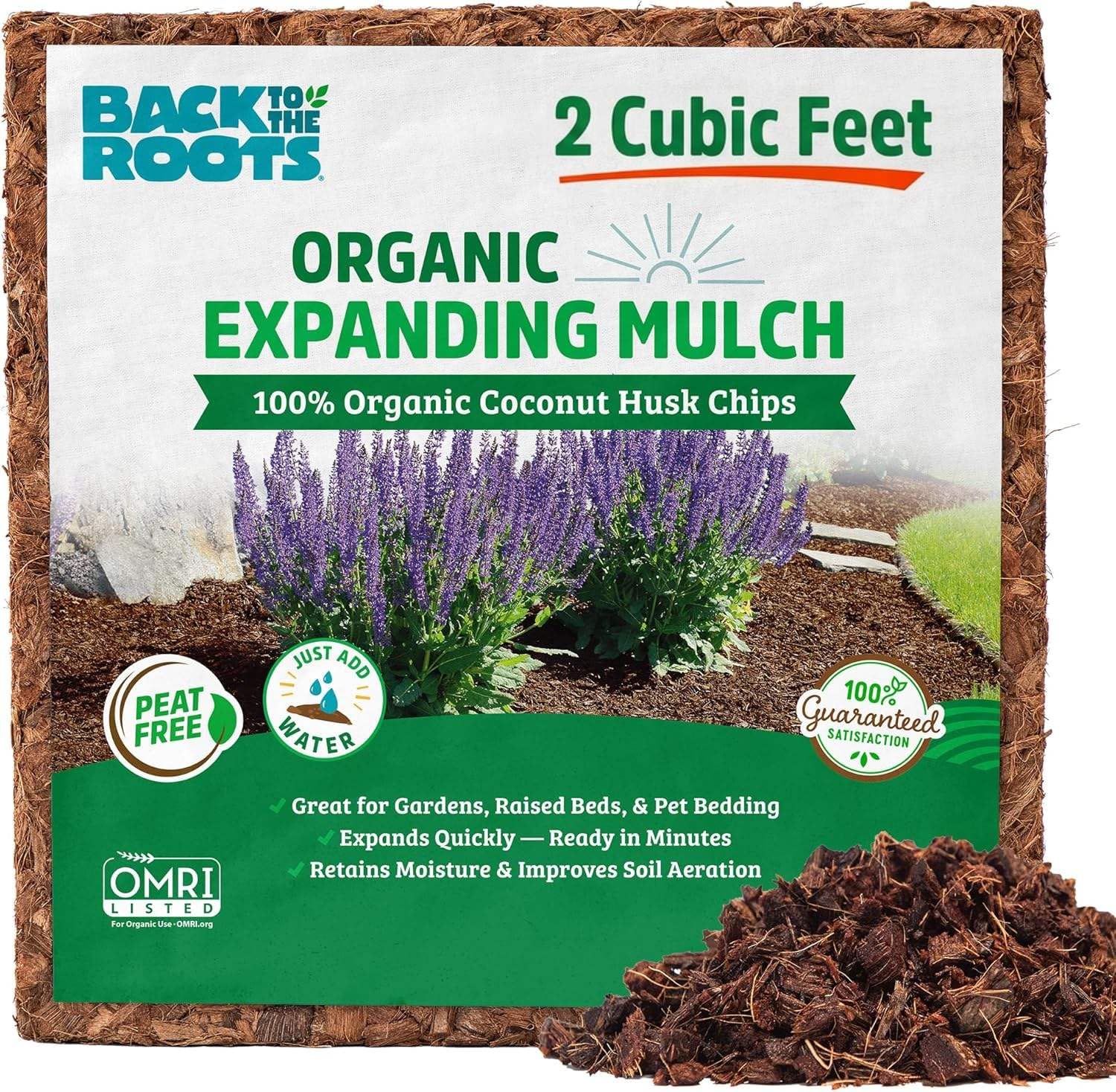
This compressed coconut husk block starts as a dense 10-pound brick and expands to over 2 cubic feet once hydrated — enough to cover a large raised bed with a 2-inch layer. The OMRI listing confirms it meets organic production standards, which matters for edible beds where you don’t want synthetic residues breaking down into the root zone. Users consistently note that the expansion process makes transport and storage far easier than dragging traditional bagged mulch from the garden center.
The coir texture creates a breathable top layer that suppresses weeds without forming a rain-shedding crust. Owners report that after tilling it into the soil at season’s end, the organic matter noticeably improves soil tilth and drainage for the next planting cycle. The neutral pH avoids the acidifying effect that peat moss introduces, so you don’t need to chase it with lime when growing vegetables.
One reviewer who needed to absorb standing water in a low-lying garden spot found that the coir’s wicking ability pulled moisture away from plant crowns. Another noted that unlike traditional bark, this product doesn’t attract termites or carpenter ants, making it safer for wood-framed beds. The “GrowOneGiveOne” program also donates classroom kits when you share your garden photos, adding a community component that resonates with school garden operators.
What works
- Huge expansion ratio saves storage space
- Neutral pH works for most vegetables and flowers
- Breathable structure prevents waterlogging
What doesn’t
- Requires a large container to hydrate fully
- Darker color can lighten as it dries out
2. Plantonix Organic Coco Chips (10 lbs)

Plantonix delivers coconut husk chips that are larger and chunkier than standard coco coir, creating noticeable air pockets that prevent soil compaction in heavy raised beds. The brick format expands into roughly 15 gallons of material when hydrated, and the chips retain their structure for months rather than breaking down into mush. Because the chips have a high cation exchange capacity, they hold onto positively charged nutrients like potassium and magnesium and release them gradually as roots exchange hydrogen ions.
Several users specifically call out that the pieces are significantly bigger than what you get from fine coco coir, which makes them ideal for blending into potting mixes for container vegetables and herbs. One gardener who filled large raised planters reported that the chips created a lighter soil profile that reduced the overall weight of the bed — helpful for elevated or rooftop gardens. The neutral pH means you don’t need to adjust acid levels before planting most annuals.
The product’s main caveat is that unbuffered coco coir can initially absorb calcium and magnesium from your soil, so a handful of users recommend pre-soaking with a dilute nutrient solution to saturate the exchange sites. The chips also float slightly when first watered, though they settle as they absorb moisture. For gardeners who want long-term aeration without the dust that fine coir creates, this bulk chip format is a solid upgrade.
What works
- Chunky texture prevents soil compaction
- High CEC improves nutrient retention
- No unpleasant smell during hydration
What doesn’t
- Unbuffered chips may tie up calcium initially
- Large pieces can float until fully soaked
3. R&M Organics Premium Organic Compost (10 lb)
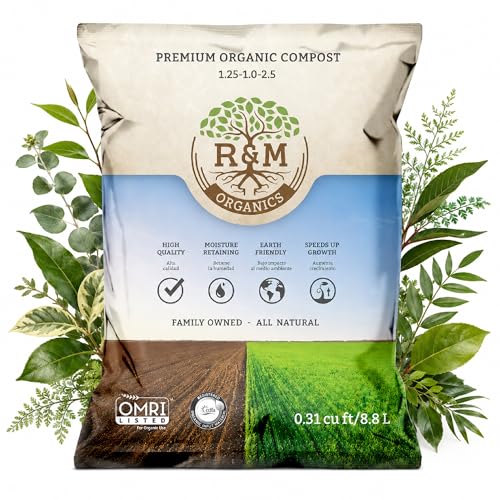
R&M Organics turns composted dairy cow manure into a fine, soil-like top dressing that delivers a slow feed of macronutrients to heavy-feeding plants. The low-odor processing means you can apply it around vegetable beds without the strong ammonia smell that poorly composted manure produces. One master gardener recommended it to a family member whose azaleas suffered after a roof-cleaning chemical spill, and the compost helped the shrubs bounce back within weeks.
The application rate is economical: a quarter-inch layer around established plants or mixed into the top few inches of new beds. A tomato grower whose plant had stalled with yellowing leaves reported that the leaves re-greened and flower buds appeared within a week of mixing this compost into a 27-gallon planter. Because the material is fully composted, it won’t burn roots the way raw manure can. The texture is fine enough to use as a seed-starter cover, though you’ll want to sift it for uniform particle size if you’re direct-sowing tiny seeds.
On the downside, a 10-pound bag goes fast — a single raised bed can consume two or three bags for a full top-dress renovation. Some users note that while the product is labeled “all-purpose,” it doesn’t carry a specific NPK guarantee on the bag, so you may still need supplemental fertilizer for extremely hungry crops like corn or squash. Still, for a quick organic boost that improves both moisture retention and microbial activity, this compost performs reliably.
What works
- Fine texture mixes easily into existing soil
- Low odor suitable for indoor and patio use
- Quick recovery response for stressed plants
What doesn’t
- Small bag size covers limited area
- No guaranteed NPK ratio on label
4. Hull Farm 50150 Cocoa Bean Shell Mulch (2 cu ft)

Cocoa bean shell mulch offers a rich chocolate fragrance that fills the garden for the first week after application, making it a sensory standout among organic mulches. Hull Farm’s version carries a fertilizer value of roughly 2.5-1-3, meaning it adds a mild dose of nitrogen and potassium as it breaks down without burning plant tissue. The shells form a solid blanket when watered, creating a surface that deters squirrels from digging in flower planters — a persistent problem for gardeners using pecan or bark mulches.
Users in hot, dry climates report that the cocoa shells maintain excellent moisture retention, keeping the soil underneath cool and damp longer than shredded bark. The material is lightweight, so it won’t compact into a dense mat, but that lightness also means it can blow around before it’s fully wetted. One reviewer noted the bag lacks a warning about not using cocoa mulch near flower stems — the shells can trap moisture against plant crowns and encourage rot if piled too high.
The main drawback isn’t performance but availability: the price has increased significantly compared to historical bulk prices, and some owners lament the high shipping cost relative to the bag size. If you have dogs, be aware that cocoa mulch contains theobromine and can be toxic if ingested in large amounts, so it’s not suitable for households where pets roam the garden beds freely. For the smell alone, though, this remains a favorite among flower-bed enthusiasts.
What works
- Strong chocolate aroma for first week
- Deters digging by squirrels and rodents
- Provides mild fertilizer value as it decomposes
What doesn’t
- Can blow away before watering settles it
- Toxic to dogs if ingested
5. Rubberific Premium Shredded Rubber Mulch (0.8 cu ft, Brown)

Rubberific’s shredded rubber mulch mimics the look of natural wood bark but eliminates the annual replacement cycle that organic mulches require. The manufacturer backs it with a 12-year color warranty, and owners confirm that the brown shade doesn’t fade or bleed onto pathways after rain exposure. Because the rubber pieces don’t rot or compress, you won’t see the settling and thinning that forces you to top up bark beds every season. For gardeners who want a one-and-done solution for decorative beds or playground-adjacent borders, this synthetic option saves significant labor over time.
The shredded texture creates a cushioning surface that’s popular around play areas, and several reviewers note that it stays put during heavy rain better than lightweight organic mulches. One pet owner specifically chose it because neighborhood dogs and cats wouldn’t use the rubber surface as a bathroom, solving a persistent mess issue. The material is also completely inert, so it adds no organic matter — but it also won’t tie up nitrogen the way fresh wood chips can.
The trade-offs are real: rubber mulch smells strongly of tires when first laid, and that odor can persist for weeks in hot weather. It also doesn’t contribute to soil health — you won’t get the microbial food or nutrient release that organic mulches provide. A few users mention that the 0.8-cubic-foot bag covers less area than expected for the price, so large projects require multiple bags. This is a niche tool for specific use cases, not a general-purpose bed cover.
What works
- Never rots or needs annual replacement
- Color stays consistent for years
- Deters animals from digging or soiling
What doesn’t
- Strong rubber smell initially
- Adds zero organic matter to soil
6. Hoffman Canadian Sphagnum Peat Moss (18 Quart)

Hoffman’s Canadian sphagnum peat moss comes from New Brunswick bogs and delivers the coarse, fibrous texture that makes it a staple for seed starting and acid-soil gardens. The 18-quart bag offers a cost-effective way to cover ground for moisture-loving plants like Venus flytraps, blueberries, and azaleas. One carnivorous plant grower mixed it with perlite and reported that the flytraps produced new shoots within a week, crediting the peat’s ability to maintain consistently damp conditions without waterlogging.
Gardeners also use it as a thin top-dressing over grass seed to hold moisture against the soil surface during germination — the fibrous structure prevents the seedbed from drying out between waterings. The material contains very little woody debris or root fragments, so you get a uniform texture that doesn’t require hand-sorting before application. Because Canadian sphagnum forms the basis of most premium potting mixes, it blends easily with perlite and vermiculite to create custom soilless blends for container gardens.
The major downside is that peat is a non-renewable resource harvested from sensitive bog ecosystems, and its low pH can lock up nutrients if used as a heavy mulch on alkaline-preferring crops without lime amendment. Over time, dry peat can form a hydrophobic crust that repels water, making rehydration difficult. For general vegetable beds, you’re better off pairing this with compost or limestone rather than using it alone.
What works
- Excellent moisture retention for seed germination
- Low pH ideal for acid-loving plants
- Minimal debris or filler material
What doesn’t
- Dries into hydrophobic crust if allowed to dry out
- Non-renewable harvesting impacts bogs
7. Rio Hamza Trading Houseplant Mulch (8 Quarts)

Rio Hamza Trading’s houseplant mulch offers finely shredded bark chips in a compact 8-quart bag aimed at indoor potted plants and patio containers. The small chip size gives a neat, uniform appearance that hides soil surfaces without overpowering small pots the way chunky wood chips would. Users consistently note that the bark doesn’t introduce pests — a frequent worry when bringing outdoor mulch indoors — and that the chips help retain moisture between waterings for houseplants like pothos and peace lilies.
Indoor gardeners who tried it as a soil amendment report that the chips add aeration and drainage to potting mixes, though the primary role is decorative top cover. One reviewer from Illinois found that using it as a top layer on overwintering plants in a garage kept the plants growing and even budding during cold months, attributing the success to the moisture retention. The chips are simple to apply: open the bag and pour, no mixing or pre-wetting required.
The biggest complaint is the value proposition — the 8-quart bag goes quickly, and one reviewer noted it only covered 2.5 medium pots at a chip depth that looked substantial. Cheaper bulk bark options exist, but they require storage space and may contain larger pieces that look wrong on a windowsill. For quick sprucing and consistent moisture in a houseplant collection, this works well, but it’s not a budget-friendly choice for covering multiple large planters.
What works
- Small, uniform chips look clean on indoor pots
- No pest introduction reported by multiple users
- Easy pour-and-use packaging
What doesn’t
- Low volume per bag for the price
- Only suitable for small container applications
Hardware & Specs Guide
Cation Exchange Capacity (CEC)
CEC measures how well a mulch holds onto positively charged nutrient ions and prevents them from leaching out with irrigation. Coco coir and peat moss have CEC values around 100-200 meq/100g, meaning they act like nutrient sponges. Shredded bark and cocoa shells have lower CEC (20-50 meq/100g) and rely more on slow decomposition to release nutrients. If you grow in sandy soil that drains fast, choose a high-CEC mulch like coco chips to keep fertilizers available longer.
pH Influence on Soil
Each organic mulch shifts soil pH differently over its decomposition cycle. Sphagnum peat drops pH to the 3.5-4.5 range and requires lime for neutral-soil crops. Coco coir sits at pH 5.5-6.5, which is compatible with most vegetables. Composted manure typically lands between pH 6.5-7.5, making it a safe bet for alkaline-tending beds. Rubber mulch is inert and has no pH effect, which can be an advantage if you need to keep soil chemistry stable.
FAQ
Can I use a mixed layer of peat and compost as mulch?
How often should I replace cocoa bean shell mulch?
Does rubber mulch leach chemicals into vegetable beds?
Final Thoughts: The Verdict
For most gardeners, the mulch for garden beds winner is the Back to the Roots Coconut Husk Mulch because it combines neutral pH, excellent moisture retention, and a compact storage format that expands to cover large areas without heavy lifting. If you want a nutrient-driven top dress to revive struggling plants, grab the R&M Organics Compost. And for a permanent weed-suppressing layer with zero annual maintenance, nothing beats the Rubberific Shredded Rubber Mulch.