
You watch your blueberry bushes swell, the raspberries turn deep red, and just before you harvest, a flock of birds strips the patch clean. Berry bush netting is the only physical barrier that stops this overnight theft without chemicals, traps, or constant vigilance. But the wrong netting tangles in the wind, traps small animals, or degrades after one season.
I’m Rikta — the co-founder and writer behind Lawn Gear Lab. I’ve spent dozens of hours cross-referencing the actual weave densities, material weights, and drawstring mechanisms of every major netting product on the market while analyzing hundreds of verified owner reports to separate what truly protects a berry patch from what just frustrates gardeners.
Whether you are shielding a single potted bush or a full row of strawberries, this guide dissects the specific mesh sizes, tensile strengths, and coverage dimensions that make or break your harvest. Here is my researched breakdown of the best berry bush netting for every garden setup.
How To Choose The Best Berry Bush Netting
Selecting the right netting for your berry bushes is a decision about three interconnected variables: mesh aperture, material durability, and the anchoring system. A net that excels in one area but fails in another will leave your fruit exposed or your plants damaged.
Mesh Size: The Trade-Off Between Exclusion and Airflow
The most critical spec on any netting package is the hole size. A 1/2-inch or 5/8-inch mesh effectively blocks birds, squirrels, and deer but allows small insects like aphids and beetles to pass through. Ultra-fine mesh (0.04-inch) blocks insects as well as birds, but it also prevents bees from reaching the flowers for pollination. If you must cover bushes while they are blooming, a larger mesh or a temporary removal schedule is necessary. For berry bushes that self-pollinate or are covered only after fruit sets, ultra-fine mesh provides the highest level of exclusion without the pollination problem.
Material Weight and UV Stability
Standard bargain netting weighs between 6 and 9 grams per square meter and often splits within a single season under direct sun. The heavier-duty options — 30 gsm HDPE netting or tightly woven nylon — resist UV degradation and tearing when branches shift in the wind. Lightweight nylon is gentler on young, brittle branches because it does not add much load, but it can act like a sail in a strong breeze. Heavier materials require a more robust support structure (posts or hoops) but provide reliable multi-season performance.
Enclosure Style: Sheets vs. Bags
Loose netting sheets are flexible and excellent for covering rows, raised beds, or large arching cane berries. However, they must be staked or weighted at the edges, or ground animals will crawl underneath. Drawstring bags provide a tighter seal around the base of an individual bush or a potted plant, which effectively blocks ground squirrels and chipmunks. For a single blueberry bush, a drawstring bag is the superior choice. For a 20-foot row of raspberries, a wide sheet with landscape staples or ties is more practical and cost-effective.
Quick Comparison
On smaller screens, swipe sideways to see the full table.
| Model | Category | Best For | Key Spec | Amazon |
|---|---|---|---|---|
| GonLei 10×10 ft (2-Pack) | Drawstring Bag | Large single bushes | Ultra-dense nylon mesh | Amazon |
| RIFNY 13×40 ft | Sheet | Long rows & arches | HDPE, 5/8-inch mesh | Amazon |
| RIFNY Ultra-Fine 2-Pack | Sheet | Insect & bird exclusion | 0.04-inch ultra-fine mesh | Amazon |
| GonLei 4-Pack (2 sizes) | Drawstring Bag | Multi-size bush coverage | Premium nylon, 2 sizes | Amazon |
| Kikhope 20-Piece Bags | Individual Bags | Individual fruit clusters | 21×14-inch PE bags | Amazon |
| POYEE 20×20 ft | Sheet | General garden coverage | 30 gsm HDPE netting | Amazon |
| ZYP 7×6 ft | Drawstring Bag | Small budget-friendly use | Lightweight nylon mesh | Amazon |
In‑Depth Reviews
1. GonLei 2-Pack 10×10 ft Drawstring Netting
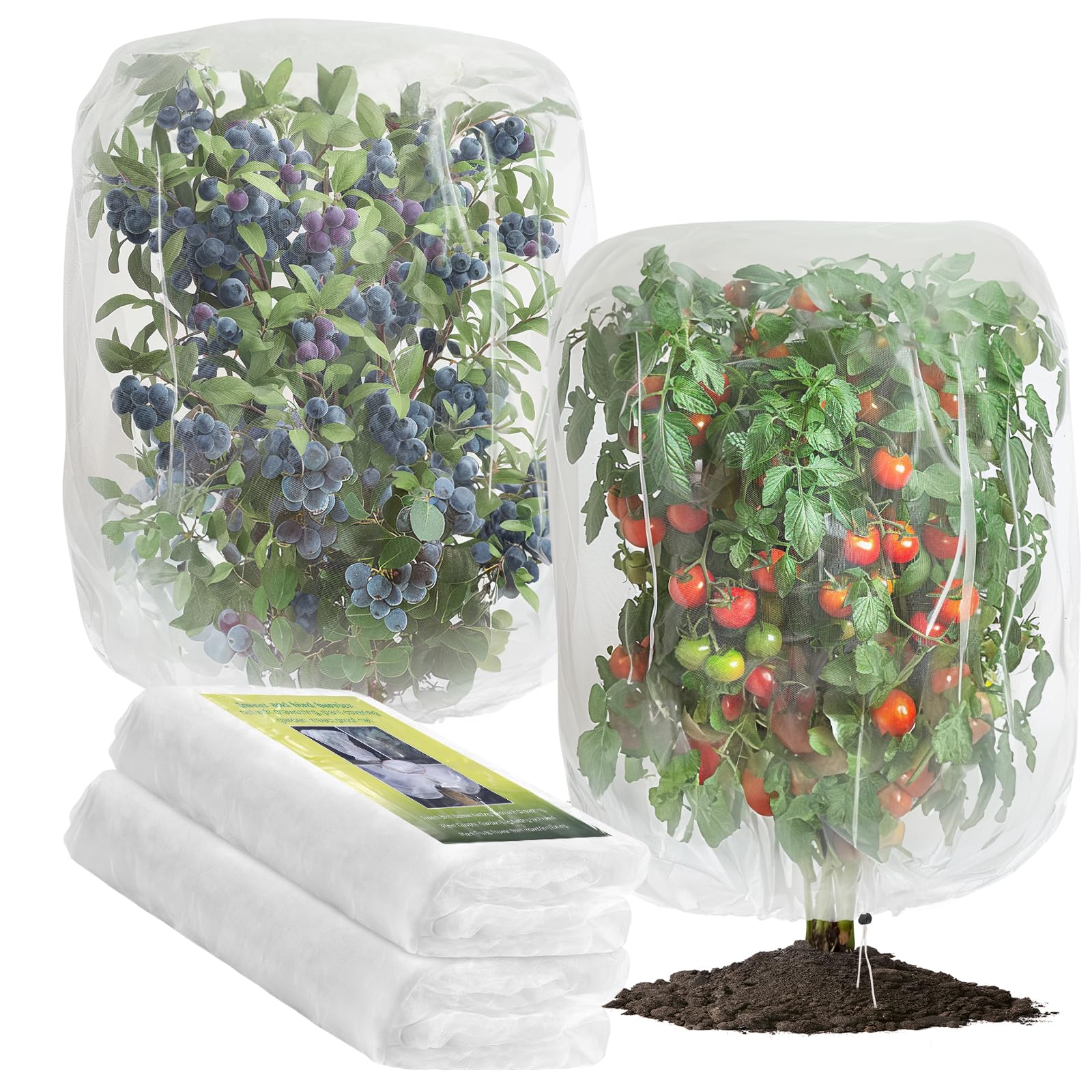
The GonLei 10×10 ft drawstring bag set is the most versatile single-bush solution in this lineup. Each bag measures 10 feet square, and receiving two in the package gives you the flexibility to protect two large blueberry bushes or one sprawling citrus tree. The ultra-dense nylon mesh is soft enough to avoid abrading fruit but tight enough to block cicadas, birds, and squirrels. Multiple verified owners report that the material performs well year after year when stored properly during the off-season.
The drawstring design is the standout feature here. It cinches around the trunk or the container rim, creating a ground-level seal that sheet netting simply cannot match. This prevents chipmunks and voles from sneaking in from underneath — a problem the ZYP and POYEE models struggle with. However, the included drawstring cord is a weak point; several reviewers replaced it with thicker ribbon or paracord for a more reliable cinch. The netting itself requires a central support pole or stake in windy areas to prevent the bag from collapsing.
For the gardener managing two medium-to-large bushes and wanting a tight, reusable barrier, this is the strongest combination of coverage area, material quality, and pest exclusion. The two-pack format also works well for tall container plants like dwarf Meyer lemon trees, where the bag slides over the entire canopy and cinches below the pot rim.
What works
- Two large 10×10 ft bags cover substantial bushes without needing to sew or join panels.
- Ultra-dense nylon weave excludes both insects and birds while admitting light and water.
- Drawstring bottom keeps ground pests from entering.
What doesn’t
- Stock drawstring cord frays quickly and may need replacement with a thicker option.
- Bags act as wind sails without a central support post.
2. RIFNY 13×40 ft Heavy Duty Bird Netting
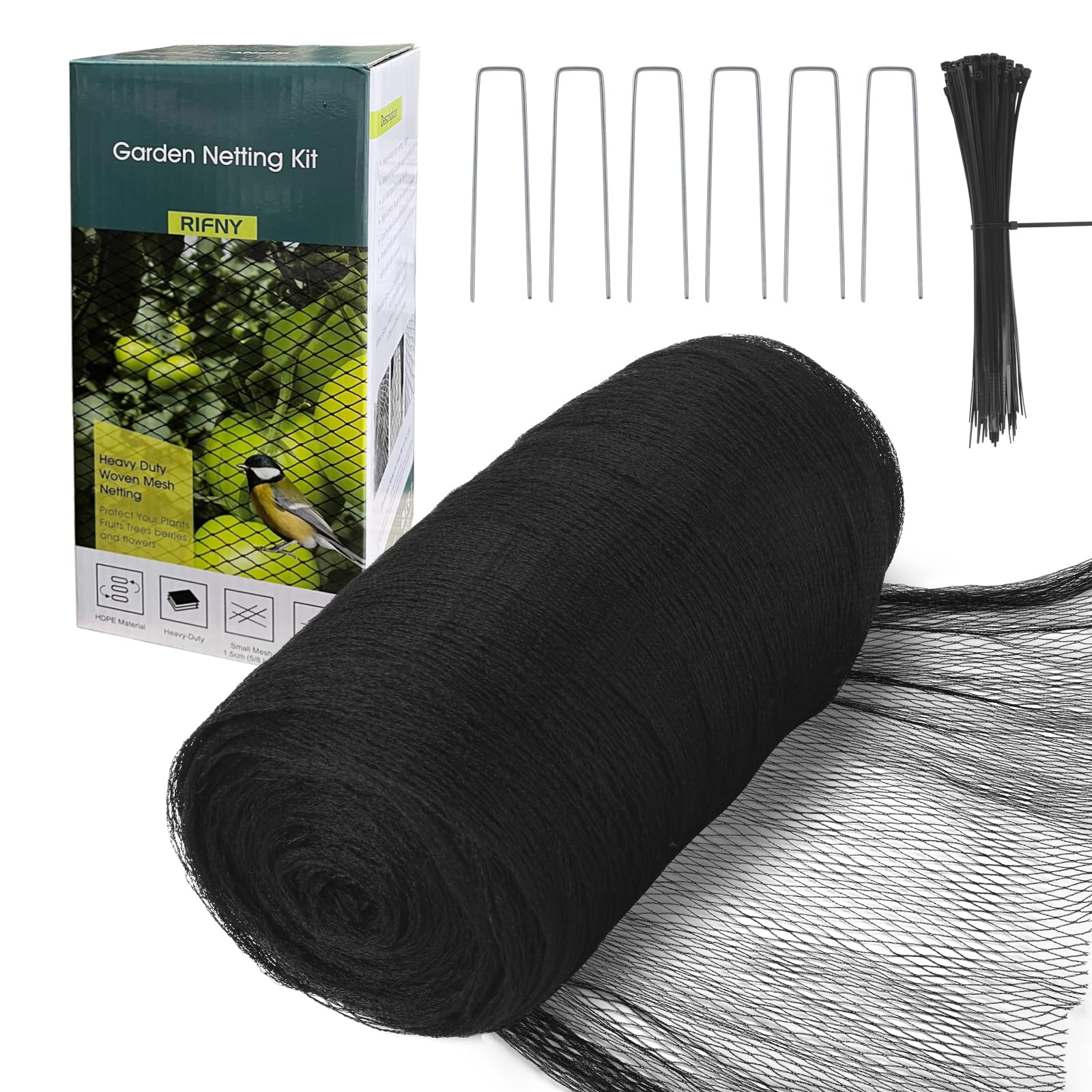
The RIFNY 13×40 ft sheet is built for scale. It uses high-density polyethylene (HDPE) instead of standard polypropylene, which gives it a significantly higher tear resistance and a weight of 0.65 ounces per square yard. This is roughly ten times heavier than flimsy 6 gsm netting. Gardeners who draped this over a 28-foot grape arbor report it survived two winters without tearing or tangling. The 5/8-inch mesh is ideal for bird and squirrel exclusion without the fine enough weave to trap small animals.
Installation is straightforward: you cut the sheet to size with scissors and secure it with the included twist ties and 7-inch landscape staples. The material rolls out without tangling, which is a recurring complaint with cheaper PE netting that knots into unusable wads. The UV and rot resistance is rated for temperatures from -58°F to 212°F, making this a genuine all-season product. The black color blends into the garden better than white netting and does not reflect harsh light onto the leaves.
The main limitation is the absence of a drawstring or pre-formed enclosure. To keep ground animals out, you must staple or weight the edges down completely — a process that takes more time than sliding a drawstring bag over a single bush. This is the right choice for berry patches, raised-bed rows, or trellised brambles where a large continuous sheet is more practical than individual bags.
What works
- HDPE material resists UV degradation and tearing far better than standard netting.
- 13×40 ft coverage is large enough for long rows or a full grape arbor.
- Does not tangle during unrolling or installation.
What doesn’t
- Must be staked or weighted at ground level to prevent animals from entering underneath.
- 5/8-inch mesh does not block small insects like aphids or flea beetles.
3. Kikhope 20-Piece Fruit Protection Bags

The Kikhope bags offer a completely different approach: instead of netting the whole bush, you net individual fruit clusters. The 21×14-inch bag is large enough to envelop a full sunflower head or a bunch of loquats, and the drawstring cinches around the stem. The polyethylene mesh is non-toxic and flexible, allowing air and sunlight to reach the fruit while preventing birds from pecking through.
This targeted protection is ideal for gardeners who only have a few fruit-bearing branches that need defense. If you have one fig tree that produces a dozen prime figs, you can bag just those figs and leave the rest exposed for pollinators. The 20-count pack is generous, and the bags are reusable if handled gently. Several users noted that the drawstring tends to fray after repeated tightening, and the cinch can leave small gaps at the stem that clever birds or insects may exploit.
The limitation is that these bags are not suited for covering entire bushes. Placing 20 bags on a single blueberry bush would be tedious, and the bags do not stack or overlap efficiently for large-scale coverage. For someone with a few high-value fruit clusters, this is a cheap, effective, and pesticide-free solution that allows the rest of the plant to grow naturally unencumbered.
What works
- Targeted protection for individual fruit clusters does not interfere with overall plant growth.
- Non-toxic PE mesh is safe for edibles and allows sun and rain penetration.
- 20 bags per pack cover multiple branches without needing to net the entire bush.
What doesn’t
- Drawstring frays with use and may not seal completely around thick stems.
- Not practical for full-bush coverage — labor-intensive for large plantings.
4. GonLei 4-Pack (2.6×3.3 ft & 3.3×4.9 ft)
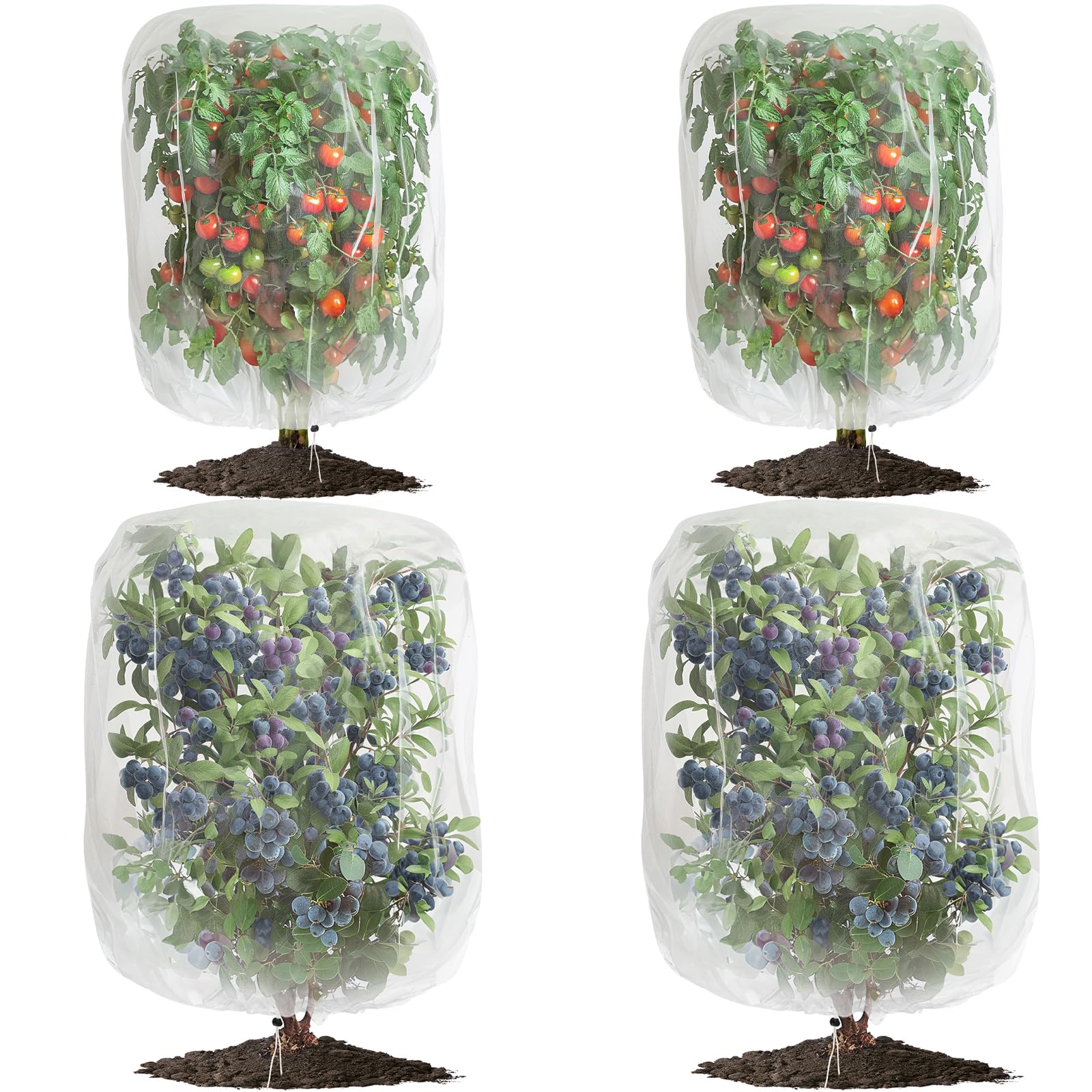
The GonLei 4-Pack is the same premium nylon material as the 10×10 ft version but packaged in smaller, more manageable sizes. You get two bags of 2.6×3.3 ft and two bags of 3.3×4.9 ft, which makes this kit perfect for a mixed garden with young bushes, container plants, and small raised beds. The ultra-dense weave is identical — soft, stretchy, and fine enough to block cicadas and smaller insects.
This multi-size approach addresses the biggest complaint about fixed-size netting bags: what fits one bush is too big for another. You can use the smaller bag on a strawberry patch or a young pepper plant and the larger bag on a dwarf blueberry or a tomato cage. The drawstring closure works the same way, cinching around the stem or pot. The cord quality is again the weak link — users recommend upgrading it for long-term reliability, especially if you plan to open and close the bags frequently for harvesting or inspection.
For the gardener who wants to start with a flexible kit that covers a range of plant sizes, this is the most practical entry point. The material density rivals the best options on the market, and the four-bag count ensures you can protect multiple vulnerable plants simultaneously without purchasing separate products for each size.
What works
- Four bags in two sizes match different plant heights and widths.
- Ultra-dense nylon provides top-tier insect and bird exclusion.
- Drawstring bottom seals against ground rodents.
What doesn’t
- Drawstring cord is thin and should be replaced for repeated use.
- Smaller bags may be tight on sprawling bush varieties.
5. RIFNY Ultra-Fine Mesh 2-Pack (10×33 ft)

RIFNY’s ultra-fine mesh netting uses a 0.04-inch aperture, which is tight enough to block thrips, aphids, leafhoppers, and even mosquitoes while still passing water and diffused sunlight. The oblong hole construction is a clever design choice — it maintains airflow while preventing insects from squeezing through the diagonal. This is the only net in this lineup that doubles as a full insect barrier, making it valuable for organic growers who want to avoid sprays entirely.
The two-pack format gives you a combined 20×33 ft of coverage, which is enough to drape over a substantial raised bed or a row of young bushes. The material is lightweight PE stabilized fabric — it will not add significant weight to branches, but it is also less tear-resistant than the HDPE RIFNY sheet. Squirrels can rip through this netting if they are determined, as noted in customer reviews. You will need to stake the edges or place landscape fabric weights along the perimeter to keep animals from lifting it.
The most critical trade-off here is pollination. With a 0.04-inch mesh, bees cannot pass through. If you cover bushes while they are in bloom, you must remove the netting during the day for pollination or only apply it after fruit has set. This limitation is clearly stated by reviewers who used it on crops needing insect pollination. For self-pollinating berries or post-bloom application, this is the most complete barrier available.
What works
- 0.04-inch mesh blocks insects, birds, and dust while allowing water and light through.
- Two 10×33 ft sheets provide massive coverage for rows or beds.
- Lightweight fabric does not burden plant branches.
What doesn’t
- Blocks pollinators — cannot stay on during bloom for most crops.
- PE fabric can be torn by persistent squirrels or sharp branch ends.
6. POYEE 20×20 ft Heavy Duty Bird Netting
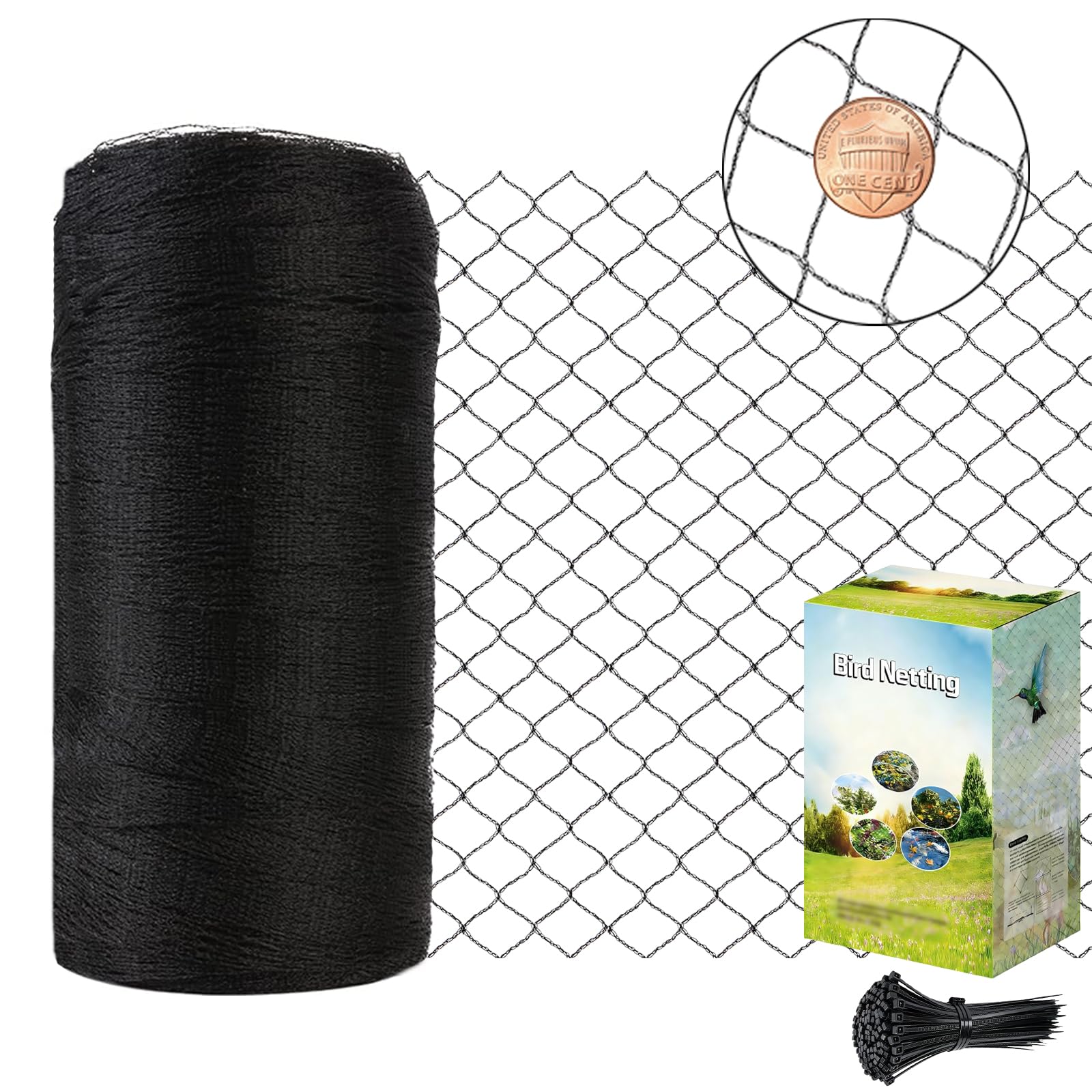
The POYEE 20×20 ft sheet is built around a simple value proposition: the highest material density in this price range. At 30 grams per square meter, this HDPE netting is roughly three to five times heavier than typical budget netting. The 1/2-inch tightly woven mesh is optimized for bird, deer, and squirrel exclusion, and the black color makes it nearly invisible from a short distance. Reviewers have used it for chicken runs, leaf catchers, and fruit tree drapes with consistent reports of multi-season durability.
The large 20×20 ft dimension is both a strength and a challenge. It covers a big area in one piece, which is excellent for a large vegetable garden or a row of mature berry bushes. But the same size means it is heavy and awkward to handle solo. Two people are recommended for installation, especially when draping it over a tall structure or tying it down around the base of multiple plants. The netting rolls out smoothly and cuts cleanly with scissors, so you can customize the shape without fraying.
Where this product falls short is in its lack of a bottom seal. Like all sheet netting, animals can push under the edges if they are not firmly staked. The 1/2-inch mesh is also too large to exclude small insects or very young chicks. For its intended use — keeping birds, deer, and large critters off a sizable garden plot — the material heft and coverage area justify its position as a rugged, long-term solution.
What works
- 30 gsm HDPE is significantly stronger than standard 6-9 gsm netting.
- 20×20 ft size covers large areas with a single sheet.
- Rot-resistant and UV-stable for multi-season reuse.
What doesn’t
- Large sheet is cumbersome to install without a helper.
- No drawstring — requires staking to prevent ground animals entering underneath.
7. ZYP 7×6 ft Drawstring Netting
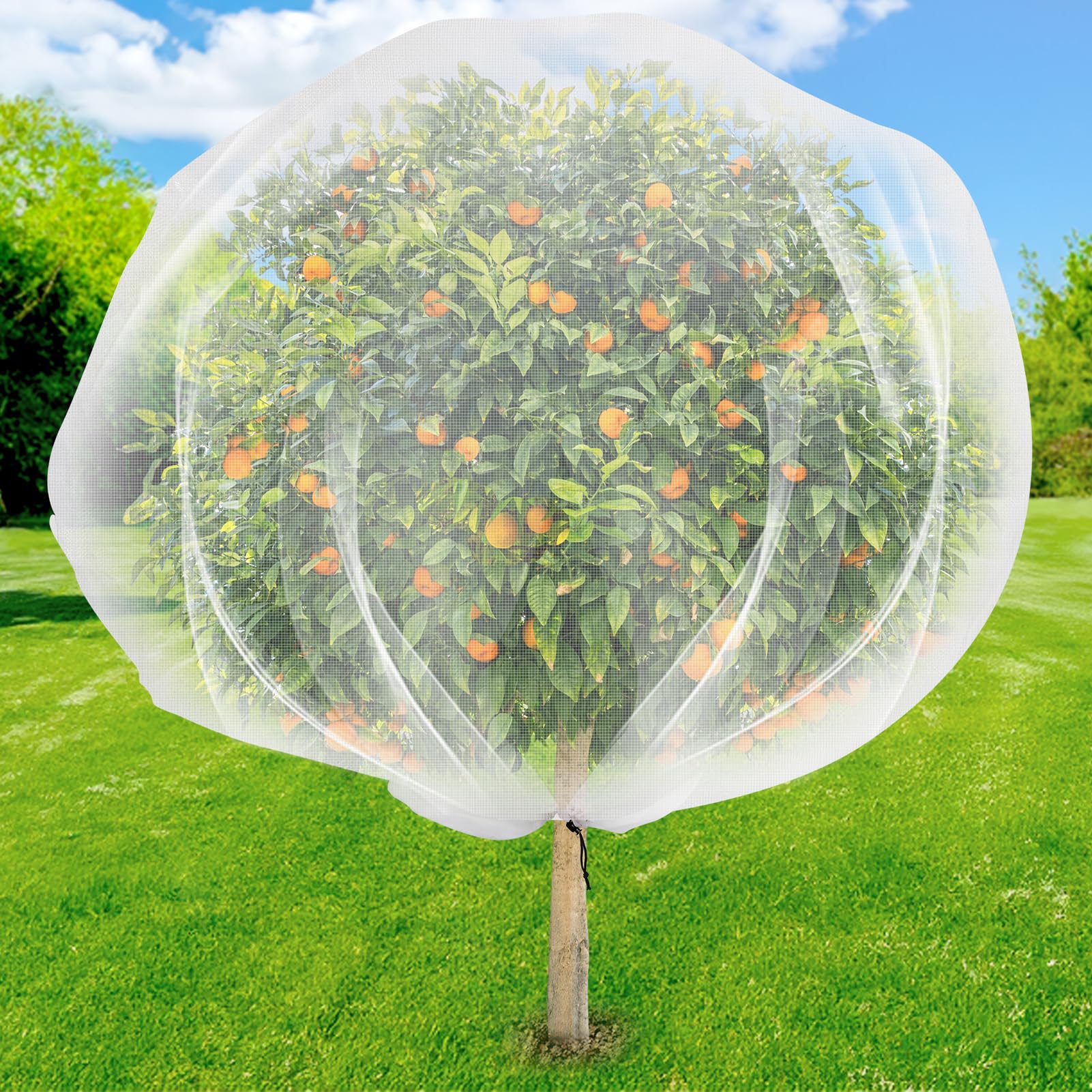
The ZYP 7×6 ft net is a textbook budget-friendly entry point. It uses lightweight nylon with an ultra-fine mesh that blocks small insects and birds while passing air and sunlight. The drawstring closure at the base provides a decent seal for a single small-to-medium bush, and the white color makes it easy to spot pests that land on the outside. At roughly half the weight of the premium options, it will not weigh down young or brittle branches.
Where this netting saves money, it also cuts corners. The lightweight nylon acts like a sail in moderate wind, and several reviewers noted that even a light breeze caused the net to sway heavily, knocking fruit off the branches. The drawstring is functional but does not cinch as tightly as the GonLei bags, leaving small gaps at the base that ground squirrels can exploit. One review specifically mentioned losing berries to rodents that entered through the gap between the drawstring and the trunk.
This netting is best suited for small, low-to-the-ground bushes in a protected corner of the yard — a patio blueberry or a young fig tree in a pot. For exposed gardens or larger bushes, the wind-loading issue makes it a frustrating choice. It is a functional, temporary solution for gardeners on a tight budget who are willing to reinforce the drawstring and stake the perimeter against wind.
What works
- Ultra-fine nylon mesh blocks birds, bees, and small insects effectively.
- Lightweight material does not stress young or fragile branches.
- Drawstring bottom provides a basic ground seal for small bushes.
What doesn’t
- Acts as a wind sail — can knock fruit off branches in breezy conditions.
- Drawstring leaves gaps that ground animals can squeeze through.
Hardware & Specs Guide
Mesh Aperture and Thread Count
The mesh size is the distance between adjacent threads measured in inches or fractions of an inch. A 1/2-inch mesh stops birds and squirrels but allows small insects through. A 5/8-inch mesh is slightly looser and better for air movement but still blocks larger pests. Ultra-fine mesh (0.04-inch) blocks insects and dust but restricts pollinators. The thread count (denier or weight per area) determines how much force the net can withstand before tearing. Heavier netting like 30 gsm HDPE resists stretching and UV damage far better than lightweight 6 gsm polypropylene.
Drawstring vs. Open Sheets
Drawstring bags have a cord sewn into the hem that cinches the netting around the trunk or container rim, creating a sealed enclosure that ground animals cannot penetrate. Open sheets require you to weigh down or staple the edges with landscape staples or rocks. Bags are superior for individual bushes; sheets are practical for rows, raised beds, and arches. Some drawstring bags have poor-quality cords that fray or snap after a season — upgrading to a thicker nylon or polyester cord improves longevity.
FAQ
Can I leave netting on my berry bushes during bloom?
How do I prevent birds from getting tangled in the netting?
Will netting protect against deer and raccoons?
Final Thoughts: The Verdict
For most gardeners, the best berry bush netting winner is the GonLei 2-Pack 10×10 ft because it combines a dense nylon weave with a drawstring bottom that blocks both birds and ground rodents across two large bags. If you want a single-sheet solution for a long row of brambles or a raised bed, grab the RIFNY 13×40 ft for its superior HDPE durability and tangle-free handling. And for protecting individual fruit clusters or small bushes on a budget, nothing beats the Kikhope 20-Piece Bags for targeted, low-cost defense.