
Choosing the wrong liquid fertilizer can stunt your tomato crop, yellow your pepper leaves, or leave your cucumber vines weak and fruitless. A balanced formula delivers the precise nitrogen, phosphorus, and potassium your vegetables need during critical growth stages — from seedling establishment to flowering and fruit set.
I’m Rikta — the co-founder and writer behind Lawn Gear Lab. I’ve analyzed grower feedback, cross-referenced NPK ratios, and studied third-party lab results to build this guide around the measurable specs that matter for edible gardens.
Whether you’re feeding a backyard raised bed or a row of container peppers, the right liquid fertilizer for vegetables makes the difference between a modest harvest and a bumper crop.
How To Choose The Best Liquid Fertilizer For Vegetables
Liquid fertilizers offer fast-acting nutrition that vegetables can absorb immediately through roots or leaves. The key is matching the formula to your crop’s growth phase and your growing method — soil, container, or hydroponics.
Decode the NPK Ratio for Your Growth Stage
Every bottle displays three numbers: nitrogen (N), phosphorus (P), and potassium (K). Leafy greens like lettuce and spinach need a higher first number (e.g., 5-1-1) for vegetative growth. Fruiting vegetables like tomatoes and peppers benefit from a balanced ratio or one with higher phosphorus and potassium (e.g., 2-8-4) during bloom. Using a high-nitrogen formula during fruiting encourages leaves over fruit.
Organic vs. Synthetic: What OMRI Listing Means
An OMRI (Organic Materials Review Institute) listing confirms a fertilizer meets organic standards. Fish emulsion, kelp-based formulas, and hydrolyzed fish products are common organic sources. Synthetic fertilizers deliver nutrients in a more immediately available form but can burn roots if over-applied. Organic options also feed soil microbes, improving long-term soil structure.
Dilution Ratio and Application Method
Concentrated formulas require precise mixing. A 5 ml/L ratio means you need a measuring syringe for accuracy. Some products are designed as soil drenches, while others work as foliar sprays. Over-concentration causes leaf burn or root damage. Always follow the label rate. For hydroponic systems, look for formulas that are specifically compatible with soilless media.
Quick Comparison
On smaller screens, swipe sideways to see the full table.
| Model | Category | Best For | Key Spec | Amazon |
|---|---|---|---|---|
| FoxFarm Trio Pack | Complete System | Full-season feeding program | 3-bottle system: 2-8-4 bloom ratio | Amazon |
| FOOP Veg & Bloom Pack | Organic All-in-One | Premium organic fruit/veg | 5 bottles, 160 fl oz total volume | Amazon |
| VIVOSUN A&B Bundle | Two-Part Base | Hydroponic and soil feed | 2-quart set, 5 ml/gal dilution | Amazon |
| The Grow Co Fish Emulsion | Single Organic Source | Gentle organic feeding | 1 gallon, 2-3-1 NPK ratio | Amazon |
| Alaska Fish Fertilizer | Organic Nitrogen Source | Vegetative growth boost | 115 fl oz, 5-1-1 NPK ratio | Amazon |
| Big A Tomato Fertilizer | Organic Powder | Tomato-specific feeding | 12 oz powder, kelp-enriched | Amazon |
| Growth Technology Chilli Focus | Specialized Formula | Peppers and hydroponics | 250 ml, 5 ml/L mixing ratio | Amazon |
In‑Depth Reviews
1. FoxFarm Soil Liquid Trio Pack

The FoxFarm Trio gives you a complete stage-by-stage feeding program in three bottles: Grow Big (6-4-4) for vegetative growth, Big Bloom (0.01-0.3-0.7) for soil conditioning, and Tiger Bloom (2-8-4) to push flower and fruit development. This system lets you adjust NPK as your vegetables move from leaf-making to fruit-setting without buying separate products.
Growers consistently report that tomatoes, peppers, and squash respond with noticeably denser foliage and heavier fruit sets compared to generic all-purpose feeds. The low pH of Tiger Bloom keeps micronutrients available in hard water, a common issue in container gardens. Users note the bottles are easy to mix with water and produce minimal odor compared to fish-based alternatives.
The main drawback is that heavy use requires periodic salt flushing to prevent nutrient buildup in soil. Some users also mention the bottle caps can leak slightly if stored on their sides. For gardeners who want a proven system that covers every phase, this trio is the clear winner.
What works
- Covers veg, transition, and bloom stages with one purchase
- Tiger Bloom’s 2-8-4 ratio pushes heavy fruit production
- Minimal odor, pleasant to mix indoors
What doesn’t
- Requires occasional salt flush to prevent buildup
- Bottle caps can leak if stored horizontally
2. FOOP Nutes Veg & Bloom Starter Pack

FOOP’s starter pack includes five 32-ounce bottles (Veg A, Veg B, Bloom A, Bloom B, and Sweetener) that deliver a fully organic feeding regimen with built-in calcium, magnesium, and silica. This eliminates the need for separate supplements. The Veg formula is optimized for root development and stalk thickness, while the Bloom formula uses fish emulsion and kelp to supply bioavailable phosphorus and potassium during fruiting.
Experienced growers report seeing tighter bud stacking on peppers and tomatoes, plus enhanced terpene profiles in herbs like basil and cilantro. The Sweetener bottle adds organic sugars and amino acids that improve flavor intensity. The certified organic ingredients mean you can apply this right up to harvest without concern about synthetic residues.
The biggest downside is the strong fishy odor during mixing, and some users note that organic formulas can attract fungus gnats if left wet on the soil surface. The price point also puts it in the premium bracket, though the volume per bottle is generous. For organic purists who want maximum flavor and yield, this is the top-tier choice.
What works
- Certified organic with built-in cal/mag and silica
- Sweetener boosts terpenes and fruit flavor
- Large 160 fl oz total volume covers entire season
What doesn’t
- Strong fishy odor during mixing
- Can attract fungus gnats if over-applied
3. VIVOSUN Liquid Nutrients Base A & B Bundle

VIVOSUN’s A&B bundle provides a two-part concentrated base that delivers complete macro and micronutrients for every growth stage. Each 1-quart bottle (A and B) mixes at 5 ml per gallon of water. The formula is 100% water-soluble and stabilizes pH in the nutrient solution, which is critical for hydroponic and coco coir setups where pH drift can lock out nutrients.
Growers report strong stem development and darker green leaves within days of first application. The system works across soil, hydroponics, aquaponics, and coco coir, making it one of the most versatile options on this list. Because A and B must be diluted separately before combining, there is no risk of concentrated precipitate forming.
Some users find the two-bottle system slightly more work than a one-part formula, and the instructions recommend using a syringe for ml-level accuracy. The containers also lack a measuring cap, so you’ll need a separate tool. For hydroponic vegetable growers or anyone running multiple media types, this bundle offers reliable performance at a moderate price.
What works
- Versatile for soil, hydro, coco, and aquaponics
- pH-stabilizing formula prevents lockout
- 100% water-soluble, fast uptake
What doesn’t
- Two bottles require separate dilution steps
- No measuring cap; syringe needed for accuracy
4. The Grow Co Organic Fish Emulsion Fertilizer

The Grow Co’s hydrolyzed fish emulsion comes in a full gallon and dilutes at a 1:100 ratio, meaning that single bottle makes over 160 gallons of feed. The 2-3-1 NPK ratio leans slightly toward phosphorus and potassium, making it ideal for fruiting vegetables like tomatoes, peppers, and cucumbers. The cold-pressed process preserves amino acids and micronutrients that synthetic heat processing destroys.
Long-time organic gardeners, some with over 50 years of experience, praise this formula for its ability to build soil biology. Used as a soil drench or foliar spray, it encourages beneficial fungi and improves soil structure. Many users mix it with rainwater and kelp to create a homemade “tea” that produces visibly larger vegetables and more blooms.
The trade-off is the pungent fish aroma, which can be overwhelming indoors. The consistency is very thin, so it mixes instantly but won’t cling to leaves like thicker emulsions. For gardeners on a budget who want a large-volume organic option, this is the best value per gallon of feed.
What works
- Massive yield: 1 gallon makes 160+ gallons of feed
- Cold-pressed retains amino acids and micronutrients
- Ideal for soil drench and foliar spray use
What doesn’t
- Very strong fishy smell during application
- Thin consistency doesn’t cling to foliage
5. Alaska Fish Fertilizer OMRI Listed 5-1-1
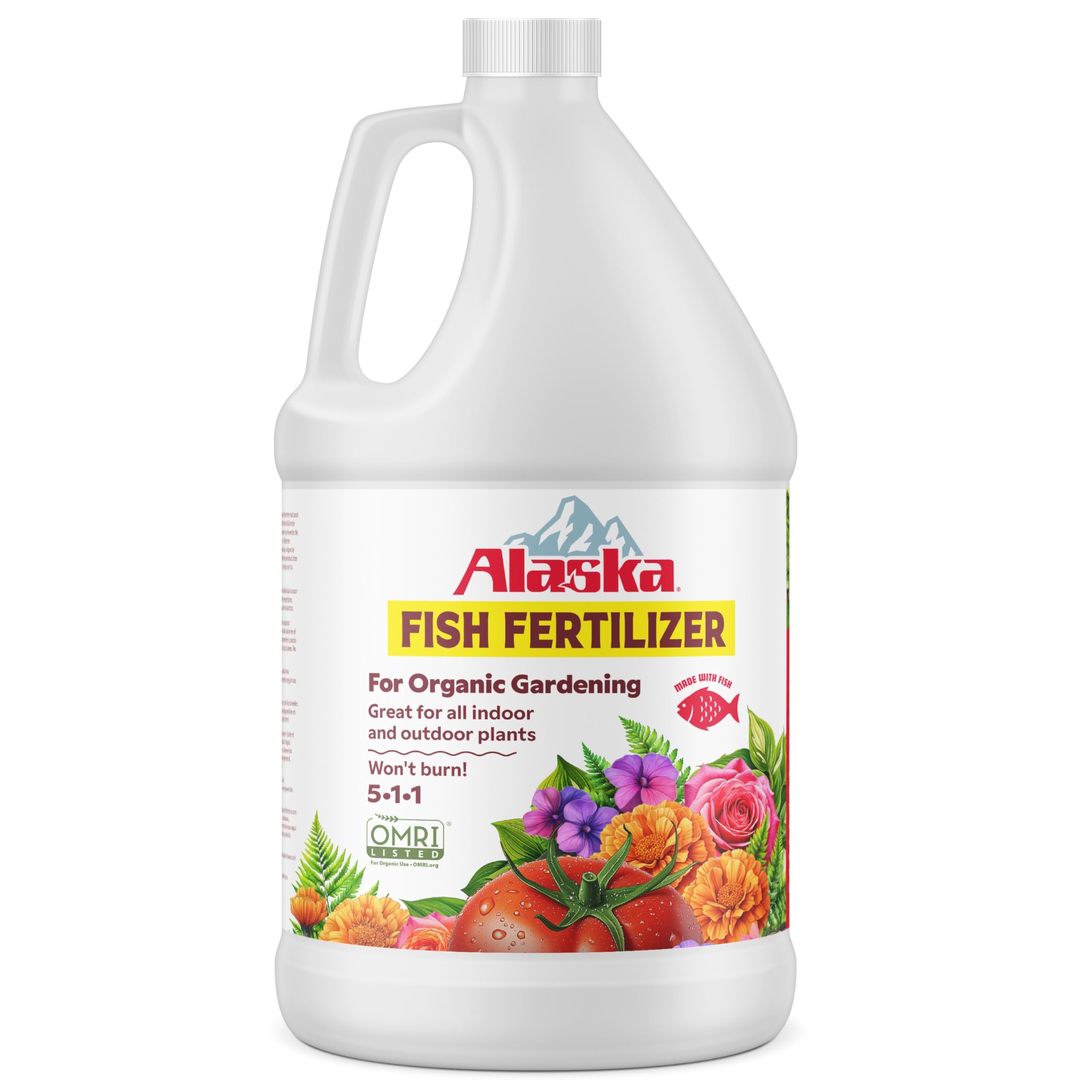
Alaska’s fish fertilizer has been a trusted organic nitrogen source for decades, and this OMRI-listed 5-1-1 formulation delivers a potent boost for leafy vegetables. The high nitrogen content is ideal for greens like spinach, kale, and lettuce, as well as the early vegetative stage of tomatoes and peppers before flowering begins. The 115-ounce jug covers up to 1,000 square feet per application.
Long-term users report that consistent feeding every three weeks produces lush, deep-green foliage and strong stem development. The cold-processed formula preserves bioavailable micronutrients, and the deodorized formulation dissipates the fish smell within a day after watering in. It also supports soil microbial activity, improving long-term soil health.
Because the NPK is heavy on nitrogen, you should switch to a bloom-focused fertilizer once flowers appear. The smell, while improved, is still potent immediately after mixing — well-ventilated outdoor application is recommended. For leafy greens and early-season growth, this remains a benchmark product.
What works
- OMRI-listed organic nitrogen powerhouse for leaf growth
- Covers up to 1,000 sq ft per application
- Deodorized formula — smell fades within a day
What doesn’t
- Low phosphorus/potassium — not for fruiting stage
- Strong odor during mixing, needs ventilation
6. Big A Tomato Premium Organic Fertilizer with Kelp

Big A’s fertilizer is a soluble powder packed with North Atlantic sea kelp, amino acids, humic acid, and a balanced macro-nutrient profile. Despite the “tomato” branding, the formula is safe and effective for all vegetables. One scoop per plant per week delivered tomatoes and peppers that thrived through an entire summer, according to verified buyers in Zone 7.
The powder format dissolves rapidly in water and provides secondary nutrients like calcium and magnesium that prevent blossom-end rot in tomatoes. Organic ingredients mean no harsh fillers, and the kelp supplies natural growth hormones that stimulate root expansion and stress tolerance.
The 12-ounce bag is relatively small compared to liquid gallons, so frequent weekly feeding will deplete it faster than some liquid options. A few users noted the bag can tear during shipping if not handled carefully. For gardeners who prefer a concentrated powder that targets tomato health specifically, this is a solid mid-range pick.
What works
- Kelp and amino acids boost root growth and stress tolerance
- Calcium and magnesium prevent blossom-end rot
- Highly soluble powder mixes rapidly
What doesn’t
- Small 12-ounce bag may run out quickly
- Bag can tear in transit if not handled gently
7. Growth Technology GT Chilli Focus Liquid Plant Food
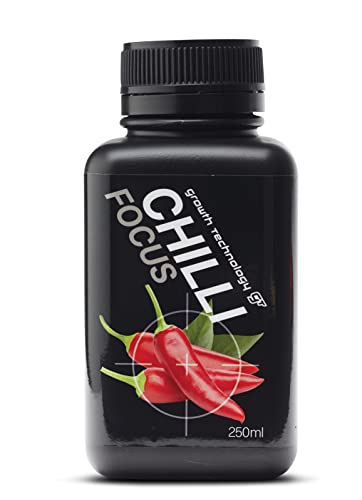
GT Chilli Focus is a specialized nutrient solution formulated specifically for chillies, peppers, and tomatoes, though it works well on a wide range of vegetables and even houseplants. The 250-milliliter bottle is small, but the 5 ml/L mixing ratio means a single bottle lasts for 50 liters of feed. It is compatible with hydroponic, semi-hydroponic, and soil systems, making it flexible for indoor and outdoor growers.
Users consistently note that plants show faster response — new growth appears within days, leaf size increases significantly, and colors become more vibrant. The precise ratio of nitrogen, phosphorus, and potassium supports both flowering and fruiting cycles, so you can use it from transplant through harvest.
The primary complaint is that the original bottle cap can leak, and some users transfer the concentrate to a dripper bottle. At its size, it’s best for small container gardens or a few raised beds rather than large plots. For pepper enthusiasts and hydroponic hobbyists, this is a targeted, high-performance option.
What works
- Highly concentrated — 5 ml/L lasts for 50+ liters
- Compatible with hydroponics, soil, and coco coir
- Fast visible results on leaf size and growth rate
What doesn’t
- Small 250 ml bottle covers limited area
- Bottle cap prone to leaking during storage
Hardware & Specs Guide
NPK Ratio — The Three-Number Code
The ratio nitrogen (N) : phosphorus (P) : potassium (K) dictates what your vegetables get. High first numbers (5-1-1) push leaf growth for greens. Balanced ratios (2-3-1 or 6-4-4) work for general growth. High middle numbers (2-8-4) support flowering and fruit set. Match the ratio to your crop’s current stage — vegetative, transition, or bloom.
Organic Certification — OMRI and Beyond
An OMRI listing guarantees the product meets organic standards for synthetic-free gardening. Hydrolyzed fish emulsion and cold-pressed kelp retain beneficial micronutrients that heat processing destroys. Organic formulas also feed soil microbes, improving long-term fertility. Non-organic lovers can still use these — they just work through biology rather than salt chemistry.
Dilution Ratio and Volume Yield
Products like The Grow Co’s gallon bottle advertise 1:100 dilution, yielding over 160 gallons of feed. Others like Growth Technology’s 250 ml bottle mix at 5 ml/L for 50 liters. Higher concentration means more feed per ounce but requires precise measurement. Always use a graduated syringe or measuring cup to avoid root burn from over-concentration.
Application Method — Drench vs. Foliar Spray
Soil drenching delivers nutrients directly to the root zone — the most common method for liquid fertilizers. Foliar spraying applies nutrients to leaves, which absorb them through stomata. Fish emulsion and hydrolyzed fish products work for both. Avoid high-nitrogen formulas as foliar sprays late in the season, as they can encourage leaf growth at the expense of fruit.
FAQ
Can I use a single liquid fertilizer for all my vegetables from seed to harvest?
How often should I apply liquid fertilizer to my vegetable garden?
Will fish emulsion fertilizer attract pests to my garden?
What NPK ratio is best for tomatoes and peppers during fruiting?
Can I mix liquid fertilizer with other additives like kelp or molasses?
Final Thoughts: The Verdict
For most gardeners, the liquid fertilizer for vegetables winner is the FoxFarm Soil Liquid Trio Pack because it provides a complete stage-by-stage feeding system that adapts from seedling to harvest. If you want a fully organic, all-in-one solution with built-in cal/mag and silica, grab the FOOP Veg & Bloom Starter Pack. And for hydroponic growers or anyone running multiple media types, nothing beats the versatility of the VIVOSUN A&B Bundle.