
A liquid fertilizer for flowers does more than just feed—it targets the specific phosphorus and potassium demands required for budding, petal density, and extended bloom cycles. The wrong ratio leads to lush foliage with zero flowers, a frustrating outcome that pushes gardeners to reformulate mid-season. Matching the NPK to the growth stage is the single most important decision you will make for your ornamental beds, hanging baskets, and container displays.
I’m Rikta — the co-founder and writer behind Lawn Gear Lab. My analysis here is built on hundreds of hours comparing NPK profiles, mixing ratios, organic certifications, and real-world owner feedback to identify which liquid flower fertilizers actually deliver measurable improvements in bloom count and plant health.
This guide covers seven of the most effective formulas on the market to help you select the right liquid fertilizer for flowers for your garden’s specific needs and your preferred soil management approach.
How To Choose The Best Liquid Fertilizer For Flowers
Selecting the right liquid flower food requires understanding three core variables: the NPK ratio, the source of nutrients (organic or synthetic), and the application method. A fertilizer optimized for flowering plants prioritizes phosphorus and potassium over nitrogen, which supports bloom development rather than leaf growth. Below are the key factors to evaluate before making a purchase.
NPK Ratio — The Middle Number Is Everything
The three numbers on a fertilizer label represent nitrogen (N), phosphorus (P), and potassium (K). For flowering plants, the phosphorus number (the middle digit) should be the highest or at least equal to the first number. A ratio like 2-6-4 signals strong bloom support, whereas a high-nitrogen formula like 10-10-10 will push excessive foliage at the expense of flowers. Look for ratios where P is prominently above N for visible bud development and petal production.
Organic vs. Synthetic — How Feeding Speed Affects Blooms
Organic liquid fertilizers derived from fish emulsion, seaweed, or compost extract release nutrients slowly and feed soil microbes. They improve long-term soil structure but may take a week or longer to show visible results. Synthetic formulas, like those based on ammonium phosphate or potassium nitrate, deliver nutrients immediately to the root zone, producing rapid color and growth. Serious gardeners often combine both approaches — organic for soil health and synthetic for acute bloom boosting during peak flowering weeks.
Mixing Ratio and Concentration Control
Every liquid concentrate has a recommended dilution rate, typically expressed as ounces per gallon of water. Over-concentrating any formula risks nitrogen burn, leaf tip necrosis, and root damage. Beginners should start at half the recommended strength and observe plant response for one week before increasing dosage. Formulas with higher unit counts (gallons vs. pints) are more economical for large flower beds but require accurate measuring tools to avoid waste and plant stress.
Quick Comparison
On smaller screens, swipe sideways to see the full table.
| Model | Category | Best For | Key Spec | Amazon |
|---|---|---|---|---|
| Great Big Roses & Flowers Booster | Premium Booster | Reviving non-blooming roses and hydrangeas | 70 chelated trace minerals per dose | Amazon |
| Neptune’s Harvest Rose & Flowering | Organic Liquid | Foliar feeding for dense bud sets | 2-6-4 NPK with seaweed & humic acids | Amazon |
| Dyna-Gro Foliage Pro | All-Purpose Synthetic | Quick green-up and root development | 3-1-2 NPK for interior foliage | Amazon |
| Heirloom Roses Fish Fertilizer | Organic Fish Emulsion | Sustained blooming for new own-root roses | 4 oz. per gallon mixing ratio | Amazon |
| Miracle-Gro LiquaFeed Bloom Booster | Synthetic Boost | Quick, measurable results with hose-end feeder | 64 fl. oz. total in multi-pack | Amazon |
| Alaska Morbloom 0-10-10 | Bloom-Specific Concentrate | Pushing flowers into heavy bud production | Zero-nitrogen 0-10-10 NPK | Amazon |
| The Grow Co Fish Emulsion | Organic Fish Emulsion | Large-area soil drench at low cost per gallon | 128 fl. oz. at 2-3-1 NPK | Amazon |
In‑Depth Reviews
1. Great Big Roses and Flowers Liquid Fertilizer Booster
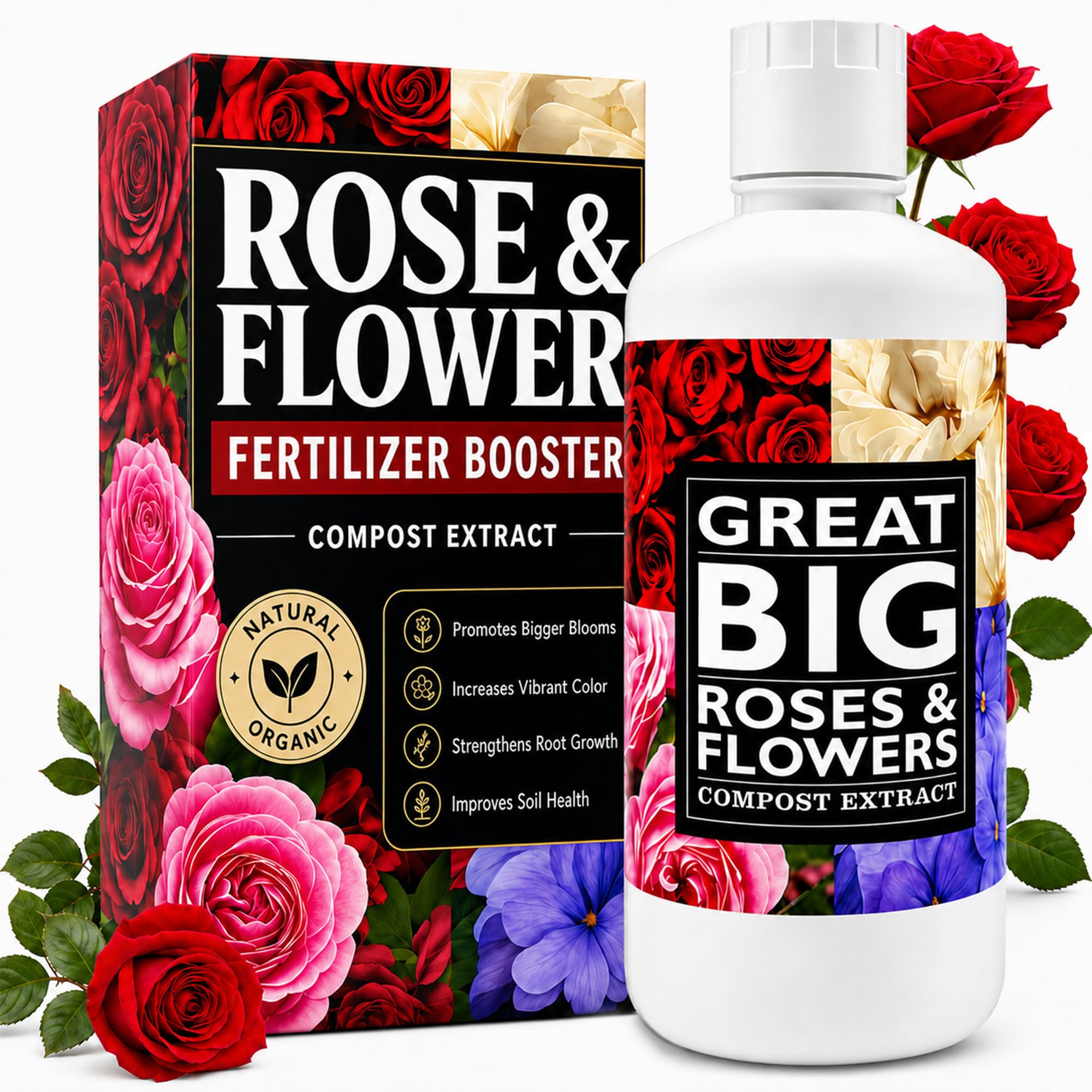
The Great Big Roses Booster is not a standard fertilizer — it is a soil activator that delivers 70 chelated trace minerals alongside humic acids and seaweed extract to unlock nutrients already present in the soil. Owners report previously stubborn rose bushes that had not bloomed in years producing large flowers within weeks of the first application. The formula works synergistically with existing organic fertilizers like fish emulsion and bone meal rather than replacing them, making it a powerful adjunct for any flowering garden.
With a mixing ratio of 4 ounces per gallon of water, each 32-ounce bottle yields eight full applications, which experienced users say covers a typical rose garden for an entire growing season. The proprietary compost extract component feeds beneficial soil microbes and improves cation exchange capacity, meaning your soil holds onto nutrients longer between waterings. This is particularly valuable for sandy or heavily leached soils where conventional liquid fertilizers wash out quickly.
The main drawback is the packaging — the wide-mouth jug makes precise measuring difficult, and the high per-bottle cost is noticeable at checkout. However, given that it multiplies the effectiveness of other fertilizers already in your shed, the overall value proposition is strong for dedicated flower gardeners who want to push their blooms from average to show-quality without switching entire feeding programs.
What works
- Revives non-blooming perennials in weeks
- 70 trace minerals feed both plant and soil biology
- Amplifies existing fertilizer programs
What doesn’t
- Wide jug opening leads to spillage during measuring
- Higher upfront cost compared to standalone fertilizers
2. Neptune’s Harvest Rose & Flowering Fertilizer (2-6-4)
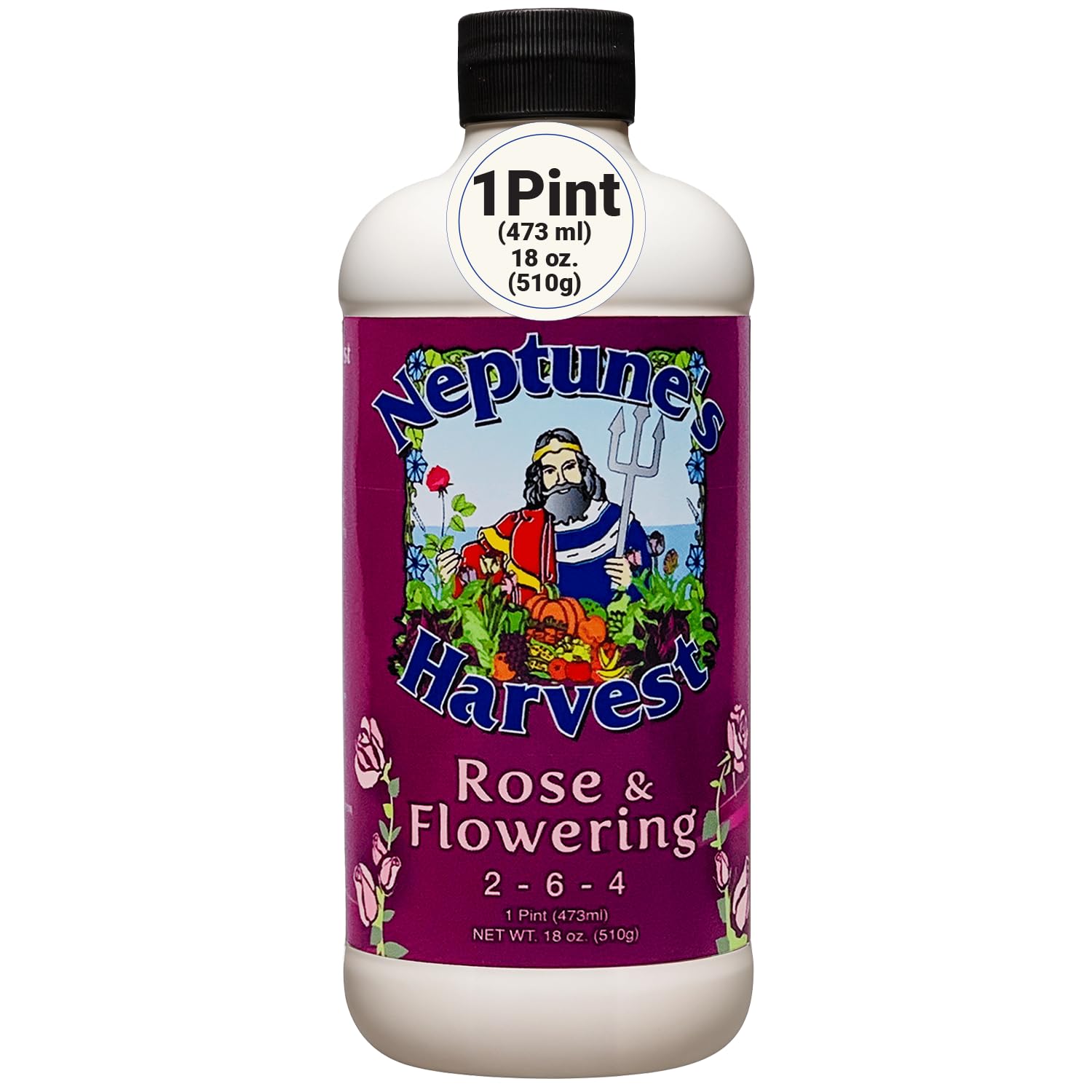
Neptune’s Harvest Rose & Flowering Fertilizer uses an NPK of 2-6-4, a ratio that prioritizes phosphorus for bud formation and potassium for stem strength while keeping nitrogen low enough to prevent excessive leaf growth. The base ingredients are fish, seaweed, molasses, humic acids, yucca extract, biological microbes, and liquid calcium — a complex blend designed for both soil drench and foliar application. Gardeners who switched to this formula from synthetic bloom boosters frequently report that the flowers appear denser and the color saturation deeper, especially on roses, zinnias, and echinacea.
The foliar feeding option is a standout feature. Applying the diluted solution directly to leaf surfaces allows the plant to absorb phosphorus and micronutrients through stomata, bypassing any soil deficiencies or pH lockout. The recommended mix is 1 ounce per gallon for outdoor flowers and just 1 tablespoon per gallon for houseplants, making the 18-ounce pint bottle last a full season of weekly feeding for a medium-sized container garden.
Several long-term users note the slight fishy aroma, though it dissipates within an hour after application and is far less pungent than straight fish emulsion. A small number of reviews mention that the bottle’s cap can leak if stored on its side, so upright storage in a cool shed or garage is recommended.
What works
- Foliar application delivers phosphorus directly to blooms
- Organic ingredients improve long-term soil microbiology
- Strong flower density and color reported by users
What doesn’t
- Mild fish odor noticeable during mixing
- Smaller bottle size requires more frequent repurchases for large beds
3. Dyna-Gro Foliage Pro 9-3-6 Liquid Fertilizer
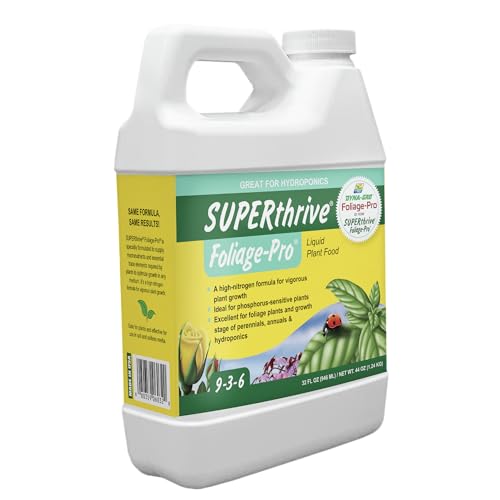
Dyna-Gro Foliage Pro carries a 9-3-6 NPK, which is nitrogen-forward and better suited for foliage development than bloom production. It earns a place on this list because dedicated gardeners rotate it during the vegetative stage of flowering plants — building strong stems and leaves before switching to a bloom-specific formula. The 3:1:2 ratio is optimal for tropical foliage, interior plantscapes, and greenhouse crops where vibrant leaf color is the primary goal.
Each 32-ounce quart requires only a small amount per gallon, and users consistently rave about how long a single bottle lasts. The solution is clear and odorless, making it ideal for indoor use where smell is a concern. It is fully compatible with hydroponic systems and soilless mixes, giving it versatility beyond traditional soil drenching. Professional growers often recommend it as the sole nutrient source for foliage plants that do not enter a heavy flowering cycle.
The main limitation for flower-focused gardeners is obvious: too much nitrogen during the bloom phase will suppress flowers and push green growth. If you are using this exclusively on blooming plants, pair it with a phosphorus supplement like Alaska Morbloom once buds begin forming.
What works
- Odorless and clear — perfect for indoor use
- Extremely concentrated; a small amount goes far
- Compatible with hydroponic and soil systems
What doesn’t
- High nitrogen ratio suppresses bloom formation
- Not suitable as a standalone flower fertilizer
4. Heirloom Roses Founder’s Fish Fertilizer
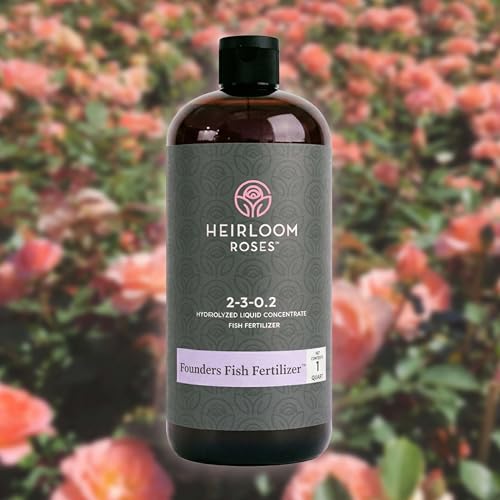
Heirloom Roses Founder’s Fish Fertilizer is a liquid emulsion derived from acidulated fish solubles stabilized with phosphoric acid, containing multiple fish species for broader soil mineralization. It is specifically formulated for rose and tomato plants, with a mixing ratio of 4 ounces per gallon of water — one gallon feeding two to three mature rose bushes. The organic matter feeds mycorrhizal fungi in the root zone, building the healthy soil bacteria that are essential for sustained nutrient uptake.
Customer feedback from zone 7a gardeners confirms that new own-root roses fed with this fertilizer bloomed prolifically in their first season, with many reporting continuous flowering through summer and into fall. The 32-ounce bottle lasts an entire season for a small rose bed of five plants, making it a long-lasting option despite the modest bottle size. The fertilizer is also safe around pets once dried into the soil, a major plus for gardeners with dogs that investigate flower beds.
The one unavoidable issue is the smell. Fish emulsion has a potent, lingering odor that is strongest during mixing and application. Users recommend applying at dusk or on overcast days when neighbors are indoors, and storing the bottle in a sealed garage or garden shed. The smell dissipates from soil within an hour but can be off-putting during the initial pour.
What works
- Excellent first-season bloom results on new roses
- Feeds soil mycorrhizae for long-term health
- Pet-safe once absorbed into soil
What doesn’t
- Strong fish odor during application
- Requires outdoor mixing and storage
5. Alaska Morbloom Concentrate 0-10-10
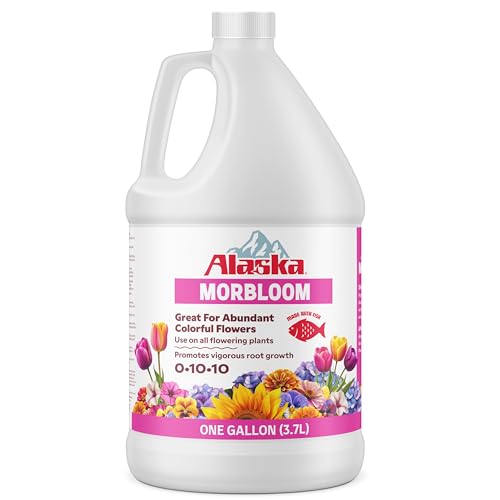
Alaska Morbloom 0-10-10 is a zero-nitrogen liquid concentrate designed explicitly for plants entering the flowering and fruiting stage. With no nitrogen to push foliage, every dose delivers phosphorus and potassium directly into bud development and root vigor. Long-term users rotate between Alaska Fish Fertilizer (5-1-1 during vegetative growth) and Morbloom once the days shorten and flower initiation begins, a two-phase feeding strategy that consistently produces abundant, colorful blooms.
The one-gallon size (128 fluid ounces) provides exceptional coverage for large flower beds, and the fish-based formula is organic-compatible. Users report that plants treated with Morbloom produce visibly larger flower clusters and stronger stems that do not flop over under the weight of heavy blooms. The concentration is potent, so careful dilution is required — applying too much can lower soil pH dramatically, which experienced growers account for by monitoring pH levels every two weeks during the feeding cycle.
Shipping complaints appear in the review history because the gallon jug is not always sealed tightly, leading to leaks in transit. Buyers should inspect the packaging upon delivery and transfer the concentrate to a more secure container if the original seal appears compromised. Once the liquid is properly stored, the product performs reliably season after season.
What works
- Zero nitrogen prevents unwanted leaf growth during bloom
- Large gallon size covers extensive flower beds
- Excellent for rotation with higher-nitrogen fish fertilizers
What doesn’t
- Strong fish smell typical of emulsion-based products
- Shipping leaks reported due to inadequate cap sealing
6. Miracle-Gro LiquaFeed Bloom Booster Flower Food

Miracle-Gro LiquaFeed Bloom Booster is a synthetic liquid fertilizer formulated specifically for flower growth, designed to work with the Miracle-Gro LiquaFeeder hose-end sprayer. The 4-pack delivers 64 total fluid ounces of concentrate, providing enough solution for dozens of applications across the growing season. Users who apply this formula two to three times per week consistently report fast visible results, with many saying their flowers bloomed more heavily and earlier than in previous years without the booster.
The hose-end feeder system eliminates measuring and mixing, which is the primary appeal for gardeners who value convenience over precise nutrient control. Simply attach the feeder to a garden hose, squeeze the trigger, and the concentrate automatically dilutes at the correct ratio as you water. This makes it especially suitable for large flower beds, hanging baskets, and mixed container gardens where feeding every plant individually with a watering can would be impractical.
Because this is a synthetic salt-based fertilizer, it provides immediate nutrient availability but does not build soil biology. Long-term exclusive use can lead to salt buildup in containers without periodic flushing. Additionally, the LiquaFeed system requires the proprietary feeder attachment, which is sold separately — factor that cost into your overall budget if you do not already own the device.
What works
- Hose-end feeder makes feeding fast and effortless
- Rapid visible results within days of application
- Multi-pack provides good seasonal coverage
What doesn’t
- Requires separately sold LiquaFeeder attachment
- Synthetic salt formula does not improve soil biology
7. The Grow Co Organic Fish Emulsion Fertilizer (2-3-1)

The Grow Co Organic Fish Emulsion Fertilizer offers a 2-3-1 NPK that leans moderately toward phosphorus, making it a decent all-rounder for flowering plants without being bloom-specific. The gallon jug (128 fluid ounces) provides 160+ gallons of mixed solution at the recommended 1:100 dilution ratio, making it one of the lowest per-gallon costs in this comparison. For gardeners with extensive flower beds or those who prefer a single fertilizer that works across flowers, vegetables, and fruits, this is a pragmatic entry-level choice.
This fish emulsion is 100% cold-pressed and hydrolyzed, retaining a full spectrum of amino acids and vitamins that synthetic processes strip away. Users with over 50 years of gardening experience note that while the consistency is thinner than some premium salmon-based emulsions, the product delivers vigorous growth and high yields when applied weekly with rainwater. The 2-3-1 ratio is gentle enough for frequent light applications without risking the nutrient burn associated with higher-concentration synthetics.
The odor is predictably fishy — the manufacturer explicitly states in the product description that if it does not smell, it is not real fish. This is not an indoor-friendly fertilizer. Some users also report that the thin consistency does not cling to the inside of measuring cups, making it harder to see if you have poured the correct amount. Still, for budget-conscious organic gardeners covering large areas, the coverage-to-cost ratio is hard to beat.
What works
- Very low cost per gallon of mixed solution
- Gentle NPK safe for frequent applications
- Sustainably sourced hydrolyzed fish retains amino acids
What doesn’t
- Strong fish smell limits indoor use
- Thin consistency makes measuring less precise
Hardware & Specs Guide
NPK Ratio and What It Actually Means
N-P-K stands for Nitrogen, Phosphorus, and Potassium. For flowering plants, you want the phosphorus number (the second digit) to be equal to or higher than the first. A 2-6-4 ratio delivers six parts phosphorus for every two of nitrogen, pushing energy into buds and roots rather than leaves. Ratios like 0-10-10 eliminate nitrogen entirely, which is useful only during the final bloom stretch when any extra nitrogen would delay flowering.
Concentration vs. Volume — Which Matters More
A 32-ounce bottle of concentrated 9-3-6 may produce more gallons of mixed solution than a 128-ounce bottle of 2-3-1 emulsion because concentration varies. Always check the mixing ratio stated on the label. A product labeled “1 ounce per gallon” will make 32 gallons from a quart, while a “4 ounces per gallon” product makes only 8 gallons from the same size. Compute total coverage, not just bottle volume, when comparing value across brands.
FAQ
Can I use a high-nitrogen lawn fertilizer on my flower beds?
How often should I apply liquid flower fertilizer during the growing season?
Is fish emulsion safe for vegetable plants if I use it on flowers nearby?
Final Thoughts: The Verdict
For most gardeners, the liquid fertilizer for flowers winner is the Great Big Roses and Flowers Booster because it unlocks existing soil nutrients with 70 trace minerals and humic acids, producing visible results on stubborn perennials within weeks. If you want a dedicated organic bloom formula, grab the Neptune’s Harvest 2-6-4 for its foliar feeding capability and balanced NPK. And for large-area, budget-conscious feeding, nothing beats the coverage of The Grow Co Fish Emulsion gallon jug.