
Compacted soil chokes grass roots by blocking air, water, and fertilizer, turning a lush lawn into a patchy, hardpan mess. The fix isn’t spike shoes or liquid gimmicks — it’s pulling actual plugs of soil from the ground, which is exactly what a purpose-built coring tool does.
I’m Rikta — the founder and writer behind Lawn Gear Lab. I’ve spent years analyzing owner feedback on hundreds of aerators, cross-referencing tine materials, plug depth claims, and frame durability reports to separate tools that actually extract cores from those that just poke holes.
This guide breaks down seven of the strongest manual and tow-behind models on the market today, so you can confidently choose the best lawn aerator for your specific yard size, soil type, and budget.
How To Choose The Best Lawn Aerator
Selecting the right aerator comes down to three factors: the type of tine (hollow core vs. solid spike), the depth of penetration, and the physical effort or machine required to operate it. A spike aerator pushes soil aside, which can further compact the edges of the hole — a hollow core aerator physically removes a plug, creating true space for root expansion.
Hollow Tines vs. Solid Spikes
Hollow tines extract a 0.5-inch diameter core of soil, relieving compaction at the root level. Solid spikes merely puncture the surface, which can increase compaction in heavy clay. For any lawn with visible thatch, poor drainage, or heavy foot traffic, a coring aerator with hollow steel tines is the only effective fix.
Plug Depth and Tine Count
Look for tines that penetrate at least 2.5 to 3 inches deep, matching the typical root zone of cool-season grasses. Tools with 3 or 4 tines strike the right balance between core removal per step and manageable resistance. Tow-behind units with 10 to 11 tine stars cover larger areas faster but sacrifice depth control on uneven terrain.
Construction and Weight Capacity
Manual aerators rely on your body weight for penetration — a 5.5 to 6-pound steel frame with a wide foot bar provides the necessary leverage. Tow-behind units need a weight tray (110–150 lb capacity) to achieve full spike depth in compacted clay. Stainless steel or galvanized tines resist rust and maintain sharpness longer than bare steel.
Quick Comparison
On smaller screens, swipe sideways to see the full table.
| Model | Category | Best For | Key Spec | Amazon |
|---|---|---|---|---|
| Landzie Original | Manual Corer | Clog-free performance in medium yards | 3 stainless steel hollow tines, 42″ | Amazon |
| Xuperace Patented | Side-Eject Corer | Stubborn clay soil without clogging | 3 replaceable hollow tines, side-port | Amazon |
| Brinly SAT2-40BH-P | Tow Spike | Large lawns needing heavy penetration | 11 tine stars, 150-lb weight tray | Amazon |
| Suchtale 40-Inch | Tow Spike | Budget tow-behind with weight tray | 10 spike stars, 110-lb weight tray | Amazon |
| Senvert Rolling | Push Roller | Small to medium yards, quick passes | Drum weight up to 55 lbs, spiral spikes | Amazon |
| Dolibest with Tray | Manual Corer | Clean operation with core collection | 4 SUS 304 tines, integrated storage tray | Amazon |
| Dolibest 4-Corer | Manual Corer | Entry-level coring on a budget | 4 stainless steel tines, rubber grip | Amazon |
In‑Depth Reviews
1. Landzie Original Hollow Tine Aerator
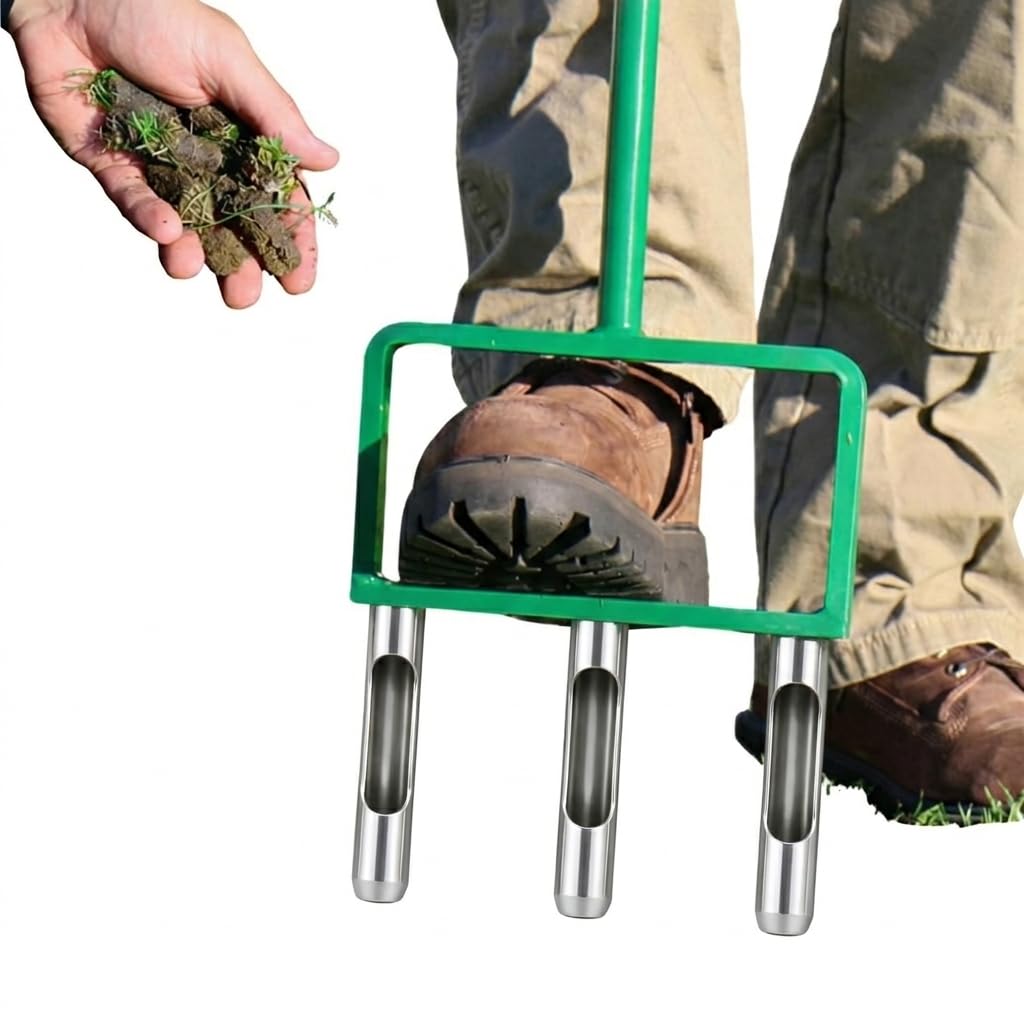
The Landzie Original is the benchmark for what a manual core aerator should be: a 42-inch, 5.6-pound frame with three stainless steel hollow tines that arrive pre-assembled and ready to pull plugs. Beveled tines push old material up and out with each press, eliminating the clogging frustration that plagues cheaper knock-offs. Owners consistently report using this on 3/4-acre lawns, tightening the tine bolts every hour or two, and never stopping to clear jammed cores.
Construction quality stands out immediately — heavy-gauge steel with a powder-coat finish that resists rust, and tines that are easily removable for cleaning or replacement. The lack of assembly means you step it into moist ground right out of the box, and the 3-tine design provides enough core extraction per step without excessive resistance. Users note it works best after a rain when soil is damp but not saturated, with a 25×25-foot section taking under an hour.
The physical effort is real — owners describe it as “lawn care cross-fit” and suggest renting a machine if your yard exceeds 2,000 square feet of heavily compacted clay. But for anyone who wants a lifetime-grade tool that actually replaces hired aeration, the Landzie delivers unmatched reliability.
What works
- Genuinely clog-free beveled tine design
- Ready to use out of the box with zero assembly
- Replaceable stainless steel tines extend tool lifespan
What doesn’t
- Very physically demanding on large or hard yards
- Tine bolts need periodic tightening during use
2. Xuperace Patented Core Aerator
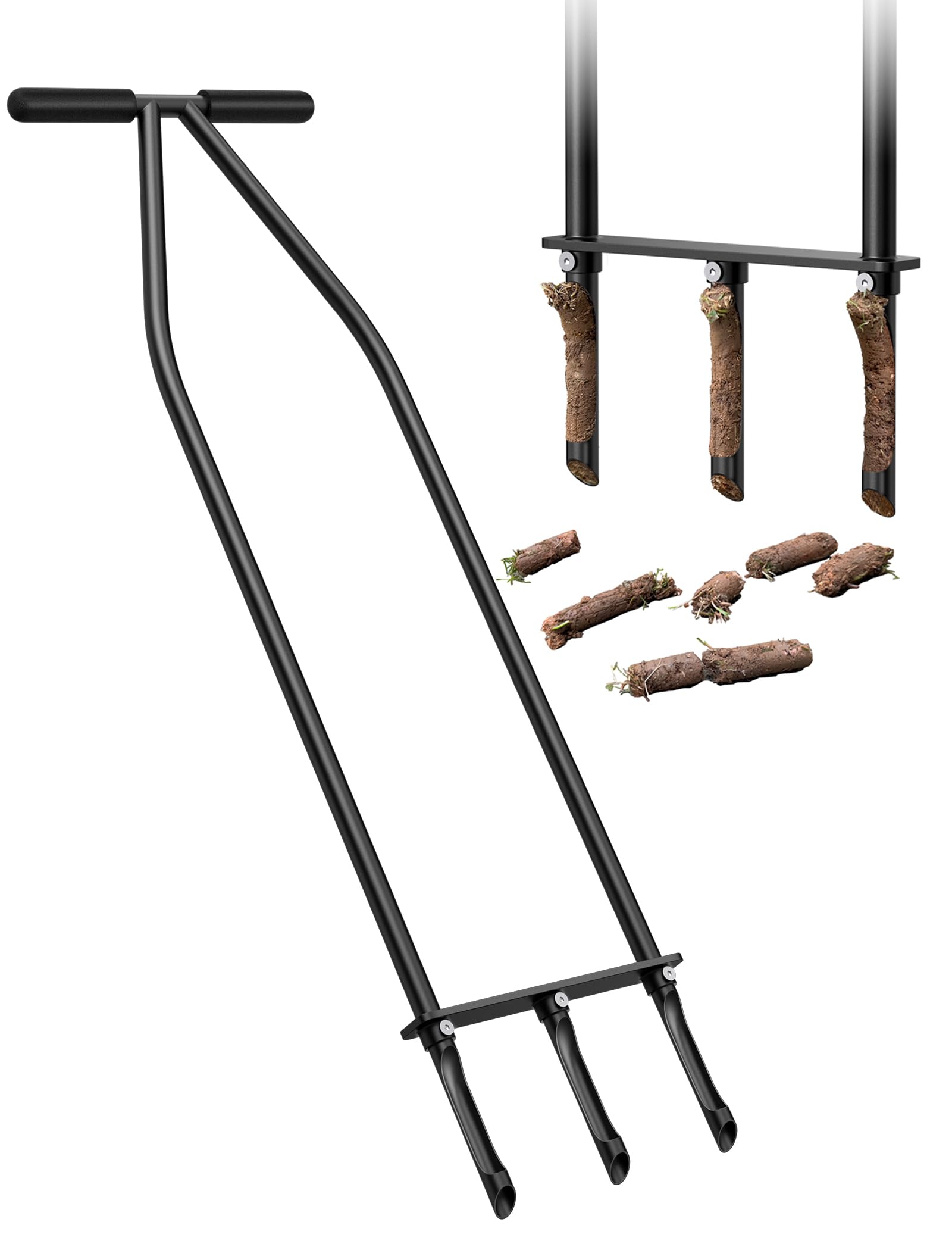
Xuperace tackles the single biggest headache of manual coring — clogged tines — with a patented side-eject design that routes soil plugs out through a ramp rather than forcing them up a vertical tube. After thousands of tests, the final tine shape and port geometry allow cores to slide out cleanly even in wet clay. The frame is built from high-strength alloy steel with a two-bar handle that owners confirm is stronger than single-bar stainless competitors.
At 5.74 pounds with a 42-inch overall length, the tool feels solid but not unwieldy. The foot plate design lets you drive the tines without your knee contacting the frame, which reduces strain during extended use. Three replaceable hollow tines attach with screws, and the package includes thread locker plus two extra bottles for maintenance. Reviewers specifically praise performance on compacted clay, noting 3- to 4-inch plug pulls.
The only real trade-off is the premium price — it sits above most manual corers in cost. Owners also note the tine screws can loosen after the first use, so keeping the included Allen wrench handy is mandatory. If you prioritize non-stop core extraction over upfront savings, this is the most technically refined manual corer available.
What works
- Side-eject port eliminates tine clogging completely
- Ergonomic footplate reduces knee interference
- Replaceable tines with included thread locker
What doesn’t
- Higher price than most manual corers
- Tine screws require frequent re-tightening
3. Brinly SAT2-40BH-P Tow Behind Spike Aerator

The Brinly SAT2-40BH-P is engineered for owners with 1+ acres who need machine-driven aeration without renting. It uses 11 tine stars at 8-inch diameters, each with 12 spike tips that penetrate up to 2 inches deep. The patent-pending 3-D galvanized steel tines are twice as thick as standard flat spikes, resisting bending even when the weight tray is loaded with 150 pounds of cinder blocks. The double tow bar and 5/8-inch solid steel axle handle the extra weight without frame flex.
Owners report that this unit transformed hard clay into plantable soil in a single season, with the spike pattern allowing water, seed, and nutrients to reach roots effectively. The single-lever transport wheels make it easy to cross driveways and sidewalks without gouging asphalt, a practical feature that cheaper tow-behinds lack. Assembly takes moderate effort — the tines are extremely sharp, and heavy-duty gloves are mandatory.
The main complaint is wheel nut retention; the standard hex lock nuts can loosen during use, and some owners remove the transport wheels entirely for continuous operation. The instruction manual also has gaps in shaft assembly details. But for pure penetration force and coverage speed on large lawns, the Brinly stands as the toughest spike aerator in its class.
What works
- 3-D galvanized tines resist bending in compacted soil
- 150-lb weight tray for maximum spike depth
- Transport wheels protect hard surfaces
What doesn’t
- Transport wheel nuts can loosen during operation
- Assembly instructions lack detail on shaft alignment
4. Suchtale 40-Inch Tow Behind Spike Aerator

Suchtale brings a 40-inch tow-behind option to the mid-range market with 10 star-shaped spike tines, each featuring 10 uneven tips for better soil disruption than flat spikes. The reinforced 6-millimeter-thick handle (versus the standard 4 mm) and channel-shape tow bar reduce bending, while the 110-pound weight tray accepts standard cinder blocks for extra penetration. The nylon spacers between each star prevent metal-on-metal wear during rotation.
Owners confirm the unit works well behind a riding mower or ATV, especially with 2–3 concrete blocks adding mass. The pin-style hitch makes attachment quick. Assembly is straightforward with a detailed manual, and the powder-coat finish has proven durable against rust. Many users report results comparable to professional lawn services at a fraction of the cost.
The biggest reliability concern is the connecting arms — some owners report bending after just a few minutes of use on rocky ground. The spikes themselves can also bend when hitting buried rocks. This unit works best on lawns that have already been cleared of debris, and the manufacturer recommends avoiding reverse operation entirely. For light-to-moderate compaction on maintained lawns, it delivers excellent value.
What works
- Reinforced handle and tow bar resist flex
- 110-lb weight tray fits standard cinder blocks
- Quick pin-style hitch for easy attachment
What doesn’t
- Connecting arms can bend on rocky terrain
- Spikes vulnerable to damage from buried rocks
5. Senvert Rolling Lawn Aerator
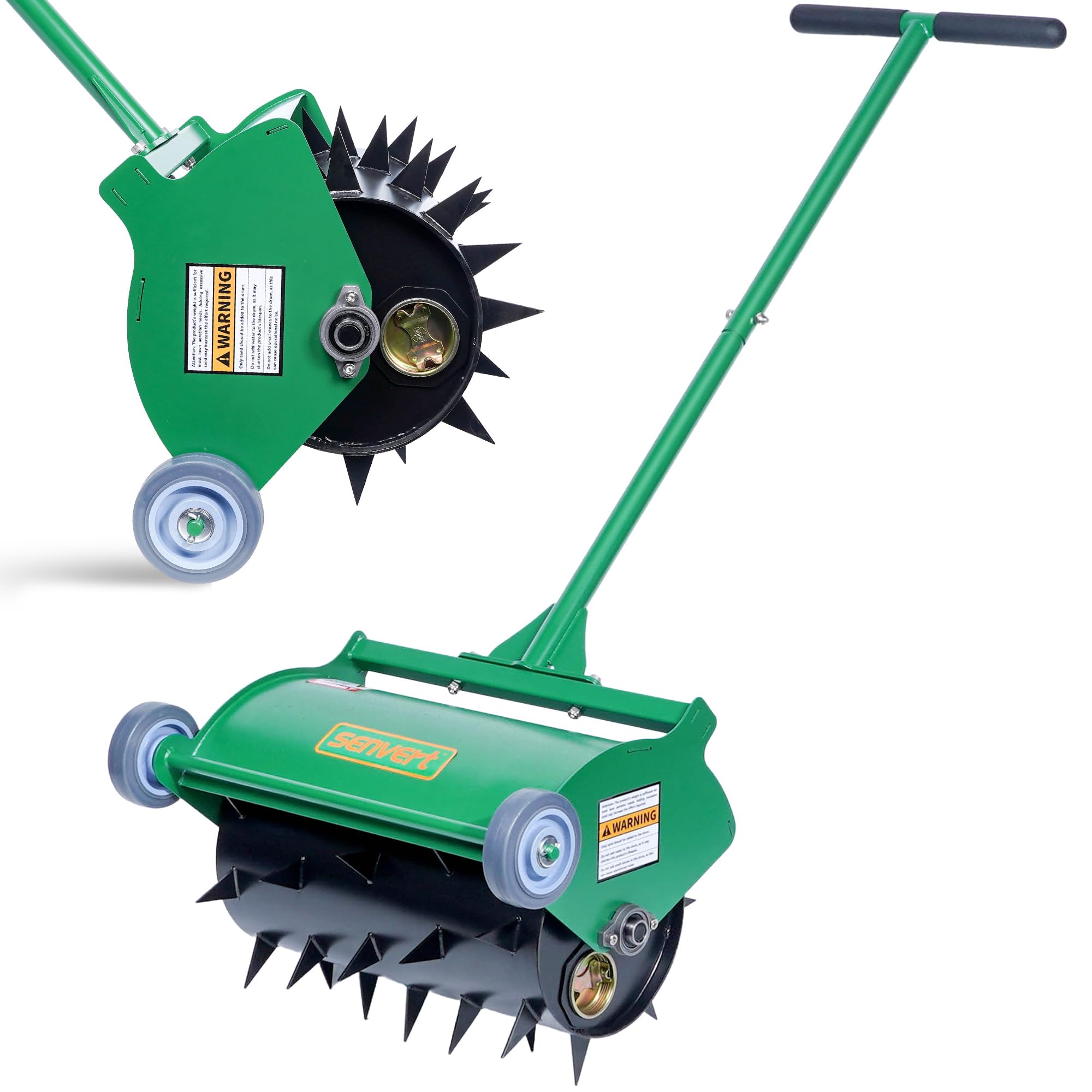
The Senvert rolling aerator takes a different approach from step-style corers, using a spiral-spiked drum that you push across the lawn like a mower. At 32 pounds empty, it provides decent initial penetration, and you can fill the drum through a covered opening with sand or stones to reach 55 pounds — the manufacturer specifically warns against adding water. A pair of auxiliary TPR wheels lift the spikes off the ground for transport across driveways and patios.
Owners praise the ease of assembly (the main body comes pre-built, you just attach the handle) and the smooth rolling action on soft grass. Users with dog-damaged lawns report it revitalized bare patches by allowing seed to make direct soil contact. The spiral tread pattern makes directional control easier than straight-spike rollers, and the noise level is low compared to metal drum designs.
The main limitation is penetration depth on clay or dry, hard-packed soil — the spikes can only manage 1 to 1.5 inches even with added weight. Owners of firmer lawns report needing to rock the drum back and forth to get full engagement. For sandy loam and established turf, this is a fast, low-effort maintenance aerator, but it won’t replace a coring tool for severe compaction.
What works
- Fast rolling coverage for small to medium yards
- Quiet TPR transport wheels protect surfaces
- Weight-adjustable drum for varied soil
What doesn’t
- Limited spike depth on clay and hard soil
- Added weight makes pushing difficult uphill
6. Dolibest Lawn Coring Aerator with Storage Tray
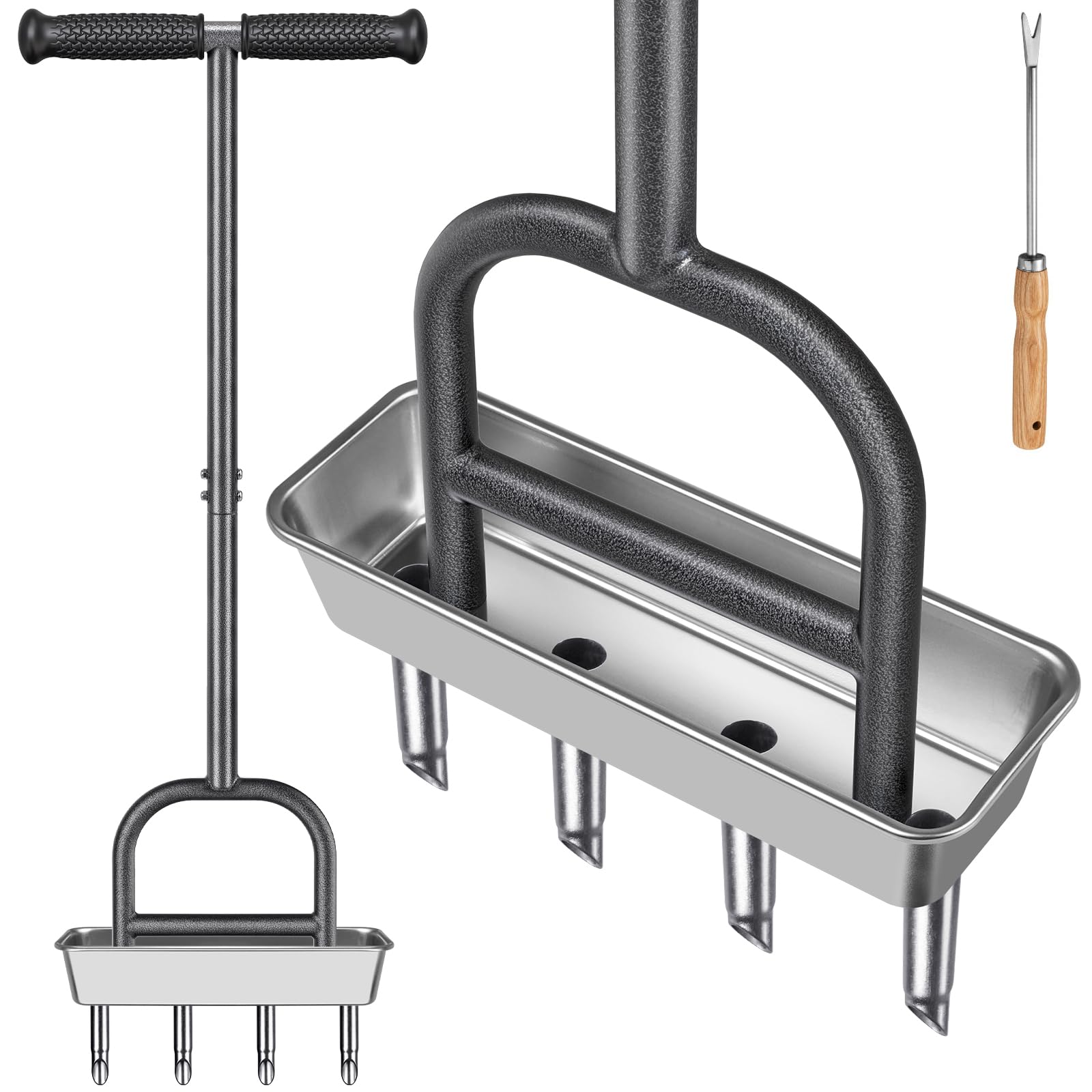
The Dolibest aerator with storage tray solves a problem most manual corers ignore: what to do with the soil cores after you pull them. An integrated SUS 304 stainless steel tray automatically collects ejected plugs, so you don’t have to rake cores off the lawn afterward. The 4-tine head uses the same stainless steel construction, and the elevated crossbar prevents your shoes from interfering with plug ejection.
At 2.81 kilograms (about 6.2 pounds), the tool feels substantial but still easy to carry. The three-part assembly takes about two minutes — lock the center pole with screws, tighten the handle, and fasten the bottom assembly. Owners consistently note this is half the price of identical-looking models at big-box stores, and the core depth of approximately 2.5 to 3 inches matches standard aeration requirements.
Some users report the probes could be sharper for cutting into dense soils, and the tray adds width that can make storage slightly bulkier. The plastic components in the locking mechanism raise durability questions over years of heavy use. For small to medium yards where clean core removal is a priority, this is the most thoughtful manual corer available.
What works
- Integrated tray stores plugs for easy disposal
- SUS 304 stainless steel resists rust
- Quick 2-minute assembly
What doesn’t
- Probes lack sharpness for dense clay
- Tray adds bulk for storage
7. Dolibest 4-Corer Manual Aerator
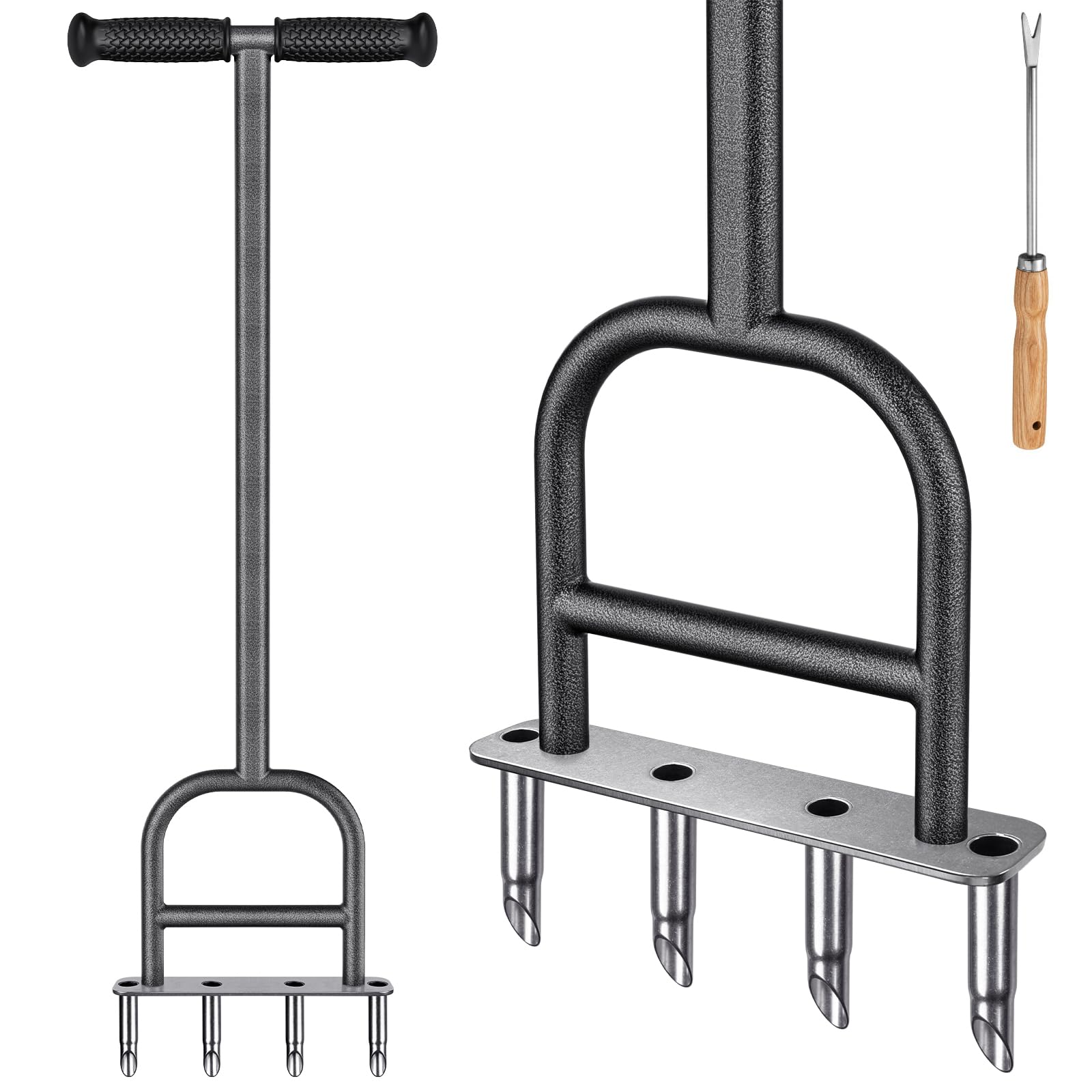
The 4-Corer from Dolibest is the entry-level champion for homeowners who want hollow-tine coring without spending on premium brands. Each of the four tines is 3.5 inches long with a 0.5-inch diameter, creating deep narrow plugs that minimize surface disruption. The all-steel construction with a black powder-coated finish and stainless steel bottom means rust isn’t a concern even after wet-season storage.
At 5.54 pounds, the tool is light enough for extended sessions, and the soft rubber grip prevents hand fatigue. The foot bar is elevated to keep shoes clear of the core ejection path, and a 12-inch weeding hand tool is included for cleaning the tines or transplanting seedlings. Owners confirm the spacing works well for small to medium projects, with plugs feeding cleanly out the top when soil moisture is correct.
The critical catch is that the aerator only reaches about 2 inches of effective depth in practice, not the full 3.5-inch tine length. Users must rock the tool side to side to achieve deeper penetration, and the rounded footstep lacks the leverage of flat-stepped competitors. Soil must be moist but not wet — overly saturated soil causes frequent clogging. For budget-focused buyers with small lawns, this tool gets the job done with patience.
What works
- Light 5.5-lb weight reduces fatigue
- Stainless tines resist rust and bending
- Includes weeding tool for cleaning and gardening
What doesn’t
- Effective depth only ~2 inches despite 3.5″ tines
- Rounded foot bar lacks leverage for hard soil
Hardware & Specs Guide
Tine Material and Resilience
Stainless steel (SUS 304 grade) offers the best corrosion resistance and maintains sharpness over years of use. Galvanized steel provides excellent rust protection at a lower cost but may dull faster on rocky soils. Plain powder-coated steel is the most affordable option but will chip and rust eventually — inspect the coating for gaps near welded joints.
Foot Bar and Leverage Geometry
Flat, wide foot bars distribute force evenly and let you drive tines deeper with less effort. Rounded or narrow bars concentrate pressure on a small area of your boot, reducing mechanical advantage and causing fatigue. Look for a minimum 2-inch wide stepping surface, preferably with a textured grip pattern for wet-weather safety.
Weight Tray Capacity in Tow Units
A weight tray is essential for spike aerators on compacted soil — 110 pounds is the minimum effective load for standard clay, while 150 pounds allows full tine penetration even on dry ground. Ensure the tray is constructed from welded steel rather than thin sheet metal, which can deform under block weight.
Hitch Compatibility and Turning Radius
Pin-style hitches (standard 1-7/8-inch or 2-inch) attach quickly but limit reverse operation. Units with solid axles and nylon spacers between tine stars offer smoother rotation around turns compared to designs with plain steel-on-steel contact, which wears faster and creates drag.
FAQ
Can I use a spike aerator instead of a core aerator?
How deep should a lawn aerator plug be?
How many tines should a manual aerator have?
Should I water the lawn before aerating?
How often should I replace aerator tines?
Final Thoughts: The Verdict
For most gardeners, the best lawn aerator winner is the Landzie Original because it delivers genuine clog-free core pulling without assembly, backed by stainless steel tines that can be replaced individually when they wear. If you need a solution that never stops to unclog even in wet clay, grab the Xuperace Patented Core Aerator — its side-eject port is the most refined coring mechanism on the market. And for large lawns where manual aeration isn’t feasible, the Brinly SAT2-40BH-P with its 150-pound weight tray and 3-D tines offers the best penetration force per dollar.