
Specs are compiled from manufacturer listings and verified buyer reviews and can change over time — please confirm the key details on the product page before buying.
Stop mulched beds from washing into your lawn and keep invasive grass roots out with a border that actually stands tall enough. The trouble is that “tall” on the box is often not what you get once the edging is buried and anchored. The four picks here all sit at least 4 inches above grade (the level of the soil surface) after installation, which is the real cutoff for holding back a deep bed of mulch or blocking creeping Bermuda grass roots.
I’m Rikta — the founder and writer behind Lawn Gear Lab. This guide is built by comparing the manufacturers’ published specifications and the patterns across verified customer reviews, so you get each pick’s real strengths and trade-offs instead of marketing spin.
There is a running theme in owner reports: the most-regretted edging purchases come from underestimating how much exposed height you actually need. That is exactly where this guide on the best landscape edging tall separates the lasting solutions from the ones that get buried and forgotten.
Our Picks at a Glance
How To Choose The Best Landscape Edging Tall
Tall landscape edging lives or dies on three things: how much of it stays above ground after installation, whether the material can handle your soil type and sun exposure, and how much work you are willing to do to get it in place. Here is what to look for.
Exposed Height Is the Only Height That Matters
Almost every edging coil or panel has a total height measurement printed on the box. But you bury the bottom inch or two to anchor it, so the real working height — what you actually see above the soil — is always less. For mulch retention, you want at least 4 inches of exposed wall. For aggressive rhizome grasses like Bermuda, buyers report needing closer to 6 or 8 inches to block root spread.
Material Dictates the Installation
HDPE plastic coils (the most common option) are lightweight and flexible, which makes them great for curves but prone to warping if the ground freezes. Galvanized steel is stiffer and will not degrade under UV (ultraviolet sunlight), but you need metal snips to cut it and gloves to handle the edges. Polyrock-style resin blocks fall in between — they mimic stone visually but rely on a peg-and-spike connection system that requires careful alignment.
Stake Quantity and Quality Reveal the True Cost
The number of included stakes is frequently the top negative mention across tall edging products. Many rolls arrive with just enough stakes for a straight run, leaving you short on curves where you need spacing every 2 to 3 feet. Check the stake material too — thin plastic stakes snap under a hammer, while nylon or metal spikes hold up to repeated blows. Buying extra stakes ahead of installation saves a mid-project trip to the hardware store.
Quick Comparison
| Model | Best For | Exposed Height | Material | Length / Coverage | Amazon |
|---|---|---|---|---|---|
| Beuta Polyrock Blocks★ Best Overall | Aesthetic, stone-like borders | 6.5 in | Resin | 48 in per block | Amazon |
| Master Mark Terrace Board | Long, straight runs at low cost | 4 in | HDPE plastic | 40 ft coil | Amazon |
| GTSABWAY Corrugated Steel | Deep root-barrier and curves | 12 in | Galvanized steel | 20 ft panel | Amazon |
| shsyue HDPE Coil | Budget-friendly no-dig layout | 4 in | HDPE plastic | 66 ft coil | Amazon |
In‑Depth Reviews
1. Beuta Landscape Edging Polyrock Blocks
Our pick — over 4.5★ from 500+ verified ratings; the strongest balance of quality and price.
The faux-stone block that keeps six inches of mulch pinned in place
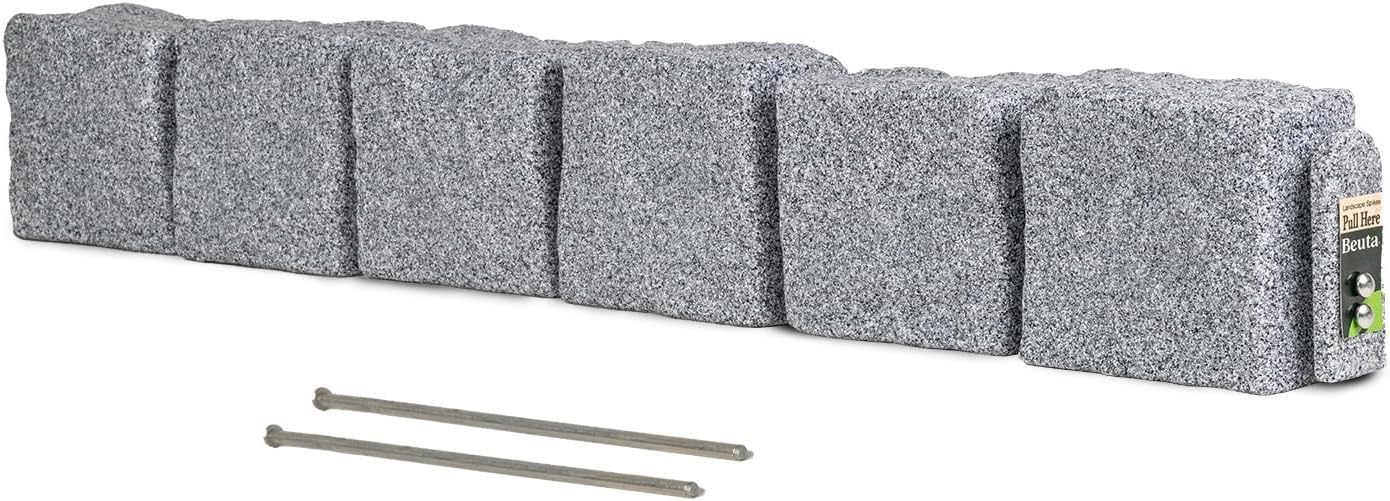
This is the only pick on the list that gives you a full 6.5 inches of exposed height right from the start — no calculation needed for how much gets buried. That means it holds back mulch and gravel without needing extra depth. Each block section is 48 inches long and 4 inches wide, made from resin (a durable molded plastic) that resists rust, fade, and corrosion. Owners mention that the “6.5 height keeps mulch in” even after heavy rain, so your bed borders stay intact through storms.
The patent-pending connection system uses five different block types (Start, Stop, Turn Right, Turn Left, Extender) so you can build curves and corners without cutting anything. At 10.7 pounds per section, this is a notably heavy product — it is 73% heavier than the Master Mark coil below, which gives it a planted feel once the spikes are driven in. The trade-off is that those spikes and the starter/finishing blocks are sold separately, a detail some owners initially missed. The greystone finish gets consistent praise for looking like real stone from a short distance, giving a premium garden aesthetic without the weight of actual rock.
Real-world verdict: The top-rated product in this roundup for a reason — the exposed height, the block system, and the stone-like appearance combine into a border that looks installed by a professional and stays put through seasons of weather.
Reach for this if: you want a tall, finished-looking edge around flower beds or tree rings and you do not mind paying for the extra stakes upfront.
Think twice if: you are edging a very long, straight run where a coil would cost less per foot and install faster.
2. Master Mark Terrace Board Landscape Edging Coil

The budget coil that bends without breaking
This 40-foot coil from Master Mark is the perennial crowd-pleaser in the tall edging category. It is made from HDPE plastic (high-density polyethylene, a tough, flexible plastic) with a textured wood-grain finish that owners say looks convincingly like real timber once it is installed. At 4 inches tall, it is the floor of what counts as “tall” edging — but buyers confirm that after partial burial it still holds enough above-ground height to contain mulch and separate grass beds effectively.
The real story here is the material thickness. Owners note that the edging is “5/32″ thick (not advertised)” and provides real rigidity once it warms in the sun for about 20 minutes, at which point it becomes flexible enough to bend into smooth curves without kinking. The flexibility score is mixed across reviews — some find it hard to keep a perfectly straight line, while others love how it conforms to undulating ground. The included 10 stakes are widely considered insufficient for a full 40-foot run, especially on curves where you need one every 2 to 3 feet. Plan to buy extra stakes if you are installing anything other than a dead-straight border. A small number of customers note color variation between different production rolls, so order all you need at once if the shade match matters to you.
The cost-per-foot leader: at a fraction of the price of steel or resin blocks per linear foot, this is the sensible choice for long perimeter borders where appearance matters but budget matters more.
Best for: large-scale straight or gently curved edging projects where you need maximum coverage for the money.
Who should pass: anyone needing a rigid, ruler-straight line — this plastic has natural flex that can look wavy if you do not stake it aggressively.
3. GTSABWAY Corrugated Galvanized Steel Edging
The steel wall that stops Bermuda grass in its tracks
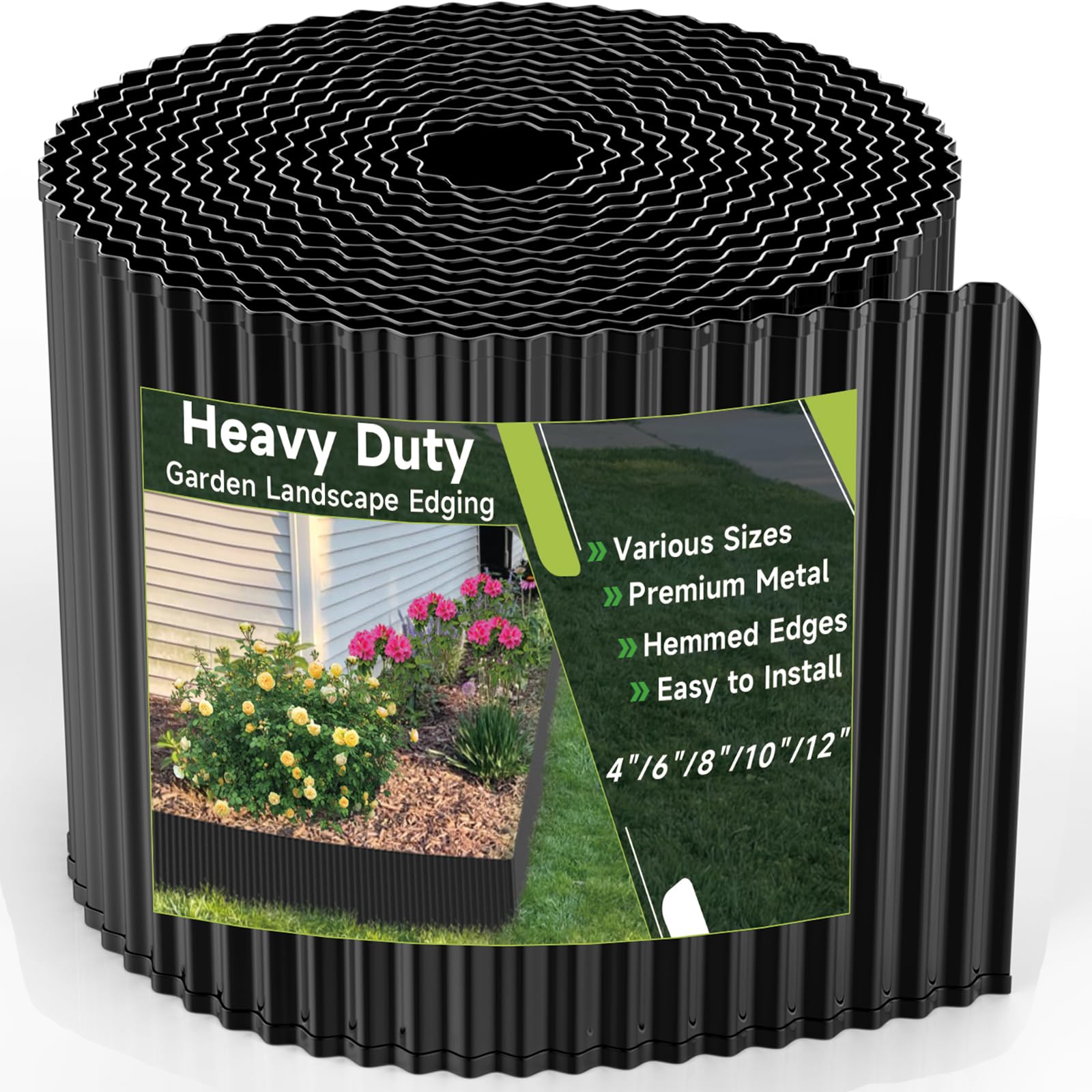
At 12 inches tall, this galvanized steel panel gives you more than double the exposed height of any other pick here — it stops aggressive weed roots that plastic cannot handle. It is 12 inches by 20 feet of corrugated metal with rounded R-shaped top and bottom edges, so while you still want gloves during installation, there are no razor-sharp raw edges to worry about once it is in the ground. Reviewers point out that burying 4 inches and leaving 8 inches exposed creates an effective barrier against aggressive Bermuda grass roots — something plastic edging simply cannot match. Unlike the flimsier shsyue HDPE coil, this steel panel will not warp or wave in heat.
The installation method is different from the plastic coils: you wet the soil, then either push the steel in by hand or tap it with a rubber mallet. For harder ground you dig a narrow trench, place the panel, and backfill. The corrugated profile gives the steel inherent stiffness while still allowing it to bend into curves and circles without cracking. At 4.13 kg (about 9.1 lb), the panel is heavier than the HDPE coils but much lighter than the resin blocks per foot. The honest warning from buyers is that the finish can look more weathered than the product photos suggest — this is not a polished architectural metal, it is functional galvanized steel that will develop a patina over time. Occasional units arrive with the protective coating already looking aged, which some owners love and others find surprising.
The heavy lifter: if your goal is stopping deep-rooted weeds or creating a permanent, corrosion-resistant border that will not warp in the sun, this steel panel outperforms every plastic option here.
Choose this for: serious root barriers, slope retention, or any spot where 4 inches of plastic just will not cut it.
Pass on this if: you want a decorative, finished-looking edge — the galvanized utilitarian look is not for everyone, and the weathered finish can be inconsistent.
4. shsyue Garden Edging Border 66FT Coil
The no-dig coil that wraps around trees on sloping ground
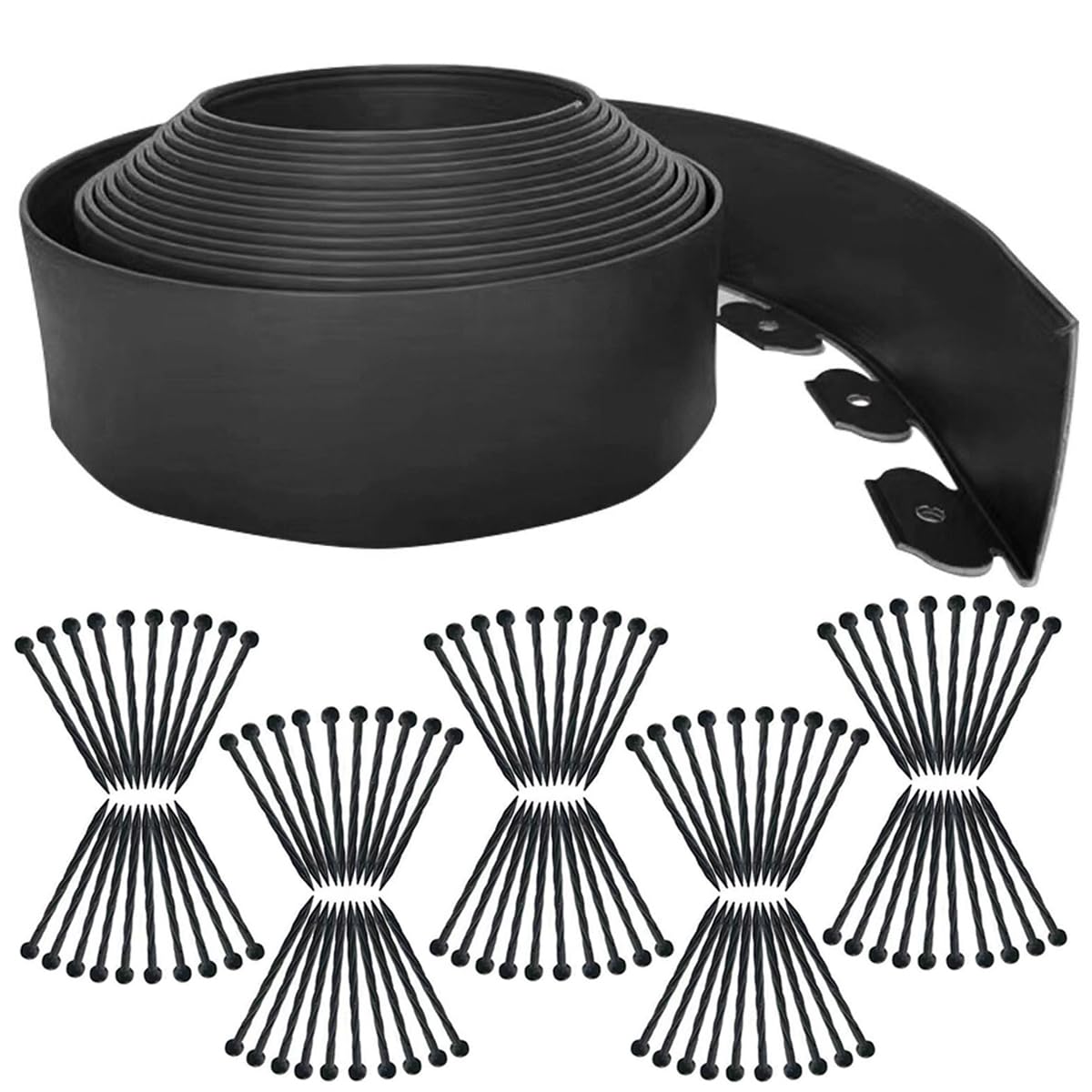
This 66-foot coil of HDPE plastic is the longest single run in the roundup, giving you enough material to encircle a good-sized yard in one purchase. It stands 4 inches tall and comes with 100 spiral nylon stakes, which is the most generous stake count of any product here by a wide margin — you will not run short on curves, unlike with the Master Mark coil which includes only 10. The manufacturer specifically calls out suitability for uneven and sloping ground — a detail that matters if your yard has grade changes that make rigid panels or blocks difficult to align.
The installation is genuinely no-dig: you unroll the strip, shape it by hand, and hammer the spiral stakes through the plastic into the soil. The material is soft enough to cut with scissors or shears for custom lengths. The recurring honest note from owners is that the plastic stakes themselves are the weak link — several shoppers say that “two broke as I was hammering them into the ground,” and a common workaround is pre-drilling holes with a metal stake before driving the plastic ones. At 100 stakes included, a few breakages are manageable, but it is worth knowing going in. The material itself gets mixed feedback on quality and durability, with some describing it as a sturdy, weather-resistant border and others calling it thin plastic. For the price per linear foot, this is the budget runner — it works well for containing mulch around trees and softening bed edges, but it is not the product for a pristine, straight-as-an-arrow border.
Best price-per-foot: the 66-foot length and included 100 stakes make this the most coverage you get in one box, ideal for large curves, tree rings, and meandering borders where perfection is not the goal.
Grab this if: you have a lot of ground to cover on a budget and prefer a no-dig, lay-it-out-and-stake-it installation.
Look elsewhere if: you need a rigid, straight line or a premium appearance — the plastic’s flexibility works against it on straight runs, and the material quality feels entry-level.
Understanding the Specs
Exposed Height vs Total Height
Every edging product lists a total height on the packaging. But you bury the bottom 1 to 2 inches to anchor it against frost heave (the lifting that happens when frozen ground expands) and physical bumps. The usable, above-ground “tall” measurement is always lower. For mulch containment, aim for 4 inches of exposed height. For blocking deep-rooted weeds like Bermuda grass, you want at least 6 to 8 inches above soil.
HDPE vs Galvanized Steel vs Resin
HDPE plastic coils are lightweight, flexible, and cheapest per foot. They soften in direct sun, which helps them bend into curves, but they can warp or wavy-line over time in extreme heat. Galvanized steel is rigid, corrosion-resistant, and stops roots cold — but it requires metal snips to cut and gloves to handle. Resin block systems like the Beuta mimic natural stone and hold their shape indefinitely, but they are the heaviest and most expensive option per linear foot.
FAQ
How tall should landscape edging be to contain mulch?
Will 4-inch tall edging stop Bermuda grass?
Can I install landscape edging without digging a trench?
How many stakes do I actually need for a 40-foot run?
Will plastic landscape edging crack in freezing weather?
Can I cut galvanized steel edging to a custom length?
Is stone-look resin edging worth the extra cost over plain plastic?
How do I keep plastic edging from looking wavy on a straight line?
Can I use tall edging on a slope?
What is the longest single length of tall edging I can buy?
Final Thoughts: The Verdict
Across the board, the landscape edging tall winner is the Beuta Polyrock Blocks because 6.5 inches of exposed height, a stone-like finish, and a simple to use connection system deliver the best combination of looks and function. If you need maximum coverage for the money on a straight run, grab the Master Mark Terrace Board. And for stopping deep-rooted weeds with a permanent steel barrier, the GTSABWAY Corrugated Steel Edging is the one to reach for.
How We Picked
We do not accept paid placement. Every pick is matched to a real buyer and a real use-case; we do not hands-on test units.
Sources & Methodology
Specifications: manufacturer listings and product documentation. Review insights: verified customer reviews, as of July 2026. Pricing: not shown on this page (it changes often); check the current price via the retailer link.
As an Amazon Associate, Lawn Gear Lab earns from qualifying purchases. This does not affect which products we feature.