
Lace bugs turn vibrant leaves into pale, stippled ghosts. These sap-sucking pests feed on the undersides of foliage, leaving behind a telltale speckled pattern that weakens shrubs, ornamentals, and shade trees. Finding the right chemical defense that eradicates both nymphs and adults without harming your plants is the difference between a thriving landscape and one that looks like it has been through a drought.
I’m Rikta — the co-founder and writer behind Lawn Gear Lab. I’ve spent hours cross-referencing active ingredients, reading through real user reports, and comparing application methods to bring you the most reliable options for controlling lace bugs on ornamentals, trees, and shrubs.
The right product targets lace bugs at the leaf level with systemic action or long-lasting contact kill. After analyzing seven top contenders, I’ve identified the best insecticide for lace bugs for different garden scenarios and budgets.
How To Choose The Best Insecticide For Lace Bugs
Lace bugs are stubborn because they feed on the underside of leaves, making contact sprays hit-or-miss. Choosing the right product means looking beyond label claims and understanding how the active ingredient works on this specific pest.
Systemic vs. Contact Kill
Systemic insecticides like acephate (found in Bonide Systemic Insect Control) are absorbed by the plant and travel to the leaf tissue. When lace bugs feed, they ingest the toxin regardless of where they sit on the leaf. Contact killers, like permethrin and bifenthrin, must be sprayed directly on the bug. For heavy infestations on large shrubs or trees, systemic chemistry often provides more complete control because it reaches hidden nymphs on the undersides.
Active Ingredient and Residual Duration
The backbone of lace bug management is residual power. Spinosad (Southern Ag, Fertilome) degrades quickly in sunlight but is very effective on contact and has low toxicity to bees once dry. Pyrethroids like bifenthrin (Wisdom Pro) and permethrin (Martin’s) can provide several weeks of residual protection. Malathion (Hi-Yield) is fast-acting but requires precise timing and often multiple applications. Match the residual duration to the scale of your infestation: spot treatments can use spinosad, while whole-plant protection benefits from a pyrethroid.
Target Plant Safety
Not all insecticides are safe for every plant. Some concentrates can burn foliage if mixed too strong or applied in direct sunlight. Products labeled for ornamentals, trees, and shrubs are generally safe when used at the recommended dilution rate. Avoid using formulations designed for turf or structural pest control on edible plants or flowering ornamentals that attract pollinators. Always check the label for specific plant restrictions before mixing.
Ease of Application and Volume
For a single small azalea bush, a ready-to-spray bottle is convenient. For a row of mature trees or a hedge line, a concentrate that makes 8 to 16 gallons of finished spray offers far better value. Concentrates also allow you to dial in the strength for the specific pest pressure you are facing. Consider whether you already own a hose-end sprayer or a pump sprayer, as some products work best with specific application equipment.
Quick Comparison
On smaller screens, swipe sideways to see the full table.
| Model | Category | Best For | Key Spec | Amazon |
|---|---|---|---|---|
| Hi-Yield 55% Malathion | Concentrate | Broad-spectrum knockdown | 55% Malathion | Amazon |
| Bonide Systemic Insect Control | Systemic Concentrate | Ornamentals & shrubs | Acephate systemic | Amazon |
| Southern Ag Conserve Naturalyte | Spinosad | Organic-compatible gardens | Spinosad, 16 oz | Amazon |
| Fertilome Spinosad | Spinosad | Chewing insects on trees | 4 Tbsp per gallon | Amazon |
| BioAdvanced Tree & Shrub | Ready-to-Spray | Quick hose-end application | Rainproof in 1 hour | Amazon |
| Martin’s Permethrin 13.3% | Pyrethroid | Long residual control | 13.3% Permethrin | Amazon |
| Wisdom Pro Bifenthrin | Pyrethroid | Perimeter & landscape use | 7.9% Bifenthrin | Amazon |
In‑Depth Reviews
1. Hi-Yield 55% Malathion Spray (32 oz)
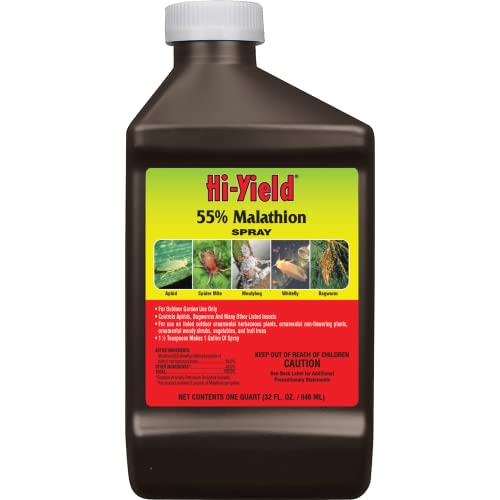
Hi-Yield’s 55% Malathion concentrate lists lace bugs right on the label, making it one of the most straightforward choices for this specific pest. The 32-ounce bottle delivers a high concentration of the organophosphate, providing fast contact and some residual activity against nymphs and adults on ornamentals, shrubs, and fruit trees. It works through a hose-end or tank sprayer and requires calm, dry weather for best results to avoid drift and wash-off.
Owners report this product handles lace bugs effectively, along with spider mites, aphids, and scale, making it a solid multi-pest solution for those already dealing with broader pressure. The key trade-off is that malathium is a broad-spectrum chemical that requires careful handling — protective gear is recommended during mixing and application. Some users noted that it can harm beneficial insects if sprayed on open blooms, so timing around flowering is essential.
For mid-sized to large landscapes where lace bugs have taken hold on multiple plant species, this concentrate offers strong knockdown power and a clear path to relief. The bottle makes a significant amount of finished spray, which keeps the cost per treatment low despite the premium active ingredient percentage.
What works
- Explicitly labeled for lace bug control on broad plant list
- High 55% concentration provides fast knockdown
- Good value per gallon of finished spray
What doesn’t
- Requires protective gear and careful timing around pollinators
- Not systemic — must coat leaf undersides thoroughly
- Strong odor that lingers for hours after application
2. Bonide Systemic Insect Control, 16 oz Concentrate

Bonide Systemic Insect Control uses acephate, a systemic active ingredient that the plant absorbs and distributes throughout its vascular system. This is a distinct advantage for lace bug management because the product reaches hidden nymphs feeding on the underside of leaves even when you only spray the top canopy. The 16-ounce concentrate makes up to 16 gallons of finished spray, which covers a large number of shrubs and ornamental beds.
User feedback highlights its effectiveness against thrips, spider mites, scale, and lace bugs on ornamentals — one reviewer specifically noted success on arborvitae and canna lilies. The downside is the strong, unpleasant odor that some describe as “rotting dumpster,” which makes it unsuitable for use near patios or open windows. It is also not labeled for vegetables or fruit plants, so it is strictly for ornamental landscapes.
If you have a recurring lace bug issue on azaleas, rhododendrons, or other ornamental shrubs, the systemic action of Bonide provides deeper, longer-lasting protection than contact-only sprays. Mix it every 7 to 10 days during active infestations for the best coverage.
What works
- Systemic action kills lace bugs on leaf undersides
- Makes 16 gallons from a single 16 oz bottle
- Effective against multiple ornamental pests
What doesn’t
- Extremely strong odor that can be offensive
- Not for use on vegetables or fruit plants
- May cause leaf spotting if applied in direct sun
3. Southern Ag Conserve Naturalyte Insect Control, 16oz

Southern Ag Conserve Naturalyte relies on spinosad, a naturally derived compound that is OMRI-listed and breaks down quickly in sunlight. It is a contact and ingestion insecticide that works well on lace bug nymphs and adults when applied directly to the foliage. The 16-ounce bottle makes up to 8 gallons of spray, which is enough for small to medium ornamental beds and specimen shrubs.
Users consistently report that spinosad is gentle on beneficial insects when dry but lethal to target pests like caterpillars, spider mites, and lace bugs. It is nearly odorless and washes off produce easily, making it an excellent choice for edible gardens where lace bugs are attacking ornamentals nearby. The main drawback is the short residual life — spinosad degrades in a few days under strong UV light, requiring more frequent reapplication than pyrethroid-based products.
For gardeners who prioritize low toxicity and prefer organic-certified inputs, Southern Ag Conserve Naturalyte is a reliable first-line treatment. It also pairs well with neem oil as part of an integrated pest management rotation to slow resistance development.
What works
- OMRI-listed for organic gardening
- Nearly odorless and safe for edibles when label is followed
- Effective against nymphs and soft-bodied adults
What doesn’t
- Low residual — reapply every 5–7 days during hot weather
- Must cover leaf undersides thoroughly
- Small bottle makes less total spray than many competitors
4. Fertilome Spinosad Insecticide, 16 oz

Fertilome Spinosad is another spinosad-based concentrate that works on the same principle as the Southern Ag product — contact and ingestion kill for lace bugs, caterpillars, leafminers, and other chewing pests. It is OMRI-listed and recommended for vegetables, trees, shrubs, and citrus. The label specifies 4 tablespoons per gallon of water, which gives precise mixing instructions for home users.
Customer reviews consistently highlight its effectiveness against bagworms, webworms, and grasshoppers on ornamentals, with several users mentioning they rotate it with neem oil in their orchard spray schedule. It degrades relatively fast in sunlight, so expect to reapply every 5 to 7 days during an active lace bug outbreak. Some users noted that the spray leaves a visible residue on leaves, which can be cosmetically unappealing on showpiece plants.
This is a strong choice for integrated pest management routines. If you are already using organic methods and need a rotational tool to avoid resistance, Fertilome Spinosad fits well alongside oil-based sprays and biological controls.
What works
- OMRI-listed for organic production
- Good against chewing insects on trees and citrus
- Easy to mix and apply with standard pump sprayer
What doesn’t
- Short residual — requires frequent reapplication
- Leaves white residue on dark green foliage
- Not as effective on adults if coverage is poor
5. BioAdvanced Tree & Shrub Insect Killer, 32 oz

BioAdvanced Tree & Shrub is a ready-to-spray formulation that connects directly to your garden hose, making it extremely convenient for treating large shrubs or small trees without mixing. It kills lace bugs by contact and provides up to 2 weeks of residual protection. The formula is rainproof within one hour of application, which reduces the anxiety of unpredictable weather during treatment day.
Users consistently praise this product for its ease of use and noticeable results within a day or two. One reviewer specifically mentioned it restored their dogwood tree after a lace bug-related leaf dieback the previous season. The 32-ounce bottle treats a substantial area, but the total finished spray volume depends on your hose pressure and spray time. The main limitation is that you cannot control the dilution strength — you get whatever concentration the hose-end system delivers.
For homeowners with multiple shrubs and trees who want a no-fuss solution that works fast, BioAdvanced is the most user-friendly option. It is a reliable mid-range choice that fills the gap between simple contact sprays and complex systemic concentrates.
What works
- Hose-end design — no mixing or measuring required
- Rainproof in one hour for worry-free application
- Up to 2 weeks of residual protection
What doesn’t
- No control over dilution strength
- Not systemic — must hit lace bugs directly
- Bottle may not cover fully mature trees
6. Martin’s 32 oz Permethrin 13.3% Concentrate
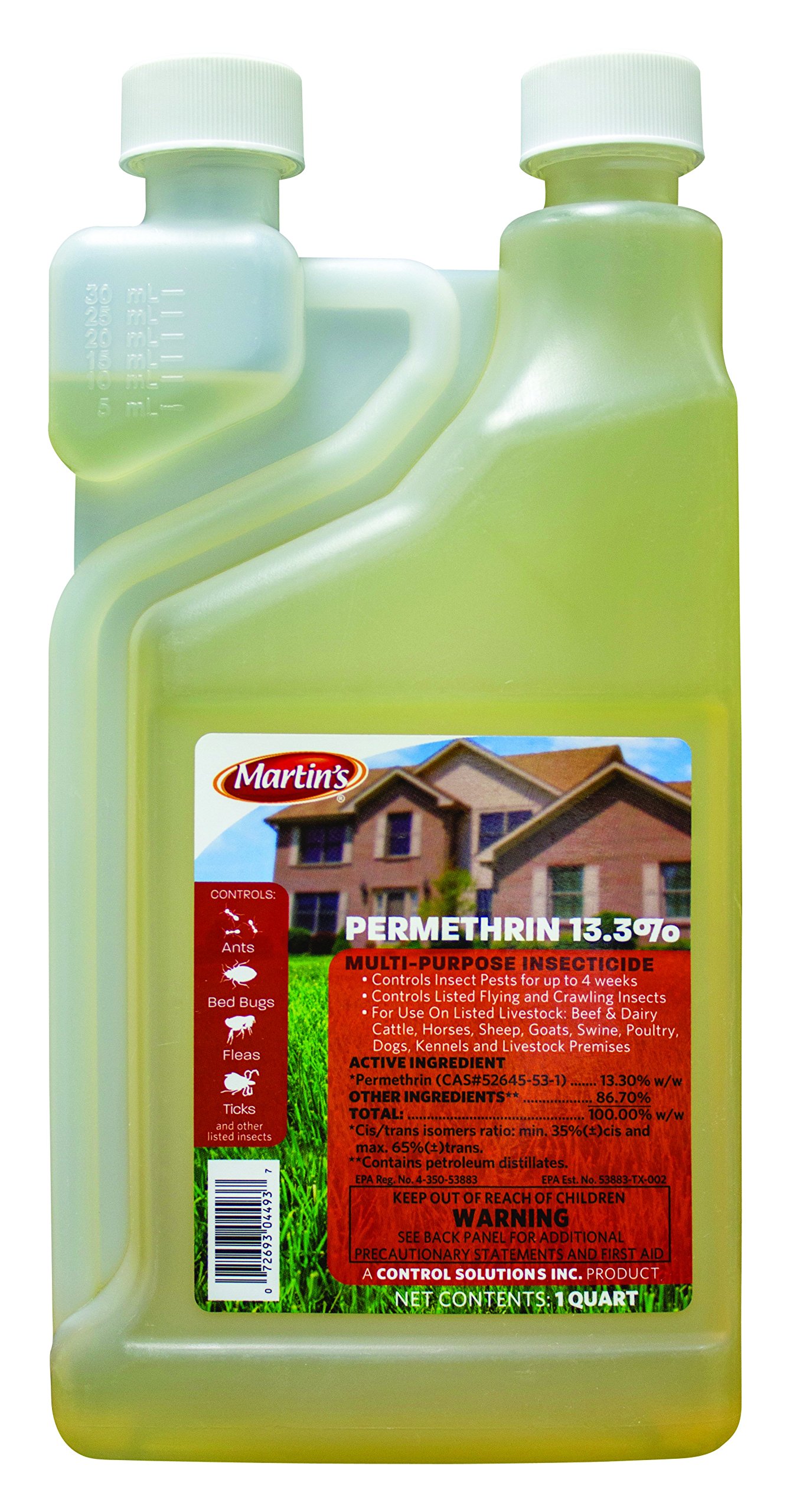
Martin’s Permethrin 13.3% concentrate is a synthetic pyrethroid that provides up to 4 weeks of residual control on treated surfaces. This is much longer than any spinosad product and makes it ideal for lace bug infestations on large landscapes where frequent reapplication is impractical. The 32-ounce bottle mixes into a large volume of finished spray — 4 ounces per gallon yields 8 gallons of ready-to-use solution.
Customer reviews focus heavily on its effectiveness against ticks and mosquitoes, but the same mechanism kills lace bugs on contact. A few users noted the strong solvent-like odor that lingers for several hours after spraying, which is a drawback for use near seating areas or open windows. It is not OMRI-listed, so it is not suitable for organic gardens or edible crops.
If you need a long-lasting barrier against lace bugs on ornamental hedges and trees, Martin’s Permethrin delivers unmatched residual power. The upfront cost is higher, but the extended interval between treatments offsets the premium for large properties.
What works
- Up to 4 weeks of residual control per application
- High concentration makes many gallons of spray
- Effective on lace bugs, ticks, mosquitoes, and more
What doesn’t
- Strong chemical odor that lingers
- Not OMRI-listed or suitable for organic gardens
- Must avoid drift onto open blooms to protect bees
7. Wisdom Pro L&H 7.9% Bifenthrin Concentrate (Quart)

Wisdom Pro L&H is a professional-grade bifenthrin concentrate that disrupts insect nervous systems through sodium channel modulation, leading to fast paralysis and death. It is approved for indoor and outdoor use on ornamentals, turf, and building perimeters, which makes it versatile for treating lace bug hotspots on foundation shrubs and landscape beds. The quart size is larger than most retail products and makes a huge volume of finished spray — 1 to 2 ounces per gallon, depending on pest pressure.
User reviews highlight excellent results against ants, spiders, and wasps, with several commenting that a single application provided months of perimeter protection. For lace bugs, the 7.9% bifenthrin delivers strong contact kill and residual activity of several weeks on treated foliage. The product is not OMRI-listed, so it should be kept away from edible crops and pollinator-attracting blooms. The strong chemical smell and need for precise mixing are barriers for casual users.
If you already manage landscape pests with a backpack or power sprayer, Wisdom Pro gives you commercial-level control in a consumer-sized bottle. It is the best option for large properties where lace bugs have become a recurring seasonal problem.
What works
- Professional-grade bifenthrin for strong residual
- Quart size makes a massive volume of finished spray
- Effective on lace bugs and many other landscape pests
What doesn’t
- Strong chemical odor during and after application
- Requires measuring and mixing equipment
- Not suitable for organic or edible gardens
Hardware & Specs Guide
Active Ingredient Class
The active ingredient determines how the insecticide works on lace bugs. Organophosphates (malathion) attack the nervous system through contact ingestion. Pyrethroids (permethrin, bifenthrin) modify sodium channels for fast knockdown and long residual. Spinosad targets nicotinic acetylcholine receptors, giving a unique mode of action that is gentle on beneficials when dry. Acephate is a systemic organophosphate that travels through the plant sap, making it effective against hidden lace bug nymphs. Choosing the right class depends on whether you need quick contact kill or long-term systemic protection.
Concentration Percentage
The percentage of active ingredient in the concentrate matters more than the bottle size. A 55% malathion concentrate is far stronger than a 1% ready-to-use spray and requires precise dilution. Higher concentrations generally provide better value per gallon of finished spray, but they also require careful measurement and protective gear. For lace bugs on large shrubs, a 13.3% permethrin or 7.9% bifenthrin concentrate gives you enough punch to treat multiple seasons. Lower concentrations in ready-to-spray products offer convenience but limit your coverage and residual duration.
FAQ
How do I know if lace bugs are on my plants?
What is the best time of year to apply insecticide for lace bugs?
Can I use the same insecticide for lace bugs on vegetables and ornamentals?
Final Thoughts: The Verdict
For most gardeners, the best insecticide for lace bugs winner is the Hi-Yield 55% Malathion because it is explicitly labeled for lace bugs, provides fast knockdown at a high concentration, and works on a wide variety of ornamentals and shrubs. If you want systemic protection that reaches hidden nymphs on leaf undersides, grab the Bonide Systemic Insect Control. And for an organic-compatible option with low toxicity, nothing beats the Southern Ag Conserve Naturalyte.