
Your peace lily is drooping. The pothos has stopped pushing out new leaves. The monstera’s fenestrations are getting smaller with each unfurling. What’s missing isn’t more water or a sunnier window — it’s the right balance of nitrogen, phosphorus, and potassium delivered at the right frequency. Choosing the wrong houseplant food doesn’t just waste money; it stunts growth, burns roots, or leaves you guessing with zero visible results.
I’m Rikta — the co-founder and writer behind Lawn Gear Lab. I’ve spent hundreds of hours dissecting fertilizer labels, comparing NPK ratios, measuring dilution accuracy, and cross-referencing real owner experience to find which formulations actually deliver cleaner leaf color and stronger root structure for the most common indoor species.
Seven contenders made the cut, from economical concentrates to species-specific blends. Use this guide to match the right NPK profile to your plant collection and never second-guess your feeding schedule again. This is the definitive analysis of the best food for houseplants on the market right now.
How To Choose The Best Food For Houseplants
Not all plant food is created equal. A formulation that makes your snake plant thrive can easily burn the delicate roots of a calathea. The six factors below separate effective feeding from expensive guesswork.
NPK Ratio — The Three Numbers That Define Performance
Every fertilizer label displays three hyphenated numbers, for example 6-2-4 or 5-5-5. The first is nitrogen (N), which drives leaf growth and green color. The second is phosphorus (P), which supports roots and blooms. The third is potassium (K), which strengthens cell walls and disease resistance. Foliage-forward houseplants like pothos and philodendron need higher N and lower P — a ratio around 3:1:2 is ideal. Blooming plants like African violets prefer a higher middle number. Multi-purpose formulas around 5-5-5 work for mixed collections but deliver less targeted impact.
Liquid Concentrate vs Water-Soluble Powder
Liquid concentrates are ready to dilute, mix instantly, and pose less burn risk when dosed correctly. They are ideal for weekly feeding schedules. Powders like Jack’s Classic offer greater value per gallon because they lack water weight in the package, but they require more careful measuring and thorough dissolving to avoid salt deposits. For beginners, a liquid concentrate is the safer, more forgiving choice.
Organic vs Synthetic Formulation
Organic plant food, such as formulas with sea kelp, fish emulsion, or mineral-based nutrients, feeds soil microbes and slowly releases nutrition. This builds long-term soil structure but acts more gradually. Synthetic fertilizers provide immediately available minerals that produce fast greening and quick leaf production. Synthetic formulas can also cause salt buildup if used too frequently. For the average indoor gardener with potted plants, a gentle organic formula or a balanced synthetic like 9-3-6 reduces the risk of accidental overfeeding.
Mixing Ratio and Coverage per Bottle
One 8-ounce bottle of concentrated liquid can treat anywhere from 16 to over 85 gallons of water depending on the formula. Pay close attention to the recommended mixing ratio — 1 teaspoon per gallon versus 1 capful per quart translates into dramatically different longevity. Larger collections benefit from higher concentrate ratios (more gallons per ounce) to avoid constant repurchasing.
Safety Around Pets and Children
If your houseplants share space with curious pets or toddlers, the plant food base matters. Certain organic emulsions have strong odors but are generally non-toxic when used as directed. Some synthetic formulas contain chemical salts that can cause gastrointestinal irritation if ingested. Always check the label for pet-safe or child-safe claims, and store all liquid fertilizers out of reach regardless of the label.
Species-Specific vs All-Purpose Blends
Species-specific formulas are calibrated for a single genus — a monstera food with a 5-2-3 NPK ratio is tuned to the exact macronutrient profile that encourages fenestrated leaf development. All-purpose blends cover a wider range of plants but may be off-target for picky species like calatheas or orchids. If you have a large mixed collection, one balanced all-purpose fertilizer (say, 6-2-4 or 5-5-5) is more practical than buying a separate bottle for each plant type.
Quick Comparison
On smaller screens, swipe sideways to see the full table.
| Model | Category | Best For | Key Spec | Amazon |
|---|---|---|---|---|
| HiThrive 16oz Houseplant Fertilizer | Liquid Concentrate | All-purpose indoor foliage | 6-2-4 NPK, makes 85+ gal | Amazon |
| Grow Queen Organic Liquid 5-5-5 | Organic Liquid | Mixed collections, gentle care | 5-5-5 NPK with sea kelp | Amazon |
| Espoma Organic Indoor Plant Food (2-Pack) | Organic Liquid | Pet-safe gentle feeding | 8 oz bottles, mild odor | Amazon |
| Jack’s Classic 15-30-15 Houseplant Special | Water-Soluble Powder | Blooming plants & foliar feeds | 15-30-15 NPK, includes spoon | Amazon |
| Houseplant Resource Center Monstera Food | Species-Specific Liquid | Monstera & tropical aroids | 5-2-3 NPK, gentle formula | Amazon |
| Dyna-Gro Foliage Pro 9-3-6 | Premium Liquid | Foliage density & root strength | 9-3-6 NPK, 32 oz quart | Amazon |
| Growth Technology GT Foliage Focus | Specialist Liquid | Hydroponics & semi-hydro | pH-buffered, 946 mL | Amazon |
In‑Depth Reviews
1. HiThrive 16oz Houseplant Fertilizer

The HiThrive 16oz concentrate sets a high bar with its 6-2-4 NPK ratio — a nitrogen-heavy profile that directly targets leaf production and deep green color in common houseplants like pothos, fiddle leaf fig, and dracaena. Each bottle yields over 85 gallons of feed, making it one of the most economical liquid options on this list at roughly half a teaspoon per gallon. Owners consistently report visible greening within two weeks and stronger stems on previously leggy plants.
The formula uses a clean, odorless base that mixes transparently into water, so there is no discoloration or lingering smell. It works equally well as a root drench and as a foliar spray when diluted at quarter strength. Several reviewers noted that the 6-2-4 balance produces faster results on foliage plants compared to all-purpose 5-5-5 blends, which makes sense given the higher nitrogen content. Just be mindful of the concentration — using it every watering without skipping a week can build up salts in the soil.
A single capful feeds one gallon, and the measuring lines printed on the cap eliminate guesswork. For a mixed collection of tropical foliage plants, this is the most versatile, cost-effective entry point that covers the largest number of plants with the least effort.
What works
- High concentration (85+ gallons) means exceptional value per plant.
- Odorless and clear — no residue or smell indoors.
- Fast-acting results on green foliage within two weeks.
What doesn’t
- Too much nitrogen for flowering species — may suppress blooms.
- No organic certification — synthetic mineral base.
2. Grow Queen Organic Liquid 5-5-5
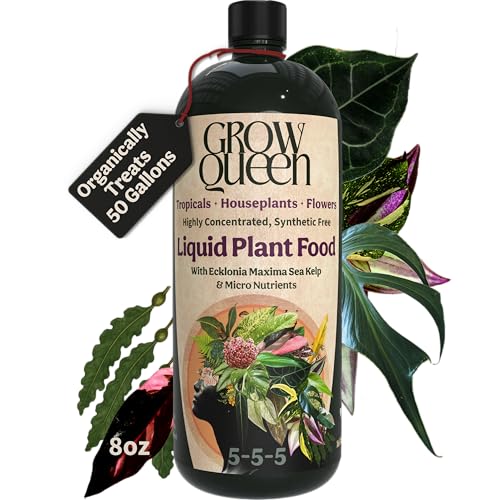
Grow Queen offers a true 5-5-5 organic NPK liquid that feeds both the plant and the soil microbiome. The inclusion of cold-processed Ecklonia maxima sea kelp adds auxins and trace minerals that synthetic-only formulas lack. This makes it a strong all-rounder for a collection that mixes foliage plants, succulents, and the occasional blooming tropical. Reviewers noted that sluggish aloe and monstera developed new growth within three weeks of first use.
The 8-ounce bottle treats up to 50 gallons, and the formula is pH-balanced to avoid root burn even when used weekly. There is a very faint earthy smell during mixing that dissipates immediately, unlike strong fish-emulsion fertilizers. It works with both soil and hydroponic setups, and users reported no salt buildup after months of regular feeding — a common pain point with synthetic concentrates.
For plant parents who prioritize long-term soil health and want one bottle that works across diverse species, this is the most dependable organic pick. The 5-5-5 ratio is not optimized for heavy foliage feeders like fiddle leaf figs, but it handles general maintenance beautifully.
What works
- 100% organic and biodegradable — safe for soil biology.
- Very low burn risk even with weekly use.
- Includes sea kelp micronutrients for root vigor.
What doesn’t
- Balanced 5-5-5 is not ideal for nitrogen-hungry plants.
- Slightly slower visible results compared to synthetic high-N blends.
3. Espoma Organic Indoor Plant Food (2-Pack)

Espoma is a trusted name in organic gardening, and their liquid indoor plant food delivers precisely what the brand promises: gentle, consistent nutrition derived from organic sources. The two-pack provides 16 ounces total, and the formula is formulated specifically for potted indoor conditions — a lower concentration that virtually eliminates the risk of fertilizer burn. Many long-time customers report using it every watering during the growing season without any leaf tip browning.
The product has a mild, manure-like odor during mixing, but users confirm it dissipates within minutes and does not linger in the home. The recommended dose is half a cap per quart of water, which works out to a very dilute feed that is safe around kids and pets. For collections that include sensitive ferns, calatheas, and prayer plants, this is one of the safest options available.
Growth results are not dramatic — it won’t force explosive leaf production like a high-nitrogen synthetic — but it produces steady, healthy growth with better color over weeks. The two-pack format makes it easy to keep one bottle in the kitchen and one near a large plant stand. For pet owners who want organic peace of mind with proven brand reliability, this is hard to beat.
What works
- Extremely gentle — safe for ferns and sensitive tropicals.
- Two-pack value with reliable organic quality.
- Pet-friendly and kid-safe when used as directed.
What doesn’t
- Noticeable organic odor during mixing.
- Slow results — not for fixing acute nutrient deficiencies quickly.
4. Jack’s Classic 15-30-15 Houseplant Special

Jack’s Classic 15-30-15 is a high-phosphorus water-soluble powder designed to push both green growth and bloom production in houseplants. The 15-30-15 NPK ratio is notably different from the foliage-first blends — the elevated middle number supports root development and flowering, making this ideal for African violets, peace lilies, and Christmas cacti. The 8-ounce bag includes a measuring spoon, and the powder dissolves completely in water with minimal agitation.
Because the nitrogen content is still relatively high, users report excellent results on foliage plants as well. Many long-term users alternate between this and a balanced formula depending on the season — using Jack’s during the active growing months and switching to a milder blend in winter. The formula works for both root drench and foliar spray, and the powder format stores indefinitely without taking up fridge space.
The trade-off is precision — it is easy to overdo the mixing and cause leaf burn, especially if you misread the teaspoon-to-gallon ratio. A quarter teaspoon per gallon is a safer start for sensitive plants. Overall, for experienced growers who want maximum control over their NPK input and love seeing fast results on bloomers, this is a highly effective tool.
What works
- Excellent for promoting blooms and root health.
- Powder format is shelf-stable and lightweight.
- Works as foliar spray and root feed.
What doesn’t
- Requires accurate measuring — burn risk if overdosed.
- Not organic and may build salts with heavy use.
5. Houseplant Resource Center Monstera Food
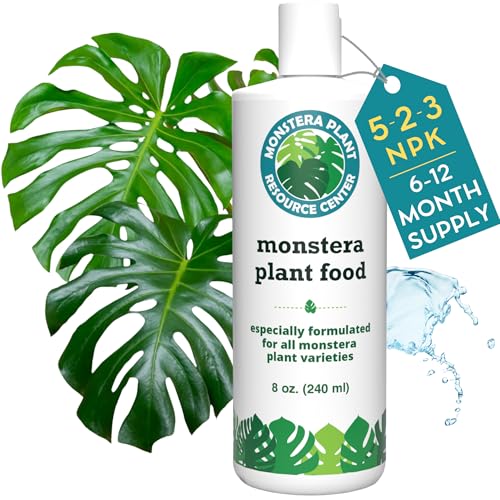
This 5-2-3 NPK formula from the Houseplant Resource Center is engineered specifically for Monstera deliciosa and related tropical aroids. The low phosphorus relative to nitrogen reflects the natural feeding pattern of vining tropical plants that prioritize leaf expansion over flower production. Owners of large monsteras consistently report bigger, more fenestrated leaves and faster unfurling of new growth within the first month of use.
The formula is chelated for better nutrient uptake, and the liquid dilutes easily with a 1:16 mixing ratio. It is safe for weekly feeding without burn, and the 8-ounce bottle lasts roughly two months for a average-sized monstera. While positioned for monsteras, it also works well on philodendrons, pothos, and syngoniums. The family-run brand includes a clear mixing guide, though some users found the instructions ambiguous — 1 teaspoon to “at least 2 cups” of water — and preferred a 1-teaspoon-per-quart ratio for consistency.
For the price, the per-gallon cost is higher than multi-purpose alternatives, but the targeted NPK makes sense if your collection is dominated by aroids. If you own more than three monsteras, this will produce visibly better fenestration than any all-purpose 5-5-5 blend.
What works
- Designed specifically for monstera — visible fenestration improvement.
- Gentle enough for weekly use with zero burn reports.
- Small family business with customer-focused support.
What doesn’t
- Higher cost per gallon than all-purpose alternatives.
- Not suitable for blooming plants or succulents.
6. Dyna-Gro Foliage Pro 9-3-6
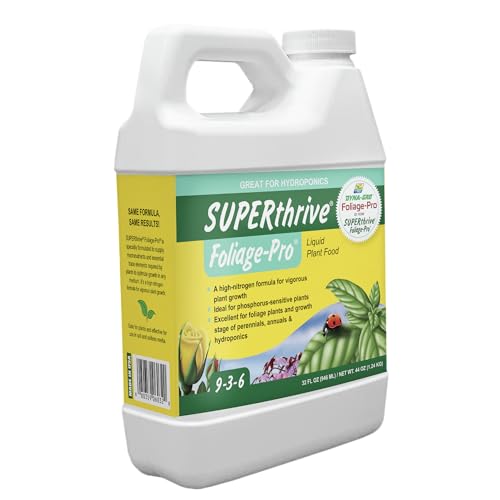
Dyna-Gro’s Foliage Pro is a professional-grade liquid fertilizer with a 9-3-6 NPK ratio — a 3:1:2 balance that is widely considered the gold standard for foliage houseplants. The 32-ounce quart bottle feeds an enormous number of plants because the dosage is tiny: 1/4 to 1/2 teaspoon per gallon of water. Users who switched from weaker formulas noted a significant boost in stem thickness and leaf size, with some reporting that pothos vines doubled in length within a single season.
The formula is complete with all essential micronutrients, so no additional feeding is needed. It is designed for both soil and hydroponic use, and its pH-buffering properties help maintain uptake in various water hardness levels. A few users did mention that overdoing the dosage can quickly burn plants — one review described nearly killing an entire collection after misreading the label. Stick to the recommended quarter-teaspoon schedule and your plants will thrive without risk.
For serious plant collectors with 20 or more specimens, this is the most cost-effective premium option simply because a single quart lasts a year or longer. The 9-3-6 ratio is perfectly tuned for foliage density, making it ideal for anyone who prioritizes lush, full plants over flowers.
What works
- Highly concentrated — a quart lasts most growers over a year.
- Optimal 3:1:2 ratio for foliage plants.
- Includes all micronutrients — no need for supplements.
What doesn’t
- Extremely potent — overdosing causes severe leaf burn.
- Not organic — synthetic mineral salts.
7. Growth Technology GT Foliage Focus
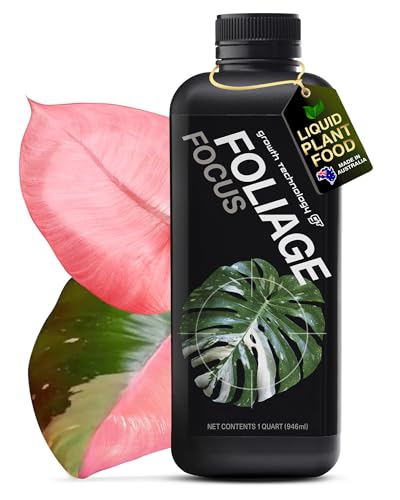
Growth Technology GT Foliage Focus is a precision liquid feed formulated for tropical species grown in soil, hydroponic systems, and semi-hydro setups. It contains nitrate-nitrogen, potassium, calcium, and magnesium, plus chelated trace elements that support chlorophyll production and steady leaf coloration. The pH-buffered nature means it automatically adjusts the water pH to the optimal range for nutrient uptake, which removes a variable that often frustrates growers using tap water.
The recommended dosage varies by medium — 3-5 ml per liter for soil and 5-7 ml per liter for hydroponics — and the formula is compatible with foliar application. Users praise it for producing significantly larger leaf size on alocasia and monstera, with consistent results across different growing environments. The 946 mL quart bottle is generous, and the per-feed cost is very low given the tiny milliliter dose. Some customers noted that the original bottle seal can leak during shipping, so inspect upon arrival.
For growers who move plants between soil and semi-hydro, or who maintain a propagation station with cuttings in water, this is the most versatile single-bottle solution. It eliminates the need for multiple supplements and simplifies feeding to one measured step per watering.
What works
- pH-buffered — works with varying water hardness.
- Excellent for hydroponics, semi-hydro, and soil.
- Promotes visibly larger leaves on tropical aroids.
What doesn’t
- Bottle seal can leak during shipping.
- Higher upfront cost than multi-purpose blends.
Hardware & Specs Guide
NPK Ratio — What the Numbers Actually Mean
The three hyphenated numbers on a fertilizer label represent the percentage by weight of nitrogen (N), phosphorus (P), and potassium (K). A 6-2-4 formula contains 6% N, 2% P, and 4% K. For foliage houseplants like pothos, philodendron, and snake plant, nitrogen drives leaf production; phosphorus is needed in lower amounts for root health; potassium supports overall vigor. A ratio with higher N (such as 3:1:2 or 9-3-6) delivers the fastest green-up on non-flowering plants.
Liquid Concentrate vs Powder — Which Lasts Longer
A liquid concentrate like HiThrive at 6-2-4 yields over 85 gallons per 16-ounce bottle because each gallon requires only 1 teaspoon of concentrate. Water-soluble powders such as Jack’s Classic pack even more feeding power per ounce since they contain no water weight — an 8-ounce bag can produce 80+ gallons at standard dilution. Powders are more compact and shelf-stable, but liquids dissolve instantly and are harder to overdose accidentally.
Organic Certification and Soil Biology
Organic plant foods (OMRI-listed or similar) feed the soil microbiome rather than just the plant. Organic formulas like Espoma and Grow Queen use plant- and mineral-based ingredients that break down slowly and improve soil structure over time. Synthetic fertilizers provide immediately available ions that produce rapid greening but can kill beneficial soil life and cause salt crust on pot surfaces if over-applied. For houseplants that stay in the same pot for years, occasional organic feeding helps maintain a living root zone.
Water-Soluble vs Time-Release — Which to Choose
All products in this guide are water-soluble — they require dilution with water before each use. This gives you full control over feeding frequency and concentration. Time-release granular fertilizers (not covered here) are convenient for outdoor containers but can lead to inconsistent nutrient spikes indoors where watering schedules vary. Water-soluble food also allows foliar application, which can correct micronutrient deficiencies faster than root drenching.
FAQ
How often should I feed houseplants with liquid fertilizer?
Can I use the same food for succulents and tropical plants?
What causes white crust on top of the soil after feeding?
Final Thoughts: The Verdict
For most gardeners, the best food for houseplants winner is the HiThrive 16oz Houseplant Fertilizer because it delivers a high-nitrogen 6-2-4 formula that produces visible greening in all common foliage plants while making over 85 gallons per bottle. If you want a gentle organic formula safe for pets and sensitive species, grab the Espoma Organic Indoor Plant Food (2-Pack). And for large mixed collections dominated by aroids and tropicals, nothing beats the sheer longevity and balanced 9-3-6 performance of the Dyna-Gro Foliage Pro.