
Japanese beetles, aphids, and thrips can shred a prized rose bush within days, turning perfect blooms into lacework and leaving leaves curled and yellow. The difference between a rose garden that thrives and one that fights for survival often comes down to selecting an insect spray for roses that matches the specific pest pressure and your maintenance style.
I’m Rikta — the co-founder and writer behind Lawn Gear Lab. I’ve spent many hours cross-referencing active ingredient efficacy data, comparing systemic versus contact kill speeds, and analyzing aggregated owner feedback from thousands of rose growers to build this guide.
Whether you need a ready-to-use contact killer for an active Japanese beetle invasion or a systemic drench for season-long prevention, the right rose insect spray for roses delivers measurable pest knockdown without sacrificing flower quality or plant health.
How To Choose The Best Insect Spray For Roses
Roses attract a unique mix of pests — Japanese beetles, aphids, spider mites, thrips, and sawfly larvae — each requiring a different mode of action. Selecting the right spray means matching the delivery method and active ingredient to your specific pest problem without harming the plant or beneficial insects.
Systemic vs Contact — The Core Decision
Systemic insecticides are absorbed into the plant’s vascular system, protecting new growth from the inside out for weeks. They are ideal for long-season prevention against sucking insects like aphids and for diseases like black spot. Contact killers, by contrast, must hit the pest directly and are best for immediate knockdown of visible infestations like Japanese beetles or caterpillars. Many rose growers use a systemic drench early in the season and then spot-treat with a contact spray when outbreaks occur.
Active Ingredient Selection
Neem oil extracts work as both a fungicide and a mild insecticide, making them a strong choice for organic gardeners managing low-to-moderate pest pressure. Spinosad is a biologically derived compound that excels against thrips, caterpillars, and beetles without heavy synthetic residue. Pyrethrin-based sprays offer fast knockdown for severe infestations but degrade quickly in sunlight. For rose-specific disease prevention, look for products containing chlorothalonil or propiconazole alongside the insecticide component.
Application Method and Coverage
Ready-to-use trigger sprays provide convenience for small rose beds and spot treatments, while concentrates mixed with water deliver better value for large gardens. Hose-end sprayers offer the fastest coverage for multiple bushes but require careful calibration to avoid runoff. Drench formulas, poured around the root zone, eliminate the need for spraying altogether — a major advantage if you have many bushes or want to avoid drift onto adjacent plants.
Quick Comparison
On smaller screens, swipe sideways to see the full table.
| Model | Category | Best For | Key Spec | Amazon |
|---|---|---|---|---|
| Bonide Rose Rx Systemic Drench | Systemic Drench | Season-long rose protection | 6-week systemic control | Amazon |
| Bonide Captain Jack’s Orchard Spray | Concentrate | Multi-pest disease control | Makes 6.4 gal finished spray | Amazon |
| Garden Safe Fungicide3 | Neem Oil RTU | Organic 3-in-1 prevention | 1 gallon ready-to-use | Amazon |
| Ortho Rose and Flower Insect Killer | Contact Spray | Quick knockdown on roses | 4-week residual protection | Amazon |
| Natural Guard Spinosad Soap | Spinosad RTU | Thrips and caterpillar control | Kills within minutes | Amazon |
| Natria Neem Oil Spray | Neem Oil RTU | Minor pests + mildew control | 0.9% neem oil extract | Amazon |
| Bonide Japanese Beetle Killer | Contact Spray | Targeted beetle elimination | 32 oz ready-to-use | Amazon |
In‑Depth Reviews
1. Bonide Rose Rx Systemic Drench

This is the single most effective product for rose growers who want hands-off, season-long protection. The systemic drench is mixed with water and poured around the base of each plant, where it is absorbed into the root system and distributed throughout the foliage. It simultaneously targets insects like Japanese beetles, borers, and aphids while preventing fungal diseases including black spot, powdery mildew, and rust — all for a full six weeks per application.
The concentrated formula means one bottle treats multiple plants, and the no-spray application eliminates drift risk entirely. Owners with extensive rose beds report dramatic reductions in sawfly damage and near-complete elimination of aphid colonies after a single treatment cycle. The product also works on azaleas, camellias, and other ornamental shrubs, making it a versatile addition to any flower garden.
Because it is systemic, it protects new growth as it emerges — something no contact spray can match. The trade-off is that bees foraging on treated blooms may be affected, so apply in the evening or early morning when pollinators are less active. For rose enthusiasts willing to work around that timing, this drench delivers the best results with the least effort.
What works
- 6 weeks of protection from a single pour
- Controls both insects and fungal diseases simultaneously
- No spraying required — eliminates drift and coverage gaps
- Protects new growth systemically for complete coverage
What doesn’t
- Can harm bees if applied during active foraging hours
- Requires careful measuring to avoid over-application
- Not effective for instant knockdown of visible beetle swarms
2. Bonide Captain Jack’s Citrus, Fruit & Nut Orchard Spray

This concentrate pulls triple duty as an insecticide, fungicide, and miticide in one bottle, which makes it an economical powerhouse for rose growers who also maintain fruit trees or vegetable gardens. One pint mixes into 6.4 gallons of finished spray — enough to cover a large rose bed multiple times throughout the season at a per-treatment cost that undercuts almost every ready-to-use alternative.
The active ingredient formulation targets beetles, caterpillars, leafhoppers, thrips, and spider mites while simultaneously controlling powdery mildew, rust, brown rot, and leaf spot. Owners report visible results within hours on Japanese beetles and tent caterpillars, with leaf health improving noticeably after two applications. The concentrate stores well between uses, so you only mix what you need for each treatment.
Application requires a hose-end or tank sprayer, which adds a small equipment requirement but gives you full control over dilution strength. Use a 2.5-ounce-per-gallon rate for maintenance spraying on roses, or increase the concentration for heavy infestations. The product is safe to use up to the day before harvest on edibles, and it leaves minimal residue on rose foliage compared to oil-based sprays.
What works
- Three-in-one control saves needing separate products
- Very economical — one pint makes over 6 gallons of spray
- Fast knockdown on beetles and caterpillars
- Controls rust and powdery mildew alongside insects
What doesn’t
- Requires a separate sprayer — not ready-to-use
- Slight sulfur residue on leaves after drying
- Needs reapplication after heavy rain
3. Garden Safe Fungicide3
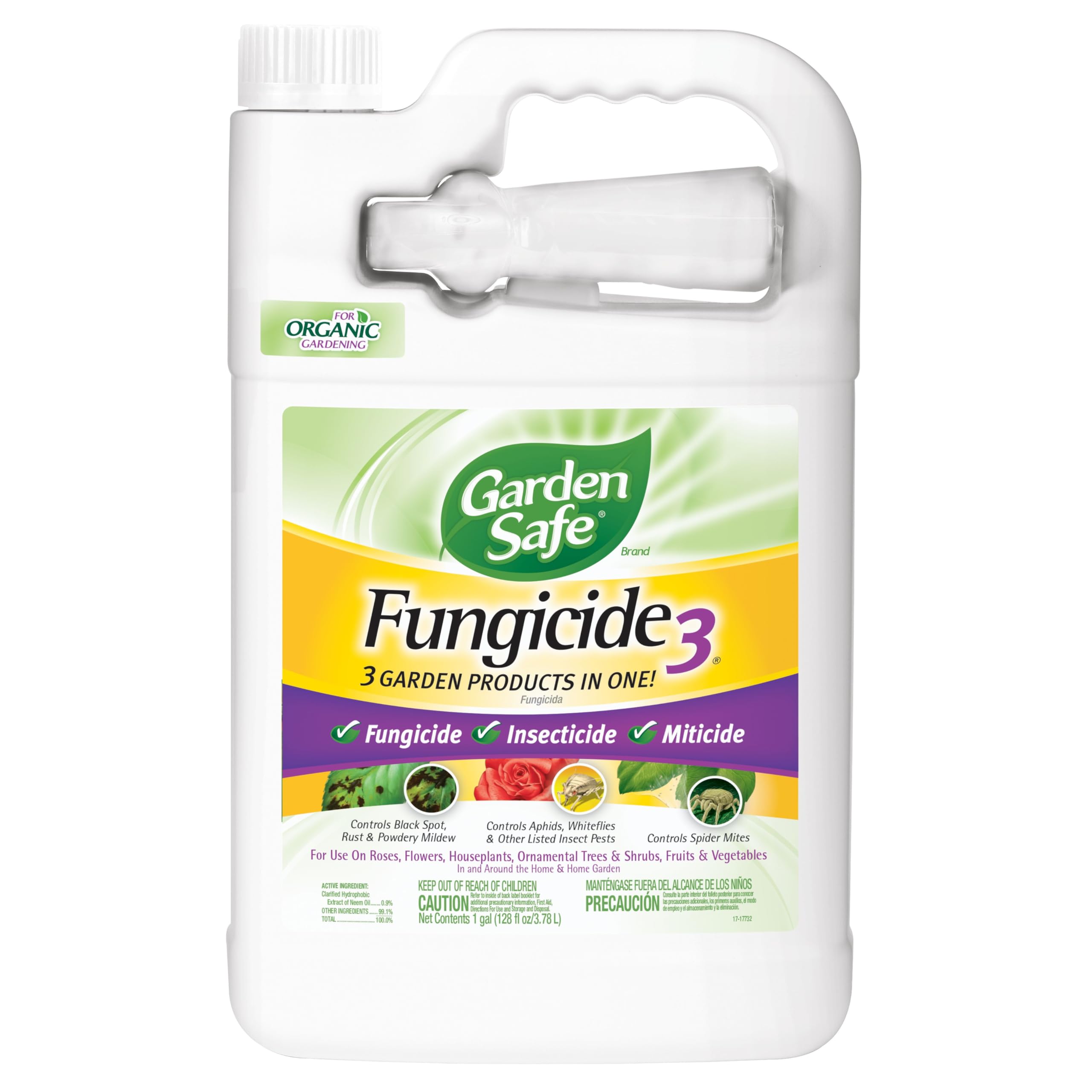
For organic rose growers who want broad-spectrum protection without synthetic chemistry, this gallon-sized ready-to-use spray delivers a neem oil extract formula that works as a fungicide, insecticide, and miticide. It kills aphids, whiteflies, and spider mites on contact while preventing black spot, rust, and powdery mildew from establishing on leaf surfaces. The large one-gallon container means you can treat even a substantial rose bed without running out mid-application.
Owners with orchids, hibiscus, tomatoes, and blueberries report that weekly use through the growing season essentially eliminates mildew problems and dramatically improves foliage color and bloom production. The product also kills insect eggs and larvae, breaking the pest life cycle rather than just zapping adults. The neem oil extract leaves a thin protective coating on leaves that continues working between sprays.
The built-in sprayer is convenient for quick applications, though some users find the hose attachment design shorter than ideal for reaching deep into bush interiors. Because neem oil is gentle on plants but potent on soft-bodied insects, it is an excellent choice for rose gardens where children or pets frequently play. Apply in the evening to avoid leaf burn on hot, sunny days and to maximize the oil’s contact time with pests.
What works
- Large 1-gallon ready-to-use container for extensive coverage
- Organic neem oil formulation safe for edible plants
- Breaks pest life cycle by killing eggs and larvae
- Prevents common rose fungal diseases effectively
What doesn’t
- Sprayer hose is short — limits reach on dense bushes
- Can cause leaf burn if applied in direct midday sun
- Neem oil smell lingers for a day after application
4. Ortho Rose and Flower Insect Killer

Ortho’s rose-specific spray combines a contact killer for immediate knockdown with a systemic component that protects the plant for up to four weeks after application. This dual-action approach means that when Japanese beetles land on treated foliage, they die quickly, and any new growth that emerges after spraying carries residual protection. The formula specifically claims to kill over 100 listed insects without damaging blooms or foliage.
Rose owners with ten or more bushes consistently recommend this as their go-to product, reporting that a few sprays per season keep leaves hole-free and flowers pristine. The ready-to-use trigger sprayer makes targeted application simple — just point and spray until the leaves are wet on both top and bottom surfaces. Many users find it particularly effective against the Japanese beetles that descend on roses in mid-summer, with visible beetle die-off within an hour.
The weak link in this product’s performance is its limited systemic activity. For heavy infestations of mealybugs or scale, the residual protection may not be strong enough to eradicate the colony completely, requiring repeated applications every two weeks. It works best as a preventive maintenance spray rather than a rescue treatment for already overwhelmed plants.
What works
- Dual contact-and-systemic action for extended protection
- Safe for rose blooms — won’t damage petals or buds
- Fast knockdown on Japanese beetles and aphids
- Trusted brand with wide availability
What doesn’t
- Systemic effect is weak — struggles with scale and mealybugs
- Needs reapplication every 2 to 4 weeks for heavy pressure
- Small 24-ounce bottle runs out quickly on large gardens
5. Natural Guard Spinosad Soap

Spinosad is a biologically derived compound that targets the nervous system of chewing and sucking insects while remaining safe for mammals and most beneficial insects once the spray has dried. This ready-to-use formula combines spinosad with insecticidal soap for dual-mode action that penetrates pest exoskeletons and disrupts feeding within minutes. It is particularly effective against thrips, caterpillars, and beetles that attack rose foliage and buds.
Gardeners dealing with cactus beetle infestations, aphid invasions on dracaena, and persistent thrips on roses report near-total elimination after a single thorough spray. The soap component helps the spinosad adhere to leaf surfaces and spread across waxy cuticles, improving coverage on those hard-to-reach leaf undersides where spider mites and aphids cluster. Owners appreciate that it works rapidly — beetles stop feeding and die within an hour of application.
The 32-ounce ready-to-use bottle works well for small to medium rose gardens but may not be economical for large plantings. Because spinosad breaks down in sunlight within a few days, you need to reapply every 5 to 7 days during active infestations. It is an excellent choice for organic growers who want a non-neem option with proven efficacy against tough pests.
What works
- Kills within minutes of contact — visibly fast results
- Biologically derived — safe for organic gardening programs
- Excellent against thrips, caterpillars, and beetles
- Soap formula improves adhesion to waxy rose leaves
What doesn’t
- Degrades quickly in sunlight — frequent reapplication needed
- Small bottle size limits value for large gardens
- Some users report shipping leakage on bottles
6. Natria Neem Oil Spray
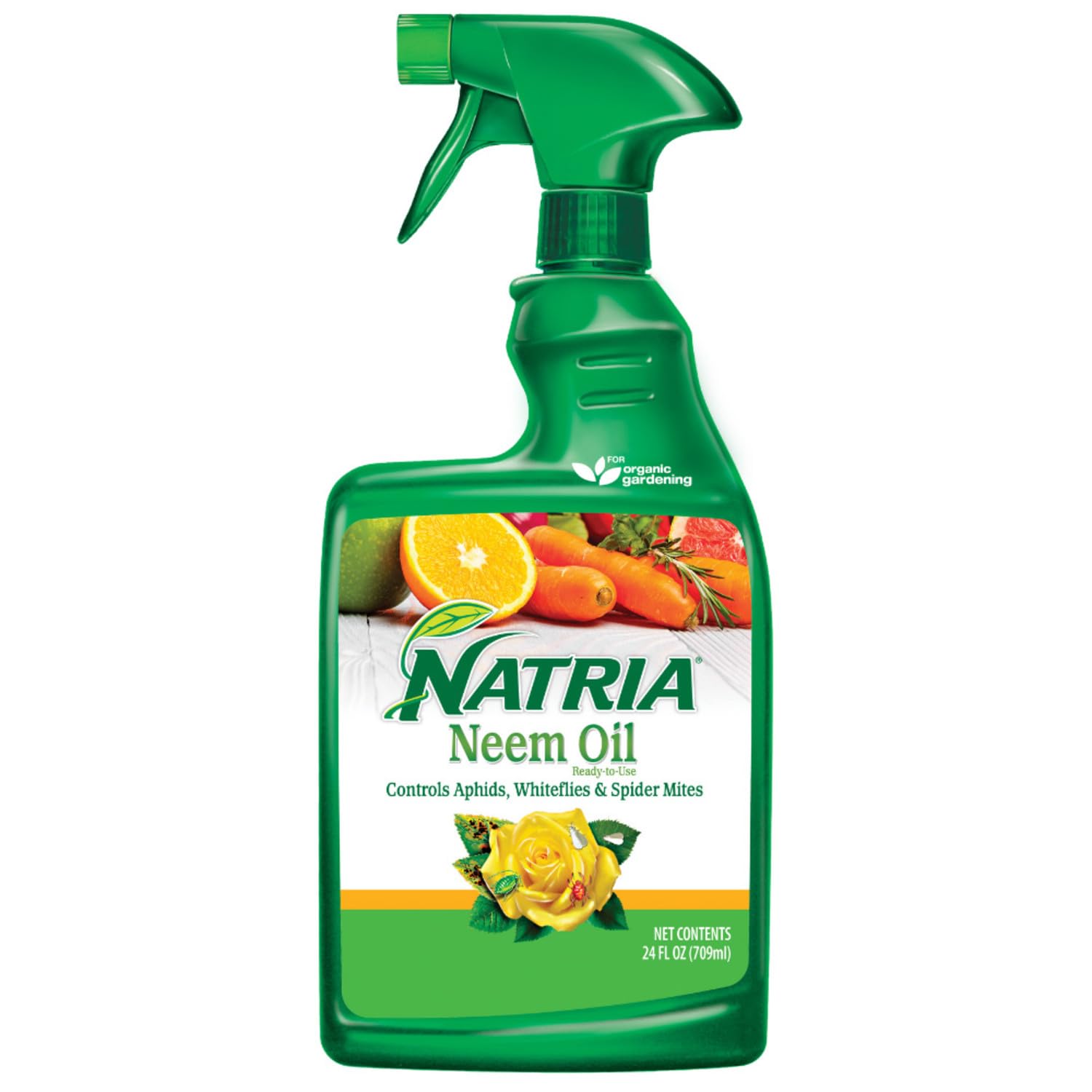
Natria’s ready-to-use neem oil spray is formulated specifically as a dual-purpose insecticide and fungicide for indoor and outdoor plants including roses. The 0.9% clarified hydrophobic extract of neem oil controls aphids, whiteflies, spider mites, and Japanese beetles while simultaneously preventing black spot, powdery mildew, botrytis, and scab. The ready-to-use trigger sprayer requires no mixing — just point and spray for complete coverage.
Owners use this on everything from houseplants to vegetable gardens, with particular success against fruit flies and general garden pests. The neem oil smell dissipates within a day or two, and the formula is safe to use up to the day of harvest on edible plants. For roses specifically, it provides gentle but consistent control of minor pest populations and early-stage fungal infections without the harsh chemical load of synthetic alternatives.
Where this product falls short is against heavy, established infestations. Multiple users note that while pest numbers decrease noticeably, complete eradication is rare with neem oil alone. It works best as a regular maintenance spray applied every 7 to 14 days, catching problems before they escalate. For rose beds with active beetle swarms or advanced black spot, you will need a more aggressive product alongside this one.
What works
- Dual insecticide and fungicide in one spray
- Safe for use on edibles up to day of harvest
- Gentle on plants — low risk of leaf burn
- Very popular — #28 best seller in pest repellent sprays
What doesn’t
- Too mild for severe Japanese beetle or aphid infestations
- 24-ounce bottle is small for large rose gardens
- Needs frequent reapplication for consistent control
7. Bonide Japanese Beetle Killer Ready-to-Use Spray

This entry-level contact spray is purpose-built for one job: knocking down Japanese beetles on contact. It also controls aphids, flea beetles, caterpillars, leafhoppers, and Colorado potato beetles, making it a decent general-purpose option for rose growers on a tight budget. The 32-ounce ready-to-use trigger sprayer means you can start spraying the moment beetles appear without any mixing or preparation.
Owners with cherry trees and rose bushes confirm that beetles hit with this spray die within minutes — users report beetles “falling off the door” five minutes after application. It works well as a spot treatment for visible infestations on specific bushes, and the nozzle provides a decent spray pattern for covering leaf surfaces. The formula is safe for use on vegetables, flowers, ornamentals, trees, and shrubs both indoors and out.
The critical limitation is that this is purely a contact killer with zero residual or systemic activity. Beetles that land on untreated foliage the next day are unaffected, meaning you must reapply daily during heavy beetle emergence. Several users also report that the spray seemed to attract more beetles than it killed, suggesting that a contact-only approach can sometimes backfire if not combined with a prevention strategy. Use this as a quick-response tool, not a complete rose protection plan.
What works
- Instant knockdown on Japanese beetles and aphids
- Ready-to-use — no mixing required
- Works on vegetables, flowers, and ornamentals
What doesn’t
- No residual protection — daily reapplication needed
- Not a preventative — only kills what it directly hits
- Some users report it attracted more beetles instead of repelling them
Hardware & Specs Guide
Active Ingredient Concentration
The effectiveness of any rose insect spray hinges on its active ingredient percentage and formulation. Systemic drenches like Bonide Rose Rx use a concentrated chemical that moves through the plant’s vascular tissue, while neem oil products like Natria and Garden Safe rely on clarified hydrophobic extract of neem oil at concentrations around 0.9%. Spinosad sprays use a bacterial fermentation byproduct that targets insect nervous systems but degrades in UV light within days. Higher concentration does not always mean better results — the right mode of action for your specific pest matters more than raw percentage.
Spray Volume and Coverage
Ready-to-use bottles range from 24 to 128 fluid ounces, with the larger containers providing enough volume to thoroughly wet the upper and lower leaf surfaces of 10 to 20 mature rose bushes per application. Concentrates like Bonide Captain Jack’s offer the best value per treated area — one 32-ounce bottle makes 6.4 gallons of finished spray, enough for an entire season on a medium garden. The delivery method also matters: trigger sprayers allow precise spot treatment, while hose-end sprayers and tank sprayers provide faster coverage for large plantings but require more careful calibration to avoid waste and runoff.
FAQ
How often should I spray my roses for insects during the growing season?
Can I use the same spray for black spot and Japanese beetles on my roses?
What time of day should I apply insect spray to my rose bushes?
Final Thoughts: The Verdict
For most rose gardeners, the best insect spray for roses winner is the Bonide Rose Rx Systemic Drench because it delivers six weeks of protection against both insects and diseases with zero spraying required. If you want a versatile concentrate that handles beetles, caterpillars, and powdery mildew across your entire garden, grab the Bonide Captain Jack’s Orchard Spray. And for organic gardeners seeking a gentle but effective neem oil formula, nothing beats the Garden Safe Fungicide3 in the large one-gallon ready-to-use container.