
You want to stop throwing food scraps in the trash, but you don’t want a stinky bin, fruit flies buzzing around your kitchen, or a complicated outdoor pile you have to tend to. The solution is an in-home composter — a countertop machine that turns your banana peels, coffee grounds, and leftover salad into something useful for your garden or houseplants, with no mess and very little effort. But not all of these machines actually make real compost: many just dry and grind your scraps into a crumbly powder that still needs more time to break down before it’s truly plant-ready.
I’m Rikta — the co-founder and writer behind Lawn Gear Lab. This guide is built by comparing the manufacturers’ published specifications and the patterns across verified customer reviews, so you get each pick’s real strengths and trade-offs instead of marketing spin.
We looked at nine of the most popular models side-by-side, and this guide to the best in-home composter will show you exactly which one fits your kitchen, your family size, and your gardening ambitions.
How To Choose The Best In-Home Composter
Most people walk into this category thinking any machine that dries and grinds food scraps is a “composter.” The reality is more nuanced. Knowing the difference between a dehydrator/grinder and a true microbial composter is the single most important decision you’ll make — it determines whether you get instant volume reduction or finished compost you can use immediately on your plants.
Dehydrators vs. True Composters
A dehydrator/grinder (like the budget and mid-range options) uses heat and blades to shrink your scraps by up to 90% of their original volume. The output is dry, crumbly, and sterile — it’s pre-compost that needs to be buried, mixed into an outdoor bin, or added to your green waste cart. It’s excellent for reducing trash volume and eliminating odors, but it won’t feed your soil right away. A true microbial composter (like the upper-tier models) uses a controlled environment with heat-resistant microbes to biologically break down food waste into actual, nutrient-rich compost in hours or days. The output is dark, smells like earth, and can be mixed directly into potting soil.
Capacity: Matching the Machine to Your Household
Capacity is measured in liters, and it’s the quickest way to know if a machine will handle your daily output. A 2.5-liter bucket fills up quickly with a single meal’s prep scraps — suitable for one or two people. A 4-liter model is the sweet spot for a family of three to four. The larger units, 14 liters and above from Reencle and GEME, are designed for families of four or more who cook every day and want to add scraps continuously without emptying a small bucket all the time.
Odor Control: The Real Reason You’ll Keep It on Your Counter
The main reason people give up on indoor composting is smell. Every machine relies on two things: a carbon filter that absorbs odors during the cycle, and a tight seal that keeps smells locked inside when idle. Look for replaceable carbon filters — some last a few months, others claim to last the lifetime of the machine. The quality of the seal and the filter directly determines whether your composter lives on the counter or gets exiled to the garage.
Noise and Cycle Time
Most dehydrator-style machines run between 3 and 8 hours per cycle and produce a hum similar to a dishwasher or a quiet conversation (around 40 to 48 decibels). Some have a “low-noise” mode below 40 dB for overnight use. Microbe-based machines often run quieter (some as low as 24 dB) because they use gentle mixing paddles rather than high-speed grinding blades. If you plan to run the machine while you sleep, pay very close attention to the stated noise levels.
Quick Comparison
On smaller screens, swipe sideways to see the full table.
| Model | Category | Best For | Key Spec | Amazon |
|---|---|---|---|---|
| Reencle Prime | Microbial Composter | Real compost, 2-3 person household | 14 liters / uses microbes | Amazon |
| Reencle Gravity | Microbial Composter | Largest capacity, larger families | 22 liters / 3.3 lbs daily | Amazon |
| GEME Smart | Microbial Composter | Real compost, zero filter changes | 19 liters / 11 lbs daily | Amazon |
| Vego Kitchen Composter | Smart Dehydrator | App control, weight-based cycles | 4 liters / 5 modes + app | Amazon |
| Food Cycler Eco 5 | Dehydrator/Grinder | Largest dehydrator bucket (5L) | 5 liters / Vortech grinding | Amazon |
| Airthereal Revive R500-V | Dehydrator/Grinder | Glass lid, budget-friendly | 2.5 liters / 1-button | Amazon |
| Airthereal Revive R500 | Dehydrator/Grinder | Entry-level, small kitchens | 2.5 liters / cast aluminum bucket | Amazon |
| Ouaken 4L Composter | Dehydrator/Grinder | Large capacity, quiet (under 40 dB) | 4 liters / low noise mode | Amazon |
| Soliddis 4.2L Composter | Dehydrator/Grinder | Odorless, self-cleaning cycle | 4.2 liters / under 45 dB | Amazon |
In‑Depth Reviews
1. Reencle Prime Electric Composter
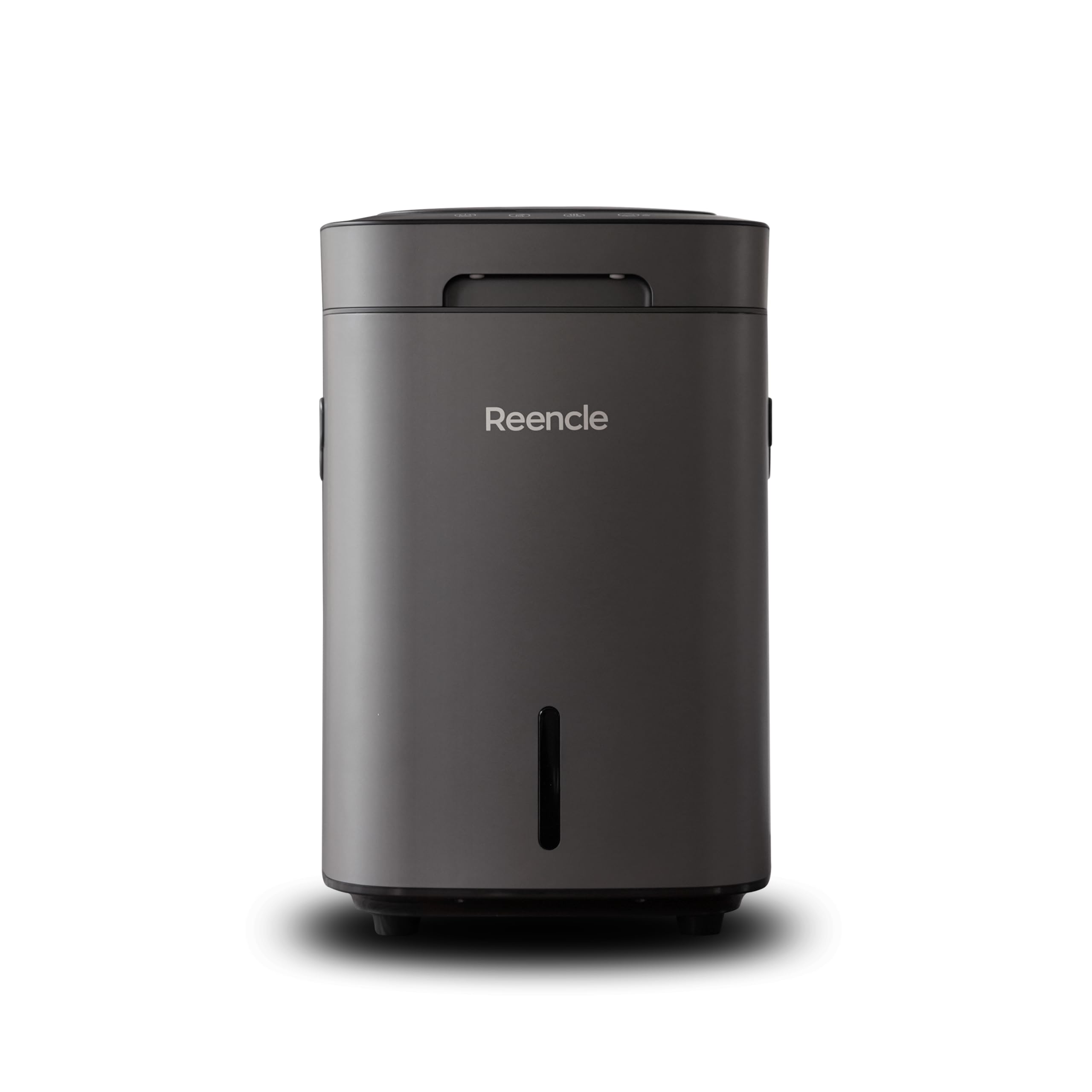
The Reencle Prime is the top pick because its 14-liter capacity handles up to 2.2 pounds of food waste daily using heat-loving microbes to produce true compost, making it ideal for a household of two or three who cook regularly.
Reviewers report it operates at a whisper-quiet 28 dB (softer than a library) with zero noticeable odor — one long-time user describes the smell as “like rising bread” during the cycle. Because it uses a biological process rather than high heat, you can add scraps continuously and only need to scoop out finished compost about once a month, far less frequent than emptying a dehydrator bucket every day.
The one honest limit is its size: at 12″ x 13″ x 18.4″, it is taller and bulkier than most countertop dehydrators, and buyers report it does not fit under standard upper cabinets. But if you have the counter space and want real compost in 24 hours instead of dried mulch, this is the machine that delivers without smell or noise.
Why it’s great
- Produces real microbial compost, not dehydrated scraps
- Near-silent 28 dB operation
- Large 14L capacity with monthly compost harvest
Good to know
- Tall profile won’t fit under most cabinets
- Requires microbe starter pack included in box
- Premium price reflects true biological composting
2. Reencle Gravity Electric Composter
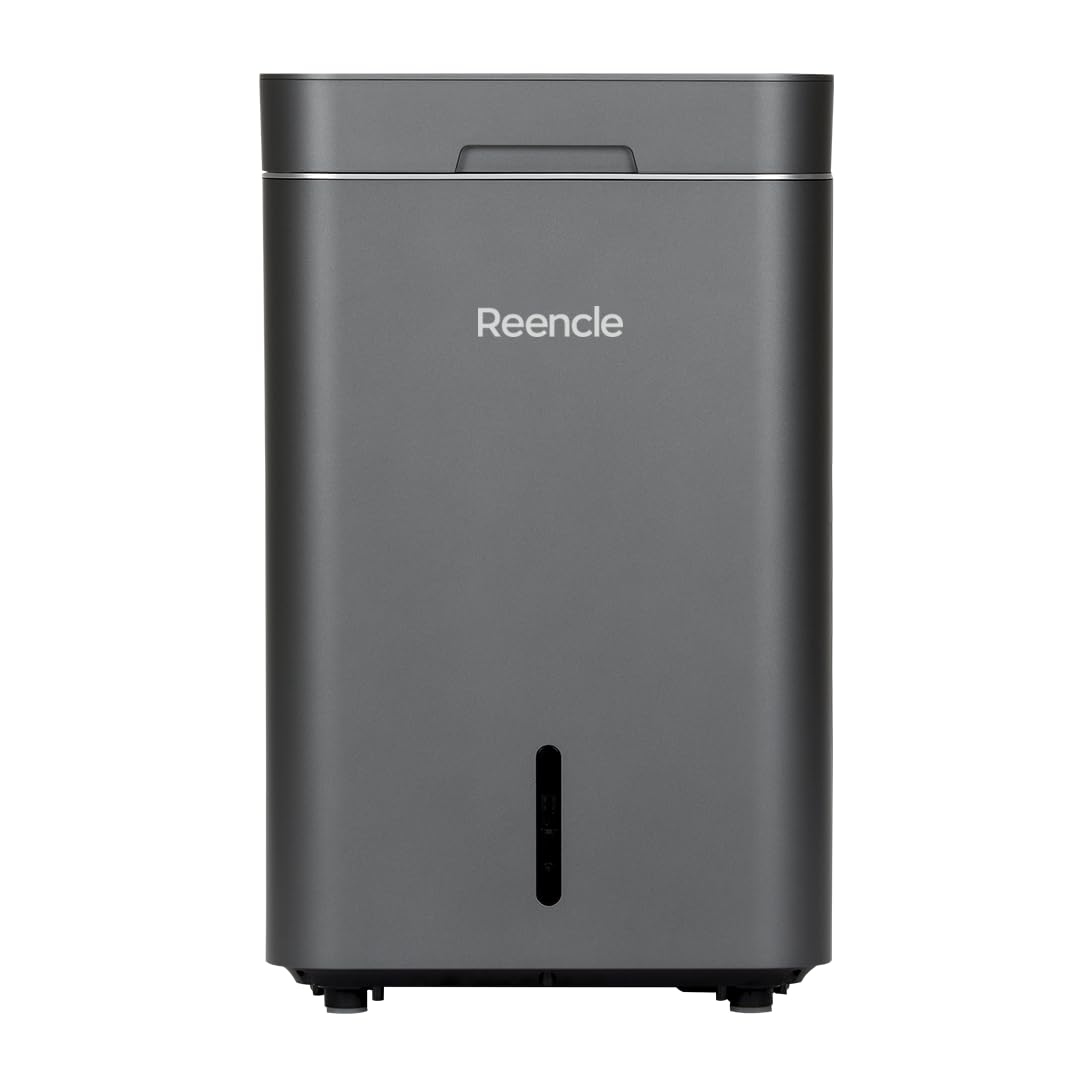
The Reencle Gravity is the step-up sibling of the Prime, and it beats the Prime on two critical numbers: capacity and daily throughput. It also runs even quieter at 24 dB, which is basically the sound of a quiet room.
Like the Prime, it uses the same microbe-based aerobic composting process to create real compost in 2 to 24 hours. One buyer who has used it for months reports that it “eliminates gnats and odor” and that the waste comes out as sawdust-like particles ready for the garden. The Gravity adds built-in weight and time tracking, so you can monitor your progress and efficiency right on the machine.
If you have a larger household and your main concern is volume — you produce more scraps than a 14-liter machine can handle — choose the Gravity over the Prime. The sensor lid opens quickly (one reviewer noted it opens in 3 seconds), which is a minor annoyance if you startle easily.
Where it shines
- Massive 22L capacity handles families of 4+
- Ultra-quiet 24 dB operation
- Smart weight and time tracking built in
Worth noting
- Tallest model at 20.6 inches
- No auto-restart after a power outage
- Sensor lid may open too quickly for some
3. GEME Smart 19L Electric Composter

If you want real compost and never want to think about replacing a carbon filter again, the GEME Smart is built differently from every other machine on this list. It uses microbial degradation (the same biological process as the Reencle) to turn up to 11 pounds of food waste per day into true, nutrient-rich compost in 6 to 8 hours — not dehydrated powder that still needs to break down. Its 19-liter bucket is enormous, and because the industrial-grade deodorization system is built to last the lifetime of the composter, you’ll never have to buy or swap a filter.
Reviewers who have owned this machine for over two years report it is “silent, odorless, easy to use” and that it produces 2 to 3 large bags of compost annually. They also note the low maintenance: no filter replacements, no cleaning between uses, and the only occasional task is wiping a bit of food residue off the lid. One long-term user did say that finding replacement yeast or probiotic packets can be tricky if you need them, though the machine works well with alternatives.
The standout spec here is the built-in permanent filter — every other machine in this guide requires periodic carbon filter changes, but the GEME’s system is designed to never need replacing.
What stands out
- Permanent built-in filter — never replace it
- Processes up to 11 lbs of waste daily
- Produces true microbial compost in 6-8 hours
The trade-offs
- Heaviest unit at 42 pounds
- Tallest at 26.2 inches — needs dedicated space
- Customer service reported as slow by some reviewers
4. Vego Kitchen Composter 4L
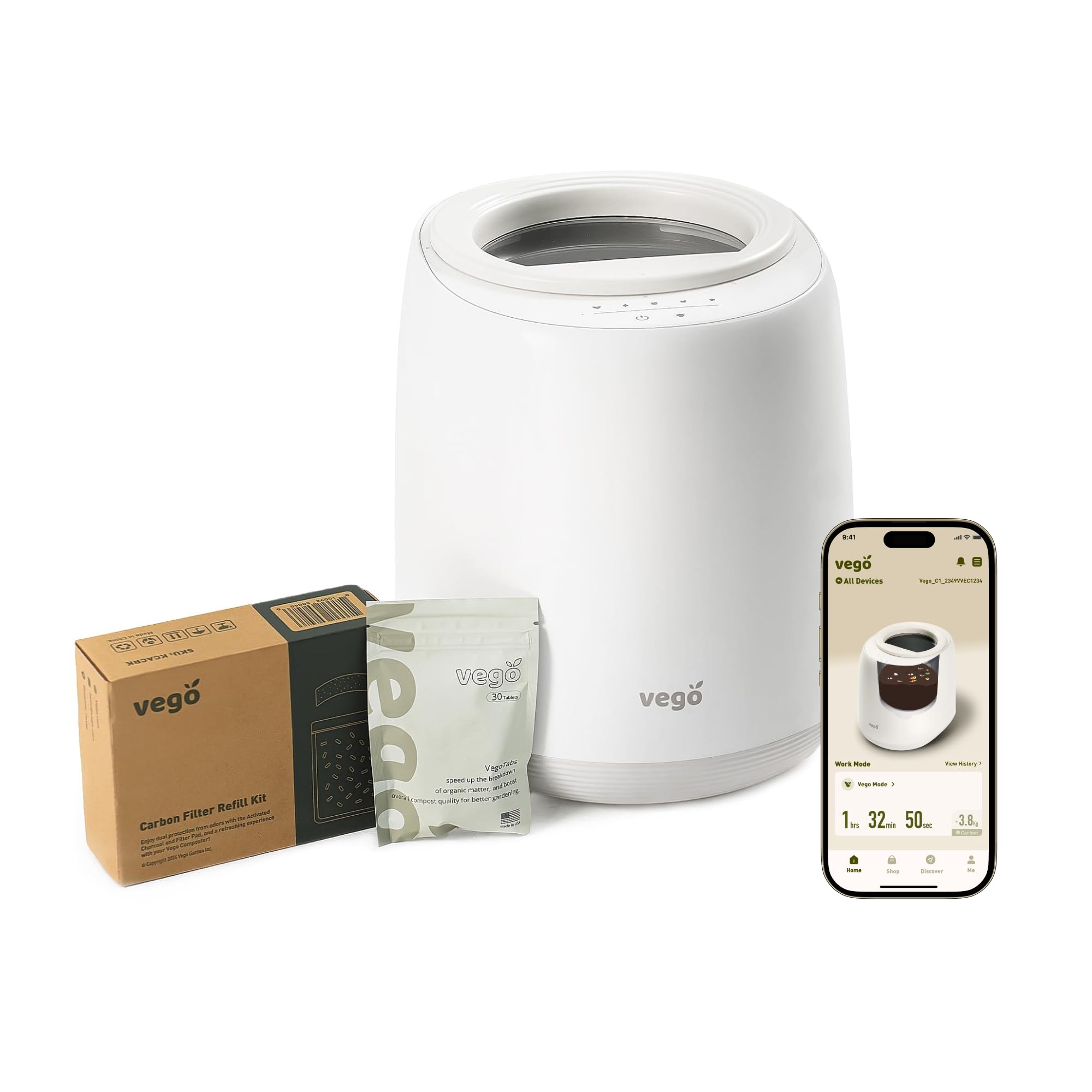
The single number that matters most in this category is the processing time, and the Vego Kitchen Composter 4L scores a 6-hour maximum cycle — but its built-in scale adjusts that time based on the weight of the scraps you add. That weight-based intelligence means you never run a 6-hour cycle for just a handful of coffee grounds, which saves electricity and wear on the machine. It has five modes including a “Vego Mode” that lets you add scraps mid-cycle without restarting — a genuine convenience if you cook throughout the day.
The catch is the same as with any dehydrator-style machine: the output is dry, ground-up pre-compost, not finished compost. You’ll need to mix it into your outdoor bin or soil to complete the breakdown. Reviewers praise the app for giving real-time updates on the cycle, and one buyer notes the build quality feels “high-quality” with intuitive controls. The 4-liter bucket is a good size for a family of three.
For the buyer who wants app connectivity and the ability to toss scraps in mid-cycle, the Vego does things no dehydrator competitor offers. The price reflects its premium position in the dehydrator category, making it a strong price-to-value read for those who prioritize smart features over raw capacity.
The upsides
- Weight-based smart mode adjusts cycle time automatically
- Add scraps mid-cycle without restarting
- Glass lid and internal light for viewing progress
Keep in mind
- Dehydrator output needs outdoor finish
- Some reviewers report blade jams with tough foods
- Larger footprint at 15″ long
5. Food Cycler Eco 5
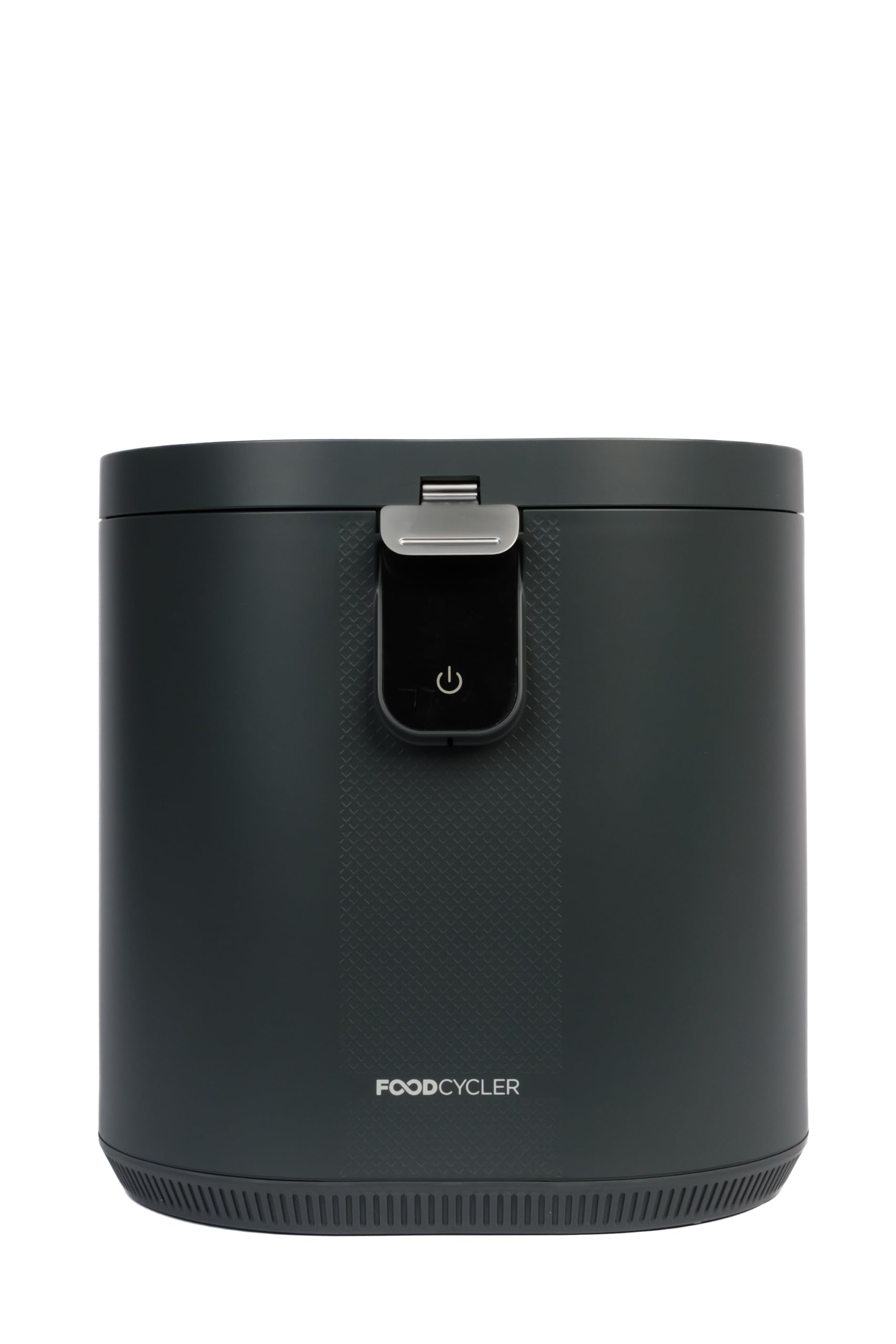
For the money, you get the largest bucket in the dehydrator category: 5 liters of capacity, which is 60% more than most standard 2.5-liter models. The Food Cycler Eco 5 uses a patented Vortech grinding system that owners mention handles pits, peels, bones, and leftovers without jamming. It reduces waste volume by up to 90% in about 8 hours, and the included refillable carbon filter keeps odors contained during the cycle.
What you give up is true composting — the output is dry, ground, and inert, ready to be used as fill or added to an outdoor bin for further breakdown. Some customers note that overly wet items like grapes can create a cement-like mass inside the bucket, so you need to balance wet ingredients with dry materials. On the plus side, the machine is quiet and odorless during operation, and it comes with a 3-year limited warranty that reviewers point out as easy to use.
A competitor called Lomi is often compared to the Eco 5. One reviewer who had a Lomi for two years switched to the Food Cycler and said it is quieter, easier to maintain, and has simpler carbon cartridges. For the budget-conscious buyer who wants the biggest bucket for their dollar and doesn’t need app connectivity, the Eco 5 is the straightforward, reliable choice.
Why we’d pick it
- Largest dehydrator bucket at 5 liters
- 3-year warranty is best in this tier
- Quiet and odor-free operation
A few caveats
- Output is dry pre-compost, not real compost
- Wet foods can cause clumping
- 8-hour cycle is longer than some alternatives
6. Airthereal Revive R500-V (Glass Cover)

The Airthereal Revive R500-V is perfect for a single person or a couple who wants a compact, fast countertop composter and enjoys the satisfying visual feedback of watching food scraps transform into dry, crumbly powder through its glass lid. Its 2.5-liter capacity is identical to the standard R500 (12.5″ x 10″ x 12.5″), and it processes a full bucket in 2 to 3 hours, which is faster than most larger dehydrators.
Reviewers report that the machine is quiet, produces no noticeable odor, and that the cast aluminum bucket lifts out for easy cleaning. One reviewer mentions the 2 to 3 hour cycle “dries/grinds scraps into small particles” with no smell if you use the biodegradable carbon filter. The R500-V also comes with a 3-year warranty (1.5 years standard plus 1.5 years extended) that does not require registration — a strong safety net compared to some competitors.
The honest limit is the 2.5-liter bucket: if you have a family of three or more, you will fill it fast and may need to run it twice a day.
Strong points
- Glass lid lets you monitor the cycle
- Fast 2-3 hour processing time
- 3-year warranty with no registration needed
Before you buy
- Small 2.5L bucket for 1-2 person households
- Wet/sugary foods can cause clumping
- Heavy at 17 pounds for its size
7. Airthereal Revive R500

At a lower price than most competitors, the Airthereal Revive R500 offers a no-frills dehydrator that works reliably for one or two people. Its 2.5-liter cast aluminum bucket and one-button operation make it as simple as it gets: fill it up, press the button, and come back in 4 hours to find your scraps ground into a dry powder. One reviewer describes the experience perfectly: “After 4 hours your food scraps will be ground up and dried into powder so you can empty it out in the morning.” You do not get a glass lid, an app, or multiple modes — just a straightforward machine that does the job.
What you get for that lower price is a solid build: the bucket is cast aluminum, which is dishwasher-safe and easy to clean. The biodegradable carbon filter helps control odor between cycles. However, some reviewers mention that the unit can be too loud for open-concept kitchens, and a few reported that customer service stopped responding after initial troubleshooting steps.
The one clear reason to choose it is if you want to dip your toes into indoor composting without spending much, and you are comfortable with a small bucket that needs daily emptying.
What we like
- Simple one-button operation
- Dishwasher-safe cast aluminum bucket
- 4-hour cycle ready by morning
The downsides
- Small 2.5L bucket requires daily emptying
- Some reports of poor customer support
- Can be noisy for some users
8. Ouaken 4L Electric Composter
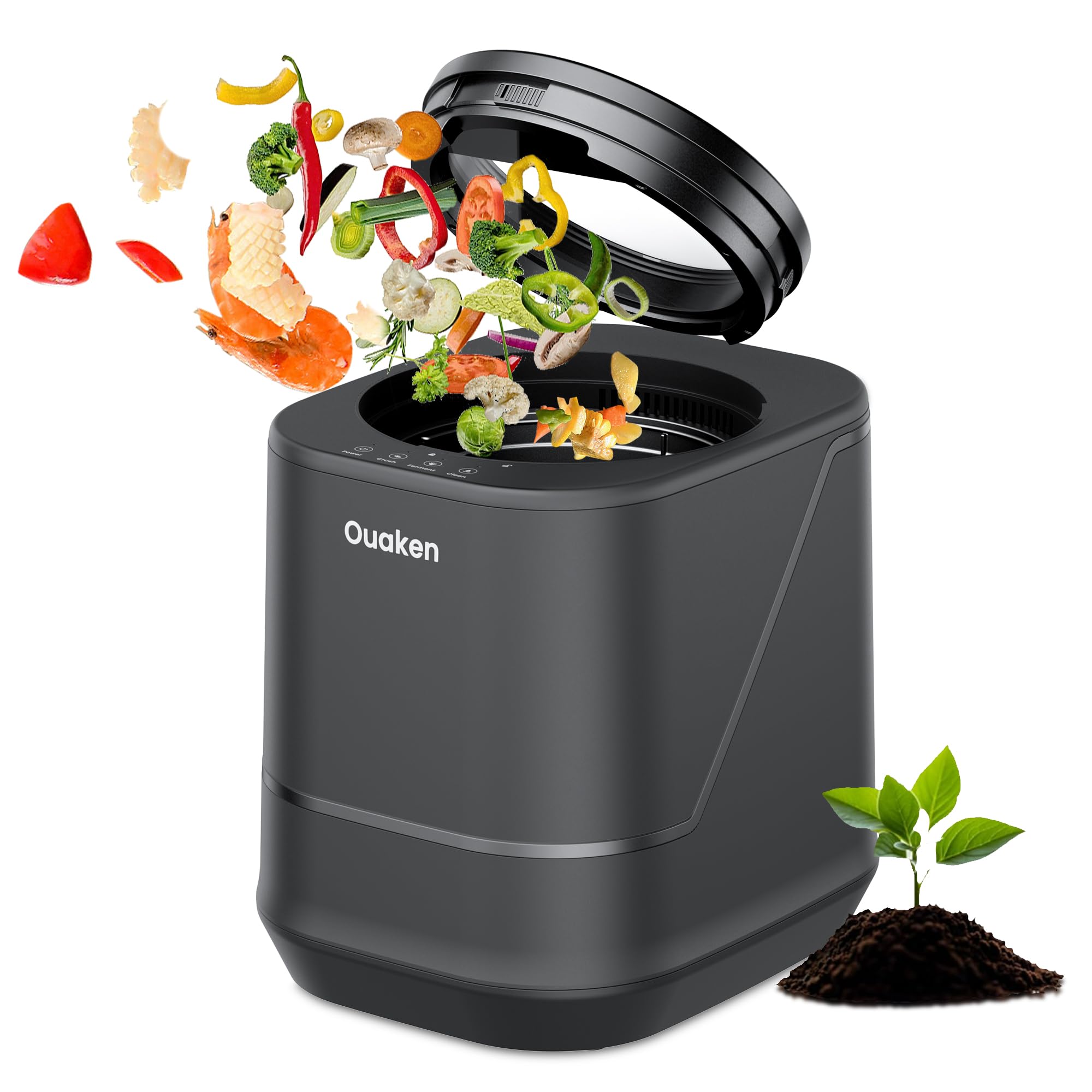
The Ouaken 4L Electric Composter targets a specific sweet spot: a 4-liter capacity that suits families of three to four, combined with a noise level below 40 dB — quiet enough to run overnight without waking anyone. Its 4-liter bucket is 60% larger than the 2.5-liter Airthereal models, and it has three modes: Crush (for volume reduction), Ferment (for faster compost), and Clean (for self-cleaning the bucket). Reviewers call it “odorless” and praise the transparent lid that lets you check progress without opening the seal.
A reviewer who had the machine for 8 months reported a durability issue — the “blades and gear fell off after 8 months” — but also noted that the warranty replacement was sent from China within a few days. Other shoppers say it functions exactly as expected with minimal maintenance, though heavy users will need to replace the carbon filter more often. The Crush mode takes about 4 hours and produces a fluffy, dry mixture, while the Ferment mode runs longer for a more finished product.
At its price, the Ouaken gives you a 4-liter machine with noise levels that are genuinely low enough for overnight use. If that combination matters to you, it’s a strong mid-range contender that holds its own against pricier options.
Why it’s great
- Quiet operation under 40 dB
- 4-liter capacity fits families of 3-4
- Crush, Ferment, and Clean modes
Good to know
- Blade durability concerns long-term
- Filter needs frequent replacement with heavy use
- Smaller drum than some competing 4L models
9. Soliddis 4.2L Electric Composter
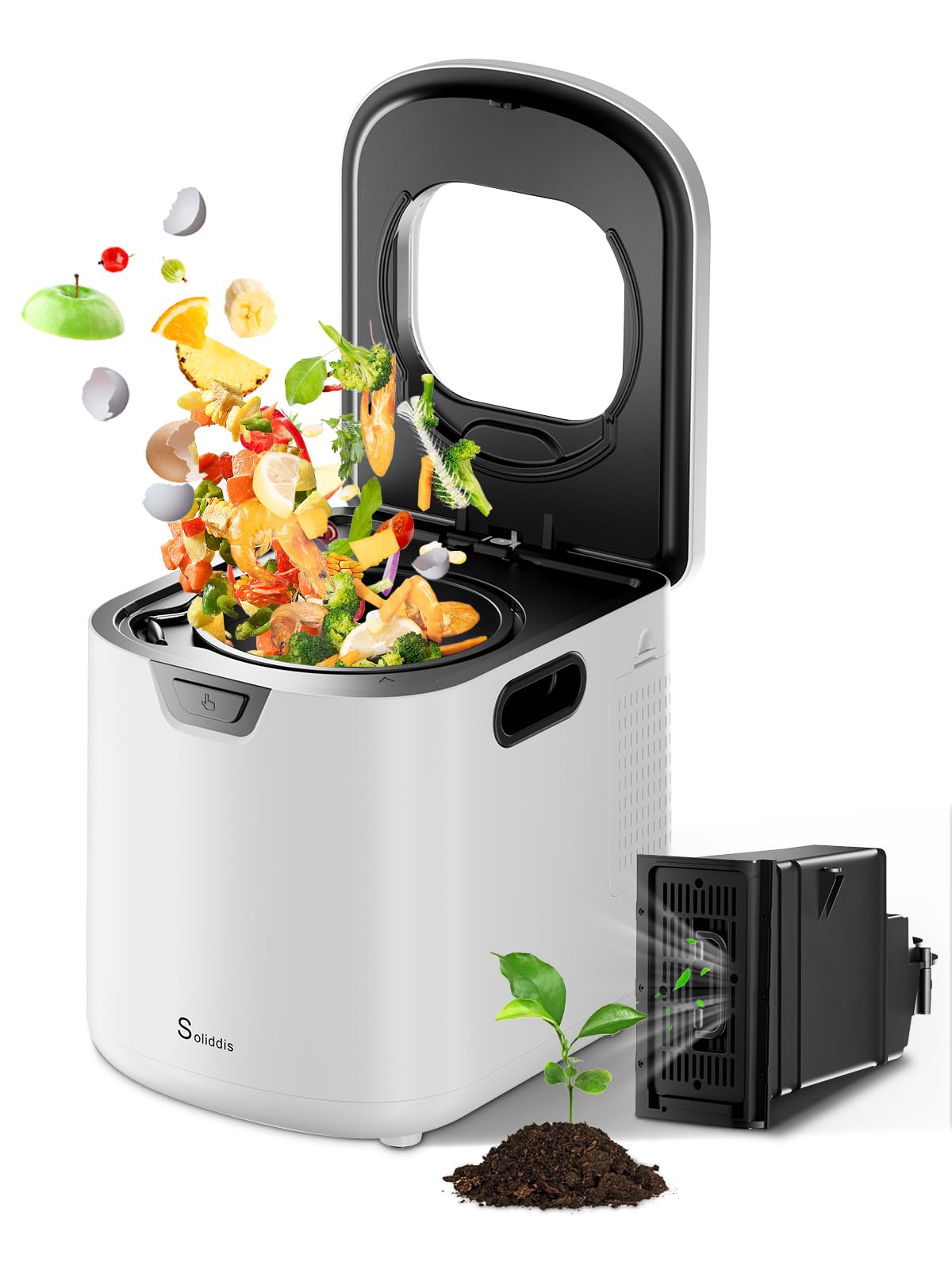
Compared to the top pick, the Soliddis 4.2L Electric Composter uses a “crush & dry” approach that processes a full bucket in 4 to 6 hours — faster than the top pick’s fermentation cycle — and includes a 900 ml carbon filter, which is noticeably bigger than the standard filters on most machines. It undercuts the Vego and Ouaken on price while offering a slightly larger bucket at 4.2 liters, focusing on fast, energy-efficient volume reduction rather than long fermentation. Reviewers report that it’s “quiet, odor-free (carbon filter), self-cleaning” and that it transforms kitchen waste “into dry organic fertilizer” in hours.
One buyer notes a design quirk: the handle can come off unexpectedly, but customer support responded within 30 minutes to address the issue. The machine also handles tough foods like cantaloupe innards, though you need to balance them with dry scraps to prevent a damp final product. The self-cleaning cycle is a nice addition, though some reviewers still prefer to soak the bucket for the occasional deep clean.
Choose the Soliddis over the top pick if you want a larger-than-average carbon filter, a self-cleaning feature, and a fast dehydrator-style composter that prioritizes speed and volume reduction over long fermentation, all at a mid-range budget.
Where it shines
- 4.2-liter capacity with 900 ml carbon filter
- Self-cleaning cycle reduces maintenance
- Quiet operation under 45 dB
Worth noting
- Handle may detach during use
- Output can be damp if wet scraps aren’t balanced
- One-button operation lacks multiple modes
Understanding the Specs
Capacity (Liters)
This is the volume of the bucket where you put your food scraps. A 2.5-liter bucket holds about one day’s worth of prep scraps for one or two people. A 4-liter bucket fits a typical family of three to four. The larger microbial machines (14 liters and up) allow continuous adding and only need emptying once a month, which completely changes how often you interact with the machine.
Noise Level (dB)
Measured in decibels, this tells you how loud the machine is during its cycle. A normal conversation is around 60 dB, a quiet library is about 40 dB, and a quiet room can be as low as 20 dB. Dehydrators with grinding blades typically hum between 40 and 48 dB. Microbial composters with gentle mixing paddles can be as quiet as 24 dB, which is barely audible.
Cycle Time
This is how long the machine takes to process one full bucket of scraps. Dehydrators usually take 3 to 8 hours depending on the moisture content of the food. Microbial composters can break down scraps in 6 to 24 hours. Some machines have multiple modes: a shorter “crush” mode for quick volume reduction and a longer “ferment” mode for more finished compost.
Carbon Filter
Most in-home composters use a replaceable activated carbon filter that absorbs odors during the processing cycle. Some filters last 3 to 5 months; others claim to last the lifetime of the machine. The carbon filter is the single most important component for keeping your kitchen smelling fresh, especially if you run the machine while you sleep or are away from home.
FAQ
Can I put bones in an in-home composter?
Do in-home composters smell?
Can I use the output directly on my houseplants?
How often do I need to empty a dehydrator-style composter?
Final Thoughts: The Verdict
When it comes down to it, the best in-home composter winner is the Reencle Prime because it makes true, microbial compost at a whisper-quiet 28 dB that you can use in your garden within 24 hours. If you want the largest capacity with the same biological process, grab the Reencle Gravity. And for a zero-maintenance, never-replace-the-filter experience, the standout is the GEME Smart.