
Over-fertilizing is the fastest way to send a houseplant to the compost pile. Yellow tips, leaf drop, and a white crust on the soil surface all point to the same problem: excess mineral salts from a nitrogen-heavy mix. The difference between a thriving indoor jungle and a collection of sad, scorched leaves often comes down to picking a formula with the right NPK ratio and delivery method for your specific plants.
I’m Rikta — the co-founder and writer behind Lawn Gear Lab. After analyzing the NPK profiles, solubility data, and organic certifications across dozens of indoor plant products, I’ve mapped out the specifications that separate gentle, effective feeding from chemistry experiments gone wrong.
The right pick delivers steady leaf expansion and root development without salt buildup. This guide breaks down the top contenders for the title of best houseplant fertilizer, comparing concentration levels, application ease, and cost-per-gallon to match your exact growing conditions.
How To Choose The Best Houseplant Fertilizer
Selecting the wrong formula wastes money and can stunt growth. The key variables are the NPK ratio, the form of the fertilizer (liquid, granular, or tablet), and whether the ingredients meet organic standards. Each factor changes how often you apply the product and how the plant absorbs nutrients.
NPK Ratio and What It Means for Indoor Plants
Nitrogen drives leafy green growth, phosphorus supports root development and blooms, and potassium strengthens cell walls. A 24-8-4 formula pushes rapid foliage expansion but risks nitrogen burn if applied too frequently. A lower-nitrogen mix like 6-2-4 is safer for regular feeding on slow-growing species like snake plants or zz plants. High-phosphorus ratios can trigger flowering in species like African violets, but provide no advantage for foliage-only plants.
Liquid, Granular, or Tablet Application
Liquid concentrates dissolve instantly and deliver nutrients directly to the root zone, giving you precise control over dosage per watering session. Granular slow-release formulas break down over weeks and are better for plants that prefer consistent, low-level feeding — but they stay active in the soil, making it harder to flush out salts. Tablets offer the simplest no-measure option but lack the flexibility to adjust dosage for different plant sizes within the same watering routine.
Organic Certification and Plant Safety
OMRI-listed fertilizers use naturally derived ingredients and skip synthetic mineral salts, reducing the chance of root burn. These organic formulas often have a mild odor due to composted materials, but the microbial activity they introduce improves long-term soil structure. Synthetic options score higher in immediate nitrogen availability but require more careful measurement to avoid toxic salt accumulation in container soil.
Quick Comparison
On smaller screens, swipe sideways to see the full table.
| Model | Category | Best For | Key Spec | Amazon |
|---|---|---|---|---|
| Dyna-Gro Foliage Pro | Liquid Concentrate | Year-round balanced feeding | NPK 9-3-6 | Amazon |
| Growth Technology GT Foliage Focus | Liquid Concentrate | Hydroponic and semi-hydro setups | NPK 8-2-6 (approx) | Amazon |
| FoxFarm Happy Frog All Purpose | Granular Slow-Release | Organic soil enrichment | NPK 6-4-5 | Amazon |
| Espoma Organic Indoor Plant Food | Liquid Concentrate | Gentle organic feeding | NPK 2-2-2 (approx) | Amazon |
| Instant Biologics Instant Plant Food Tablets | Tablet | No-measure convenience | NPK 4-3-6 | Amazon |
| HiThrive Houseplant Fertilizer | Liquid Concentrate | Large-volume feeding | NPK 6-2-4 | Amazon |
| Miracle-Gro Water Soluble All Purpose | Water-Soluble Powder | Fast-acting general feeding | NPK 24-8-16 | Amazon |
In‑Depth Reviews
1. Dyna-Gro Foliage Pro 32oz
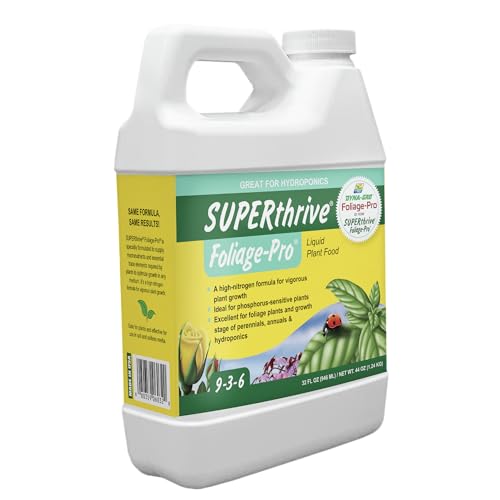
The Dyna-Gro Foliage Pro uses a 9-3-6 NPK ratio that delivers nitrogen for leaf growth without the salt index found in 24-8-16 formulas. This makes it safe enough for weekly use on low-light tropicals and greenhouse crops alike. The liquid concentrate mixes cleanly with water and works in both soil and hydroponic reservoirs without clogging lines or leaving residue.
Users report visible new leaf development within days of first application, and the bottle lasts a long time because the recommended dose is only a few milliliters per gallon. The formulation includes all essential macro and micronutrients, so you do not need to supplement with additional additives for most houseplant species. It stays stable on the shelf and seals well between uses.
Overdosing is the one real risk here — several reviews mention accidentally using too much concentrate and nearly killing their plants. The instructions are clear, but beginners need to measure carefully or stick to a weaker mix. The product is not OMRI listed, so organic gardeners may prefer an alternative.
What works
- Balanced 9-3-6 ratio works for nearly all foliage plants without burning
- Ultra-concentrated — small dose per gallon extends bottle life
- Compatible with soil, soilless mixes, and hydroponic systems
What doesn’t
- High concentration punishes careless measuring — follow instructions closely
- Not OMI listed, disqualifying it for strict organic regimens
2. Growth Technology GT Foliage Focus 8.5 fl oz
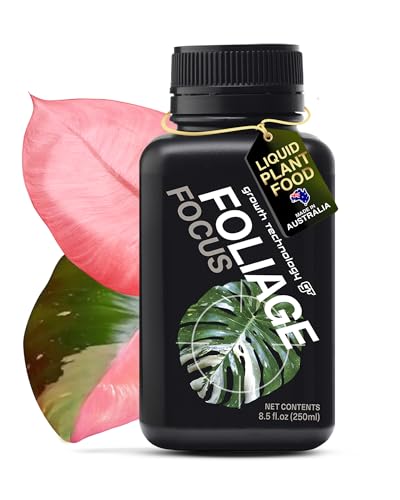
Growth Technology GT Foliage Focus is built specifically for aroids, philodendrons, ferns, and palms — the heavy foliage producers that need a steady supply of nitrate-nitrogen and calcium. At a dosing rate of only 3 to 5 ml per liter of water in soil, this liquid concentrate delivers leaf color improvement and denser growth without the high phosphorus content that can accumulate in potting mix over time.
The formula is pH buffered and contains magnesium for chlorophyll production, so older leaves stay green longer before naturally yellowing. It works equally well in semi-hydro setups and as a foliar spray for plants that struggle with root uptake. Reviewers with rare Alocasia and Monstera varieties consistently report larger leaf size and faster emergence of new leaves.
The main drawback is the small bottle size — 250 ml does not stretch as far as a quart for large collections. The concentrate is not organic, and a few users have noted that the original bottle seal can leak during shipping if not packed carefully. Despite the higher upfront cost per ounce, the dose-per-gallon math works out favorably for serious collectors.
What works
- Formulated specifically for aroids and heavy-foliage tropical plants
- pH buffered and includes magnesium for chlorophyll stability
- Suitable for soil, hydroponics, and foliar spray applications
What doesn’t
- Small 250 ml bottle runs out fast with a large collection
- Not OMRI listed — synthetic mineral base
3. FoxFarm Happy Frog All Purpose Fertilizer 4 lb

FoxFarm Happy Frog All Purpose is a granular 6-4-5 slow-release fertilizer packed with beneficial soil microbes and mycorrhizal fungi. The OMRI listing guarantees organic compliance, making it a solid choice for edible indoor plants or gardeners who want to avoid synthetic salts entirely. The granules break down gradually over weeks, feeding plants without a sudden nitrogen spike.
Users report that yellowed leaves on vegetables and ornamentals green up within a week of application, and the microbial component improves root zone health over repeated use. The 4-pound bag covers a large number of pots for the price, and you only need to reapply every 4 to 6 weeks during the growing season. The formula is gentle enough for use in potting mixes, raised beds, and container gardens.
The biggest complaint is the strong manure-like odor that makes indoor application unpleasant — you will want to open windows or apply it outdoors and move the plant back inside after watering. If you over-apply or fail to water it in properly, white mold can form on the soil surface. The granular form also makes it harder to flush the soil if you accidentally add too much.
What works
- OMRI listed with beneficial soil microbes and mycorrhizal fungi
- Slow 6-4-5 NPK release prevents salt burn
- 4 lb bag offers strong value per square foot of coverage
What doesn’t
- Strong manure smell requires ventilation during indoor use
- Granules can develop surface mold if not watered in thoroughly
4. Espoma Organic Indoor Plant Food 2-Pack

Espoma’s Organic Indoor Plant Food uses a gentle 2-2-2 NPK ratio that is extremely forgiving for novice plant owners. The liquid concentrate is applied by adding half a capful per quart of water every 2 to 4 weeks. Because the nutrient concentration is low, you are unlikely to burn roots even if you feed twice as often as recommended.
This formula is marketed as safe around kids and pets, and the ingredients are derived from natural sources rather than synthetic salts. Reviewers with 20-plus years of indoor growing experience call it the best organic liquid they have used, noting immediate improvement in leaf color and stem strength. The two-pack provides ample volume for a moderately sized collection without taking up much storage space.
The mild manure-like smell is noticeable during mixing but dissipates quickly after watering. A small number of users report that the 8-ounce bottles run out faster than expected for large collections — you may need the larger size if you have dozens of plants. The low NPK also means you cannot push rapid new growth on heavy feeders like monsteras without applying more frequently.
What works
- Very dilute 2-2-2 NPK is nearly impossible to over-apply
- Organic ingredients safe for households with children and pets
- Two-pack gives good value for entry-level organic feeding
What doesn’t
- Small 8 oz bottle per pack requires frequent reordering for big collections
- Low nutrient density demands more frequent application for fast-growing species
5. Instant Biologics Instant Plant Food Tablets 4-Pack
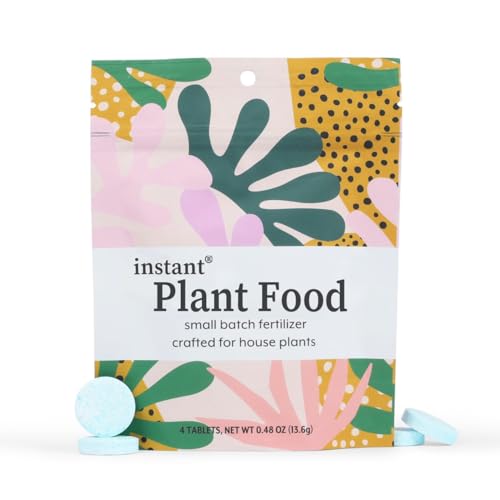
Instant Biologics uses a self-dissolving tablet format that eliminates measuring entirely — drop one tablet into a watering can or glass of water, wait for it to dissolve, and water your plants. The 4-3-6 NPK ratio is slightly higher in potassium, which helps with stress resistance, and the fermentation-derived ingredients are certified vegan and cruelty-free.
Each tablet feeds a large houseplant or several smaller ones for up to 3 months, making this one of the lowest-maintenance options available. Beginner plant owners report that the simple instructions and lack of smell make it easy to stick to a regular feeding schedule. The tablets dissolve completely without leaving sediment, and the formula is safe for self-watering containers.
The biggest limitation is the lack of dosage flexibility — one tablet fixed per volume of water means you cannot adjust the strength for light-sensitive plants or weak-rooted specimens. At a higher cost per feeding compared to liquid concentrates, the tablet form is less economical for large collections. The 4-count pack also requires repurchasing more often than a concentrated liquid bottle that lasts for dozens of gallons.
What works
- No mixing or measuring required — drop and dissolve
- Each tablet lasts up to 3 months of regular feeding
- Vegan, cruelty-free, and made from fermentation-derived ingredients
What doesn’t
- No flexibility to dilute dosage for sensitive or small plants
- Higher per-feeding cost compared to liquid concentrates
6. HiThrive Houseplant Fertilizer 16oz

HiThrive’s 16-ounce bottle of 6-2-4 liquid concentrate is formulated to cover 85-plus gallons of water, making it one of the highest-value options for medium to large plant collections. The dilution rate of 1 teaspoon per gallon ensures that the bottle lasts through months of weekly feeding. The NPK ratio is moderate enough to use on most common houseplants including pothos, peace lilies, and dracaena.
Reviewers note that the formula encourages blooming in species that had not flowered in years, suggesting that the phosphorus and potassium levels are well-calibrated for general use. The liquid mixes clear and does not leave an odor. The bottle cap serves as a measuring tool, removing the need for a separate dropper or spoon.
The main drawback is that the 6-2-4 ratio is still higher in nitrogen than what some slow-growing desert species like cacti and succulents prefer — users with mixed collections should reduce dosage for those plants. A few reviewers recommend spacing out applications rather than feeding with every watering to avoid nutrient buildup in compacted soil.
What works
- Extremely concentrated — one bottle feeds over 85 gallons of water
- Clear liquid mixes without smell or residue
- Affordable per-gallon cost for large collections
What doesn’t
- Moderate 6-2-4 NPK still higher in nitrogen than succulents prefer
- Requires spacing out applications to avoid salt buildup in compacted soil
7. Miracle-Gro Water Soluble All Purpose Plant Food 3 lb

Miracle-Gro’s water-soluble powder is the most recognized name in plant food for a reason — the 24-8-16 NPK ratio delivers a fast green-up within days of application. The 3-pound container covers roughly 1,200 square feet of garden area, and the powder dissolves nearly instantly in water when mixed according to the indoor dosage of half a teaspoon per gallon.
Users consistently report that plants double in size and produce greener leaves after just one or two feedings. The formula includes chelated iron and five other micronutrients, plus a soil penetrant that helps the solution reach the root zone efficiently. It works on everything from roses and vegetables to ferns and trees, making it a one-stop option for gardeners who also maintain outdoor beds.
The high nitrogen content can easily burn indoor plants if you use the outdoor dosage. The fine blue powder stains hands and clothing, and airborne dust can be irritating to breathe. Frequent indoor use without periodic soil flushing leads to salt crust formation on the soil surface. This option is better suited for experienced growers who can manage dosage than for beginners wanting a set-and-forget routine.
What works
- Instant visible results — greener leaves and faster growth within days
- Extremely cost effective for large-scale feeding indoors and outdoors
- Includes chelated iron and trace elements beyond the primary NPK
What doesn’t
- High 24-8-16 NPK makes indoor overdose easy for beginners
- Fine blue powder stains surfaces and can irritate lungs if inhaled
Hardware & Specs Guide
NPK Ratio
The three numbers represent the percentage by weight of nitrogen, phosphorus, and potassium. A 24-8-16 formula is 24 percent nitrogen, which drives leaf growth but accumulates as salt if not flushed. A 6-4-5 or 9-3-6 ratio provides a more balanced feeding profile that is safer for indoor containers where drainage is limited. Lower nitrogen formulas are better for succulents, cacti, and species that grow slowly in low light.
Liquid vs Granular vs Tablet
Liquid concentrates give you per-watering control over dosage and are easiest to flush out. Granular slow-release formulas feed over weeks and work best in pots with a top-dressing method, but they cannot be removed once applied. Tablets trade flexibility for convenience — they dissolve at a fixed rate and are ideal for self-watering pots or for plant owners who want a hands-off schedule. Each form changes how quickly you see results and how much precision you have over the nutrient load.
Salt Index and Buildup
Synthetic fertilizers with high NPK numbers have a higher salt index, which can burn root tips and cause leaf tip browning if over-applied. Organic formulas and low-concentration liquids reduce this risk but may provide slower nutrient release. Indoor pots without drainage holes are especially vulnerable to salt accumulation — using distilled water between feedings helps flush excess minerals. A white crust on the soil surface is the clearest sign that you need to reduce fertilizer strength or frequency.
Organic Certification (OMRI)
Products listed with the Organic Materials Review Institute meet strict standards for natural sourcing and exclude synthetic ingredients like ammonium nitrate and urea. OMRI-listed fertilizers support soil microbiology and reduce the risk of chemical burn, but they often have a stronger natural odor and may cost more per unit of nitrogen. For most houseplant owners, organic certification matters most when growing edible plants indoors or when sensitivity to synthetic salt buildup is a concern.
FAQ
How often should I fertilize indoor houseplants?
What NPK ratio is best for general houseplant feeding?
Can I use outdoor plant food on my houseplants?
What is the difference between synthetic and organic houseplant fertilizer?
Final Thoughts: The Verdict
For most gardeners, the best houseplant fertilizer winner is the Dyna-Gro Foliage Pro because its 9-3-6 NPK ratio hits the sweet spot between growth response and safety for a wide range of indoor species. If you want a certified organic formula with soil-building microbes, grab the FoxFarm Happy Frog All Purpose. And for no-measure convenience on a tight schedule, nothing beats the Instant Biologics Instant Plant Food Tablets.