
Weeds don’t fight fair. They burrow deep, snap off at the surface, and laugh at flimsy tools that bend on the first pull. A proper hoe for weeds needs to be sharp enough to sever roots, heavy enough to break compacted soil, and long enough to save your back — and most garden hoes fail on at least one of those fronts.
I’m Rikta — the co-founder and writer behind Lawn Gear Lab. I’ve spent hundreds of hours comparing steel gauge data, handle materials, blade geometries, and owner-reported durability to build this guide around the most effective weed-fighting tools on the market.
Whether you’re clearing crabgrass from a vegetable bed or reclaiming an overgrown patch of field, this review of the best hoe for weeds breaks down exactly which tool matches your soil, your strength, and the stubbornness of your weed problem.
How To Choose The Best Hoe For Weeds
The wrong hoe turns weeding into a back‑breaking chore. The right one makes it a satisfying, rhythmic sweep. Here are the specs that separate a keeper from a frustration.
Steel Gauge and Blade Thickness
Most budget hoes use 16-gauge or thinner steel. That’s fine for loose, sandy soil. But if you’re dealing with clay, compacted garden beds, or established taproots, 12-gauge steel is the standard that resists bending and holds a sharp edge. The Bully Tools line and the Rogue Hoe both use thicker steel and report fewer edge rolls after extended use.
Blade Geometry: Draw, Stirrup, Scuffle, Warren, or Diamond
Each blade shape targets weeds differently. A draw hoe chops and pulls toward you — powerful but tiring on large areas. A stirrup (or hula) hoe cuts on both push and pull strokes, making it faster and less fatiguing for clearing beds. A diamond hoe’s pointed edges reach into tight spaces between plants. The warren hoe’s pointed triangular head excels at digging furrows and cutting through roots. Match the shape to your primary task.
Handle Length and Material
A handle between 54 and 60 inches lets you stand upright while working, reducing lower back strain. Fiberglass handles are lighter, splinter-proof, and resist moisture and UV degradation better than wood. Wood handles have a more comfortable natural grip but require maintenance and can crack in weather. Ash is the premium wood choice; hardwood is durable but heavier.
Weight and Balance
Heavier hoes (3-4 pounds) deliver more momentum through tough soil and roots, reducing the effort you need to apply. Lighter hoes (1-2 pounds) are easier to maneuver for precision tasks around delicate plants but may bounce off hard ground. Test the balance point — a well-balanced hoe lets the blade do the work, not your arms.
Quick Comparison
On smaller screens, swipe sideways to see the full table.
| Model | Category | Best For | Key Spec | Amazon |
|---|---|---|---|---|
| Hoss Stirrup Hoe | Stirrup | Large beds, fast clearing | 6″ spring steel, 20° oscillation | Amazon |
| Rogue Hoe 7″ Wide Blade | Field/Cultivator | Heavy sod, woody brush | 7″ recycled disc blade | Amazon |
| Corona SH61000 Diamond Hoe | Diamond | Precision weeding near plants | Four sharpened edges | Amazon |
| Bully Tools 12-Gauge Draw Hoe | Draw/Paddle | Heavy chopping, shaping soil | 12-gauge steel, 58″ fiberglass handle | Amazon |
| Bully Tools Warren Hoe | Warren | Furrow digging, root cutting | 12-gauge steel, extended ferrule | Amazon |
| True Temper Action Hoe | Stirrup | Raised beds, scuffling | Triangular oscillating head | Amazon |
| Skidger Xtreme Weeder | Scuffle | Gravel, mulch, flower beds | Stainless V-blade, 54″ handle | Amazon |
In‑Depth Reviews
1. Hoss Stirrup Hoe

The Hoss Stirrup Hoe delivers exactly what a serious weeder needs: a sharp, 6-inch spring steel blade that cuts on both forward and backward strokes thanks to its 20-degree oscillation. That dual-action motion means you clear a swath of weeds in half the time compared to a standard draw hoe, and the long waxed ash handle (60 inches) keeps you upright through an entire bed. Users consistently report that it slices through sod, ivy, and even small shrubs when used with a sawing motion — no prying or yanking required.
The blade arrives factory-sharp on both sides and is designed to be maintenance-free for typical use. The square-peg mounting is sturdier than traditional stirrup designs, so the blade stays locked in at the correct angle season after season. Several owners noted that it handled compacted soil with surprising ease and made quick work of deep-rooted crabgrass patches.
Where this tool shines is in its balance. The ash handle is waxed (not varnished), which prevents peeling and cracking, and the overall weight of roughly two pounds makes it light enough for extended sessions without sacrificing the blade heft needed for clean cuts. It’s the fastest, least exhausting approach to large-scale weeding this side of a tiller.
What works
- Oscillating blade cuts on push and pull for fast clearing
- Waxed ash handle resists weather and won’t peel
- 60-inch length reduces back strain significantly
What doesn’t
- Premium price sits near the cost of small electric tillers
- Some users reported blade edge folding after heavy use on rocky soil
2. Rogue Hoe 7″ Wide Blade Garden Cultivator

The Rogue Hoe is built from recycled agricultural disc blades — steel that was originally designed to slice through crop stubble and hardpan. That heritage translates into a 7-inch blade that takes a razor edge with a file, holds it through hours of chopping, and can handle tasks most garden hoes can’t. Owners report using it to clear blackberry brambles, cut through sod, and even dispatch small saplings up to an inch in diameter.
At just over four pounds, this is the heaviest hoe on the list, and that weight is an advantage when you’re breaking new ground. The blade geometry is ground up the sides, creating pointed edges that let you dig into tough clay and pry out root networks. The socket and blade are welded together for maximum strength, and the long handle allows a full swing that maximizes leverage.
Owners consistently describe it as a lifetime tool if you maintain the handle properly (remove the varnish and apply linseed oil). It’s not the best choice for delicate flower bed work — the wide blade and heft are overkill in tight spaces — but for reclaiming overgrown areas or prepping a new garden plot, nothing else on this list matches its raw cutting power.
What works
- Extremely sharp, thick blade holds edge through heavy use
- Weight and blade width slice through sod, roots, and brush
- Recycled disc steel is virtually indestructible with proper care
What doesn’t
- High price point limits it to serious or professional gardeners
- Too heavy and wide for precise weeding around small plants
3. Corona Clipper SH61000 Diamond Hoe

The Corona Diamond Hoe stands apart with its diamond-shaped carbon steel head that has four sharpened edges — every stroke, forward or backward, presents a fresh cutting surface to the weed. The diamond points are narrow enough to reach between closely planted vegetables or flowers, nicking small weeds that a wider blade would miss entirely. Multiple owners praised its effectiveness on seedling-stage weeds and crabgrass hiding in tight spaces.
The blade is easily sharpened with a file when it dulls, and the head is attached with a welded solid socket connection that outlasts riveted or bolted alternatives. The wood handle is comfortable and replaceable, and at roughly 65 inches total length, the reach is excellent for tall gardeners. One reviewer at 5’4″ found the stock angle less than ideal but fixed it with a quick vice adjustment.
It’s worth noting that the diamond shape isn’t ideal for deep taproots like dandelions — the pointed ends tend to slide off rather than bite in. But for surface-level scuffling and precision weeding near established plants, this is the most maneuverable hoe in the lineup. The trade-off is a higher price for a relatively lightweight head that excels at finesse over brute force.
What works
- Four sharp edges cut on every stroke direction
- Diamond points reach tight spaces between plants
- Blade is easily re-sharpened with a file
What doesn’t
- Not effective on deep taproots like dandelions
- On slopes, the blade tends to pull soil downhill and cause erosion
4. Bully Tools 12-Gauge Garden Hoe (Draw Hoe)

Bully Tools earns its name with this 12-gauge steel paddle draw hoe — the thickest head in the mid-range section. At 3.2 pounds, it has real momentum to drive through compacted soil and established weed networks. The head measures 5.25 by 6.25 inches, giving you a broad surface for chopping, shaping soil, and dragging garden amendments. The fiberglass handle is triple-wall construction that won’t splinter or rot, and the rubber grip reduces hand fatigue during long sessions.
Owners consistently praise the American-made quality and the fact that the steel head is over-welded to a steel-encased neck — a detail that prevents the head separation that kills cheaper hoes. Several users noted that it cut their garden work time in half and that the weight actually helps break tough soil rather than tiring the user out. It’s a brute-force tool that excels at dislodging weeds by the root when pulled toward you.
The drawbacks are real: the head is not overly sharp from the factory, and some owners reported surface rust developing within six weeks, requiring regular oiling. It’s also heavy enough that users who prefer ultra-light tools may find it fatiguing. But for anyone dealing with hard clay, established sod, or overgrown beds, this draw hoe delivers the mechanical advantage those tasks demand.
What works
- 12-gauge steel head resists bending and powers through packed soil
- Over-welded neck prevents head failure common on cheaper hoes
- Long fiberglass handle with rubber grip reduces back and hand strain
What doesn’t
- Blade arrives less sharp than some competitors
- Prone to rust without regular oiling in humid conditions
5. Bully Tools Warren Hoe Professional 12-Gauge
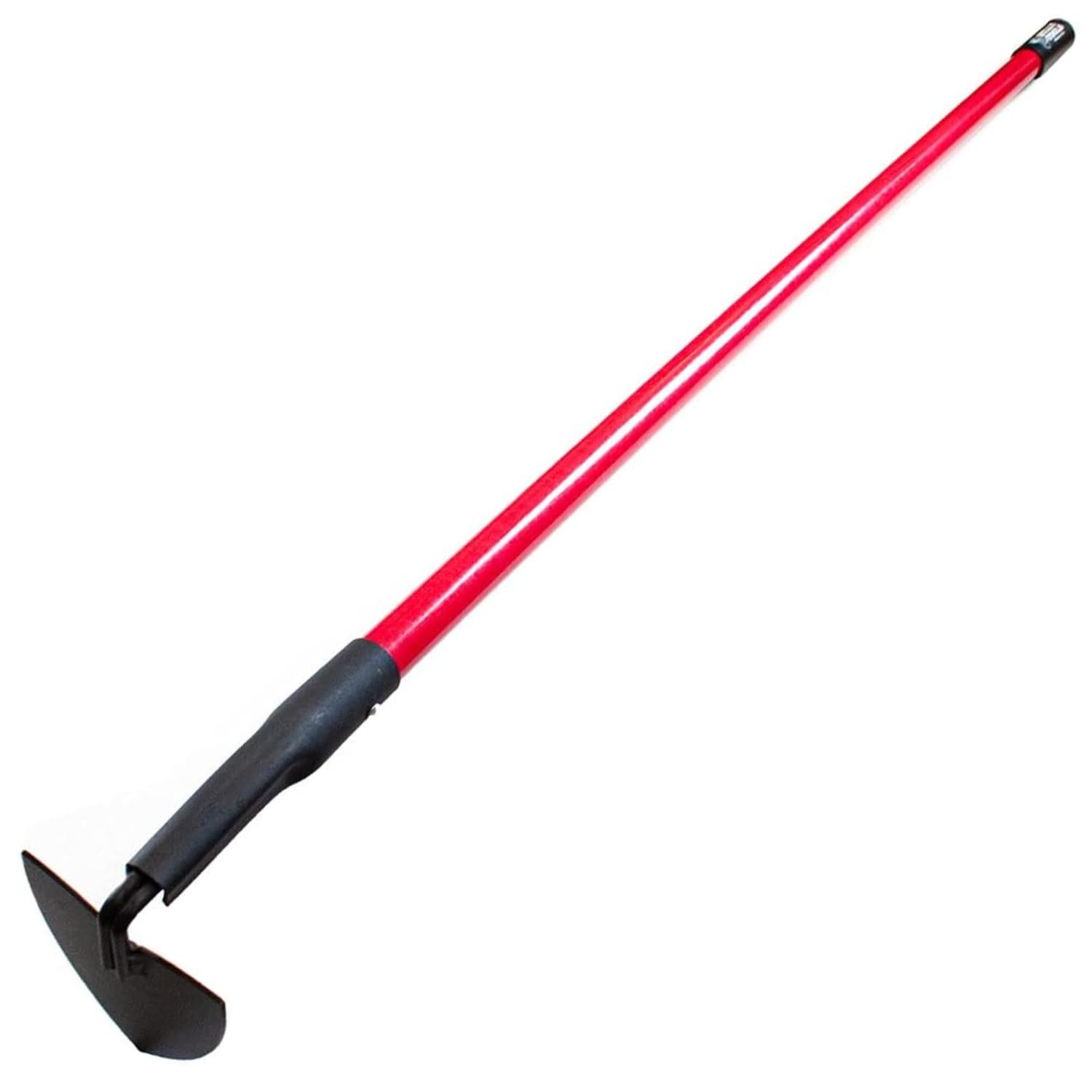
The Warren hoe shape — a pointed triangular head — is designed for digging furrows, cutting roots, and working in tight spaces around plants. Bully Tools executes it in the same 12-gauge American steel as their draw hoe, but adds an extended steel ferrule that reinforces the handle connection. That ferrule is the weak point on many warren-style tools, and the beefed-up design here explains why owners report the head staying rock-solid for years of heavy use.
Customer feedback highlights the commercial-grade construction and the limited lifetime warranty that Bully Tools actually honors — one owner described receiving a free replacement after four years of hard use with zero questions asked. The tool weighs about 3 pounds, making it slightly lighter than the draw hoe version, and the fiberglass handle with polyester veil coating resists moisture and UV damage reliably.
The primary trade-off is that this is a heavy warren hoe, and some users felt it was overbuilt for light weeding tasks. The pointed head excels at cutting through individual root clumps and digging planting trenches, but it doesn’t cover as much surface area per stroke as a paddle or stirrup blade. It’s a specialist’s tool for gardeners who value precision and durability above speed.
What works
- Thick 12-gauge American steel with excellent head-to-handle connection
- Limited lifetime warranty honored by manufacturer
- Extended steel ferrule prevents handle splitting at attachment point
What doesn’t
- Heavier than some users prefer for extended sessions
- Narrow blade is less effective for large surface area clearing
6. True Temper Action Hoe with Hardwood Handle

The True Temper Action Hoe is a stirrup-style tool with a triangular head that oscillates as you push and pull, cutting weed roots just below the soil surface. At roughly one pound, it’s the lightest tool on this list, making it an excellent choice for raised bed gardeners and users who may have limited arm strength. The 54-inch hardwood handle is strong and durable, though heavier than fiberglass alternatives.
Owners consistently describe it as a “back saver” — the scuffling motion skims the top 3-4 inches of soil, disturbing weeds without flipping the soil structure or harming beneficial worms. One reviewer mentioned finishing an entire 4-by-6-foot raised bed in under 30 minutes with minimal strain. The blade arrives sharp enough for immediate use, and the action is intuitive even for beginners.
On the downside, the head is riveted to the handle rather than bolted or welded, which means replacing a broken handle requires drilling out the rivets. The triangular head is slightly narrower than the product photos suggest. And while it handles loose garden soil beautifully, it struggles in heavily compacted clay or rocky ground where the lightweight head lacks the momentum to cut through.
What works
- Lightweight design is ideal for raised beds and reduced back strain
- Scuffling action preserves soil structure and worms
- Intuitive push-pull motion covers beds quickly
What doesn’t
- Riveted head requires drilling for handle replacement
- Not effective in compacted clay or very rocky soil
7. Skidger Xtreme Weeder (Scuffle Hoe Cultivator)
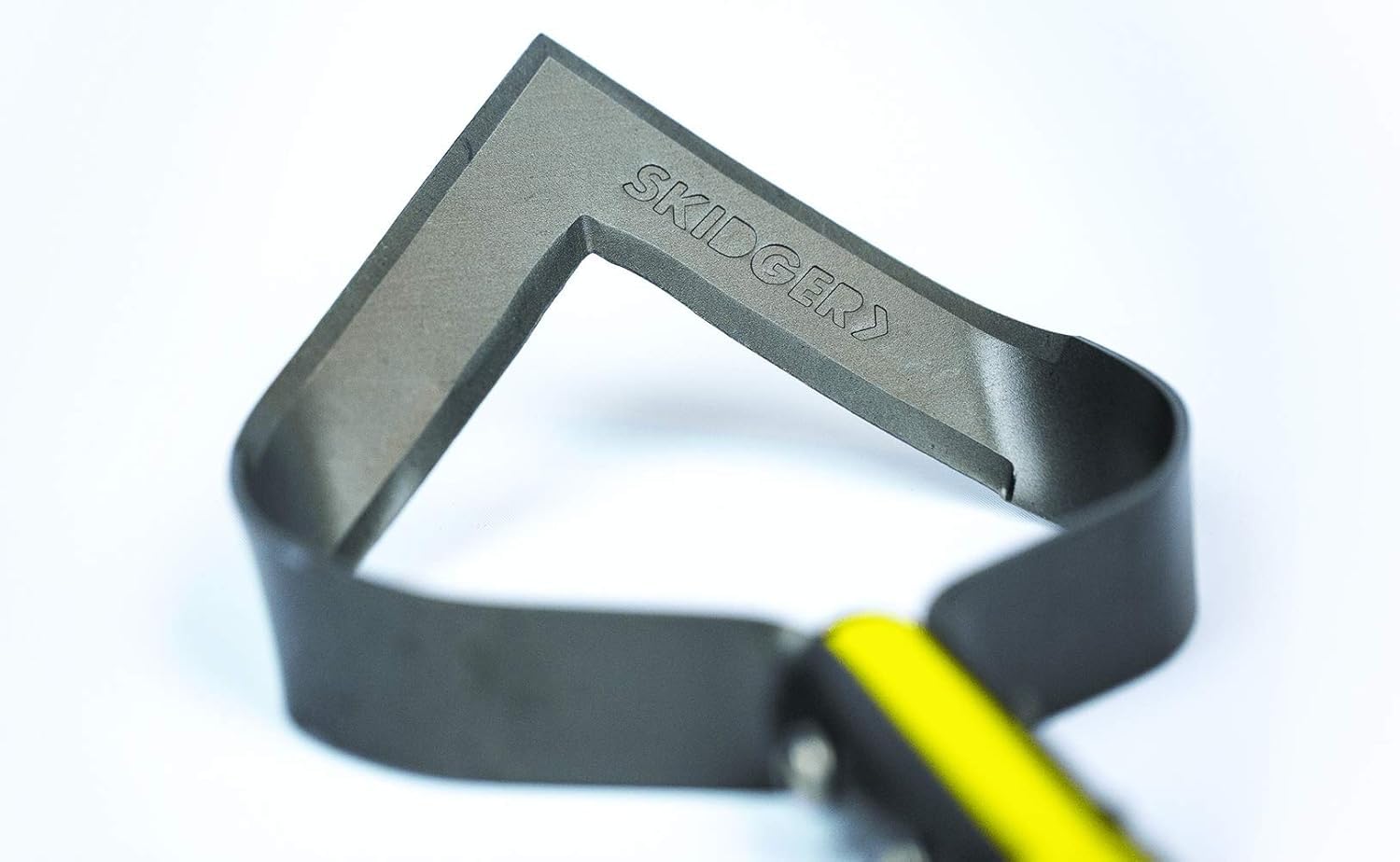
The Xtreme Weeder uses a stainless steel V-shaped blade that cuts weeds on both the push and pull stroke — the classic scuffle hoe motion. What sets it apart is the open design that works in loose materials like gravel, bark mulch, and pine straw without clogging. The pointed tip allows you to snake between plants and around drip irrigation lines, making it a strong choice for established flower beds and mulched areas.
At 1.8 pounds and with a 54-inch fiberglass handle, it’s light enough for users with limited arm strength — several owners specifically cited its ease of use after surgery or for arthritis management. The blade curvature is designed to let you see exactly where the blade is cutting, which improves accuracy when working near desirable plants. Stainless steel construction means no rust worries, and the blade holds its edge well for typical garden use.
The main drawback is that the handle is quite long (54 inches), which can be awkward for shorter users — you may need to choke up on the grip or add a second grip point. Some units arrived with minor shipping damage to the blade tip, and a few users reported that the V-blade doesn’t always sever thick, woody taproots in one pass. But for surface-level weeding in loose or mulched beds, it’s one of the most effortless tools you can use.
What works
- Stainless steel V-blade works in gravel, bark, and mulch without clogging
- Open blade design lets you see cutting area clearly
- Lightweight and easy to use for gardeners with limited strength
What doesn’t
- 54-inch handle can feel too long for shorter users
- V-blade may struggle with large, woody taproots in one pass
Hardware & Specs Guide
Steel Gauge (Thickness)
Steel gauge numbers work inversely — lower numbers are thicker. 12-gauge steel (used by Bully Tools) is approximately 0.1046 inches thick, roughly 30% thicker than 14-gauge (0.0747 inches) and nearly double the thickness of 16-gauge (0.0598 inches). Thicker steel resists bending under repeated impacts with roots and hard soil. If you primarily work in loose, prepared garden beds, 16-gauge is adequate. If you’re breaking new ground or dealing with clay, 12-gauge is the durability floor.
Handle Length and Ergonomics
Handle length determines both leverage and posture. A 48-54 inch handle is comfortable for users under 5’6″ and works well for raised beds where standing height is limited. A 58-65 inch handle gives taller users better posture and provides more leverage for heavier chopping strokes. Fiberglass handles (Bully Tools, Xtreme Weeder) offer consistent weight, splinter-proof texture, and moisture resistance. Ash wood (Hoss, True Temper) provides natural vibration dampening but requires periodic waxing or oiling to prevent drying and cracking.
FAQ
What’s the difference between a stirrup hoe and a scuffle hoe?
Can a heavy draw hoe damage my garden soil structure?
How do I prevent my hoe blade from rusting between uses?
How often should I sharpen my weeding hoe?
Final Thoughts: The Verdict
For most gardeners, the best hoe for weeds winner is the Hoss Stirrup Hoe because its oscillating 6-inch blade cuts on both strokes, making large-bed weeding fast and efficient while the long ash handle saves your back. If you’re reclaiming overgrown ground where brute force is non-negotiable, grab the Rogue Hoe 7″ Wide Blade — its recycled disc steel shears through roots and sod that would stop a lighter tool cold. And for precision weeding around delicate plants, nothing beats the Corona Diamond Hoe with its four sharp edges that reach into tight spaces without disturbing your established plants.