
Dead and overhanging branches turn a manageable yard into a daily hazard. Standard pruners buckle under wood thicker than an inch, leaving you wrestling with half-cut limbs instead of making quick work of cleanup. A tool built for the job eliminates the struggle.
I’m Rikta — the co-founder and writer behind Lawn Gear Lab. My research focuses on comparing mechanical advantage systems, blade metallurgy, and handle ergonomics across dozens of models, and I’ve analyzed hundreds of verified owner reports to isolate what separates a true heavy-duty lopper from a light-duty pretender.
This guide breaks down the seven best contenders for tough pruning work, rated by leverage, durability, and cut capacity, to help you find the right heavy duty tree loppers for your property.
How To Choose The Best Heavy Duty Tree Loppers
Not every long-handled cutter qualifies as heavy duty. The frame, the blade interface, and the leverage system determine what size wood the tool can handle repeatedly without bending or dulling after a few cuts. Focus on these four factors when sorting through the options.
Blade Type: Bypass vs. Anvil
Bypass blades slide past each other like scissors, producing a clean slice that heals faster on living (green) wood. Anvil blades crush the branch against a flat surface, making them better suited for dry, dead, or hardwood where a clean edge matters less. Some anvil models also handle green wood well, but bypass is the default for tree care that promotes plant health.
Cutting Mechanism: Compound Action vs. Ratcheting
Compound-action loppers use a pivoting linkage that multiplies your hand force, letting you cut through thicker branches with less muscle. Ratcheting mechanisms take this further by dividing the cut into progressive stages; the blade bites deeper with each squeeze. For branches over 1.5 inches, either system significantly reduces fatigue compared to a fixed-pivot design.
Handle Material and Length
Aluminum handles keep the overall weight low while providing enough stiffness for branches up to two inches. Steel handles offer extra durability but add pounds that tire your arms during extended use. Telescoping handles (typically 26 to 40 inches) give you overhead reach without a ladder, but the locking mechanism must feel positive — twist-locks wear out faster than pin-lock systems.
Cutting Capacity and Blade Steel
Manufacturers list a maximum branch diameter, but real-world performance depends on steel hardness and edge retention. Fully forged, heat-treated steel holds an edge longer than stamped blades. A rating of 2 inches is the practical minimum for a tool labeled “heavy duty.” If your routine includes limbs above that, look for forged, replaceable blades that can be resharpened rather than replaced.
Quick Comparison
On smaller screens, swipe sideways to see the full table.
| Model | Category | Best For | Key Spec | Amazon |
|---|---|---|---|---|
| Corona AL 8482 | Premium Bypass | Precision green-wood pruning | 2.25″ forged steel blade | Amazon |
| Fiskars PowerGear X | Premium Anvil | Dry hardwood | 2.1″ anvil with gear mechanism | Amazon |
| Corona DualLINK | Mid-Range Bypass | General property maintenance | 2″ compound-action steel | Amazon |
| Kings County Tools | Mid-Range Bypass | Thick living branches | 2″ double ratcheting | Amazon |
| STEELHEAD Gear-Bypass | Mid-Range Bypass | Telescoping reach | 1.75″ ratcheting gears | Amazon |
| YRTSH Compound | Budget Anvil | Light-duty yard cleanup | 2″ Teflon-coated anvil | Amazon |
| BLACK+DECKER LLP120 | Cordless Chainsaw | 4″ limb removal | 4″ battery-powered bar | Amazon |
In‑Depth Reviews
1. Corona AL 8482 36-Inch Orchard Lopper
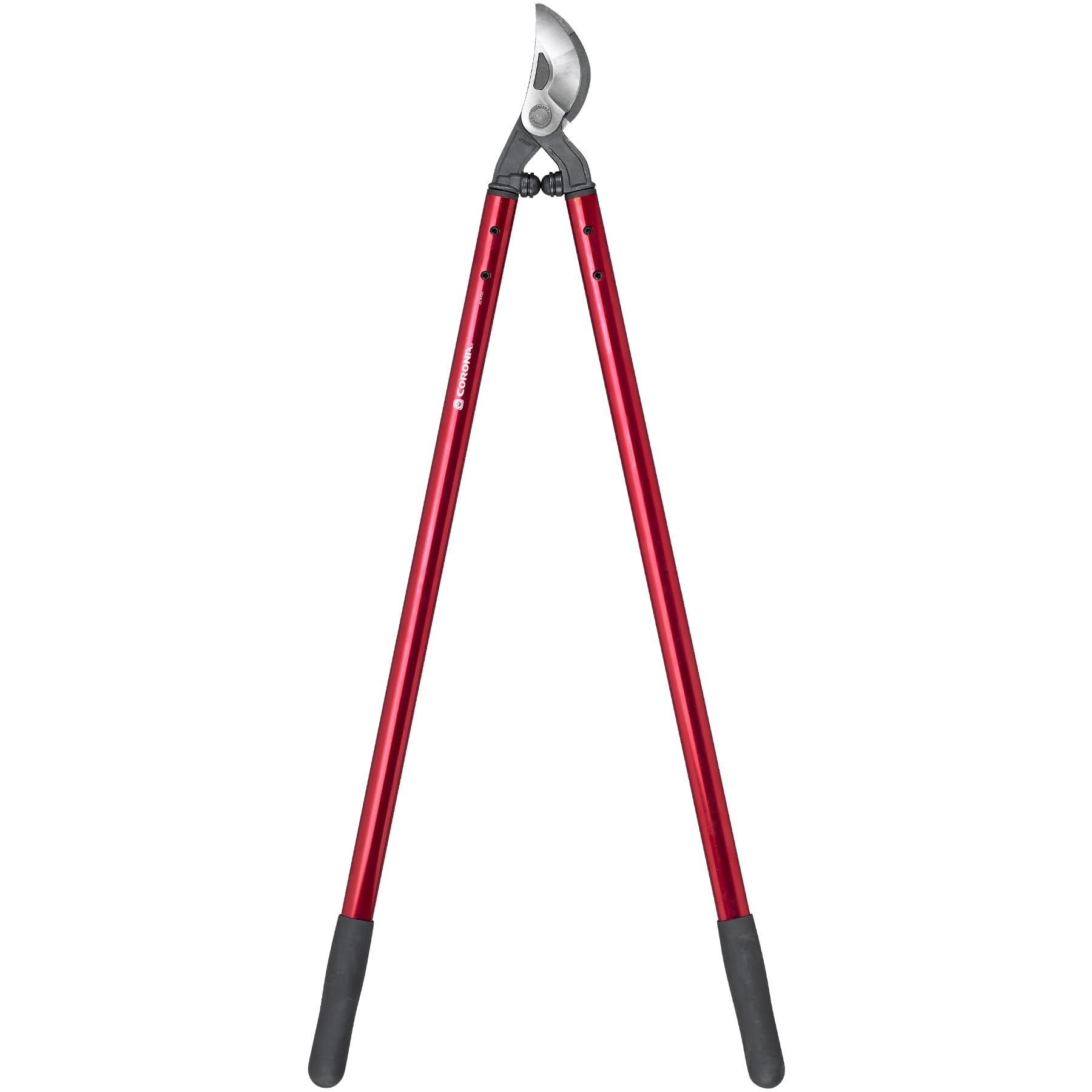
Corona’s AL 8482 represents what a purpose-built orchard lopper should be: lightweight elliptical aluminum handles (just 2.8 pounds) paired with a fully forged, heat-treated steel blade that cuts through green wood up to 2.25 inches. The Dual Arc bypass blade includes a deep sap groove that keeps the cutting path clear of sticky residue, and the slant-ground hook self-clears on every stroke. At 36 inches, the handles provide serious leverage without the weight penalty of steel, making overhead pruning far less punishing over a full afternoon.
Owner feedback consistently highlights the longevity of this tool — one user reported 11 years of service before a break from misuse, and multiple reviewers confirm the blade remains sharp through seasons of bamboo, cypress, and live oak cuts. The replaceable, resharpenable blade design means you aren’t throwing away the whole tool when the edge wears. The locking nut has been updated to eliminate the old retaining clip, a weak point on earlier Corona models. Hands of all sizes find the cushioned grips comfortable, and the forged hook resists bending even when you push past the rated diameter.
The AL 8482 is less ideal for users who need compound or ratcheting assistance — it relies entirely on handle length and blade sharpness for cutting force. Those with limited hand strength may prefer a geared mechanism. A few owners note the tool feels heavy when used horizontally for ground-level trimming, though the weight is well balanced for vertical and overhead work. For the user who values clean, precise cuts and tool longevity over mechanical shortcuts, this is the benchmark.
What works
- Lightweight aluminum frame reduces fatigue during extended use
- Forged, resharpenable blade holds an edge for years
- Clean bypass cut promotes faster healing on green wood
What doesn’t
- No compound or ratcheting mechanism for extra force
- Feels less balanced when used low to the ground
2. Fiskars PowerGear X Anvil Lopper LX99

Fiskars designed the PowerGear X specifically for dry, dead hardwood — the kind that makes bypass blades bind and chatter. The anvil head catches the branch against a flat surface while the curved, non-stick-coated blade slices down with up to three times more cutting force than a standard anvil lopper. The gear mechanism multiplies hand input smoothly, so a 5.5 cm (roughly 2.1-inch) dry beech limb succumbs without the creaking or jamming common in lesser anvil tools.
European and North American owners alike praise its ability to handle seasoned firewood and deadfall. The aluminum handles keep the overall weight at 1.36 kg (about 3 pounds), and the SoftGrip coating provides a secure hold even in wet conditions. Fiskars offers replacement blades (model 1026286) and a diamond file maintenance kit, extending the tool’s service life considerably. The design is ambidextrous, and the lower blade’s curved profile helps trap the branch for a clean bite rather than pushing it away.
The trade-off is maneuverability on living trees. Anvil crushers leave a rougher wound than bypass cutters, and the PowerGear X is less effective on green, sappy wood where the blade wants to gum up. Some users report difficulty reaching into dense canopy because the anvil head is bulkier than a bypass jaw. This tool excels on the ground or low ladder, cutting dead branches into manageable lengths. If your primary task is clearing dry limbs and storm damage, it’s hard to beat.
What works
- Gear mechanism provides exceptional leverage on hardwood
- Lightweight aluminum handles reduce arm fatigue
- Replaceable blade extends tool lifespan
What doesn’t
- Anvil cut is less clean on green, living wood
- Bulkier head reduces access in tight branch crotches
3. Corona DualLINK MAXFORGED 33-Inch Lopper

Corona’s DualLINK MAXFORGED mechanism is the bridge between a fixed-pivot lopper and a full ratcheting system. The linkage multiplies your closing force so a two-inch live oak limb cuts through with noticeably less effort than a standard bypass of the same handle length. The fully forged steel blades arrive sharp and resist rolling during heavy use. The 33-inch length delivers extended reach without forcing you into a fully telescoping design, which can introduce slop at the joint over time.
Owner reports consistently describe this as an “indestructible” tool for property maintenance. Multiple users note it handles two-inch cuts consistently, and the impact-reducing bumpers at the handle base mute the jarring shock that travels into your palms on tough cuts. The non-slip cushioned grips stay secure in sweaty or wet conditions. Several reviewers mention this is their second pair — the first dulled after years of service, and they chose to buy the same model rather than resharpen, which speaks to both satisfaction and the value of a replaceable blade design.
A few users with previous experience using Fiskars loppers found the DualLINK offered no significant advantage in cutting smoothness. The tool is heavier than the aluminum-handled Corona AL 8482 (4.3 pounds vs. 2.8 pounds), which contributes to fatigue during marathon pruning sessions. The steel blade is durable but is not marketed as resharpenable, meaning you’ll eventually need a replacement head or a new tool. For someone tackling mixed green and dry wood on a regular basis, the DualLINK provides a solid middle ground between price and cutting force.
What works
- Compound linkage reduces cutting effort significantly
- Forged steel blade stays sharp through heavy use
- Impact bumpers reduce hand shock on tough cuts
What doesn’t
- Heavier than aluminum-handled competitors
- Blade is not easily resharpenable by the owner
4. Kings County Tools Double Ratcheting Bypass Lopper
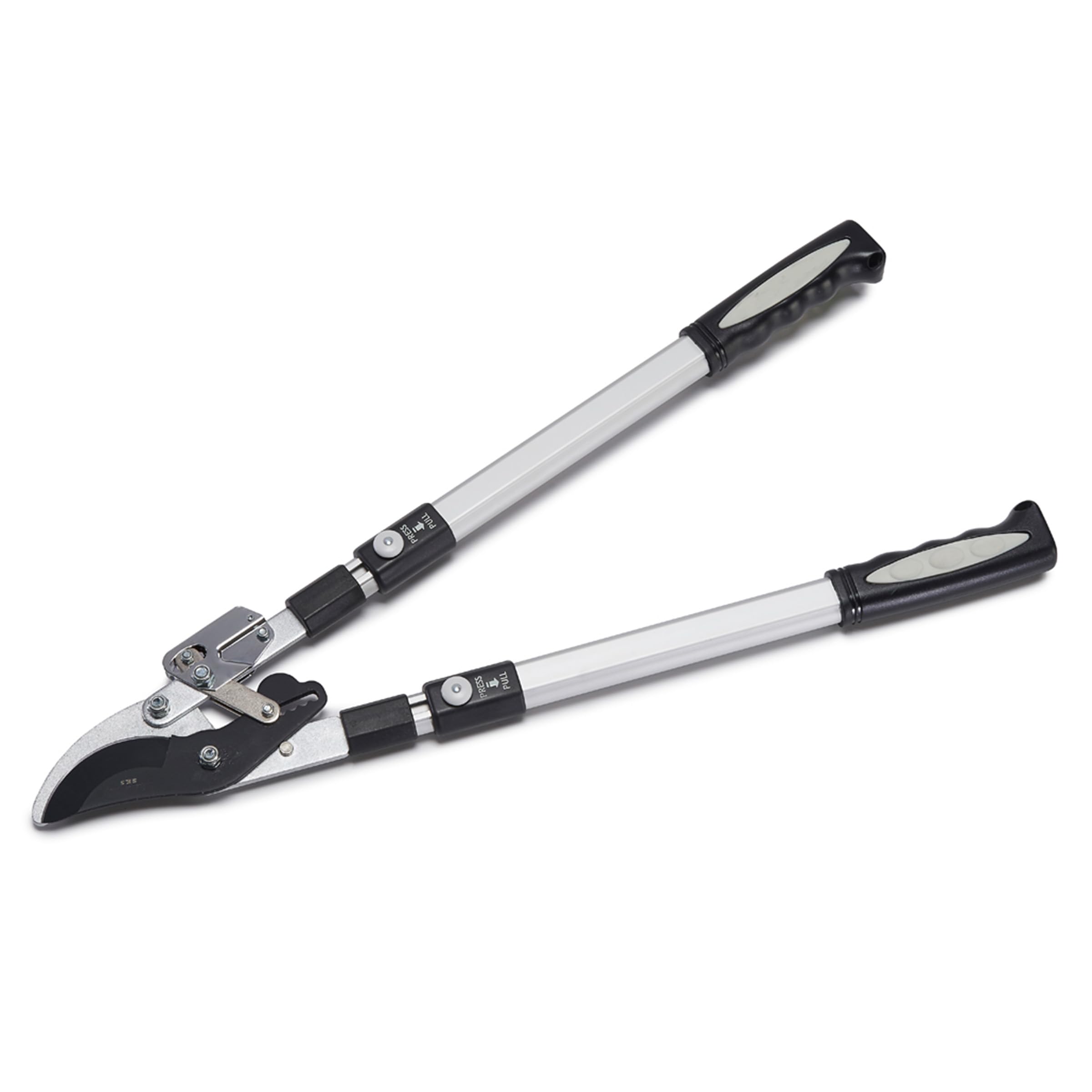
The double ratcheting mechanism on this Kings County Tools lopper divides each cut into two progressive stages, allowing you to bite deeper with each handle squeeze without regripping. This is particularly valuable for users with arthritis or limited grip strength who still need to trim branches up to two inches thick. The bypass blade is designed for green, living wood, and the telescoping handles extend from 26 to 40 inches, giving you the reach to access high limbs without leaving the ground.
Owner feedback highlights the tool’s cutting effectiveness on green wood in the 3/4- to 1.5-inch range, with several users calling it the best value lopper they’ve owned. The aluminum construction keeps the weight manageable for a telescoping design (3.8 pounds), and the six-position pin-lock mechanism feels more secure than the twist-lock collars found on budget extendable handles. A few long-term users reported blade breakage on thicker dead wood, but the manufacturer’s customer service resolved those issues with replacements, indicating solid warranty support.
The main drawback is weight distribution. Several owners note that the tool feels front-heavy compared to fixed-length loppers, which can tire your arms during extended overhead work. The ratcheting mechanism also adds complexity — if a gear strip or the pawl mechanism fails, the tool becomes a standard (and less effective) bypass lopper. For users who need the combination of ratcheting power and adjustable length, this is a capable choice, but it works best when you stay within the recommended cutting capacity and avoid dry hardwood.
What works
- Double ratchet multiplies force for users with weaker grip
- Pin-lock telescoping handles provide secure extension
- Excellent for green wood up to 1.5 inches
What doesn’t
- Front-heavy balance causes fatigue overhead
- Ratcheting mechanism adds potential failure points
5. STEELHEAD Gear-Bypass Limb & Branch Lopper

STEELHEAD’s approach combines a ratcheting gear mechanism with a bypass blade, aiming to get three times the cutting force at the fulcrum while maintaining a clean cut on green wood. The tool telescopes from 27 to 40 inches via a tool-less pin-lock system that owners consistently describe as positive and durable. The high-carbon steel blade carries a non-stick coating to resist sap buildup, and the overmolded DuraGrip handles accommodate both large and small hands comfortably. At just 16 ounces, it is one of the lightest telescoping loppers available.
User reports emphasize the immediate improvement over twist-lock designs — the pin-lock does not slip under load, and the ratcheting action lets you chew through stubborn branches one gear tooth at a time. Several owners replaced expensive big-box store loppers with this unit and found the cutting performance equal or better. The lightweight construction makes it a good option for users who need to carry the tool across a large property or who are prone to arm fatigue from heavier models. The lifetime US-based support from Atlanta adds a layer of confidence.
The cutting capacity is rated at 1.75 inches, which is lower than several competitors on this list. One reviewer noted that while it cuts live oak limbs up to about 1.25 inches effortlessly, it will not cleanly sever a full 2-inch green branch. The serrated blade edge can snag on fibrous bark if you rush the cut. This lopper is best suited for users who prioritize light weight and adjustable length over maximum cutting diameter, and who typically face branches in the 1- to 1.5-inch range.
What works
- Extremely light at 16 ounces for a telescoping model
- Positive pin-lock holds handles securely at any length
- Ratcheting gear reduces effort on medium branches
What doesn’t
- Rated capacity of 1.75 inches is below class average
- Serrated edge can snag on fibrous bark
6. YRTSH Compound Action Lopper
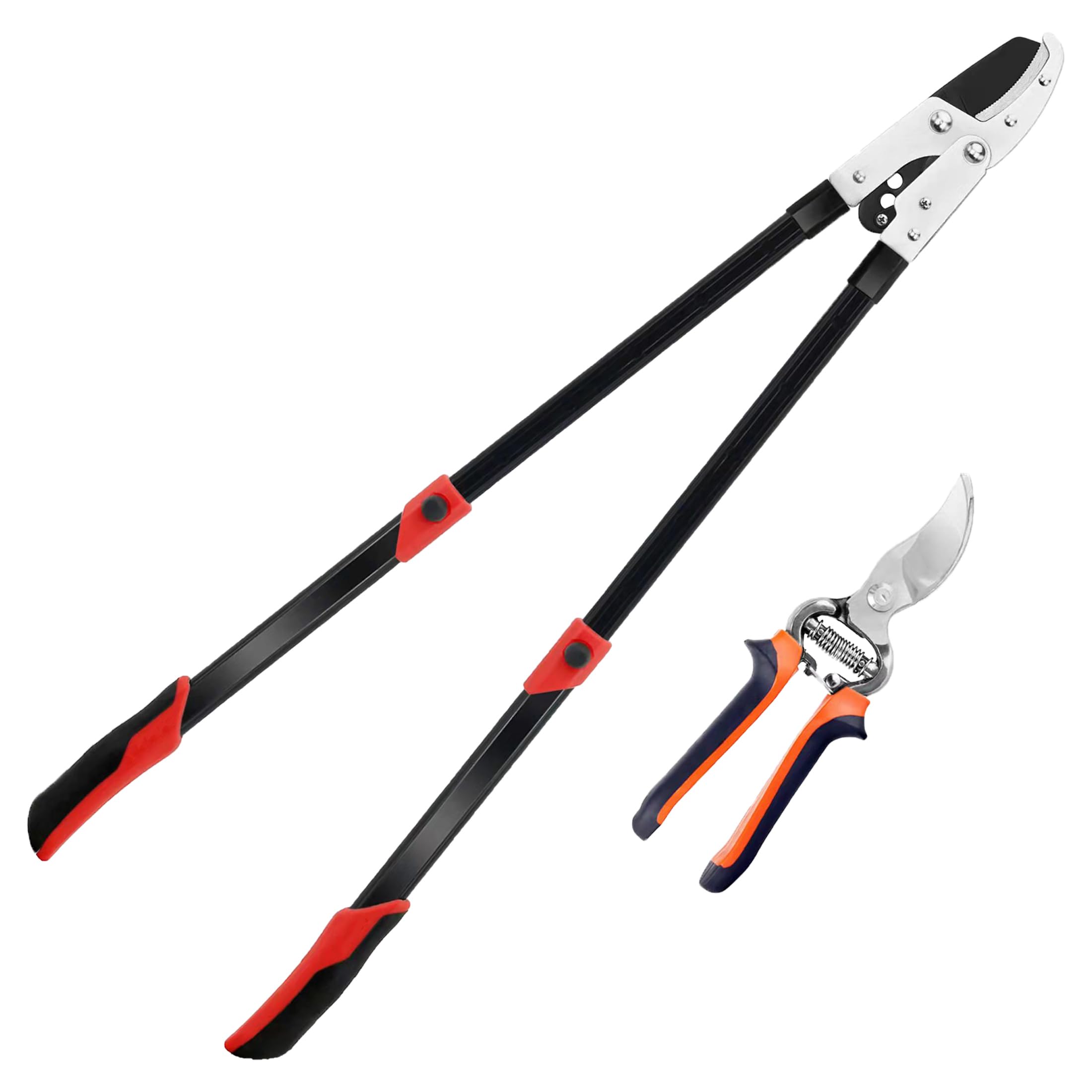
YRTSH brings compound-action leverage to a budget-friendly price point, using a Teflon-coated alloy steel anvil blade that resists sap and rust. The 28- to 41-inch six-step telescoping aluminum handles give you substantial reach for overhead limbs, and the cushioned non-slip grip helps maintain control when you are working at full extension. The blade is rated for branches up to two inches, and the compound pivot is designed to multiply force so users of any age or strength level can cut through thick growth.
Owner reports are largely positive for the price. A 73-year-old reviewer reports cutting hibiscus branches and dry banana leaves with ease, calling the tool lightweight and manageable on a half-acre property. Multiple users confirm that the lopper handles 1.5-inch green branches with little effort. The set also includes a pair of smaller hand pruners, which several owners found useful for quick cleanup of smaller twigs. The anvil design works well on both green and dry material, though the cuts are not as clean as a bypass on living wood.
The primary complaints center on handle flex under high load — one user noted the handles bend when attempting to cut 2-inch green wood overhead, recommending the tool stay within the 1.25-inch range for thicker live oak. The compound action reduces effort but also adds mechanical slop over time compared to a fixed-pivot design. The included small pruners have a metal loop latch that some owners found annoying, as it locks closed every few cuts. For light to medium-duty yard maintenance, this is a capable entry-level option, but it is not built for sustained heavy pruning.
What works
- Compound action makes cutting easier for all strength levels
- Very affordable for a telescoping anvil lopper
- Includes useful hand pruners for smaller tasks
What doesn’t
- Handles flex under heavy loads on thick wood
- Anvil cut is less precise on living branches
7. BLACK+DECKER 20V MAX Alligator Lopper LLP120
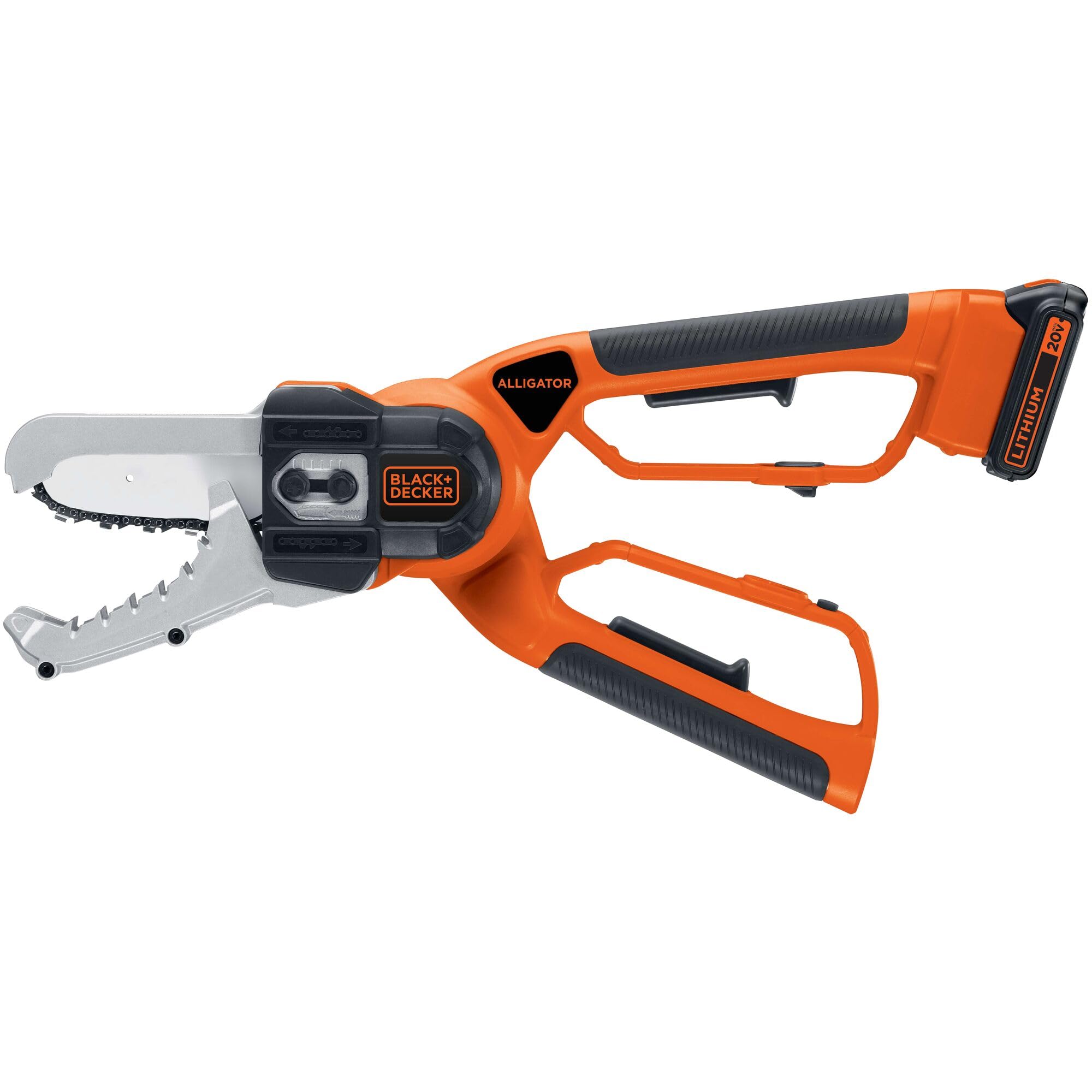
This is not a manual lopper — the LLP120 is a battery-powered chainsaw with a scissor-action clamping jaw that grabs and cuts branches up to four inches thick in a single motion. The 20V MAX lithium battery delivers up to 150 cuts through 1.5-inch wood per charge, making it ideal for clearing brush, small trees, and overhead limbs that would stall a manual tool. Dual-hand switches must both be actuated to start the chain, adding a layer of safety that makes this a preferred choice for users who want chainsaw power without full chainsaw risk.
Owners consistently praise the speed and ease of use for smaller clearing jobs. One user cleared over three miles of fire break with this tool, reporting 30 minutes of cutting time per charge. The clamping jaw design holds the branch steady while the bar cuts through, reducing the kickback potential of a traditional chainsaw. The tool is relatively quiet, which is appreciated in residential settings. Several reviewers note that the safety features make it suitable for occasional users who need to remove limbs without professional gear.
The main limitations are battery runtime and recharge speed. Heavy users report needing to recharge after 30 minutes of active cutting, and the charger is not fast — a spare battery is essentially mandatory for larger jobs. The chain also requires bar oil frequently (about every 10 minutes of cutting), and the included oil bottle is mostly decorative. The chain adjustment tool feels flimsy, and some owners have had battery failures after extended storage. This is a niche tool that excels at fast limb removal but cannot replace a manual lopper for precision pruning or work in tight spaces.
What works
- Cuts branches up to 4 inches with minimal effort
- Safety dual-switch design prevents accidental starts
- Fast and quiet compared to gas chainsaws
What doesn’t
- Battery runtime limits use to 30 minutes per charge
- Requires frequent bar oil and chain adjustments
Hardware & Specs Guide
Bypass vs. Anvil Blade Geometry
Bypass blades create a scissor-like shearing action that leaves a smooth wound, critical for green wood where the tree must heal over the cut quickly. Anvil blades crush the branch against a flat metal plate; they are less precise but generate more force on dry, dead wood. Heavy-duty loppers rated for 2+ inches often use anvil or compound-bypass designs to prevent the blade from jamming mid-cut on thick material.
Leverage Systems and Mechanical Advantage
Compound-action loppers use a four-bar linkage that increases the force applied to the blade by roughly 2:1 over a standard pivot. Ratcheting mechanisms divide the cut into stages, locking the blade at each depth so you can squeeze again without the branch slipping. Both systems reduce the hand force required, but ratcheting adds weight and complexity, while compound-action is simpler and lighter.
Handle Material and Telescoping Mechanisms
Aluminum handles offer the best strength-to-weight ratio for loppers over 30 inches. Steel adds durability at the cost of significant weight. Telescoping handles usually use either a twist-lock collar or a pin-lock system; pin-lock mechanisms are more reliable under repetitive load because they do not rely on friction alone. A loose handle joint is the most common failure point on extendable loppers, so prioritize a model with solid metal-on-metal locking.
Blade Steel and Edge Retention
Fully forged, heat-treated steel (common in mid-range and premium loppers) maintains a sharp edge much longer than stamped steel blades. Blade coatings like Teflon or non-stick finishes reduce friction and sap adhesion but wear off over time. The most serviceable tools feature replaceable or resharpenable blades, extending the product life beyond a single season of heavy pruning.
FAQ
What is the practical cutting capacity difference between a 1.75-inch and a 2.25-inch lopper?
Can I use an anvil lopper on green, living branches?
How often should I sharpen or replace the blade on heavy duty tree loppers?
Final Thoughts: The Verdict
For most gardeners, the heavy duty tree loppers winner is the Corona AL 8482 because it combines lightweight aluminum handles with a forged steel blade that delivers clean bypass cuts on green wood up to 2.25 inches. If you need ratcheting power for dry hardwood, grab the Fiskars PowerGear X. And for users who want maximum cutting diameter without manual effort, the BLACK+DECKER LLP120 cordless lopper makes short work of 4-inch limbs.