
If you’ve ever yanked a stubborn weed only to feel a sharp sting in your palm or a scratch race up your forearm, you know the real enemy isn’t the weed—it’s the defense mechanism hiding in the stem. Rose thorns, blackberry brambles, thistles, and foxtails turn a simple pull into a painful gamble, and cheap cotton gloves offer about as much protection as bare skin. The difference between a smooth afternoon of clearing and a frustrating retreat to the first-aid kit is simply the right pair of gloves built to stop punctures before they happen.
I’m Rikta — the co-founder and writer behind Lawn Gear Lab. I spend my time sifting through material specifications, measuring sleeve lengths, comparing puncture resistance standards, and cross-referencing thousands of owner reports to find out which gloves actually stand up to the sharpest plants in the garden.
After analyzing seven leading models, the real standouts combine dense cowhide or pigskin leather, elbow-length cuffs, and reinforced stitching that lets you grab briars without flinching. This guide breaks down what actually matters when you’re shopping for the best gloves for pulling weeds and how each contender handles the real-world abuse of brambles, cactus, and rose bushes.
How To Choose The Best Gloves For Pulling Weeds
Choosing weed-pulling gloves isn’t about style or color — it’s about stopping a thorn before it reaches your skin. Here are the three critical factors that separate a glove that protects from one that just looks tough.
Leather Type and Thickness
Cowhide is the standard for puncture resistance: it’s dense, thick, and naturally abrasion-resistant, making it ideal for rose bushes and blackberries. Pigskin leather is slightly thinner but more breathable and flexible, which helps with dexterity during delicate weeding tasks. Goatskin offers flexibility but less blunt puncture protection. For pulling weeds with thorns, stick with cowhide or pigskin in a heavyweight construction — anything lighter and you risk a thorn punching through.
Gauntlet Length and Forearm Coverage
The best gloves for pulling weeds extend well past the wrist — ideally to the elbow or mid-forearm. A short cuff leaves your forearm exposed when you push through dense brush or reach into a thorny patch. Look for an elbow-length gauntlet (10 inches or more from wrist to end) made of leather or a thick synthetic. Some models also include an adjustable drawstring to seal out debris, which is essential for keeping foxtails and dirt out of the glove.
Puncture Resistance Standards
Not all “thorn proof” claims are equal. The CE EN 388 standard includes a puncture test (often rated 1 through 4), and the ANSI Puncture Level 2 or higher means the glove can resist moderate needle-like pressure. Reinforced fingertips and a padded palm double patch are strong indicators that the manufacturer designed the glove for real puncture threats. If the product page doesn’t list any standard, assume the protection is minimal — look for verified owner reviews that mention grabbing cactus or rose bushes without penetration.
Quick Comparison
On smaller screens, swipe sideways to see the full table.
| Model | Category | Best For | Key Spec | Amazon |
|---|---|---|---|---|
| HANDLANDY Pigskin Gauntlet | Premium | Breathable thorn protection & dexterity | Pigskin leather with drawstring cuff | Amazon |
| DEX FIT FG310 Cowhide | Premium | Certified puncture resistance (ANSI Level 2) | ANSI Puncture Level 2 & CE EN 388 2121X | Amazon |
| Gardens Leather Gauntlet (Nuo Wen) | Mid-Range | Full grain cowhide durability | Elbow-length genuine grain cowhide | Amazon |
| WORKPRO Long Leather | Mid-Range | Thorn-stopping grip & reinforced stitching | Heavy-duty leather with reinforced stitching | Amazon |
| WFKWCXW Cowhide Long Sleeve | Mid-Range | Extra arm coverage + inner liner included | Long cowhide with removable inner gloves | Amazon |
| Luvaswel 100% Cowhide | Budget | Affordable cowhide for moderate weeding | 100% cowhide leather, extended sleeve | Amazon |
| Professional Rose Pruning Gauntlet | Budget | Lightweight dexterity for small hands | Synthetic leather palm, elbow-length cuff | Amazon |
In‑Depth Reviews
1. HANDLANDY Long Gardening Gloves (Pigskin Gauntlet)
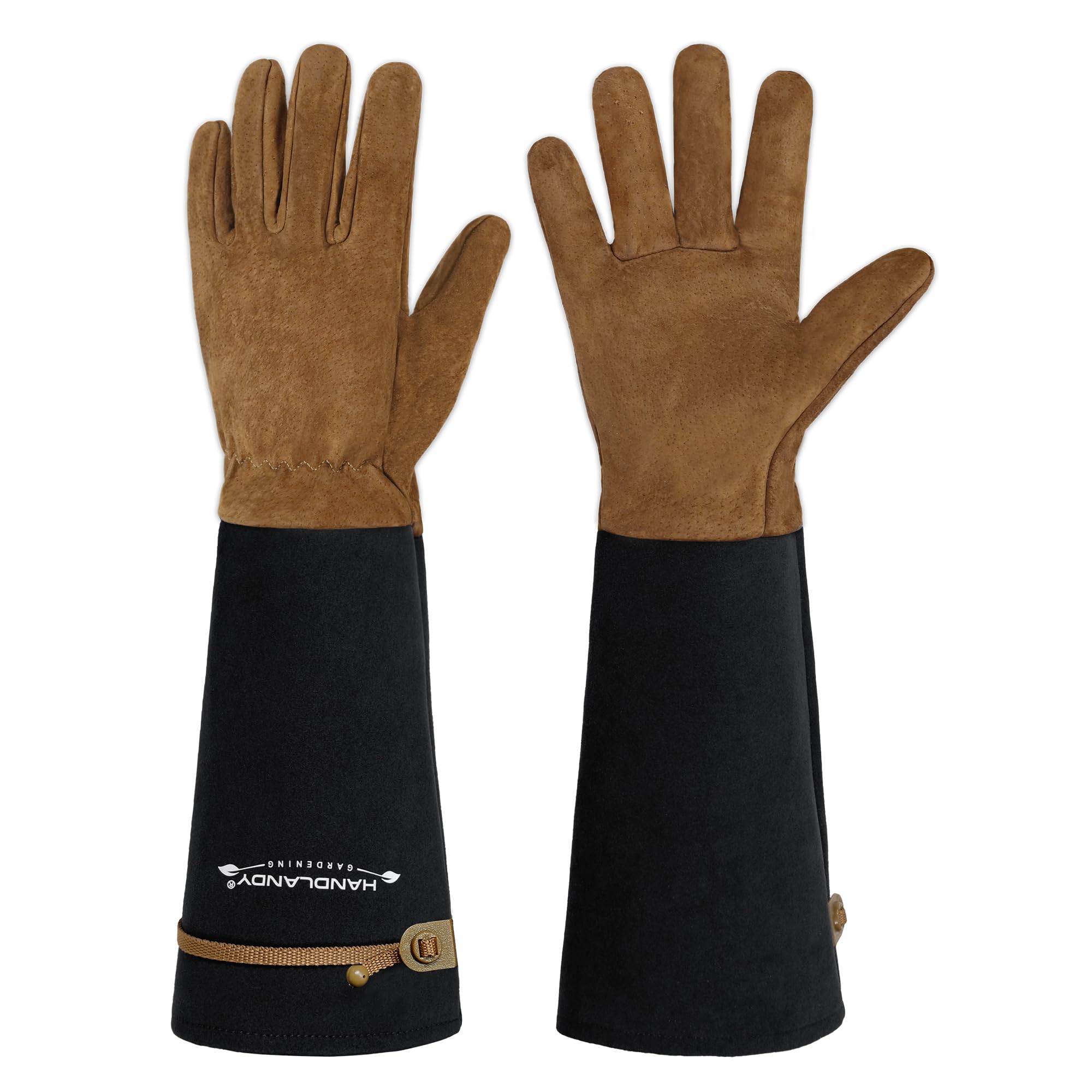
The HANDLANDY gauntlet stands out because it uses pigskin leather rather than standard cowhide. Pigskin breathes noticeably better during hot summer weeding sessions, yet it still delivers impressive puncture resistance — owners report grabbing cactus arms and heavy thorn vines with only rare penetrations. The synthetic leather forearms extend fully to the elbow, and the adjustable drawstring cuff keeps foxtails and soil out effectively.
Dexterity is a strong point here. The leather is soft enough that you can feel the weed stem without losing feedback, which reduces accidental crushing of desirable plants. After a short break-in period, the gloves mold to your hand shape. Several verified buyers with long fingernails mentioned the fit accommodated them comfortably without bunching at the tips.
Review consistency is excellent: owners who used these for rose pruning, cactus handling, and heavy brush clearing all gave 5-star ratings. The only recurring note is that very aggressive thorns — like extra-long rose spikes — can occasionally push through if you grab directly at the tip. Overall, this is the most breathable option for extended weed-pulling sessions in heat.
What works
- Pigskin breathes well in hot conditions without sacrificing puncture protection.
- Drawstring cuff seals out debris effectively, keeping hands clean.
- Soft leather flexibility offers good dexterity for delicate weeding tasks.
What doesn’t
- Not fully water-resistant; wet soil will soak through over time.
- Wrist area may feel snug for users with larger hands if not sized up.
2. DEX FIT FG310 Cowhide Gardening Gloves

DEX FIT is a known work-glove brand, and the FG310 model brings certified puncture-resistance to the gardening category. It carries CE EN 388 2121X and ANSI Puncture Level 2 ratings, which means it has been lab-tested against needle-like pressure. The cowhide leather is thick but not stiff, and the keystone-style thumb allows natural movement when gripping weed stems at awkward angles.
The double-patch palm and reinforced fingertips add extra layers at the highest-wear points. Owners consistently mention three days of heavy thorn-vine clearing without a single prick, and one review noted these gloves saved them from a serious MRSA infection after a rose thorn encounter with thinner gloves. The cuff covers the lower arm well, though it doesn’t reach the full elbow like some longer models.
Where the FG310 truly excels is confidence: you can reach into a dense briar patch without hesitation. The leather does need a break-in to soften fully, but after a few sessions the flexibility improves noticeably. Available in multiple sizes from small to extra-large, making it easier to find a precise fit.
What works
- Lab-certified ANSI Level 2 puncture resistance provides verified protection.
- Double-patch palm and reinforced fingertips add durability at stress points.
- Keystone thumb design improves grip and flexibility during intricate weeding.
What doesn’t
- Forearm coverage stops short of the elbow; gauntlet could be longer.
- Leather is stiff initially and requires a break-in period for full flexibility.
3. Gardens Leather Gardening Gloves (Nuo Wen)

The Nuo Wen Gardens glove is built around genuine grain cowhide, the same material used in high-end work gloves for heavy construction. The leather is thick, tough, and naturally abrasion-resistant — owners who pruned 50 rose bushes in a week reported zero thorn penetrations. The gunn cut and keystone thumb design reduce hand fatigue during prolonged weeding sessions.
Forearm coverage is a key differentiator: the gauntlet runs to the elbow and is made of the same cowhide, not a flimsy fabric panel. This protects against scratches when reaching into blackberry brambles or oleander. Several owners in Arizona and Texas confirmed these gloves stopped cactus spines and aggressive bougainvillea thorns completely.
Size is worth checking carefully. Buyers note that the fit runs true to American sizing — Medium fits a typical women’s hand, while men’s Large works for average-sized male hands. The lack of a drawstring means occasional debris can enter through the top, but the snug fit around the forearm minimizes this issue for most users.
What works
- Full-length cowhide gauntlet protects forearms to the elbow with no fabric gaps.
- Genuine grain cowhide offers superior abrasion and puncture resistance.
- Comfortable gunn cut reduces hand fatigue during extended weeding sessions.
What doesn’t
- No drawstring or closure at the gauntlet top, allowing occasional debris entry.
- Limited stretch means sizing must be precise; size up if between sizes.
4. WORKPRO Long Leather Gardening Gloves
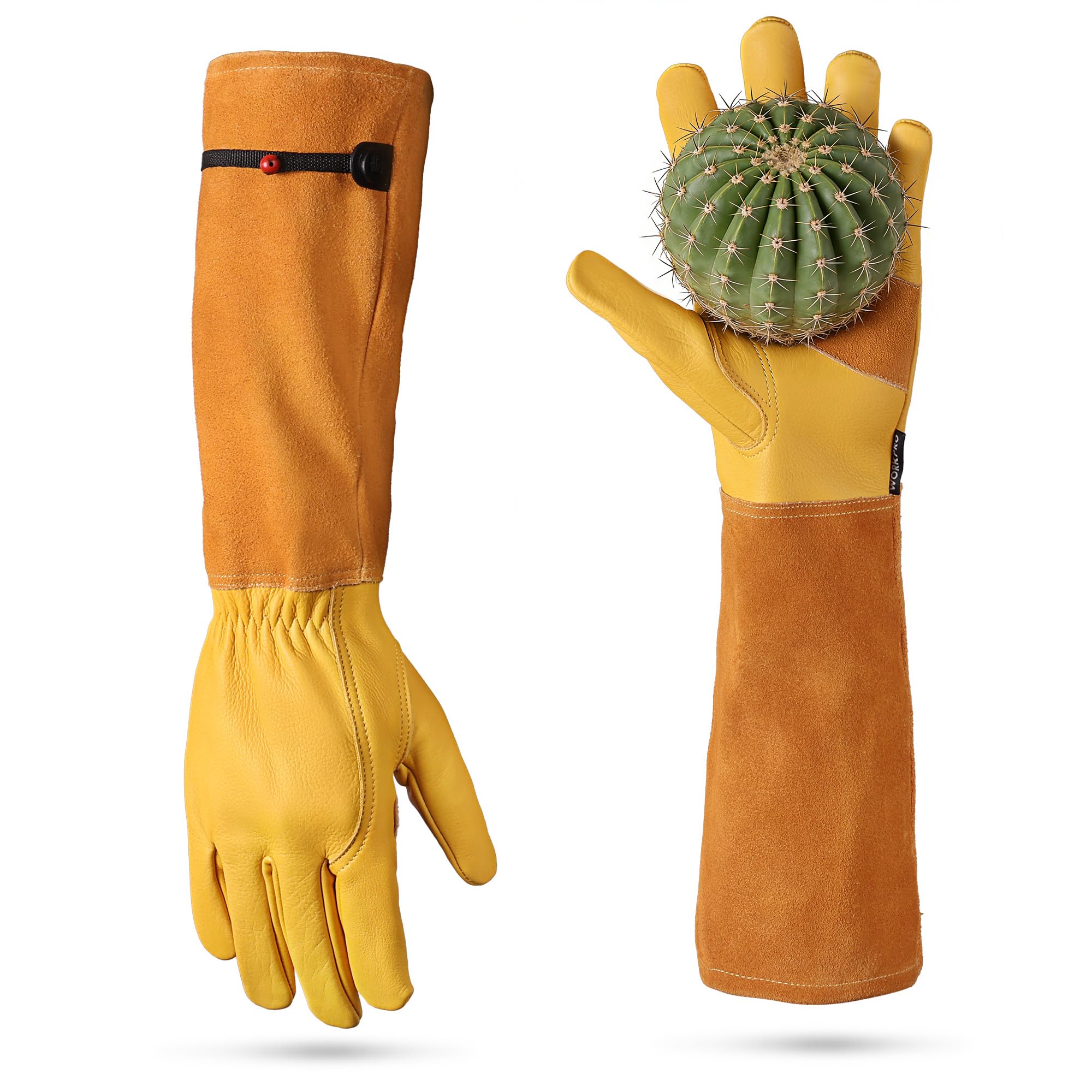
The WORKPRO gloves offer a solid mid-range option with heavy-duty cowhide construction and reinforced stitching that holds up well against dense rose bush and cactus work. The leather is thick enough to stop most thorns on contact, and the elbow-length design covers the forearm reliably. Owners who used them for clearing blackberries and thistles reported no punctures through the palm or fingers.
Fit is a notable consideration here: several buyers with smaller hands found the gloves run tight, especially across the palm. Choosing a size up solves this, and the snug fit actually improves grip when pulling tough weeds. The yellow color is easy to spot if you set them down in the yard, and the overall build quality feels more expensive than the price suggests.
Breathability is adequate for moderate temperatures, though extended use in high heat can cause some sweating. The stitching at the thumb crotch is reinforced, a common failure point in cheaper gloves. These won’t stop the longest rose thorns on a direct jab, but for general weeding and pruning, they provide confidence-inspiring protection.
What works
- Reinforced stitching at stress points improves longevity over standard sewn gloves.
- Thick cowhide palm blocks blackberry and thistle thorns effectively.
- Elbow-length design provides consistent forearm coverage without gaps.
What doesn’t
- Runs small; ordering a size up is recommended for a comfortable fit.
- Limited breathability can lead to sweaty hands during hot, extended weeding.
5. WFKWCXW Cowhide Long Gardening Gloves
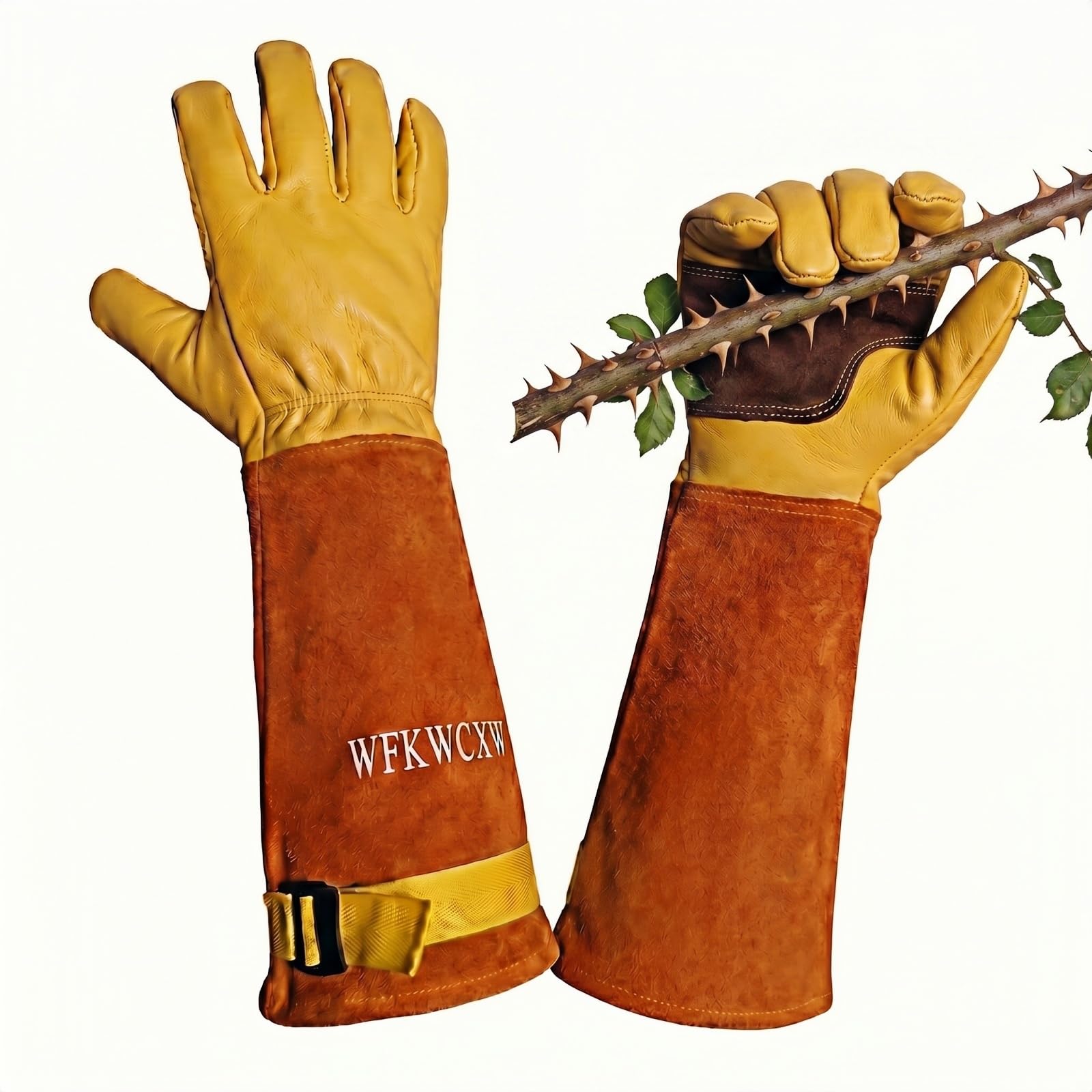
This model from WFKWCXW adds a unique twist: it comes with a pair of thinner inner gloves that can be worn separately for lighter tasks or layered under the cowhide gauntlet for extra insulation or moisture wicking. The outer cowhide is thick and the gauntlet runs long — reviewers who removed two large rose bushes in one session only suffered a single thorn prick.
The adjustable cinch at the forearm helps seal the gauntlet against your arm, which is especially valuable for keeping poison ivy, foxtails, and dirt from migrating inside. Owners with teenagers who are allergic to poison ivy found these long enough to fit over a jacket sleeve, providing an extra barrier. The yellow dye on the leather did transfer to one owner’s forearms, but it washed off without staining.
While the gloves feel sturdy, the leather isn’t as thick as premium full-grain alternatives. Cactus and large yucca thorns can occasionally push through on direct pressure. Still, for the price, the included inner gloves and thoughtful gauntlet design make this a versatile option for mixed garden tasks.
What works
- Includes removable inner gloves for layering or light-duty weeding.
- Adjustable cinch gauntlet prevents debris and poison ivy from entering.
- Long enough to fit over jacket sleeves for extra arm protection.
What doesn’t
- Leather may transfer yellow dye to forearms, though it washes off.
- Thinner cowhide can be penetrated by very large, stiff cactus thorns.
6. Luvaswel 100% Cowhide Gardening Gloves
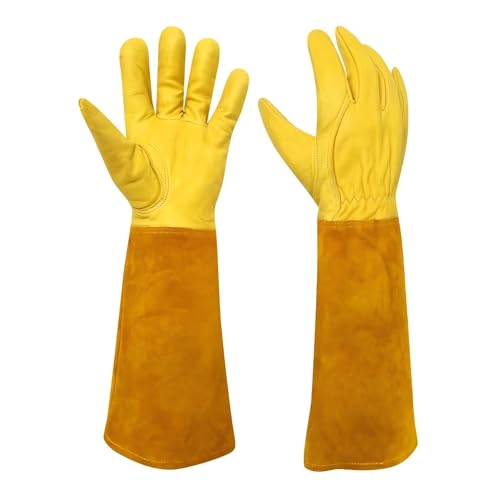
The Luvaswel gloves are a straightforward entry-level cowhide option that covers the basics: genuine leather construction, extended forearm sleeves, and a pull-on design for easy removal. For moderate weeding tasks involving rose bushes, blackberries, and common garden thistles, the cowhide provides adequate puncture resistance. Owners who tackled a hawthorn tree takedown over several months reported only two pricks total.
The 100% cowhide is soft and comfortable right out of the package, with no long break-in period. The extended sleeve reaches to the mid-forearm but not quite to the elbow — adequate for most weeding but less protective when you need to plunge into dense, tall brush. The yellow color is visible and the leather smell is natural without being overpowering.
Where these fall short is in extreme puncture scenarios. Several verified buyers noted that very thick rose thorns and yucca spikes can still penetrate on direct, forceful grabs. The pull-on closure means no drawstring, so debris can occasionally enter through the top. For lighter-duty gardeners who face moderate thorn pressure, these offer good value for the material quality.
What works
- Soft 100% cowhide is comfortable immediately with no break-in needed.
- Extended sleeve offers good mid-forearm protection during normal weeding.
- Excellent value for genuine leather at this price tier.
What doesn’t
- Thick rose or yucca thorns can penetrate on strong, direct grabs.
- No gauntlet cinch or closure; debris can enter from the top.
7. Professional Rose Pruning Thorn Proof Gardening Gloves

This glove uses a synthetic leather palm and spandex back rather than full cowhide, which makes it significantly lighter and more breathable than the leather options above. For gardeners with smaller hands who prioritize dexterity over brute-force puncture resistance, this is an attractive choice. The reinforced fingertips add an extra layer at the points most likely to contact thorns.
The elbow-length gauntlet is made from a durable fabric that resists tearing, and it provides good arm coverage for rose pruning and general weeding. Owners who used these for clearing dense brush with poison ivy praised the arm protection and water resistance. The synthetic leather is decent at stopping most garden thorns, but a few reviewers noted that direct grabs on blackberry canes could still result in a poke.
Breathability is a clear advantage: the spandex back panel allows airflow, reducing sweat buildup during long sessions. The gloves are also easy to wash and dry quickly. However, they are not suitable for heavy-duty thorn work like cactus handling or multi-day brush clearing. Consider these if your weeding involves light to moderate thorn threats and you value a slim, non-bulky fit.
What works
- Spandex back provides excellent breathability for hot-weather weeding.
- Lightweight design offers superior dexterity for precise weed pulling.
- Reinforced fingertips add targeted protection at high-wear areas.
What doesn’t
- Synthetic leather is less puncture-resistant than cowhide against thick thorns.
- Not intended for heavy-duty tasks like cactus or dense briar clearing.
Hardware & Specs Guide
Puncture Resistance Standards Explained
Gardening gloves that claim to be “thorn proof” should ideally carry a recognized puncture rating. The European CE EN 388 standard assigns a puncture score from 1 to 4, where Level 1 indicates basic resistance and Level 4 indicates resistance to over 150 Newtons of needle force. The American ANSI/ISEA 138 standard uses Levels 1 through 5, with Level 2 representing resistance to a penetration force of at least 20 Newtons. A glove rated ANSI Puncture Level 2, like the DEX FIT FG310, has passed a lab test using a standard steel probe — giving you a real number instead of a marketing claim. When a manufacturer doesn’t list any standard, the glove may still stop light thorns, but it hasn’t been certified against a repeatable test.
Leather Types and Their Trade-offs
Cowhide is the most common puncture-resistant leather used in weed-pulling gloves. It is dense, abrasion-resistant, and softens with use without losing structural integrity. Pigskin is naturally more breathable and flexible, making it better for extended wear in hot weather, but it is slightly less dense than cowhide and may allow a very sharp thorn to penetrate on a direct hit. Goatskin offers excellent flexibility and is often used in dexterity-focused gloves, but it offers the lowest puncture resistance of the three. Synthetic leather is the most affordable and lightweight option, but it has the shortest lifespan and the lowest puncture resistance — fine for light weeding, but not for aggressive thorn bushes.
FAQ
How do I know if a gardening glove is truly thorn-proof?
What gauntlet length do I need for pulling tall weeds and brambles?
Can I machine-wash cowhide leather gardening gloves?
Final Thoughts: The Verdict
For most gardeners, the gloves for pulling weeds winner is the HANDLANDY Pigskin Gauntlet because it combines genuine puncture-resistant pigskin leather, a drawstring-sealed gauntlet, and excellent breathability for all-day comfort. If you want lab-certified ANSI Level 2 protection and a brand known for industrial-grade durability, grab the DEX FIT FG310. And for heavy-duty thorn work that demands full-grain cowhide and the longest forearm coverage, nothing beats the Gardens Leather Gauntlet (Nuo Wen).