
Irises are heavy feeders that demand a precise balance of phosphorus and potassium to push out those large, vibrant flowers, yet most general-purpose fertilizers deliver too much nitrogen, resulting in lush foliage with few or no blooms. The right NPK ratio is the single most critical factor in transforming a row of green leaves into a spectacular display of color.
I’m Rikta — the co-founder and writer behind Lawn Gear Lab. I’ve spent hundreds of hours analyzing commercial fertilizer formulas, cross-referencing soil science data, and studying owner-reported results to pinpoint the exact nutrition profile that irises need to thrive.
This guide breaks down the top granular options by their measurable NPK values, organic certification status, and micronutrient content so you can confidently pick the best fertilizer for irises without wasting money on a mismatched blend.
How To Choose The Best Fertilizer For Irises
Selecting the right fertilizer for irises comes down to understanding their unique growth cycle. Unlike leafy greens, irises store energy in rhizomes and require a phosphorus-rich formula to initiate flower buds. Choosing poorly can lead to nitrogen burn or lush foliage at the expense of blooms.
NPK Ratio: The Middle Number Matters Most
The three numbers on a fertilizer bag represent nitrogen (N), phosphorus (P), and potassium (K). For irises, phosphorus — the middle number — is the key driver of bloom production. Look for a ratio where P is significantly higher than N, such as 4-10-10, 6-10-10, or even 9-58-8. Low-nitrogen formulas prevent excessive leaf growth and reduce the risk of soft, rot-prone foliage.
Slow-Release vs. Quick-Release Granules
Slow-release organic granules feed the soil microbiome and release nutrients gradually over several weeks, making them safer for established iris beds. Quick-release synthetic powders deliver an immediate nutrient spike ideal for correcting deficits mid-season, but they require precise application around the drip line to avoid burning the rhizomes. Your choice depends on whether you are planting new bulbs or feeding an established clump.
Micronutrient Additives and Soil pH
Irises perform best in neutral to slightly acidic soil (pH 6.0–7.0). Some premium blends include chelated iron and calcium, which help prevent chlorosis and strengthen cell walls. A formula with 2% iron plus trace micronutrients can dramatically improve bloom size and petal color intensity compared to a bare-bones NPK blend.
Quick Comparison
On smaller screens, swipe sideways to see the full table.
| Model | Category | Best For | Key Spec | Amazon |
|---|---|---|---|---|
| 6-10-10 Premium Iris Food | Granules | Dedicated iris beds | 6-10-10 NPK, 4 lb | Amazon |
| Carl Pool BR-61 Plant Food | Powder | Intense bloom boosting | 9-58-8 NPK, 3 lb | Amazon |
| Cz Garden 4-10-10 Bulb and Bloom | Granules | Multi-purpose bulb feeding | 4-10-10 NPK, 2% iron | Amazon |
| Lilly Miller Bulb & Bloom | Powder | Reliable slow release | 4-10-10 NPK, 4 lb | Amazon |
| Espoma Bulb-Tone 3-5-3 | Granules | Organic bulb planting | 3-5-3 NPK, OMRI-listed | Amazon |
| Espoma Holly-Tone 4-3-4 | Granules | Acidic soil acid lovers | 4-3-4 NPK, 5% sulfur | Amazon |
| Cz Garden 5-10-10 Tomato & Vegetable | Granules | Budget-friendly feeding | 5-10-10 NPK, 2% iron | Amazon |
In‑Depth Reviews
1. 6-10-10 Premium Iris Food
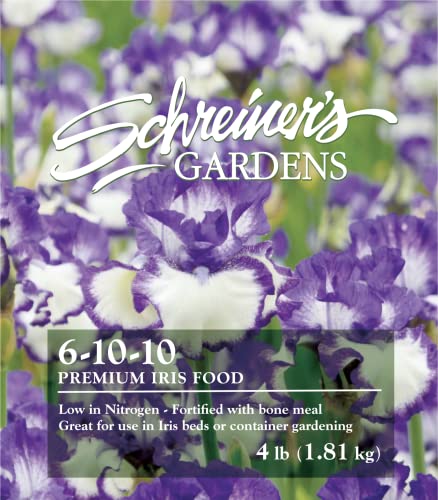
This is the only formula on the list specifically engineered for irises, with a 6-10-10 NPK ratio that mirrors what professional iris growers at Schreiner’s have refined over decades. The phosphorus content is high enough to trigger robust flower bud initiation without pushing excessive leaf growth, while the potassium strengthens rhizome tissue against rot and winter dieback. In owner reports, established clumps treated with this granular feed produced noticeably larger blooms within four weeks of spring application.
The 4-pound bag covers roughly 80 square feet of iris bed when applied at the recommended rate of one cup per ten square feet. Users praise the easy scatter application — just distribute around the drip line and water in before rain. Multiple long-time iris enthusiasts emphatically state this outperforms every generic bulb food they had previously tried, citing significantly more flower stalks per clump.
The only real downside is availability and price fluctuation; while it delivers elite results, it sits at a higher price per pound than multi-purpose blends. For dedicated iris beds where bloom quality is the priority, though, this targeted formulation justifies the premium over general 4-10-10 alternatives.
What works
- Perfectly dialed 6-10-10 ratio for iris bloom production
- Proven results from long-time iris growers — bigger blooms in one season
- Simple granular scatter application with no mixing required
What doesn’t
- Higher price per pound compared to general-purpose bulb foods
- Not widely available in local garden centers — depends on online ordering
2. Carl Pool BR-61 Plant Food 9-58-8
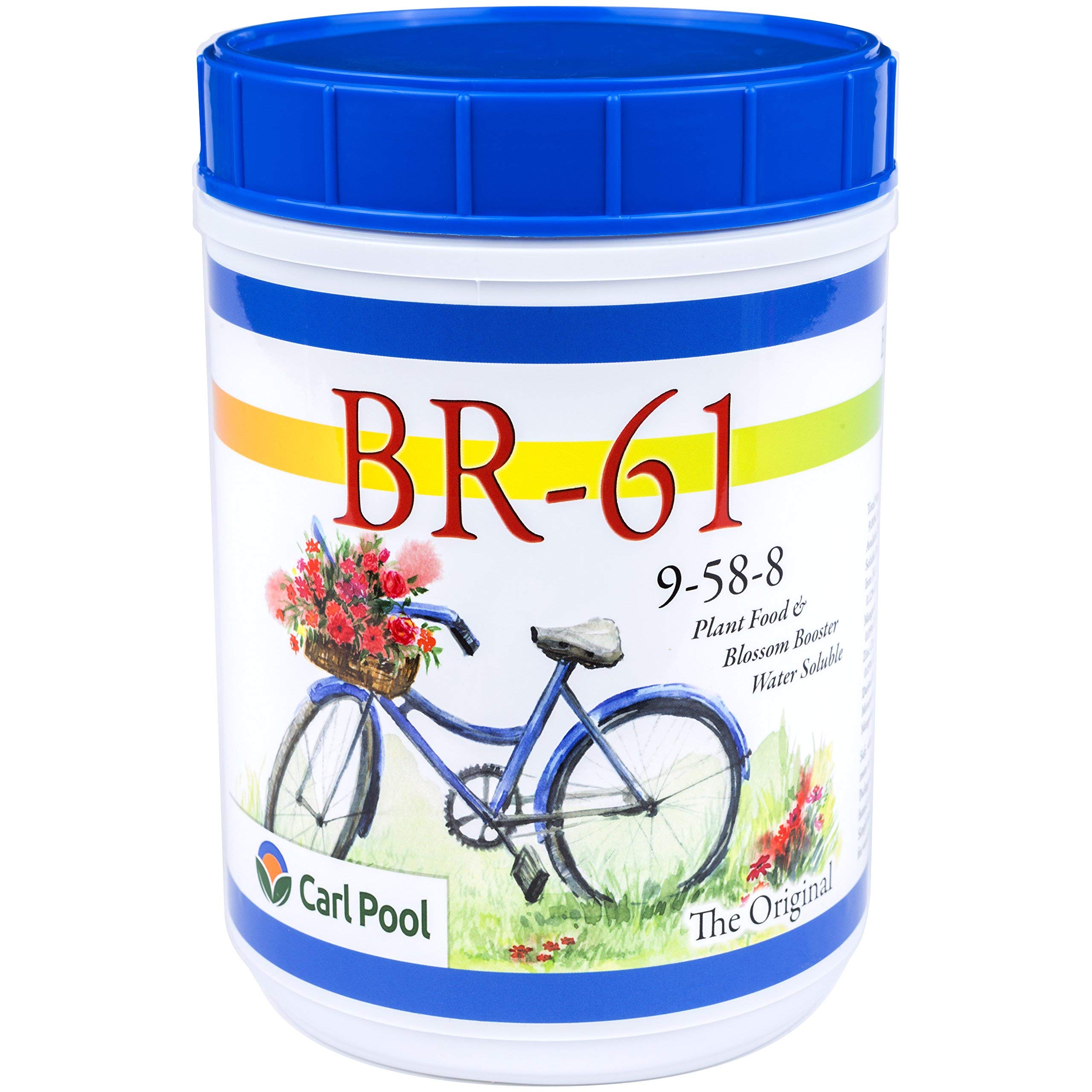
The 9-58-8 NPK ratio of BR-61 is the highest phosphorus concentration in this roundup, making it a borderline professional bloom booster rather than a maintenance feed. With 58% phosphorus, it forces iris rhizomes to divert energy into flower bud differentiation — ideal for established clumps that have gone vegetative and stopped blooming. This is a water-soluble powder, so it enters the root zone faster than granules, producing visible results within two weeks.
Mix one tablespoon per gallon of water and apply every two weeks during the pre-bloom period. Plumeria and bougainvillea growers have long relied on this formula, but iris owners report that a single season of BR-61 applications revived beds that had been “all leaves, no flowers” for years. The 3-pound bag goes a long way — about 48 gallons of mixed solution — making it more economical per application than the bag price might suggest.
Because of the extreme phosphorus spike, this should not be used as a regular maintenance feed; overapplication can interfere with micronutrient uptake. Use it as a targeted rescue treatment or a six-week spring bloom catalyst, then switch to a balanced maintenance formula for the rest of the season.
What works
- Extreme 58% phosphorus forces immediate bloom initiation
- Water-soluble powder provides rapid root uptake
- Excellent value per application — 48 gallons of mixed solution
What doesn’t
- Too potent for regular maintenance — risk of micronutrient lockout
- Requires mixing and precise measurement to avoid overfeeding
3. Cz Garden 4-10-10 Bulb and Bloom Fertilizer

The 4-10-10 ratio from Cz Garden Supply hits the sweet spot for spring and fall bulb feeding — higher in phosphorus and potassium than nitrogen, exactly what irises require for bloom development. What sets this apart from the Lilly Miller equivalent is the addition of 2% iron plus trace micronutrients, which helps prevent leaf yellowing in alkaline soils and intensifies the purple and blue pigments in iris petals. Owners who switched from generic 10-10-10 blends reported that iris blooms appeared larger and held their color longer before fading.
The resealable heavy-duty pouch is a practical upgrade over traditional paper bags — it keeps granules dry and prevents caking in humid storage environments. Application is straightforward: sprinkle one to two tablespoons per plant around the drip line and water in. The 4-pound bag covers about 80 square feet of bulb bed, providing enough for two full seasonal feedings of a medium-sized iris garden.
Some users note that the iron content can leave orange stains on patios or walkways if granules are spilled and not swept immediately.
What works
- Optimal 4-10-10 ratio plus 2% iron for deeper bloom color
- Resealable pouch keeps granules fresh and dry
- Competitive price with added micronutrient value
What doesn’t
- Iron content may stain hard surfaces if spilled
- Not OMRI-listed organic despite high-quality ingredients
4. Lilly Miller Bulb & Bloom Food 4-10-10

Lilly Miller’s 4-10-10 Bulb & Bloom Food has been a staple among daffodil and iris growers for years, delivering a consistent slow-release feed that supports both spring bulbs and fall-planted rhizomes. The 4-10-10 ratio is nearly identical to the Cz Garden product, but Lilly Miller achieves its slow-release action through a powdered formulation that breaks down gradually in moist soil. One verified reviewer specifically noted that their purple irises “loved this product,” crediting it for a dramatic improvement in bloom count.
The 4-pound bag covers roughly the same area as other mid-size options — about 80 square feet — and the application window is flexible: feed at planting time for new bulbs or side-dress established clumps in early spring just as new growth emerges. Because it is a powder rather than granules, it mixes into the topsoil more readily, but it can clump if stored in a damp environment. Users praise its performance on amaryllis and all bulb types, with many buying it repeatedly after a single successful season.
The limitation here is the lack of added micronutrients; you get a straightforward 4-10-10 N-P-K feed with no iron, calcium, or sulfur boost. For gardeners with naturally rich soil this is sufficient, but those dealing with alkaline or nutrient-poor conditions may want a formula that includes trace elements. Still, as a reliable, no-fuss bulb food at a budget-friendly price, it earns its reputation.
What works
- Proven slow-release performance on irises and other bulbs
- Straightforward powder formulation mixes easily into soil
- Reliable bloom results season after season
What doesn’t
- No added micronutrients or iron for color enhancement
- Powder can clump if exposed to moisture in storage
5. Espoma Organic Bulb-Tone 3-5-3

Espoma’s Bulb-Tone is the only OMRI-listed organic option in this lineup, making it the clear choice for gardeners who want to avoid synthetic inputs. With a 3-5-3 NPK ratio and 6% calcium, it feeds the soil food web rather than just the plant, building long-term rhizome health through microbial activity. The Bio-tone proprietary blend includes beneficial bacteria and mycorrhizae that help irises access phosphorus even in cooler spring soils where nutrient uptake is typically slower.
Application is simple: for new bulbs, place Bulb-Tone directly in the planting hole; for established clumps, sprinkle on the soil surface around the drip line and water in. Owners report that tulips, daffodils, and irises all show stronger stems and more uniform blooms when Bulb-Tone is used at planting and again as a post-bloom top-dress. The 4-pound bag is comparable in coverage to others in this review — roughly 80 square feet per bag.
The trade-off is a lower phosphorus percentage than other picks here — 5% versus 10% in the 4-10-10 formulas. In rich, well-amended soil this is sufficient, but in depleted beds you might see fewer bloom stalks than you would with a higher-P synthetic option. It is also more expensive per pound than non-organic equivalents. For organic certification holders, though, Bulb-Tone remains the safest, most effective choice.
What works
- OMRI-listed for certified organic gardening
- Bio-tone formula includes beneficial microbes for phosphorus access
- Safe direct contact with bulbs — no burning risk
What doesn’t
- Lower phosphorus content may underperform in depleted soils
- Higher cost per pound than synthetic alternatives
6. Espoma Organic Holly-Tone 4-3-4
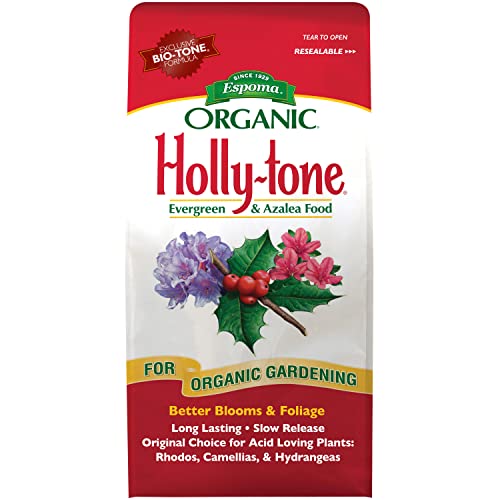
Holly-Tone is primarily formulated for acid-loving plants like azaleas and rhododendrons, but its 4-3-4 NPK with 5% sulfur makes it a niche option for irises growing in alkaline soil. If your iris foliage shows yellowing between veins — a classic sign of iron chlorosis caused by high pH — the sulfur in Holly-Tone will gradually lower the soil pH, making iron and phosphorus more available to the roots. Many iris growers with heavy clay or limestone-influenced soils report greener foliage and improved bloom color after switching to this blend.
As an OMRI-listed organic product, Holly-Tone relies on natural ingredient breakdown rather than synthetic salts. The 4-pound bag uses the same Bio-tone microbial enhancer found in Bulb-Tone, supporting long-term soil biology. Application is a simple scatter-and-water routine, and because it is organic, there is minimal risk of burning rhizomes even if applied slightly over the recommended rate.
The main limitation is the low phosphorus percentage — at 3%, it is the weakest bloom booster on this list. For irises that are already blooming acceptably but show signs of nutrient deficiency, Holly-Tone is a corrective tool, not a bloom maximizer. It also adds sulfur that could over-acidify neutral soils, so a pH test before purchase is strongly advised.
What works
- Sulfur content lowers soil pH to correct iron chlorosis
- Organic formula with Bio-tone microbes feeds soil biology
- Safe, slow-release granules minimize burn risk
What doesn’t
- Low 3% phosphorus limits bloom boost potential
- Overuse can acidify neutral soils excessively
7. Cz Garden 5-10-10 Tomato & Vegetable Fertilizer

This 5-10-10 blend from Cz Garden Supply is marketed for tomatoes and vegetables, but its NPK ratio — higher in phosphorus and potassium than nitrogen — is nearly identical to what irises need. The 5-10-10 analysis delivers two units more nitrogen than the dedicated 4-10-10 bulb blends, but still keeps N lower than P and K, making it safe for iris beds when applied at half the tomato rate. The addition of 2% chelated iron helps deepen bloom pigmentation in the same way as the dedicated Cz Garden bulb formula.
What makes this a budget-friendly pick is the versatility — one bag can feed your iris bed in spring and your vegetable patch in summer, eliminating the need for multiple products. The resealable pouch keeps granules dry, and the 4-pound bag covers roughly 80 square feet. Users note that the colored bead identification system makes it easy to see where you have applied it, preventing double-dosing.
The caution here is that the 5-10-10 ratio is not optimized for irises the way a 4-10-10 or 6-10-10 is. The extra nitrogen can push leaf growth at the expense of blooms if overapplied, so stick to one tablespoon per plant rather than the recommended vegetable rate. For budget-conscious gardeners who need a single fertilizer that performs adequately across multiple plant types, this is a solid compromise.
What works
- Versatile 5-10-10 ratio works for both irises and vegetables
- Resealable pouch and colored bead system prevent overapplication
- Good value for multi-purpose use across the garden
What doesn’t
- Slightly higher nitrogen may reduce blooms if applied too heavily
- Not optimized specifically for iris nutritional needs
Hardware & Specs Guide
NPK Ratio — The Core Metric
Nitrogen (first number) fuels leaf and stem growth; too much causes lush foliage with few blooms. Phosphorus (middle number) drives root development and flower bud initiation — this is the number iris growers should prioritize highest. Potassium (third number) strengthens rhizome tissue, disease resistance, and overwintering survival. For irises, target a ratio where P and K are both higher than N, ideally with phosphorus at 8 percent or above for maximum bloom count.
Application Method and Timing
Granules are scatter-and-water — best for top-dressing established beds in early spring and immediately after bloom to replenish rhizome energy stores. Water-soluble powders require mixing but provide faster uptake, making them ideal for mid-season rescue feeding. Regardless of form, always apply to moist soil around the drip line and water in thoroughly. Never place fertilizer directly on the exposed rhizome crown, as this invites rot and chemical burn.
FAQ
Can I use a general 10-10-10 fertilizer on my irises?
When should I fertilize irises for the best blooms?
Is organic or synthetic fertilizer better for irises?
Final Thoughts: The Verdict
For most gardeners, the best fertilizer for irises winner is the 6-10-10 Premium Iris Food because its targeted NPK ratio matches exactly what iris rhizomes need for maximum bloom production. If you want a potent, fast-acting bloom booster for a bed that has stopped flowering, grab the Carl Pool BR-61. And for certified organic growers or those planting new beds, nothing beats the Espoma Bulb-Tone for its safe, soil-building formulation.