
Selecting the right glazing for your greenhouse is a decision that directly affects light diffusion, thermal retention, and structural longevity. Whether you are replacing shattered panels from a storm or building a new frame from scratch, the material you choose determines how much UV radiation reaches your seedlings and how well the interior holds warmth through the night. Polycarbonate has largely supplanted traditional glass for modern greenhouse use because it offers high impact resistance without the weight and fragility of annealed glass panes.
I’m Rikta — the co-founder and writer behind Lawn Gear Lab. For this guide I have compared twin-wall thicknesses, UV-blocking percentages, and light-transmission ratings across seven top-selling panel kits, then cross-referenced those specs against hundreds of verified buyer reports to identify which models deliver real durability in the garden.
This research will help you find the best glass for greenhouse replacement kits that combine shatterproof safety with excellent thermal insulation for year-round growing.
How To Choose The Best Glass For Greenhouse
Greenhouse glazing is no longer limited to brittle single-pane glass. Modern polycarbonate sheets offer superior strength, insulation, and UV filtering. Here are the key specs to evaluate before you buy.
Panel Thickness and Insulation Value
The thickness of a polycarbonate panel, measured in inches, directly correlates with its R-value and impact resistance. A 0.16″ twin-wall sheet provides adequate protection for moderate climates, while a 0.24″ panel adds an extra air pocket that significantly reduces heat loss during freezing nights. Thicker panels also resist hail and falling branches more effectively.
UV Protection and Light Transmission
Look for panels that block at least 99% of ultraviolet radiation while transmitting 80% or more of visible light. A UV-resistant co-extruded layer prevents the material from yellowing and becoming brittle after a few seasons. Balanced light transmission ensures your plants get the full spectrum for photosynthesis without getting scorched.
Panel Size and Cut Tolerance
Standard sheets measure approximately 4 feet by 2 feet, but actual dimensions often vary by up to an inch. Verify the exact width and height of your greenhouse frame slots before ordering. Many kits can be trimmed with a utility knife, but cutting tolerance matters — some manufacturers guarantee ±0.19 inch, which is critical for a tight seal.
Quick Comparison
On smaller screens, swipe sideways to see the full table.
| Model | Category | Best For | Key Spec | Amazon |
|---|---|---|---|---|
| UMIG 12 PCS 4’x2’x0.24″ | Twin-Wall Premium | Maximum insulation | 0.24″ thickness, double-layer | Amazon |
| Sinimaka 15 Pack 4’x2’x0.16″ | Twin-Wall Value | High quantity replacement | 15 panels, 89% light transmission | Amazon |
| XISOCO 6PCS 4’x2’x0.24″ | Twin-Wall Premium | Thick heavy-duty panels | 0.24″ thickness, 10-yr warranty | Amazon |
| XISOCO 12 PCS 4’x2’x0.16″ | Twin-Wall Mid | Versatile mid-thickness option | 0.16″ thickness, 12 panels | Amazon |
| FAHKNS 14 Pack 4’x2’x0.16″ | Twin-Wall Mid | Storm repair kits | 0.16″ thickness, 14 panels | Amazon |
| Storystore 14 Pcs 4’x2’x0.16″ | Twin-Wall Mid | Budget-friendly replacement | 0.16″ thickness, clear finish | Amazon |
| BPS 6Pcs 24″x64″x0.16″ | Long Panel | Custom length projects | 64″ length, heavy duty | Amazon |
In‑Depth Reviews
1. UMIG 12 PCS 4′ x 2′ x 0.24” Polycarbonate Greenhouse Panels

The UMIG kit offers the thickest twin-wall construction in this roundup at 0.24 inches, which translates to noticeably better thermal insulation during cold snaps. Owners report a measurable temperature lift of several degrees inside unheated chicken coops and small greenhouses after installation. The double-layer cellular structure traps an air buffer that reduces heating costs in winter while reflecting excess solar gain in summer, making it a genuine four-season performer.
Each panel is coated on both sides for UV resistance, which helps prevent the yellowing issue some users have noted after a full year of direct sun exposure. With a specific gravity of 1.2 kg/m², these sheets are lightweight enough to transport but dense enough to shrug off moderate impacts. The 80% light transmission delivers plenty of photosynthetically active radiation without turning the interior into an oven.
The panels ship with plastic corner protectors and arrive flat, minimizing the risk of edge damage during transit. While the 12-piece count covers roughly 96 square feet, the value sits in the thickness upgrade rather than sheer quantity. For gardeners in regions with hard frosts or persistent winter winds, this set provides the best temperature stability of any option here.
What works
- Superior 0.24″ thickness provides excellent winter insulation.
- Double-sided UV coating delays yellowing longer than budget panels.
- Cut cleanly with a utility knife without cracking or splintering.
What doesn’t
- Some early batches have shown yellowing after 12 months of full sun.
- Higher per-panel cost than 0.16″ alternatives.
2. Sinimaka 15 Pack Polycarbonate Greenhouse Panels, 4′ x 2′ x 0.16”

The Sinimaka 15-pack delivers the highest light transmission rating in this comparison at 89%, paired with a UV-blocking coating that stops 99.9% of harmful radiation. The twin-wall 0.16-inch construction provides a smart balance of rigidity and flexibility for standard greenhouse frames, and the panels can be cold-bent to form curved roofs without stress cracking. The translucent finish diffuses harsh direct rays into a soft, even glow that seedlings respond to well.
With a count of 15 panels, this kit covers approximately 120 square feet, which is enough for a full roof replacement on a medium-sized hobby greenhouse or a complete re-glaze on a smaller structure. Users have successfully used these panels to winterize chicken coops, screened porches, and cold frames, noting that the material effectively blocks drafts while allowing ample sunlight. The panels tolerate temperature extremes from -40°C to 120°C, making them suitable for most climates.
One common caveat is that the panels measure 23 inches wide rather than the advertised 24 inches, so you will need to account for a 1-inch gap when installing into standard 2-foot frame channels. Owners recommend using H-strips and silicone tape to bridge the seam. Despite this dimension quirk, the durability and clarity of these sheets make them a top contender for anyone replacing a large number of panels at once.
What works
- Highest light transmission at 89% for maximum photosynthesis.
- 15-panel quantity is ideal for full roof replacements.
- Can be cold-bent for curved roof applications without cracking.
What doesn’t
- Actual width is 23 inches, not a true 2 feet, requiring seam bridging.
- Tape joints may yellow after 3-4 years of sun exposure.
3. XISOCO 6PCS 4′ x 2′ x 0.24” Polycarbonate Greenhouse Panels

The XISOCO 6-pack is built for users who prioritize panel strength and long-term performance over sheer quantity. At 0.24 inches thick, these twin-wall sheets offer the highest impact resistance among the reviewed kits, and the 10-year limited warranty backs the manufacturer’s confidence in the UV-resistant co-extruded layer. The special coating on the bottom side is designed to eliminate condensation drip, a common nuisance in greenhouses that can lead to mold and leaf spot diseases.
Field reports confirm that these panels withstand desert sun intensity, blunt impacts from tools, and sustained high winds without developing cracks or surface crazing. Several owners have used them to enclose chicken coops and firewood storage, noting that snow slides off easily and the panels remain clear after six months of full sun exposure. The material blocks 99.5% of UV radiation while transmitting enough visible light for healthy plant growth.
The installation requires careful attention to the orientation of the protective film — the patterned side must face outward to receive the UV coating. With a cutting tolerance of ±0.19 inch, you can trim these sheets to fit non-standard frame sizes using a circular saw or utility knife. The 6-panel set covers roughly 48 square feet, making it ideal for targeted roof repairs or small stand-alone greenhouses rather than full-structure glazing.
What works
- Excellent resistance to desert sun, impacts, and high winds over extended use.
- Anti-condensation coating reduces drip and mold risk inside the greenhouse.
- 10-year warranty provides peace of mind for long-term investment.
What doesn’t
- Only 6 panels per pack limits coverage area for large greenhouses.
- Lower per-panel count makes cost-per-square-foot relatively high.
4. XISOCO 12 PCS 4′ x 2′ x 0.16” Polycarbonate Greenhouse Panels
This 12-panel kit from XISOCO shares the same UV-blocking technology and flame-retardant construction as the 6-pack premium variant but uses a 0.16-inch wall thickness to reduce weight and cost. The panels deliver 99.5% UV protection and feature a multiwall cellular structure that minimizes heat loss in winter and reduces excessive heat buildup in summer. The bottom-side coating also eliminates condensation drip, keeping the interior of the greenhouse drier and healthier for seedlings.
Buyers have successfully used these panels to insulate chicken coops through harsh rain and cold, and several owner reviews note that the material remains clear and unfaded after more than six months of direct sun exposure. The lightweight nature makes handling and cutting much easier than thicker alternatives, and the panels can be trimmed with a utility knife without splitting. The 12-panel count covers approximately 96 square feet, which is enough for the roof of a medium greenhouse or a complete side-wall replacement.
The key trade-off is structural rigidity — the 0.16-inch material is noticeably more flexible than the 0.24-inch version, which can be a concern in areas prone to heavy snow loads or very high winds. For standard backyard greenhouses in moderate climates, however, this set offers a strong balance of coverage area, UV protection, and price efficiency. Just remember to orient the UV-coated side outward during installation.
What works
- Same 99.5% UV protection as premium XISOCO panels at a lower cost.
- Lightweight and easy to cut for DIY installation.
- Anti-drip coating helps prevent condensation-related problems.
What doesn’t
- 0.16″ thickness offers less insulation and rigidity than 0.24″ panels.
- May flex excessively under heavy snow loads.
5. FAHKNS 14 Pack Polycarbonate Greenhouse Panels, 4′ x 2′ x 0.16”
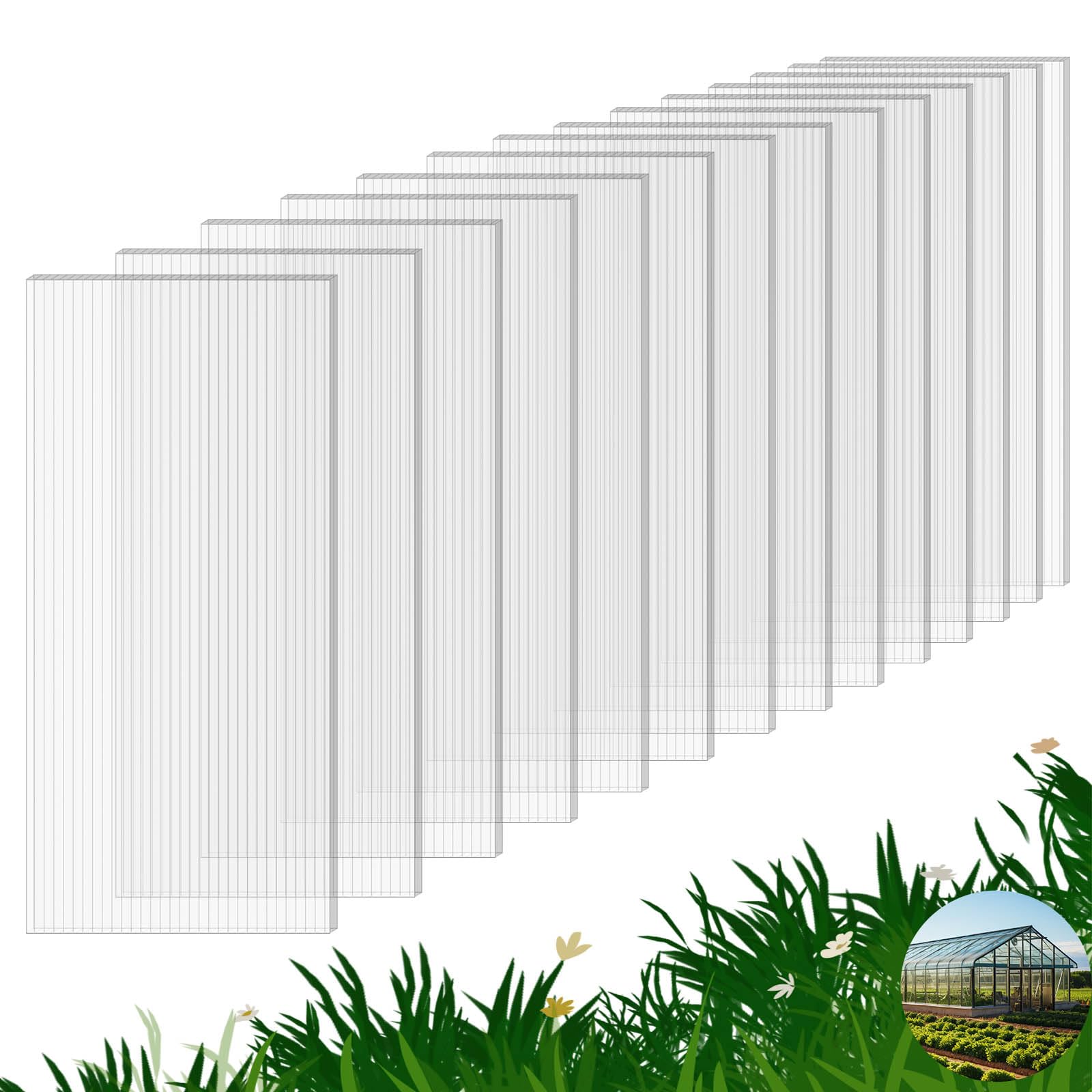
The FAHKNS 14-pack is designed specifically for greenhouse repair after storm damage, as reflected in the numerous owner reviews describing successful roof patches after high-wind events. These 0.16-inch twin-wall sheets are made from high-strength polycarbonate that handles accidental falls, hail, and heavy gusts without cracking. The panels allow 80% light transmission while filtering out harmful UV radiation, and the working temperature range from -44°C to 120°C ensures performance across all seasons.
Users consistently praise the ease of trimming these sheets with a utility knife, and one owner noted that the material is noticeably more rigid than the original panels that came with their greenhouse. The 14-panel count covers roughly 112 square feet, providing enough material to replace a complete roof section or multiple wall panes on an aging structure. The panels ship with a thin protective film on both sides that should be peeled off before installation.
While the thermal insulation of 0.16-inch material is adequate for spring-through-fall use, some buyers have noted that it is not sufficient alone for freezing temperatures and may require an additional layer or supplemental heating. The panels also lack the anti-condensation coating found on the XISOCO products, so drip may be more noticeable in high-humidity environments. For quick, cost-effective storm repairs, though, this kit provides excellent coverage per dollar.
What works
- Great price per panel for large-scale repair projects.
- Rigid construction that over-performs compared to many OEM greenhouse panels.
- Very easy to cut with a razor and straight edge.
What doesn’t
- No anti-condensation coating, so interior drip can be an issue.
- 0.16″ thickness offers limited frost protection without added insulation.
6. Storystore 14 Pcs Polycarbonate Greenhouse Panels, 47.2” x 23.6” x 0.16”
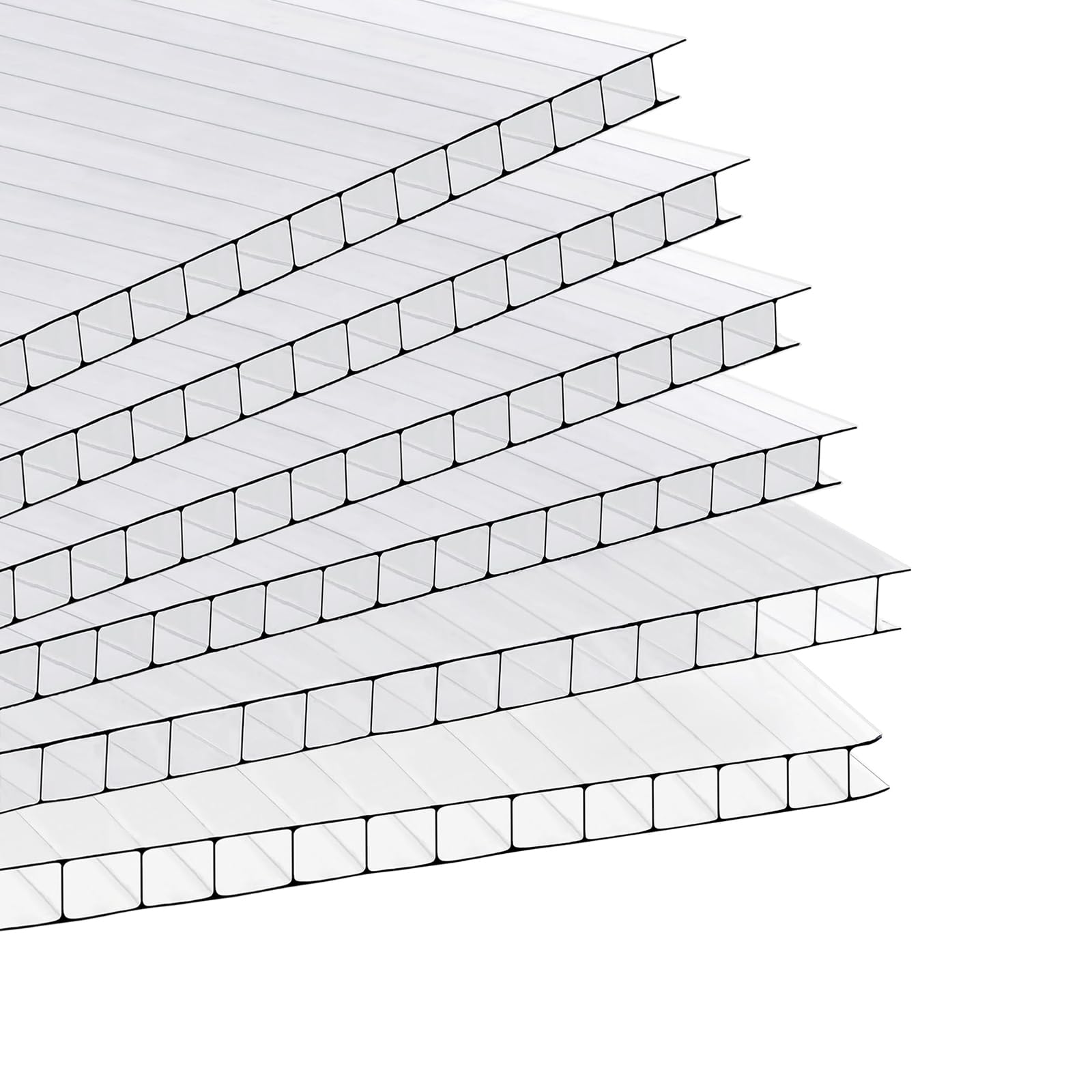
The Storystore 14-panel kit is a straightforward, no-frills replacement option that delivers a clean clear finish and solid twin-wall construction at a very accessible price point. These 0.16-inch panels provide 80% light transmission, allowing natural sunlight to penetrate the greenhouse for photosynthesis while the translucent finish softens harsh rays. The double-wall design offers moderate heat insulation that helps maintain a stable internal temperature compared to single-layer alternatives.
Owner feedback highlights the sturdiness of these panels relative to pre-fabricated greenhouse originals, with one buyer calling them the best price after researching several competing sets. The panels are easy to cut with a knife and are packed securely to arrive without cracks or scratches. They are ideal for replacing damaged sections on pre-fab greenhouses, both for the roof and side walls, especially after spring storms.
The primary drawback is the thermal performance — at 0.16 inches, the insulation is limited, and one reviewer noted that the panels alone were not enough to protect against freezing temperatures. This kit is best suited for mild-climate gardeners or those who already have a secondary heating system in place. The Storystore set also uses an aluminum frame frame referenced in the specs, which suggests the panels are intended to fit standard channeled aluminum greenhouse frames.
What works
- Excellent price-to-coverage ratio for budget-conscious buyers.
- Sturdier than many original pre-fab greenhouse panels.
- Quick shipping and secure packaging reduce damage risk.
What doesn’t
- Limited insulation value in freezing conditions.
- Clear finish may show scratches and dust more easily than translucent panels.
7. BPS 6Pcs 24” (W) x 64” (L) x 0.16” Polycarbonate Panels
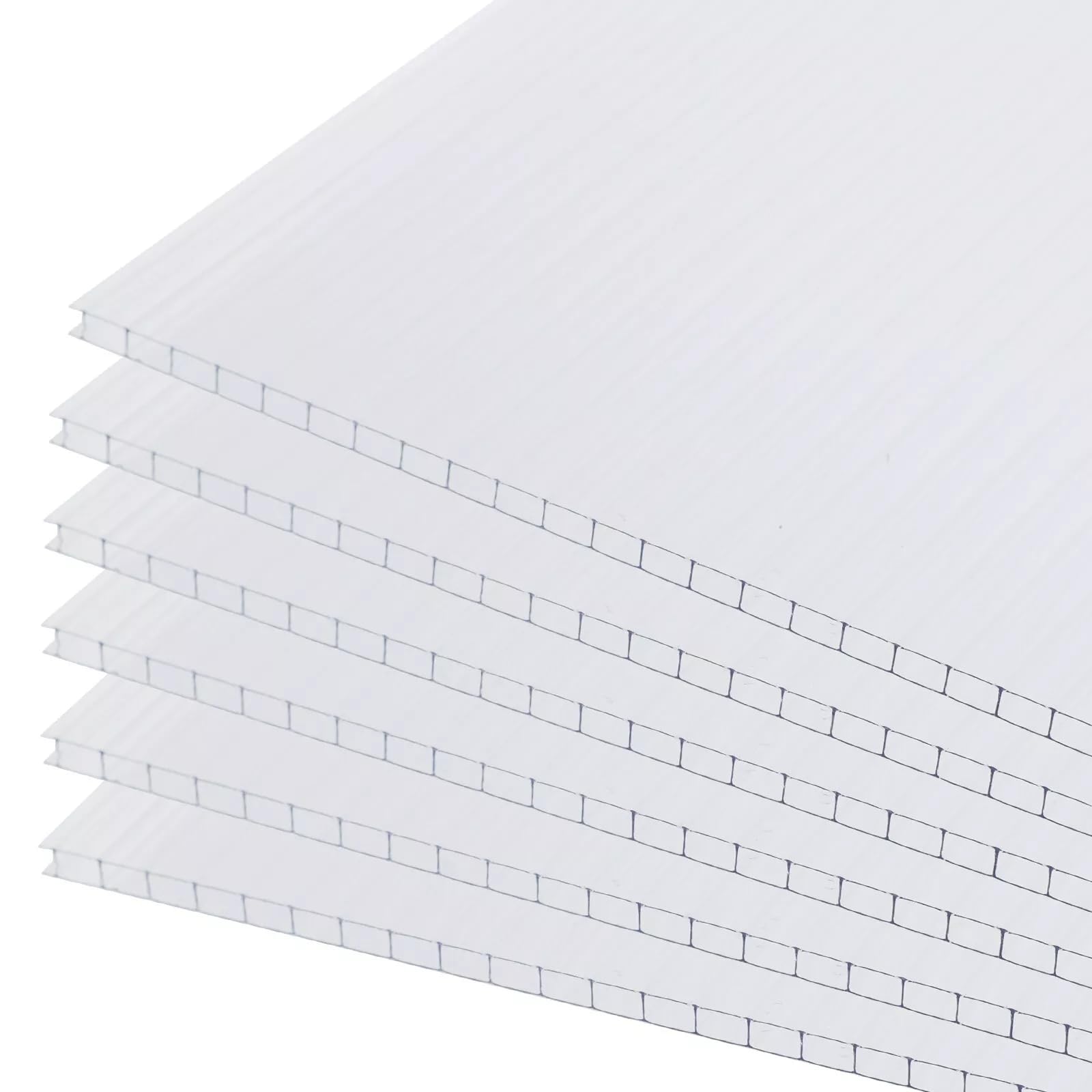
The BPS 6-pack stands apart from the standard 4-foot sheet length, offering panels that are 64 inches long — a full 16 inches longer than the typical 4-foot option. This extra length makes them ideal for covering pergola awnings, gazebo roofs, aisle covers, or greenhouse side walls where fewer seams translate to fewer leak points. The 0.16-inch twin-wall construction delivers heavy duty impact resistance and can withstand strong winds and harsh winters with minimal damage.
Owner reviews attest to the panels surviving multiple wind storms and a harsh winter with only one panel showing minor damage. The UV coating has held up well in direct sun, preventing the yellowing issues that cheaper polycarbonate can develop. The clear finish maintains good transparency and distributes sunlight evenly underneath, making them equally effective for both plant growth structures and outdoor living spaces.
The main limitation is the panel count — 6 pieces at 64 inches cover roughly 64 square feet, which is less total area than the standard 14-panel kits. For a full greenhouse re-glazing, you would need at least two kits. These panels are best reserved for specific long-span repairs or custom DIY projects where the extended length eliminates the need for a mid-span joint. The material cuts cleanly with standard tools if you need to shorten it.
What works
- Extra 64″ length reduces seam count for cleaner installations.
- Proven wind and winter durability in real-world use.
- UV coating prevents yellowing after prolonged sun exposure.
What doesn’t
- Only 6 panels per pack; limited coverage for full greenhouse projects.
- Longer panels may require additional support to prevent sagging.
Hardware & Specs Guide
Twin-Wall Thickness
The two standard thicknesses for greenhouse polycarbonate are 0.16 inches (4 mm) and 0.24 inches (6 mm). Thicker panels provide an additional layer of trapped air, boosting the R-value and reducing heat loss by approximately 30% compared to the thinner variant. The trade-off is increased weight and higher cost per panel.
UV Coating and Light Transmission
A co-extruded UV layer is essential for preventing photodegradation and yellowing. Panels with double-sided UV coating last significantly longer than single-side treatments. Light transmission rates between 80% and 89% are ideal for most plants — rates above 90% can cause leaf scorch in direct sun, while rates below 75% can stunt growth.
Cutting and Installation Tolerances
Polycarbonate can be cut with a utility knife, circular saw, or jigsaw. Industry-standard tolerances are ±0.19 inches for cut sheets. Always verify the actual dimensions of the panels against your frame slots before ordering — many polycarbonate panels are slightly undersized (e.g., 23 inches instead of 24 inches), requiring H-channels or tape to seal gaps.
Operating Temperature Range
Quality greenhouse polycarbonate panels should handle a temperature range from at least -40°C to 120°C. This ensures the material will not become brittle in freezing conditions or warp under intense summer sun. Panels that fail to meet this spec are prone to cracking during the first hard frost.
FAQ
How many years does polycarbonate greenhouse glazing typically last before yellowing?
Can I use standard window glass instead of polycarbonate for a greenhouse?
Which side of the polycarbonate panel faces the sun during installation?
Final Thoughts: The Verdict
For most gardeners, the best glass for greenhouse winner is the UMIG 12 PCS 4’x2’x0.24″ because its thicker twin-wall construction provides superior thermal insulation for year-round growing in fluctuating climates. If you want maximum light transmission and the highest panel count for a full rebuild, grab the Sinimaka 15 Pack. And for targeted storm repairs or custom long-span projects, nothing beats the BPS 6Pcs 24″x64″ for reducing seam leak points.