
A standard trowel bends the moment you hit a buried rock or a thick root, leaving you frustrated and digging with your fingers. The gardening knife — a hori-hori by design — replaces three separate tools with one hardened blade that saws through roots, scoops soil, and pries out stubborn weeds without breaking a sweat. This is the tool that changes how you work the soil.
I’m Rikta — the co-founder and writer behind Lawn Gear Lab. I’ve spent countless hours comparing stainless steel grades, handle ergonomics, and sheath durability across dozens of models to understand exactly what separates a tool that lasts a decade from one that rusts after a single season.
Whether you’re transplanting seedlings or excavating a tenacious dandelion, finding the right best gardening knife depends on blade steel, edge geometry, and handle comfort more than any other factor.
How To Choose The Best Gardening Knife
A gardening knife, often called a hori-hori, is defined by three core attributes: blade steel, edge configuration, and handle construction. Choosing poorly means buying a replacement within a year. Here’s what separates the keepers from the disposables.
Blade Steel: Hardness and Corrosion Resistance
Stainless steel blades dominate the category, but not all stainless is equal. Budget-tier knives use softer steels that dull quickly against gritty soil and rust if left damp. Premium options like Japanese AUS-8 or HRC58-rated steel resist corrosion and hold a razor edge through dozens of digging sessions. A blade marked with “HRC58” has been heat-treated to a hardness that balances toughness with the ability to be sharpened.
Edge Type: Serrated vs. Plain vs. Compound Bevel
A plain edge slices cleanly through twine and soft plant tissue. A serrated edge grips and saws through woody roots, tough weeds, and compacted sod. The most versatile models combine both on a single double-edged blade — one side serrated for aggressive cutting, the other plain for precision slicing. A compound bevel blade offers a third option, combining a sharp primary edge with a stronger secondary grind for heavy prying.
Handle and Tang: Full-Tang Is Non-Negotiable
A full-tang blade extends the full length of the handle, distributing prying force evenly and preventing the handle from snapping during heavy use. Knives with partial tangs or plastic scales bolted on are prone to failure when you lever out a rock. Handles made from rosewood, Pakkawood, or textured TPR provide a secure grip even when wet, while bare metal or smooth plastic handles invite slipping.
Quick Comparison
On smaller screens, swipe sideways to see the full table.
| Model | Category | Best For | Key Spec | Amazon |
|---|---|---|---|---|
| TONMA Hori Hori | Premium Steel | Heirloom-level durability | AUS-8 steel, HRC 58±1 | Amazon |
| Nisaku NJP651 | Japanese Heritage | Traditional precision | HRC58 hardened blade | Amazon |
| A.M. Leonard Deluxe | Pro Grade | Professional landscaping | 300-lb pressure rated | Amazon |
| Root Slayer 17211 | Aggressive Cut | Cutting thick roots | Carbon steel ripsaw teeth | Amazon |
| Corona CT15409 | Entry-Level | Everyday weeding | Serrated needle point tip | Amazon |
| SHALL Hori Hori | Classic Wood | Traditional aesthetic feel | Rosewood handle, full tang | Amazon |
| WORKPRO Hori Hori | Budget Pick | Cost-effective starter | 7-inch double-edge blade | Amazon |
In‑Depth Reviews
1. TONMA Hori Hori Garden Knife
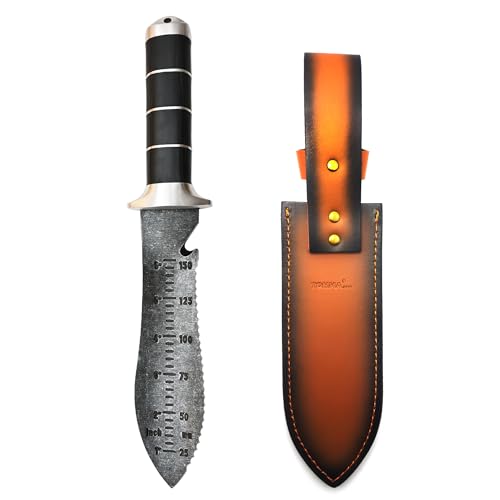
The TONMA is built from Japanese AUS-8 stainless steel hardened to HRC 58±1, a spec that places it among the hardest gardening blades available. The concave 7.3-inch blade pairs a sharp plain edge for slicing with a serrated edge for aggressive sawing, and the full-tang Pakkawood handle resists moisture and cracking over years of use. The included cowhide leather sheath adds storage quality without bulk.
Owners report this knife handles heavy digging, deep-rooted weed extraction, and even light cover-crop clearing without dulling or bending. The etched inch markers remain legible after repeated soil contact, and the overall heft — substantial but not fatiguing — inspires confidence when prying rocks or cutting through landscaping fabric. The AUS-8 steel requires basic cleaning but resists rust far better than generic stainless.
The Pakkawood handle lacks the rubberized cushion of TPR models, which may matter during extended sessions in wet conditions. The sheath requires a belt to carry, with no clip for pocket attachment. Still, for gardeners who want a single tool that will outlast their trowel, pruner, and weeder combined, the TONMA delivers heirloom-grade construction at a mid-premium price point.
What works
- AUS-8 steel holds an edge through tough roots and rocky soil
- Full-tang Pakkawood handle provides excellent leverage and moisture resistance
- Thick cowhide sheath protects blade and user during storage
What doesn’t
- Wood handle offers less grip than rubber when wet
- Sheath requires belt loops, no pocket clip included
- Heavier than basic plastic-handled models
2. Nisaku NJP651 Hori Weeding & Digging Knife

The Nisaku NJP651 comes from Tomita, a Japanese manufacturer established in 1960, and its HRC58 hardened stainless steel blade represents the hardest steel in the Nisaku hori line. The 7.25-inch concave blade uses a sharp plain edge on one side and a serrated edge on the other, with engraved inch markers for precise planting depth. The wooden handle and premium leather sheath reflect traditional Japanese tool-making aesthetics.
After a year of heavy use including lifting rocks, cutting sod, and digging through clay, owners report minimal scratching and edge retention that remains sharp enough for slicing roots without resists. The blade’s concave shape excels at scooping soil and lifting bulbs, and the depth measurements stay legible. The wood handle is comfortable for smaller hands and works well with gardening gloves.
The Nisaku requires more maintenance than rubber-handled alternatives — the wood can crack if left wet, and the steel needs drying and occasional oiling to prevent rust. The serrated edge demands a round file for sharpening. For the gardener who appreciates heritage craftsmanship and is willing to perform basic upkeep, the Nisaku delivers authentic Japanese performance.
What works
- HRC58 hardened steel stays sharp through heavy digging and root cutting
- Concave blade shape is excellent for scooping and lifting plants
- Engraved inch markers are durable and accurate for planting depth
What doesn’t
- Wood handle requires drying and oiling to prevent cracking
- Serrated edge needs a round file to sharpen properly
- Smaller handle may feel short for larger hands
3. A.M. Leonard Deluxe Soil Knife

The A.M. Leonard Deluxe Soil Knife is built to withstand 300 pounds of pressure, making it the strongest-rated model in this lineup. Its 6-inch stainless steel blade features a deep serrated edge on one side and a tapered slicing edge on the other, plus a twine-cutting notch and engraved depth gauge markings. The bright orange composite handle with a wide safety guard ensures high visibility and a secure grip.
Professional landscapers and master gardeners report this knife survives heavy misuse — prying stones, cutting through crab grass, burdock, and creeping Charlie, and even slicing cardboard — without rusting or losing structural integrity. The serrated side excels at chopping through non-woody plants and dense soil, while the plain edge handles precise cutting. The twine notch is sharp enough to cut through binding twine without needing scissors.
The composite handle lacks the natural feel of wood and may feel slightly bulky for users with small hands. The knife does not include a sheath, so you will need to purchase one separately for safe carry. For gardeners who prioritize brute strength and professional-grade durability over aesthetics, the A.M. Leonard Deluxe is a reliable workhorse.
What works
- Rated for 300 lbs of pressure — extremely durable for prying and digging
- Deep serrated edge cuts through dense soil and thick roots easily
- Bright orange handle is easy to find in garden beds and tool bags
What doesn’t
- No sheath included — requires separate purchase for safe storage
- Composite handle lacks the tactile feel of wood or rubber
- Bulky grip may not suit smaller hands
4. Root Slayer 17211 Garden Soil Knife

The Root Slayer 17211 uses a powder-coated carbon steel blade with an aggressive ripsaw-style serrated edge that cuts through wrist-thick roots in minutes. The straight edge provides clean cutting for twine and soft plant material, while the inverted V tip penetrates compacted ground more effectively than a blunt spear point. The thermoplastic handle with a reinforced polypropylene core offers a non-slip grip even in wet conditions.
Gardeners and metal detecting enthusiasts alike praise the knife’s ability to pop bulbs, extract clumping weeds with minimal soil disturbance, and cut through thick landscaping fabric. The balance of the tool reduces arm strain during extended weeding sessions, and the included holster provides convenient belt carry. The carbon steel blade can be sharpened to restore cutting performance after heavy use in rocky soil.
The carbon steel blade is prone to rust if not cleaned and dried immediately after use, and some owners report surface scratches appearing immediately. The holster lacks a dirt-escape hole, so debris accumulates inside. For gardeners working in heavy clay or root-bound beds who prioritize cutting aggression over corrosion resistance, the Root Slayer is a capable choice.
What works
- Ripsaw-style serrated edge cuts thick roots and dense soil aggressively
- Inverted V tip penetrates compacted ground with less effort
- Ergonomic thermoplastic handle provides secure non-slip grip
What doesn’t
- Carbon steel rusts quickly if not dried after use
- Blade surface scratches easily in rocky soil
- Holster collects dirt with no drainage hole
5. Corona Tools CT15409 Hori Garden Knife
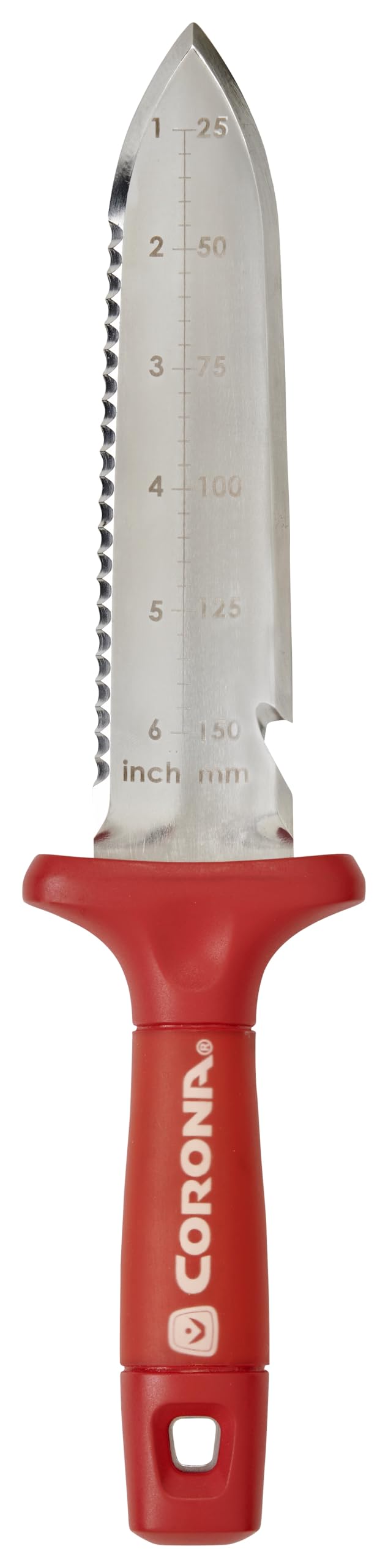
The Corona CT15409 is a mid-range hori-style knife that delivers reliable performance without pushing into premium pricing. Its serrated stainless steel blade with a needle-point tip slices through roots, sod, and compacted soil, while the bright red plastic handle with a thumb divot provides a comfortable grip that is easy to spot in garden beds. The overall length of 12 inches offers good reach for deep digging.
Gardeners report this knife excels at weeding — especially pulling long taproots — and creating planting holes for bulbs and transplants. The serrated edge grips roots effectively, reducing the need for secondary tools. Owners who have owned previous versions note that the blade resists rust even after years of use, and the handle remains comfortable for extended sessions. The needle point allows precise work next to established plants.
The plastic handle, while durable, lacks the premium feel of wood or TPR and may feel slightly slippery when wet. The knife does not include a sheath, so safe carry requires an aftermarket solution. For gardeners seeking a dependable, no-fuss tool that handles the bulk of daily weeding and planting tasks, the Corona offers strong value.
What works
- Serrated edge grips and cuts roots effectively for clean weeding
- Needle-point tip allows precise work around established plants
- Bright red handle is easy to find in soil and mulch
What doesn’t
- Plastic handle can feel slippery when wet
- No sheath included for safe storage or carry
- Not as durable as full-tang wood-handled models for heavy prying
6. SHALL Hori Hori Garden Knife

The SHALL Hori Hori combines a full-tang rosewood handle with a mirror-polished stainless steel blade that resists rust and wear. The 7-inch curved blade features a sharp edge, serrated edge, and a rope-cutting notch, plus 6-inch measurement markings for planting depth. The leather sheath, reinforced with seven rivets and a metal snap, offers durable carry with a belt loop and hide rope for hanging.
Gardeners report using this knife to plant over 500 bulbs in a single season, finding it easier than a dedicated bulb digger. The curved blade shape works well for pot culture, digging in rocky soil, and sawing small branches. The rosewood handle provides a comfortable, non-slip grip that improves with use, and the full-tang construction with three rivets ensures the handle will not separate during heavy prying tasks.
The rosewood handle requires occasional oiling to maintain its appearance and prevent drying, especially in arid climates. The blade, while sharp, may need touching up more frequently than higher-hardness steels for users working in very rocky or abrasive soil. For gardeners who value traditional materials and an attractive presentation, the SHALL is a solid mid-range performer.
What works
- Full-tang rosewood handle with rivets provides excellent durability
- Mirror-polished stainless steel resists rust and looks great
- Leather sheath with belt loop and hide rope is well-made and secure
What doesn’t
- Rosewood handle needs periodic oiling to prevent drying
- Blade steel may dull faster than HRC58-rated options in abrasive soil
- Curved blade shape takes slight adjustment for straight digging
7. WORKPRO Hori Hori Garden Knife

The WORKPRO Hori Hori enters the budget tier with a 7-inch double-edged stainless steel blade — serrated on one side for cutting roots and wood, plain on the other for slicing vegetables and twine. The TRP ergonomic handle with a hanging hole provides a comfortable non-slip grip, and the Oxford sheath with belt loops allows convenient carry. The blade includes 6-inch measurement markings in inches and millimeters.
Owners consistently describe this as one of the best gardening hand tools they have purchased, noting its ability to dig through hard ground, saw stray roots, and scoop dirt for planting. The double-edged design eliminates the need to switch between tools when moving from weeding to cutting. The full-tang construction prevents handle snapping, a common failure in cheaper alternatives, and the carbon steel blade holds a razor edge.
The blade edges arrive not as sharp as premium models, requiring a touch-up for pruning woody branches. The Oxford sheath, while functional, lacks the durability of leather and may wear over time. For gardeners on a tight budget who need a reliable, multi-function gardening knife for general tasks, the WORKPRO delivers impressive performance.
What works
- Double-edged design provides serrated and plain options for different tasks
- Full-tang TRP handle is comfortable and resistant to snapping
- Measurement markings are useful for precise planting depth
What doesn’t
- Blade is not as sharp out of the box as premium alternatives
- Oxford sheath is less durable than leather options
- Not ideal for heavy prying or cutting woody branches
Hardware & Specs Guide
Blade Steel Hardness (HRC)
HRC (Rockwell Hardness Scale C) measures a steel blade’s resistance to indentation and wear. Gardening knives with an HRC rating of 58 or higher, like the TONMA’s AUS-8 at HRC 58±1 and the Nisaku’s HRC58 blade, hold a sharp edge longer and resist deformation when prying rocks or cutting roots. Lower-hardness stainless steels, common in budget-tier models, dull faster in gritty soil but are easier to sharpen with basic tools. For heavy digging in rocky or clay soil, prioritize HRC 58 or higher.
Blade Length and Geometry
Most gardening knives feature blades between 6 and 7.3 inches. A 7-inch blade provides enough reach for deep weeding and soil penetration without becoming unwieldy. Concave blades, seen on the TONMA and Nisaku, excel at scooping soil and lifting bulbs. Needle-point tips, like on the Corona, allow precise work near delicate plants. Spear-point designs, as on the A.M. Leonard, offer a balance of piercing and slicing. Serrated edges are essential for sawing through woody roots, while plain edges provide clean cuts for twine and soft plant tissue.
FAQ
What does HRC58 mean on a gardening knife blade?
Can I use a gardening knife for pruning woody branches?
Final Thoughts: The Verdict
For most gardeners, the best gardening knife winner is the TONMA Hori Hori because its AUS-8 steel at HRC 58±1 provides exceptional edge retention, corrosion resistance, and durability for years of heavy use. If you want a heritage piece from a 1960s Japanese manufacturer with a traditional wood handle, grab the Nisaku NJP651. And for professional-grade strength rated to 300 pounds of pressure, nothing beats the A.M. Leonard Deluxe Soil Knife.