
The difference between a thriving vegetable bed and a mediocre one often comes down to what the soil is fed. A bone mill for the garden transforms tough kitchen waste — chicken bones, lobster shells, eggshells — into a fine, crumbly pre-compost that adds calcium and phosphorus back into the earth. These machines chew through what a standard blender refuses, turning food scraps into something your plants actually use.
I’m Rikta — the co-founder and writer behind Lawn Gear Lab. I spend hundreds of hours cross-referencing motor specs, blade configurations, carbon filter densities, and real-world owner fatigue points to separate the units that deliver consistent, dry results from the ones that leave you with a sludgy mess.
Whether you live in a condo or tend a large backyard plot, the best bone mill for garden work is a countertop appliance that grinds, dries, and cools scraps into a soil-ready powder you can mix directly into your beds.
How To Choose The Best Bone Mill For Garden
Not every countertop food recycler is built to handle the dense, fibrous material a bone mill is supposed to break down. The wrong unit will leave you with wet sludge, loud grinding, or a stalled motor halfway through a load of rib bones. Focus on these three variables before you hit add to cart.
Blade Count and Motor Torque
A standard 2-blade composter will pulverize soft peels but stall on chicken bones. Look for a unit with at least 4 stainless steel blades or a triple-layer offset design. The motor should be brushless for longer life and lower noise — a brushed motor loses torque as the carbon brushes wear, which happens quickly under the strain of bone grinding.
Filtration and Odor Management
Bone grinding generates heat and releases proteins that smell like cooked meat if they escape. A dual-channel activated carbon filter system — where two independent vent lines each hold replaceable carbon cells — traps 99% of odor molecules. Single-filter units often let smells slip after the first few cycles. Check that the filter box holds at least 700g of carbon for effective long-term use.
Output Texture and Cycle Flexibility
The best bone mills produce a dry, coffee-ground-like material, not wet soil. Look for a machine with separate grind, dry, and cool phases. A fermentation mode (FMD) that adds a microbial kick can accelerate the breakdown when you plan to incorporate the output directly into potting mix. Avoid units that only run one cycle type — flexibility matters when you’re processing everything from eggshells to beef bones.
Quick Comparison
On smaller screens, swipe sideways to see the full table.
| Model | Category | Best For | Key Spec | Amazon |
|---|---|---|---|---|
| KEEPEEZ FWD-301 | Electric Composter | Quiet overnight grinding | 4 Sharksden Blades, 800g Carbon Filter | Amazon |
| Growell 4L Silver | Electric Composter | Large household daily waste | 4L Capacity, Brushless Motor | Amazon |
| Growell 4L Black | Electric Composter | Long-term reliability | 4L Capacity, 3-Year Warranty | Amazon |
| NutriChef NCVK9112BGR | Electric Composter | Dry/crush/cool processing | 3L Capacity, Dishwasher Safe Bucket | Amazon |
| The Lab Made 5-Blade | Bone Grinder | Tough bones and shells | 5 Blades, 500W Stepping Motor | Amazon |
| MOLINGDUN MND-EC01B-1 | Electric Composter | Compact four-person households | 3L Capacity, Triple Offset Blades | Amazon |
| NutriChef NCVK9112BWH | Electric Composter | Small kitchen simplicity | 3L Capacity, One Button Operation | Amazon |
In‑Depth Reviews
1. KEEPEEZ FWD-301
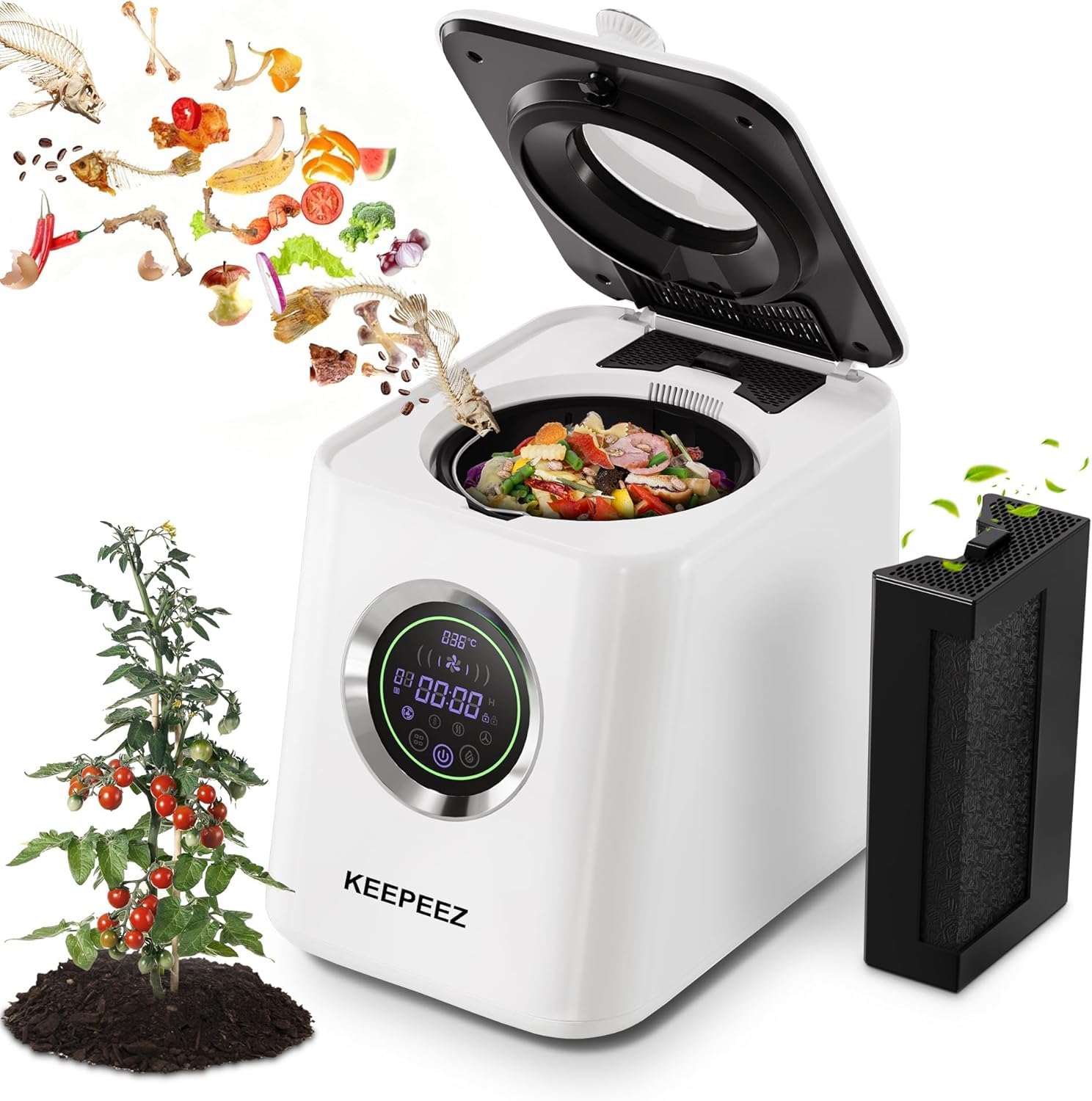
The KEEPEEZ FWD-301 uses four Sharksden grinding blades arranged to pull food waste from multiple directions, so chicken bones and avocado pits get fractured instead of bounced around. The 800g refillable activated carbon box — well above the standard 500g — combined with a thickened manual-lock lid keeps the smell of ground protein sealed inside even during extended runs.
Two cycle lengths (6 and 10 hours) let you choose between a quick dry grind for soft scraps and a deeper fermentation cycle for bones and fibrous stalks. The pure copper brushless motor runs at 42 dB, which is quiet enough to run overnight without disturbing the kitchen. Real-time sensor monitoring adjusts the grind time based on the moisture level of the load, preventing the wet sludge issue that plagues fixed-timer machines.
The cast aluminum inner liner resists leaks and is dishwasher safe. ETL and FCC certifications provide electrical safety assurance. The 3-year warranty (1 year basic plus 2 years extended) and 30-day return policy add long-term confidence that most competitors don’t offer at this tier.
What works
- Exceptional odor control from oversized carbon filter and sealed lid
- Brushless motor stays quiet and holds torque under heavy bone loads
- Smart sensors adjust cycle based on waste volume and moisture
What doesn’t
- Touch panel interface is not intuitive; requires manual for first few cycles
- Mode 2 (10-hour) can produce a burnt cheese odor toward the end
2. Growell 4L Silver (EC01SS)
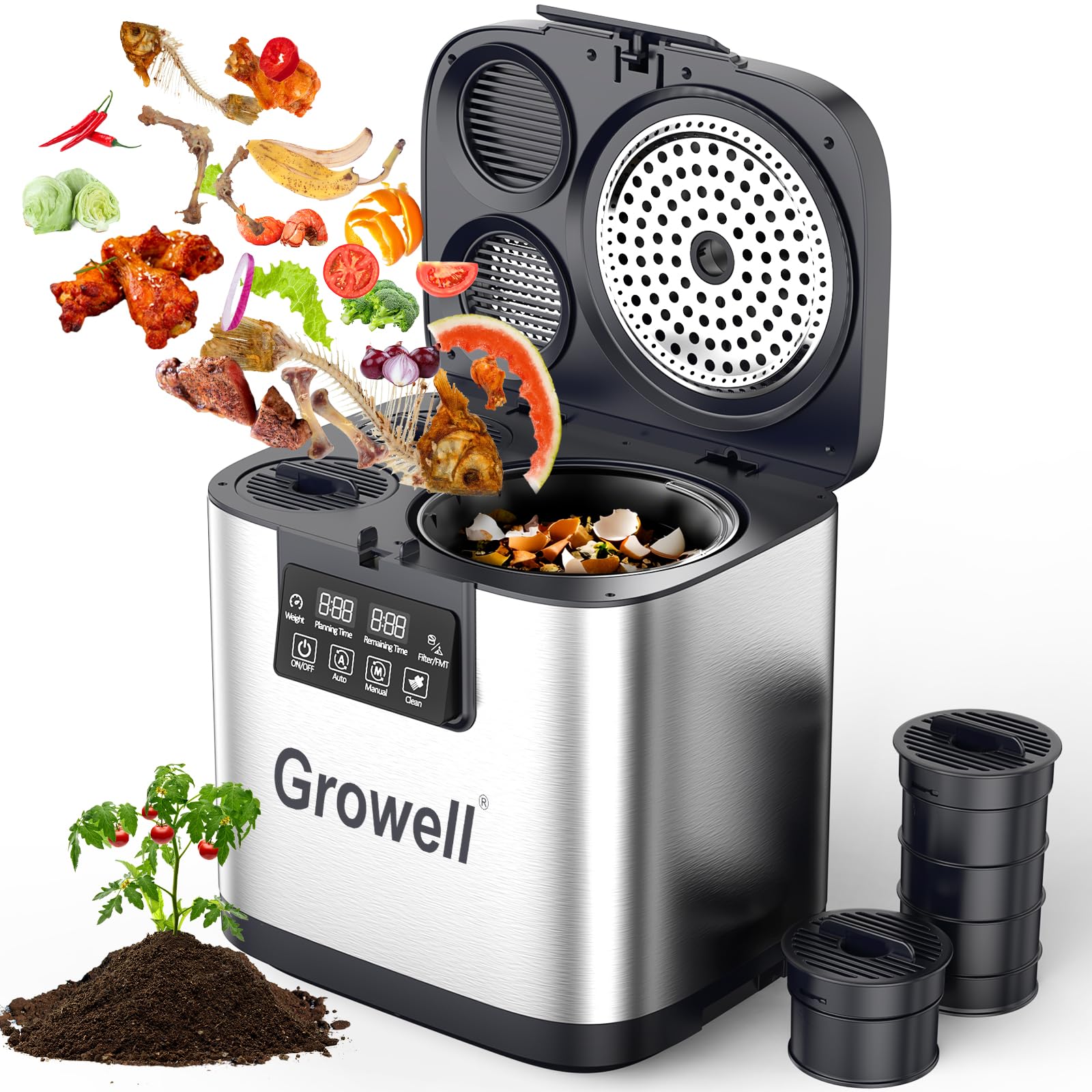
The Growell 4L Silver handles a full family’s daily waste in one load with its 4-liter inner barrel. The dual alloy and stainless steel blades use low-speed, high-torque rotation to pulverize chicken bones without stalling. The brushless motor is rated to last 2–3 times longer than a brushed equivalent, which matters when you’re running cycles daily.
Three modes — automatic (4–6 hours), manual (1–6 hours), and FMD fermentation — give you control over output texture. The FMD mode adds a microbial boost that pre-digests the ground material, making the resulting powder safer for direct soil incorporation. The dual activated carbon filter system achieves a 99.7% odor molecule interception rate, and the sealed design keeps flies out.
The LED display shows real-time remaining processing time, and smart sensors automatically adjust the power draw based on the load. The auto-cleaning cycle requires only water and a button press. The 3-year warranty from the date of purchase is among the best in this category.
What works
- Large 4L capacity reduces need for multiple daily cycles
- Three processing modes give adaptable output control
- Brushless motor provides long-term reliability and quiet operation
What doesn’t
- Partial-cycle operation needed to prevent compost deterioration if left idle
- Manufacturer could not provide specific guidance for yeast amount in fermentation mode
3. Growell 4L Black (GWEC01BKD)

The Growell 4L Black shares the same 4-liter barrel and four reinforced blades as its silver sibling but adds a transparent viewing window on the front. This lets you monitor the grinding and drying progress without opening the lid and releasing heat. The brushless motor runs at 40 dB — noticeably quieter than most competitors — making it a strong candidate for overnight apartment use.
The dual activated carbon filters block 99.7% of odor molecules, and the included 1.15-pound bag of carbon refills means you can start processing immediately. The three cycles (Auto, Manual, FMD) accommodate everything from a light load of vegetable peels to a heavy batch of bones and eggshells. Automatic mode runs 3–6 hours for typical kitchen waste.
The auto-cleaning function requires just water and a button press. The heavy-duty alloy and stainless steel blades handle chicken bones without jamming. The 3-year support and strict quality checks during manufacturing provide reassurance for long-term use.
What works
- Viewing window allows progress monitoring without losing heat or odor seal
- 40 dB brushless motor is among the quietest in its class
- Includes a full bag of carbon refills so no extra purchase needed
What doesn’t
- Output is not fully composted; requires mixing as thin topsoil layer
- Shipping damage reported occasionally; seller responsive but adds friction
4. NutriChef NCVK9112BGR

The NutriChef NCVK9112BGR uses a three-stage processing sequence — dry, crush, then cool — that is engineered to produce a consistent pre-compost texture. The drying phase reduces moisture before the blades engage, which prevents the wet paste that forms when blades hit soggy scraps. The cooling phase locks in the dry texture before the bin opens.
The advanced odor-reducing filtration system keeps the kitchen fresh during the several-hour cycle. The compact footprint (11.02 x 13.5 x 12.5 inches) fits neatly on a standard countertop. The PP and ABS construction is dishwasher safe, and the bucket removes easily for cleaning.
Noise-free operation makes it suitable for open-plan kitchens. The large capacity handles daily waste from a family of three or four. The grey color resists showing stains better than white units.
What works
- Three-stage processing (dry, crush, cool) prevents sludge output
- Dishwasher-safe bucket simplifies cleaning
- Compact footprint fits easily on counters
What doesn’t
- Blade can detach from drive after extended use (reported after 13 months)
- No replacement parts available for out-of-warranty repairs
5. The Lab Made 5-Blade (LMCM)
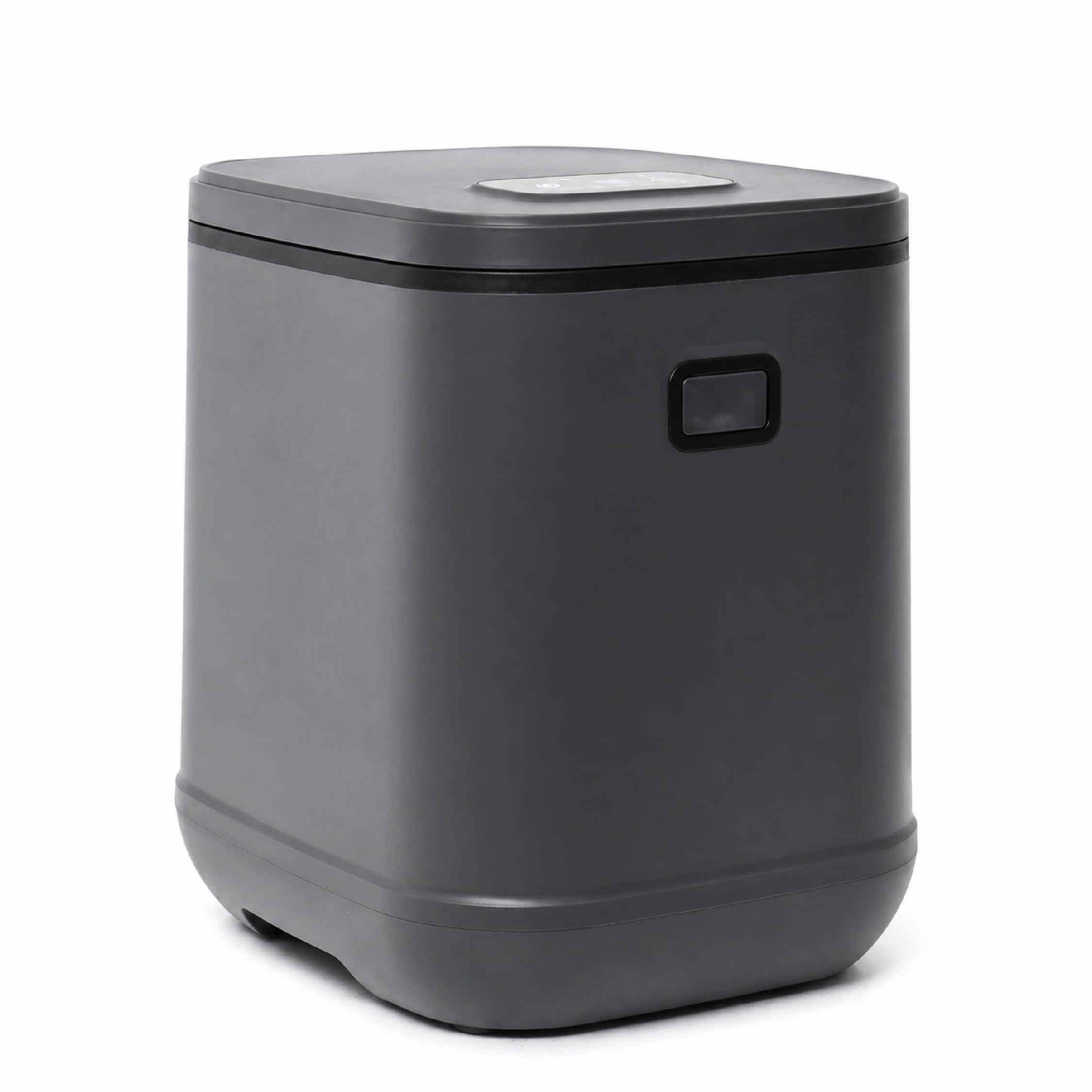
The Lab Made 5-Blade is the only unit in this review with five stainless steel blades, driven by a stepping motor designed for long-life stability. The extra blade surface area means it handles dense materials — chicken bones, lobster shells, shrimp shells — that standard 2-blade machines reject. The output is brown, silky, flat chips rather than dark wet compost, which makes it easier to mix into potting soil.
The dual activated carbon filters ship empty and must be filled with loose granules before first use. Once filled, the system effectively blocks odors. Two cycle modes — Standard (5–10 hours) and Ferment (10–20 hours) — let you choose between speed and nutritional richness. The pause/resume feature allows mid-cycle interruption without losing progress.
ETL electrical certification sets this unit apart from many direct-import competitors that lack third-party safety verification. The 22.4-pound weight provides stability during grinding. The Florida-based company provides domestic support.
What works
- Five blades handle bones and shells that 2-blade units cannot
- Pause/resume feature allows flexible scheduling
- ETL certified for electrical safety
What doesn’t
- Filters ship empty; requires separate purchase of activated carbon granules
- Notable clicking and crunching noise during bone grinding
6. MOLINGDUN MND-EC01B-1
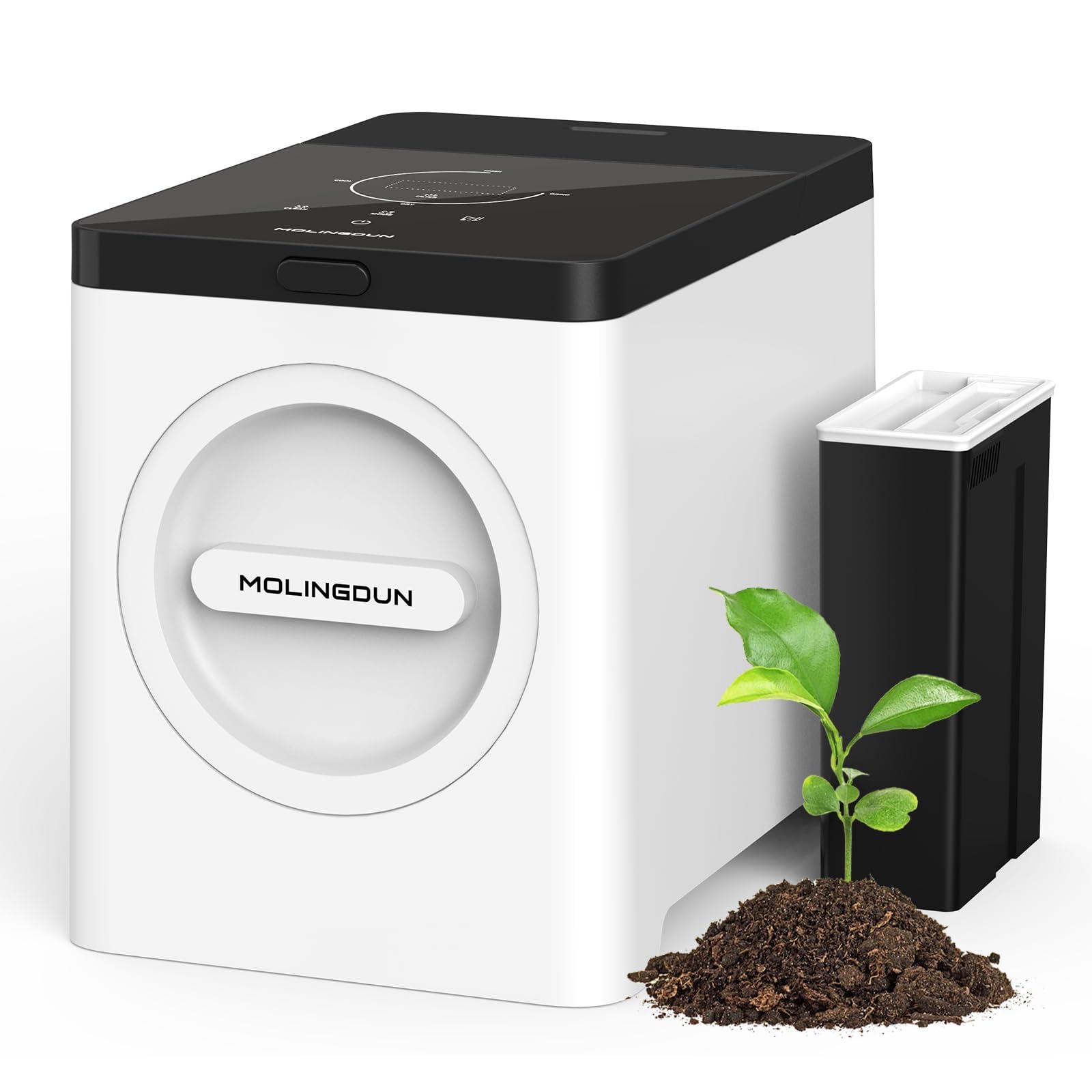
The MOLINGDUN MND-EC01B-1 features triple offset stainless steel blades arranged in three layers that pulverize avocado pits and chicken bones without jamming. The 3-liter capacity is sized for a family of four and reduces waste volume by over 90% in a single cycle. The output is a dry, crumbly material closer to ground coffee than wet compost.
The dual-channel active-carbon system uses two independent vent lines, each packed with replaceable carbon cells, to lock in odor molecules. The self-clean cycle reverse-pulses the blades while heating the chamber to 75°C, then you pour out the gray-water. The compact footprint (11.85 x 9.84 x 14.17 inches) takes up less counter space than a standard bread maker.
One-touch operation simplifies the process for daily use. The LED touch screen shows cycle status. The white finish blends into most kitchen decors.
What works
- Triple offset blade design prevents jamming on fibrous material
- Dual-channel carbon system keeps odors contained effectively
- Compact footprint ideal for small countertops
What doesn’t
- Small capacity may require nightly runs for larger families
- User reported unit failure after one month despite proper maintenance
7. NutriChef NCVK9112BWH
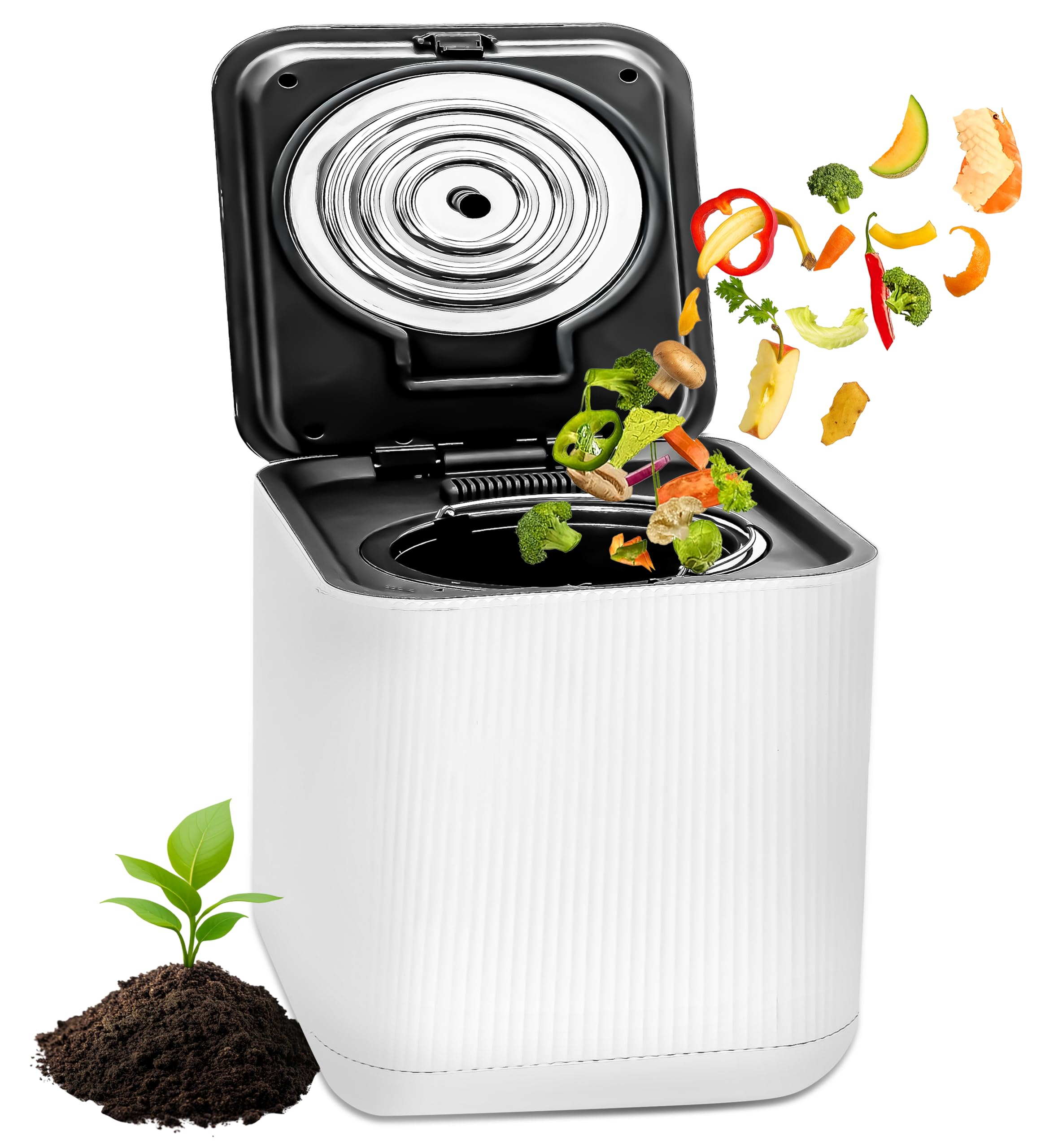
The NutriChef NCVK9112BWH is the simplest bone mill on this list — one button starts the 6–10 hour cycle, and the advanced odorless filtration system handles the rest. The 3-liter capacity processes vegetable peels, coffee grounds, and eggshells into pre-compost material with minimal user intervention. The noise-free technology keeps the kitchen quiet during overnight runs.
The compact dimensions (11.02 x 13.5 x 12.5 inches) make it easy to tuck into small kitchens. The PP and ABS construction is durable, and the removable bucket is dishwasher safe for simple cleanup. Built-in safety mechanisms prevent accidental opening during operation.
This unit reliably processes heavy plant scraps and eggshells but may require a second dehydration cycle for wetter loads to achieve a dry, soil-like texture. The clean and filter lights illuminate after every cycle, which some users find excessive but ensures the machine stays maintained.
What works
- One-button operation requires no learning curve
- Near-silent operation is suitable for overnight use
- Dishwasher-safe components simplify maintenance
What doesn’t
- Sometimes produces wet sludge that requires a second dehydration cycle
- Manufacturer unresponsive after 31-day return window closes
Hardware & Specs Guide
Blade Material and Configuration
The number of blades and their arrangement directly determines bone-crushing capability. Three or four offset stainless steel blades fracture bones from multiple angles. Two-blade designs bounce off dense material. Look for reinforced alloy or cast aluminum inner liners that resist denting when heavy loads shift during grinding.
Carbon Filter Capacity and Placement
Dual-channel systems with independent vent lines and at least 700g of activated carbon provide reliable odor control for bone processing. Single-filter units lose effectiveness after 2–3 weeks of daily bone grinding. Filter placement matters — top-mounted filters vent upward and may bypass if the lid seal is weak. Side-mounted or sealed compartment filters maintain better containment.
Motor Type: Brushless vs. Brushed
Brushless motors deliver consistent torque, run quieter (40–45 dB), and last 2–3 times longer than brushed equivalents. Brushed motors lose torque as carbon brushes wear, which happens faster under the high-resistance load of grinding bones. A stepping motor offers an alternative with precise speed control but may produce more audible clicking during operation.
Cycle Stages: Grind, Dry, Cool
Units that separate the processing into distinct stages produce a better final texture. The drying phase removes moisture before the grinding phase engages, preventing paste formation. The cooling phase locks in the dry crumbly texture. Machines that combine all stages into one continuous run tend to produce inconsistent results, sometimes wet, sometimes burnt.
FAQ
Can a bone mill for garden use handle whole chicken bones?
Is the output from a bone mill ready to use directly on garden soil?
How often must the carbon filters be replaced in a kitchen bone composter?
What is the difference between Standard and Ferment modes on a bone mill?
Final Thoughts: The Verdict
For most gardeners, the bone mill for garden winner is the KEEPEEZ FWD-301 because four Sharksden blades, an oversized carbon filter, and a brushless motor at 42 dB deliver consistent dry output with minimal noise. If you need a larger 4-liter capacity for a full family and want a transparent window to monitor progress, grab the Growell 4L Black. And for handling the toughest bones and shells with five dedicated blades, nothing beats the The Lab Made 5-Blade.