
Specs are compiled from manufacturer listings and verified buyer reviews and can change over time — please confirm the key details on the product page before buying.
You want a vegetable garden to feed you, not fight you. But picking a raised bed means staring at a wall of choices: metal vs. wood, how deep, how big, how long will it last before it rots or rusts?
This guide breaks down seven popular models using the manufacturers’ published specs and patterns in verified customer reviews, so you get each pick’s real strengths and trade-offs instead of marketing spin.
Here are the best garden vegetable raised beds for your backyard, your back, and your budget.
Our Picks at a Glance
How To Choose The Best Garden Vegetable Raised Beds
Material — Metal vs. Wood vs. Resin
Galvanized steel with a painted finish lasts decades without rotting. Wood is natural and beautiful but eventually breaks down in ground contact. Resin composite (like the Keter Evotech material) never rots and requires zero maintenance, though it is lighter and may feel less sturdy to some. Pick metal or resin if you want a bed that stays put for a decade; pick wood if you want a classic look and intend to replace it eventually.
Height — Comfort and Root Room
A 12-inch bed is enough for lettuce, herbs, and shallow-root vegetables. At 17 inches, you gain room for tomatoes, peppers, and root crops — and you spend less time bending down. A 30-plus-inch improve bed eliminates bending, a relief for anyone with back or knee trouble. The trade-off is soil volume: deeper beds require significantly more bags of soil.
Configuration — Fixed Shape vs. Modular
Modular kits let you build one large U-shape, a long rectangle, or separate smaller beds from a single box. Fixed-size beds are simpler to assemble and usually cheaper per square foot but lock you into one layout. If you are unsure about your garden plan, modular wins. If you know exactly where the bed goes, a fixed-size bed keeps the build simple.
Quick Comparison
| Model | Best For | Height | Material | Soil Volume | Amazon |
|---|---|---|---|---|---|
| Vego Garden 17″ Modular★ Best Overall | Best Overall | 17 inches | VZ 2.0 Metal | 12-13 bags (1.5 cu ft) | Amazon |
| SoliWood improve CedarStanding Reach | Standing Reach | 30 inches | Cedar Wood | 6 cubic feet | Amazon |
| A ANLEOLIFE 8x4x2ft | Large Crop Bed | 24 inches | Galvanized Steel | 478 gallons | Amazon |
| Keter 48″ Square Resin | No-Tools Setup | 12.6 inches | Resin Composite | 117 gallons | Amazon |
| Vego Garden 10-in-1 Jumbo | Big Modular | 17 inches | VZ 2.0 Metal | 21 cubic feet | Amazon |
| ketive Mobile Wood Planter | Moving With Sun | 33 inches | Fir Wood | 33.5 gallons | Amazon |
| Pattiumo Galvanized Round | Budget Runner-Up | 18 inches | Galvanized Steel | 24 cubic feet | Amazon |
In‑Depth Reviews
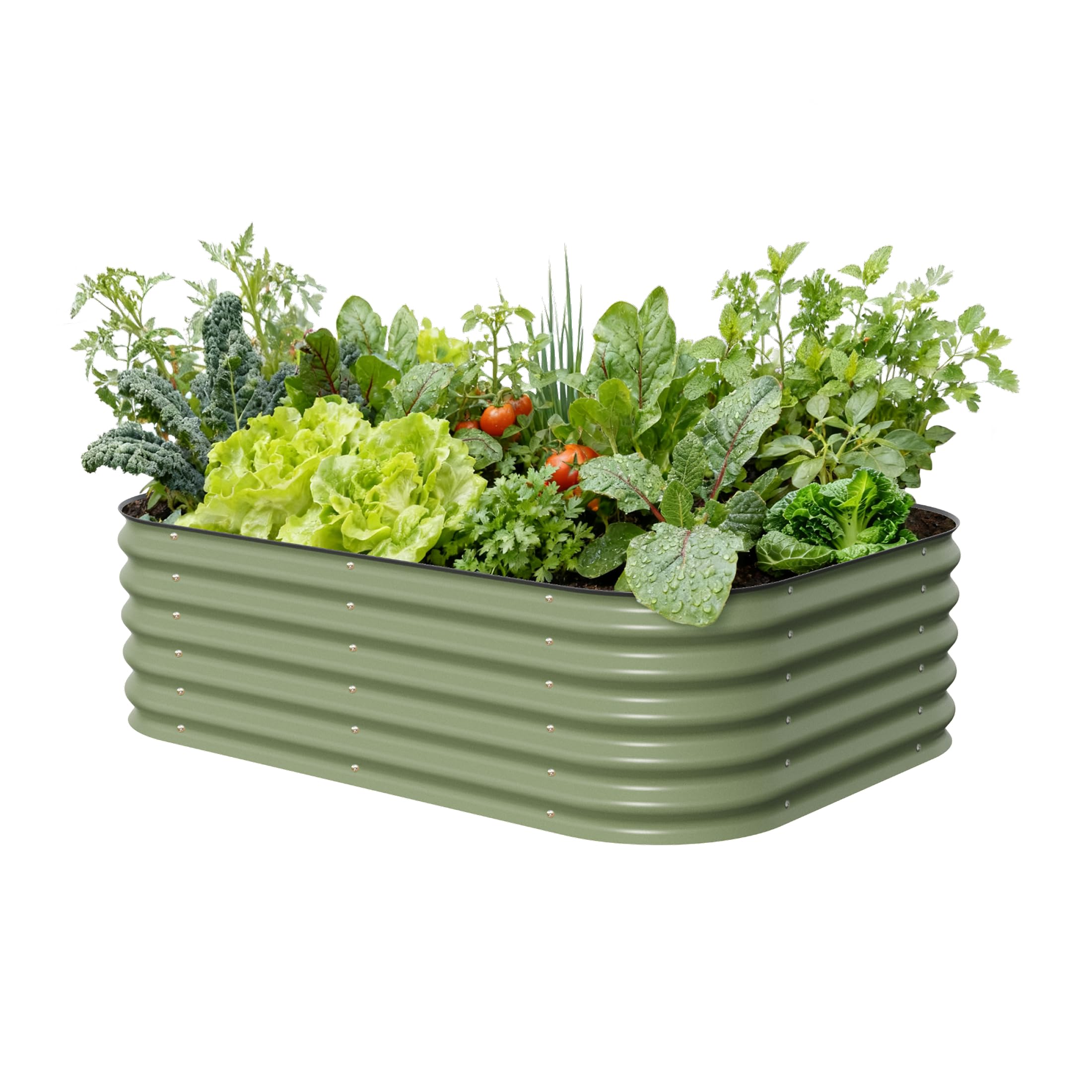
1. Vego Garden 17″ Tall 6-in-1 Modular Metal Raised Garden Bed
Our pick — over 4.5★ from 750+ verified ratings; the strongest balance of quality and price.
This crowd favorite balances depth, durability, and flexibility.
The 17-inch height lets your tomato roots stretch deep, your watering schedule stretches longer, and you bend barely at the waist to weed. That is five inches deeper than a standard 12-inch bed. Buyers report it takes 12 to 13 bags of 1.5-cubic-foot soil to fill a 3×5 configuration — a solid head start for a serious vegetable patch.
The material is the other standout. Vego uses VZ 2.0 steel — a Zinc, Magnesium, and Aluminum coated core with an AkzoNobel paint that is USDA approved — tested at the Texas A&M National Corrosion & Materials Reliability Lab for a 20-plus-year lifespan. That is decades beyond what any wood bed can promise. The assembly is straightforward for one person but time-consuming (many screws are involved, as owners note), and the olive green finish blends quietly into the garden.
The main hesitation is the price: some wish it cost less. But when you stack the 17-inch depth, the modular 6-in-1 layout, and the verified corrosion data, this is the one that grows with you. Buyers who want a 20-year bed without wood’s eventual decay should pick this over the A ANLEOLIFE for its greater layout flexibility.
What wins people over
- 17-inch depth gives roots room and saves your back
- VZ 2.0 steel with 20+ year corrosion warranty backed by lab testing
- 6-in-1 modular design fits almost any garden shape
- Easy solo assembly once you commit to the screw count
The honest trade-off
- Ish is an investment; the value is proven over years, not weeks
- Assembly is straightforward but takes real time and a screwdriver
Best for gardeners who want one bed that lasts two decades: the depth, the material science, and the flexibility make it the most complete pick on this list.
Think twice if you love the look of natural wood: this is painted metal, beautiful in a modern way but not a wood-grain match for classic cottage gardens.
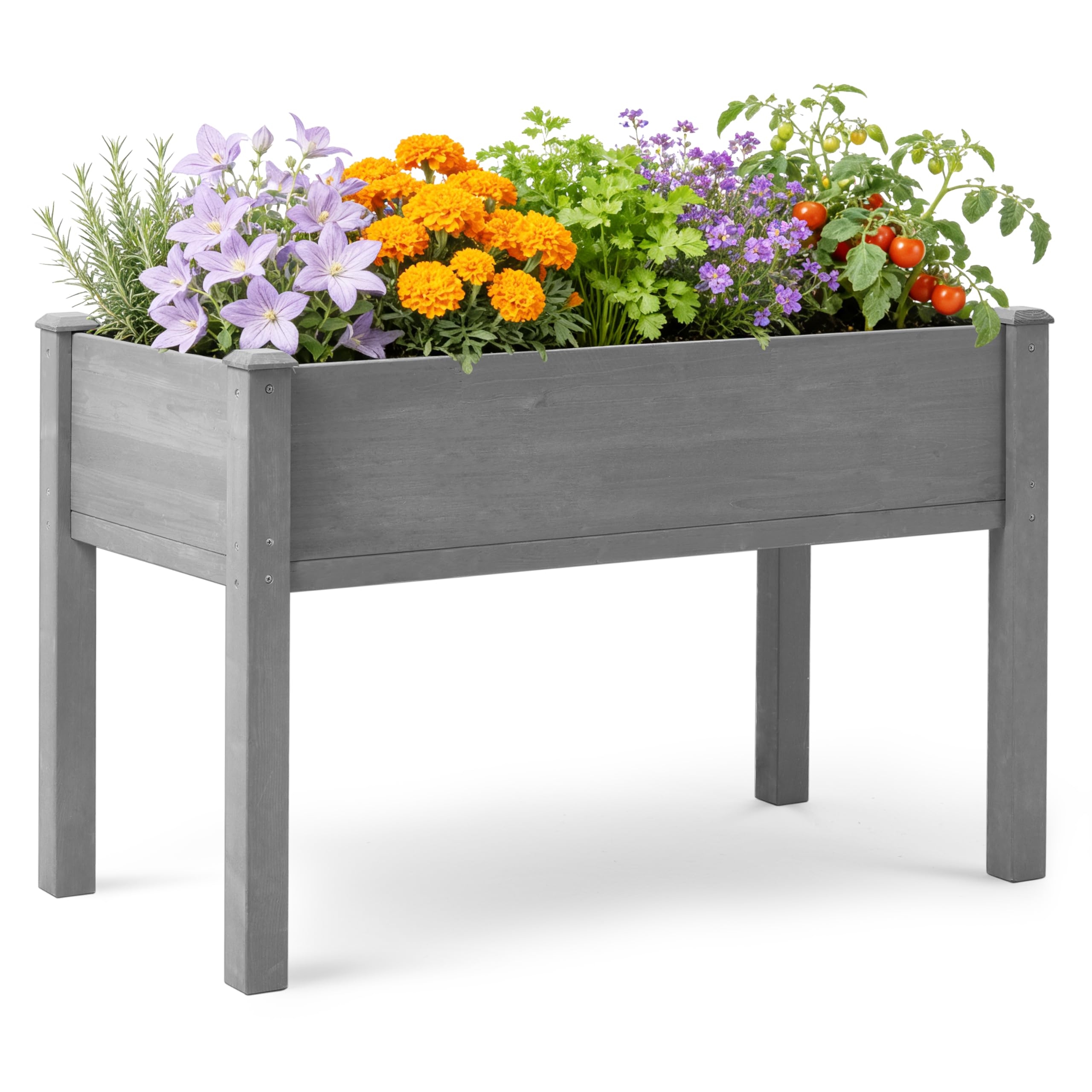
2. SoliWood Raised Garden Bed with Legs, 48x24x30”
improve 30 inches so you never bend down again — real cedar, real sturdiness.
The 30-inch working height is its biggest selling point. That puts the soil at waist level for most people, turning weeding, planting, and harvesting into standing work. The cedar construction is also a major draw — owners consistently call it sturdy and classy-looking, with the natural wood bringing warmth that metal simply cannot match. The water-based eco paint means no chemicals leach into your vegetables.
Assembly is doable in about 30 minutes, and the pre-drilled holes line up perfectly — one 76-year-old owner described the build as easy. At 38.9 pounds empty it is not light, but that heft translates to a 300-pound weight capacity once filled. The included liner helps keep soil contained while the drainage holes manage moisture. Size-wise, the 48 x 24-inch footprint fits on a patio or in a small yard without overwhelming the space.
The catch is what you would expect from real wood in an outdoor planter: even with proper sealing, cedar eventually weathers. Some owners note that the wood can split slightly if you over-tighten screws during assembly, so gentle handling is advised. And at 6 cubic feet of capacity, you are not setting up a market garden — this is an improve box for serious vegetable growing on a manageable scale. Unlike the Vego Garden bed, it will not last 20 years without signs of age.
Stand-and-grow verdict: this is the improve pick for anyone whose back hurts after 10 minutes of ground-level gardening. The cedar is beautiful, the height is transformative, and the build is solid enough to hold year after year.
Reach for this if you want to garden standing up, without kneeling or squatting: the 30-inch height is its superpower.
Look elsewhere if you need a huge growing area: this is a compact raised bed, not a large planting plot.
3. A ANLEOLIFE 8x4x2ft Galvanized Raised Garden Bed Kit
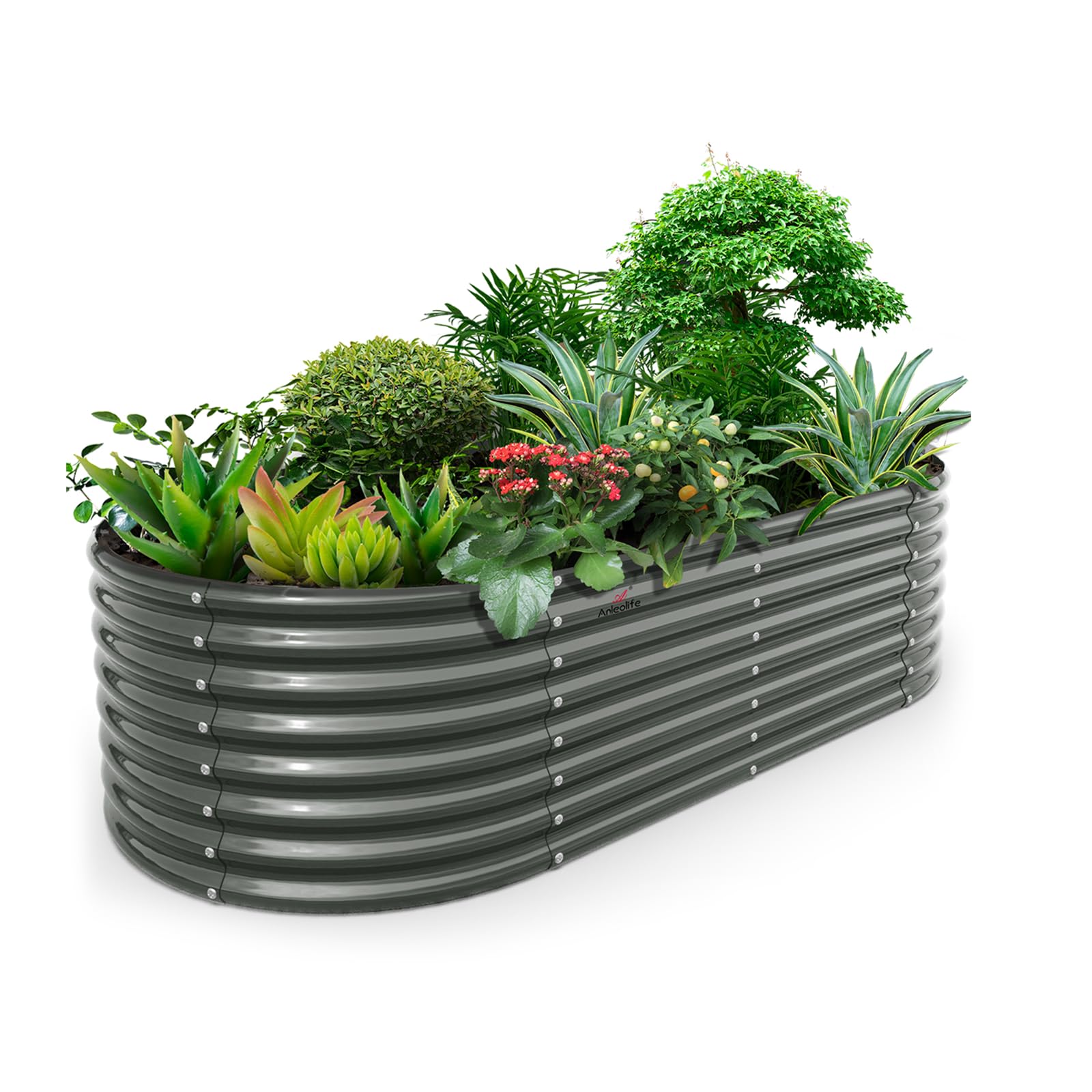
The 8×4 bed with a 24-inch depth that holds a serious harvest and stays put for decades.
This bed suits gardeners who want high-volume food production without multiple small beds. The 8-foot by 4-foot footprint with a 24-inch depth gives you a 478-gallon capacity — enough for a full family vegetable garden including tomatoes, peppers, squash, and root crops. The 22-gauge (0.8mm) corrugated galvanized steel with multi-layer powder coating is built to handle soil weight and weather for years. One owner liked it so much they bought four more to replace their old wooden beds.
The assembly is relatively straightforward with clear instructions, and the rolled edges and included garden gloves are a thoughtful safety touch. The oval shape eliminates sharp corners, and the bottomless design lets plant roots extend into the native soil below. At 24 inches deep, this bed is tall enough to keep out rabbits while giving deep-rooted vegetables room to thrive. The single-person build time is roughly 1.5 hours with a drill, and buyers consistently praise the fit and finish of the panels.
The honest trade-off is the sheer size: you will need a flat, sunny area that can accommodate a 96-inch-long bed, and filling that 478-gallon capacity takes a lot of soil. The center support rods are not the sturdiest part of the design, though the bed itself is rock-solid once loaded. This is not a weekend project — it is a multi-year investment. It lacks the modular layout options of the Vego Garden bed, but delivers more raw volume for the price.
Serious grower, serious size: if you have the room and the ambition for a full vegetable plot, this is the heavy-duty pick that outlasts wood and outperforms smaller beds.
Best for the committed vegetable gardener with space to spare: the volume and depth are class-leading on this list.
Skip if you are new to gardening or have a small yard: this bed dominates whatever space it sits in.
4. Keter 48″ Square Wood-Look Resin Raised Garden Bed

A 5-minute, no-tools assembly that looks like wood and never rots — genuinely.
For planting within an hour of unboxing, this Keter bed is the speed champion. The Evotech advanced composite material looks convincingly like real wood with a dual-finished, embossed texture, but it is 100% resin — it will never rot, splinter, or need sealing. The 48 x 48-inch square gives you a 117-gallon capacity, enough for five tomato plants alongside herbs and flowers. Assembly involves four screws per corner and takes about 10 minutes, as multiple owners confirm.
The bed is BPA-free, so your vegetables grow in a safe environment, and the material holds up well through summer heat. One owner even used it as a play pit with rubber mulch before converting it to a garden bed. At 14.3 pounds, the empty bed is light enough to reposition, though the weight of soil and plants keeps it firmly grounded. The 12.6-inch height is standard for shallow-root crops like lettuce, peppers, and herbs.
The recurring trade-off is stability — several owners note that the corners feel wobbly before the bed is filled, and the resin material is not as rigid as steel or thick wood. Durability feedback is mixed: some report it survives blizzards fine, while others say the material is not built for extreme weather long-term. The 2-year limited warranty gives some confidence, but this is a mid-life bed, not a 20-year investment like the Vego Garden model.
The quick-start appeal
- No-tools assembly in under 15 minutes — easiest by far
- Wood-look texture without the maintenance of real wood
- Large growing area at 117 gallons for the footprint
- BPA-free material is safe for vegetables and herbs
The honest trade-off
- Corners can feel wobbly until the soil weight stabilizes it
- Resin is durable but not as weather-proof as galvanized steel
- 12.6-inch depth limits deep-root vegetables like carrots
Best for the instant-gratification gardener: you can unbox, assemble, and plant in under an hour with zero skill required.
Skip if you live in extreme climates or need deep soil for root crops: the resin and 12.6-inch depth have limits.
5. Vego Garden 17″ Tall 10-in-1 Jumbo Modular Metal Raised Garden Bed
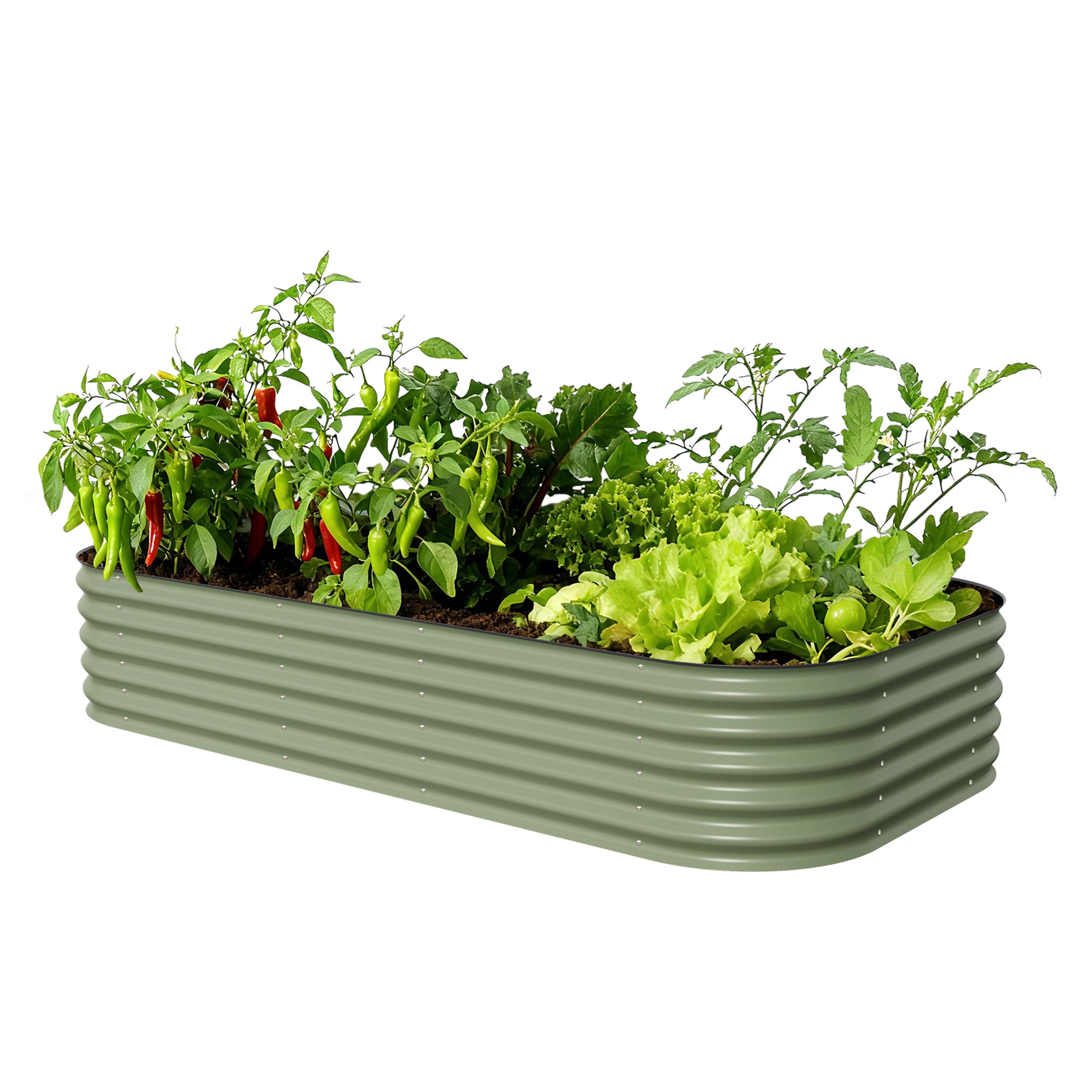
The jumbo modular set that offers 10 layouts and 21 cubic feet of premium growing space.
If the 6-in-1 Vego is the smart middle child, the 10-in-1 is the big sibling with more land to cover. At 21 cubic feet capacity and a 41.7-pound kit weight, this is the largest modular bed in the lineup, giving you ten possible configurations to fit irregular garden shapes. You get the same VZ 2.0 material — Zinc, Magnesium, and Aluminum coated steel with USDA-approved AkzoNobel paint, verified at Texas A&M for a 20-plus-year life. The 17-inch depth remains the same, so root crops and comfort are equally well-served.
Assembly is straightforward with bolts and a screwdriver, though the sheer number of fasteners means it is time-consuming rather than hard. Buyers praise the stainless steel fasteners and the organized packaging. The oval design and heavy-duty rubber edging eliminate sharp corners, making it safe for kids and pets. Owners in harsh climates report it survives ND winters without issue.
The main consideration is the price and commitment: this kit costs more than most individual beds on this list, and if you don’t use the full 10 configurations, you might be overpaying for modularity. At 41.7 pounds, the components are manageable, but this is a two-person assembly job. It shares the same excellent material as the 6-in-1 Vego but asks you to commit to a larger garden footprint.
Maximum flexibility for the dedicated grower: the 10-in-1 is for someone who knows they want a big garden and wants to custom-fit the bed to their exact yard.
Best for the ambitious gardener with an irregularly shaped garden: the 10 configurations fit almost any space.
Consider the 6-in-1 instead if you only need a simple rectangular bed: the extra configurations would go unused.
6. ketive Raised Garden Bed with Lockable Wheels

The only raised bed on the list that rolls — lockable wheels let you chase the sun.
This is a genuinely different idea: a raised bed on casters. The 33-inch height puts the growing surface at standing level, and the lockable wheels let you pivot the bed to follow sunlight across the day or move it out of the way for a patio event. The fir wood construction gives a warm, natural look, and the included liner and four drainage holes keep soil moisture balanced. It even has a bottom shelf and side shelves for workspace, turning the planter into a small gardening station.
Assembly is moderate — instructions are somewhat clear, and the wood has no pre-drilled holes, so you need a drill and some patience. Multiple owners mention easy builds, and one noted the wood did not split when driving screws. The 55.5 x 24-inch footprint fits on a small deck or patio, making it ideal for apartment dwellers or anyone with limited ground space who still wants fresh vegetables.
The trade-offs are real: the fir wood scratches easily, and the initial stain smell is strong (one owner recommends building it outside). Some units arrive with minor damage to a piece, and the bottom plates can misalign if you are not careful during assembly. The 33.5-gallon capacity is modest compared to in-ground beds, so focus on shallow vegetables and herbs. This is a beautiful mobile planter, not a high-volume production bed like the A ANLEOLIFE.
Why this one stands out
- Wheels let you chase sunlight or clear the patio in minutes
- 33-inch standing height eliminates all bending
- Includes shelves for tools and workspace
- Real fir wood with a natural finish
What to expect honestly
- 33.5-gallon capacity is small for deep-root vegetables
- Wood scratches and stains easily; build outside initially
- Assembly requires a drill and careful alignment
Best for small-space, sun-chasing gardeners on patios or decks: the wheels and standing height make it uniquely practical.
Not for large harvest goals or rough handling: the fir wood needs care, and the capacity is limited.
7. Pattiumo Galvanized Raised Garden Bed 8×2×1.5 FT
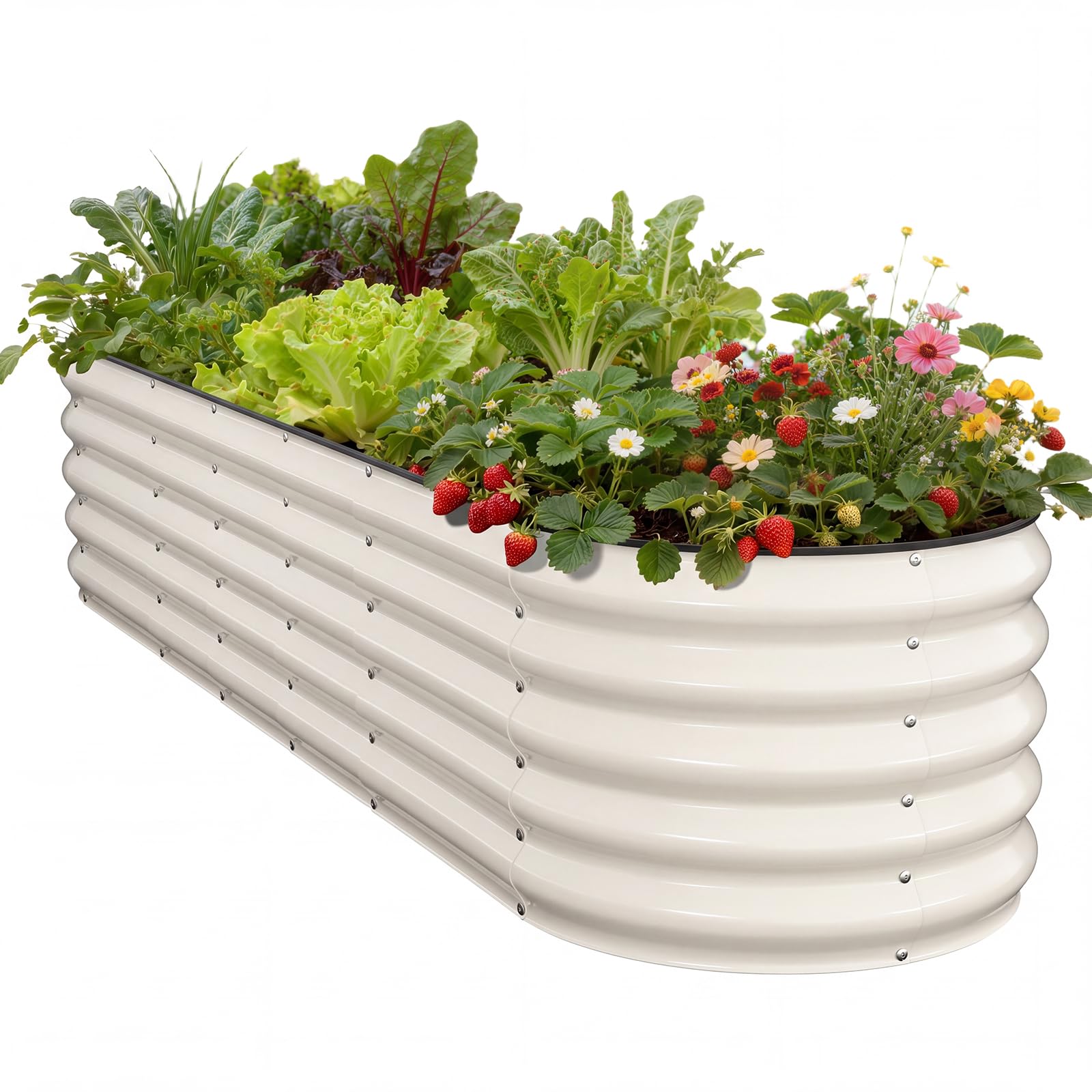
A heavy-gauge steel bed at a budget price — the best low-cost entry to galvanized gardening.
For under fifty dollars, you get an 8-foot by 2-foot oval bed made from heavy-gauge galvanized steel that owners describe as two to four times stronger than expected. The 18-inch height is enough to reduce back strain while keeping the soil volume reasonable at 24 cubic feet. Customers note it requires about three bags of 3-cubic-foot soil to fill — a manageable weekend project. The open-bottom design allows natural drainage and deep root access into the ground below.
Assembly takes roughly an hour with the included tools, though owners warn against overtightening the bolts as they can snap. The protective plastic edging covers sharp edges during setup, and the overall look is clean and modern — one owner called it “beautiful” and was happy with the colors. It has survived an ice storm with the protective plastic film still on and looks new into a second year.
The honest limitations: the 18-inch height is adequate for most vegetables but barely enough for blueberries or very deep-root crops. The durability feedback is mixed — some report the paint scratches easily, and others note the metal can dent. The color also gets mixed reactions. At this price point, you are trading long-term resilience for immediate affordability. It is a solid starter bed, not a 20-year heirloom like the Vego Garden model, but it gets you growing on a budget.
The value king: if you want galvanized steel without the premium price, this bed gets the job done with good reviews to back it up.
Best for budget-conscious first-time gardeners: you get a real galvanized steel bed for less than the cost of lumber.
Move on if you want a 20-year bed with a premium finish: the paint and metal are entry-level quality.
Understanding the Specs
Soil Volume and Bag Math
The biggest surprise for new raised bed owners is how much soil it takes to fill one. A 48 x 48 x 12-inch bed holds about 117 gallons, which translates to several 1.5-cubic-foot bags from the garden center. Deeper beds like the 17-inch Vego take 12-13 of those bags. Always check the bed’s cubic-foot or gallon capacity before you start hauling soil — underestimating here means an extra trip to the store.
Bed Depth (Inches Matter)
Depth or height determines what you can grow and how often you water. A 12-inch bed works for lettuce, herbs, and peppers. A 17-inch bed opens the door to tomatoes, carrots, and potatoes. An improve 30-inch bed is primarily about comfort — you can garden standing up, but root depth is limited by the box bottom. Shallow beds dry out faster in summer heat, so deeper is generally better unless you have a specific reason for a short bed.
FAQ
How deep should a raised garden bed be for vegetables?
Is galvanized steel safe for growing vegetables?
How many bags of soil do I need to fill a raised bed?
Will a raised bed rot or rust over time?
Can I put a raised bed directly on grass?
What is the best material for a long-lasting raised bed?
Do I need to assemble a raised bed myself?
Can I move a raised bed after it is filled with soil?
Final Thoughts: The Verdict
For most gardeners, the best garden vegetable raised beds choice is the Vego Garden 17″ Tall Modular Bed because it nails the trifecta of depth, durability, and flexible design at a price that matches its long lifespan. If standing-height gardening is your priority and you love the look of cedar, the SoliWood improve Planter is the one to reach for. And for a budget-friendly entry into galvanized steel that still delivers real growing space, the Pattiumo Round Bed gets you started without overspending.
How We Picked
We do not accept paid placement. Every pick is matched to a real buyer and a real use-case; we do not hands-on test units.
Sources & Methodology
Specifications: manufacturer listings and product documentation. Review insights: verified customer reviews, as of July 2026. Pricing: not shown on this page (it changes often); check the current price via the retailer link.
As an Amazon Associate, Lawn Gear Lab earns from qualifying purchases. This does not affect which products we feature.