
Specs are compiled from manufacturer listings and verified buyer reviews and can change over time — please confirm the key details on the product page before buying.
You just want a clean cut — not a wrestling match with a twig. The right garden hand shears turn a Saturday morning cleanup into a satisfying routine. The wrong ones turn your wrist into a complaint machine by Tuesday. This guide gives you the shortlist of shears that stay sharp, feel comfortable, and handle whatever you prune.
I’m Rikta — the founder and writer behind Lawn Gear Lab. This guide is built by comparing the manufacturers’ published specifications and the patterns across verified customer reviews, so you get each pick’s real strengths and trade-offs instead of marketing spin.
Every pair here has been measured against the real-world demands of cutting, trimming, and deadheading. What follows is a clear breakdown of the best garden hand shears for the job you have right now.
Our Picks at a Glance


How To Choose The Best Garden Hand Shears
Buying a pair of hand shears seems simple — you pick one up, squeeze, and you are done. But a few key details separate a tool you reach for every time from one that sits rusting in the shed. Here is what matters most.
Bypass vs. Anvil Blade
The blade type decides what the shear can handle. A bypass blade (two curved blades sliding past each other like scissors) makes the cleanest cut on live, green growth — think rose canes, tomatoes, softwood stems. It reduces plant damage because it slices cleanly. An anvil blade has one sharp blade that closes against a flat surface, crushing the stem against it. This gives you more leverage for dead, dry wood or thick branches. Anvil shears tend to crush live stems, so choose based on what you prune most.
Cutting Capacity
This is the maximum branch thickness the shear can comfortably cut. Most good-quality hand shears can handle branches up to 1 inch thick. Anything thicker forces the blades apart and strains the pivot joint, leading to dull cuts and early wear. Match the capacity to the thickest stem in your garden — 0.25-inch shears are for flowers and herbs, while a 1-inch capacity tackles serious shrub work.
Handle Material and Ergonomics
Handles made of aluminum are light and tough, reducing fatigue during a long session. Fiberglass composite handles are lighter still but can flex under heavy pressure. Plastic handles are budget-friendly but less durable. Look for a non-slip coating or contoured grip if you work in wet conditions or have arthritis. The angle of the cutting head also matters — an angled head keeps your wrist in a natural position.
Replaceable Parts and Durability
A shear with a replaceable blade and spring will last years longer than a sealed, disposable model. High-carbon steel blades hold an edge longer than stainless steel but need more maintenance (cleaning and oiling) to resist rust. A titanium coating reduces friction and rust without changing the blade’s sharpness. If you prune heavily every season, paying for a repairable tool saves you money in the long run.
Quick Comparison
| Model | Best For | Blade Type | Cutting Capacity | Handle Material | Amazon |
|---|---|---|---|---|---|
| Felco F2★ Best Overall | Professional All-Purpose Pruning | Bypass (Carbon Steel) | 1 inch | Forged Aluminum | view |
| Dramm ColorPoint CompactPrecision Pick | Precision Flower & Herb Cutting | Bypass (Stainless Steel) | 0.25 inches | Stainless Steel | view |
| Byhagern Grass ShearsBudget Champion | Grass and Weed Trimming | Bypass (High Carbon Steel) | — | Plastic | view |
| Modern Sprout Shears | Herb & Houseplant Snipping | Bypass (High Carbon Steel) | — | Aluminum | view |
| Haus & Garten EnduroPRO | Heavy-Duty Garden Pruning | Bypass (Ti-Coated Steel) | 1 inch | Anodized Aluminum | view |
| Corona BP 6250 | Mid-Range All-Purpose | Bypass (Carbon Steel) | 1 inch | Aluminum | view |
| Felco F160L | Large Hands & Extended Use | Bypass (Alloy Steel) | 1 inch | Fiberglass Composite | view |
| Original LÖWE Anvil | Dry Branch & Thick Wood | Anvil (Carbon Steel) | 0.87 inches | Plastic | view |
| ARS VS-8XZ | Precision & Lightweight Cutting | Parrot Beak (Carbon Steel) | 0.87 inches | Aluminum | view |
In‑Depth Reviews
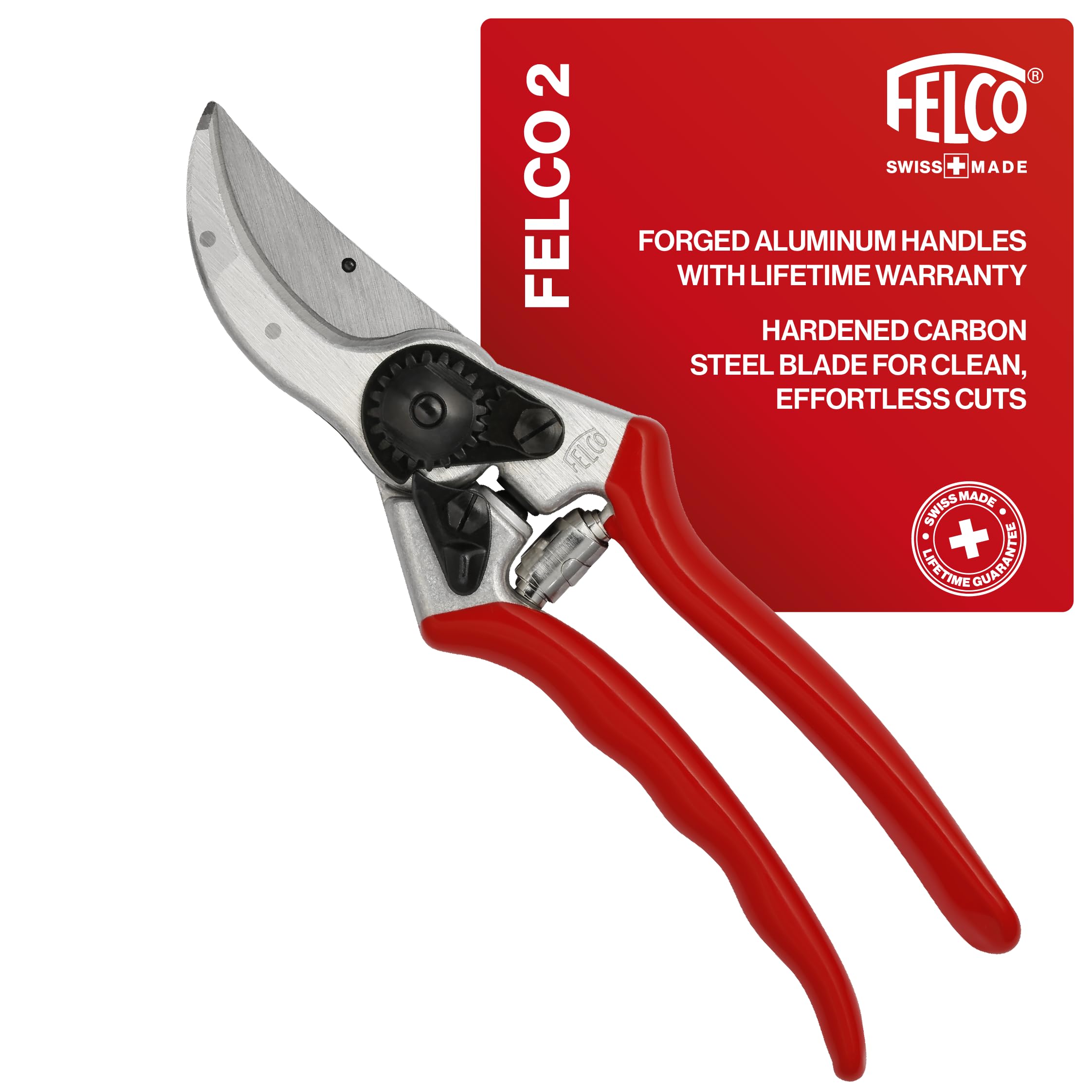
1. Felco F2 Pruning Shears
Our pick — over 4.5★ from 14,000+ verified ratings; the strongest balance of quality and price.
The professional standard that landscape crews have quietly depended on for decades.
This is the tool pros reach for — it keeps the garden shed quiet for years. The Felco F2 uses a hardened carbon steel blade (a bypass type, meaning it slices cleanly like scissors) to cut branches up to 1 inch thick. Forged aluminum handles keep the weight down without sacrificing durability. The non-slip coating and angled cutting head reduce strain during long pruning sessions, which matters when you work through a whole hedge.
What wins people over is the repairability. Every single part — the blade, the spring, the anvil (the flat surface the blade closes against), the bolt — can be replaced or sharpened. This makes it a decades-long investment rather than a disposable tool. Buyers report it as “the best pruner I have ever owned,” and the consistent 4.8-star consensus across tens of thousands of owners backs that up. It is lightweight and has replaceable parts.
Why It Dominates
- The Swiss precision bypass blade cuts through 1-inch branches with a clean, scissor-like action.
- Fully replaceable parts mean you never throw it away — just swap the worn component.
- The ergonomic head and grip keep your wrist comfortable even after long use.
The One Trade-Off
- At this tier, it is an investment in a long-term tool, not a grab-and-go throwaway.
Reach for this if: you want a single pruner that cuts everything from daisy stems to 1-inch oak branches and can be rebuilt rather than replaced. It is the one professionals choose because they know it will last a lifetime.
Look elsewhere if: you only do light snipping once a season and prefer a smaller, lower-investment tool like the Modern Sprout Shears.
2. Dramm ColorPoint Stainless Steel Compact Pruning Shears
The pocket-sized detail snip that makes deadheading feel surgical.
If your garden work is more about flowers, herbs, and delicate plants than thick branches, this is the shear that fits your hand and your pocket. The fine-point stainless steel blade (2 inches long) makes precise cuts in tight spots — snipping a spent bloom without damaging the bud beside it. The corrosion-resistant steel means it stays sharp even if you forget to wipe it down. The cutting width is only 0.25 inches, so it is not for woody stems, but for deadheading, trimming roots, or cutting twine, it is a top choice.
The consensus among owners is that this is a “high quality, sharp, precise fine-tip shear.” A professional gardener reported using one daily for 2 months with no rust and no loss of sharpness. The ambidextrous design and slide lock make it easy to carry in a shirt pocket and clip one-handed. Unlike the bigger Felco F2, it is built for delicate snips, not thick branches.
Verdict from the data: If your pruning is about precision (roses, tomatoes, herbs) rather than power, this is the one to pick. skip it if you regularly need to cut anything thicker than a pencil.
3. Byhagern Upgraded Grass Shears
The dedicated grass trimmer that reaches where the string trimmer cannot.
When you need to clean up the edges of the lawn or snip weeds out of a narrow bed, this long-bladed shear (6.7 inches long) is the right tool. It is different from a pruning shear — the straight, scissor-like blades are made for slicing through grass and leaves, not branches.
Buyers praise the cutting performance most (81 mentions), and the spring-loaded action cuts down on hand fatigue. One described how you can “use a second hand to pull grass from walls” for an even better result. The trade-off is that the maker explicitly warns against using these on branches, which could warp the structure. Stick to weeds, grass, and leaves and they last well. It is a specialty tool, unlike the all-purpose Corona BP 6250.
Bottom line: Best for lawn-edge detail work and tall weeds. Not a pruner — do not use it on shrubs.
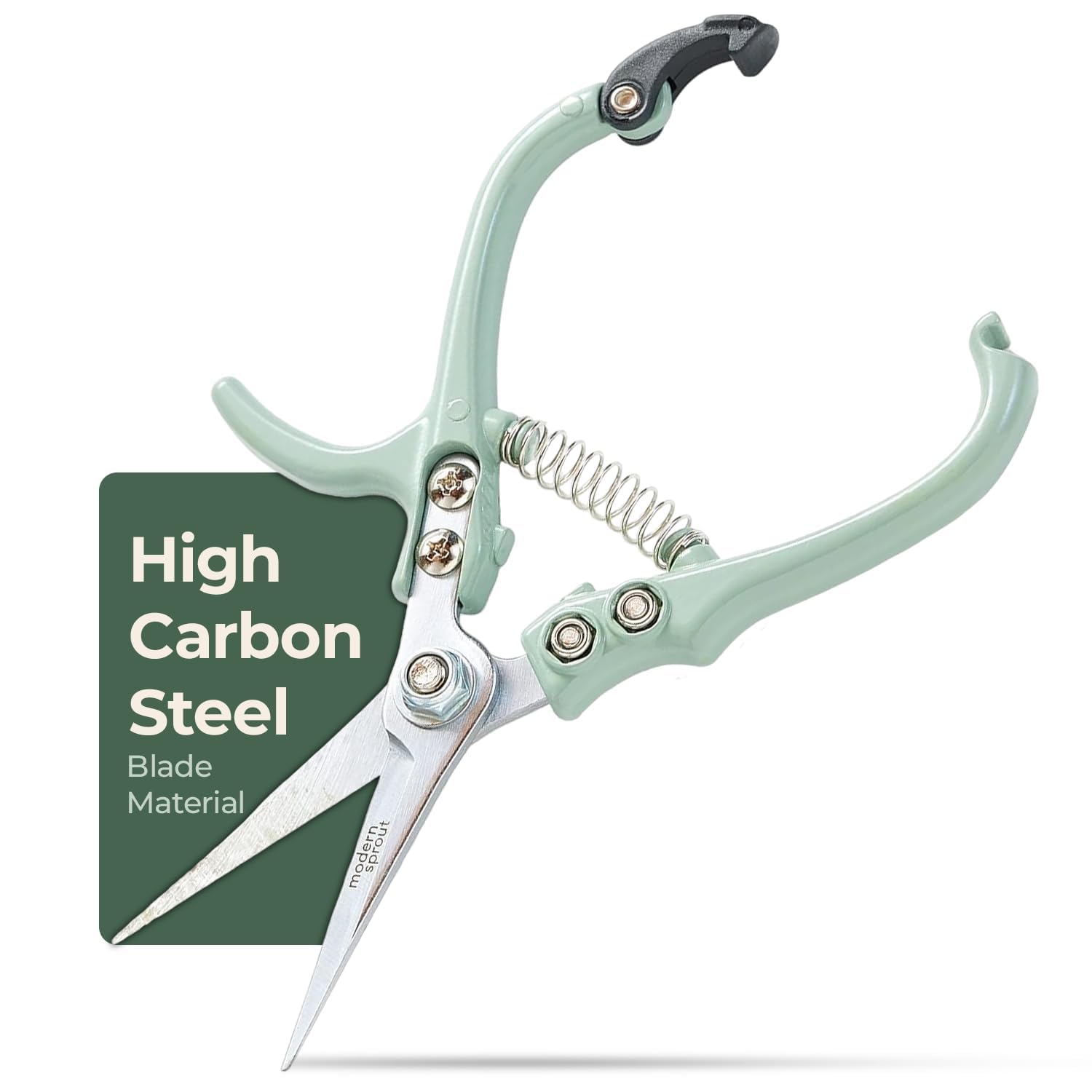
4. Modern Sprout Pruning Shears
The needle-nose snip that treats your basil and bonsai with surgical precision.
This is a lightweight, fine-tipped shear built specifically for delicate work. The high-carbon steel blades are narrow and pointed, letting you reach into a dense basil plant or a bonsai canopy to snip a single stem without damaging the surrounding leaves. The ergonomic aluminum handles are comfortable for smaller hands, and the easy-lock safety latch keeps them securely closed in a drawer or apron pocket.
The thing everyone mentions is the sharpness (102 mentions) and quality (133 mentions) — owners describe the blades as “sharp, pointed” and note that they make “clean cuts for healthier plants.” The sage color and sleek design are a bonus if you keep tools visible on a kitchen shelf. They are not for thick branches — for that, the Felco F2 is a better fit — but for herbs, houseplants, and slender flower stems, they are a top pick.
Best for: indoor gardeners, herb harvesters, and anyone who wants a precise, lightweight tool for fine-stemmed plants.
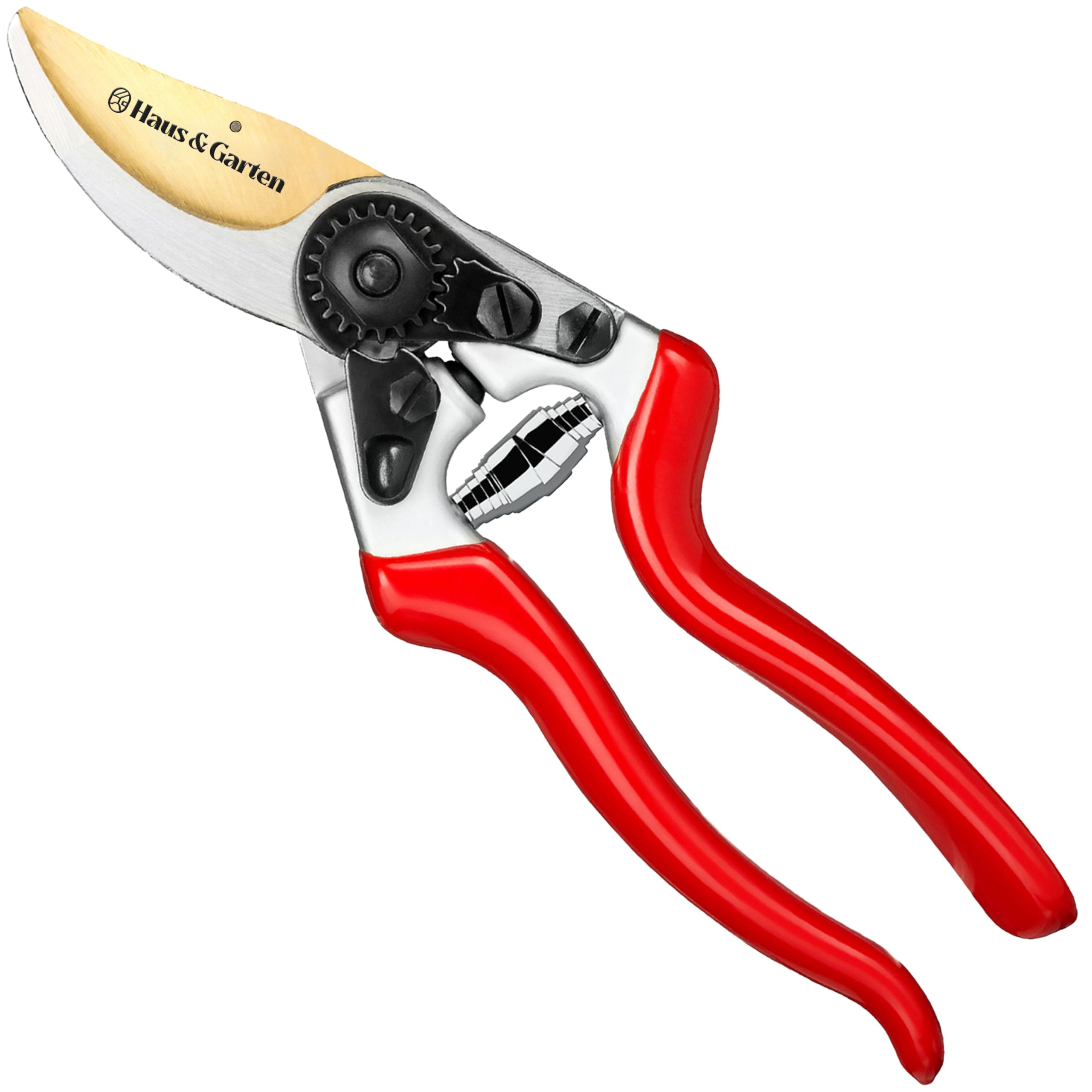
5. Haus & Garten EnduroPRO Ergonomic Bypass Pruners
Heavy-duty Japanese steel in a titanium coat — built to take a beating season after season.
This pruner sits between pro-grade and homeowner-friendly. The blade is Japanese high-carbon steel with a titanium coating (which reduces friction and resists rust). The anodized aluminum body and drop-forged handles mean it will survive years of hard use. The ergonomic design is designed to reduce hand fatigue by aligning your wrist properly — owners confirm the grip is comfortable, with one noting they cut “through twigs and branches easily.”
At 8.8 ounces and 8.3 inches long, it is lighter than the Felco F2 (which is 9.25 inches long and slightly heavier), yet it handles a full 1-inch cutting capacity. The red anti-slip soft grips are easy to spot if you drop them in the mulch. The only repeated note is that people with larger hands or arthritis sometimes wish the handles were bigger, but the cut quality is described as “sharp as a razor.”
What Stands Out
- The titanium-coated Japanese-steel blade reduces rust and makes cleaner cuts.
- The anodized aluminum frame is heavy-duty but lightweight (8.8 ounces); the Byhagern grass shears weigh 16 ounces.
- Comfortable ergonomic grip for long sessions, praised by owners for reducing strain.
The Main Caveat
- The handle size may feel small for those with very large hands or arthritic conditions.
Reach for this if: you want professional-level cut quality and durability without paying the full Felco premium.
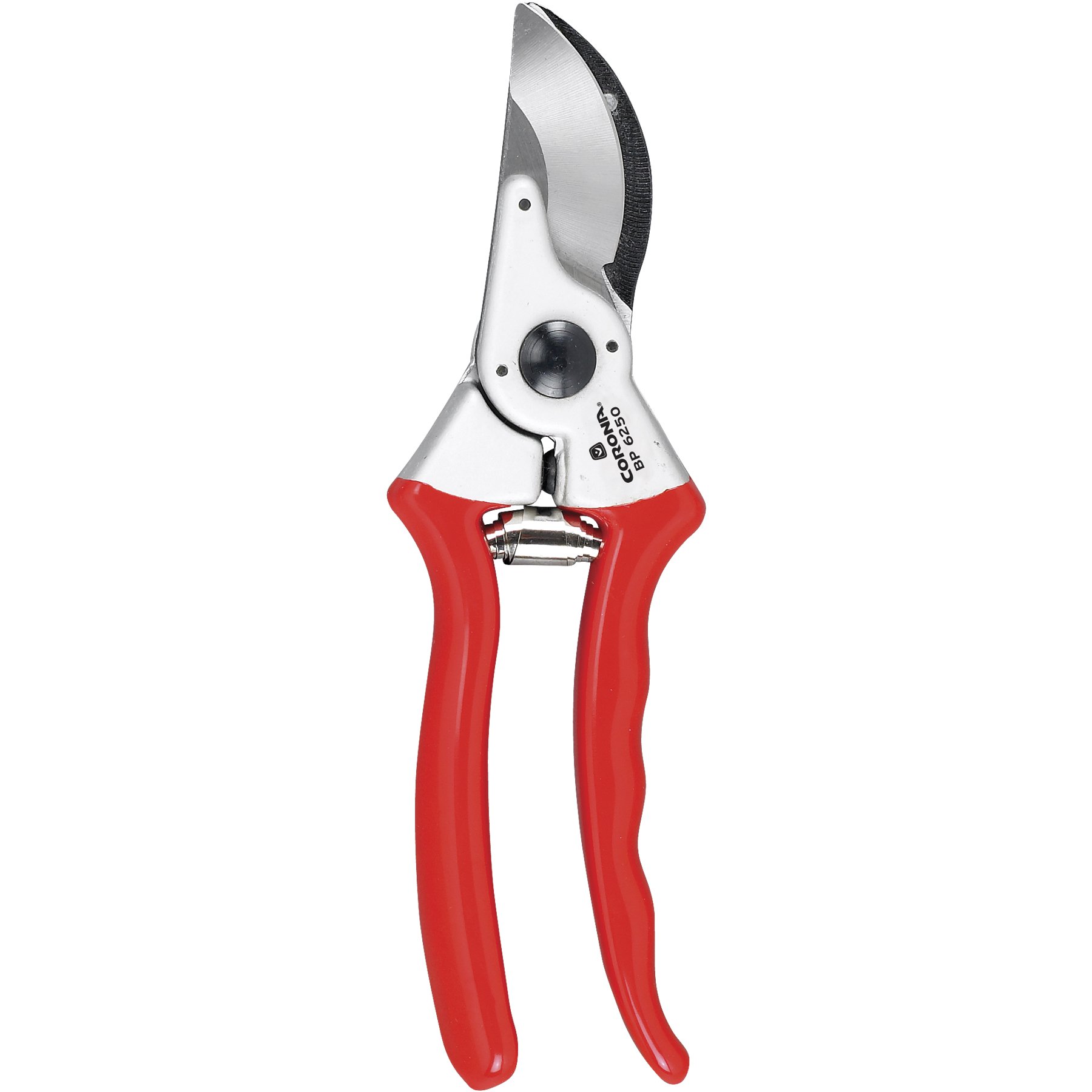
6. Corona Tools BP 6250 MAXFORGED Aluminum Bypass Pruner
The cut that rivals a Swiss icon at a lower price — a real value play for serious pruners.
This Corona pruner is often compared directly to the Felco F2. Owners describe it as “Felco F-2 performance at half cost.” The forged steel bypass blade cuts 1-inch branches with a clean action, and the lightweight aluminum handles (9.6 ounces) keep hand fatigue low — users report working for 4 hours with no strain, which is a strong sign for anyone with arthritis-prone hands.
It comes with a wire cutting notch (a small slot near the blade’s pivot for cutting thin wire without damaging the main edge), a shock-absorbing bumper, and a self-cleaning sap groove (a channel in the hook that prevents sticky residue from gumming up the cut). The carbon steel blade is replaceable, and the limited lifetime warranty adds confidence. One thing to note: it may arrive with the blade closed; you will need to watch a quick video to adjust the pivot tension, but that is a one-time step.
Final take: If you want Felco-class cutting without the Felco price, this is it. The value is strong for a pruner with a replaceable blade and forged aluminum handles.
7. FELCO 160L Pruning Shears

The exceptionally light Swiss shear that fits a big hand without the usual fatigue.
If you have larger hands or wear gardening gloves often, standard shears can feel cramped after a few cuts. The FELCO 160L solves this with longer fiberglass composite handles (fiberglass threads woven into a plastic resin) that give you more room, while still weighing only 7.8 ounces — at 7.8 ounces, while the Corona BP 6250 is 9.6 ounces and the Byhagern is 16 ounces The hardened steel bypass blade cuts branches up to 1 inch thick, and the angled cutting head keeps your wrist in a neutral position.
The fiberglass composite handles are the defining feature here: they shed weight significantly compared to aluminum, but a small number of owners have noted that the composite can feel less rigid under very heavy pressure. For medium-duty pruning (think raspberry canes, softwood branches, flowers) it is a great fit. The replaceable parts and Swiss quality mean it should last a long time with normal care.
Ideal for: gardeners with larger hands who prioritize lightweight handling over brute-force leverage on thick wood.
8. Original LÖWE Professional Anvil Pruner

The German anvil cutter that bites through dry wood like a hot knife through butter.
When your pruning involves dead wood, old branches, or tough, dry material, a bypass blade can struggle or get damaged. That is where this anvil pruner shines. The serrated carbon steel blade crushes and cuts through branches up to nearly an inch thick (0.87 inches) with less effort than a bypass shear would require — the anvil action gives you more mechanical advantage. Owners describe it as cutting “through rose stocks and branches easily.”
It is made in Germany with a sliding lacquer coating on the blade for corrosion protection, and every part is replaceable. The one-hand safety lock is smooth, and the orange plastic handles are comfortable for medium to large hands. The main trade-off is weight —, so it is less ideal for quick, repetitive snips on green growth. But for thick, dry wood, it is the tool to reach for.
Reach for this if: your pruning jobs involve dead branches, thick stems, and hard, dry wood. pass on it if you mostly prune live, green growth — a bypass blade like the Felco F2 is better for that.
9. ARS ARS-VS-8XZ Hand Pruner

Japan’s best-kept cutting secret — a parrot-beak pruner with a one-of-a-kind lock.
This pruner stands out immediately because of its unique locking mechanism: you squeeze the handles to open it, rather than sliding a switch or pressing a button. It is a small detail that makes one-handed operation genuinely smooth. The high-carbon tool steel blade is hard chrome plated to resist rust and sap, and the parrot-beak blade shape (a narrow bypass profile) allows for very clean, precise cuts on branches up to about 0.86 inches.
At 220 grams (7.7 ounces) with tough die-cast aluminum handles, it is lightweight and durable. Owners who have switched from the Felco F2 say the ARS cuts “extremely well” and that the initial stiffness in the pivot “softens after two weeks daily use.” The only real hesitation from some is the price — it is in the premium tier — but the consensus is that it will “likely be the last pruners I ever need.”
Final word: A top-tier choice for anyone who values a unique, fast-action lock mechanism and a lightweight, precise Japanese blade. Give it two weeks to break in, and it becomes easy.
Understanding the Specs
Cutting Capacity
This is the thickest branch the shear is designed to cut cleanly. A 1-inch capacity handles most shrub and tree pruning. A 0.25-inch capacity is for flowers, herbs, and fine stems. Exceeding the capacity damages the blade and pivot joint, leading to poor cuts and early tool failure.
Blade Material and Coating
High-carbon steel holds a sharper edge longer than stainless steel but rusts if neglected. Titanium or chrome coatings reduce friction and resist rust, making the blade slide through wood more easily. Stainless steel blades are more corrosion-resistant and require less maintenance, but they do not stay as sharp as long.
FAQ
What is the difference between bypass and anvil blades?
Can I use anvil pruners on live plants?
How do I know what cutting capacity I need?
How long should garden hand shears last?
Are grass shears different from pruning shears?
What does an ergonomic hand shear do for me?
What is the best garden hand shear for people with arthritis?
Can I sharpen my garden shears at home?
Do I need to oil my garden shears?
What does a wire cutting notch do?
Final Thoughts: The Verdict
For most people, the best garden hand shears are the Felco F2 — it cuts everything from flowers to 1-inch branches, feels natural in the hand, and never needs replacing thanks to its fully repairable design. If you want a precise snip for herbs and flowers, grab the Modern Sprout Shears. And for tackling tough, dry branches, the Original LÖWE Anvil Pruner is the heavy hitter you need in your shed.
How We Picked
We do not accept paid placement. Every pick is matched to a real buyer and a real use-case; we do not hands-on test units.
Sources & Methodology
Specifications: manufacturer listings and product documentation. Review insights: verified customer reviews, as of July 2026. Pricing: not shown on this page (it changes often); check the current price via the retailer link.
As an Amazon Associate, Lawn Gear Lab earns from qualifying purchases. This does not affect which products we feature.