
A garden fork that bends on the first rock or snaps at the handle splice isn’t a tool — it’s a frustration waiting to happen. The real test of a digging fork isn’t how it looks in the product photo; it’s whether the tines stay straight after you sink them into packed clay, whether the handle can take your full body weight on a root, and whether the head-to-shaft joint holds up after a season of heavy use. This guide cuts through the marketing gloss to compare seven garden forks built for serious soil work, from compost turning to double-digging new beds.
I’m Rikta — the co-founder and writer behind Lawn Gear Lab. For this guide, I spent weeks cross-referencing over 100 verified customer feedback entries, comparing tine metal grades, handle materials, socket construction methods, and head dimensions to determine which garden forks deliver genuine long-term value for the money.
Whether you need to bust up compacted clay, screen rocks from a new bed, or move hay bales without your back screaming, the right garden fork saves hours of labor and saves you from buying a replacement every spring.
How To Choose The Best Garden Fork
A garden fork looks simple — four or five tines on a handle — but the materials and construction methods make the difference between a tool that lasts a decade and one that goes in the recycling bin before the second season. Focus on three critical areas before you buy.
Tine Material and Head Construction
The tines are the business end. Forged carbon steel or boron steel heads resist bending far better than stamped steel. A one-piece forged head with a socket that wraps around the shaft is stronger than a welded head, which has a heat-affected zone that can crack under heavy prying. Stainless steel offers rust resistance and less soil adhesion but is generally softer than carbon steel — fine for sandy loam but risky for rocky clay. Count the tines: 4-tine forks are ideal for deep digging and root cutting because they penetrate with less resistance, while 5-tine forks carry more material and work better for mulching or compost turning.
Handle Length and Grip Design
The handle determines your leverage and posture. A 40-inch to 45-inch total length works for most users, allowing you to apply downward force without excessive bending. Taller users (6 feet and above) should look for a 45-inch to 58-inch handle to avoid back strain. The grip style matters: a D-handle gives you two-handed control for prying and lifting, while a Y-handle or T-handle distributes force more evenly across the palm. Wood handles absorb vibration better than fiberglass but can split if the tool is left in the rain. Fiberglass handles are lighter and won’t rot but can flex under extreme load. A steel shaft is virtually unbreakable but adds weight.
Socket Joint Strength
The connection between the tine head and the handle is the most common failure point. A full tang that runs through the handle and is secured with a rivet or bolt is the strongest design. A socket that wraps around the handle and is pinned is the next best option. Avoid plastic collars or thin crimped metal sleeves — they crack when you put your boot on the step. On forks with a steel shaft, look for a welded head-to-shaft junction with a thick gusset plate. On wood-handled forks, ensure the ferrule (metal band) is long and tightly fitted; a short ferrule concentrates stress in one spot.
Quick Comparison
On smaller screens, swipe sideways to see the full table.
| Model | Category | Best For | Key Spec | Amazon |
|---|---|---|---|---|
| TABOR TOOLS J59A | Premium | Heavy clay & rock breaking | Alloy steel shaft 40 in | Amazon |
| Berry&Bird Digging Fork | Premium | Ergonomic raised-bed work | Ash wood handle 43.9 in | Amazon |
| Ymachray 5-Tine | Mid-Range | Clay busting & weed removal | Stainless steel head 41.3 in | Amazon |
| Nohovu 5-Tine | Mid-Range | Hay, leaf & mulch moving | Fiberglass handle 58 in | Amazon |
| Truper 30293 | Mid-Range | Heavy compost & barn work | Wood D-handle 30 in | Amazon |
| VNIMTI Spading Fork | Budget | Starters & light garden use | Hardwood handle 45 in | Amazon |
| VEVOR Garden Fork | Budget | Entry-level aeration & tilling | Fiberglass handle 45 in | Amazon |
In‑Depth Reviews
1. TABOR TOOLS Digging Fork J59A

The TABOR TOOLS J59A is built for the most punishing soil conditions. Its 4-tine head is forged from hardened high-carbon alloy steel, and the entire shaft is welded steel — no wood or fiberglass to flex or splinter. The result is a tool that feels heavy in the hand (5.5 lb) but transfers every ounce of your body weight directly into the soil. Customer reviews consistently confirm that the tines do not bend even in black clay or limestone-infused ground, and the D-handle provides enough room for a gloved hand.
What sets the J59A apart from every other fork in this lineup is the welded steel shaft. While wood-handled forks eventually split at the socket and fiberglass handles can crack under repeated stress, this steel-shaft design eliminates the weakest point entirely. The head width is 8 inches and the tine length is 12 inches, giving you deep penetration for double-digging. The black oxide finish resists corrosion, and the diamond-point tines slide into compacted soil with noticeably less effort than blunt-tine competitors.
The one consistent criticism from users is length. At 40 inches total, taller gardeners (6’2” and above) report having to bend more than they’d like during extended use. If you are over 6 feet and have a lot of ground to cover, you may prefer a longer-handled option. But for pure, unbreakable strength in the toughest clay, this fork is the clear winner.
What works
- Welded alloy steel shaft will not bend or break in heavy clay.
- Forged carbon steel tines resist deformation even with prying force.
- Black oxide coating protects against rust.
What doesn’t
- 40-inch total length is too short for taller users.
- Heavier than wood or fiberglass alternatives.
2. Berry&Bird Gardening Digging Fork

Berry&Bird takes a different approach from the steel-shaft competition. This fork uses a 43.9-inch solid ash wood handle sourced from FSC-certified forests paired with a 4-tine stainless steel head. The wood handle dampens vibration significantly better than steel or fiberglass, making this a more comfortable choice for long sessions of turning soil or aerating raised beds. The D-grip is reinforced with a metal collar and shows no signs of loosening even after repeated use in moist soil.
The stainless steel head is the defining feature here. It resists rust completely — even when left in the rain or used near coastal salt air — and the polished surface sheds soil and compost with minimal sticking. The tines are straight rather than curved, which makes this fork exceptional for aerating beds without creating large soil clods. At 6.24 pounds, it is the heaviest fork in this roundup, but the weight is balanced well by the ash handle, so it swings like a lighter tool.
The trade-off is that stainless steel is softer than carbon or boron steel. Owners who used this fork aggressively for prying out rocks or splitting thick root clumps reported that the tines can bend under extreme side-load. Berry&Bird backs it with a 2-year warranty and 30-day free replacement, but if your soil is loaded with rocks or you tend to use your fork as a pry bar, the TABOR or Ymachray options will resist deformation better.
What works
- FSC ash wood handle absorbs vibration and feels comfortable.
- Stainless steel head resists rust and soil adhesion.
- Ideal length for reducing back strain during extended use.
What doesn’t
- Stainless tines can bend under heavy side-load prying.
- Heaviest option in the lineup at over 6 lb.
3. Ymachray 5-Tine Heavy Duty Pitch Fork

The Ymachray 5-Tine fork addresses the most common complaint from gardeners with heavy clay: the soil is so dense that standard 4-tine forks require more force than most users can comfortably apply. The 5-tine head distributes the load across an extra tine, reducing the pressure per tine and allowing the fork to sink into compacted ground with less effort. The head is made from welded boron steel, which is harder and more impact-resistant than standard carbon steel, and the square-profile tines cut through clay and root mats effectively.
What makes this fork uniquely effective for clay soils is the built-in tilt bracket — a welded steel plate at the base of the tines that acts as a fulcrum. When you push the fork into the ground and lean back, that bracket lifts the soil clump with the tines rather than requiring you to lever the handle. Customers with Georgia red clay and Oklahoma caliche specifically mentioned this fork as the only tool that broke up their soil without requiring a rototiller. The T-handle design reduces wrist strain compared to a D-handle, and the bright black/yellow color makes it easy to spot in the garden.
The main limitation is that the 41.3-inch overall length is on the shorter side for taller users. Several owners at 5’10” and above wished the handle were 6 inches longer. Additionally, while the welded boron steel is extremely durable, the manufacturer warns against using it for side-to-side prying — the same caution applies to nearly every fork, but the rigid steel shaft transfers any twisting force directly to the weld joint.
What works
- Boron steel tines cut through dense clay without bending.
- Tilt bracket lifts soil clumps with less back strain.
- Square tines provide excellent root-cutting ability.
What doesn’t
- 41.3-inch handle is short for users over 6 feet.
- Not recommended for side-to-side prying.
4. Nohovu 5 Tine Pitchfork

The Nohovu 5 Tine Pitchfork is the only model in this lineup with a 58-inch overall length, making it the clear choice for taller users or anyone who wants to move material without stooping. The extra length means you can stand upright while lifting hay, leaves, or compost, which dramatically reduces lower back fatigue during long sessions. The fiberglass handle is lightweight at 3.88 pounds despite the extended length, and two non-slip rubber grips keep your hands secure even when wet.
The 5-tine carbon steel head is 8.26 inches wide, which gives it a larger payload capacity than narrower 4-tine forks. This makes it particularly effective for moving bulk materials — hay bales, wet mulch, fall leaves — where each forkful needs to carry maximum volume. The tines are coated with a rust-resistant finish and have maintained their shape through multiple seasons of use according to customer feedback. The fork works well for barn chores (bedding, manure) and farm tasks where a traditional pitchfork is the standard tool.
The trade-off for the long handle is less direct control for precision digging. The 58-inch shaft makes it harder to apply downward force in a tight vertical line, so it is not the best choice for double-digging a dense clay bed or splitting perennial clumps where you need fine control. A few buyers also noted that the box packaging was inadequate — the box arrived damaged and one tine was slightly bent. This appears to be a shipping issue rather than a defect in the tool itself, but it is worth inspecting immediately upon delivery.
What works
- 58-inch handle is ideal for tall users and zero-back-bending work.
- Lightweight fiberglass construction at under 4 lb.
- Wide head carries large volumes of mulch or hay.
What doesn’t
- Less precise for deep digging or close-quarters bed work.
- Shipping packaging can be insufficient; inspect tines on arrival.
5. Truper Spading Fork 30293
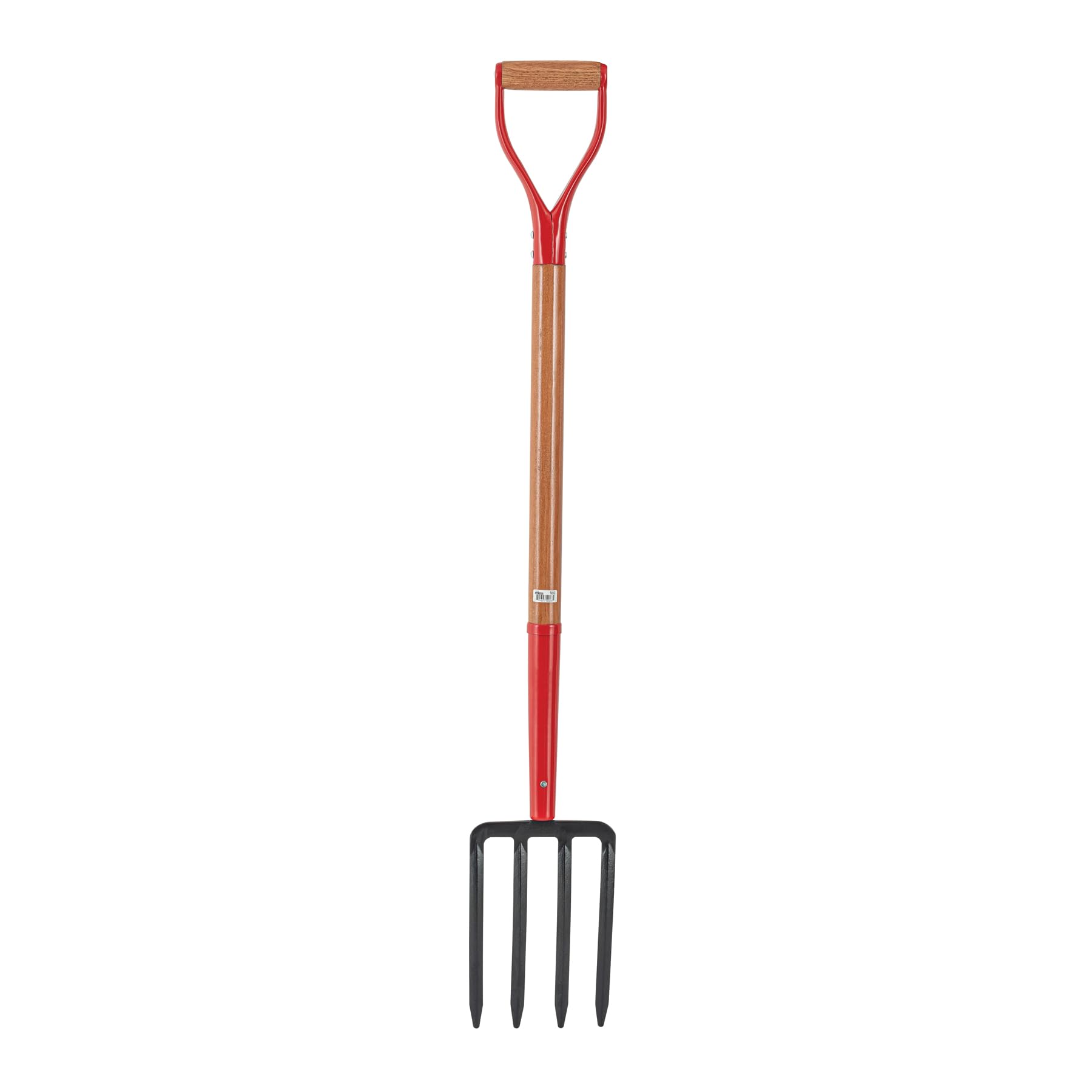
The Truper 30293 is a classic spading fork designed for maneuverability rather than brute force. At only 30 inches total length with a 7-inch-wide steel head, it fits easily into tight raised beds, narrow planting rows, and greenhouse aisles where a full-length fork would be unwieldy. The D-handle is made from hardwood and provides excellent control for two-handed leverage, and the steel tines are thick enough to handle routine compost turning and soil loosening without flexing.
What experienced gardeners appreciate about this fork is the balance between weight and control. It weighs about 3.7 pounds, which is light enough to use for extended weeding sessions without fatigue but heavy enough that the tines sink into moderately compacted soil without needing a running start. The short handle forces a more upright posture when working in beds, and several customers noted it works beautifully for dividing perennials and working around established root systems where a longer fork would damage adjacent plants.
The short 30-inch length is simultaneously the fork’s biggest strength and its most significant limitation. It is not suitable for standing work — you will be bent over or kneeling when using it in open ground. It also should not be used as a pry bar or for breaking up extremely hard, rocky soil; the hardwood handle can snap under excessive torque. For intensive bed work, compost turning, and weeding within confined spaces, it is an excellent specialized tool. For broad-scale tilling or heavy clay work, a longer fork from the premium tiers in this guide will serve you better.
What works
- Compact 30-inch length fits tight raised beds and greenhouses.
- Thick steel tines handle routine turning without bending.
- Hardwood D-handle provides excellent two-handed control.
What doesn’t
- Short handle forces bent-over posture in open ground.
- Wood handle can snap if used for heavy prying.
6. VNIMTI Garden Fork

The VNIMTI Garden Fork is a solid entry-level option that punches above its price tier. The 45-inch hardwood handle is long enough for most users to work without excessive bending, and the metal Y-grip is a standout feature in this segment — most budget forks use plastic handles that degrade in UV light, but the metal-reinforced grip on this fork stays secure and won’t crack or fade. The 4-tine steel head is polished and measures 6.9 inches across, which is adequate for standard digging, bulb planting, and compost turning.
Customer feedback consistently praises the build quality for the money. Users reported using this fork to turn heavy soil, transplant perennials, and flip compost piles without the tines bending or the head separating from the handle. At 4.5 pounds, it is light enough for elderly gardeners and women to handle comfortably, yet the steel head provides enough weight to penetrate moderately firm soil. The fork doubles as a potato-digging tool and can handle light mulching duties as well.
The limitation is the long-term durability of the hardwood handle. While the wood itself is sturdy, it is not sealed as heavily as premium-grade handles, so it is more susceptible to moisture absorption and eventual splitting if left outdoors or stored in damp conditions. VNIMTI offers responsive customer service for issues, but the wood-to-socket joint is the long-term reliability question on this model. For light to medium-duty garden work, this represents exceptional value. For daily commercial use or heavy clay busting, a higher-tier option with a steel shaft or sealed fiberglass handle is a better long-term investment.
What works
- 45-inch hardwood handle reduces back strain at a budget price.
- Metal Y-grip is more durable than plastic alternatives.
- Lightweight enough for elderly or less strong users.
What doesn’t
- Hardwood handle may split if exposed to moisture long-term.
- Not designed for heavy prying or rocky soil.
7. VEVOR Garden Fork
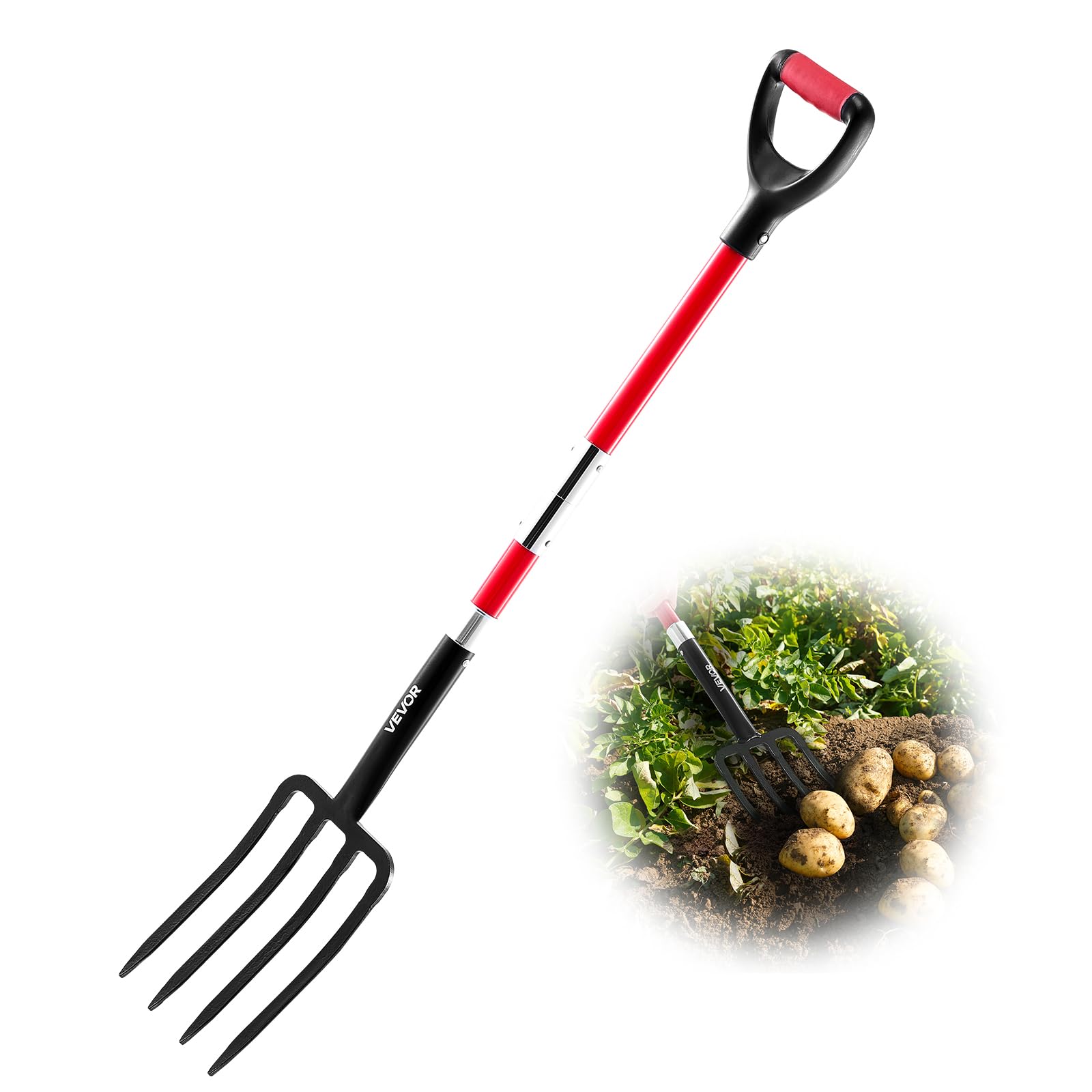
The VEVOR Garden Fork is designed for the backyard gardener who needs a reliable tool for occasional aeration, raised-bed tilling, and light composting. The 45-inch fiberglass handle is lighter than wood and will not rot, and the head is forged steel rather than the cheaper stamped steel found on many basement-level forks. The Y-grip has a non-slip surface that maintains control even in wet or muddy conditions, and the head-to-handle connection uses a reinforced socket that resists wobbling over time.
Where this fork performs best is in loose, prepared soil — turning a raised bed, mixing in compost, or aerating a flower bed that has already been broken up. Customer reviews from users with standard backyard conditions were overwhelmingly positive, noting that the fork is easy to assemble and feels balanced in the hand. Several older users specifically praised how manageable the weight is compared to traditional steel-shaft forks, and the 45-inch length allows for comfortable upright work.
The VEVOR struggles in heavy, compacted clay or rocky ground. The forged head is strong for its class, but the fiberglass handle has more flex than steel or ash wood, which means you lose some downward force transfer in hard soil. A few customers with extremely dense Oklahoma and Texas clay noted that they had to apply significantly more effort to penetrate compared to heavier forks. If your garden has heavy clay or you plan to do extensive double-digging, the Ymachray or TABOR forks will save you time and effort. For light to moderate duties, the VEVOR is a competent and affordable starting point.
What works
- Fiberglass handle is lightweight and rot-proof.
- Forged steel head is stronger than stamped alternatives.
- Non-slip grip works well in wet or muddy conditions.
What doesn’t
- Fiberglass flex reduces force transfer in hard soil.
- Not ideal for heavy clay or root-dense ground.
Hardware & Specs Guide
Tine Count and Shape
Four-tine forks offer less resistance when penetrating hard soil, with the tines sliding between rocks and roots more easily. Five-tine forks distribute the load over a wider area, making them better for carrying bulk materials (hay, mulch, compost) and for working in looser, prepared soil. Square-profile tines cut through root masses more effectively than round tines, which tend to slide past roots rather than severing them. Flat tines with a slight curve (sometimes called “spading tines”) pry soil more efficiently than perfectly straight tines when lifting clumps.
Head-to-Handle Connection
The socket joint is the structural bottleneck of any garden fork. A solid-tang design where the metal tines extend through the handle and are pinned is the strongest. A wrapped socket with a long ferrule (metal sleeve) is the next best option — the longer the ferrule, the more surface area distributing stress. For steel-shaft forks, look for a welded gusset plate at the junction between the shaft and the tine head. Avoid forks where the handle is simply glued or crimped into a short metal collar, as these fail quickly under repeated prying force.
FAQ
What is the difference between a spading fork and a pitchfork?
How do I prevent my garden fork handle from rotting?
Can I use a garden fork to remove deep-rooted weeds?
What handle length should I choose for my height?
Final Thoughts: The Verdict
For most gardeners, the garden fork winner is the TABOR TOOLS J59A because its welded alloy steel shaft and forged carbon steel head cannot be broken by normal digging, making it a one-time purchase for heavy clay users. If you want a lighter, ergonomic tool with a comfortable ash wood handle and stainless steel rust resistance, grab the Berry&Bird Digging Fork. And for tall gardeners or heavy material moving (hay, mulch, bedding), the Nohovu 5-Tine with its 58-inch fiberglass handle lets you work standing straight, saving your back all season.