
Banana trees are heavy feeders that demand a specific nutrient balance to produce large, sweet fruit rather than just tall leaves. Common all-purpose fertilizers often supply too much nitrogen, which pushes leafy growth at the expense of flower and fruit development — a frustrating outcome for anyone waiting months for a harvest.
I’m Rikta — the co-founder and writer behind Lawn Gear Lab. I spend hours cross-referencing university horticultural studies, comparing NPK ratio performance data, and analyzing aggregated owner feedback to separate formulations that actually move the needle from those that just look good on the label.
After digging through the spec sheets and real-world results, this guide narrows down the seven most effective options to help you pick the right fertilizer for banana trees that matches your growing setup and fruit production goals.
How To Choose The Best Fertilizer For Banana Trees
Selecting the right banana tree fertilizer comes down to matching the NPK ratio to the plant’s growth stage, understanding the release mechanism, and considering whether you’re growing in-ground or in a container. A mismatch here can mean months of lush leaves with zero fruit.
NPK Ratio — The Potassium Priority
Banana trees require a higher potassium level compared to most fruiting plants. Look for a ratio where the third number (potassium, K) is higher than the first (nitrogen, N). A 3-1-6 or 16-8-24 ratio supports flower initiation, fruit fill, and overall plant vigor. Nitrogen-heavy formulas like 10-10-10 produce oversized leaves at the cost of fruit quality.
Release Mechanism — Spikes, Liquids, or Powders
Slow-release fertilizer spikes provide a steady nutrient supply over several months with minimal effort — ideal for in-ground trees. Liquid concentrates offer faster uptake and precise control, making them better for potted banana plants where nutrients leach out faster. Water-soluble powders require mixing but allow you to adjust dosage weekly during the active growing season.
Organic vs. Synthetic Formulations
Organic fertilizers like feather meal and kelp meal improve long-term soil structure and microbial activity, which benefits tropical plants in warm climates. Synthetic formulations deliver nutrients more immediately and are easier to fine-tune for specific deficiencies. Both can work, but organic options reduce the risk of salt buildup in containers.
Quick Comparison
On smaller screens, swipe sideways to see the full table.
| Model | Category | Best For | Key Spec | Amazon |
|---|---|---|---|---|
| Wellspring Gardens Banana Fuel | Liquid | Container & in-ground bananas | 3-1-6 NPK ratio | Amazon |
| Farmers Secret Fruit Tree Booster | Liquid | Early growth & bloom stage | Phosphorus-rich concentrate | Amazon |
| TPS Nutrients Banana Fertilizer | Liquid | Large leaf & foot growth | 1 gallon ready-to-mix | Amazon |
| Grow-More Fruit Fuel | Water-soluble | High-yield banana production | 16-8-24 NPK ratio | Amazon |
| Down To Earth Fruit Tree | Powder | Organic in-ground orchards | 6-2-4 with calcium | Amazon |
| Jobes Organics Fruit & Citrus | Spike | Low-maintenance container trees | 3-5-5 organic spikes | Amazon |
| Jobes Fruit & Citrus Spikes | Spike | Budget-friendly slow feed | 9-12-12 ratio spikes | Amazon |
In‑Depth Reviews
1. Wellspring Gardens Banana Fuel Liquid Fertilizer
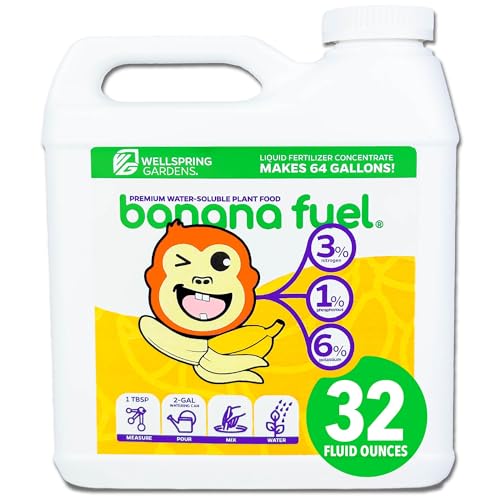
This liquid concentrate uses a 3-1-6 NPK ratio — a formulation the University of Florida specifically recommends for bananas. The high potassium content (6) directly supports flower development and fruit fill, while the modest nitrogen level prevents excessive leaf growth at the expense of the bunch.
The mixing ratio is simple: one tablespoon per two gallons of water. A single 32-ounce bottle goes a long way, making it a cost-effective choice for both container plants and in-ground trees. Multiple verified buyers reported visible leaf greening within a week and accelerated new shoot growth after one month of weekly feeding.
Because it is a liquid, the nutrients are immediately available to the root zone — important for potted banana plants where soil volume is limited and nutrient leaching happens faster. The formula includes minor elements often missing in general-purpose fertilizers.
What works
- University-backed 3-1-6 ratio matches banana needs precisely
- Fast-acting liquid format ideal for container plants
- High potassium drives fruit production rather than foliage
What doesn’t
- Requires weekly mixing — less convenient than spikes
- Bottle size may be small for large in-ground orchards
2. Farmer’s Secret Fruit Tree Booster Fertilizer

This phosphorus-rich liquid concentrate is formulated for the early growth cycle — from post-dormancy through fruit bud initiation. With a dosage of just one teaspoon per gallon, the super-concentrated formula is designed for trees in their first two seasons and scales up to ten teaspoons per week for mature specimens.
Owner feedback highlights strong branch development, rich green foliage, and notably increased bud counts on apple, plum, and peach trees. One grower reported that their banana tree produced larger, sweeter fruit after switching to this product mid-season. The phosphorus focus helps during the transition from vegetative growth to flowering.
The bottle is made in Kentucky and comes with detailed weekly application guidelines for different tree maturity levels. Because it targets early-stage nutrition, it pairs well with a maintenance fertilizer for the rest of the growing season.
What works
- Extremely concentrated — small bottle lasts many applications
- Phosphorus formulation supports flower and fruit bud development
- Adjustable dosing for young versus mature trees
What doesn’t
- Best used during early growth phase, not as a year-round sole feed
- Some users reported bitter fruit on peach trees when over-applied
3. TPS Nutrients Banana Tree Fertilizer
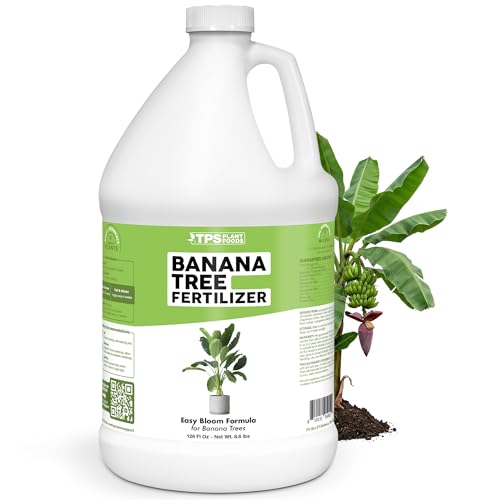
This one-gallon liquid concentrate is specifically formulated for banana tree varieties, targeting fast leaf expansion, root strength, and overall vigor. The larger volume makes it suitable for multiple banana plants or for those who want a season’s worth of feed without reordering.
Verified buyers report noticeable height gains — one owner measured about a foot of growth after starting the regimen. Others noted that small starter plants reached two and a half feet faster than expected. The formula focuses on promoting large, healthy leaves, which are critical for photosynthesis in tropical environments.
The manufacturer recommends it for garden beds, containers, and tropical settings. Because it is made in the USA and has clear instructions, it is straightforward to integrate into a weekly watering routine. The 128-ounce container is particularly cost-effective for growers with multiple trees.
What works
- Large one-gallon volume suits multi-plant households
- Promotes rapid leaf growth and vertical height gain
- Easy-to-follow instructions for weekly application
What doesn’t
- Does not specify exact NPK ratio on packaging for precise comparison
- May require supplemental phosphorus for heavy fruiting
4. Grow-More Banana Fertilizer Fruit Fuel 16-8-24
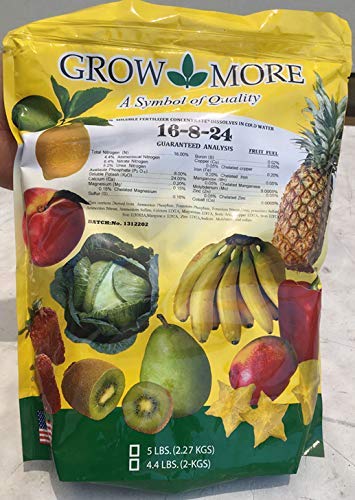
This water-soluble powder delivers a 16-8-24 NPK ratio — exceptionally high in potassium for maximum fruit production. The formula is designed for bananas, fruit trees, and vegetables, and the general dosage is one tablespoon per gallon of water applied weekly during the growing season.
Real-world results are strong: after Hurricane Ian, a verified buyer used this on damaged banana plants and reported they recovered and produced large, sweet bananas. The same user noted excellent results on guava and mango trees. The potassium-dominant ratio directly supports the energy transfer needed for fruit ripening and sugar development.
The five-pound bag provides many applications, though the packaging does not reseal well — several reviewers noted the powder absorbed moisture and clumped. Storing the bag in an airtight container or the refrigerator is recommended to preserve its effectiveness.
What works
- High 16-8-24 ratio maximizes fruit size and sweetness
- Water-soluble formula allows precise weekly dosing
- Proven recovery results on storm-damaged banana plants
What doesn’t
- Bag lacks resealable closure — powder clumps if exposed to humidity
- Home-garden dosing instructions are minimal; ratio data targets commercial use
5. Down To Earth Organic Fruit Tree Fertilizer 6-2-4

This OMRI-listed organic powder fertilizer uses a 6-2-4 ratio with added calcium from ingredients like feather meal, fish bone meal, and kelp meal. The calcium content is particularly valuable for fruit development, helping prevent blossom-end rot and supporting cell wall structure in developing bananas.
Buyers report that this formula revived struggling crabapple trees and helped trees recover from frost damage. The organic base feeds the soil microbiome rather than just the plant, which improves long-term soil health in tropical beds. It does not expire if stored in a cool, dry place, making it a stable option for seasonal growers.
The five-pound box provides good coverage for several in-ground trees. Because it is a dry powder, it must be worked into the soil surface and watered in thoroughly. It works well for gardeners who prioritize organic production and want to avoid synthetic salt-based fertilizers.
What works
- OMRI-listed organic ingredients suitable for certified organic gardens
- Added calcium supports proper fruit development and cell strength
- Non-expiring dry formula for long-term storage
What doesn’t
- Slower nutrient release compared to liquid or synthetic options
- Requires soil incorporation and watering in for activation
6. Jobe’s Organics Fruit & Citrus Fertilizer Spikes

These pre-measured organic spikes deliver a 3-5-5 ratio with Jobe’s Biozome, a proprietary blend of Archaea microorganisms that accelerate nutrient breakdown. The organic certification means no synthetic chemicals, which is important for container banana trees where salt buildup is a concern.
Owners of potted Meyer lemon and calamondin citrus trees report excellent fruit production, and the same benefits apply to container banana plants. The slow-release design provides steady feeding for about two months per spike. Proper placement is critical: positioning spikes away from the trunk along the dripline prevents root burn.
The six-count package is compact and easy to store. Users note that the spikes are simple to push into moist soil without any mixing or measuring, making this the most hands-off feeding method for banana trees in small spaces.
What works
- Zero mixing required — just push into soil around the dripline
- Organic Biozome improves soil microbial activity
- Slow-release format prevents nutrient leaching in containers
What doesn’t
- Spikes need correct spacing to avoid root burn
- Fixed dosage per spike — harder to fine-tune for individual tree size
7. Jobe’s 01002 Fertilizer Spikes for Fruit & Citrus

These classic Jobe’s spikes feature a 9-12-12 NPK ratio with a focus on strong root and fruit development. They are designed for all fruit and citrus trees — including bananas — and release nutrients slowly over several weeks directly into the root zone, eliminating wasteful runoff.
One owner revived a neglected orange tree that had not been fed for years, reporting noticeable leaf improvement within two months and a significantly better harvest the following season. The convenience factor is high: no measuring, no mixing, and no mess. Each spike delivers a pre-measured dose that feeds for about six to eight weeks.
The five-count pack is an entry-level option for those with one or two small trees. Users looking to cover multiple large trees can buy larger counts. The biggest advantage is the set-and-forget nature — ideal for casual growers who want improvement without a weekly routine.
What works
- No mixing or measuring — insert and leave for weeks
- Slow-release design prevents nutrient runoff and waste
- Proven performance on neglected fruit trees
What doesn’t
- Five-count pack covers limited area for larger gardens
- Ratio is generalized for citrus — not banana-specific like 3-1-6
Hardware & Specs Guide
NPK Ratio — The Critical Number
The NPK ratio represents the percentage of nitrogen (N), phosphorus (P), and potassium (K) by weight. For banana trees, the potassium number should be the highest, ideally 5 or above. A 3-1-6 or 16-8-24 ratio directly supplies the high potassium demand for fruit development. A 9-12-12 ratio also works for general maintenance, but the lower nitrogen prevents excessive leaf growth.
Release Mechanism — Speed vs. Duration
Liquid concentrates (3-1-6, 16-8-24) provide immediate nutrient availability and require weekly mixing during the growing season. Slow-release spikes (9-12-12, 3-5-5) meter nutrients over six to eight weeks with a single application. Water-soluble powders offer a middle ground: quick action with the ability to adjust dosage per watering. Container plants benefit more from liquids due to faster leaching rates.
FAQ
What NPK ratio is best for banana trees?
Should I use liquid or spike fertilizer for potted banana trees?
How often should I fertilize my banana tree during the growing season?
Final Thoughts: The Verdict
For most gardeners, the fertilizer for banana trees winner is the Wellspring Gardens Banana Fuel because its 3-1-6 ratio matches the specific nutrient demands of banana plants for fruit production. If you want a high-potassium formula for maximum yield, grab the Grow-More Fruit Fuel 16-8-24. And for a no-fuss organic option that improves soil over time, nothing beats the Down To Earth Fruit Tree 6-2-4.