
Shot hole disease doesn’t just disfigure leaves; it actively defoliates stone fruit trees and ornamental laurels, reducing their ability to photosynthesize and weakening them for the next season. Finding the right fungicide for shot hole disease means selecting a product that stops the pathogen before it creates those characteristic “shotgun” patterns, and the options range from biological preventatives to potent systemic penetrants.
I’m Rikta — the co-founder and writer behind Lawn Gear Lab. I’ve spent countless hours comparing the active ingredients, application rates, and residual control periods of the most effective formulations against this specific fungal and bacterial complex.
This guide is built around the seven most effective products, sorted by their chemistry and strength, to help you find the best fungicide for shot hole disease for your specific trees, bushes, and garden conditions.
How To Choose The Best Fungicide For Shot Hole Disease
Shot hole disease is caused by the fungus Wilsonomyces carpophilus, which overwinters in infected buds and twig lesions. The right spray choice depends on whether you are protecting against a known infection or managing an active outbreak, and what stage your tree is in.
Active Ingredient Matters Most
Broad-spectrum protectants like chlorothalonil are excellent for preventing spore germination on leaf surfaces. For an active infection, a systemic triazole like propiconazole moves into the plant tissue to stop the fungus from spreading internally. Biological options using Bacillus subtilis work as a preventive immune booster for organic setups.
Application Timing and Coverage
The most critical window is at bud break in early spring, followed by applications after every heavy rain event if conditions favor disease. You want a liquid concentrate that mixes easily and stick well to the waxy surfaces of stone fruit leaves.
Quick Comparison
On smaller screens, swipe sideways to see the full table.
| Model | Category | Best For | Key Spec | Amazon |
|---|---|---|---|---|
| Ferti-lome Liquid Systemic II | Systemic | Active infections on trees | Propiconazole 1.55% | Amazon |
| Quali-Pro Propiconazole 14.3 | Professional | Large turf & tree areas | Propiconazole 14.3% | Amazon |
| Bonide Fung-onil | Protectant | Preventive spray | Chlorothalonil 29.6% | Amazon |
| Select Source Propiconazole | Systemic | Turf & shrub rotation | Propiconazole 14.3 | Amazon |
| Bonide Revitalize | Biological | Organic gardens | Bacillus subtilis | Amazon |
| Southern Ag Biological | Biological | Soil drench & spray | Bacillus amyloliquefaciens | Amazon |
| Garden Safe Fungicide3 | Multi-Purpose | Mild cases & pests | Neem Oil Extract | Amazon |
In‑Depth Reviews
1. Ferti-lome Liquid Systemic Fungicide II (32 oz)

The Ferti-lome Liquid Systemic Fungicide II is the ideal entry point for homeowners managing shot hole disease on stone fruit trees. Its propiconazole-based formula provides locally systemic action, meaning it penetrates the leaf tissue to stop the fungus from spreading internally after infection has begun. At 32 ounces of concentrate, this bottle goes a long way for a medium-sized orchard or a collection of ornamental cherry and plum trees.
Reports from users show it is highly effective when applied at the first sign of leaf spots, halting the progression of the disease on mature trees like oaks and maples, but the same mode of action translates perfectly to shot hole’s early stages. The liquid mixes readily with water and stays on the leaf surface long enough to be absorbed before rain. It also controls leaf spot, brown patch, and powdery mildew, making it a versatile tool for the whole yard.
One downside is that it does not list shot hole disease directly on the label as a specific target for all formulations, though the active chemistry is proven. You must apply it diligently during the spring bud break window and reapply after rain to maintain full protection.
What works
- Systemic action treats active infections in leaf tissue
- Large 32 oz bottle stretches for many applications
- Controls a wide range of lawn and tree diseases
What doesn’t
- Label may not specifically list shot hole disease
- Requires precise timing at bud break for best results
2. Quali-Pro Propiconazole 14.3 Fungicide (32 oz)

Quali-Pro’s Propiconazole 14.3 is a professional-grade concentrate that delivers a much higher percentage of active ingredient than consumer formulations. With 14.3% propiconazole, you get powerful, long-lasting systemic protection that moves through the plant’s vascular system. This is the go-to product for large properties where shot hole disease has become a recurring problem on multiple cherry, laurel, or peach trees.
The microemulsion formulation reduces odor and provides excellent tank stability, which is critical when mixing with other fungicides for a rotation schedule. Users fighting brown patch on turf and orange rust on blackberries have confirmed that this concentrate halts aggressive fungal spread within a week of the first application. For shot hole, applying it at the first sign of small purple spots prevents the lesions from developing into the classic shot holes that cause leaves to drop.
Because it is a highly concentrated professional product, it requires careful measurement and full PPE during mixing and spraying. It is not intended for small ornamental plantings where a weaker, ready-to-spray formulation would be more convenient.
What works
- High 14.3% active ingredient for strong control
- Locally systemic for long residual protection
- Low odor microemulsion for comfortable use
What doesn’t
- Requires precise measurement and PPE
- Overkill for small home gardens
3. Bonide Fung-onil Multi-Purpose Fungicide (16 oz)

Bonide Fung-onil is the quintessential broad-spectrum protectant fungicide, leveraging chlorothalonil at a high 29.6% concentration to form a protective barrier on leaf surfaces. For shot hole disease prevention, spraying this on your trees just before bud break and continuing through wet spring weather provides a chemical shield that prevents Wilsonomyces carpophilus spores from germinating. It is the standard choice for conventional home gardeners who want a dependable, economical option.
Users consistently report it eliminates leaf spot and blight on tomatoes and ornamental shrubs after just two applications. For stone fruits, mixing it to label specifications and achieving full coverage on all twigs and buds is the key to success. The milky texture clings well to leaves, resisting wash-off from light rain better than some other protectants.
Chlorothalonil is strictly a contact protectant; it will not cure an active infection inside the leaf. If shot hole spots are already visible, you need a systemic product. It also leaves a visible white residue on sprayed surfaces, which some gardeners find unsightly on ornamental plants.
What works
- Excellent preventive barrier against spore germination
- High chlorothalonil concentration for broad-spectrum control
- Good rainfastness once dry
What doesn’t
- Cannot cure existing internal infections
- Leaves a visible white residue on foliage
4. Select Source Propiconazole 14.3 Fungicide (16 oz)

Select Source’s Propiconazole 14.3 offers identical chemistry to the Quali-Pro product but in a smaller 16-ounce bottle, making it a smart choice for those with a moderate number of trees. This propiconazole formulation provides excellent residual control with low use rates, meaning you get a lot of spray solution from a small bottle. Its low odor and high tank-mix compatibility make it an easy addition to integrated pest management programs that rotate with other chemistries.
Users fighting lawn fungus like brown patch and dollar spot often alternate this with azoxystrobin to prevent resistance. For shot hole, applying it in early spring as a systemic treatment helps protect new growth that is most vulnerable to infection. The locally systemic action ensures the fungicide moves into developing leaves, not just the surface they sit on.
The bottle design is the primary complaint; the opening can cause dribbling when measuring concentrate into a sprayer. Additionally, you must be disciplined about rotating with a different mode of action over multiple seasons to prevent fungicide resistance from developing in the pathogen population.
What works
- Concentrated systemic with long residual control
- Low odor and excellent tank-mix stability
- Ideal for rotation with other fungicides
What doesn’t
- Bottle opening can cause messy measurement
- Requires rotation to avoid resistance
5. Bonide Revitalize Biofungicide (16 oz)

Bonide Revitalize is a biological fungicide that leverages Bacillus subtilis to trigger an immune response in plants, making them more resistant to diseases like shot hole. Approved for organic gardening, it can be used up until the day of harvest, which is a significant advantage for food-bearing stone fruit trees. Rather than directly killing the fungus, it works by colonizing the leaf surface and outcompeting pathogens while activating the plant’s own defense mechanisms.
For shot hole, this is best deployed as a preventive program, starting at bud break and continuing on a regular schedule through wet weather. Users note improvement with leaf spot on tomatoes and general plant health, though the results are slower and less dramatic than synthetic chemistry. It can be applied as a foliar spray or soil drench, and it is safe for an extensive variety of plants from vegetables to ornamentals.
The biological nature means it is less effective once a severe infection has already taken hold. It also has a noticeable odor that some users find unpleasant, though this dissipates quickly after application.
What works
- Safe for organic gardening up to day of harvest
- Boosts plant immune response naturally
- Can be used on a huge variety of plants
What doesn’t
- Less effective against severe, active infections
- Has a noticeable odor during application
6. Southern Ag Garden Friendly Biological Fungicide (16 oz)

Southern Ag’s Biological Fungicide uses a different strain of beneficial bacteria—Bacillus amyloliquefaciens—that colonizes both the root zone and the leaf surface. This strain is particularly effective when applied as a soil drench because it establishes a protective barrier in the root system, preventing soil-borne pathogens from moving into the tree. For shot hole, this provides an additional layer of defense that many other fungicides do not address.
This product is a powerhouse for hydroponic and high-moisture environments; users report it saving water propagations from rot and controlling leaf miners and hornworms indirectly by strengthening plant health. It acts as a bio-fertilizer, darkening leaves and increasing vigor, which helps trees withstand shot hole pressure. Using it as a regular soil drench during the growing season keeps beneficial microbes active around the roots.
The bottle opening suffers from the same dribbling issue as the Select Source product. As with all biologicals, it works best as a preventive measure rather than a curative treatment for an established shot hole outbreak.
What works
- Dual-action as foliar spray and soil drench
- Bio-fertilizer effect increases plant vigor
- Highly concentrated compared to similar products
What doesn’t
- Bottle opening design leads to spills
- Preventive only, not a cure for active infections
7. Garden Safe Fungicide3 (1 Gallon)
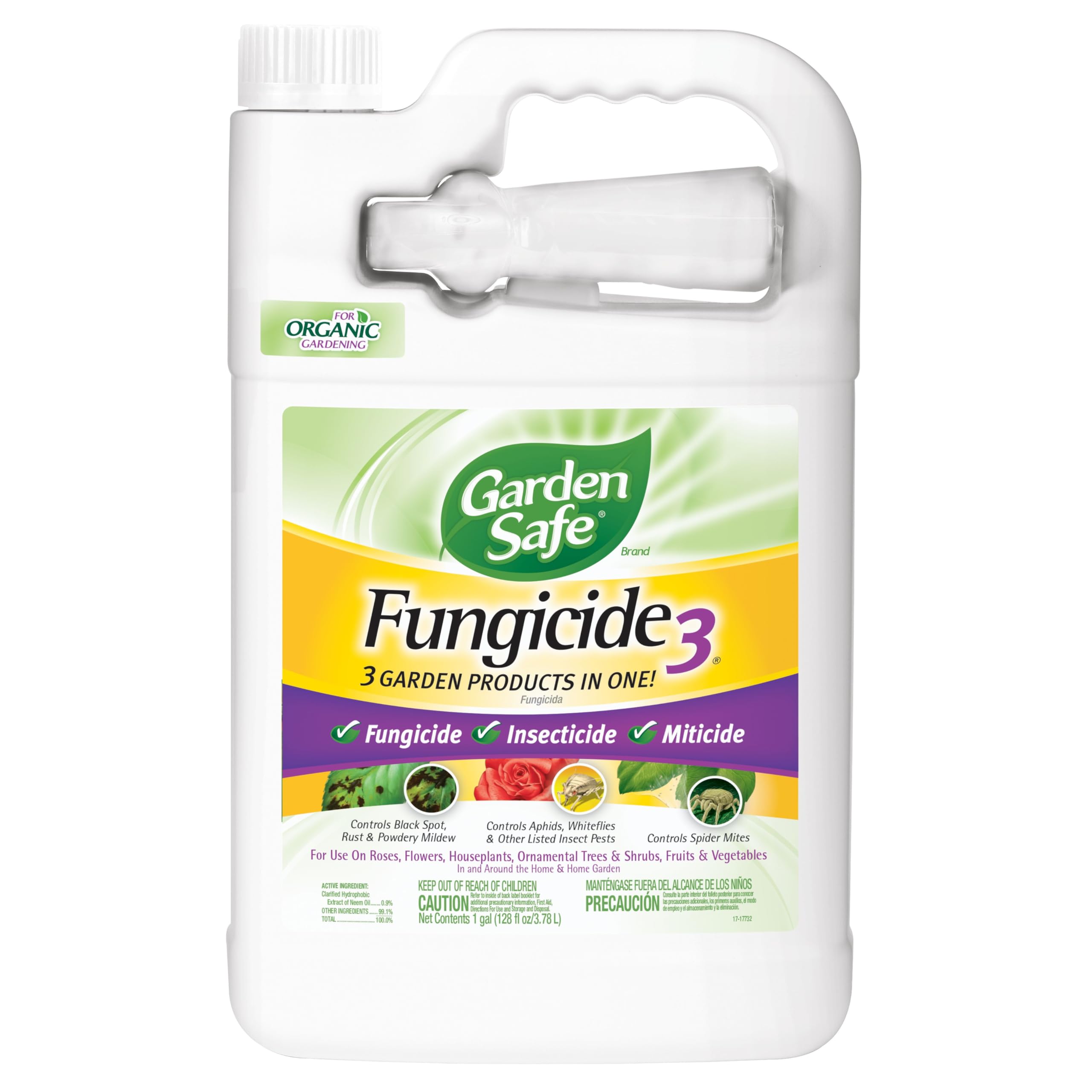
Garden Safe Fungicide3 is a 3-in-1 product combining clarified hydrophobic neem oil extract as a fungicide, insecticide, and miticide. For shot hole disease, neem oil works by smothering fungal spores and creating a hostile environment for the pathogen on the leaf surface. While it is the weakest chemistry in this lineup against a tough fungal pathogen, it is the most accessible for casual gardeners who need one bottle for everything from aphids to rust.
It comes in a convenient ready-to-use gallon with an attached sprayer, removing the need for mixing equipment. Users report great results on powdery mildew, black spot, and general leaf health on roses, hibiscus, and vegetables. It is EPA-approved for organic gardening and safe to use on edible crops up until harvest.
Neem oil is not systemic, so it cannot reach the fungus once it has penetrated the leaf cuticle. It may also cause phytotoxicity if applied during daytime heat or on stressed plants, requiring shade application and reduced dosage. For a serious shot hole outbreak, this product is best used as a mild preventive or in rotation with stronger treatments.
What works
- Triple-action controls pests and fungal spores
- Ready-to-use sprayer for quick application
- Organic and safe for food crops
What doesn’t
- Not strong enough for established shot hole infections
- Can burn plant leaves if applied in direct sunlight
Hardware & Specs Guide
Contact vs. Systemic Action
Contact fungicides like chlorothalonil (Bonide Fung-onil) form a protective chemical barrier on the leaf surface that kills fungal spores on contact. They are the backbone of preventive spraying but wash off over time. Systemic fungicides like propiconazole (Quali-Pro, Ferti-lome) penetrate the leaf cuticle and move within the plant tissue, providing curative action against infections already inside the leaf and lasting longer between applications.
Active Ingredient Concentration
The percentage of active ingredient dictates how much concentrate you need per gallon of water. Consumer products like Ferti-lome Liquid Systemic have 1.55% propiconazole, requiring larger volumes per application. Professional concentrates like Quali-Pro and Select Source offer 14.3% propiconazole, which is roughly ten times stronger, meaning a few ounces treat thousands of square feet of foliage.
FAQ
Can I use chlorothalonil to cure shot hole disease after I see the spots?
How often should I spray fungicide for shot hole disease on my cherry tree?
Final Thoughts: The Verdict
For most gardeners, the fungicide for shot hole disease winner is the Ferti-lome Liquid Systemic Fungicide II because its propiconazole formulation provides both preventive and curative systemic action at a reasonable price for home use. If you want a professional-grade concentrated solution for larger orchards or severe recurring infections, grab the Quali-Pro Propiconazole 14.3. And for an organic, preventive program that boosts overall tree health, nothing beats the Bonide Revitalize Biofungicide.