
The difference between a bumper crop of sweet, juicy apples or peaches and a disappointing harvest of small, mealy fruit often comes down to one factor: the nitrogen-phosphorus-potassium ratio hitting the root zone at the right moment in the tree’s growth cycle. Home orchardists quickly discover that piling on a generic all-purpose feed usually pushes vigorous leafy growth at the expense of flower bud formation, leaving you with a towering but barren tree. You need a fertilizer engineered specifically for the unique nutritional demands of fruit-bearing trees, not a lawn feed repurposed for the orchard.
I’m Rikta — the co-founder and writer behind Lawn Gear Lab. I’ve spent countless hours analyzing soil science reports, cross-referencing manufacturer NPK claims against horticultural extension recommendations, and reading through thousands of verified owner experiences to build this guide around measurable results rather than marketing fluff.
Whether your backyard holds a mature apple tree, a potted Meyer lemon, or a young peach sapling, the right feed transforms your yield. After weeks of comparative analysis, I’ve ranked the top performers to help you find the best fruit tree fertilizer for your specific growing conditions and orchard goals.
How To Choose The Best Fruit Tree Fertilizer
Fruit trees are long-term investments, and the fertilizer you choose shapes their health for years. Unlike annual vegetables, a fruit tree builds its structural framework over seasons, so the nutrient mix you apply must support root development, wood maturation, flower initiation, and fruit sizing in the right proportions. This section breaks down the critical specifications to evaluate before you buy.
Understanding N-P-K Ratios for Fruit
The three numbers on a fertilizer bag represent the percentage of nitrogen, phosphorus, and potassium by weight. For established fruit trees, a balanced or slightly phosphorus-and-potassium-heavy ratio such as 6-2-4 or 3-5-5 promotes bud set and fruit development without triggering excessive vegetative growth. A high-first-number ratio like 16-4-4 is better suited for young, non-bearing trees or early spring application when foliage establishment is the priority. Mismatching the ratio to the tree’s growth stage is the most common mistake home orchardists make.
Organic Certification and Microbial Additives
OMRI- or USDA-certified organic fertilizers rely on naturally derived ingredients such as feather meal, bone meal, langbeinite, and kelp. These materials break down slowly through microbial activity, feeding the soil food web rather than just the tree. Products containing mycorrhizal fungi or proprietary archaea blends like Biozome further enhance root efficiency and water uptake. For growers maintaining organic orchards or no-till systems, the microbial component is often as important as the macro-nutrient analysis.
Application Form: Granules, Spikes, or Powders
Granular fertilizers are broadcast or banded around the drip line and watered in, offering flexibility in application rate and coverage. Fertilizer spikes are pre-measured, mess-free options that deliver nutrients directly to the root zone over weeks — ideal for container trees or gardeners who want a set-and-forget approach. Powders dissolve in water for liquid feeding but require more frequent application. The best choice depends on your tree count, soil type, and how much hands-on time you want to invest each season.
Quick Comparison
On smaller screens, swipe sideways to see the full table.
| Model | Category | Best For | Key Spec | Amazon |
|---|---|---|---|---|
| FoxFarm Happy Frog Fruit & Flower | Organic Granules | Versatile organic feeding | 4-9-3 NPK + Mycorrhizae | Amazon |
| Jobe’s Organics Fruit & Citrus Spikes | Organic Spikes | Set-and-forget container trees | 3-5-5 NPK with Biozome | Amazon |
| Down To Earth Fruit Tree 6-2-4 | Organic Powder | Calcium-rich fruit development | 6-2-4 + Calcium Carbonate | Amazon |
| Nelson NutriStar Citrus & Avocado | Synthetic Granules | Quick green-up and cold hardiness | 12-10-10 + Calcium | Amazon |
| Jobe’s Tree Fertilizer Spikes 16-4-4 | Synthetic Spikes | High-nitrogen growth for young trees | 16-4-4 NPK, 30-pack | Amazon |
| Old Farmer’s Almanac TruSpikes | Synthetic Spikes | Hard-to-break spikes for heavy soils | 13-3-3 NPK, 24-count | Amazon |
| Espoma Organic Tree-Tone 6-3-2 | Organic Granules | Large-scale organic orchards | 6-3-2 + 5% Calcium, 36 lb | Amazon |
In‑Depth Reviews
1. FoxFarm Happy Frog Fruit & Flower Fertilizer

FoxFarm’s Happy Frog Fruit & Flower Fertilizer stands out because of its heavy phosphorus bias at 4-9-3, which directly supports flower and fruit set rather than leafy top growth. The inclusion of mycorrhizal fungi gives it a leg up over basic granular blends — these beneficial soil organisms colonize the root system and improve the tree’s ability to mine water and nutrients from the soil, especially in less-than-ideal native dirt. The 4-pound bag is a manageable size for a small orchard or a handful of potted trees, and the granules are dry enough to spread evenly without clumping.
Greenhouse-tested consistency from a brand that has been in the game since 1984 adds confidence, and the OMRI listing means this can be used in certified organic production without question. Customer feedback repeatedly highlights how simple the monthly sprinkle-and-sprinkler method is — users report healthier flowering plants and stronger growth with virtually no mixing or measuring. Even cold-damaged tropical trees like banana responded well to a root-zone application, bouncing back with new growth.
Where this product falls short for some orchardists is the relatively low nitrogen content. If your fruit tree is young and still establishing trunk and branch structure, the 4-9-3 ratio may not provide enough nitrogen to drive the rapid canopy development needed in the first couple of seasons. It is also not the best choice for trees showing signs of nitrogen deficiency like pale leaves and stunted shoot growth. Stick with this formulation for established, bearing trees where fruit quality is the priority.
What works
- High phosphorus content targets bloom and fruit production
- Mycorrhizal fungi improve root efficiency over the long term
- Easy dry-granule application with no mixing required
What doesn’t
- Low nitrogen may not support young trees building canopy
- 4-pound bag runs out quickly for larger orchard setups
2. Jobe’s Organics Fruit & Citrus Tree Fertilizer Spikes

Jobe’s Organics Fruit & Citrus Spikes deliver a 3-5-5 NPK ratio that is almost perfectly tuned for flowering and fruiting — low nitrogen prevents excessive leaf growth while the elevated phosphorus and potassium encourage bud development and fruit maturity. The spike format eliminates the guesswork of measuring and broadcasting; you simply drive the pre-measured stake into the soil around the drip line. This is particularly valuable for container-grown citrus or small in-ground trees where runoff and waste are hard to control with granules.
The proprietary Biozome technology is the key differentiator here. This blend of beneficial archaea aggressively breaks down organic material in the rhizosphere, which accelerates nutrient release compared to standard organic spikes. OMRI listing confirms no synthetic chemicals, so it fits into certified organic regimens without issue. Verified users report that potted Meyer lemon trees produce abundant, juicy fruit year after year, and heritage apple trees showed visible growth improvement after correcting the initial placement error of driving spikes too close to the trunk.
The biggest downside is application density. The package contains only 6 spikes, which covers just one or two small trees at the recommended spacing. For a larger orchard, you would need multiple packages, which pushes the per-tree cost higher than a bulk granular alternative. Timing and depth are also critical — users who hammered spikes directly into dry clay or placed them against the trunk saw reduced effectiveness. Read and follow the placement diagram on the package carefully.
What works
- Pre-measured spikes eliminate measuring errors and runoff
- Biozome archaea speed organic matter breakdown for faster results
- Low-N ratio is ideal for established bearing trees and container plants
What doesn’t
- 6-spike count is insufficient for orchards with multiple trees
- Placement must be precise; incorrect depth or location reduces benefits
3. Down To Earth Fruit Tree 6-2-4 Organic Fertilizer

Down To Earth keeps its ingredient list refreshingly simple: feather meal, fish bone meal, calcium carbonate, langbeinite, potassium sulfate, alfalfa meal, and kelp meal. There are no synthetic carriers or filler ingredients. The 6-2-4 NPK ratio provides moderate nitrogen for steady growth while the potassium supports winter hardiness and fruit quality. The standout feature here is the added calcium from calcium carbonate, which is critical for preventing blossom-end rot in fruit like apples and pears — a problem that shows up when calcium transport to developing fruit is insufficient.
This fertilizer is available as a powder rather than granules, which means it mixes easily into the top layer of soil or can be brewed into a tea for liquid feeding. The 5-pound box covers a respectable area for a modest backyard orchard, and the kelp meal provides trace minerals that are often missing in synthetic blends. Verified owners report that it revitalized trees damaged by cold frost and helped a struggling crabapple tree return to producing berries and leaves after two years of decline.
The powder form can be dusty during application, especially on windy days, and it does not have the slow-release coating that some granular products use. This means more frequent reapplication may be needed to maintain consistent nutrient levels throughout the growing season. Some users also noted the smell is present during application, though it dissipates quickly once watered in. Store the bag in a cool, dry place because the organic ingredients are prone to clumping in humidity.
What works
- Clean organic ingredient list with no synthetic carriers
- Calcium content directly addresses blossom-end rot risk
- Kelp meal supplies trace minerals for overall tree health
What doesn’t
- Powder form is dusty during dry application
- Lacks slow-release coating; requires more frequent reapplication
4. Nelson NutriStar Citrus Fruit & Avocado Plant Food
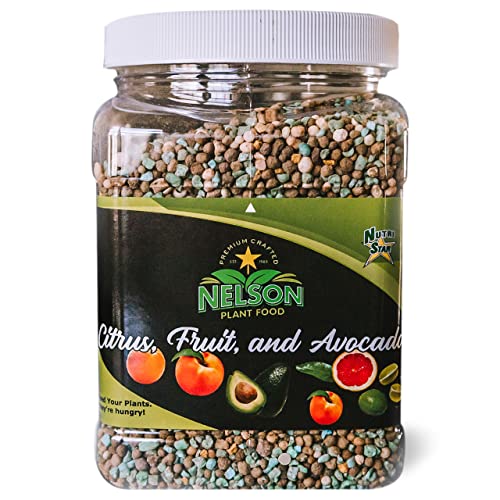
Nelson Plant Food’s NutriStar formulation takes a different approach with a 12-10-10 analysis that delivers immediate, readily available nutrition to the tree. The higher nitrogen content drives rapid foliar development and green-up, which is useful for trees coming out of dormancy or those that have suffered leaf loss. The calcium addition does double duty — it strengthens trunk and limb structure while preventing the calcium-related disorders that plague citrus and avocado fruit. This is a synthetic blend designed for quick action, not slow organic release.
The granular form is easy to apply around the drip line of both in-ground and container trees, and instructions recommend feeding every 30 days during the growing season. The manufacturer targets a broad spectrum of species including not just citrus and avocado but also apples, pears, peaches, plums, figs, and even grapes and kiwis. Verified reviews describe orange trees putting out a full flush of new leaves within two months of switching to NutriStar, even after being moved indoors for winter.
The primary drawback is the synthetic composition, which does not build soil organic matter the way organic alternatives do. Over-reliance on high-N synthetic feeds can lead to salt buildup in containers and reduced microbial activity in the root zone over time.
What works
- Immediate nutrient availability for fast green-up and recovery
- Calcium fortification supports trunk strength and fruit quality
- Works on a wide range of fruit tree species beyond citrus
What doesn’t
- Synthetic formulation does not contribute to long-term soil health
- 2-pound bag is small for larger orchards; frequent reordering needed
5. Jobe’s Tree Fertilizer Spikes 16-4-4

Jobe’s 16-4-4 spikes are a completely different tool than the organic fruit-specific spikes — this is a high-nitrogen formulation designed for deciduous trees and shrubs during their vegetative growth phase. The 16% nitrogen content drives vigorous leaf and stem development, making this the right choice for young, non-bearing fruit trees that need to build caliper and canopy before they can support a heavy fruit load. The spike format feeds continuously below the surface, where active feeder roots are working, with no runoff or odor.
The 30-spike package provides enough coverage for multiple trees or a mixed border of shrubs and fruiting plants. The slow-release mechanism also eliminates the risk of fertilizer burn — a common issue with high-N granular feeds applied too heavily. A verified user reported that drought-stressed trees recovered noticeably after a season using these spikes, and another saw hydrangeas, lilacs, and peonies bloom on schedule with consistent annual spring application.
The mismatch for bearing fruit trees is the high nitrogen ratio. Applying 16-4-4 to a mature apple or peach tree in mid-summer will push leafy growth at the expense of fruit size and sweetness. This product is best reserved for young trees in their first three years or for early spring feeding before flower buds have set. It also lacks any organic certification, so growers committed to chemical-free production should look at the organic Jobes spikes instead.
What works
- High nitrogen drives rapid canopy and trunk growth on young trees
- Slow-release spikes eliminate burn risk and runoff waste
- 30-count box offers good value for multiple-tree applications
What doesn’t
- Too much nitrogen for mature bearing trees; can reduce fruit quality
- Not certified organic; not suitable for chemical-free orchards
6. The Old Farmer’s Almanac TruSpikes 13-3-3
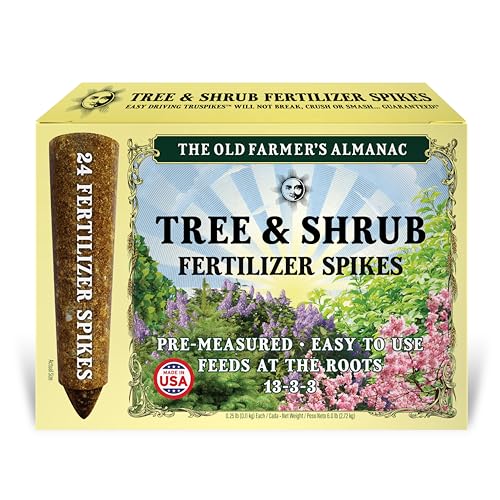
The Old Farmer’s Almanac TruSpikes solve a specific tactile frustration that owners of heavy clay soil know well: spikes that crumble or shatter when you try to hammer them into hard ground. These 5-inch TruSpikes are formulated to stay intact even when driven with a mallet into dense clay, and the 13-3-3 NPK ratio provides robust nitrogen for foliage growth with enough potassium to support root development. The inclusion of molasses in the formula feeds soil microbes directly, which helps build long-term soil fertility around the root zone.
Each box contains 24 spikes, enough for several medium trees or a group of shrubs, and the feeding schedule is simple — apply once in early spring and once in late fall. Verified users report that after hurricane damage, trees greened up nicely with these spikes, and a Japanese Stewartia produced more flowers than ever before in the season following application. The strength of the spike material is a genuine quality-of-life improvement for anyone who has fought with brittle stakes that snap halfway into the ground.
The nitrogen level at 13% is still high for trees in heavy fruit production mode, so this spike is better suited for general tree and shrub maintenance or for young fruit trees building structure. The 3% phosphorus is also relatively low, meaning flowering and fruiting support is secondary to foliage and root growth. If your primary goal is to maximize a heavy fruit crop on a mature tree, look for a higher-phosphorus spike or granular option instead.
What works
- Spikes resist shattering when driven into hard or clay soil
- Molasses content feeds beneficial soil microbes
- Simple twice-per-season schedule reduces labor
What doesn’t
- 13% nitrogen may push too much leafy growth on bearing trees
- Low phosphorus ratio offers limited flower and fruit support
7. Espoma Organic Tree-Tone 6-3-2

Espoma Tree-Tone is the heavyweight option for serious orchardists — the 36-pound bag provides enough granular organic fertilizer to feed a large number of trees over several seasons. The 6-3-2 NPK ratio is deliberately conservative on nitrogen and phosphorus, focusing instead on a steady, low-and-slow nutrient release that mimics natural soil processes. The 5% calcium content is a major plus for avoiding bitter pit in apples and internal breakdown in pears, problems that synthetic high-nitrogen feeds often exacerbate.
The Bio-tone formula is a proprietary blend of beneficial microbes that continue breaking down organic matter in the soil after application, building long-term tilth and microbial diversity. The product is OMRI-listed and meets organic production standards, giving certified growers confidence. One verified review described applying 160 pounds of this fertilizer under an 80-year-old White Oak, which resulted in leaf-out occurring three weeks earlier than normal. For fruit trees specifically, organic farm users report that apples, pears, and peaches stay healthier and produce better-tasting fruit year after year.
The sheer scale of the bag is both an asset and a limitation — if you only have one or two trees, the 36-pound quantity represents years of storage, and the organic ingredients can attract moisture if not resealed properly. The smell during application is also notably stronger than synthetic blends, which some users find unpleasant. Because the 6-3-2 ratio is lower in phosphorus than many fruit-specific formulations, trees that are already showing blossom or fruit set issues may benefit from a supplemental phosphorus source during the flowering window.
What works
- 36-pound bag provides exceptional value for large properties
- Bio-tone microbes improve long-term soil biology
- 5% calcium helps prevent common fruit disorders
What doesn’t
- Large quantity is impractical for single-tree or container use
- Organic ingredients have a strong natural odor during application
Hardware & Specs Guide
Understanding NPK Ratios
The three-number analysis on every fertilizer package indicates the percentage of nitrogen, phosphorus, and potassium by weight. Nitrogen drives leaf and stem growth; phosphorus supports root development, flower formation, and fruit set; potassium regulates water movement, enzyme activation, and cold hardiness. For fruit trees in production, a ratio with the middle and last numbers close to or higher than the first (such as 4-9-3 or 3-5-5) signals a formulation aimed at fruit quality rather than vegetative bulk.
OMRI and Organic Certification
The Organic Materials Review Institute (OMRI) listing indicates that a product’s ingredients meet the National Organic Program standards for use in certified organic production. This is important if you are growing fruit for sale under an organic label or if you want to avoid synthetic chemicals in your home orchard. OMRI-listed products rely on mined minerals, animal byproducts, and plant meals rather than ammonium nitrate or urea, and they typically include microbial inoculants that feed the soil food web.
FAQ
What NPK ratio is ideal for established fruit trees?
Should I use fertilizer spikes or granular feed for my fruit trees?
How often should I fertilize my fruit trees during the growing season?
Do I need a calcium supplement for my apple or pear trees?
Final Thoughts: The Verdict
For most gardeners, the best fruit tree fertilizer winner is the FoxFarm Happy Frog Fruit & Flower because its 4-9-3 NPK ratio combined with mycorrhizal fungi delivers the phosphorus punch that established trees need for heavy blooming and fruiting while building long-term root efficiency. If you want mess-free, pre-measured convenience for container citrus or a few in-ground trees, grab the Jobe’s Organics Fruit & Citrus Spikes. And for large organic orchards where soil health and volume matter most, nothing beats the Espoma Organic Tree-Tone 6-3-2 in the 36-pound bag.