
Specs are compiled from manufacturer listings and verified buyer reviews and can change over time — please confirm the key details on the product page before buying.
You water your plants, you give them sunlight, but they still look tired. The real issue might be the soil — it robs nutrients before roots get a good drink. That is the moment a foliar spray changes everything by delivering food directly through the leaves, bypassing the ground completely.
I’m Rikta — the founder and writer behind Lawn Gear Lab. This guide is built by comparing the manufacturers’ published specifications and the patterns across verified customer reviews, so you get each pick’s real strengths and trade-offs instead of marketing spin.
Whether you are reviving a struggling houseplant or pushing vegetables toward a bigger harvest, the foliar spray you pick decides how fast and how fully your leaves respond — so I’ve matched each one to the job it actually does best.
Quick Picks
- FOOP Mist Foliar Spray — Best Overall
- Orchid Fertilizer Mist by Perfect Plants — Orchid Expert
- Canopy Boost Foliar Spray by TPS Nutrients — Potent Concentrate
- Leaf Armor Spray by Houseplant Resource Center — Protect + Shine
- Bloom City Supergreen Organic Kelp Foliar Spray — Kelp Powerhouse
- FOOP Organic Broad-Spectrum Plant Spray — Garden Workhorse
How To Choose The Best Foliar Spray
A foliar spray is not a one-size-fits-all product — the right pick depends on what your plants are craving and how much effort you want to put into mixing. A few key decisions will steer you straight.
Ready-to-Use vs. Concentrate
Ready-to-use sprays come in a bottle with a trigger — you shake and spray, no measuring cups. Concentrates (powders or liquids you dilute) stretch further per dollar but require you to follow a mixing ratio exactly. If you have one or two houseplants, a ready-to-use mist saves time and prevents over-fertilizing.
Nutrient Profile and What Your Plant Needs
Some sprays target blooming (higher phosphorus), others target leaf growth (higher nitrogen), and a few are balanced for general health. A phosphorus-free spray, for example, is designed specifically for orchids that absorb phosphorus through roots, not leaves. Check the N-P-K ratio (nitrogen-phosphorus-potassium) on the label against what your plant is showing you — yellow leaves often mean low nitrogen, while weak flowers can mean low phosphorus.
Volume and Value
Spray bottles range from small 8-fluid-ounce hand-helds up to 32-fluid-ounce bottles that last through a full gardening season. A bigger bottle costs more upfront but lowers the cost per ounce — just make sure you can use it within six months after opening, since some organic formulas lose potency over time.
Quick Comparison
| Model | Best For | Liquid Volume | Item Weight | Mixing Ratio | Amazon |
|---|---|---|---|---|---|
| FOOP Mist Foliar Spray | Fast recovery (organic, OMRI) | 32 fl oz | 32 oz | Ready-to-use | Amazon |
| Orchid Fertilizer Mist by Perfect Plants | Orchids (phosphorus-free) | 8 fl oz | — | Ready-to-use (2.5-0-2.5) | Amazon |
| Canopy Boost Foliar Spray | Foliage density (concentrate) | 8 fl oz | 8 oz | 1:1 (concentrate) | Amazon |
| Leaf Armor Spray | Fungal protection + shine | 8 fl oz | 9.5 oz | Ready-to-use | Amazon |
| Bloom City Supergreen Organic Kelp | All-purpose kelp feeding (concentrate) | 32 fl oz | 32 oz | 1:20 or 1:40 (concentrate) | Amazon |
| FOOP Broad-Spectrum Plant Spray | Vegetables, herbs, flowers | 32 fl oz | 32 oz | Ready-to-use | Amazon |
In-Depth Reviews
1. FOOP Mist Foliar Spray

Revives pale, struggling leaves by feeding them nutrients through a fresh minty mist.
This is the spray you reach for when a plant looks sickly and you need it to bounce back fast. FOOP Mist delivers macronutrients, micronutrients, and soil-enriching microbes through the leaves, completely skipping a weak root system. It holds 32 fluid ounces (4.0x the volume of the Orchid Fertilizer Mist) and weighs 32 ounces, so one bottle covers a lot of green.
It is certified organic by the Organic Materials Review Institute (OMRI, a third-party organization that checks if products meet organic standards), so you are not spraying synthetic chemicals. The ready-to-use formula means zero mixing — just shake the bottle and mist. Buyers report that it revived sickly, pale cannabis leaves overnight with new growth, and they noted the minty smell dissipates quickly after spraying. The biggest trade-off is the sticker price — it costs more per bottle than entry-level options — but the 32-fluid-ounce volume plus its organic certification make it a premium workhorse for anyone who grows indoors or out.
Instant rescue spray: For a gardener who wants organic-certified nutrition that works overnight, this is the top overall pick — just be ready to pay for the potency and volume.
Reach for this if: You have stressed plants, clones, or seedlings with weak roots and need a fast, organic fix without any mixing.
Look elsewhere if: Your budget is very tight — the upfront cost of a premium ready-to-use may feel steep for occasional use on a single houseplant.
2. Orchid Fertilizer Mist by Perfect Plants
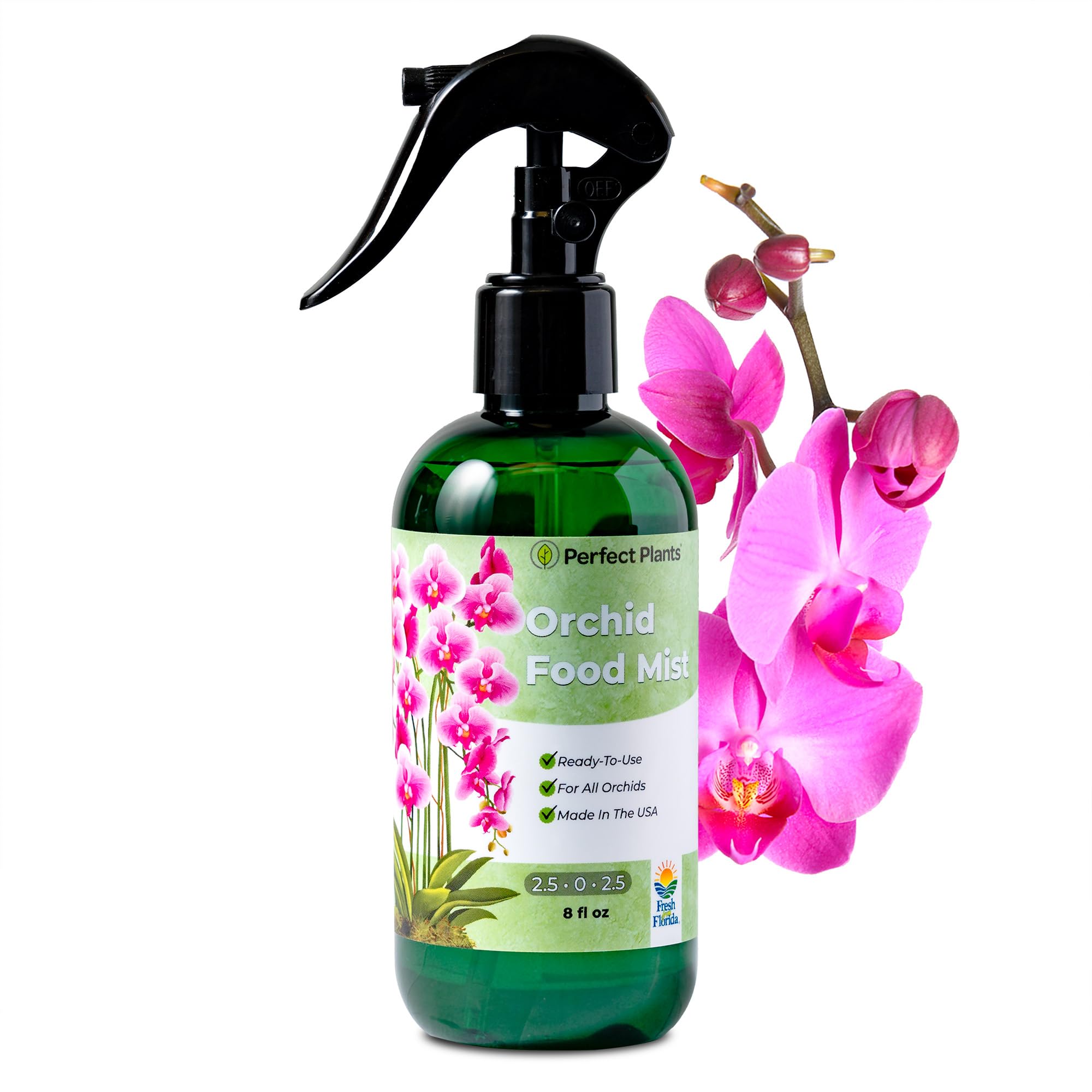
A phosphorus-free formula built for orchids that had not bloomed in over a year.
Orchids absorb phosphorus primarily through their roots, not their leaves — so a standard general-purpose spray can leave white residue or cause leaf burn. This 8-fluid-ounce mist from Perfect Plants skips phosphorus entirely and uses a 2.5-0-2.5 N-P-K ratio (nitrogen and potassium with zero phosphorus) designed for phalaenopsis, cattleya, dendrobium, cymbidium, and Paphiopedilum varieties. It is ready to use with no dilution needed.
The 8-fluid-ounce volume is compact (it holds a quarter of the liquid the FOOP Mist does), so it fits easily on a windowsill or shelf but may need replacing sooner if you have multiple orchids. Keep in mind it is not meant for vegetables or general houseplants; its phosphorus-free makeup is a specific advantage only for orchids.
Why orchid owners love it
- Phosphorus-free — matches how orchids absorb food through leaves vs. roots.
- Ready-to-use mister; no measuring or mixing required.
- Owners mention orchids blooming again after more than a year of no flowers.
One limitation
- Small 8-oz bottle goes fast if you spray multiple orchids regularly.
- Not suitable for foliage plants or vegetables that need a balanced N-P-K.
Best for orchid lovers: If you own orchids that refuse to bloom, this spray’s phosphorus-free formulation is the smartest pick — but do not use it on your tomatoes.
3. Canopy Boost Foliar Spray by TPS Nutrients
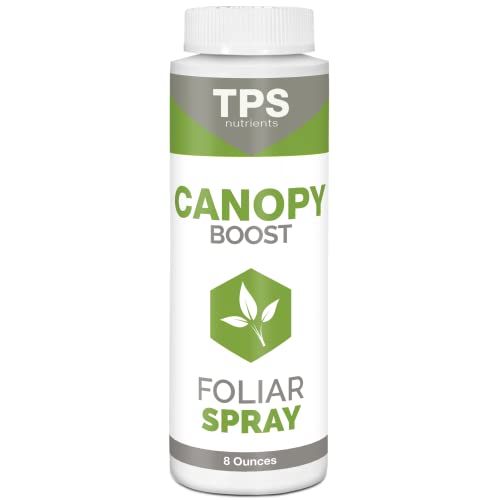
One bottle lasted six months because just a teaspoon per gallon goes a long way.
This is a concentrate — an 8-ounce bottle that you dilute at a ratio of 1:1 with water (1 part concentrate to 1 part water) before spraying. That small bottle is lightweight at 8 ounces (4.0x lighter than the 32-ounce Bloom City Supergreen), but because it is potent, customers note it lasting six months even with regular use on herbs, fig trees, and cannabis. One reviewer noted the recommended dilution is between 1 teaspoon and 1 tablespoon per gallon of water.
It is made in the USA and labeled biodegradable, which matters if you are concerned about runoff. The best results come from spraying indoor herbs like basil, cilantro, and microgreens twice a week — buyers saw leaves become extremely shiny and healthy. Unlike the ready-to-use FOOP Mist, you have to pull out a measuring spoon and a gallon jug before each application, which might be a dealbreaker if you want grab-and-go convenience.
Long-lasting value: For a grower who does not mind mixing and wants the lowest cost per gallon, this concentrate delivers dense foliage growth — one bottle easily covers a full season of indoor herbs.
Reach for this if: You have multiple plants and want a concentrated formula that stretches farther per dollar than any ready-to-use spray.
Look elsewhere if: You hate measuring or only have one small houseplant — an 8-oz concentrate adds unnecessary steps for a single pot.
4. Leaf Armor Spray by Houseplant Resource Center

Tropical leaves looked happier in 24 hours, with curled fiddle fig leaves opening flat.
Most foliar sprays just feed — Leaf Armor also protects. It uses organic-based biopolymers and yucca extract (a natural plant compound derived from the yucca plant that helps nutrients stick to and penetrate leaves) to guard against fungal leaf spots, bacteria, and pathogens while cleaning off dust. It holds 8 fluid ounces yet weighs 9.5 ounces, slightly heavier than the Canopy Boost because of the thick biopolymer formula.
Reviewers point out that sprayed tropical plants showed improved appearance and quality within 24 hours, with curled fiddle leaf fig leaves flattening out and no waxy residue left behind. Because it is meant for protection and shine rather than heavy nutrient delivery, you may still need a separate fertilizer spray for hungry plants like tomatoes or cannabis.
What makes it different
- Non-toxic, organic-based formula safe around kids and pets when applied correctly.
- Buyers saw curled fiddle fig leaves open and flatten after one spray.
- Cleans dust and fights fungi without harsh oils or waxy buildup.
Keep in mind
- Small 8-oz bottle — pricey per ounce for a large plant collection.
- Not a complete fertilizer; more of a protectant and leaf shiner.
Best for tropical houseplant parents: If your fiddle leaf figs, Monsteras, or pothos have dull leaves or fungal spots, this spray cleans and protects in one step — but pair it with a fertilizer if your plants need feeding.
5. Bloom City Supergreen Organic Kelp Foliar Spray
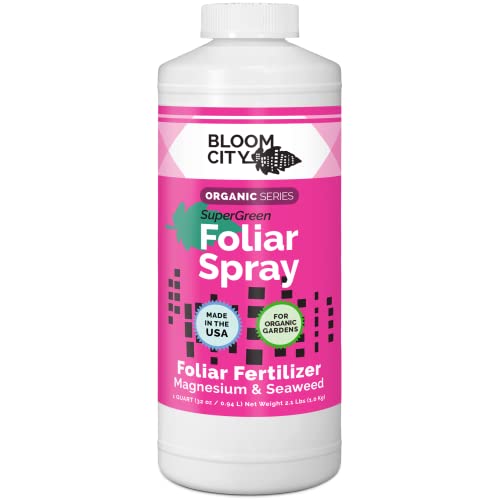
A 32-ounce kelp concentrate that makes leaves greener and plants sturdier from the inside out.
Kelp extract is packed with natural growth hormones (cytokinins, auxins) that stimulate cell division and root development. This 32-ounce bottle from Bloom City weighs 32 ounces and mixes at either 1:20 or 1:40 (1 part concentrate to 20 or 40 parts water), depending on how strong you want each batch. One buyer shared that sickly plants recuperated quickly and seedlings exploded with growth when used alongside a salmon-based fertilizer.
Compared to the FOOP Mist — which is also 32 fluid ounces — the Bloom City is a concentrate, meaning the same-size bottle lasts much longer because you dilute it. However, the FOOP Mist is ready-to-use and certified organic (OMRI), while the Bloom City is not listed with that specific certification. The trade-off is mixing effort versus value: the Bloom City gives you more sprays per dollar but requires a separate sprayer and measuring each time.
Versatile kelp option: For large gardens, indoor collections, and cloning setups, this concentrate gives you kelp’s natural growth boost at a lower cost per gallon than any ready-to-use option.
Reach for this if: You want organic kelp benefits and are willing to mix — this 32-ounce bottle will feed a whole season of plants.
Look elsewhere if: You prefer grab-and-go convenience; the mixing ratio (1:20 or 1:40) adds a small routine step every time.
6. FOOP Organic Broad-Spectrum Plant Spray

Nitrogen, calcium, kelp, and aloe vera in one ready-to-use bottle for outdoor vegetables.
This 32-ounce spray from FOOP is the sibling of the FOOP Mist but formulated with a broader nutrient mix that includes nitrogen, calcium, kelp, aloe vera, and organic rooting hormone. It is ready to use, so you take it straight to the garden bed without mixing. Shoppers say it helps plants recover from heat damage and revives struggling vegetables during summer replanting.
Like the FOOP Mist, it weighs 32 ounces and holds 32 fluid ounces, but this formula targets vegetables, herbs, and flowers rather than general-purpose or cannabis use. A mild smell is mentioned by several buyers, though it dissipates quickly. The drawback for heavy-use gardeners is the cost — one reviewer admitted they could not afford to apply it as frequently as recommended. For a single raised bed or a container garden, a 32-ounce bottle is a solid season’s supply; for a large plot, you would need multiple bottles.
Why outdoor growers pick it
- Broad-spectrum formula (nitrogen, calcium, kelp, aloe, rooting hormone) in one bottle.
- Ready-to-use — no mixing, no measuring, just spray on vegetables and flowers.
- Buyers report it revives heat-damaged plants and helps new transplants establish roots.
One honest trade-off
- Price per bottle is premium-tier; frequent large-garden use gets expensive.
- Mild smell lingers briefly — not an issue outdoors, but noticeable.
Best for veggie and herb gardeners: If you want a single organic spray that handles tomatoes, peppers, and basil without mixing, this is it — but consider the concentrate options if you have a very large garden.
Understanding the Specs
Liquid Volume vs. Concentrate
The number on the bottle (8 fl oz vs. 32 fl oz) tells you the total liquid inside. But that number can be misleading: a 32-fluid-ounce concentrate like the Bloom City Supergreen dilutes into many gallons of spray, while a 32-fluid-ounce ready-to-use like the FOOP Mist is one-and-done. Always check whether the product says “concentrate” or “ready-to-use” — the same bottle size can mean very different coverage.
N-P-K Ratio and Zero Phosphorus
The three numbers on a fertilizer label (like 2.5-0-2.5) stand for nitrogen, phosphorus, and potassium. Nitrogen pushes leaf green-up, phosphorus supports blooms and roots, and potassium builds overall plant strength. A phosphorus-free spray (a zero in the middle) is not a flaw — orchids absorb phosphorus through roots, not leaves, so spraying it would be wasted and could even cause leaf burn.
FAQ
Can I use a foliar spray on succulents and cacti?
Should I spray the top or bottom of the leaves?
How often should I apply a foliar spray?
Will a foliar spray burn my leaves in the sun?
What is the difference between kelp-based and synthetic foliar sprays?
Can I mix a foliar spray with other liquid fertilizers or pesticides?
Why does my Leaf Armor spray leave a white film on the leaves?
Will a foliar spray fix yellow leaves on my houseplant?
Final Thoughts: The Verdict
For most people, the foliar spray winner is the FOOP Mist because it delivers organic, OMRI-certified nutrition in a ready-to-use 32-ounce bottle — fast results without mixing. If you have orchids that refuse to bloom, grab the Orchid Fertilizer Mist by Perfect Plants with its phosphorus-free formula. And for protecting tropical houseplants while adding a glossy shine, the Leaf Armor Spray is the smartest choice for clean, healthy leaves.
How We Picked
We do not accept paid placement. Every pick is matched to a real buyer and a real use-case; we do not hands-on test units.
Sources & Methodology
Specifications: manufacturer listings and product documentation. Review insights: verified customer reviews, as of July 2026. Pricing: not shown on this page (it changes often); check the current price via the retailer link.
As an Amazon Associate, Lawn Gear Lab earns from qualifying purchases. This does not affect which products we feature.