
Specs are compiled from manufacturer listings and verified buyer reviews and can change over time — please confirm the key details on the product page before buying.
A sloppy snip can crush a stem, leaving your flower or herb unable to drink water and wilting days early. That is the real problem most gardeners face — shears that tear rather than sever cleanly. The right pair protects every cut you make so your plants stay healthy and your bouquets last longer.
I’m Rikta — the founder and writer behind Lawn Gear Lab. This guide is built by comparing the manufacturers’ published specifications and the patterns across verified customer reviews, so you get each pick’s real strengths and trade-offs instead of marketing spin.
Whether you trim roses, deadhead spent blooms, or snip herbs for the kitchen, the best flower shears must balance a sharp blade that stays sharp with a comfortable grip you can hold for hours without cramping.
Quick Picks
- Dramm ColorPoint Stainless Steel Compact Garden Pruning Shears — Best Overall
- Wazakura Hanafubuki Ikebana Scissors (MADE IN JAPAN) — Precision Pick
- PrunePro Garden Scissors Pruning Shears — Smart Value
- Modern Sprout Pruning Shears — Compact & Comfy
- Horsvill Garden Shears (Wood grain) — Heavy-Duty Champ
How To Choose The Best Flower Shears
What you cut most often — delicate flower stems, woody rose canes, or soft herb tips — decides which pair of shears fits your hands and your garden. Three factors matter most.
Blade Material: Stainless Steel vs High-Carbon Steel
Stainless steel blades resist rust without special care, which matters if you leave your shears in damp soil or a wet greenhouse. High-carbon steel takes and holds a sharper edge, so it cuts with less force, but it can rust if you do not dry it after use. Many premium shears add a Teflon or chrome coating to protect high-carbon steel blades against sap and moisture.
Blade Style: Bypass vs Straight Edge
Bypass blades work like scissors — two sharp blades slide past each other for a clean, precise cut that does not crush the stem. This style is the standard for flower shears because it keeps plant tissue healthy. Straight-edge or anvil blades have one sharp side that presses down onto a flat surface; they can crush delicate stems and are better suited for tough, dead wood.
Handle Comfort and Safety Lock
Ergonomically shaped handles and a spring that opens the blades for you reduce hand strain during long trimming sessions. Look for a safety lock that slides or flips to hold the blades closed when the shears are in a pocket or tool bag. A lock that stays engaged during use — rather than sliding up on its own — keeps you cutting without interruptions.
Quick Comparison
On smaller screens, swipe sideways to see the full table.
| Model | Best For | Blade Material | Blade Length | Cutting Width | Amazon |
|---|---|---|---|---|---|
| Dramm ColorPoint | Detailed work, small hands | Stainless Steel | 2 Inches | 0.25 Inches | Amazon |
| Modern Sprout Pruning Shears | Herb and fine-stem trimming | High-Carbon Steel | — | — | Amazon |
| PrunePro Garden Scissors | Precision snips, thin stems | German Stainless Steel | — | — | Amazon |
| Wazakura Hanafubuki Ikebana Scissors | Ikebana and floral arranging | S58C Black Carbon Steel | 45 mm | — | Amazon |
| Horsvill Garden Shears (Wood grain) | Heavy-duty cuts, thick branches | Japanese SK4 High Carbon Steel | 55 mm | 1 Inch | Amazon |
In‑Depth Reviews
1. Dramm ColorPoint Stainless Steel Compact Garden Pruning Shears

A tiny stainless-steel snipper that disappears into your pocket but handles daily garden chores.
For anyone who trims roses, deadheads spent flowers, or snips twine, this compact pruner from Dramm does the job without weighing you down. The stainless steel blades measure 2 inches, and the fine point is built for detailed cutting in tight spots. Buyers report “no rust after 2 months daily use,” which backs up the corrosion-resistant claim from the maker. The blade lock slides easily to keep it safe in storage, and it comes in six bright colors so you can spot it in the grass.
Compared to the long-bladed Wazakura below, the Dramm is far more portable for quick trims around the house — but its 0.25-inch cutting width means it is not for thick, woody branches. The ambidextrous handle works well for gardeners with small hands or arthritis, according to several owners. It is a bypass blade, so each cut is clean rather than crushed, which keeps your plants healthy.
Tailor-made for
- Corrosion-resistant stainless steel for wet garden work
- Fine point reaches into dense plants for precise snips
- Light enough for extended trimming without hand fatigue
Hold up on
- Only cuts up to 0.25 inches — not for thick branches
- Small grip may feel cramped for larger hands
Grab these if: you need a rust-proof everyday snipper for flowers, herbs, and light pruning that fits in an apron pocket.
Skip them if: you regularly cut branches thicker than a pencil — you will need something with a wider jaw.
2. Wazakura Hanafubuki Ikebana Scissors (MADE IN JAPAN)

Hand-forged in Japan with a looped handle that makes every cut feel easy.
These are not your typical garden clippers. Made by artisans in Sanjo, Niigata Prefecture, the Wazakura Hanafubuki is a traditional ikebana scissors (a Japanese flower-arranging tool) designed to sever flower fibers cleanly so stems absorb water better. The blade length is just 45 mm (1.77 inches), and the long shank gives you leverage for a smooth, precise snip. One florist reviewer said “This guide compares several clippers as a florist and these are hands down the best ones I have used.” The “tsuru” looped handle follows a classic Japanese form and allows a less tiring grip, especially when you wear gloves.
At 6.52 oz (185 g), it is noticeably heavier than the Dramm above, but that heft comes from the S58C black carbon steel that holds an extremely sharp edge. The pointed blade is ideal for detailed floral work, though the maker warns it is not suitable for thick branches. If you make bouquets, arrange flowers, or practice ikebana, the clean cut from these shears helps your arrangements last longer.
Where it shines
- Short pointed blade severs fibers cleanly for better water uptake
- Looped “tsuru” handle reduces hand fatigue
- Authentic Japanese craftsmanship from Sanjo artisans
Keep in mind
- Not designed for thick or woody branches
- Carbon steel requires drying after use to prevent rust
Perfect for: serious flower arrangers and ikebana practitioners who value surgical-clean cuts over brute strength.
Not for: heavy garden pruning — the short blade and carbon steel are wasted on rough work.
3. PrunePro Garden Scissors Pruning Shears
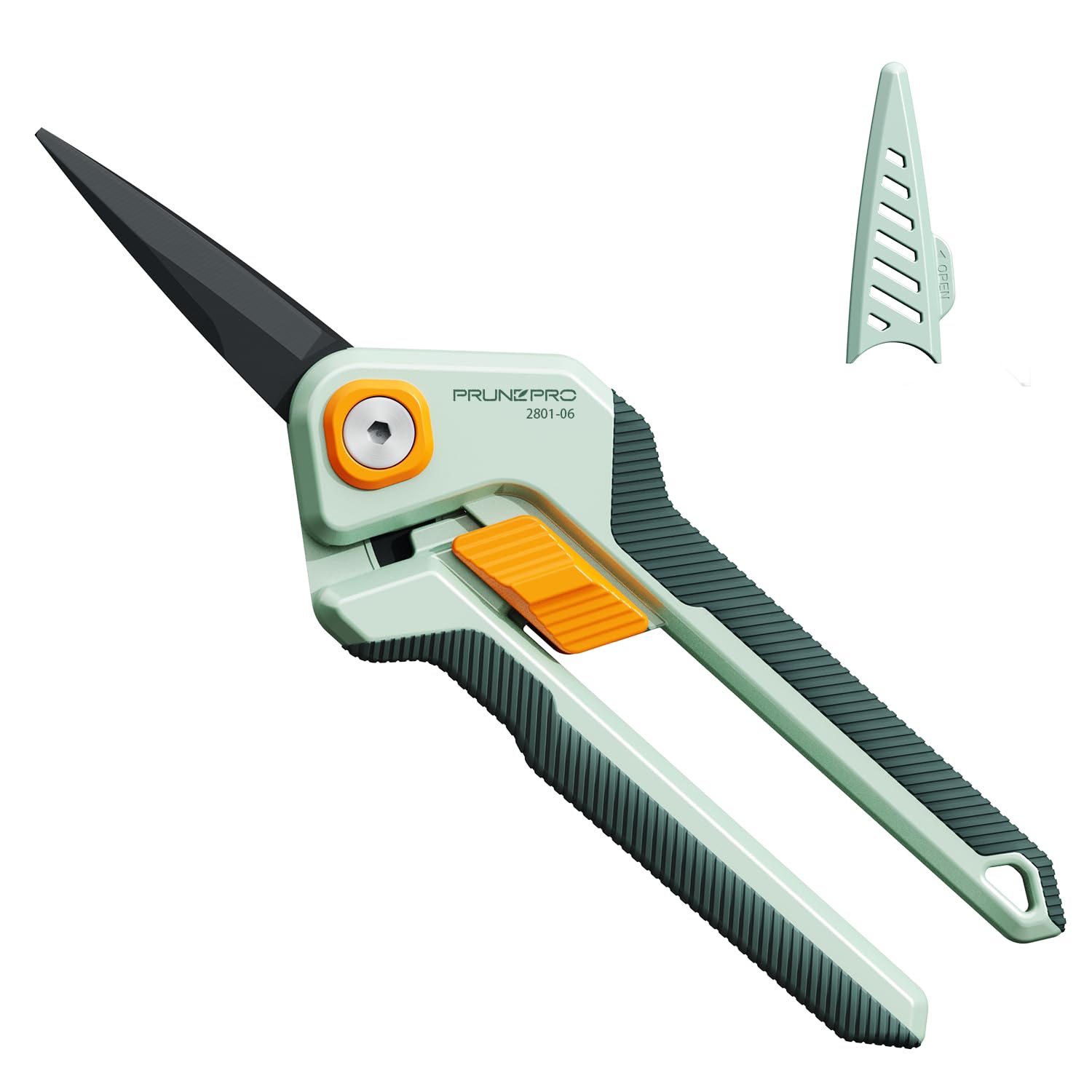
German steel and a Teflon coating meet a budget-friendly tag for clean, easy cuts.
The PrunePro brings a flat of engineering to the mid-range: the blades are made from high-carbon 1.4031 German stainless steel (a specific alloy that resists rust), and the Teflon coating helps sap slide off so the blade stays sharp longer. The micro-tip snips let you reach into a rose bush or bonsai canopy and cut only the stem you intend to remove, leaving surrounding growth untouched. A high-tension spring reduces the effort needed to squeeze, and the ergonomic polypropylene handles are light enough for extended trimming sessions.
Owners mention these shears are “very sharp” and “get the job done fast,” with one owner praising how quickly they cut through stems for wedding flower arrangements. The maker clearly states these are designed for delicate stems and thin green growth — not thick, woody branches. The unique safety lock mechanism prevents the lock from sliding up during cutting, a detail that frustrates users of cheaper shears.
The strong points
- German 1.4031 stainless steel resists rust and holds an edge
- Teflon coating reduces sap buildup for smoother cuts
- Anti-break lock stays put during use
Watch for
- Not meant for woody branches — only thin green stems
- Polypropylene handles may feel less premium than metal
Choose this if: you want German steel performance without spending on a premium brand, and you mainly snip flowers, herbs, or bonsai.
Look elsewhere if: you need a general-purpose pruner that can handle the occasional tough branch.
4. Modern Sprout Pruning Shears
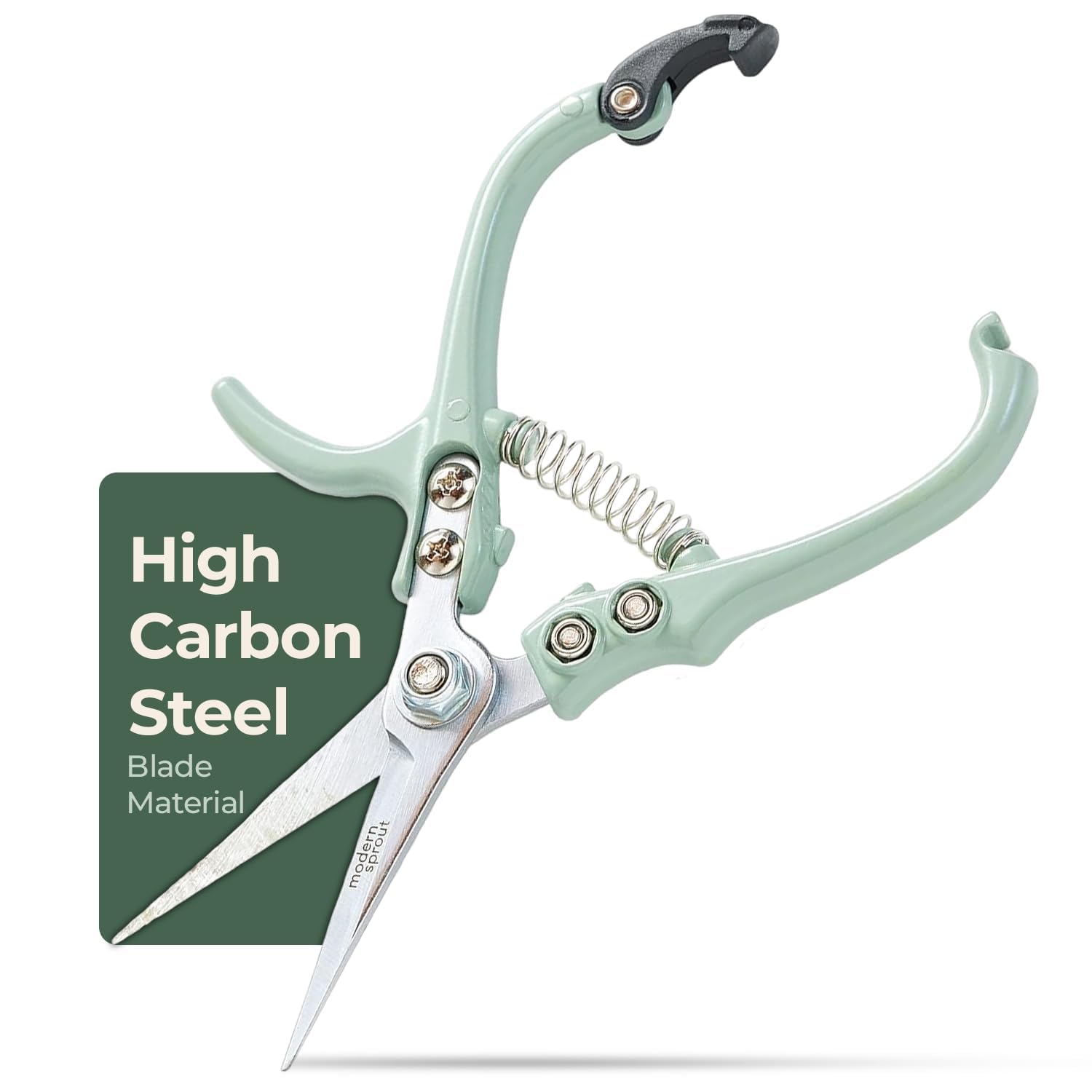
A needle-nose tip and aluminum handle pair up to deliver precise cuts without hand strain.
Modern Sprout focused on two things: a razor-sharp point that can reach into a basil plant without crushing nearby leaves, and a comfortable grip that does not cramp. The high-carbon steel blades are needle-nose shape — long and narrow — so you can snip individual stems in tight spaces. The handle is aluminum rather than steel, keeping the overall weight low while the ergonomic shape is meant to support natural hand movement. A safety latch locks the blades closed for safe drawer storage.
Owners describe these shears as “precise, easy to use” and especially love them for deadheading slender-stemmed blooms where you want to leave the healthy bud intact. The bypass blade type ensures clean cuts, and the rust-resistant coating on the high-carbon steel helps them survive damp conditions. Unlike the Dramm above, these have a longer reach thanks to the needle-nose tip, making them the better choice for reaching into dense herb pots or bonsai trays.
Reach for these when
- Needle-nose tip reaches into tight spots without damaging adjacent leaves
- Aluminum handle keeps weight low for extended trimming
- Rust-resistant high-carbon steel stays sharp
Consider
- Fine tip may be too delicate for thicker stems or woody canes
- Aluminum handle can feel cold in cool weather
Best suited for: indoor gardeners and herb growers who need to make precise cuts in tight spots without harming neighboring plants.
Not ideal for: cutting anything thicker than a pencil — the needle-nose tip is optimized for fine stems.
5. Horsvill Garden Shears (Wood grain)

Japanese SK4 steel hardened past HRC62 chews through branches up to a full inch thick.
If your flower shears need to handle more than stems — like rose canes, small tree limbs, or thick bonsai wood — the Horsvill wood-grain shears are the workhorse. The blade is Japanese SK4 high-carbon steel, quenched and hardened at high temperature to reach a hardness above HRC62, which means the edge stays sharp far longer than standard stainless steel. It can cut branches up to 1 inch in diameter. The blade is hard chrome plated to resist rust and sap buildup, plus it has a serrated edge for grip on tougher material.
Reviewers call these “HIGH quality” and “extremely sharp,” noting that even owners with small hands and a weak grip find the aluminum alloy handle comfortable and easy to squeeze. One florist said they are “superior to other floral shears that dull quickly” and ideal for professional work. Compared to the Wazakura above, the Horsvill has double the blade length (55 mm vs 45 mm) and a far wider cutting capacity (1 inch vs thin green stems), so it suits a wider range of garden tasks — but it is bulkier and heavier.
Built for
- Japanese SK4 steel with HRC62 hardness for long-lasting sharpness
- Cuts branches up to 1 inch thick
- Hard chrome plating resists rust and sap
Not for
- Heavier than compact pruners — less convenient for pocket carry
- Serrated edge may leave a slightly rougher cut on very delicate flower stems
Reach for these if: you need one shear that handles everything from flowers to woody branches up to an inch thick without dulling quickly.
Consider alternatives if: you only snip soft flower stems and want the smallest, lightest tool possible.
Understanding the Specs
Bypass vs Anvil Blade
The blade style directly affects how your plants heal after a cut. Bypass blades slide past each other like scissors, creating a clean slice that seals quickly. Anvil blades have one sharp edge that presses against a flat surface, which can crush the stem and leave an open wound. For live flowers and herbs, always choose bypass. Anvil designs are better for dead branches where crushing does not matter.
Cutting Width and Blade Length
Cutting width tells you the maximum stem diameter the shear can handle. A 0.25-inch width is fine for flowers and herbs, while a 1-inch width is needed for woody rose canes or small branches. Blade length affects reach and leverage — shorter blades (around 45 mm) give you precise control in tight spots, while longer blades (55 mm and up) provide more slicing power through thicker material.
FAQ
Can I use flower shears on thick woody branches?
What is the difference between stainless steel and high-carbon steel blades?
How do I clean and maintain my flower shears?
Are Japanese ikebana scissors good for everyday garden use?
What does “bypass blade” mean on garden shears?
How do I know what size shears fit my hands?
Can flower shears cut through twine or fabric?
Why does the safety lock matter on garden shears?
Is a serrated blade better than a straight blade for flower shears?
How often do I need to sharpen flower shears?
Final Thoughts: The Verdict
For most gardeners, the best flower shears are the Dramm ColorPoint because its stainless steel blades resist rust and its compact size fits small hands for detailed daily snipping. If you want precision for ikebana or flower arranging, grab the Wazakura Hanafubuki. And for heavy-duty cutting that handles branches up to an inch thick, the Horsvill Garden Shears are the toughest option here.
How We Picked
We do not accept paid placement, and we did not hands-on test every unit. Instead, we match each pick to a real buyer and use-case by comparing the manufacturers’ published specifications against the patterns in verified customer reviews — so you get each pick’s real strengths and trade-offs instead of marketing copy.
Sources & Methodology
Specifications: manufacturer listings and product documentation. Review insights: verified customer reviews, as of July 2026. Pricing: not shown on this page (it changes often); check the current price via the retailer link.
As an Amazon Associate, Lawn Gear Lab earns from qualifying purchases. This does not affect which products we feature.