
The biggest mistake new raised bed gardeners make is filling the entire frame with expensive bagged topsoil. That approach costs a fortune and still leaves you with compaction issues by mid-season. The smart strategy uses a layered core of coarse organic material topped with a few inches of premium planting mix—saving money while building healthier soil structure from the bottom up.
I’m Rikta — the co-founder and writer behind Lawn Gear Lab. I spend weeks comparing soil specifications, studying organic matter ratios and drainage profiles, and analyzing aggregated owner feedback to identify the best filler options that deliver volume without sacrificing plant health.
Whether you are topping off an established bed or filling a brand-new 24-inch-deep frame, this guide breaks down exactly which products earn their place as the best filler for raised garden beds.
How To Choose The Best Filler For Raised Garden Beds
Not every bag labeled “raised bed mix” is suitable as a filler. The term “filler” implies you need bulk volume, good drainage, and enough organic matter to sustain roots without burning them. Choosing wrong means you either sink money into high-grade mix that gets buried two feet deep or you use cheap topsoil that turns into concrete.
Understand the Hugelkultur Layering Principle
The most cost-effective deep-bed strategy is to place coarse, slow-decomposing organic matter—untreated wood chips, sticks, leaves, or unfinished compost—in the bottom half of the bed. The top six to eight inches should be a nutrient-dense, well-aerated planting mix. Your “filler” bags are really for that top zone and the transition layer just below it.
Check the Bag Volume and Weight
A standard raised bed that is 4×4 feet and 12 inches deep needs roughly 16 cubic feet of material. That is ten to twelve of the 1.5-cubic-foot bags. When comparing products, look at the stated volume (cubic feet or quarts) rather than the bag weight—moisture content varies wildly, and a 40-pound bag of dense soil contains far less usable volume than a 30-pound bag of fluffy compost.
Prioritize Drainage and Aeration
Filler that stays waterlogged rots roots and breeds fungus gnats. Perlite, pumice, coarse sand, and aged bark chips improve pore space. Avoid mixes with “topsoil” as the first ingredient unless you are combining them with plenty of perlite or coco coir. The best filler blends list forest products, peat moss, or compost before any mineral soil.
Match Organic Content to Your Growing Style
If you are planting heavy feeders like tomatoes and squash, look for mycorrhizae, worm castings, and kelp meal in the ingredient list. For herbs and leafy greens, a lighter mix with less nitrogen works better. Straight compost is too rich to use as the sole filler—it compacts and can burn tender roots. You need a blend.
Quick Comparison
On smaller screens, swipe sideways to see the full table.
| Model | Category | Best For | Key Spec | Amazon |
|---|---|---|---|---|
| Coast of Maine Castine Blend | Premium Mix | Deep nutrient support | 2 cu ft, mycorrhizae + biochar | Amazon |
| FoxFarm Raised Bed Mix | Blended Mix | Ready-to-use plug-and-play | 1.5 cu ft, earthworm castings | Amazon |
| Old Potters Organic Compost | Straight Compost | Soil amendment booster | 24 qt, plant-based materials | Amazon |
| Coast of Maine Bar Harbor Blend | Organic Potting | Container fill + aeration | 16 qt, lobster + kelp meal | Amazon |
| Espoma Organic Raised Bed Mix | Organic Blend | All-natural filling | 1.5 cu ft, myco-tone inoculant | Amazon |
| Avalution Coco Coir Bricks (9-pack) | Coco Medium | Bulk volume expansion | 54 qt expanded, pH balanced | Amazon |
| Michigan Peat BACCTO Mix | Economy Blend | Budget deep-fill projects | 100 lbs dual bag, reed sedge peat | Amazon |
In‑Depth Reviews
1. Coast of Maine Castine Blend
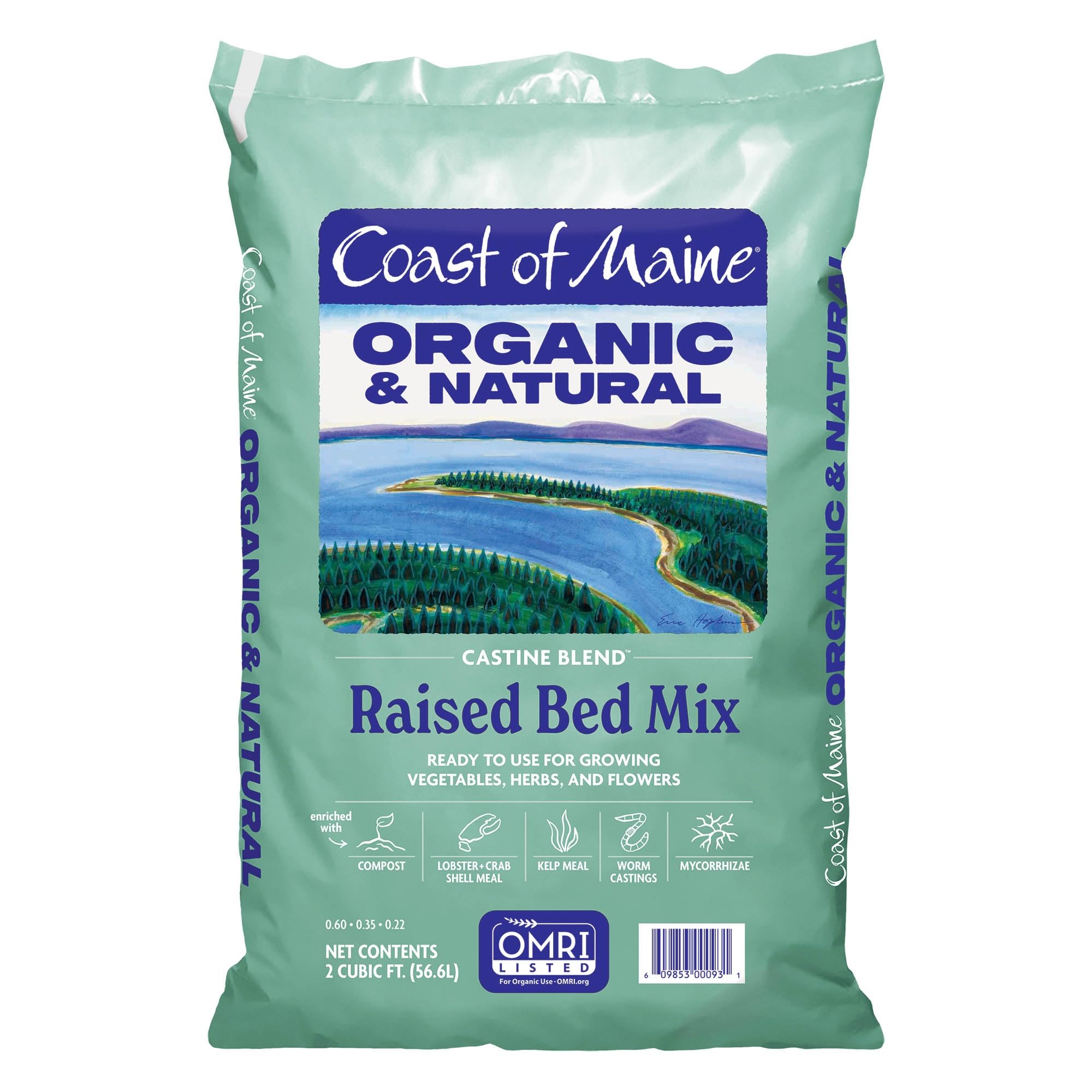
The Castine Blend is the single richest filler mix in this lineup. It combines worm castings, mycorrhizae, biochar, green sand, kelp meal, and lobster and crab shell meal into a 2-cubic-foot bag that is ready to use straight out of the bag. The biochar component provides long-term carbon sequestration in the soil and creates micro-pores that hold moisture and nutrients far better than standard peat-based blends.
Owner feedback highlights the texture: dark, soft, and free of twigs and bugs. Multiple users report using it three seasons in a row with consistent results—tomatoes and sunflowers especially thrived. At 40.25 pounds for two cubic feet, the density tells you this is packed with real organic matter rather than empty fluff.
The only downside is the higher cost per bag compared to economy blends or coco coir. But because you only need the top few inches of a raised bed to be this rich—the bottom can be filled with coarse wood material—one or two bags stretch surprisingly far. For gardeners who want a true biodiverse, living soil without having to mix five different amendments, this is the most complete single-bag solution.
What works
- Biochar and worm castings create long-lasting nutrient retention
- Light, fluffy texture with excellent aeration and drainage
- No foreign debris — clean, dark soil every bag
What doesn’t
- Premium price makes it less suitable as a deep bottom-layer filler
- Bag size at 2 cu ft could be larger for big bed projects
2. FoxFarm Raised Bed Planting Mix
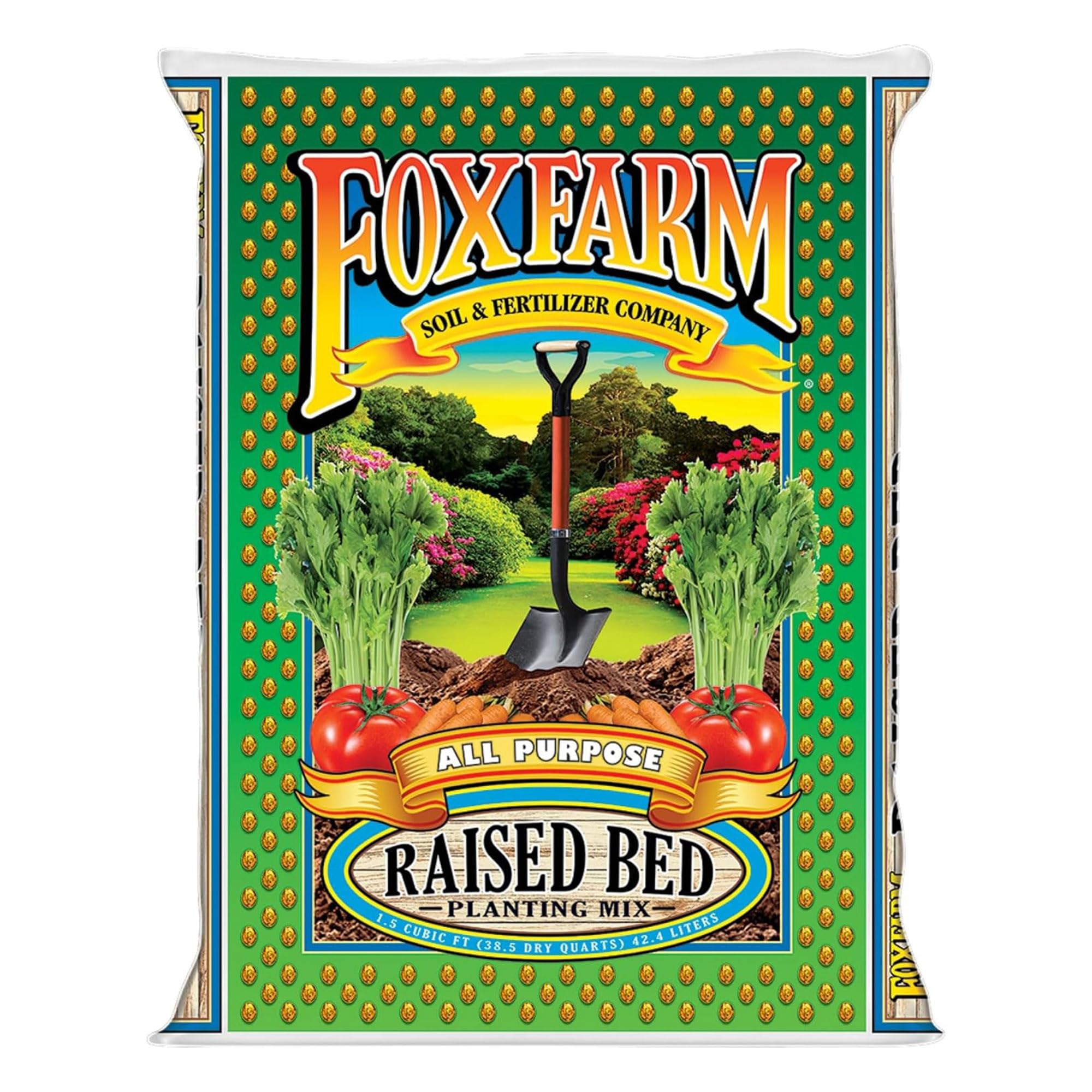
FoxFarm has a well-earned reputation in the horticulture world, and this Raised Bed Planting Mix lives up to it. The formula is built from 50-60 percent aged forest products and sphagnum peat moss, then fortified with earthworm castings, oyster shell, and dolomite lime. The oyster shell provides a slow-release calcium source that prevents blossom-end rot in tomatoes and peppers — a common frustration for raised bed gardeners.
Users consistently call this the best garden soil on the market, noting that it works equally well for containers and raised beds. The moisture-retention and drainage balance is dialed in: it holds enough water to reduce watering frequency but never feels soggy. Several reviewers pointed out that local garden centers often sell it for less, suggesting you check in-store pricing before ordering multiple bags online.
The main knock against it is simply availability — the product listing shows a price that some local stores undercut by almost half. If you can find it nearby for less, buy as many bags as your trunk will hold. For online convenience, this remains a top-tier filler that requires zero mixing or additional amendments.
What works
- Calcium-rich oyster shell fights blossom-end rot naturally
- Aged forest products provide stable, slow-decomposing structure
- Zero mixing required — pour and plant immediately
What doesn’t
- Online price can be higher than local garden center rates
- Only available in a single 1.5-cu-ft bag size from this listing
3. Old Potters Organic Compost
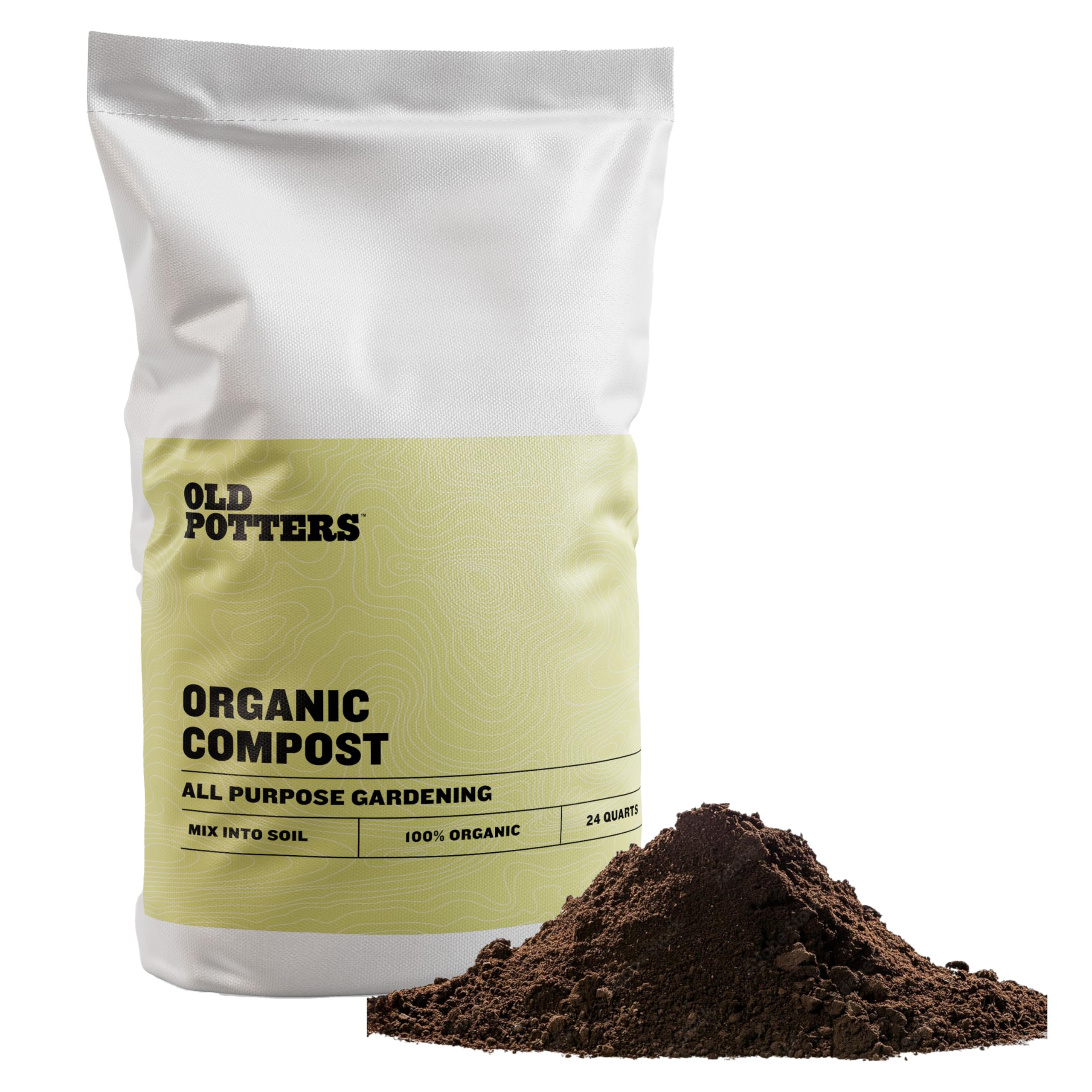
Old Potters is a 100 percent plant-based compost with no manures or synthetic chemicals. That makes it a safe pick for gardeners who want to boost organic matter without risking root burn from “hot” compost. The texture comes out slightly clumpy according to some buyers — most break it up by hand before incorporating it into their raised bed top layer.
One zone 7a gardener reported that mixing this compost with worm castings and mycorrhizae helped ten bare-root roses survive in heavy clay soil and bloom early. That level of performance suggests the microbial activity in this compost is genuinely high. The 24-quart bag is compact but dense; don’t expect it to expand dramatically like coco coir.
This product works best as an amendment layered into a base filler rather than used straight as the sole fill material. Combine one part Old Potters with two parts FoxFarm or Castine Blend for a rich, well-structured top zone. The only caution is the clumping issue — if you have a large bed, plan some extra time to break the compost apart before spreading.
What works
- Completely plant-based — no risk of chemical or manure burn
- Proven to improve heavy clay soil structure significantly
- Good microbial content for biological soil activity
What doesn’t
- Clumpy texture requires manual breaking apart
- Not cost-effective as a standalone deep filler
4. Coast of Maine Bar Harbor Blend
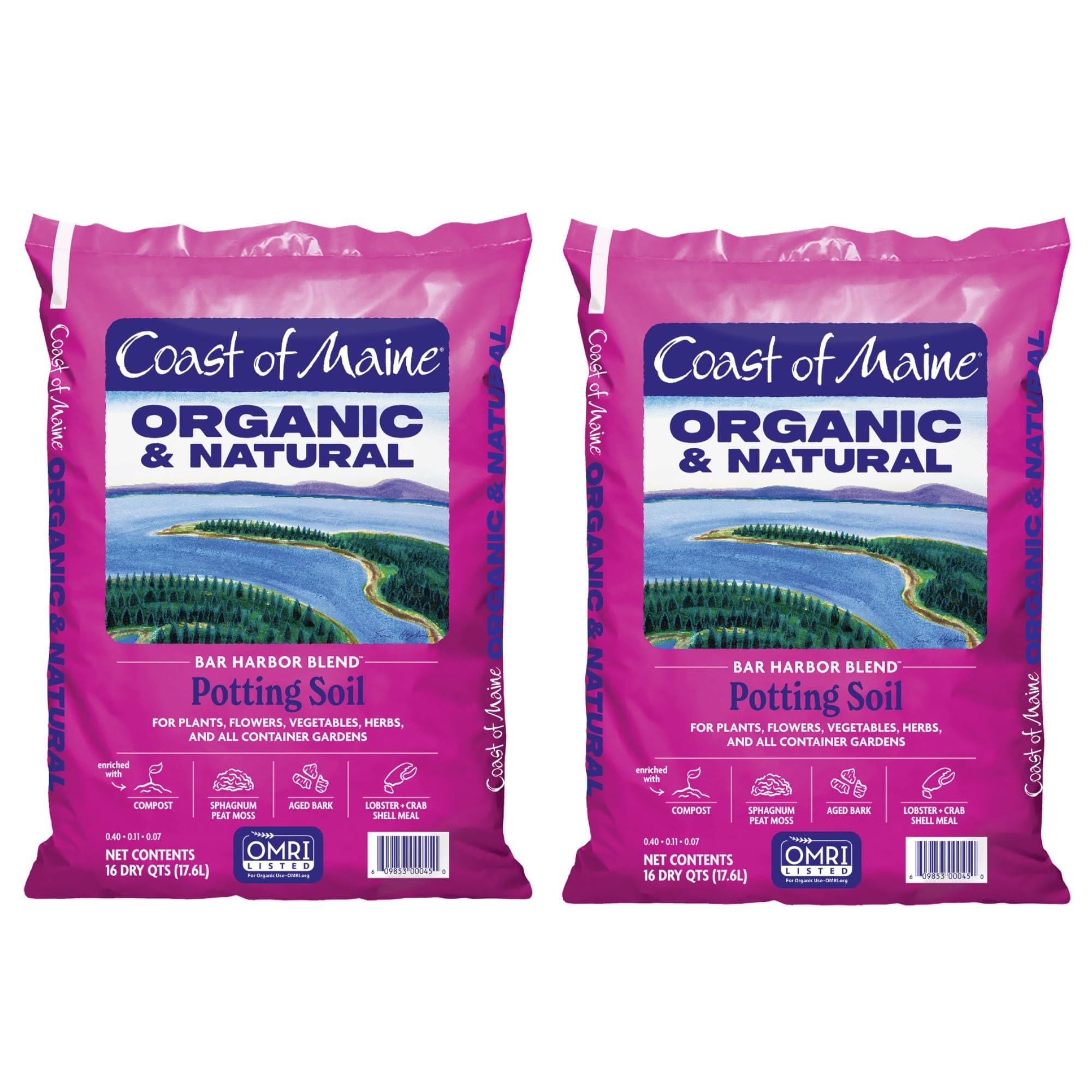
The Bar Harbor Blend is a multipurpose organic potting soil that works beautifully as the upper-layer filler in raised beds. Its ingredient list reads like a New England seafood dinner: sphagnum peat moss, compost, perlite, lobster and crab shell meal, and kelp meal. The crustacean meals provide chitin, which naturally suppresses fungal pathogens and nematodes in the soil.
Buyers consistently rate this among the best soils they have ever used. One reviewer noted the darker color indicated a higher compost-to-peat ratio than competing brands, which translates to more immediate nutrient availability. Another filled eight potato mounds and two extra planters with just two bags. The 16-quart package is the smallest in this guide, but the nutrient density is high enough that you do not need much depth.
Given its seafood-derived ingredients, the blend has a mild earthy smell but no offensive odor. The only limitation is the bag size — if you are filling a large bed, you will need many bags, and the cost adds up quickly. It is best reserved for the critical root zone rather than used as a deep bottom fill.
What works
- Lobster and crab shell meal provides natural disease suppression
- High compost ratio for immediate nutrient release
- Excellent moisture retention without becoming soggy
What doesn’t
- 16-quart bag is relatively small for deep bed projects
- Premium ingredient cost limits its use as a bulk filler
5. Espoma Organic Raised Bed Mix

Espoma is one of the most trusted names in organic gardening, and this Raised Bed Mix delivers solid performance at a cost that undercuts many competitors. The formula blends earthworm castings, alfalfa meal, kelp meal, and feather meal with a proprietary Myco-Tone blend of endo and ecto mycorrhizae. That mycorrhizal inoculant colonizes plant roots and dramatically improves phosphorus and water uptake.
Customer feedback across dozens of verified purchases praises its moisture retention without sogginess, its clean compost-like smell with no manure odor, and its ability to support everything from eggplant to strawberries to kale straight from seed. The 1.5-cubic-foot bag comes sealed and boxed, arriving without mold or dry spots. One reviewer successfully germinated nine different vegetable types in this mix alone.
The trade-off is that at per bag, it sits at a mid-range price point that is not the cheapest per cubic foot. But considering the added mycorrhizae and organic amendments, it offers genuine value for gardeners who want to avoid mixing their own custom blend. It works best as the top six-inch layer over a coarser, lower-cost base fill.
What works
- Myco-Tone mycorrhizae boost root nutrient uptake
- Clean, no-smell formula — no manure odor
- Excellent seed germination across many vegetable types
What doesn’t
- Price per cubic foot is higher than economy blends
- Not designed as a standalone deep fill for tall beds
6. Avalution Coco Coir Bricks (9-pack)

For gardeners filling deep raised beds on a budget, coco coir bricks are the single most volume-efficient option. This 9-pack from Avalution expands to 54 quarts of growing medium when hydrated — that is roughly 2.0 cubic feet from a package that arrives as a stack of lightweight 8×4-inch bricks. The low EC (electrical conductivity) and balanced pH ensure the coir will not throw your soil chemistry out of whack.
Users report that each brick requires soaking in about 4 to 5 quarts of water overnight to fully expand. Once rehydrated, the coir has excellent water-holding capacity — it absorbs up to 8 to 10 times its weight in water — while still providing good aeration because the fibrous structure prevents compaction. Several buyers combined the coir with topsoil to create a custom filler that saves money versus pre-blended bagged soils.
One caveat: coco coir has negligible nutrient content on its own. You cannot fill a bed with pure coir and expect healthy plants without adding compost, worm castings, or a balanced granular fertilizer. Use it as the bulk base layer (20 to 40 percent of your total fill volume) and top it with a nutrient-dense mix. The bricks can be a little stubborn to break apart; soaking overnight and agitating with a trowel speeds the process significantly.
What works
- Extremely space-efficient — bricks expand to over 50 quarts
- Low EC and balanced pH suitable for most plants
- Superior water retention reduces watering frequency
What doesn’t
- Zero nutrient content — requires added compost or fertilizer
- Bricks need overnight soaking and manual breaking apart
7. Michigan Peat BACCTO Mix
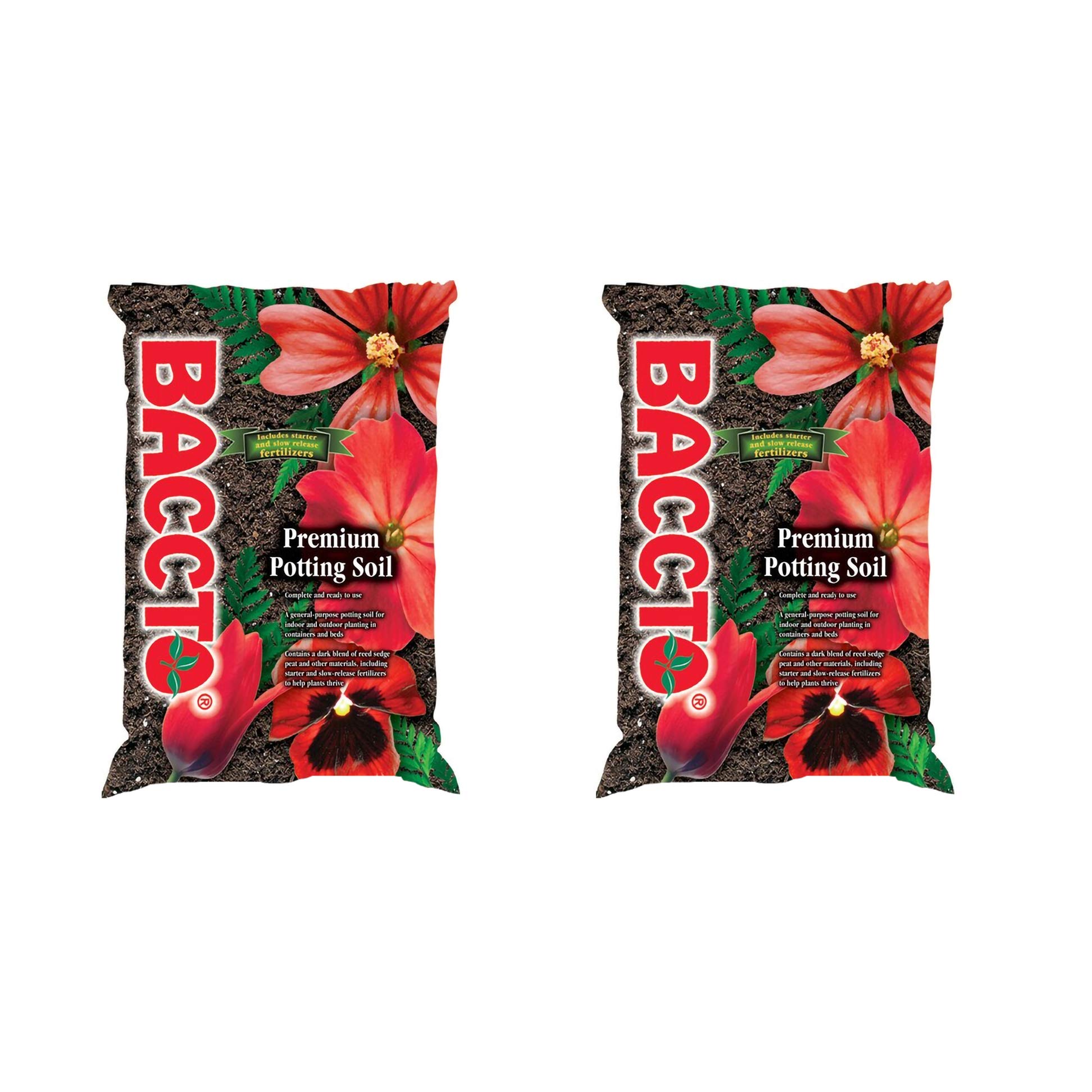
When you need serious bulk volume for filling deep raised beds without wrecking your budget, the Michigan Peat BACCTO mix delivers the most pounds per dollar in this roundup. This is a 50-pound bag sold as a two-pack — 100 pounds total — formulated with reed sedge peat, sand, and perlite. The sand provides weight and structure while the peat holds moisture and perlite keeps pore spaces open.
Customer feedback is mixed on texture: many praise its perfect consistency for potting and container gardens, describing it as fine, screened, and ready to use. A few users reported fungus gnats emerging from the bag, which is a common issue with peat-rich products that are stored moist. The soil arrived damp in several cases, which is not necessarily a defect — peat is naturally hydrophilic — but it is worth aerating the mix before use if you are concerned about pests.
This is not a nutrient-dense super-soil. It is a basic, functional growing medium ideal for the lower and middle layers of a deep bed. Plan to amend the top six inches with compost, worm castings, or a premium mix like FoxFarm or Castine Blend. For its price point, however, this is the most economical way to fill volume without resorting to raw topsoil that turns into bricks.
What works
- Very low cost per pound — best value for bulk volume
- Perlite and sand provide decent drainage for a peat-based mix
- Versatile — works for raised beds, containers, and lawn top-dressing
What doesn’t
- Fungus gnats reported in some bags due to moisture content
- Low nutrient content — requires top-layer amendment
Hardware & Specs Guide
Cubic Feet vs. Quarts: What Do You Need?
Raised bed volume is calculated as length × width × depth in feet, divided by 27 to get cubic yards, or simply multiply L × W × D to get cubic feet for smaller beds. A 4×4×1-foot bed requires 16 cubic feet. One cubic foot equals about 25.7 dry quarts. Most premium bags are sold in 1.5-cu-ft (38.5 qt) increments; coir bricks often list expanded volume in quarts. Always calculate your total volume before ordering — buying too few bags mid-project is a common frustration.
Mycorrhizae and Biochar: Do They Matter in Filler?
Mycorrhizal fungi form symbiotic relationships with plant roots, extending the root system’s reach for water and phosphorus. Biochar is a stable form of carbon that creates long-term pore space in soil and acts as a reservoir for beneficial microbes. Both are valuable in the top layer of a raised bed where most root activity occurs. They are not necessary in the bottom two-thirds of a deep bed, which is why layering a basic filler below a premium top mix is the most cost-effective strategy.
EC (Electrical Conductivity) and pH in Soil Mixes
EC measures the salt concentration in a growing medium. High EC can burn roots and inhibit germination. Most organic composts and peat-based mixes have naturally low EC (under 1.0 mS/cm). Coco coir typically has very low EC (0.2–0.5 mS/cm) and a neutral pH of 5.5–6.5, making it an excellent neutral base. Avoid mixes that list “synthetic fertilizers” or “wetting agents” if you are growing organic produce — those additives can spike EC levels unpredictably.
The Role of Perlite and Sand in Drainage
Perlite is volcanic glass that is heated until it pops like popcorn, creating lightweight, porous particles that improve aeration and prevent compaction. Sand adds weight and sharp drainage but does not hold nutrients. A good filler mix should contain at least 10–15 percent perlite or coarse sand by volume. If your chosen filler seems heavy and dense (like straight Michigan Peat or topsoil), add extra perlite separately at a ratio of about 1 part perlite to 5 parts soil.
FAQ
Can I use pure coco coir as the sole filler in a raised bed?
How much filler do I need for a standard 4×4-foot raised bed?
Is “raised bed mix” different from regular potting soil?
Will cheap topsoil work as a raised bed filler?
Final Thoughts: The Verdict
For most gardeners, the filler for raised garden beds winner is the Coast of Maine Castine Blend because it delivers the richest nutrient profile with mycorrhizae and biochar in a single ready-to-use bag — perfect for the top six inches where root growth matters most. If you want a plug-and-play mix that requires zero thought, grab the FoxFarm Raised Bed Planting Mix. And for filling deep beds on a budget while still building decent structure, nothing beats the volume-to-cost ratio of the Michigan Peat BACCTO mix combined with a top layer of nutrient-dense compost.