
A wisteria that refuses to bloom is one of the most frustrating sights for any gardener. You’ve watered, trained the vine, and waited years, only to get lush green leaves and zero flowers. The difference between a wall of green and a cascade of purple often comes down to one thing: feeding the vine the right phosphorus-heavy formula at the right time. This guide breaks down the most effective NPK ratios, application methods, and specific products that actually trigger wisteria vines to set flower buds instead of just growing more foliage.
I’m Rikta — the co-founder and writer behind Lawn Gear Lab. I’ve spent hundreds of hours cross-referencing soil science data, NPK ratio performance studies, and verified owner feedback on bloom-focused fertilizers to determine which formulations consistently push wisteria into its flowering phase.
After comparing the top phosphorus-rich fertilizers, slow-release formulas, and water-soluble bloom boosters on the market, this guide delivers the definitive, data-backed list of the best fertilizer for wisteria to turn your stubborn vine into a show-stopping floral display.
How To Choose The Best Fertilizer For Wisteria
Wisteria is a legume, meaning it can fix its own nitrogen from the air. That’s why standard high-nitrogen lawn fertilizers actually hurt your chances of blooming. You need a fertilizer that emphasizes phosphorus (the middle number in the NPK ratio) and keeps nitrogen low to discourage leaf growth and encourage flower bud formation.
Prioritize the NPK Ratio for Wisteria
Look for a fertilizer where the middle number (phosphorus) is the highest. Ratios like 0-45-0 (triple super phosphate) or 10-30-20 deliver the phosphorus punch wisteria needs to set buds. Avoid anything with a first number higher than the second — that’s a foliage feeder, not a bloom maker.
Decide Between Slow-Release Granules and Water-Soluble Powder
Granular fertilizers like Espoma Triple Phosphate release nutrients slowly over weeks, making them ideal for a single spring application. Water-soluble powders like Jack’s Classic Blossom Booster give you more control for foliar feeding or weekly root drenches during the growing season, but they need more frequent reapplication.
Check for Micronutrients and Organic Amendments
Quality bloom boosters include iron, zinc, manganese, and bone meal. These micronutrients support strong vine structure and deeper flower color. Pure phosphorus products work best when your soil already has adequate base nutrients — otherwise, a balanced bloom formula with trace elements is the safer bet.
Quick Comparison
On smaller screens, swipe sideways to see the full table.
| Model | Category | Best For | Key Spec | Amazon |
|---|---|---|---|---|
| Jack’s Classic 10-30-20 | Water-Soluble | Premium bloom stimulation | NPK 10-30-20 | Amazon |
| ENVY Bloom Special | Water-Soluble | Professional-grade rapid feeding | 1 tsp per gallon | Amazon |
| Espoma Triple Phosphate | Granular | Phosphorus-only soil correction | NPK 0-45-0 | Amazon |
| Bonide Triple Super Phosphate | Granular | Root development boost | NPK 0-45-0 | Amazon |
| Miracle-Gro LiquaFeed Bloom Booster | Liquid | Quick hose-end application | Liquid concentrate | Amazon |
| Nelson ColorStar | Granular | Extended 4-5 month feeding | 25% bone & blood meal | Amazon |
| TPS Wisteria Liquid | Liquid | Species-specific liquid feeding | 32 oz concentrate | Amazon |
In‑Depth Reviews
1. Jack’s Classic 10-30-20 Blossom Booster
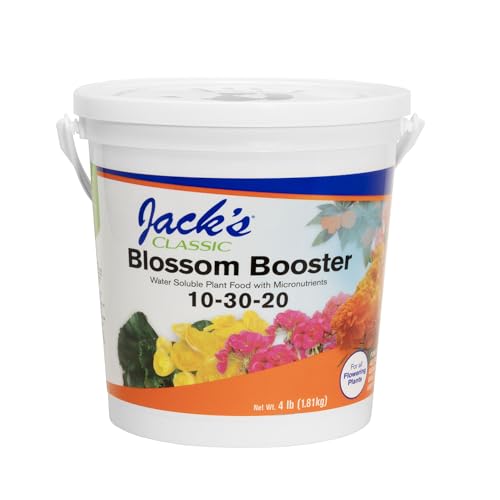
The 10-30-20 NPK ratio makes this Jack’s Classic formulation arguably the most balanced premium bloom booster for wisteria on the market. The higher phosphorus (30) and potassium (20) work together to increase flower bud count while strengthening the vine’s vascular system for bigger bloom clusters. The water-soluble powder includes chelated micronutrients — iron, manganese, and zinc — which prevent the leaf yellowing that sometimes follows heavy phosphorus feeding on established wisteria.
Each 4-pound bag mixes into up to 64 gallons of liquid fertilizer, giving you more applications per dollar than most liquid concentrates. Owners report noticeable color deepening and stem thickening within two weeks of the first application, especially on older wisteria that had previously only produced a few scattered racemes. The included measuring spoon simplifies dosing, and the blue crystal formula dissolves completely without clogging sprayers.
This product works exceptionally well for both foliar feeding and root drenching. Foliar application delivers phosphorus directly to leaf surfaces, bypassing any soil pH issues that might lock out nutrients in heavy clay or alkaline soils. For wisteria planted in less-than-ideal soil, this dual-route flexibility is a decisive advantage over pure granular phosphorus.
What works
- Ideal 10-30-20 ratio targets bloom production directly
- Micronutrient package prevents leaf chlorosis
- Versatile for foliar or root feeding
What doesn’t
- Requires mixing every application — not set-and-forget
- Powder can cake if storage seal is not airtight
2. ENVY Bloom Special Plant Fertilizer
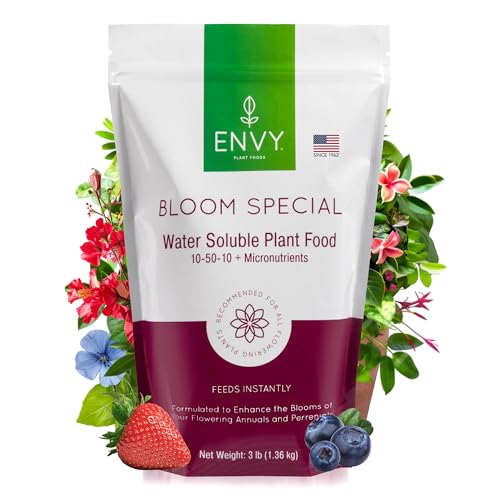
ENVY Bloom Special is a professional-grade 100% water-soluble powder blended in Chicago since 1962. Its formula delivers macro, micro, and secondary nutrients in a rapid-uptake form that wisteria vines respond to within days rather than weeks. The 3-pound pouch makes 300 gallons of feed, which is an exceptional dilution rate that keeps the cost per application extremely low for premium-grade performance.
Gardeners growing wisteria in containers, where nutrient leaching is faster, benefit from the quick-rescue nature of this product. Verified owner reports describe frangipani and plumeria — plants with similar high-phosphorus needs — producing flowers only after switching to this formula. The resealable pouch with an included scoop prevents waste and makes precise mixing easy without measuring cups.
One critical advantage is the pet-safe labeling, which matters for wisteria planted near walkways or garden borders where pets might dig. The fine powder dissolves instantly in water with no sediment, making it suitable for spray bottles and hose-end feeders alike. For gardeners who prefer a weekly liquid feed program during the growing season, this is the most efficient blend available.
What works
- Extremely high dilution — 300 gallons per pouch
- Pet-safe formulation for family gardens
- Visible bloom response within two weeks
What doesn’t
- Not a slow-release option; requires weekly mixing
- Smaller pouch size may surprise those expecting a larger box
3. Espoma Triple Phosphate 0-45-0

Espoma’s Triple Phosphate is the purest phosphorus-only fertilizer on this list — zero nitrogen, zero potassium, just 0-45-0. This makes it the most targeted tool for correcting phosphorus deficiency in soil that already has adequate nitrogen and potassium levels. For wisteria that produces dense green foliage but refuses to bloom despite good general health, this granular product addresses the specific phosphorus shortfall without triggering excessive leaf growth.
The 6.5-pound bag provides full season coverage for multiple vines with a single spring application. Simply sprinkle the granules around the drip line of the wisteria and water thoroughly. The no-filler formulation means every granule is active ingredient, and owners consistently report that previously barren wisteria produced buds the following spring after one fall or early-spring application.
One caution: because this product contains zero nitrogen, it should not be used as the sole fertilizer for young, establishing wisteria that still needs foliage development. It works best as a targeted bloom trigger for mature, well-established vines that have already built a strong root system and canopy structure.
What works
- Pure phosphorus with no nitrogen to fuel leaf growth
- Large bag size for multiple vines
- Simple one-time application
What doesn’t
- No nitrogen or potassium — needs balanced companion feeding for young plants
- Requires soil moisture to activate; less effective in drought
4. Bonide Garden Rich Triple Super Phosphate 0-45-0

Bonide’s Triple Super Phosphate delivers the same 0-45-0 phosphorus punch as the Espoma offering but in a more compact 4-pound bag at a lower entry point. The smaller size is ideal for gardeners with one or two wisteria vines who don’t need a 6.5-pound supply sitting in the shed for two seasons. The granular form is ready to use straight from the bag with no mixing, and owners report invigorated root systems and more robust vine trunks after application.
Phosphorus plays a critical role in photosynthesis — it’s used by the plant to convert sunlight into the energy required for flower bud differentiation. Bonide’s formulation is water-soluble enough to move into the root zone with regular watering but slow-release enough to avoid burning roots. This balance makes it suitable for both in-ground vines and large container-grown wisteria.
The main difference from the Espoma product is bag size and price-per-pound. If you want a smaller commitment or need to test phosphorus response on a single vine before buying in bulk, the Bonide bag is the smarter starting point. Both products are made in the USA and use the same basic chemistry.
What works
- Compact bag size for smaller gardens
- Strong root development stimulant
- Ready-to-use granular format
What doesn’t
- Lacks micronutrients for full-spectrum plant health
- Lower weight means fewer seasonal applications per purchase
5. Nelson ColorStar Outdoor & Indoor Fertilizer
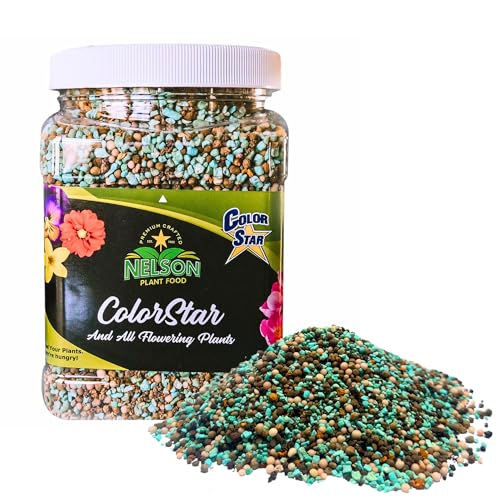
Nelson ColorStar takes a different approach by using six nitrogen sources with staggered time-release characteristics. While wisteria doesn’t need high nitrogen, the 25% bone meal and blood meal content provides organic phosphorus and slow-release feeding that lasts 4 to 5 months from a single application. This makes it the most convenient option for gardeners who want to apply once in early spring and not think about fertilizing again all season.
The 2-pound jar is compact, but the nutrient density is higher than most granular fertilizers thanks to the concentrated organic ingredients. Iron sulfate, zinc sulfate, and manganese sulfate are included to boost chlorophyll production and produce richer, deeper flower colors. Owners growing hydrangeas and other bloom-heavy perennials have noted that ColorStar produces fuller flower heads and extended bloom periods compared to standard all-purpose fertilizers.
For wisteria specifically, the slow-release mechanism ensures that phosphorus is available during the critical late-summer bud-setting period without the risk of a late-season nitrogen spike that could delay winter hardening. The granule size is small enough to be easily worked into the top inch of soil around the vine’s root zone.
What works
- Single application covers the full growing season
- Organic bone meal base for steady phosphorus release
- Micronutrients enhance flower color depth
What doesn’t
- Higher nitrogen content than dedicated bloom boosters
- Small jar size relative to price
6. Miracle-Gro LiquaFeed Bloom Booster

Miracle-Gro’s LiquaFeed Bloom Booster is the most accessible liquid option here, designed specifically for the brand’s hose-end sprayer system. If you already own a Miracle-Gro sprayer, this 4-pack of refills delivers bloom-focused nutrition with zero measuring — just attach, squeeze, and water. The liquid formula provides instant nutrient availability, which is especially useful for wisteria that shows signs of phosphorus deficiency mid-season, such as purple-tinged leaves or sparse racemes.
The convenience factor cannot be overstated for gardeners with multiple wisteria vines spread across a pergola or fence line. Each refill cartridge treats a significant area, and the water-soluble nutrients are absorbed by both roots and foliage. Owner reports consistently mention that flowering plants show larger blooms and increased bloom quantity within a week of starting the program.
However, the NPK analysis is not printed as a bold phosphorus-heavy ratio like the specialized products above. This is a general bloom formula best used as a supplement or maintenance feed rather than a targeted phosphorus therapy for stubborn non-blooming vines. It pairs well with a granular phosphorus base application in early spring.
What works
- Extremely convenient hose-end application
- Fast-acting liquid for mid-season recovery
- Good value in the 4-pack format
What doesn’t
- Not phosphorus-specific enough for stubborn non-bloomers
- Requires proprietary LiquaFeed sprayer
7. TPS Wisteria Fertilizer Liquid 32 oz
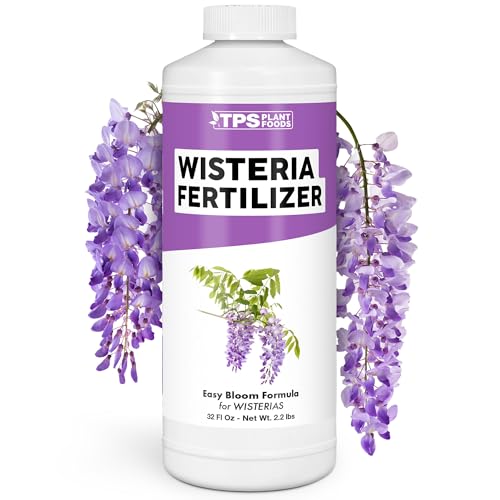
TPS Nutrients is one of the few brands that produces a fertilizer specifically labeled for wisteria, which eliminates guesswork for beginners who want a species-matched product. The 32-ounce liquid concentrate is mixed at a rate of one tablespoon per gallon of water, and multiple verified owners report that wisteria vines that appeared completely dead or dormant burst into growth within a week of first application. That level of revival power is rare in the category.
The liquid formula is designed to support abundant blooms, strong vine development, and healthy root growth — the three pillars of wisteria performance. The low coverage rating means you’ll use more product per application compared to powders, but for a single vine or a small trellis setup, the 32-ounce bottle can carry you through a full growing season with regular biweekly feeding. The product is manufactured in the USA with transparent labeling.
Because this is a liquid fertilizer, it works best for container-grown wisteria or vines that need immediate nutrient availability. The trade-off is that liquid fertilizers leach out of soil faster than granules, requiring more frequent applications. It’s a solid entry-level option that takes the guesswork out of choosing NPK ratios and application timing.
What works
- Formulated specifically for wisteria species
- Fast-acting revival for dormant or struggling vines
- Simple mixing instructions
What doesn’t
- Lower coverage per bottle than concentrated powders
- Requires more frequent reapplication than granular options
Hardware & Specs Guide
NPK Ratio — The Three Numbers
The NPK ratio on any fertilizer bag tells you the percentage of nitrogen (N), phosphorus (P), and potassium (K) by weight. For wisteria, the middle number (phosphorus) is the most critical. A ratio like 0-45-0 means 45% of the bag is available phosphate, with zero nitrogen and zero potash. This forces the plant to allocate energy to bud development rather than leaf expansion. Ratios like 10-30-20 provide a more balanced approach with modest nitrogen to support canopy health while still prioritizing bloom production. Avoid anything where the first number exceeds the second.
Granular vs. Water-Soluble Application
Granular fertilizers, such as Espoma Triple Phosphate, release nutrients slowly as soil moisture and microbial activity break down the particles. A single spring application typically lasts 6 to 8 weeks. Water-soluble powders and liquids provide instant availability — ideal for correcting mid-season deficiencies or feeding container-grown wisteria where nutrients leach quickly. The trade-off is frequency: liquid programs require application every 7 to 14 days during active growth. Choose granular for low-maintenance, set-and-forget feeding. Choose water-soluble for precise control and rapid results.
FAQ
Why does my wisteria grow leaves but never blooms?
When should I apply fertilizer to my wisteria?
Can I use a balanced 10-10-10 fertilizer on wisteria?
Final Thoughts: The Verdict
For most gardeners, the fertilizer for wisteria winner is the Jack’s Classic 10-30-20 Blossom Booster because its balanced phosphorus-to-nitrogen ratio combined with chelated micronutrients gives you the most reliable bloom trigger without the risk of leaf burn. If you want a pure phosphorus soil correction that attacks the problem of non-blooming vines at the root level, grab the Espoma Triple Phosphate 0-45-0. And for budget-friendly convenience that requires no mixing or measuring, nothing beats the TPS Wisteria Liquid for beginner-friendly species-specific feeding.