
Sunshine Ligustrum demands a fertilizer that keeps its chartreuse foliage vibrant without triggering weak, leggy growth. An off-balance feed can wash out the golden color or burn the shallow root system, leaving you with a sparse, discolored shrub instead of a dense hedge. The right nitrogen source and a slightly acidic pH are the difference between a plant that shines and one that struggles.
I’m Rikta — the co-founder and writer behind Lawn Gear Lab. I specialize in cross-referencing horticultural data with real-world owner feedback to separate marketing claims from measurable results for acid-loving ornamentals like Sunshine Ligustrum. This guide emerged from many hours spent analyzing NPK ratios, slow-release mechanisms, and soil acidifier performance so you can buy with confidence.
Whether you are planting a new hedge or reviving an established shrub, the right formulation determines everything. This deep-dive analysis cuts through the options to help you find the best fertilizer for sunshine ligustrum without guesswork.
How To Choose The Right Fertilizer For Sunshine Ligustrum
Sunshine Ligustrum is a heavy feeder during its growing season, but it is sensitive to salt-based fertilizers that can scorch its fine roots. The first rule is to prioritize formulations labeled “acid-loving” with a sulfur or iron component that keeps leaves from turning pale yellow. General-purpose 10-10-10 blends often push excessive top growth that flops, whereas a well-balanced acid blend (like 4-3-4 or 5-3-6) encourages dense branching and that signature bright foliage.
NPK Ratios and Nitrogen Sources
Nitrogen drives leaf color, but too much fast-release nitrogen (like urea) causes rapid, tender growth that pests love and a washed-out appearance. Look for blends with a moderate first number (between 4 and 9) that includes some slow-release or organic nitrogen. A higher middle number (phosphorus) supports root establishment, especially in the first year of planting. Potassium (the third number) helps with overall vigor and disease resistance.
Micronutrient Content: Iron and Sulfur
Sunshine Ligustrum is prone to interveinal chlorosis when soil pH drifts above 6.5. Iron and sulfur are non-negotiable micronutrients for this shrub. Iron chelate keeps the foliage deep green (or golden-green), and elemental sulfur gradually lowers pH to keep nutrients bioavailable. A fertilizer that lacks these components will force you to buy separate soil acidifiers. An all-in-one acid blend saves time and reduces the risk of over-application.
Release Mechanism: Granular vs. Water-Soluble
Granular slow-release fertilizers suit established in-ground Ligustrums because they feed over 2–3 months with less risk of root burn. They also require less frequent application. Water-soluble powders (like Jack’s Classic and Miracle-Gro) are better for container-grown shrubs or when you need to correct a deficiency quickly. For a low-maintenance hedge, a premium granular such as Espoma Holly-tone or Nelson NutriStar is the smartest choice; for potted specimens, a water-soluble acid formula gives you precise control.
Quick Comparison
On smaller screens, swipe sideways to see the full table.
| Model | Category | Best For | Key Spec | Amazon |
|---|---|---|---|---|
| Espoma Organic Holly-tone | Organic Granular | Long-term hedge feeding | 4-3-4 + 5% Sulfur | Amazon |
| Jack’s Classic Acid Special | Water-Soluble | Quick green-up / pots | 17-6-6 + Iron & Sulfur | Amazon |
| Nelson NutriStar Acid Loving | Specialty Granular | Heavy flowering boost | 9-13-11 + 3.2% Iron | Amazon |
| GARDENWISE 8-4-8 Acidic | Granular Slow-Release | All-around acidic care | 8-4-8 + Iron & Magnesium | Amazon |
| FoxFarm Happy Frog Acid Loving | Organic Granular | Soil biology boost | Acid blend + Mycorrhizae | Amazon |
| Fertilome Root Stimulator | Liquid Concentrate | New transplants/rooting | 4-10-3 + IBA hormone | Amazon |
| Miracle-Gro Water Soluble Acid | Water-Soluble | Budget-friendly feeding | 30-10-10 (acid-loving) | Amazon |
In‑Depth Reviews
1. Espoma Organic Holly-tone

Espoma Holly-tone is the gold standard for acid-loving shrubs, and its 4-3-4 analysis is nearly perfect for Sunshine Ligustrum’s needs. The low first number means you won’t burn roots or trigger floppy growth, while the 5% sulfur content helps keep soil pH in the optimal 5.5–6.5 range. As a 36-pound bag, it offers outstanding value-per-application for a hedge with any significant stretch of planting.
The Bio-tone formula includes beneficial microbes that slowly break down organic matter, feeding the ligustrum for up to three months per application. Users consistently report deeper foliage color and denser branching after switching to Holly-tone from synthetic blends. The granules are easy to scatter around the drip line, and the organic certification means no chemical salts accumulate in the soil over time.
The only trade-off is that the organic breakdown is slower during cool early-spring weather; if you need a rapid correction for chlorotic leaves, a water-soluble iron supplement may be needed in the interim. For a “set it and forget it” approach to hedge health, though, this bag is hard to beat. It also works beautifully on adjacent camellias, azaleas, and blueberries, which simplifies landscape feeding.
What works
- Ideal low-NPK profile prevents leggy growth and root burn
- Organic breakdown feeds gently for months
- Massive 36-lb bag covers large hedges affordably
- Approved for organic gardening
What doesn’t
- Slow to release in cold soil (under 50°F)
- Strong organic odor for the first day after application
2. Jack’s Classic Acid Special 17-6-6
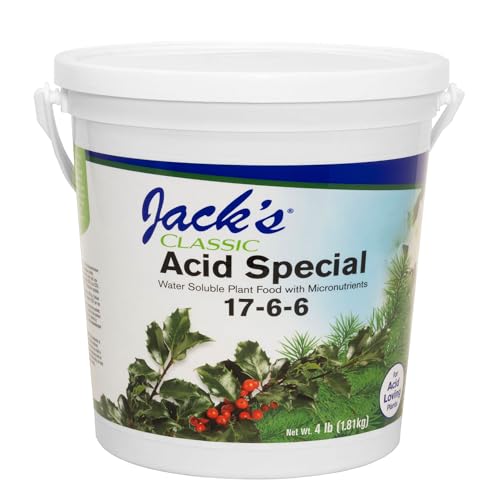
When Sunshine Ligustrum shows signs of iron chlorosis — pale leaves with dark green veins — Jack’s Classic Acid Special is the fastest corrective feed on this list. The 17-6-6 ratio delivers a heavy dose of nitrogen (with elevated iron and sulfur) in a form that reaches the foliage within days of watering. This makes it ideal for potted Ligustrums or shrubs that need a mid-season rebound after stress.
The water-soluble powder mixes cleanly with no sediment, and the included measuring spoon takes the guesswork out of dilution. The added micronutrients (iron, manganese, zinc) target the exact deficiencies that wash out the golden color in this variegated shrub. Users note that berry bushes and container azaleas respond with renewed vigor after just two applications. The 4-pound bag yields many gallons of mixed solution — very economical for small- to mid-size beds.
Because of its high nitrogen content, you must apply every 7-14 days at the correct dilution to avoid salt buildup. For deep-rooted in-ground Ligustrum hedges, Jack’s works well as a foliar spray but requires more labor than a granular feed. It is best used as a complementary tool alongside a slower-release granular like Holly-tone for season-long consistency.
What works
- Rapidly corrects iron chlorosis and pale leaves
- High sulfur content effectively lowers soil pH
- Can be used as both root drench and foliar spray
- Very economical per gallon of mixed solution
What doesn’t
- Requires frequent reapplications (every 7-14 days)
- Higher burn risk if mixing ratio is off
3. Nelson NutriStar Acid Loving Plant Food 9-13-11

Nelson NutriStar is built for gardeners who want both foliage color and a strong flower show from their acid-loving shrubs. The 9-13-11 ratio features a higher middle number (phosphorus) compared to most acid blends, which directly supports bud formation and root development. For an established Sunshine Ligustrum that you want to bush out with white flower panicles, this granular feed provides the targeted phosphorus push.
The formula includes four acidifying sources and three separate forms of iron (totaling 3.2%), which is significantly higher than most competitors. This makes it particularly effective on soils that have drifted alkaline and where Ligustrum leaves have started to lose their golden tone. The 20% cottonseed meal component adds a slow-release organic nitrogen supply that prevents the quick flush-and-fade pattern common with synthetic-only feeds.
The 2-pound bag size is best suited for smaller groupings or container specimens; for a full hedge you will need to buy multiple bags, which increases the per-plant cost. Users handling mature flowering shrubs — gardenias, azaleas, and camellias — often report noticeably larger blooms after switching to NutriStar. For a Ligustrum hedge where foliage density is the main goal, the higher phosphorus is less critical than with flowering ornamentals.
What works
- Highest iron content (3.2%) for deep green color
- Phosphorus-rich profile encourages strong root systems
- Multiple acidifying sources for stubborn alkaline soil
- Cottonseed meal provides gentle slow-release nitrogen
What doesn’t
- Small bag size is inefficient for large hedge areas
- Higher phosphorus not essential if blooms are not desired
4. GARDENWISE 8-4-8 Acidic Fertilizer
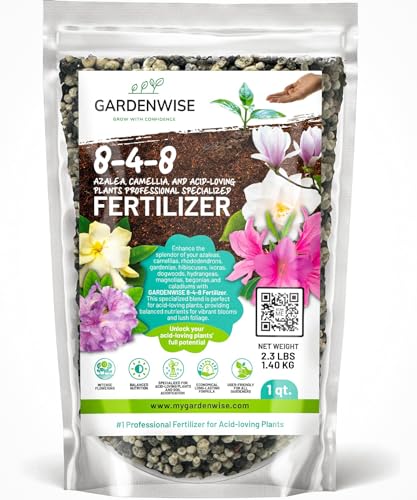
GARDENWISE 8-4-8 fills the gap between premium organics and budget synthetics, offering a balanced acid-loving granular that works well on Sunshine Ligustrum without breaking the bank. The 8-4-8 ratio delivers moderate nitrogen that supports steady leaf growth while the added iron, magnesium, and manganese work together to prevent the yellowing that plagues Ligustrum in neutral soil. It is marketed as requiring just three feedings per year, which suits a low-maintenance landscape schedule.
The slow-release granules are prilled from bio-solid material that includes live bacterial microbes, a feature more commonly found in higher-priced organic blends. User reports note that magnolias and rhododendrons — known for being finicky — responded within two weeks with noticeable leaf greening and new bud formation. For a Ligustrum hedge planted in mixed beds, this single product can feed several acid-loving species simultaneously.
The 1-quart bag (32 oz) covers a modest area; for a hedge of 10+ plants you may need to buy multiple bags. Some users have noted that the granules can cake if stored in a damp environment, so keep the bag sealed tight. It is not organic-certified like Espoma or FoxFarm, but for the price-to-coverage ratio, it delivers reliable results for mid-sized gardens.
What works
- Balanced 8-4-8 ratio suits steady foliage growth
- Added magnesium and iron prevent chlorosis effectively
- Requires only three applications per year
- Affordable for the coverage provided
What doesn’t
- Small bag size covers limited plant count per purchase
- Not OMRI-listed for organic production
5. FoxFarm Happy Frog Acid Loving Plants Fertilizer

FoxFarm Happy Frog breaks the mold by focusing on soil microbiology rather than just NPK numbers. The inclusion of mycorrhizal fungi and beneficial soil microbes helps Sunshine Ligustrum access nutrients that would otherwise remain locked up, especially in compacted or poor soil. This is a “whole system” approach — feed the soil, and the soil feeds the plant.
The 4-pound bag is designed for acid-loving plants like azaleas, rhododendrons, and blueberries, but the gentle feeding action (low soluble salts) makes it safe for the sensitive root zone of Ligustrum. It is OMRI-listed, which matters if you are mixing edible berries or herbs in the same landscape beds. Users transitioning from synthetic fertilizers report less leaf tip burn and a more even, sustained green color.
The main drawback is the 4-pound bag size, which runs out quickly if you have a hedge longer than 15 feet. It is also slower to show results compared to high-nitrogen synthetics like Jack’s or Miracle-Gro. For gardeners who prioritize long-term soil building over instant cosmetic green-up, Happy Frog is a stellar choice that pairs well with a supplemental iron drench during the peak growing season.
What works
- Mycorrhizal fungi improve nutrient uptake and root health
- OMRI-listed for organic gardening
- Very low salt index — safe for sensitive roots
- Supports long-term soil structure improvement
What doesn’t
- Small bag size not economical for large hedge installations
- Slower visible results compared to water-soluble fertilizers
6. Fertilome Root Stimulator & Plant Starter 4-10-3

Fertilome is not a maintenance fertilizer — it is a specialized rooting aid designed for the critical establishment phase. If you are planting new Sunshine Ligustrum shrubs from nursery pots or bare-root stock, this liquid concentrate gives the roots a powerful head start. The 4-10-3 ratio shifts nutrients toward phosphate and the synthetic auxin (IBA) stimulates lateral root branching, helping the shrub anchor into the soil faster.
The liquid form allows for precise application directly to the root zone, and users have reported success reviving stressed transplants that looked wilted after planting. For Ligustrum in clay soil (where root penetration is difficult), the hormone boost can mean the difference between a plant that sits stagnant for months and one that establishes quickly. Mixing is simple — a quarter tablespoon per pint of water — and the 1-gallon bottle lasts through many planting projects.
Once the shrub is established (after about 6-8 weeks), switch to a balanced acid-loving feed. Fertilome lacks the long-term nitrogen and micronutrients needed for ongoing foliage maintenance. It also has a strong odor when mixed, so wear gloves and work in a ventilated area. For its intended use — transplant shock prevention — it is extremely effective and recommended for every new planting hole.
What works
- IBA hormone actively promotes dense root development
- Liquid formula targets the root zone precisely
- Rescues stressed transplants from wilting
- Great value for the number of applications per bottle
What doesn’t
- Not suitable as a regular maintenance fertilizer
- Strong chemical odor during mixing
7. Miracle-Gro Water Soluble Azalea, Camellia, Rhododendron Plant Food

Miracle-Gro’s acid-loving formula is the most accessible option, found at nearly every garden center, and it can work for Sunshine Ligustrum if applied carefully. The 30-10-10 ratio is nitrogen-heavy, which produces rapid foliage green-up, but it also means a higher risk of root burn and leggy growth if overused. The product is formulated for acid-loving ornamentals and includes chelated iron to help prevent chlorosis.
The 5-pound resealable bag lasts through many applications, and the water-soluble crystals dissolve quickly for use with a watering can or hose-end sprayer. Users on container-grown Ligustrum have reported good results when diluting at the higher recommended rate (every 7-14 days). The formula is designed not to burn foliage when used as directed, making it safe for foliar feeding as well. It is the most economical choice for a single shrub or small planting.
Where it falls short is soil acidification: it relies on quick-release ammonium forms rather than elemental sulfur, so it does very little to lower alkaline soil pH over time. For long-term hedge health, this product should be supplemented with a sulfur amendment or an organic acidifier like Holly-tone. It is a fast-acting band-aid, not a foundation feed, but for a budget-friendly option it delivers results quickly.
What works
- Fast-acting nitrogen for rapid foliage green-up
- Resealable bag keeps powder dry for months
- Widely available and very budget-friendly
- Safe for foliar feeding when mixed correctly
What doesn’t
- Weak soil acidification — little impact on pH
- High nitrogen can cause floppy growth if over-applied
Hardware & Specs Guide
Understanding NPK Ratios for Ligustrum
Sunshine Ligustrum performs best with a nitrogen-to-phosphorus-to-potassium ratio where nitrogen is moderate (4–9) and phosphorus is equal or slightly lower. Too much nitrogen (above 20) forces leaf growth at the expense of density and color stability. The middle number (phosphorus) supports root anchorage, which is crucial in the first year. Potassium (the third number) boosts disease resistance and helps the shrub tolerate heat stress. A balanced acid blend like 4-3-4 or 8-4-8 is ideal for mature hedges; higher phosphorus (like 9-13-11) is better if you want flowers.
Iron and Sulfur: The Critical Micronutrients
Iron is the most common deficiency in Sunshine Ligustrum grown in neutral or alkaline soil. Without sufficient chelated iron, new leaves emerge pale yellow with green veins — a condition called interveinal chlorosis. Sulfur works to lower soil pH gradually, making iron and other micronutrients available. Look for fertilizers that list both iron (as ferrous sulfate or iron EDTA) and elemental sulfur. Products with at least 1% iron and 3–5% sulfur are best suited for this shrub. Foliar sprays of iron can correct deficiencies faster than soil applications.
Slow-Release vs. Water-Soluble
Granular slow-release fertilizers (like Espoma Holly-tone and GARDENWISE) are the standard for in-ground hedges because they release nutrients over 2–3 months and require only bi-annual application. They also have a much lower salt index, reducing burn risk on shallow Ligustrum roots. Water-soluble powders (Jack’s Classic, Miracle-Gro) allow precise control and deliver nutrients instantly, making them superior for container plants or emergency leaf-color correction. For a low-maintenance hedge, choose slow-release granules; for potted specimens, stick with water-soluble feeds applied every 10–14 days.
Organic Certification and Soil Microbes
Organic fertilizers (OMRI-listed) like FoxFarm Happy Frog and Espoma Holly-tone feed soil biology as well as the plant. Mycorrhizal fungi form partnerships with Ligustrum roots, extending their reach for water and phosphorus. This leads to better drought tolerance and reduced fertilizer runoff. Organic blends release nutrients more slowly and are less likely to cause salt buildup, but they are also slower to show results. If your soil is already rich in organic matter, a synthetic water-soluble feed for quick green-up is fine; for degraded or sandy soil, an organic granular with microbial inoculants builds long-term fertility.
FAQ
Can I use a general-purpose 10-10-10 fertilizer on Sunshine Ligustrum?
How often should I fertilize my Sunshine Ligustrum hedge?
What are the signs of over-fertilizing Sunshine Ligustrum?
Can I make my own homemade acidic fertilizer for Ligustrum?
Should I use a fertilizer with systemic insecticide for my Ligustrum?
Final Thoughts: The Verdict
For most gardeners, the fertilizer for sunshine ligustrum winner is the Espoma Organic Holly-tone because it delivers the ideal 4-3-4 NPK ratio, built-in sulfur for pH management, and long-lasting organic feeding that protects shallow roots. If you need to correct iron chlorosis fast, grab the Jack’s Classic Acid Special. And for new transplants or stressed shrubs that need root development, nothing beats the Fertilome Root Stimulator.