8 Best Fertilizer For Pygmy Date Palm | Dry Granules or Liquid

Specs are compiled from manufacturer listings and verified buyer reviews and can change over time — please confirm the key details on the product page before buying.

Your Pygmy Date Palm turns yellow when it does not get the right nitrogen, potassium, and magnesium — a generic all-purpose fertilizer can make that worse. These palms need a specific mix that matches how they grow, whether they sit in a pot on your patio or are planted in the ground. The good news is that picking the right blend is simple once you know what to look for.

I am Rikta, the writer behind Lawn Gear Lab. This guide is built by comparing published specs and patterns across verified customer reviews, so you get each pick’s real strengths and trade-offs.

After digging through slow-release granules, easy-to-use spikes, and concentrated liquids, these eight picks stand out as the most reliable ways to find the best fertilizer for pygmy date palm that will green your leaves and support strong new growth.
Our Picks at a Glance

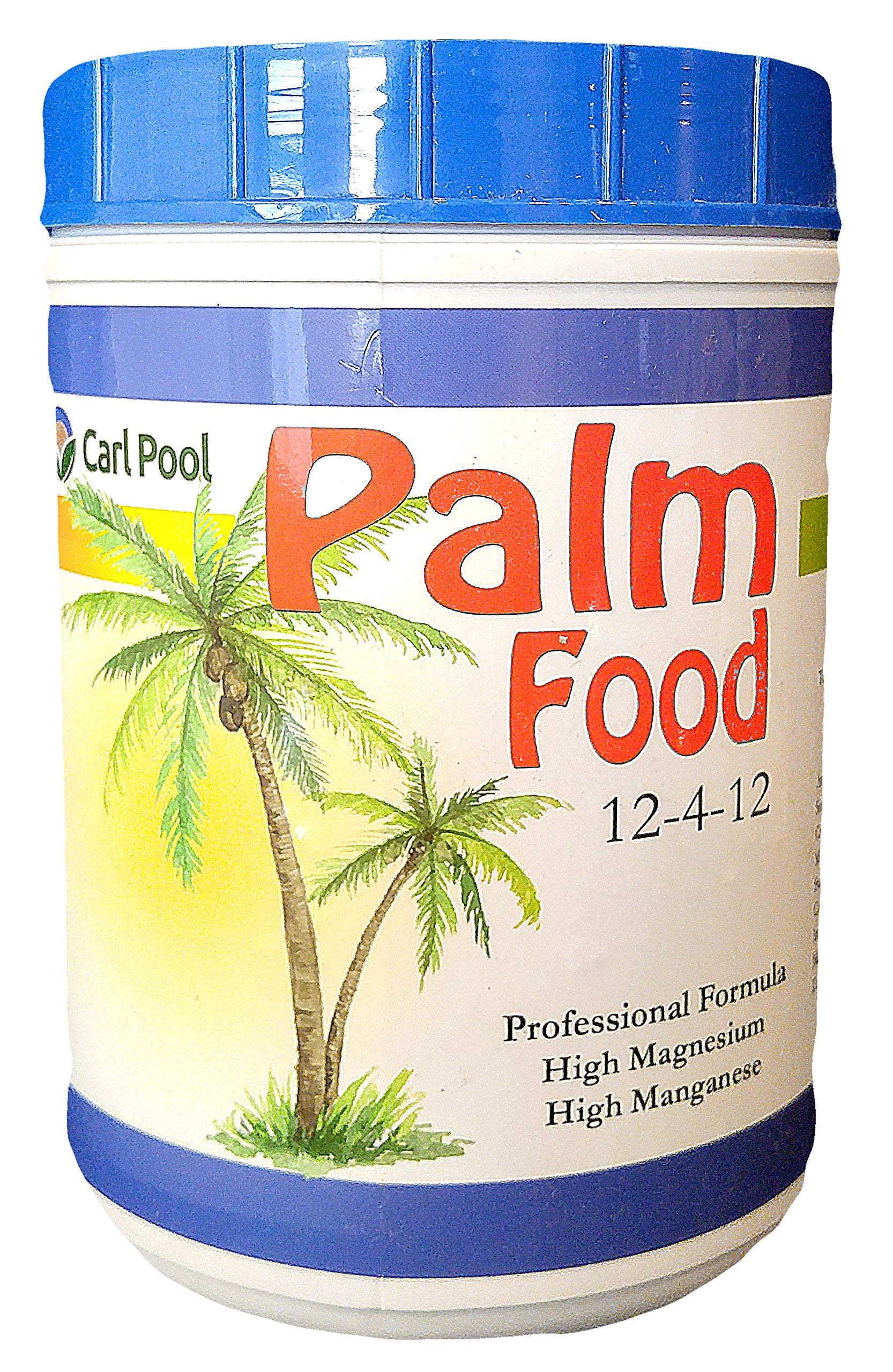
Carl Pool Palm Food 12-4-12 4 Lbs
Best OverallCarl Pool Palm Food 12-4-12 4 Lbs4.7★700 ratingsThe granular formula that pulls sago and foxtail palms back from yellow disaster Your palm turns yellow when it is starving for the right nutrients, and this 12-4-12 formula is what buyers reach for to revive it.Check Price on Amazon
BGI Fertilizers PALMGAIN, 2lb Bag
Compact FeedBGI Fertilizers PALMGAIN, 2lb Bag4.5★500 ratingsThe University of Florida recommended formula in a convenient resealable pouch This 8-2-12 blend comes from Bougainvillea Growers International, but the endorsement from the University of Florida IFAS Extension gives it real credibility…Check Price on Amazon
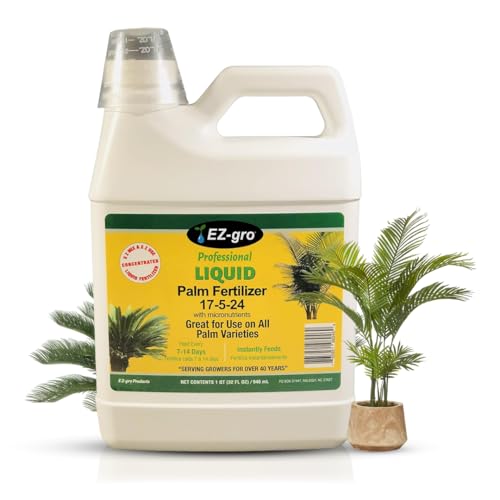
EZ-GRO 17-5-24 Liquid Plant Food, 32 fl oz
Best ValueEZ-GRO 17-5-24 Liquid Plant Food, 32 fl oz4.4★396 ratingsA high-potassium liquid that skips urea for faster, safer nitrogen uptake Indoor palm owners often struggle with smelly pellets or slow-release granules that do not work well in cool, low-light conditions.Check Price on Amazon

How To Choose The Best Fertilizer For Pygmy Date Palm

A Pygmy Date Palm is not a heavy feeder like a fruit tree, but it is very particular about the balance of nutrients it receives. A general 10-10-10 lawn fertilizer can burn roots and cause weak growth because it lacks the specific secondary nutrients this palm relies on.

Look for a Palm-Specific NPK Ratio

The three numbers on a bag — nitrogen (N), phosphorus (P), and potassium (K) — tell you the primary nutrient balance. Pygmy Date Palms need a ratio higher in nitrogen and potassium than phosphorus. You will see formulas like 12-4-12, 17-5-24, or 8-2-12; these all work because they deliver more of what the palm actually uses for frond growth and stress resistance.

Magnesium and Manganese Are Non-Negotiable

Yellow fronds and frizzle top — where new leaves come out stunted and crinkled — are classic signs of manganese or magnesium deficiency. A fertilizer that lists these as added micronutrients will prevent these problems before they start. Without them, even a perfect NPK ratio will leave your palm looking sickly.

Choose Your Application Style

Granular fertilizers need to be spread around the base and watered in, releasing nutrients over several months. Liquid fertilizers mix with water and are absorbed immediately, great for a quick green-up or for container plants you water often. Spikes are the most hands-off: you hammer them into the soil, and they dissolve slowly. Your choice depends on if you want to set a schedule or just water normally.

Quick Comparison

Model Best For NPK Ratio Item Form Weight / Volume Amazon
Carl Pool Palm Food★ Best Overall Reviving stressed palms 12-4-12 Granules 4.2 lbs Amazon
BGI Fertilizers PALMGAINCompact Feed Small indoor pots 8-2-12 Granules 2 lbs Amazon
EZ-GRO 17-5-24Best Value Indoor/container feeding 17-5-24 Liquid 32 fl oz Amazon
Jack’s Classic Tropical Food Water-soluble flexibility 16-5-25 Powder 1.5 lbs Amazon
Jobe’s Palm Spikes Low-maintenance feeding 10-5-10 Spikes 15 spikes Amazon
Farmer’s Secret Booster Quick green-up 4-15-12 Liquid 32 fl oz Amazon
Espoma Palm-Tone Organic gardening 4-1-5 Granules 4 lbs Amazon
Perfect Palm 7 LB Multiple palms on a budget 7-14-40 Granules 7 lbs Amazon

In‑Depth Reviews

★ Best Overall

1. Carl Pool Palm Food 12-4-12 4 Lbs

Our pick — over 4.5★ from 700+ verified ratings; the strongest balance of quality and price.

Slow-ReleaseExtra Magnesium

The granular formula that pulls sago and foxtail palms back from yellow disaster

Your palm turns yellow when it is starving for the right nutrients, and this 12-4-12 formula is what buyers reach for to revive it. The nitrogen comes from ureaform (a slow-release chemical form that feeds gradually). That keeps nutrients flowing for three to four months, so you do not need to reapply every few weeks. It also includes extra magnesium and manganese — the two micronutrients (tiny nutrients plants need in small amounts) that target frizzle top and yellowing fronds.

Buyers report that this 4.2-pound bag “revived yellow, droopy sago and foxtail palms after brutal summer.” They say the blend “stopped frizzle” and worked well even in sandy soil, where other fertilizers wash away. The 4.2-pound container is significantly heavier than the 2-pound PALMGAIN bag, giving you more applications per purchase and better value per feeding.

The crowd favorite holds a 4.7-star rating across 700+ owners, one of the highest-rated palm fertilizers. The only caution: delivery packaging can sometimes arrive with a slightly open lid, so inspect the bag on arrival.

What Owners Rave About

  • Slow-release ureaform nitrogen feeds for 3-4 months without burning
  • Added magnesium and manganese stop frizzle top and yellow fronds
  • Trusted formula recommended by university extension programs

The Fine Print

  • Take one cup per 3-inch trunk diameter, which uses about a quarter of the bag per feeding for a medium palm
  • A few packages arrive with lids that have loosened in transit

Reach for this if: you have a struggling Pygmy Date Palm that needs a reliable, slow-release feed with the specific micronutrients that correct yellowing and frizzle.

Think twice if: you want a no-mess spike system or a liquid that you can apply weekly — this is a granular that needs to be sprinkled and watered in.

Compact Feed

2. BGI Fertilizers PALMGAIN, 2lb Bag

University FormulaResealable Bag

The University of Florida recommended formula in a convenient resealable pouch

This 8-2-12 blend comes from Bougainvillea Growers International, but the endorsement from the University of Florida IFAS Extension gives it real credibility — it signals that the nutrient ratios and micronutrient package are backed by academic research on palms. The bag is small at just 2 pounds, making it a far lighter option than the 4.2-pound Carl Pool container, and the resealable top keeps the granules dry between uses.

Buyers praise its effectiveness. Many note that Foxtail and hibiscus plants turned greener and healthier within weeks. One owner sums it up: “My Foxtail palm is the envy of my neighborhood.” The formula also works on ferns, cycads, and ixora beyond palms.

A few owners note that the odor can be strong when first applied, and the price per pound runs higher than bulkier bags. It weighs just 2 pounds versus 4.2 pounds for the Carl Pool, so you get about half as much product for a similar outlay.

Best for small pots: The compact 2-pound bag and resealable storage make this a great pick if you have just one or two container palms on a balcony or patio.

The trade-off: Leaf health gets mixed feedback — a few saw persistent browning despite the quality ingredients — and the strong smell will not suit indoor application.

Best Value

3. EZ-GRO 17-5-24 Liquid Plant Food, 32 fl oz

Urea-FreeLiquid

A high-potassium liquid that skips urea for faster, safer nitrogen uptake

Indoor palm owners often struggle with smelly pellets or slow-release granules that do not work well in cool, low-light conditions. This EZ-GRO liquid sidesteps both problems. It is urea-free, meaning the nitrogen comes in an instantly usable form — according to the manufacturer, it delivers up to four times more readily available nitrogen than traditional urea-based fertilizers. The 32-fluid-ounce bottle offers sixteen times the volume of the 2-fluid-ounce PALMGAIN bag, making it a much better fit for anyone with multiple palms.

The 17-5-24 ratio leans heavily on potassium, which your Pygmy Date Palm needs for strong cell walls and resistance to temperature swings. A buyer in Kentucky revived a palm that spent winter indoors and “after using the fertilizer and putting it outside, it has begun to thrive again.” Others use it year-round on container palms and appreciate that it has no scent, making it comfortable for indoor dosing.

The downside: liquid feed goes fast — a few owners found that a single bottle covers only two to three feedings for a group of small trees, making it pricier per application than granules. Also, the measuring cup was missing from a handful of shipments, so check the cap before you toss the packaging.

Liquid Advantage

  • Urea-free formula delivers nitrogen fast without the risk of salt burn
  • No odor, ideal for indoor and patio palms
  • High potassium content supports cold and drought resistance

Liquid Reality

  • Higher per-feed cost than granular if you have more than a few trees
  • Lacks a measuring spoon in the package — you need your own dropper or teaspoon

Grab it for: container-grown Pygmy Date Palms indoors or on a covered patio where a scentless, fast-acting liquid is easier than spreading granules.

skip it if: you want a low-maintenance slow-release feed — this requires mixing and applying every week or two.

Top Performer

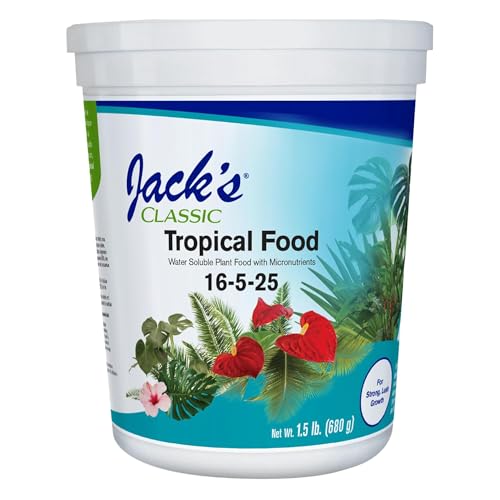
4. Jack’s Classic 16-5-25 Tropical Food, 1.5lbs

Water-SolubleLow Phosphorus

A water-soluble powder that turns into gallons of feed with one included scoop

Jack’s Classic is a powdered concentrate that punches above its 1.5-pound weight. You mix a small measured scoop with water, and that single 1.5-pound bag makes multiple gallons of liquid fertilizer — going much further than a pre-diluted 32-ounce bottle. The 16-5-25 analysis is particularly high in potassium and deliberately low in phosphorus, preventing the harmful salt buildup that can damage palm roots over time.

The customer consensus here is exceptional. Owners mention that cycads and majestic palms that were “dry and browning” in March revived completely after starting a feeding schedule. The water-soluble form works as a foliar spray (sprayed on the leaves) or a root drench (poured into the soil), giving you two application methods in one product. It also includes a full micronutrient package — magnesium, sulfur, and trace elements — so you do not need to supplement separately.

A recurring note: the plastic tub’s lid can crack or pop off during shipping, causing minor powder spillage inside the outer box. The pouch inside is the real seal, so as long as that holds, the product is fine. Jack’s includes a measuring spoon, which simplifies mixing compared to guessing tablespoons.

Flexibility you pay for: Use it as a root soak for your in-ground Pygmy Date Palm or as a foliar spray for container trees — the choice is yours with the same scoop.

The honest limit: Powder requires mixing effort every time, so if you prefer a grab-and-pour liquid, the EZ-GRO above is less work.

Hands-Off

5. Jobe’s Palm Tree Fertilizer Spikes 10-5-10, 15 Spikes

Pre-MeasuredTime Release

Hammer them in and forget about feeding for months

Some gardeners do not want to mix, measure, or spread — they just want a solution that delivers nutrients as the palm grows. Jobe’s spikes solve that. Each 10-5-10 spike is pre-measured; you hammer one into the soil around the drip line (the area beneath the outermost branches), and moisture slowly releases the nutrients directly to the root zone. The pack contains 15 spikes, enough for multiple trees or several seasons for a single Pygmy Date Palm.

The ease of use is the trait owners mention most. One buyer notes: “much easier than granular fertilizer — just hammer in.” They report that fronds perked up within days. The formula includes sulfur, magnesium, iron, and zinc, covering the full spectrum of micronutrients a Pygmy Date Palm needs to stay deep green. Spikes also eliminate the mess of granules blowing away or pellets washing off during a rainstorm.

The durability of the spikes themselves gets mixed responses — some customers note that the spikes crumble or snap during hammering, especially in hard, dry soil. Wetting the ground first helps significantly. Spikes also feed a concentrated area, so if your palm’s root zone is very wide, you may need more spikes than the package provides for even coverage.

Set and Forget

  • No measuring, no mixing, no mess — just drive into moist soil
  • Formula includes iron, zinc, sulfur, and magnesium
  • Long-lasting, slow-release action for steady feeding

Watch For

  • Spikes can break apart in very hard or rocky soil
  • Concentrated placement may not cover a large, spreading root system evenly

Best for: anyone who wants the simplest possible feeding routine — hammer, water, repeat a few times a year.

Not for: gardeners with heavy clay or rocky soil where driving a spike in is a real struggle.

Cold Recovery

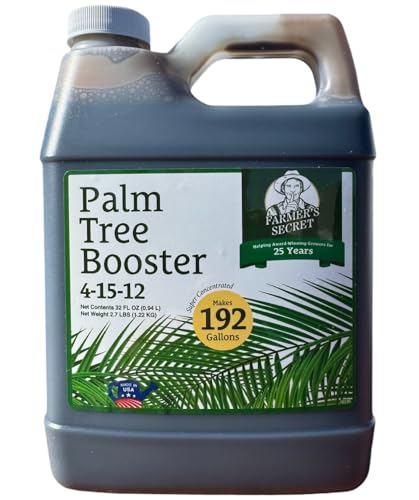
6. Farmer’s Secret Palm Tree Booster 4-15-12, 32oz

Super ConcentratedLiquid

A super-concentrated liquid that brought winter-damaged pygmy palms back to life

Winter damage is a real threat for Pygmy Date Palms, especially in zones that dip below freezing. This 4-15-12 booster is formulated for exactly that scenario — reviving trees that look dead after cold weather. The label calls for just one teaspoon per gallon of water, making the 32-ounce bottle last a long time even with weekly applications. For a first-season palm, you can go up to 1.5 teaspoons per week; for mature trees, up to three teaspoons per week.

Effectiveness is the clear leader in owner feedback. Buyers in Texas zone 8b report that it “revived dying pygmy and winter-damaged windmill palm after just two applications.” Another owner says it “brought my palms back to life after some cold winter weather.” The formula also includes trace amounts of iron and zinc, which help darken the green of existing fronds while encouraging new ones to push through.

This is a liquid that demands consistency — skipping weeks will slow the results. Also, the 4-15-12 ratio is notably higher in phosphorus than the other picks on this list. That is not a problem for a general palm, but if your soil already tests high in phosphorus, you may want the lower-phosphorus Jack’s Classic instead. A few owners note the value feels steep for the bottle size, but the heavy dilution rate offsets that.

Great for quick rescue: If your Pygmy Date Palm looks brown and sad after winter, this concentrated liquid can show visible improvement within two weeks.

One catch: The phosphorus level is higher than most palm-focused formulas, so do an annual soil test to avoid over-accumulation in the soil.

Organic Pick

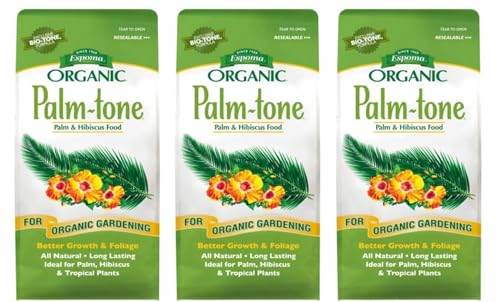
7. Espoma Organic Palm-Tone 4-1-5, Pack of 3 (12 lbs total)

Approved OrganicBio-tone Formula

An organic granular approved for organic gardens with a Bio-tone boost

If you avoid synthetic chemicals in your garden, Espoma Palm-Tone is the only organic entry on this list. The 4-1-5 analysis looks low compared to the 17-5-24 formulas, but that is normal for organic plant foods — the nutrients come from natural ingredients and are released by soil microbes, not chemical salts. The 4-pound bag (pack of 3 gives you 12 pounds total) includes 5% calcium and Espoma’s proprietary Bio-tone formula, a blend of beneficial microbes that help roots take up nutrients more efficiently.

It is approved for organic gardening and registered as an Organic Input Material, meaning it meets certified production standards. Reviewers point out that it “helped save an ailing palm” and that yuccas “turned dark green and look great.” The odor, however, is a frequent point of discussion — it carries a strong barnyard scent when first applied, though it fades after a day. This product is noticeably heavier than the 2-pound PALMGAIN bag at 4 pounds per bag, giving you more feeding power.

Palm-Tone is formulated for slow release: you apply it every three months for palms. For tropical plants in pots, you can use it monthly. The granules are ready to use with no mixing — just sprinkle around the drip line and water in.

Clean Ingredients

  • Approved for organic gardening with natural ingredient sources
  • Bio-tone microbes support root health and nutrient uptake
  • Safe for surrounding plants — no chemical runoff

The Scent Factor

  • Strong barnyard odor for about 24 hours after application
  • Lower NPK numbers mean less concentrated nutrition per scoop than synthetic granulars

Reach for this if: you keep an organic garden and want a palm fertilizer that meets certified standards while feeding soil microbes as well as the tree.

pass on it if: you need fast results or cannot tolerate the temporary barnyard smell near a patio or entryway.

Multi-Tree Value

8. Perfect Palm 7 LB Dual Action Fertilizer

Slow-Release TechResealable Pail

A farmer-designed 7-pound pail that feeds up to 14 palms per bucket

Created by actual palm farmers, this granular formula uses SMART GRANULE XCU 64% Control Release Technology — a coating on each granule that slowly releases nutrients over time. The 7-14-40 ratio is extraordinarily high in potassium, which directly supports cold resistance, drought tolerance, and overall frond health. The 7-pound pail is the heaviest container on this list, designed to feed up to 14 palms with a trunk width of 2 to 6 inches.

The resealable pail is a practical detail: it keeps the granules dry and prevents the spills that sometimes happen with bags. A free measuring scoop is included, so you are not using a kitchen spoon. Owners say it “perked up the leaves and kept them green” even after a Florida freeze. The dual-action formula includes two forms of magnesium and iron, ensuring maximum absorption regardless of soil chemistry.

A few owners find the bucket expensive upfront, though the cost per palm works out lower than most single-tree packs. The 7-pound weight also makes it less convenient for a single Pygmy Date Palm in a pot — you have many years of feed ahead unless you split it with a neighbor.

Ideal for landscapes: If you have several palms spread across a yard, one pail covers them all with a single scoop-and-sprinkle routine.

The honest trade-off: That much potassium is excellent for hardiness, but a single container palm may not need such a heavy dose — scale your application to just a few tablespoons per feeding.

Understanding the Specs

NPK Ratio

The three numbers (N-P-K) on a bag represent the percentage of nitrogen, phosphorus, and potassium by weight. Pygmy Date Palms thrive on a ratio where nitrogen and potassium are both higher than phosphorus — look for numbers like 12-4-12 or 17-5-24. Nitrogen drives leaf growth and color. Potassium strengthens cell walls, making the palm more resistant to cold and drought. Phosphorus is needed in smaller amounts because palms do not flower or fruit heavily like vegetable plants.

Slow-Release vs. Liquid

Slow-release granules use a coating (like the XCU 64% technology in Perfect Palm) or a chemical form (like ureaform in Carl Pool) that breaks down gradually over weeks or months. You apply them every 2-4 months. Liquids like EZ-GRO and Farmer’s Secret are absorbed immediately, giving faster results but requiring weekly or biweekly application. Granules are better for in-ground palms; liquids give you more control for container plants that you water frequently and whose soil drains fast.

FAQ

Can I use a general 10-10-10 fertilizer on my Pygmy Date Palm?
You can, but it will not deliver the results a palm-specific formula does. A balanced 10-10-10 has too much phosphorus and not enough potassium and magnesium. Over time, you will see more yellowing and slower growth because the palm is missing the micronutrients it evolved to need.
How often should I fertilize a Pygmy Date Palm?
For slow-release granules, three to four times a year — early spring, early summer, and early fall — is the standard schedule. Liquids need more frequent application, typically every 1 to 2 weeks during the growing season, because they are taken up quickly and wash out of the soil faster.
What does the 12-4-12 ratio actually mean for my palm?
It means the fertilizer is 12% nitrogen, 4% phosphorus, and 12% potassium by weight. The high nitrogen and potassium levels drive green frond growth and strengthen the tree against weather stress, while the low phosphorus content prevents salt buildup in the soil around the root zone.
Does a liquid fertilizer work as well as granules for a Pygmy Date Palm?
Yes, it works very well, especially for container plants. Liquids are absorbed immediately, making them ideal for correcting a deficiency quickly. The trade-off is that you have to apply them far more often, and they are generally more expensive per feeding than a granular product.
Why does my palm have frizzle top and how do I fix it?
Frizzle top — new fronds coming out stunted, crinkled, and pale — is almost always a manganese deficiency. You need a palm fertilizer that lists manganese as an added micronutrient. Products like Carl Pool Palm Food and Farmer’s Secret include it, and you should see improvement in the next flush of new leaves.
What happens if I use too much fertilizer on my Pygmy Date Palm?
Over-fertilizing can cause leaf tip burn, yellow lower fronds, and root damage from salt accumulation. You may also see a crust of salts form on the top of the soil in a container. Always follow the label rates — more is not better with palms. If you see tip burn, flush the soil with fresh water and skip a feeding cycle.
Is it normal for my Pygmy Date Palm to have yellow leaves in winter?
Some yellowing of the lowest, oldest fronds is normal as the palm ages and sheds them. But if the new growth in the center of the crown is yellow, that is a sign of nutrient deficiency. Winter cold can also cause temporary yellowing; feeding in early spring will help it green back up as temperatures rise.
Can I fertilize a Pygmy Date Palm that grows indoors?
Yes, but you need to adjust your approach. Indoor palms grow slower and stay in smaller pots, so they need less fertilizer. A liquid like EZ-GRO that has no odor and can be diluted to half-strength is ideal. Reduce feeding to once a month during winter when the palm is not actively growing.

Final Thoughts: The Verdict

For most people, the best fertilizer for Pygmy Date Palm is the Carl Pool Palm Food because its 12-4-12 ratio, slow-release ureaform nitrogen, and added magnesium and manganese directly target the yellowing and frizzle top that plague these palms. If you want a no-effort system, grab the Jobe’s Spikes. And for a quick rescue of a winter-damaged tree, the Farmer’s Secret Booster delivers visible green-up in just two weeks. No matter which you choose, sticking to a palm-specific formula with the right micronutrients will keep your Pygmy Date Palm lush and resilient through the seasons.

How We Picked

We do not accept paid placement. Every pick is matched to a real buyer and a real use-case; we do not hands-on test units.

Sources & Methodology

Specifications: manufacturer listings and product documentation. Review insights: verified customer reviews, as of July 2026. Pricing: not shown on this page (it changes often); check the current price via the retailer link.

As an Amazon Associate, Lawn Gear Lab earns from qualifying purchases. This does not affect which products we feature.

Related Guides

Please use a real email you check. If it's fake or mistyped, your message won't reach us and we can't reply — wrong addresses are rejected automatically.

Leave a Comment

Your email address will not be published. Required fields are marked *