
If your Podocarpus has yellowing needles or just isn’t putting out that rich, deep green growth you expect, the problem is almost always soil acidity. Podocarpus are acid-loving evergreens, and feeding them with a general-purpose fertilizer often makes the yellowing worse because it doesn’t lower the soil pH (the measure of acidity or alkalinity). The right fertilizer delivers iron and sulfur to unlock the nutrients your plant is starving for — and this guide breaks down exactly which formulas do that best, without the gardening jargon.
I’m Rikta — the co-founder and writer behind Lawn Gear Lab. This guide is built by comparing the manufacturers’ published specifications and the patterns across verified customer reviews, so you get each pick’s real strengths and trade-offs instead of marketing spin.
For a single potted Podocarpus on your patio or a row of tall privacy hedges, the best fertilizer for podocarpus comes down to getting the right balance of acidity, nitrogen, and iron for lasting green growth.
How To Choose The Best Fertilizer For Podocarpus
Podocarpus is a tough, low-maintenance evergreen, but it has one non-negotiable need: acidic soil. Feeding it with the wrong fertilizer can cause leaf burn, stunted growth, or yellowing from nutrient lockout. Here are the key factors to get right.
Form: Water-Soluble vs. Slow-Release Granules
Water-soluble powders (like Jack’s Classic or ENVY) mix into your watering can and feed your plant instantly — great if you want quick greening on a potted Podocarpus. Slow-release granules (like FoxFarm Happy Frog or Dr. Earth) break down over weeks and are better for in-ground hedges where you want steady feeding without remembering to mix every time. For Podocarpus, either works; the choice depends on how often you want to apply it.
NPK Ratio: What Your Podocarpus Needs
The three numbers on a fertilizer bag stand for Nitrogen (N), Phosphorus (P), and Potassium (K). For Podocarpus, you want a higher first number (nitrogen) to drive lush green needle growth. Ratios like 17-6-6 (Jack’s Classic) or 21-7-7 (ENVY) are ideal. A balanced 10-10-10 or bloom-booster with high phosphorus is the wrong choice — it pushes flowers, not foliage.
Iron and Sulfur Content
Podocarpus yellowing is often caused by iron chlorosis — the plant can’t absorb iron from alkaline soil. The best acid-loving fertilizers include chelated iron (a form of iron your plant can actually use) and sulfur, which lowers the soil pH so all nutrients become available. Without these two, even a good NPK ratio may not fix yellow needles.
Quick Comparison
On smaller screens, swipe sideways to see the full table.
| Model | Category | Best For | Key Spec | Amazon |
|---|---|---|---|---|
| Dr. Earth Acid Lovers | Organic Granules | Pet-safe organic feeding | 0.3-0.4-3 NPK, 4 lb | Amazon |
| ENVY Acid-Loving Special | Water-Soluble | Fast greening for potted shrubs | 21-7-7 NPK, 24 oz | Amazon |
| Miracle-Gro Azalea Food | Water-Soluble | Quick recovery of stressed plants | 80 oz unit count, 5 lb | Amazon |
| FoxFarm Happy Frog | Slow-Release | Container plants and gentle feeding | 4 lb with soil microbes | Amazon |
| Jack’s Classic 17-6-6 | Water-Soluble | Precise feeding for sensitive plants | 17-6-6 NPK, 16 oz | Amazon |
| Bloom City Acid-Loving | Liquid Concentrate | Reviving older, stressed plants | 32 oz liquid | Amazon |
| Nelson NutriStar 9-13-11 | Granules | Heavy flowering and cold recovery | 9-13-11 NPK, 2 lb | Amazon |
In‑Depth Reviews
1. Dr. Earth Acid Lovers Azalea, Camellia, Rhododendron & Maple Fertilizer 4 lb

The Dr. Earth Acid Lovers fertilizer earns the top spot because it is the only Non-GMO Project Verified fertilizer in the U.S. and it is completely safe around pets and people — no synthetic chemicals or toxic ingredients. For Podocarpus owners with kids or dogs who dig in the garden, this is the safest choice on the shelf at a 4-pound bag weight that covers several medium shrubs.
Buyers report it “revived sad camellias with no digging or tea needed, just toss and water,” and one reviewer noted their gardenia bloomed better than ever after using it. Made from human and feed-grade ingredients with humic acids and trace elements, it feeds the soil biology as well as the plant — meaning your Podocarpus gets consistent, gentle nutrition rather than a chemical spike.
The catch is its NPK ratio (0.3-0.4-3) is extremely low in nitrogen compared to synthetic options like the ENVY (21-7-7), so if your Podocarpus is severely yellowed, you may see slower greening. For long-term health and organic peace of mind, this is the one to start with.
Why it’s great
- OMRI-listed organic — safe for pets, kids, and edible gardens
- Live soil microbes and humic acids improve long-term soil health
- No mixing needed; just sprinkle and water
Good to know
- Very low nitrogen (0.3-0.4-3) — greening may be slow on stressed plants
- 4 lb bag covers less area than concentrated water-soluble options
2. ENVY Plant Foods Acid-Loving Special | Water Soluble Fertilizer (1.5 lb)
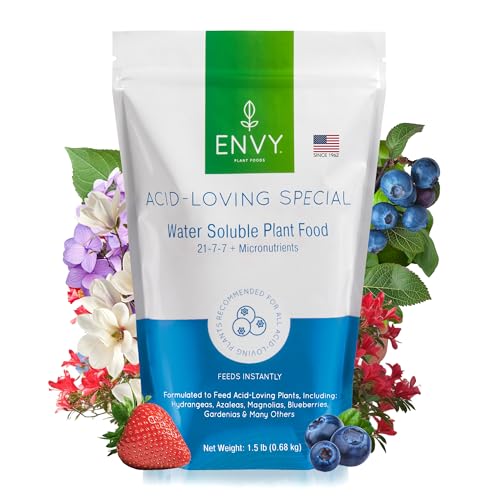
Compared to the top pick Dr. Earth, the ENVY Acid-Loving Special delivers nitrogen immediately with its 21-7-7 NPK ratio, whereas Dr. Earth’s 0.3-0.4-3 formula requires weeks of soil biology buildup before feeding your Podocarpus. The ENVY dissolves completely in water for rapid root absorption, aiming for greener needles within days.
Owners mention that after applying it in spring, “hydrangeas bloomed significantly more; plants healthier and growing strong,” and one Florida reviewer noted their hydrangeas were “thriving after 4 weeks” in full sun. The resealable pouch and included measuring scoop take the guesswork out of mixing — you just add the right amount to a gallon of water and water your Podocarpus as usual.
At 24 ounces (the same unit count as Jack’s Classic but priced lower), it gives you 3.3x more volume than the smallest ENVY bag, making it a genuine value pick. Choose this over the Dr. Earth if you want fast, visible greening without waiting for organic breakdown. This is the pick for the buyer who needs results this week, not next month.
Where it shines
- High-nitrogen 21-7-7 formula greens up Podocarpus quickly
- Completely water-soluble — no residue on leaves or soil
- Resealable pouch and scoop for easy, mess-free mixing
Worth noting
- Water-soluble requires more frequent application than slow-release granules
- Not organic — synthetic salts may build up if overused
3. Miracle-Gro Water Soluble Azalea, Camellia, Rhododendron Plant Food (5 lb)

If you are managing a long hedge of Podocarpus and want to feed the entire row in one session without constantly buying new bags, this 5-pound water-soluble option is the largest in this guide. It delivers more feeding sessions per dollar than any other water-soluble pick here, feeding instantly through both leaves and roots. Customers note that it greened up azaleas and holly bushes within a week, and it works with a watering can or a Miracle-Gro sprayer to cover large areas fast.
The downside is that it is synthetic and not organic, but for the gardener who values convenience and quantity above organic certification, this is your best bet. If you have a large property and need to feed many acid-loving evergreens on a regular schedule, the 5-pound bag makes the most sense.
One bag replaces several smaller packages, giving you more feeding sessions per dollar than any other water-soluble pick here.
What stands out
- Massive 5 lb bag — best value for large hedges and multiple shrubs
- Feeds instantly through leaves and roots; visible results in 7 days
- Safe on all acid-loving evergreens when diluted correctly
The trade-offs
- Not organic — synthetic formulation may not suit all gardeners
- Needs mixing every 1-2 weeks; less convenient than slow-release
4. FoxFarm Happy Frog Acid Loving Plants Fertilizer (4 lb)

The single number that matters most here is 4 pounds with the addition of mycorrhizal fungi and beneficial soil microbes — a feature none of the water-soluble powders offer. For a potted Podocarpus or container hedge, slow-release granules mean you feed once and the microbes work for weeks, improving how well roots absorb moisture and nutrients in low-pH soil.
The trade-off you accept is speed: this is not for emergency greening. Reviewers point out that a gardenia in a container produced 2 buds within 10 days, but the full greening effect builds over a month. If your Podocarpus is healthy but needs steady maintenance, this is the gentlest option that won’t risk root burn from synthetic salts. Pick this over Dr. Earth if you want a slow-release solution that also feeds the soil microbiome.
For the cost of a bag that covers multiple containers or a small hedge row, you get a living soil amendment rather than just salt-based nutrients — a price-to-value read that favors long-term root health over instant results.
The upsides
- Contains mycorrhizal fungi and soil microbes for root health
- Slow-release formula — feed every 4-6 weeks, not weekly
- OMRI-listed for organic gardening
Keep in mind
- Greening takes weeks; not a quick fix for yellowing Podocarpus
- Granules may sit on top of compacted soil; scratch in lightly
5. Jack’s Classic 17-6-6 Acid Special Water-Soluble Fertilizer (1.5 lbs)

What you actually get at this lower price is a 1.5-pound bag of Jack’s Classic 17-6-6 Acid Special Water-Soluble Fertilizer with a built-in measuring spoon for precise, repeatable mixing. Its NPK ratio of 17-6-6, plus added iron and sulfur, is specifically designed to correct iron chlorosis in Podocarpus.
What you give up is the organic angle — this is a synthetic salt-based fertilizer, so over-application can burn roots. Shoppers say that “Jack’s fertilizer dramatically boosted new growth on struggling blueberry bushes after 3 biweekly applications,” and that its lower concentration (17-6-6 vs. Miracle-Gro’s 30-10-10) is better suited to sensitive plants. One reviewer specifically chose it over Miracle-Gro’s acid mix because of the gentler formula and effective pH reduction via sulfur.
This is the exact budget-friendly premium pick for the Podocarpus owner who has tried general fertilizer without results and wants a targeted, balanced acid-loving formula with built-in micronutrients. Pick it if you already use other Jack’s products for other plants; skip it if you want a single all-purpose feed — it is perfect for the budget buyer who values precision over convenience.
Why we’d pick it
- 17-6-6 with iron and sulfur — perfect for correcting chlorosis in Podocarpus
- Can be used as a foliar spray (on leaves) or root drench (on soil)
- Included measuring spoon for exact, repeatable mixing
A few caveats
- Synthetic formula — follow mixing directions precisely to avoid burn
- 16 oz bag weighs half of ENVY’s 24 oz — less total volume
6. Bloom City Acid-Loving Plant Fertilizer – Liquid Concentrate (32 oz)

This liquid concentrate is specifically designed for the Podocarpus owner dealing with a plant that has been struggling for years — not just a little yellowing, but poor production and stunted growth. One buyer mentioned that Bloom City “revived 8-year-old blueberry bushes from poor production and stress,” resulting in “healthier, fuller, more vigorous plants with improved leaves and growth.”
At 32 fluid ounces, it is the largest liquid volume in this lineup, and it is ready to mix at 2-4 teaspoons per gallon of water — so one bottle goes a long way. The liquid form means you can adjust the strength based on your Podocarpus’s specific condition, which is harder to do with pre-measured granules or powders.
The gentle caution about its one weakness: as a liquid, it requires consistent application every 2-4 weeks, and the mixing ratio is not printed on the provided data so you’ll need to check the packaging.
Strong points
- Liquid concentrate allows precise, adjustable dosing per plant
- 32 oz bottle — large volume for multiple seasons of feeding
- Proven to revive old, stressed plants from poor production
Before you buy
- Requires mixing and applying every 2-4 weeks
- Mixing ratio not specified on the provided data; check the bottle
7. Nelson NutriStar Acid Loving Plant Food 9-13-11 (2 lb)

The Nelson NutriStar is the most premium per-pound option in this guide, but that premium buys you a unique 9-13-11 ratio — the only pick with higher phosphorus and potassium than nitrogen — plus four acidifying sources and three forms of iron (3.2% total) to lower soil pH aggressively.
What that money actually gets you is a granular formula that offers immediate results plus lasting slow-release feeding from 20% cottonseed meal. Buyers report it “saved plants from cold snap; visible recovery in under a week; all plants survived and bloomed that season,” and one grower in Houston noted their azaleas looked great after using it. The three sources of iron make this especially effective if your soil is stubbornly alkaline.
The one clear reason to choose it: if your Podocarpus is surrounded by flowering shrubs like camellias or azaleas and you want one fertilizer that satisfies both the evergreens and the bloomers, Nelson’s formula covers both without compromise.
What we like
- Four acidifying sources lower soil pH faster than single-source formulas
- Three forms of iron (3.2%) combat iron chlorosis effectively
- 20% cottonseed meal provides consistent slow-release feeding
The downsides
- 9-13-11 NPK is higher in phosphorus — better suited if you also have flowering shrubs
- 2 lb bag is smaller than the 4-5 lb options; may not last a full season for large hedges
Understanding the Specs
NPK Ratio
These are the three numbers on the fertilizer label, representing the percentage of Nitrogen, Phosphorus, and Potassium. For Podocarpus, you want a higher first number (nitrogen) to drive green needle growth — ratios like 17-6-6 or 21-7-7 are ideal. A 9-13-11 formula (like the Nelson) works better if you have mixed acid-loving shrubs that need blooms too.
Water-Soluble vs. Slow-Release
Water-soluble powders (ENVY, Jack’s Classic, Miracle-Gro) dissolve in water and feed your plant immediately — you’ll see greening in 3-7 days, but you need to apply every 1-2 weeks. Slow-release granules (Dr. Earth, FoxFarm, Nelson) break down over 4-6 weeks with soil moisture and microbes, so you feed less often but wait longer for results. Choose water-soluble for quick fixes; choose slow-release for set-and-forget maintenance.
FAQ
Can I use a general-purpose fertilizer like 10-10-10 on Podocarpus?
How often should I fertilize my Podocarpus for best results?
Final Thoughts: The Verdict
Across the board, the fertilizer for podocarpus winner is the Dr. Earth Acid Lovers because it is the safest organic option that feeds the soil and the plant without synthetic chemicals. If you want fast greening and visible results in days, grab the ENVY Acid-Loving Special. And for large hedges where quantity and consistency matter most, the standout is the Miracle-Gro Azalea Food in the 5-pound bag.