
Specs are compiled from manufacturer listings and verified buyer reviews and can change over time — please confirm the key details on the product page before buying.
The difference between a sad, withered pepper and a plant so loaded with fruit the stems can barely hold it almost always depends on one thing: what you are feeding it. Most general-purpose fertilizers push leaves, not pods, leaving you with a lush green bush that produces almost nothing. This guide cuts through the nitrogen-heavy marketing to show you exactly which fertilizer for pepper plants delivers the phosphorus and potassium your peppers actually need to set fruit and ripen with the right flavor and heat.
I am Rikta — the writer behind Lawn Gear Lab. This guide compares each brand’s published specs and patterns across verified customer reviews, so you get real strengths and trade-offs instead of marketing spin.
You will find the right match whether you grow in a container on a patio, a raised bed, or a full hydroponic setup.
Quick Picks
- Down To Earth All Natural Fertilizers Organic All Purpose Tomato & Vegetable Mix (4-6-2) — Best Overall
- FoxFarm Happy Frog Tomato & Vegetable Fertilizer (5-7-3) — Top Performer
- Espoma Organic Garden-tone 3-4-4 (Pack of 2) — Best Value
- MasterBlend 4-18-38 Tomato & Vegetable Fertilizer (1 lb) — Hydroponic Power
- Growth Technology GT Chilli Focus Liquid Plant Food (8.5 fl oz) — Indoor Specialist
How To Choose The Best Fertilizer For Pepper Plants
Pepper plants are heavy feeders — they need more phosphorus and potassium than nitrogen to produce large, flavorful fruit. Here is exactly what to look for in the specs before you buy.
N-P-K Ratio: The Secret is in the Second Number
The three numbers on a fertilizer bag are Nitrogen (N), Phosphorus (P), and Potassium (K). For peppers, you want a formula where the middle number (phosphorus) is equal to or slightly higher than the others. A ratio like 4-6-2 or 3-4-4 supports root development, blooms, and fruit set without turning your plant into a giant leafy bush that yields almost nothing.
Granule vs. Powder vs. Liquid
Granular fertilizers release nutrients slowly into the soil, making them a low-maintenance choice for outdoor raised beds and containers. Powders and liquids provide immediate feeding and are essential for hydroponic systems where the plant gets everything from the water. Each form suits a different growing style, so pick the one that matches your setup.
Organic vs. Synthetic
Organic fertilizers like those made from bone meal, feather meal, or kelp feed the soil microbes that in turn feed your plants. They improve long-term soil health but release nutrients more slowly. Synthetic water-soluble powders deliver a precise and fast-acting nutrient dose, perfect for correcting an immediate deficiency or for use in soilless hydroponic systems.
Quick Comparison
| Model | Best For | N-P-K Ratio | Form | Weight | Amazon |
|---|---|---|---|---|---|
| Down To Earth 4-6-2 | Organic & OMRI Listed | 4-6-2 | Granules | 15 lb | Amazon |
| FoxFarm Happy Frog 5-7-3 | Vigorous Feeders | 5-7-3 | Granules | 4 lb | Amazon |
| Espoma Garden-tone 3-4-4 | Organic Gardening | 3-4-4 | Granules | 4 lb | Amazon |
| MasterBlend 4-18-38 | Hydroponics | 4-18-38 | Powder | 16 oz | Amazon |
| Growth Technology Chilli Focus | Indoor & Hydroponics | 5 ml/L | Liquid | 8.5 fl oz | Amazon |
In‑Depth Reviews
1. Down To Earth All Natural Fertilizers Organic All Purpose Tomato & Vegetable Mix (4-6-2)
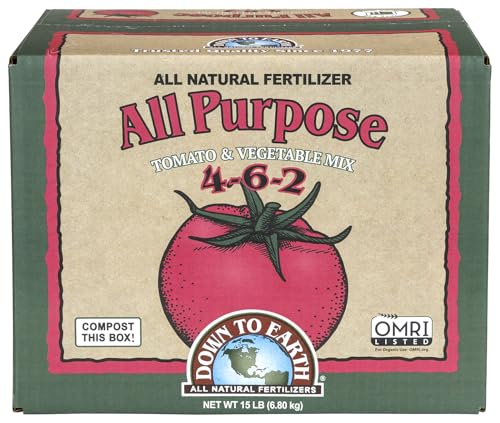
A 15-pound bag that buyers report revives weak plants in two weeks.
The big value here is the bag size. The Down To Earth mix comes in a 15 lb bag, compared with the FoxFarm’s 4 lb bag and the MasterBlend’s 16 oz package. For backyard gardeners with multiple raised beds, that single bag lasts nearly a full growing season without restocking.
So you get a balanced 4-6-2 ratio, where the middle number (phosphorus) is higher than nitrogen. That pushes energy into flowering and fruit development instead of just leaves. Owners mention that this mix “revived pale, flimsy tomato plants within two weeks of application,” which matters when you spot a deficiency before harvest.
It is also OMRI Listed, meaning it is safe for certified organic gardens with no synthetic chemicals. The main trade-off is the smell. Because it is made from natural ingredients like bone and feather meal, it has a distinct odor that several customers note dissipates after a few days.
The yield builder: This 15 lb bag covers more ground than any other pick here, feeding an entire season of peppers with a balanced organic ratio that keeps fruit production the priority.
Reach for this if: you have a large garden or multiple raised beds and want one organic mix to feed everything from transplant through harvest.
Pass it by if: you need a fast-acting liquid for a hydroponic system — this is a slow-release granule for soil.
2. FoxFarm Happy Frog Tomato & Vegetable Fertilizer (5-7-3)

The mix that reviewers point out turns tiny sprigs into fruit-loaded trees.
FoxFarm’s Happy Frog fertilizer uses a 5-7-3 mixing ratio, while the Espoma formula is 3-4-4. That extra phosphorus is exactly what a pepper plant needs during flowering to set a heavier fruit load. The formula also includes calcium specifically to prevent blossom end rot (the dreaded black leathery spot on the bottom of your peppers).
The second standout feature is the inclusion of mycorrhizal fungi. These beneficial soil fungi cling to plant roots and effectively increase the surface area for water and nutrient absorption, so your pepper plant drinks and feeds more efficiently. Shoppers say that “Fox Farm fertilizer yields bumper tomato crops,” and one reviewer described how “it turned tiny cherry tomato sprig into a tomato-producing tree” — a common experience for pepper growers who switch to this formula.
At 4 lb and 1892.7 mL (liquid volume), it comes in a smaller bag than the Down To Earth, but its potency means you use less per feeding. The granules have no chemical or fish smell, which several home gardeners appreciate when storing it in a shed or garage. However, unlike the Espoma or Down To Earth, this is not OMRI Listed for certified organic use.
Why it performs
- Highest phosphorus ratio (5-7-3) for strong fruit set.
- Calcium added to prevent blossom end rot.
- Mycorrhizal fungi boost root efficiency for better water uptake.
One caveat
- Not OMRI listed for certified organic gardens.
Best for: gardeners growing heavy-feeding pepper varieties who want the highest phosphorus kick and a built-in defense against blossom end rot.
Pass this if: you need an OMRI-listed organic label to maintain certification.
3. Espoma Organic Garden-tone 3-4-4 (Pack of 2)

A monthly sprinkle that buyers report keeps an organic garden thriving for years.
The Espoma Garden-tone comes as a pack of two 4 lb bags, giving you 8 lb of fertilizer total. Its 3-4-4 mixing ratio is slightly lower in nitrogen than the FoxFarm, which makes it a safer pick for gardeners who worry about burning plants with over-application. One reviewer noted “it doesn’t burn the plants if you over apply.”
This is an OMRI-listed organic formula enhanced with Espoma’s exclusive Bio-tone formula — a proprietary blend of beneficial microbes that help break down organic matter in the soil. You simply apply it monthly throughout the growing season around the drip line and water it in; there is no mixing required because it is ready-to-use granules. Buyers confirm that “after using Espoma products for the past year, my garden has thanked me by the show of growth, blooms and beauty,” pointing to the long-term soil conditioning effect.
The trade-off vs the FoxFarm is that the 3-4-4 ratio supplies less phosphorus, which may matter if you are growing super-hot peppers that need a heavier fruit-set boost. It also has a noticeable organic smell, which some gardeners dislike but that dissipates quickly after watering.
The gentle feeder: Three years of consistent use and a forgiving formula make this the smart choice for organic gardeners who want a steady monthly feed without the risk of burning young transplants.
Reach for this if: you want an organic, OMRI-listed fertilizer that is safe for the whole vegetable garden and you prefer long-term soil health over a one-season boost.
Look elsewhere if: your pepper plants are already showing signs of phosphorus deficiency and need a faster, stronger correction.
4. MasterBlend 4-18-38 Tomato & Vegetable Fertilizer (1 lb)
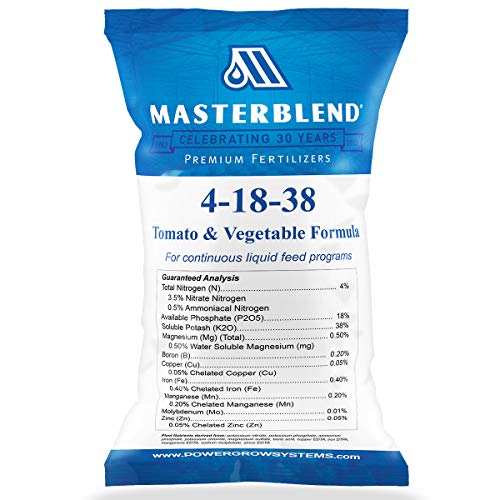
Super-concentrated powder that delivers a precise hydroponic punch.
MasterBlend is completely different from the granular picks above because it is a 100% water-soluble powder designed specifically for hydroponic systems. Its ratio of 4-18-38 is overwhelming on potassium and phosphorus compared to any soil fertilizer — that extremely high middle number (18) is meant for plants that get zero nutrition from soil and rely entirely on the water solution. If you are growing peppers in a bucket or deep-water culture setup, this gives you precise control over every mineral.
The 16-ounce bag is a small 16 oz unit compared to the 15 lb Down To Earth bag, but because the powder is super-concentrated, that single bag makes a huge volume of liquid feed. It also contains all the trace minerals needed for complete plant nutrition. Unlike the liquid Chilli Focus, this powder is shelf-stable for years, which is helpful if you only grow one season per year.
The catch is that this is a pure hydroponic formula — it does not work as a slow-release top dressing for soil, and if you try to use it in the ground without careful dilution, the high salt index can damage soil biology. It also requires mixing with a separate calcium nitrate source for certain hydroponic recipes, which adds a step that complete liquid feeds skip.
The hydro specialist: class-leading phosphorus and potassium levels (4-18-38) give hydroponic pepper growers total control over fruit development in a shelf-stable, super-concentrated powder.
Grab this for: any hydroponic, aeroponic, or soilless pepper grower who needs a water-soluble, precise nutrient that covers all trace minerals.
Avoid it if: you grow in soil or want a simple “sprinkle and water” routine — this requires measuring and mixing.
5. Growth Technology GT Chilli Focus Liquid Plant Food (8.5 fl oz)
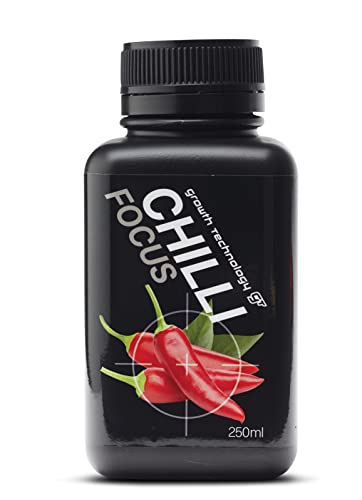
A liquid concentrate that owners mention makes indoor hydro plants grow like weeds.
The Chilli Focus is a liquid fertilizer with a 250 mL volume, while the FoxFarm listing shows 1892.7 mL liquid volume, and it is specifically formulated for chillies, peppers, and tomatoes. It is designed for both hydroponic systems and traditional soil watering, making it the most versatile form factor here. You simply mix 5 ml per liter of water and apply it during your regular watering schedule — no granules, no dust, no measuring scale.
Because it is a liquid, it is immediately available to the plant roots. There is no waiting for soil microbes to break down granules. Customers note that “my hydro plants grow like weeds with it!” and that it produces “stronger growth, healthier leaves, better color” even on fussy indoor plants like Alocasia and Monstera. This quick availability makes it ideal for correcting a mid-season deficiency in container peppers.
The drawback is value per pound compared to the other picks. The 250 mL bottle is the smallest total volume on this list, and while it is super-concentrated, you will repurchase it more frequently if you have a large outdoor garden. It also comes in an original bottle that some reviewers point out can leak during shipping, so it is worth transferring the liquid to a different container after arrival.
What makes it different
- Liquid form works in both hydroponic and soil systems with the same bottle.
- Immediately available to roots — no waiting for breakdown.
- Precise 5 ml/L mixing ratio is easy to follow.
The trade-off
- 250 mL bottle is small; expect to buy replacement bottles mid-season for larger gardens.
- Some reports of the bottle leaking during shipping.
Best for: indoor pepper growers, hydroponic beginners, and anyone who wants a simple “dose and water” liquid that works across soil and soilless setups.
skip it if: you have a large outdoor raised-bed garden and need a bulk bag you can apply once and forget for a month.
Understanding the Specs
N-P-K Ratio Explained
The three numbers are Nitrogen (N), Phosphorus (P), and Potassium (K). Nitrogen drives leaf and stem growth, phosphorus fuels root development and flower/fruit set, and potassium supports overall plant health and disease resistance. For pepper plants, you want a ratio where the middle number (P) is at least equal to the first number (N) — formulas like 4-6-2 or 3-4-4 push energy into pods, not just leaves.
Granules vs. Powder vs. Liquid
Granules are slow-release and best for outdoor soil: you sprinkle them on top and water them in. Powders like MasterBlend are water-soluble and ideal for hydroponic setups where you control every drop. Liquids like Chilli Focus are ready-to-use after dilution and give immediate feeding, making them excellent for container plants and in-ground corrections. Your choice depends on if you want a low-maintenance season (granules) or precise weekly control (liquid/powder).
FAQ
Can I use tomato fertilizer for pepper plants?
What N-P-K ratio is best for pepper plants?
How often should I fertilize pepper plants?
Can I use too much fertilizer on peppers?
What is the difference between organic and synthetic fertilizer for peppers?
Do pepper plants need calcium fertilizer?
Can I use a hydroponic fertilizer like MasterBlend in soil?
How long does a bag of granular fertilizer last for peppers?
Is fish emulsion good for pepper plants?
What is the best fertilizer for pepper plants in pots vs. in ground?
Final Thoughts: The Verdict
Across the board, the best fertilizer for pepper plants winner is the Down To Earth Organic 4-6-2 because it balances organic certification, a correct phosphorus-heavy ratio, and the largest bag on this list for season-long feeding. If you want the highest phosphorus boost and a built-in defense against blossom end rot, grab the FoxFarm Happy Frog 5-7-3. And for hydroponic or indoor growers who need immediate precision feeding, the MasterBlend 4-18-38 or the Growth Technology Chilli Focus liquid deliver the needed control.
How We Picked
We do not accept paid placement. Every pick is matched to a real buyer and a real use-case; we do not hands-on test units.
Sources & Methodology
Specifications: manufacturer listings and product documentation. Review insights: verified customer reviews, as of July 2026. Pricing: not shown on this page (it changes often); check the current price via the retailer link.
As an Amazon Associate, Lawn Gear Lab earns from qualifying purchases. This does not affect which products we feature.