
Specs are compiled from manufacturer listings and verified buyer reviews and can change over time — please confirm the key details on the product page before buying.
The perfect fertilizer for dahlias in pots is the difference between a pot of leaves and a cascade of dinner-plate-sized blooms. You need a mix that delivers steady feeding without burning roots inside the confined space of a container, and the wrong choice can stunt growth or cause leggy foliage at the expense of flowers.
I’m Rikta — the founder and writer behind Lawn Gear Lab. This guide is built by comparing the manufacturers’ published specifications and the patterns across verified customer reviews, so you get each pick’s real strengths and trade-offs instead of marketing spin.
Whether you are coaxing first-year tubers into a vibrant show or maintaining a mature collection, understanding the exact NPK ratio and release mechanism makes all the difference when you are choosing the best fertilizer for dahlias in pots.
Quick Picks
- Dr. Earth Flower Girl Bud & Bloom Booster 4-10-7 Fertilizer — Best Overall
- Smart Grower Organic Plant Food with Beneficial Microbes — Best for Quick Results
- Alaska Fish Fertilizer OMRI Listed 5-1-1 — Best for Foliage Growth
- FoxFarm Marine Cuisine 10-7-7 Ocean-Based Fertilizer — Top Performer
How To Choose The Best Fertilizer For Dahlias In Pots
Container dahlias depend entirely on you for nutrition, so picking the right formula is critical. Confined pots mean roots can’t spread out to find food, and the risk of salt buildup from wrong fertilizers is higher.
Focus on the NPK Ratio
The three numbers on a label tell you the proportion of nitrogen (N), phosphorus (P), and potassium (K). For dahlias in pots, you want a higher phosphorus number (the middle one) to encourage bud formation and blooms instead of just tall, leafy stems. A ratio like 4-10-7 is more suited to flowering than a general 5-1-1 mix.
Choose Between Liquid and Granular
Liquid fertilizers like fish emulsion are taken up fast, which is great for a quick boost, but you need to apply every few weeks. Granular or slow-release options, like the ocean-based marine cuisine, feed steadily over months and reduce the risk of over-fertilizing a small pot. Your choice depends on how often you want to remember to water with plant food.
Check for Organic Certifications
An OMRI listing means the fertilizer meets strict organic standards, which is a strong signal that it’s free from harsh synthetic chemicals and safe to use around pets and kids. Organic options also support beneficial soil microbes that help break down nutrients for better root absorption in a contained environment.
Quick Comparison
On smaller screens, swipe sideways to see the full table.
| Model | Best For | NPK Ratio | Item Form | Item Weight | Amazon |
|---|---|---|---|---|---|
| Dr. Earth Flower Girl Bud & Bloom Booster | Organic flower boosting | 4-10-7 | Granular | 4 lbs | Amazon |
| Smart Grower Organic Plant Food | Quick microbial boost | 1-0.07-2 | Powder | 125 grams | Amazon |
| Alaska Fish Fertilizer OMRI Listed 5-1-1 | Organic vegetative growth | 5-1-1 | Liquid | 8.8 lbs | Amazon |
| FoxFarm Marine Cuisine 10-7-7 | Heavy feeders in pots | 10-7-7 | Powder | 4 lbs | Amazon |
In‑Depth Reviews
1. Dr. Earth Flower Girl Bud & Bloom Booster 4-10-7 Fertilizer

The bloom-focused formula that makes your potted dahlias flower like mad.
The standout spec here is the 4-10-7 NPK ratio, which delivers a much higher dose of phosphorus (the middle number) than nitrogen. This is exactly what you want for container dahlias, because phosphorus drives bud development and flower production instead of leafy growth. At just 4 lbs, the bag is compact and easy to store, but a little goes a long way since it is a dry granular blend.
One reviewer noted, “Last year, my dragon fruit only bloomed three out of the two trees this year they bloomed 25!” — a clear sign the phosphorus boost works. The formula is OMRI certified organic and carries a “People & Pet Safe” label, with no GMOs, chicken manure, or sewage sludge. Buyers report it is slower-acting than chemical fertilizers, but the trade-off is safer feeding in a confined pot where salts can build up.
Compared to the Alaska Fish Fertilizer’s 5-1-1 ratio, Dr. Earth is far better suited for the flowering stage of potted dahlias, whereas the Alaska product is best for early-season green growth. Dr. Earth also weighs 4 lbs versus the 8.8 lbs of the Alaska liquid, making it lighter to handle despite offering fewer total uses per bag.
Blooming Champs
- High-phosphorus formula (4-10-7) supports massive flower production
- OMRI organic and safe for people and pets
- Highly recommended by experienced dahlia gardeners
Consider These First
- Slower acting than synthetic bloom boosters
- One buyer mentioned the label may read 3-9-4 on some shipments
Perfect for flower chasers: This is the pick if your main goal is a spectacular bloom show from your potted dahlias. It is also excellent for any flowering vegetable or ornamental container plant.
Skip if impatient: If you want overnight results and are willing to risk synthetic chemicals, a liquid chemical fertilizer will be faster — but this is the safer organic route.
2. Smart Grower Organic Plant Food with Beneficial Microbes
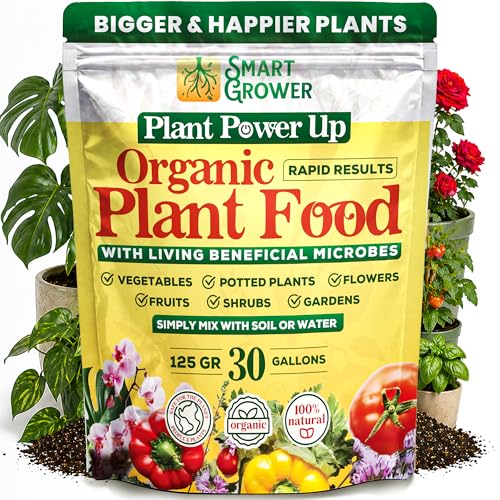
The microbe-packed powder that jump-starts soil life in a tight pot.
This is not your standard NPK formula — it is a biological approach. The 125-gram powder contains six strains of beneficial bacteria, including Bacillus subtilis and Bacillus pumilus, totaling 2.5×10⁸ CFU/gr. These microbes break down organic matter in the soil, making nutrients more available to your dahlia roots. The Humic Acid (3.85%) and Fulvic Acids (4.65%) help improve nutrient uptake and soil structure, which is critical in a pot where roots can’t expand outward.
Owners mention “Noticed huge improvement in vegetable garden within 3 days” and note it has no nasty smell. The NPK is very light — 1.00% nitrogen, 0.07% phosphorus, 2.00% potassium — meaning this works best as a soil-conditioner supplement rather than a primary bloom-driving food. For dahlias in pots that are already in decent soil, this is an excellent weekly tonic to keep roots healthy and vibrant.
Its 1:1024 mixing ratio means a tiny 125-gram packet makes 30 gallons of feeding solution, so it stretches far despite the small bag. Unlike the FoxFarm Marine Cuisine (10-7-7), the Smart Grower is weak on phosphorus, so you would want to alternate it with a bloom booster during the flowering stage of your dahlias.
Living soil booster: Ideal for reviving tired potting mix and adding microbial life, but pair it with a higher-phosphorus feed when your dahlias begin to set buds.
Reach for this if: You are trying to rehabilitate old container soil or want a gentle, odorless feed you can use weekly without fear of burning roots.
Look elsewhere if: Your dahlia leaves are already lush but you see zero flowers — this lacks the phosphorus punch needed for blooming.
3. Alaska Fish Fertilizer OMRI Listed 5-1-1

The time-tested fish emulsion that fuels green growth for lush dahlia foliage.
This is made from cold-processed fish, preserving natural micronutrients, and it carries the OMRI organic seal. The 5-1-1 ratio is heavy on nitrogen, making it the best pick on this list for pushing out big, healthy leaves and strong stems early in the season. At 115 fluid ounces and 8.8 lbs, the bottle is heavy but gives you many feedings for a reasonable cost per use.
It is recommended for use every 3 weeks during the growing season.
The clear trade-off: a 5-1-1 ratio is nearly the opposite of what you want once your dahlias start forming buds. Unlike the Dr. Earth Bloom Booster (4-10-7) which swings hard toward phosphorus, this Alaska product will give you a bushy green plant with fewer flowers. It is perfect for the first few weeks after planting tubers, but you will need to switch to a bloom formula as summer progresses.
Green Machine
- Nitrogen-rich for vigorous leaf and stem growth
- OMRI organic and gentle—won’t burn roots when diluted
- Trusted for over a decade by experienced gardeners
Keep in Mind
- Strong fishy smell during mixing (fades within a day)
- Needs a phosphorus supplement for flowering stage
Early-season essential: Use this from planting until your dahlias reach about half their expected height, then switch to a bloom-specific feed.
Not for bloom time: If you are already seeing buds and want bigger flowers, this will push leaves instead — it is the wrong tool for that job.
4. FoxFarm Marine Cuisine 10-7-7 Ocean-Based Fertilizer
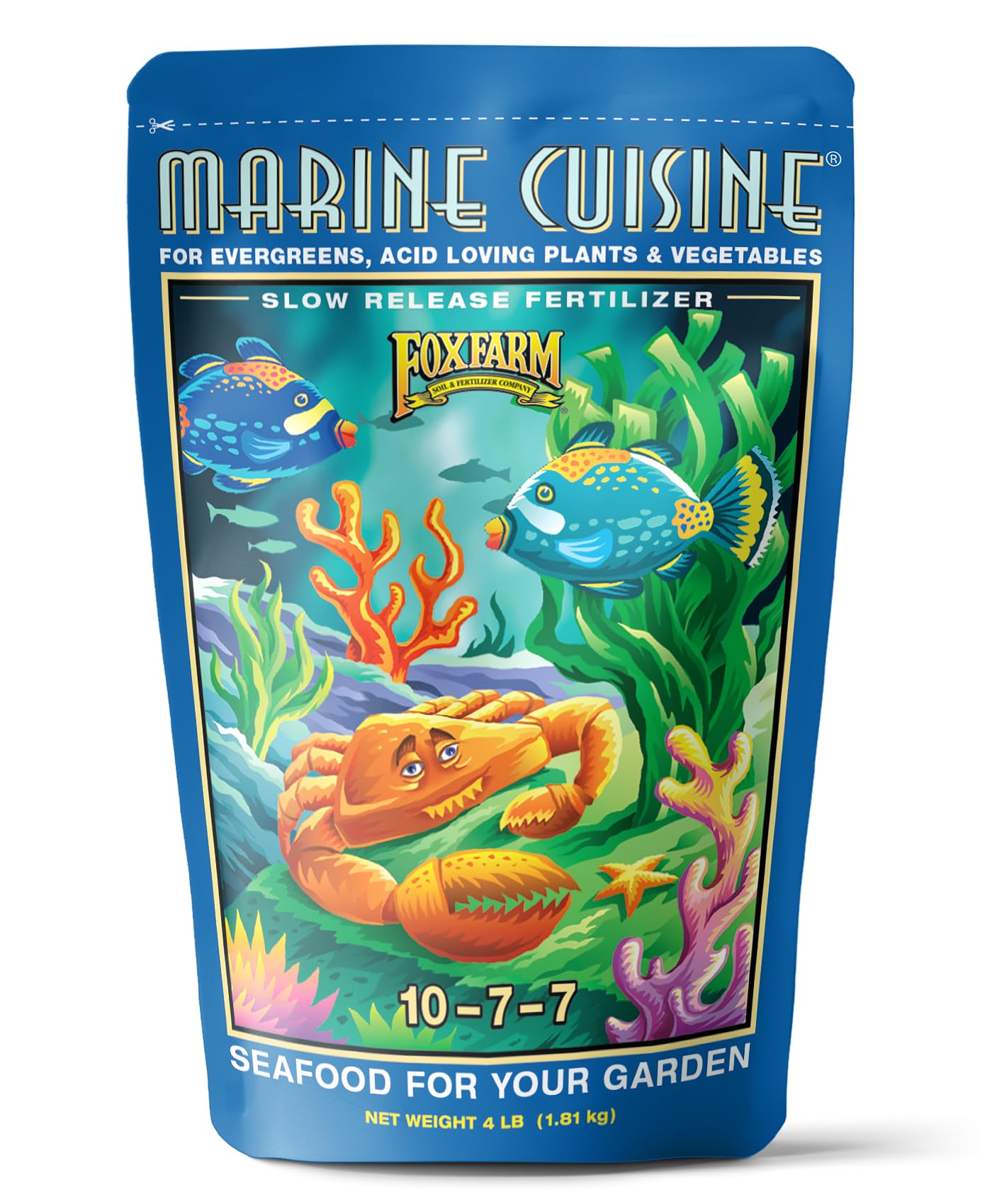
The heavy-feeder formula that powers the biggest potted dahlias.
The 10-7-7 analysis means this has 10 nitrogen versus the Dr. Earth product’s 4 nitrogen, making it a balanced, all-purpose feed that supports both leaves and flowers without favoring one too heavily. The key difference is the ingredient list: crab meal, shrimp meal, seabird guano, and kelp deliver both quick availability and slow-release nutrition, so you only need to apply it twice per season, about 3-4 months apart. For container dahlias that go through a long growing season, this steady feeding approach is a major convenience.
Customers note dramatic results: “WOW!! My squash plants were looking very sad yellow and unhealthy. Decided to try Marine Cuisine and what a difference in just 3 days!” The 4-pound bag is compact, and the slow-release mechanism means you are less likely to accidentally burn roots — a real risk in small pots where fertilizers concentrate. It works for vegetables, flowers, roses, and container plants, so it is a versatile purchase if you have other potted plants.
Compared to the Alaska Fish Fertilizer (5-1-1), this has 10 nitrogen versus 5 and 7 phosphorus versus 1 for blooming. It also has a much stronger NPK profile than the Smart Grower’s 1-0.07-2. The only catch is the premium price tag, which sits at the top of this list.
Set-and-Forget Power
- Twice-per-season application for long-term feeding
- Ocean-based ingredients provide micronutrients
- High NPK (10-7-7) supports both green growth and blooms
Price Check
- Most expensive option on this list
- Slow-release means less control over immediate feeding adjustments
Best for low-maintenance growers: If you want to fertilize once at planting and once mid-summer and forget about it, this is the pick for your potted dahlias.
Skip if you like fine-tuning: If you prefer to adjust feeding week-to-week based on leaf color or bud count, a water-soluble liquid gives you more control.
Understanding the Specs
NPK Ratio Explained
The three hyphenated numbers on every fertilizer label stand for nitrogen (N), phosphorus (P), and potassium (K). Nitrogen drives leafy green growth, phosphorus fuels flower and fruit development, and potassium supports overall plant health and disease resistance. For dahlias in pots, you want a phosphorus-dominant ratio — something like 4-10-7 or 10-7-7 — once the plant reaches about half its final height. Using a high-nitrogen ratio like 5-1-1 during bloom time will give you a big green bush with very few flowers.
Slow-Release vs. Liquid
Liquid fertilizers, like the Alaska Fish Fertilizer, are absorbed by roots within hours, giving you fast results and the ability to adjust feeding week by week. The downside is you need to reapply every 1-3 weeks. Slow-release granular formulas, like the FoxFarm Marine Cuisine, feed steadily over months with a single application. In small pots, slow-release reduces the risk of salt buildup because the nutrients release more gradually. Choose based on how much time you want to spend mixing and watering.
FAQ
Can I use a general-purpose fertilizer for my potted dahlias?
How often should I feed my dahlias in a pot?
Is organic fertilizer better for container dahlias?
What happens if I use too much fertilizer in a pot?
Can I mix liquid and slow-release fertilizers together?
Do I need to feed dahlias in pots during the fall?
Does the pH of the fertilizer matter for container dahlias?
Is fish fertilizer safe to use indoors on a patio dahlia?
Final Thoughts: The Verdict
Across the board, the fertilizer for dahlias in pots winner is the Dr. Earth Flower Girl Bud & Bloom Booster because its 4-10-7 NPK ratio is precisely matched to the blooming needs of container dahlias while remaining organic and safe. If you want a slow-release set-and-forget approach, grab the FoxFarm Marine Cuisine 10-7-7. And for early-season foliage building on a budget, the Smart Grower or Alaska Fish Fertilizer both offer great value.
How We Picked
We do not accept paid placement, and we did not hands-on test every unit. Instead, we match each pick to a real buyer and use-case by comparing the manufacturers’ published specifications against the patterns in verified customer reviews — so you get each pick’s real strengths and trade-offs instead of marketing copy.
Sources & Methodology
Specifications: manufacturer listings and product documentation. Review insights: verified customer reviews, as of July 2026. Pricing: not shown on this page (it changes often); check the current price via the retailer link.
As an Amazon Associate, Lawn Gear Lab earns from qualifying purchases. This does not affect which products we feature.