
Collard greens are heavy nitrogen feeders that demand a steady supply of nutrients to produce those broad, dark-green leaves Southern cooks prize. Skimp on the fertilizer, and you get pale, stunted plants that bolt before you ever get a decent harvest. The right granular or organic feed makes the difference between a sad patch and a season-long supply of flavorful greens.
I’m Rikta — the co-founder and writer behind Lawn Gear Lab. I’ve spent weeks analyzing NPK ratios, organic certifications, customer yield results, and application ease to separate the truly effective collard green feeds from the duds that leave you with yellowed leaves.
This guide cuts through the label noise to help you pick the one fertilizer for collard greens that actually delivers deep leaf color, strong root systems, and a harvest that keeps on giving.
How To Choose The Best Fertilizer For Collard Greens
Collard greens are part of the brassica family and behave differently than tomatoes or peppers. They thrive on consistent nitrogen for leaf production, but they also need phosphorus for strong roots and potassium for overall plant health. A balanced organic granular feed that releases slowly over weeks is ideal because it mimics the natural soil biology brassicas evolved with. Avoid high-nitrogen synthetics that can burn roots or cause rapid, weak growth prone to pests.
NPK Ratio — Nitrogen First for Leafy Growth
The first number in the NPK ratio represents nitrogen, which drives the rich green color and size of collard leaves. Look for a ratio where the nitrogen content is equal to or slightly higher than the potassium and phosphorus. Formulations around 5-7-3, 4-6-2, or even 3-4-4 work well because they prioritize leaf development without starving the roots. A balanced 4-4-4 also works if you side-dress more frequently during peak growth.
Form — Granular Slow-Release Over Liquid
Granular organic fertilizers break down slowly as soil microbes process them, feeding collards steadily over 4-6 weeks. This reduces the risk of nutrient leaching after heavy rain and prevents the shock of sudden synthetic salt concentrations. Liquid fertilizers can supplement a granular base during rapid growth phases, but they shouldn’t be the sole source because collards need a continuous supply, not spikes.
Organic Certification and Soil Biology
OMRI-listed or organic-certified products ensure that the ingredients—fish bone meal, blood meal, feather meal, kelp, langbeinite, or worm castings—feed the soil food web as well as the plant. Healthy soil biology helps collard roots access nutrients more efficiently, improves water retention, and suppresses soil-borne diseases like clubroot. If you plan to grow organically, look for products that list specific microbial benefits or mycorrhizal fungi.
Quick Comparison
On smaller screens, swipe sideways to see the full table.
| Model | Category | Best For | Key Spec | Amazon |
|---|---|---|---|---|
| FoxFarm Happy Frog Tomato & Vegetable | Premium | Nitrogen-heavy feeder collards | NPK 5-7-3 + calcium | Amazon |
| Gaia Green 4-4-4 All Purpose | Premium | Season-long steady feed | NPK 4-4-4 variable release | Amazon |
| Espoma Garden-tone 3-4-4 | Mid-Range | Organic brassica gardens | NPK 3-4-4 + 5% calcium | Amazon |
| Down To Earth Tomato & Vegetable 4-6-2 | Mid-Range | Transplants and side-dressing | NPK 4-6-2 OMRI-listed | Amazon |
| FoxFarm Happy Frog All Purpose 6-4-5 | Mid-Range | General leafy greens | NPK 6-4-5 + soil microbes | Amazon |
| Jobe’s Organics All Purpose 4-4-4 | Mid-Range | Large beds on a budget | NPK 4-4-4 OMRI-listed | Amazon |
| Back to the Roots Worm Castings | Entry | Soil amendment booster | 0.5-0-0 slow-release | Amazon |
In‑Depth Reviews
1. FoxFarm Happy Frog Tomato & Vegetable Fertilizer

The 5-7-3 NPK ratio in this FoxFarm blend is engineered specifically for heavy feeders like collard greens. Nitrogen is high enough to drive rapid leaf expansion, while the calcium content directly prevents blossom end rot — a common issue when brassicas grow too fast without adequate calcium uptake. The inclusion of mycorrhizal fungi colonizes the root zone, increasing the surface area for water and nutrient absorption, which translates to larger, darker leaves with fewer deficiencies.
Users report that this granular formula works without the strong fishy odor of many organic fertilizers, making it pleasant to apply even in raised beds near the house. It also blends easily into existing soil or potting mix, releasing nutrients steadily over several weeks without burning seedlings. Gardeners who top-dress every three to four weeks during the growing season see consistent dark-green foliage all the way into fall.
This product is OMRI-listed and contains no synthetic chemicals, so it fits perfectly into organic gardening systems. The 4-pound bag covers roughly 40 square feet, making it a premium mid-size option for home gardens with a dozen or more collard plants. For anyone serious about maximizing leaf size and preventing calcium-related disorders, this is the most reliable pick.
What works
- High nitrogen and calcium in one balanced blend
- Mycorrhizal fungi improve root efficiency
- Odorless granules, pleasant to handle
What doesn’t
- Smaller bag size requires more frequent reordering for large beds
- Premium formulation carries a higher per-pound cost
2. Gaia Green All Purpose 4-4-4
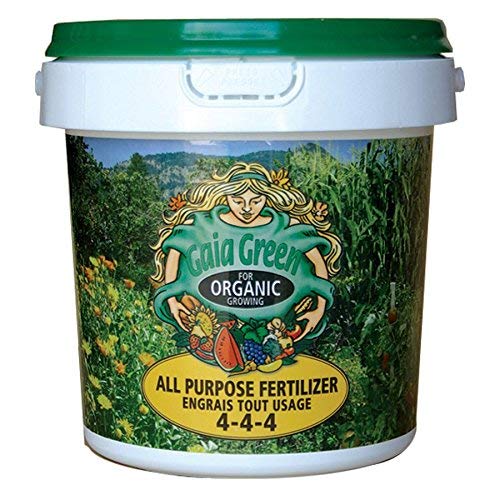
Gaia Green’s 4-4-4 formula is a staple among organic gardeners who want a single fertilizer that works across the entire garden, including collard greens. The balanced NPK ratio supports root development and leaf growth simultaneously, but what sets this product apart is its variable nutrient release rates. Ingredients like kelp meal and rock phosphate break down at different speeds, so nitrogen is available early while phosphorus and potassium linger for later-stage health.
Users in cool climates report that collard seedlings fed with Gaia Green doubled in size during the first week, and mature plants maintained deep green color through summer heat. The 2kg bag (about 4.4 pounds) is compact but concentrated, and the granules are fine enough to work into the top inch of soil without clumping. It also mixes well with worm castings for an extra microbial boost.
This product is made in Canada and is designed for gardeners who want a minimalist approach — just one bag for vegetables, flowers, trees, and lawns. For collard growers who also tend a mixed vegetable patch, this is the most versatile premium choice that eliminates the need for multiple specialized fertilizers.
What works
- Variable release rates feed collards all season
- Fine granules mix easily into soil
- Versatile for all garden plants
What doesn’t
- Higher price per pound than some mid-range competitors
- Not specifically formulated for nitrogen-hungry brassicas
3. Espoma Organic Garden-tone 3-4-4

Espoma Garden-tone is built specifically for cool- and warm-season vegetables, including collard greens, kale, and cabbage. The 3-4-4 ratio is slightly lower in nitrogen than some competitors, but the inclusion of 5% calcium and Espoma’s proprietary Bio-tone microbial inoculant compensates by improving nutrient cycling in the root zone. This means the plant can access existing soil nitrogen more efficiently, reducing the need for high-nitrogen inputs.
Gardeners consistently report that this formula produces thick, sturdy collard stems and dark leaves without the risk of nitrogen burn, even when applied generously. The pack of two 4-pound bags provides plenty of coverage for a medium-sized collard patch, and the granules can be side-dressed monthly throughout the growing season. The Bio-tone formula also helps seedlings resist transplant shock, which is critical for spring-planted collards.
Espoma has been manufacturing organic fertilizers since 1929, and the Garden-tone line is OMRI-listed for organic production. For the price, this two-pack offers the best balance of cost coverage and specialized brassica nutrition. It’s a smart choice for organic growers who want consistent results without breaking the bank.
What works
- Calcium and Bio-tone improve nutrient uptake
- Two bags per order for extended coverage
- Gentle formula safe for seedlings
What doesn’t
- Lower nitrogen ratio may require more frequent reapplication
- Some users report noticeable organic smell
4. Down To Earth Tomato & Vegetable Mix 4-6-2

The 4-6-2 formula from Down To Earth delivers a phosphorus boost that benefits young collard transplants by encouraging sturdy root establishment before the plant shifts focus to leaf production. The primary ingredients — fish bone meal, blood meal, feather meal, and rock phosphate — provide a mix of fast- and slow-release nitrogen sources, so there’s an initial green-up followed by sustained feeding over several weeks.
Users note that this product revived pale, flimsy tomato plants within two weeks, and collard growers report similar results with struggling spring plantings. The 5-pound box is compact but dense, and the granules are fine enough to mix into planting holes or broadcast over beds. It’s also OMRI-listed and contains langbeinite for potassium and kelp meal for trace minerals, which supports overall plant vigor and disease resistance.
The primary trade-off is the smell — blood meal and fish bone meal produce a strong odor that lingers for a few days after application. This is a common trait among high-quality organic fertilizers, and it does dissipate. For gardeners who prioritize root health and plant establishment over scent, this is a formidable mid-range option.
What works
- High phosphorus for strong root development
- Multiple nitrogen sources for staged release
- Includes langbeinite and kelp for trace minerals
What doesn’t
- Strong organic odor for several days
- Phosphorus-heavy ratio may be excessive for already-rich soil
5. FoxFarm Happy Frog All Purpose 6-4-5

FoxFarm’s All Purpose formulation shifts to a 6-4-5 NPK, which delivers the highest nitrogen content in this list while still keeping phosphorus and potassium in a supportive range. This makes it ideal for collard greens that need a strong nitrogen kick mid-season when leaves start to yellow from heavy feeding. The real differentiator is the inclusion of beneficial soil microbes and mycorrhizal fungi, which help break down organic matter in the soil and make nutrients more available.
Users report that this fertilizer reversed yellowing on zucchini and tomato plants within a week, and collard growers see similar quick results when side-dressing during the hottest part of summer. The granules are easy to spread and don’t require pre-mixing, and a single 4-pound bag can cover a 40-square-foot area for several months if used sparingly. It’s also OMRI-listed, so it fits organic regimens.
One notable downside is the pungent odor — users describe it as manure-like and strong, especially when applied indoors or in enclosed spaces. This is a natural byproduct of the microbial ingredients, and it dissipates after a few days outdoors. For collard beds that are far from the house, this is a non-issue, but container growers on a patio may want to ventilate well after application.
What works
- Highest nitrogen ratio for leaf production
- Beneficial microbes enhance soil health
- Quick reversal of yellowing leaves
What doesn’t
- Strong manure-like odor
- Small bag size for the price
6. Jobe’s Organics All Purpose 4-4-4

Jobe’s Organics delivers a massive 16-pound bag of 4-4-4 balanced fertilizer that provides incredible coverage for large collard beds or community garden plots. The NPK ratio is perfectly balanced for general vegetable feeding, and when applied every two to three weeks during the growing season, it maintains steady leaf growth without the risk of burning. The granules are friable and dark green, spreading easily by hand or with a handheld spreader.
Users report that this fertilizer produced massive squash and cucumber harvests when used as both a soil amendment and a liquid tea (1 cup per gallon of water, steeped for 24 hours). Collard growers appreciate the resealable bag and the fact that it’s OMRI-listed and contains no synthetic chemicals. The 4-4-4 ratio is forgiving — even if you over-apply slightly, it won’t damage plants the way a synthetic salt-based fertilizer would.
The main drawback is the smell, which several users describe as pungent but milder than raw manure. The bag is also quite heavy, so it’s less convenient for gardeners with limited storage space. For budget-conscious growers who need to feed a large area without spending a premium, this is the most economical entry-level pick that still delivers organic results.
What works
- Largest bag size for the lowest per-pound cost
- NPK 4-4-4 is safe and forgiving for beginners
- Can be used as dry top-dress or steeped as liquid tea
What doesn’t
- Strong organic odor during application
- Heavy bag may be difficult to store
7. Back to the Roots Organic Worm Castings

Worm castings function more as a soil amendment than a standalone fertilizer, but they are a vital addition for collard greens grown in depleted soil. The NPK is very low at 0.5-0-0, so this product alone won’t provide enough nitrogen for a full season. However, when blended into the planting hole or mixed with a granular fertilizer like the FoxFarm or Espoma options, worm castings introduce beneficial microbes that protect seedlings from pathogens and improve soil structure.
Users praise the fact that these castings are pure vermicompost from the USA — no filler, no odor, and no risk of burning seedlings. They hold moisture well, which can be a double-edged sword in heavy clay soils but is a benefit in sandy beds that drain quickly. Collard roots will grow through the castings, accessing both moisture and trace nutrients that organic granular fertilizers don’t always provide.
The 5-pound bag is resealable, making it easy to store between uses. This is the best entry-level addition for gardeners who already use a balanced granular feed and want to give their collards a microbial edge. It’s also a great choice for seed-starting mix, as the castings won’t harm delicate young brassica seedlings.
What works
- Zero risk of burning plants or seedlings
- Introduces beneficial microbes for soil health
- No odor, clean to handle indoors or out
What doesn’t
- Very low NPK cannot be the sole fertilizer for collards
- Holds moisture — may cause root rot in poorly draining soil
Hardware & Specs Guide
NPK Ratio — The First Number Rules
The nitrogen-phosphorus-potassium ratio determines how a fertilizer supports your collards. Nitrogen drives leaf size and color, phosphorus supports root and flower development, and potassium strengthens overall plant health and disease resistance. For leafy brassicas, a ratio with nitrogen equal to or higher than potassium (e.g., 5-7-3, 4-6-2, or 6-4-5) produces the best results. Balanced 4-4-4 formulas work too, but you may need to apply more frequently to maintain dark green leaves during peak growth.
Organic vs. Synthetic Release
Organic granular fertilizers release nutrients through microbial activity in warm, moist soil. This slow process typically feeds collards for 4 to 6 weeks per application, reducing the risk of nutrient leaching. Synthetic fertilizers provide immediate nitrogen but can burn roots if applied too heavily, and they don’t improve soil biology. For collard greens, which need consistent feeding over a long growing season, organic slow-release granules are the safer and more sustainable choice.
FAQ
How often should I fertilize collard greens during the growing season?
Can I use a tomato-specific fertilizer on collard greens?
Is worm castings alone enough to feed collard greens?
Final Thoughts: The Verdict
For most gardeners, the fertilizer for collard greens winner is the FoxFarm Happy Frog Tomato & Vegetable Fertilizer because its 5-7-3 ratio, calcium, and mycorrhizal fungi target exactly what leafy brassicas need. If you want a balanced all-purpose option that covers your entire vegetable patch, grab the Gaia Green 4-4-4. And for the most budget-friendly coverage of a large collard bed, nothing beats the Jobe’s Organics 4-4-4 16-pound bag.