
Crabgrass is the turfgrass opponent that seems to win every summer, spreading faster than a good lawn can recover. Post-emergent selective herbicides break that cycle by targeting the invader without nuking your fescue, bluegrass, or St. Augustine into oblivion.
I’m Rikta — the co-founder and writer behind Lawn Gear Lab. I’ve spent countless hours cross-referencing active-ingredient concentrations, application rates, and real-world owner feedback to separate the crabgrass killers that actually deliver from the ones that just turn your money into a pretty-colored puddle on the driveway.
This guide cuts through the shelf confusion and walks you through five top-rated selective formulas so you can confidently choose the best crabgrass selective herbicide for your lawn type and infestation severity.
How To Choose The Best Crabgrass Selective Herbicide
Post-emergent herbicides work on established weeds, but not all active ingredients play nice with every grass type. Choosing wrong means dead crabgrass and a dead lawn — or worse, wasted applications on resistant weeds.
Active Ingredient Match: Mesotrione vs. Quinclorac
Mesotrione (40% concentration) is the only selective option that allows overseeding immediately — it inhibits carotenoid biosynthesis, turning susceptible weeds white within days. It works on almost all cool-season turf and St. Augustine sod, but it’s off-limits for Bermuda grass, Zoysia, and bentgrass. Quinclorac (18.92%) is your go-to for Bermuda lawns: it attacks crabgrass at the root zone and provides up to 30 days of residual control, but it requires a surfactant to stick to waxy weed leaves.
Surfactant Dependency
Every quinclorac product in this guide works best when tank-mixed with a non-ionic surfactant (MSO or NIS). Without it, droplets bead off crabgrass foliage and the active ingredient never translocates. Mesotrione formulas also benefit from a surfactant plus a blue dye to prevent overlapping application that can temporarily stunt desirable turf.
Application Window
Post-emergent herbicides work best when crabgrass is young — before it develops a full set of tillers. For spring applications, wait for soil temperatures above 55°F and apply when the weed is actively growing. Late-summer rescue treatments are possible, but mature crabgrass may require a second application spaced two weeks apart.
Quick Comparison
On smaller screens, swipe sideways to see the full table.
| Model | Category | Best For | Key Spec | Amazon |
|---|---|---|---|---|
| Syngenta Tenacity 8oz | Brand-Name | Pre & post-emergent with overseeding | Mesotrione 40% | Amazon |
| BASF Drive XLR8 64oz | Professional | Large lawns with warm-season turf | Quinclorac 18.92% | Amazon |
| Liquid Harvest Mesotrione 16oz | Concentrate | High-volume mesotrione value | Mesotrione 40% | Amazon |
| Liquid Harvest Mesotrione 8oz | Compact | Small lawns & spot-spraying | Mesotrione 40% | Amazon |
| Pro Crabgrass Killer 32oz | High-Concentrate | Stubborn mature crabgrass | Quinclorac 18.92% | Amazon |
| Primesource Quinclorac 64oz | Commercial | Large properties & golf turf | Quinclorac 18.92% | Amazon |
| Triad QC Select 32oz | Triple-Active | Mixed weed infestations | 2,4-D + Dicamba + Quinclorac | Amazon |
In‑Depth Reviews
1. Syngenta Tenacity Turf Herbicide 8oz
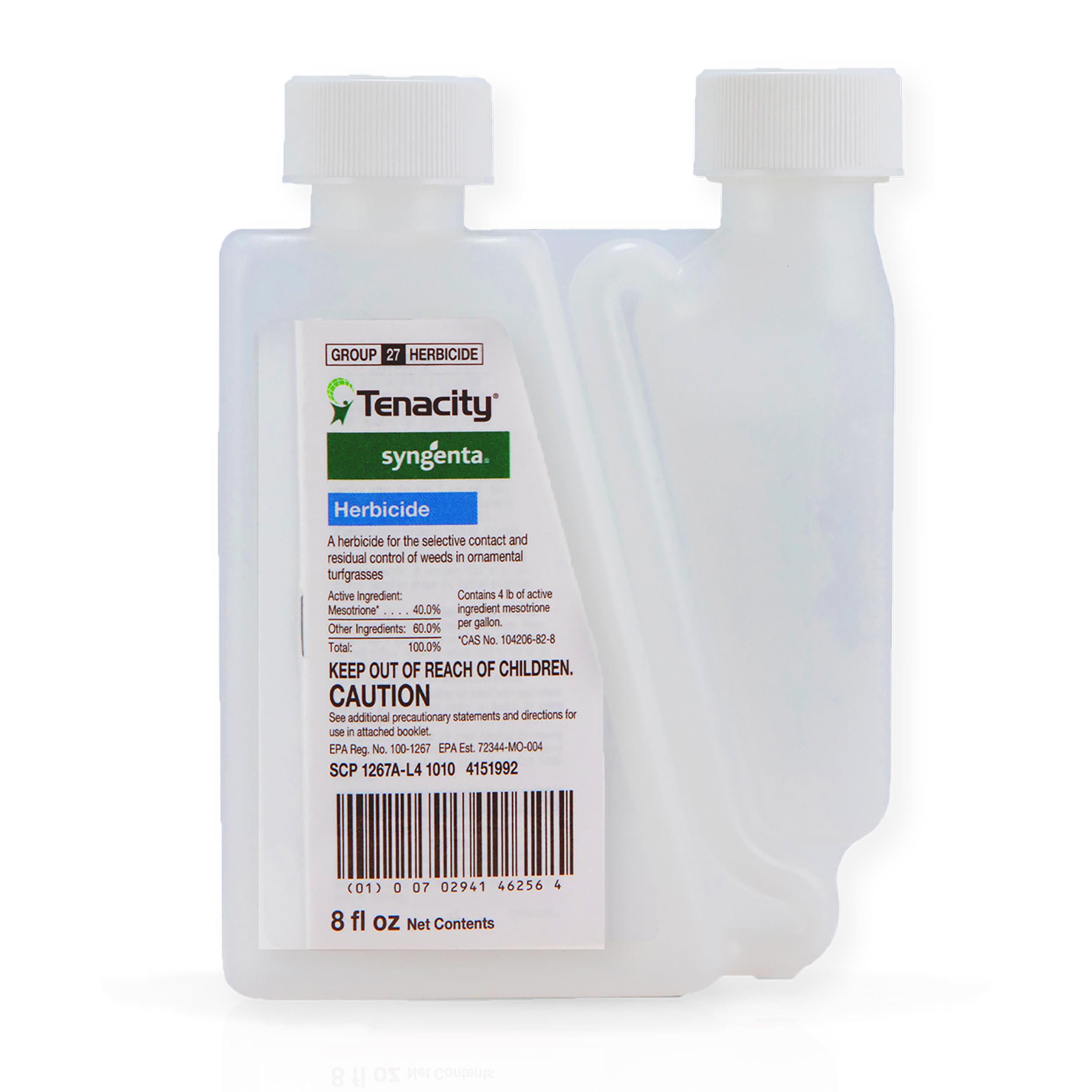
Tenacity is the gold standard for cool-season turf owners who need dual-mode flexibility — it works as a pre-emergent that prevents crabgrass germination and as a post-emergent that turns actively growing weeds white through carotenoid inhibition. The 40% mesotrione concentration is the highest on the consumer market, and a single 8-ounce bottle treats roughly 0.7 acres when mixed at the standard 1/2 teaspoon per gallon. Owner reports confirm that the “bleaching” effect starts within 3–4 days, full death takes 2–3 weeks, and the product is rainfast within 24 hours.
What separates Tenacity from generic mesotrione is the unique ability to apply it during seeding — you can kill nimblewill, bentgrass, and crabgrass without harming newly germinated tall fescue or Kentucky bluegrass. Syngenta’s formulation also includes built-in surfactants that reduce droplet beading on waxy weed leaves, though many users still add a non-ionic surfactant for heavy infestations. The 5–8 year shelf life when stored in a cool, dark place makes it a staple you can keep in the garage for multiple seasons.
The only real downside is the cost per ounce — it’s the most expensive option on a per-unit basis, but the concentrated formula makes the per-application cost reasonable for lawns up to a quarter acre. It is not labeled for use on Bermuda, Zoysia, or bentgrass turf, so warm-season lawn owners need a different active ingredient.
What works
- Safe to use when overseeding new grass seed
- Dual pre-emergent and post-emergent action in one bottle
- High 40% mesotrione concentration extends coverage per bottle
What doesn’t
- Not labeled for Bermuda, Zoysia, or bentgrass lawns
- Premium price per ounce compared to generic alternatives
2. BASF Drive XLR8 Crabgrass Killer 64oz

Drive XLR8 is the professional-grade quinclorac solution for warm-season turf owners who need control that extends well past application day. The water-based formulation is absorbed through both foliage and roots, and it provides up to 30 days of residual activity — meaning newly germinated crabgrass dies before it ever becomes visible. Owner reviews frequently describe four-day turnaround on mature crabgrass with multiple tillers, and the 64-ounce bottle covers a surprisingly large area when mixed at 4 ounces per gallon per 1,000 square feet.
The label approves application on both warm-season and cool-season turf including Bermuda, Zoysia, centipede, St. Augustine (sod only), tall fescue, and perennial ryegrass. BASF uses a unique water-based suspension that speeds plant uptake compared to older emulsifiable concentrates, and the product is rainfast in under one hour. Users consistently report that Bermuda grass remains completely unharmed while crabgrass, foxtail, and signalgrass shrivel and die.
The main drawback is the slower visual response — you won’t see dramatic bleaching like with mesotrione. Death takes 7–14 days for most crabgrass, and a second application may be needed for large infestations or when weeds have reached the 5-tiller stage. A non-ionic surfactant is recommended for consistent results.
What works
- Safe on Bermuda and Zoysia lawns without damage
- Water-based formula with longer residual preventing regrowth
- Rainfast in under 60 minutes
What doesn’t
- Slower visual results than mesotrione-based products
- Requires surfactant for full adhesion on waxy crabgrass
3. Liquid Harvest Mesotrione 16oz

This 16-ounce bottle from Liquid Harvest is the same 40% mesotrione concentrate as Syngenta’s Tenacity, but at a per-ounce cost that makes sense for owners of larger lawns. At the standard rate of 1/2 teaspoon per gallon, this single bottle treats roughly 1.4 acres — more than enough for a half-acre property with extra left over for spot treatments. Owner reviews confirm the same bleaching effect: crabgrass and broadleaf weeds turn white within 3–5 days, then brown and die over the next two weeks.
Like all mesotrione products, this one is safe for use on Kentucky bluegrass, centipede, buffalo grass, tall fescue, fine fescue, and St. Augustine sod. It is not labeled for bentgrass, Bermuda, or Zoysia. The product requires water activation within 10 days if rainfall doesn’t happen — you can apply 0.15 inches of irrigation to kickstart the chemical process. Many users report that adding a blue dye and surfactant dramatically improves coverage consistency, especially on dense crabgrass patches.
The biggest limitation is the same across all mesotrione concentrates: temporary whitening of desirable turf if overlapping occurs. Multiple owners mention that St. Augustine grass showed signs of stress after a second application too close to the first. Always follow the 7–10 day retreatment interval and use a marking dye.
What works
- Lower per-ounce cost for small-acreage applications
- Identical 40% mesotrione concentration as brand-name Tenacity
- Works on St. Augustine sod without permanent damage
What doesn’t
- Not safe for Bermuda or Zoysia turf
- Requires irrigation if no rain occurs within 10 days
4. Liquid Harvest Mesotrione 8oz

The 8-ounce version of Liquid Harvest’s mesotrione concentrate is the entry point for homeowners who only need to treat small patches rather than the entire lawn. At 1 teaspoon per 2 gallons, a single bottle creates roughly 32 gallons of spray solution — enough to hit a couple of hot spots in a 5,000-square-foot lawn or tackle isolated clumps of crabgrass, clover, and wild violet. Owner reviews highlight that centipede grass tolerates the product extremely well, and one application was enough to eliminate crabgrass that had resisted every other product tried.
This formulation shares the same 40% active ingredient as the larger bottle, and it requires the same activation protocol — 0.2 inches of rain or irrigation within 24 hours for pre-emergent use, or within 10 days for post-emergent. Users should avoid hose-end sprayers because the concentrate is potent enough to cause overlapping damage on St. Augustine and centipede. A backpack sprayer with a marking dye is the preferred delivery method according to experienced reviewers.
The small bottle is more expensive per ounce than the 16-ounce version, so if you plan to treat more than 1,000 square feet regularly, the larger bottle delivers better value. On the positive side, the compact size fits easily in a garden toolbox and has a longer shelf life when stored properly since you’re not opening a large container repeatedly.
What works
- Ideal for small lawns and targeted spot treatments
- Excellent safety on centipede and St. Augustine sod
- Concentrated enough to tackle tough clover and violet
What doesn’t
- Higher cost per ounce than the 16oz bottle
- Requires a sprayer with dye to prevent overlap damage
5. Pro Crabgrass & Grassy Weed Killer 32oz

Liquid Harvest’s Pro line delivers the same 18.92% quinclorac concentration as Drive XLR8 but in a 32-ounce bottle aimed at homeowners who need rapid visual confirmation that the product is working. Owner reports describe visible wilting within 4–6 days, full brown-down in about 14 days, and residual control that prevents regrowth for weeks. The formulation also targets a broader set of grassy weeds beyond crabgrass, including foxtail, barnyardgrass, and Dallisgrass — a common southern lawn invader that resists many other products.
Application recipes from experienced users center on 1.5 ounces per gallon per 1,000 square feet, always with a methylated seed oil (MSO) surfactant. Without the surfactant, the active ingredient struggles to penetrate the waxy cuticle of mature crabgrass. Several reviewers note that the product needs careful mixing because the concentrate is thick, and the bottle’s cap design can make precise measuring tricky without a graduated measuring cup.
The largest complaint involves the packaging: multiple shipments arrived with leaking bottles because the cap seal isn’t robust enough for transit. After receiving the product in good condition, the chemical performance is consistent with professional-grade quinclorac. Not recommended for use on bentgrass or St. Augustine lawns.
What works
- Visible results in less than a week on young crabgrass
- Effective on Dallisgrass and other tough southern grasses
- Residual activity prevents immediate re-infestation
What doesn’t
- Bottle design prone to leaking during shipping
- Requires MSO surfactant for consistent adherence
6. Primesource Quinclorac 1.5L Select 64oz
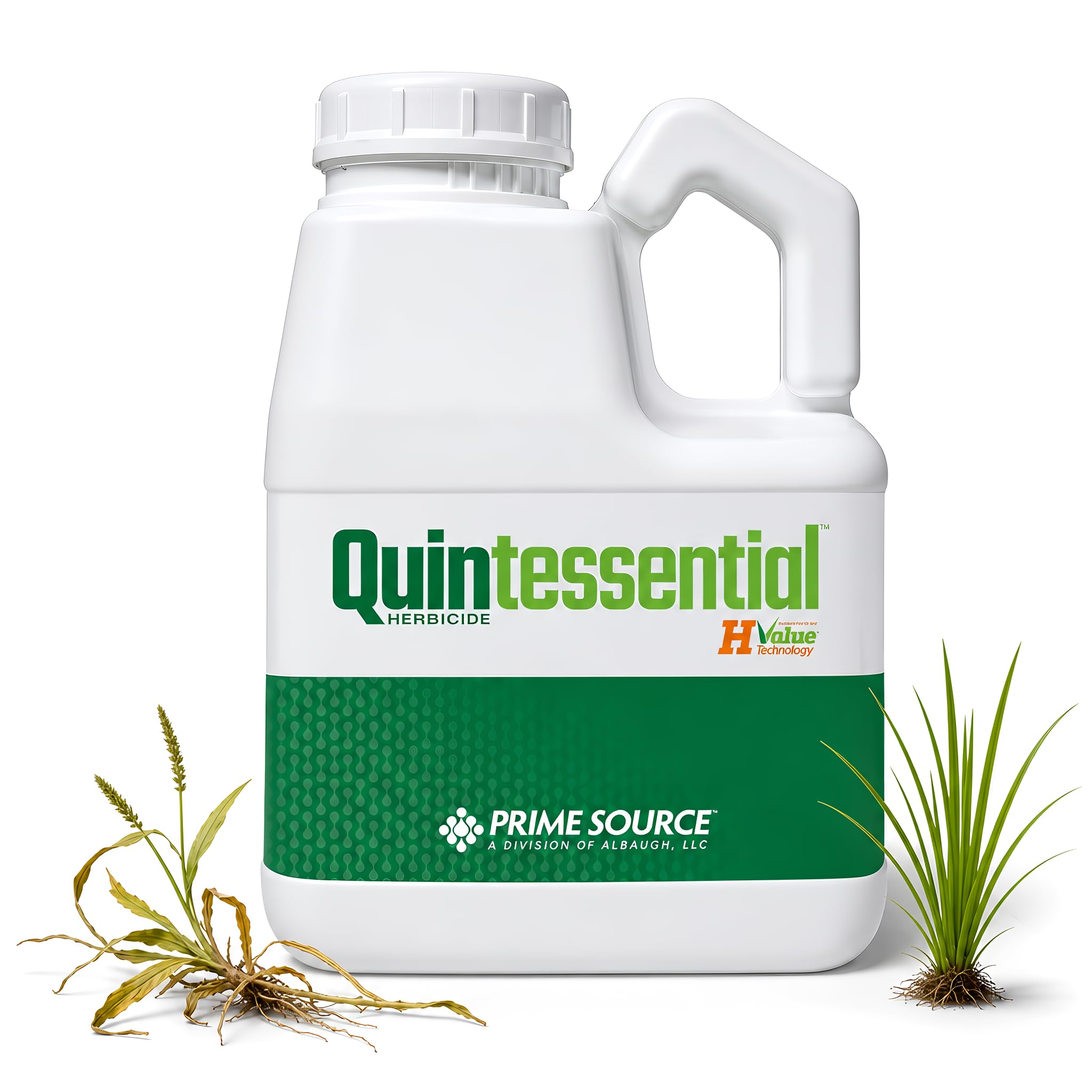
Primesource Quinclorac 1.5L Select is the commercial-scale option for property owners managing large lawns, athletic fields, or roadside strips. The 64-ounce jug contains 18.92% quinclorac and covers up to 500 square feet per application when mixed at professional rates. Owner reviews from golf course managers and large-lot homeowners consistently report 70–98% crabgrass kill rates after a single application, especially when paired with an oil-based surfactant. The product is labeled for use on Bermuda, Zoysia, centipede, and most cool-season turf, making it one of the most versatile quinclorac options available.
The 1.5-liter format is designed for power sprayers and tank mixing — the concentrate mixes readily with water and stays in suspension without constant agitation. Users who applied it in late August reported that crabgrass started dying within 24 hours and was completely brown and shriveled in under a week, with enough time left in the season to overseed. The label also covers foxtail, kikuyugrass, signalgrass, torpedograss, and a long list of broadleaf weeds including clover, dandelion, and dollarweed.
The only real limitation is the price point — it sits at the premium end of the spectrum, and the large bottle may be overkill for homeowners with small lawns. Some users also note that the label is less detailed than premium brands like BASF, requiring a bit of trial and error for first-time quinclorac users.
What works
- Label covers warm-season and cool-season turf types
- Rapid results — crabgrass dying within 24–72 hours
- Large 64-ounce volume for multi-acre treatment areas
What doesn’t
- Higher upfront cost than smaller consumer bottles
- Label instructions less detailed than premium brands
7. Select Source Triad QC Select 32oz

Triad QC Select is the multi-mode option that combines three active ingredients — 2,4-D, dicamba, and quinclorac — to handle mixed weed infestations that no single-ingredient product can touch. This 32-ounce quart is designed for late-season clean-up when pre-emergent applications have already failed, and it targets both grassy weeds like crabgrass and broadleaf weeds like clover, dandelion, wild violet, and creeping Charlie. Owner reviews emphasize that this combo finally killed clover that had become resistant to standard 2,4-D applications alone.
The quinclorac component specifically addresses crabgrass at every growth stage, from newly germinated 1-leaf to mature 5-tiller plants. The 2,4-D and dicamba provide broadleaf knockdown that quinclorac alone doesn’t offer. This product is labeled for residential lawns, athletic fields, parks, and golf turf (excluding tees, greens, and collars). It works well on Bermuda, fescue, and perennial ryegrass, but the dicamba component makes it risky for centipede and St. Augustine — always test a small area first.
The main downside is the strong odor during and after application — several reviewers describe it as overpowering. Also, this is a post-emergent only product; it has no pre-emergent activity. For homeowners who only need crabgrass control and already have good broadleaf management, a single-ingredient quinclorac or mesotrione product may be more targeted.
What works
- Three active ingredients handle resistant weed mixes
- Effective from 1-leaf to 5-tiller crabgrass stage
- Label extends to athletic fields and non-residential turf
What doesn’t
- Strong chemical odor during and after application
- No pre-emergent activity — must be used on visible weeds
Hardware & Specs Guide
Mesotrione 40%
This active ingredient inhibits the HPPD enzyme in susceptible weeds, blocking carotenoid synthesis. Without carotenoids, plants cannot protect chlorophyll from sunlight and literally bleach white before dying. It works both pre-emergently (absorbed by germinating seeds) and post-emergently (absorbed through foliage). The key homeowner spec: 1/2 teaspoon per gallon treats 1,000 square feet, and the product requires activation through 0.15 inches of rainfall or irrigation within 10 days.
Quinclorac 18.92%
This auxin-mimicking herbicide forces uncontrolled cell growth in susceptible grassy weeds, causing vascular system failure and plant death. It’s the go-to selective for warm-season turf lawns because Bermuda and Zoysia metabolize the compound differently. The professional spec: use 1.5–4 ounces per gallon depending on weed maturity, always add a non-ionic surfactant at 0.25–0.5% solution, and expect residual control for 30 days on treated areas.
Surfactant Requirement
Crabgrass foliage has a waxy cuticle that repels water-based herbicide droplets. Without a non-ionic surfactant (at 1–2 teaspoons per gallon), up to 40% of the active ingredient can bead off instead of penetrating. Methylated seed oil (MSO) is reported by professional users to outperform standard NIS on mature crabgrass with thick cuticles, but it can cause leaf burn on stressed turf.
Application Temperature Window
Both mesotrione and quinclorac stop working effectively when temperatures climb above 85°F during application — the weed goes into heat-stress mode and shuts down chemical uptake. The ideal window is 60–80°F with low wind, applying in the early morning so foliage has 6–8 hours to absorb before evening dew forms. Avoid application when drought stress is visible on desirable turf.
FAQ
Can I use a crabgrass selective herbicide on my new grass seed?
Why did my crabgrass turn white instead of brown after spraying?
How long does quinclorac last in the soil after application?
Do I need to mow before applying a post-emergent crabgrass killer?
What happens if I accidentally use a quinclorac product on St. Augustine grass?
Final Thoughts: The Verdict
For most gardeners, the best crabgrass selective herbicide winner is the Syngenta Tenacity because it delivers dual pre-emergent and post-emergent action in one bottle while being safe to use when overseeding. If you maintain a Bermuda or Zoysia lawn, grab the BASF Drive XLR8 for its residual power and warm-season turf safety. And for small-acreage spot treatments where value matters, nothing beats the Liquid Harvest Mesotrione 16oz.