
Specs are compiled from manufacturer listings and verified buyer reviews and can change over time — please confirm the key details on the product page before buying.
If you have ever planted a handful of tulip or daffodil bulbs only to get spindly stems and a single sad flower, the problem is almost never the bulb — it is what you fed it. Flowering bulbs are heavy feeders that need a specific balance of nutrients to build strong roots first and then push out those big, brightly colored blooms you see on the package. The wrong fertilizer pushes all leaves and no flowers; the right one makes a row of bulbs look like a florist’s display.
I’m Rikta — the founder and writer behind Lawn Gear Lab. This guide is built by comparing the manufacturers’ published specifications and the patterns across verified customer reviews, so you get each pick’s real strengths and trade-offs instead of marketing spin.
You need a fertilizer for bulbs that feeds roots and flowers without burning them — whether you are planting spring-blooming tulips, fall-blooming lilies, or summer-blooming gladioli. The right one supplies phosphorus (a nutrient that fuels root growth) and potassium (a nutrient that boosts flower size), while staying organic enough not to damage tender new roots.
Our Picks at a Glance


How To Choose The Best Fertilizer For Bulbs
Bulbs need less nitrogen (the first number on a fertilizer label) than leafy plants do, and a lot more phosphorus (the second number) to fuel root development and flower formation. A balanced all-purpose 10-10-10 often gives you too much nitrogen, which pushes green leaves at the expense of flowers.
Understand the NPK Ratio
The three numbers on the bag stand for nitrogen (N), phosphorus (P), and potassium (K). For bulbs, you want a higher middle number — something like 4-10-10, 3-5-3, or 3-15-0. Phosphorus drives root growth from the moment the bulb touches soil, and it directly influences how many flower stalks each bulb sends up. A fertilizer with a low second number may produce plenty of foliage but very few blooms.
Granular vs. Powdered
Granular formulas, like Espoma Bulb-Tone, are ready to use right out of the bag — you sprinkle them into the planting hole or on the soil surface and water them in. Powdered bone meal, like the Down To Earth bag, needs to be mixed into the soil at the root zone. Granular is easier for quick planting; powder gives you more control over how deep the phosphorus goes near the bulb.
Organic Certification Matters
If you keep an organic garden, look for products listed by the Organic Materials Review Institute (OMRI). Both the Espoma Bulb-Tone and the Down To Earth Bone Meal carry OMRI certification, which means they meet the requirements for organic production without synthetic chemicals or sludges.
Quick Comparison
| Model | Best For | NPK Ratio | Item Weight | Form | Amazon |
|---|---|---|---|---|---|
| Espoma Bone Meal★ Best Overall | Phosphorus boost | 4-12-0 | 10 lb | Powder | Amazon |
| Espoma Bulb-ToneAlso Great | All bulb types | 3-5-3 | 4 lb | Granules | Amazon |
| Lilly Miller Bulb & Bloom | High potassium | 4-10-10 | 4 lb | Powder | Amazon |
| Earth Science Bone Meal | Budget bone meal | — | 4 lb | Granules | Amazon |
| Down To Earth Bone Meal | Large gardens | 3-15-0 | 25 lb | Granules | Amazon |
In‑Depth Reviews
1. Espoma Organic Bone Meal 4-12-0
Our pick — over 4.5★ from 950+ verified ratings; the strongest balance of quality and price.
A mid-size bag of 100% natural bone meal that delivers a healthy phosphorus punch without the bulk of the 25-pounder.
This Espoma Bone Meal sits right in the middle of the lineup in both bag size and phosphorus level. The 4-12-0 ratio gives you a 12% phosphorus content — enough to get bulbs like daffodils, lilies, and alliums to form thick flower stalks — while the 10-pound bag is manageable to carry and store. It is 100% all-natural domestic bone meal with no fillers or additives, and it is approved for organic gardening. You use it by mixing 1 teaspoon per bulb into the soil at planting time.
Because it is a powder rather than a granular product, it mixes into the soil more intimately, placing phosphorus right where the root zone will expand. This is the same brand behind the Bulb-Tone, but with a much higher phosphorus content (4-12-0 vs 3-5-3). Where the Bulb-Tone is a complete formula with potassium and calcium, this bone meal is a more targeted phosphorus and calcium supplement. Owners mention “love this stuff” and note it helps tomatoes, dahlias, and pomegranate trees alongside bulbs. The main trade-off is the powder form can clump if stored in a damp shed — keep the bag sealed and dry.
Versatile bone meal
- 10 lb bag offers a good balance of price, portability, and supply
- Higher phosphorus than the Bulb-Tone (4-12-0 vs 3-5-3)
- 100% natural bone meal with no synthetic additives
- Works on bulbs, roses, tomatoes, and trees — a versatile one-bag product
Moderate phosphorus
- Powder form can clump if exposed to moisture in storage
- No potassium (0% K), so potassium-dependent bulbs may need a supplement
Smart middle-ground pick: If you want the phosphorus focus of bone meal without committing to a 25-pound bag, this 10-pound size hits the balance for most home gardeners.
For heavy feeders: Gardeners who prefer a no-mix granular product they can sprinkle directly on the soil — this powder needs to be worked into the root zone.
2. Espoma Organic Bulb-Tone 3-5-3
The ready-to-use granular blend that takes the guesswork out of feeding every spring and fall bulb.
This is the bulb food you reach for when you want one product that works for tulips, daffodils, crocus, hyacinths, gladioli, and lilies without having to measure or mix. The granules are ready to use: you sprinkle them directly into the planting hole for new bulbs, or on the soil surface around established plants, then water thoroughly.
Unlike the Espoma Bone Meal powder below, this Bulb-Tone includes the exclusive Bio-tone formula, a blend of beneficial microbes that help roots access nutrients in the soil. At 4 pounds, this bag covers a medium-sized garden bed nicely. Buyers report it “helped produce large blooms on daffodils,” which matches the 4.8-star rating from over 400 reviews. It is also OMRI-listed for organic gardening, so it fits a certified organic plot without question.
Balanced bulb booster
- Ready to use — no mixing, no measuring spoons required
- Contains 6% calcium for stronger cell walls in flower petals
- Approved for organic production (OMRI listed)
- Works on both spring and fall blooming bulbs
Slow nitrogen release
- Only 4 lb bag — may not be enough for a large bulb bed
- The 3-5-3 ratio is lower in phosphorus than dedicated bone meal products
For established bulbs: You want a single, easy-to-use granular fertilizer for all your spring and fall bulbs, from daffodils to lilies, without needing to mix or measure.
If quick feeding needed: You need a very high phosphorus boost for heavy-feeding bulbs like giant alliums, or you are feeding a large garden and need a bigger bag.
3. Down To Earth Organic Bone Meal 3-15-0
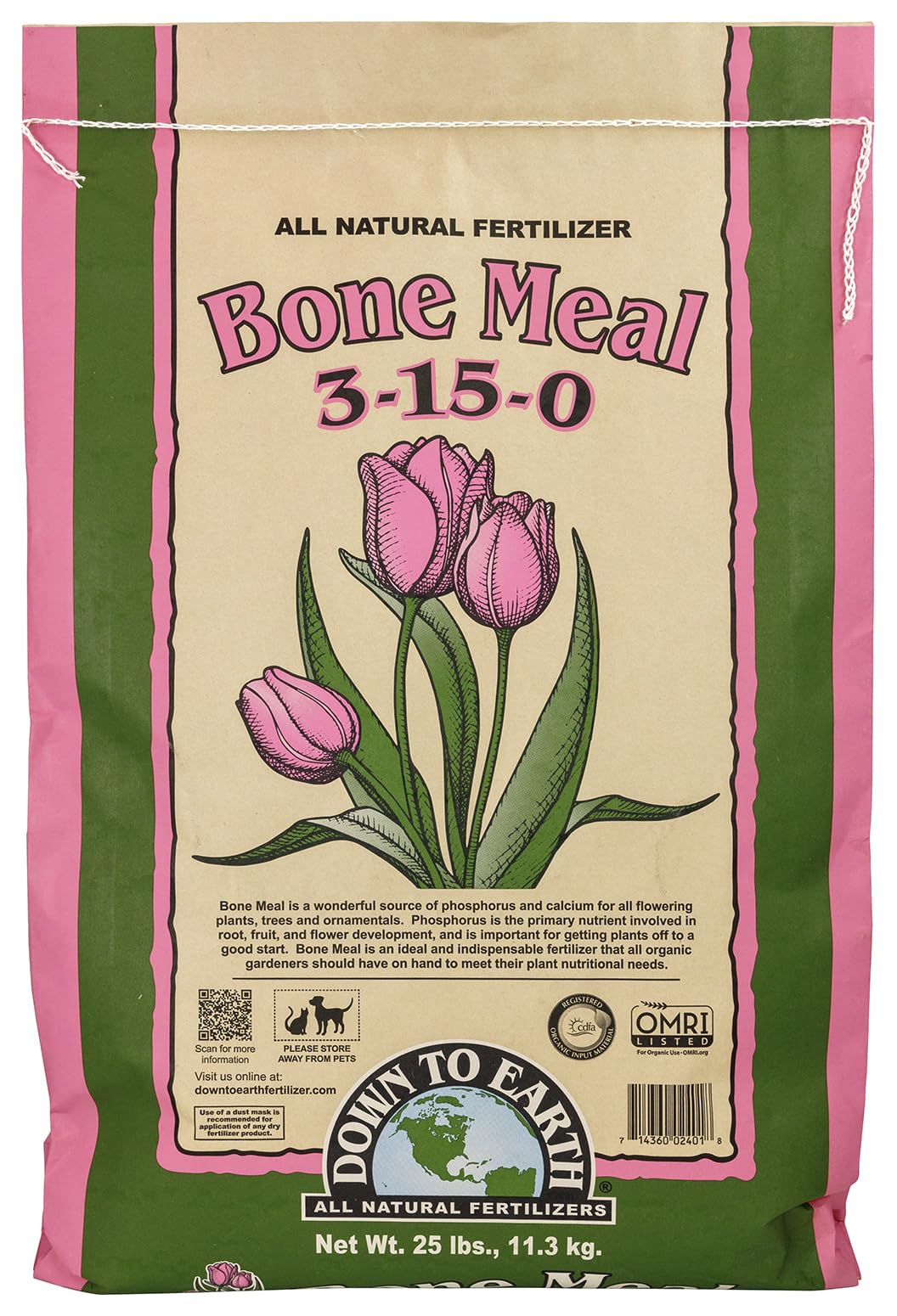
A massive 25-pound bag of high-phosphorus bone meal built for serious bulb gardens and orchard-scale planting.
When you are planting a whole hillside of daffodils or a long border of tulips, you need volume and potency. This bag delivers both: a 25-pound supply of all-natural bone meal with a 3-15-0 formula, meaning the middle phosphorus number is the highest in this lineup. Compared to the Espoma Bulb-Tone’s 3-5-3, this product delivers three times the phosphorus per pound, which makes it a standout choice for getting bulbs to establish deep roots in poor soil.
The granules are ground to a fine powder that one reviewer described as “not too fine and dusty,” making it easy to spread without creating a choking cloud. It is listed by the Organic Materials Review Institute (OMRI), so it meets certified organic standards. One experienced gardener left a detailed review noting that using less than 15 grams on melons and squash delayed female flowers — a helpful caution to apply it sparingly on fruiting crops. For bulbs, you mix a spoonful into the soil at planting time and let the slow-release phosphorus do the work through the growing season. The catch is the bag is heavy at 25 pounds, so storing it takes dedicated space.
High phosphorus bone meal
- Very high phosphorus (3-15-0) for strong root and bloom development
- Enough product in one bag for large gardens, tree rings, or orchard work
- OMRI listed for organic production
- Slow-release formula feeds bulbs through the entire growing season
Low nitrogen content
- 25 lb bag is bulky and heavy to move around the garden
- No potassium (0% K) — you may need a separate potash source for potassium-demanding bulbs
For large-scale planting: If you have a big garden, multiple flower beds, or you plant bulbs by the hundred, this bag gives you the highest phosphorus concentration at a low per-pound cost.
If nitrogen needed: You only have a few pots or a small border — a 4 lb bag will serve you better without leaving half a bag to go stale in the shed.
4. Lilly Miller Bulb & Bloom Food 4-10-10

The only product in this list with a high potassium third number, built for bigger, longer-lasting blooms.
Most bulb foods focus on phosphorus and let the potassium number fall where it may. The Lilly Miller Bulb & Bloom Food takes a different approach with its 4-10-10 formula — the first number (nitrogen) is low to prevent leafy growth, the middle number (phosphorus) is solid at 10%, and the last number (potassium) is also 10%, matching the phosphorus. Potassium helps flowers hold their shape, resist disease, and produce brighter color. This formula is a slow-release powder, meaning it feeds bulbs gradually rather than delivering one big dose.
Buyers specifically note it is “excellent for amaryllis and other bulbs” and that it “promotes strong growth” — one reviewer noted their purple iris “loved this product.” The 33% more gap in phosphorus compared to the Espoma Bone Meal’s 4-12-0 is not huge here, but the real advantage is the potassium content. If you grow show-quality tulips or prize-winning lilies where flower size and stem strength matter, this formulation gives the bloom stage the potassium it craves. On the downside, the 4-pound bag only covers a moderate planting, and the slow-release nature means you need to apply it earlier than you would a fast-acting bone meal.
Bloom-focused formula
- Balanced phosphorus and potassium (10-10) for strong stems and vivid blooms
- Slow release formula feeds bulbs over several weeks
- Formulated specifically for bulbs, not a general-purpose fertilizer
- Easy to find online when local stores are out of stock
Slow nutrient delivery
- 4 lb bag is on the smaller side; may not cover a large bulb bed
- Powder form needs to be mixed into soil rather than surface-applied
For flower production: If you enter flower shows or just want the biggest, most vibrant tulips on your block, the extra potassium in this formula makes a visible difference.
If fast results wanted: Because it is slow release, it takes longer to show results — plan to apply it at planting or just after bulbs emerge, not as a rescue treatment for weak blooms.
5. Earth Science Natural Bone Meal 4 lb

An entry-level bone meal that gives small gardens and container plantings a reliable phosphorus boost on a budget.
If you are new to feeding bulbs or you only have a few pots on a patio, this 4-pound bag of Earth Science bone meal is a low-commitment way to try organic bulb feeding. It comes in granular form — not as fine as the Down To Earth powder — and you apply it by raking or mixing it into the soil and watering in. The brand recommends 10 lbs per 100 square feet for garden beds, or 1 teaspoon per individual bulb, which gives you flexibility whether you are planting a border or a container.
Buyers describe it as “high-quality natural bone meal with fine texture and earthy smell” and note it boosts blooming in roses, dahlias, and tomatoes. One buyer mentioned the packaging arrived punctured because it was shipped in a bag rather than a box — a packaging risk note when ordering. Compared to the Espoma Bone Meal above, this one costs less upfront but has a smaller bag and a less concentrated formula, though the NPK ratio is not listed on the bag so you are trusting the brand’s general “natural bone meal” standard. For a small garden that does not need precise NPK numbers, this is a perfectly solid pick.
Simple bone meal
- Entry-level price for a 4 lb bag of organic bone meal
- Granular form is easy to mix into soil without dust clouds
- Works on bulbs, roses, vegetables, and trees
- Fine texture and earthy smell — pleasant to handle
Limited nutrients
- NPK ratio is not printed on the bag — harder to calculate exact phosphorus dose
- Packaging can arrive damaged if shipped in a soft bag with heavy items
- Only 4 lb bag; larger gardens will need multiple bags
Good starting point: For a few container bulbs or a new flower bed where you want to start organic feeding without spending much, this bag does the job.
For nutrient-rich soil: You need a known NPK ratio for precise feeding or you have a large garden that requires many pounds of fertilizer — the bigger bags above will be more cost-effective.
Understanding the Specs
NPK Ratio — The Three Numbers
The three numbers separated by hyphens (like 3-5-3 or 4-12-0) tell you the percentage of nitrogen (N), phosphorus (P), and potassium (K) in the bag. Nitrogen fuels leaf and stem growth. Phosphorus drives root development and flower formation — this is the number bulb growers watch most. Potassium strengthens cell walls, helps the plant resist disease, and improves bloom color and longevity. For bulbs, a good target is a low first number (under 5), a medium-high second number (at least 5, ideally 10 or more), and a moderate third number (3 to 10).
Bone Meal vs. Complete Bulb Food
Bone meal is a single-ingredient fertilizer made from ground animal bones. It is naturally high in phosphorus and calcium but contains almost no potassium. A complete bulb food like Espoma Bulb-Tone or Lilly Miller is a blend that includes all three nutrients plus trace minerals and sometimes beneficial microbes. If your soil is already rich in potassium (from compost or wood ash), a straight bone meal works perfectly. If you are starting with poor soil, a complete formula gives more balanced nutrition.
FAQ
When should I apply fertilizer to my spring bulbs?
Can I use a general-purpose 10-10-10 fertilizer on bulbs?
What is the difference between bone meal and Bulb-Tone?
How much fertilizer should I put in each bulb hole?
Is it safe to use bone meal if I have dogs in the yard?
Can I use these fertilizers on potted bulbs indoors?
How long does a bag of bulb fertilizer last in storage?
Should I fertilize bulbs after they bloom or wait until next fall?
What is OMRI certification and does it matter?
Can I mix bone meal with other fertilizers?
Final Thoughts: The Verdict
For most people, the fertilizer for bulbs winner is the Espoma Organic Bulb-Tone 3-5-3 because it is a complete, ready-to-use granular formula that feeds every type of bulb from tulips to lilies without mixing or measuring, and it is backed by a 4.8-star average from hundreds of buyers. If you want the highest phosphorus concentration for establishing bulbs in poor soil or you are planting a large garden, grab the Down To Earth Organic Bone Meal 3-15-0 for its 25-pound bag and OMRI certification. And for bloom quality where flower size and stem strength matter most, the Lilly Miller Bulb & Bloom Food 4-10-10 gives you the potassium that the other products lack, producing brighter, longer-lasting flowers.
How We Picked
We do not accept paid placement. Every pick is matched to a real buyer and a real use-case; we do not hands-on test units.
Sources & Methodology
Specifications: manufacturer listings and product documentation. Review insights: verified customer reviews, as of July 2026. Pricing: not shown on this page (it changes often); check the current price via the retailer link.
As an Amazon Associate, Lawn Gear Lab earns from qualifying purchases. This does not affect which products we feature.