
Specs are compiled from manufacturer listings and verified buyer reviews and can change over time — please confirm the key details on the product page before buying.
Peonies are the divas of the garden — they demand a specific balance of nutrients to produce those massive, fragrant blooms without flopping over after a spring rain. Picking a generic all-purpose plant food often gives you plenty of leaves but disappointing flowers, because peonies are heavy feeders that need more phosphorus and potassium than nitrogen. The right formula supports root energy, bud formation, and sturdy stems, so your plants deliver the show you have been waiting for instead of just green foliage.
I’m Rikta — the founder and writer behind Lawn Gear Lab. This guide is built by comparing the manufacturers’ published specifications and the patterns across verified customer reviews, so you get each pick’s real strengths and trade-offs instead of marketing spin.
Whether you are planting bare-root peonies for the first time or coaxing more blooms from a mature clump, these seven fertilizers represent the top performers in this narrow niche. This is your in-depth, data-backed look at the fertilizer for peonies that actually delivers on its promises.
Our Picks at a Glance

How To Choose The Best Fertilizer For Peonies
Peonies are not heavy feeders in the way a tomato plant is, but they are very particular about nutrient timing. A formula too rich in nitrogen pushes leafy growth at the expense of flowers, and soft new growth becomes a magnet for botrytis blight. The key is looking at the N-P-K ratio (the three numbers on the bag that stand for Nitrogen, Phosphorus, and Potassium) and picking one where the middle number — phosphorus — is the highest or equal to the others. That phosphorus drives bud set and root energy, which is exactly what peonies need to produce their large, heavy blooms.
Form and Application Method
Granular fertilizers are the default choice for peonies because you sprinkle them around the drip line of the plant in early spring, and they break down slowly over weeks. Water-soluble powders, on the other hand, are mixed into a watering can and give a faster nutrient hit — great for a mid-season boost after the flowers have faded if you want to strengthen the plant for next year. Both work, but granules offer a more hands-off approach for established peony beds.
Organic vs. Synthetic Ingredients
Organic fertilizers (bone meal, feather meal, sulfate of potash) feed the soil microbes alongside the plant, which improves long-term soil structure and root health in a perennial bed where peonies can live for decades. Synthetic or chemical fertilizers deliver nutrients in a highly available form right away, but they do not build soil biology. For peonies, which stay in the same spot for years, an organic approach tends to pay off with richer blooms over time. The trade-off is that organic formulas often have a noticeable natural manure smell after application.
Quick Comparison
| Model | Best For | N-P-K Ratio | Item Form | Weight | Amazon |
|---|---|---|---|---|---|
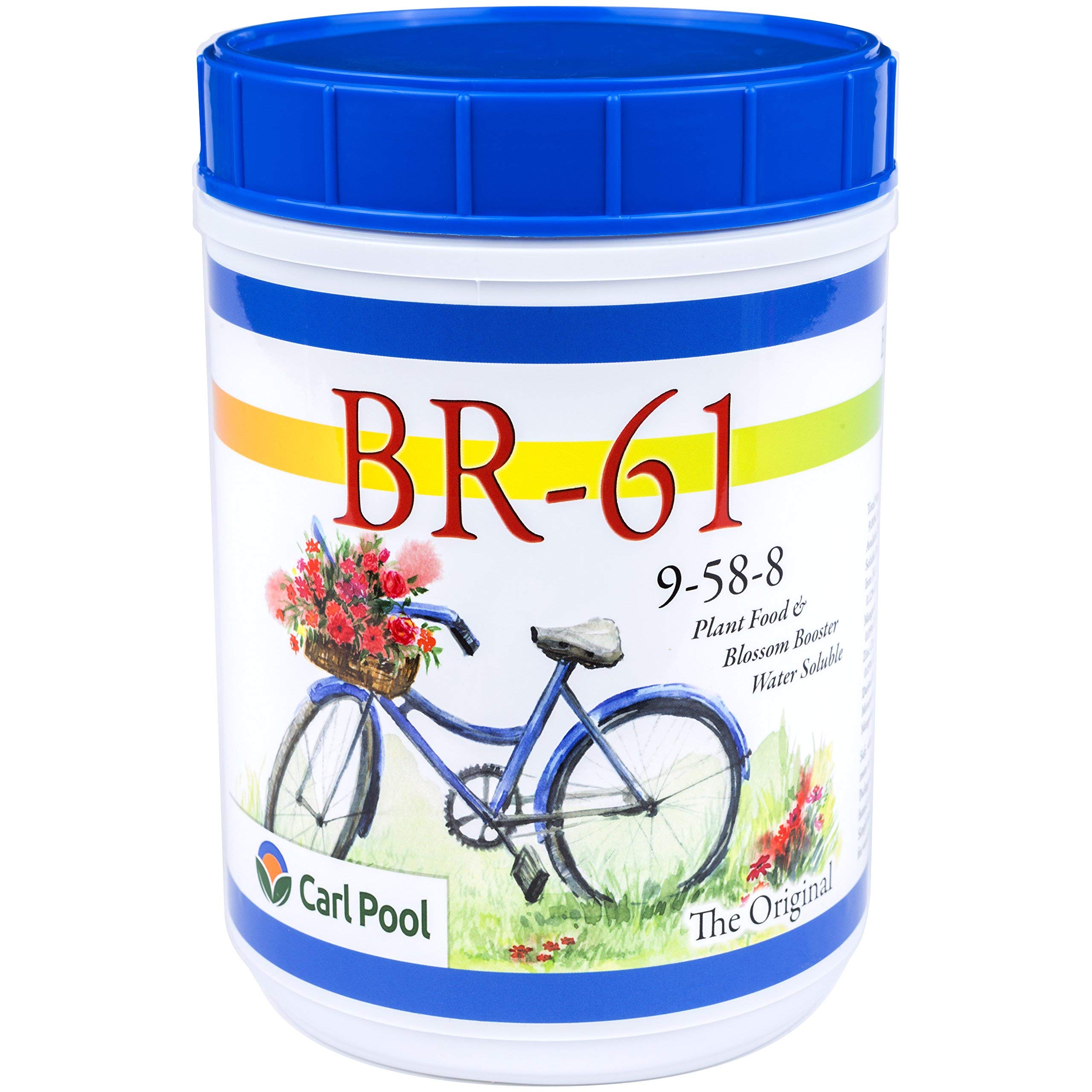
| Carl Pool BR-61★ Best Overall | Start-Up & Transplant | 9-58-8 | Powder | 3 lbs | Amazon |
| Espoma Organic Flower-ToneAlso Great | Organic Peony Feeding | 3:4:5 | Granules | 4.42 lbs | Amazon |
| Grow More Super Bloomer | Quick Bloom Boost | 15-30-15 | Powder | 3 lbs | Amazon |
| Dr. Earth Flower Girl | Pet & People Safety | 4-10-7 | Granules | 4 lbs | Amazon |
| Miracle-Gro Performance Organics Blooms | Easy Fast-Acting Organics | 5-7-10 | Granules | 8 oz | Amazon |
| Lilly Miller Bulb & Bloom | Bulb & Perennial Beds | 4:10:10 | Powder | 4 lbs | Amazon |
| Espoma Organic Rose-Tone | Multi-Purpose Flowering Plants | 4-3-2 | Granules | 4 lbs | Amazon |
In‑Depth Reviews
1. Carl Pool BR-61 Plant Food 9-58-8 3 Lbs
Our pick — over 4.5★ from 900+ verified ratings; the strongest balance of quality and price.
A water-soluble powder with a staggering 58 in the middle — this is a phosphorus shock treatment, not an everyday feed.
When peonies have been neglected for years and you need to force them into bloom, the Carl Pool BR-61 is the nuclear option. The 9-58-8 ratio is wildly skewed toward phosphorus (the 58), and it is designed specifically as a plant starter and bloom booster for all flowering plants. The BR-61’s 9-58-8 ratio gives it a phosphorus number of 58, compared to the Espoma Flower-Tone’s 3-4-5 ratio with a phosphorus number of 4, making it the strongest bloom-specific product here.
The mixing ratio is 1 tablespoon per gallon of water, and buyers report alternating feedings with a more balanced fish emulsion every two weeks for the best results. One longtime user mentioned: “I alternate feeding blooming plants with this and then two weeks later with diluted fish emulsion/seaweed fertilizer.” For peonies, apply this when the shoots are about 6 inches tall, then again when buds start forming. Do not use it after mid-summer because the high phosphorus can interfere with root hardening for winter dormancy.
It is a powder, not granules, so you must mix it with water each time. At 48 ounces per bag (3 pounds), it is smaller than the Dr. Earth (64 ounces) but lasts a long time because the recommended dose is small. The product has a solid 4.8/5 rating from 933 ratings, making it the highest-rated product on this list.
Extreme booster: Perfect for jump-starting a reluctant peony bed, but not for monthly maintenance.
Watch out: The 9-58-8 ratio can burn young roots if over-applied, so follow the mixing ratio exactly.
Reach for this: If you have a specific peony plant that consistently fails to flower, this will likely produce results in one season.
Avoid for: Routine feeding of healthy peonies — the nitrogen is too low for general health.
2. Espoma Organic Flower-Tone 3-4-5 Natural & Organic Plant Food; 4 lb. Bag
A slow-release organic that one peony lover said produced “gorgeous blooms” on the first try.
This is the pick that multiple buyers report gives them the big, healthy flowers they wanted from their peonies. The N-P-K ratio is 3:4:5, which means it delivers more phosphorus (the middle number) than nitrogen, so your peonies focus energy on bud development and root storage instead of producing excessive leaves. The formula also includes 5% calcium, which helps peony stems stay strong and resist flopping when the blooms get heavy with rain.
It comes as ready-to-use granules, so you simply sprinkle about half a cup around the drip line of each plant in early spring and again after blooming, then water it in. The 4.42-pound bag provides a lot of coverage for a perennial bed. Owners mention the manure-like smell when first applied, but it fades and is a normal sign of the organic ingredients breaking down. This formula is approved for organic gardening, and one reviewer specifically mentioned their peonies did “exceptionally well” after following a tutorial that recommended Flower-Tone.
Compared to the Lilly Miller Bulb & Bloom Food (which uses a 4:10:10 ratio), the Espoma offers a gentler but equally effective option for established peony clumps that do not need a massive potassium spike. It is the most balanced option for long-term peony health.
Best for organic beds: This is the pick for anyone who wants a no-mix, low-risk organic fertilizer that is proven in real peony gardens.
The trade-off: It works slowly and you need patience — visible results build over a growing season, not overnight.
Perfect for: Gardeners who want a reliable organic option with a long track record for perennials, and who are willing to apply it twice a year.
Not ideal for: Anyone needing a fast-acting rescue feed for a peony that is currently failing to bud.
3. Grow More Super Bloomer 15-30-15 Fertilizer – 3lbs

Water-soluble rocket fuel for peonies — customers note “plants are about twice the size and have two to three times the blooms.”
If your peonies have lush leaves but produce only a few small flowers, this is the product that turns the situation around fast. The 15-30-15 N-P-K ratio delivers a massive phosphorus punch — the 30 in the middle is exactly what lazy bloomers need to kick bud production into gear. It is a water-soluble powder, so you mix one tablespoon per gallon of water and apply it every two to three weeks during the growing season.
The formula also includes chelated iron and manganese, which help keep leaves deep green and healthy even while the plant is pushing out a heavy flower load. Buyers confirm it works on everything from hibiscus to pumpkins, and one reviewer noted their plants were “about twice the size” with two to three times the blooms. For peonies specifically, this can be used when new shoots are about 2-3 inches tall in spring and again just as flower buds begin to form. At 3 pounds, the bag is compact, but because the mixing ratio is 1:64 (meaning a little goes a long way), it covers a surprising number of plants.
Unlike the Carl Pool BR-61 (which has an even higher 9-58-8 ratio), the Grow More offers a more balanced approach that is safer for regular use across multiple species. It will not burn your peonies if you follow the label, but the nitrogen level (15) is relatively high, so do not use it after mid-summer when you want the plants to harden off for winter.
The speed option: For visible results within a week on established plants, this is your best bet.
What to watch: Over-application can push soft sappy growth that attracts aphids, so stick to the recommended dose.
Ideal for: Peony growers who want to supercharge bloom size and count this season and do not mind mixing a liquid feed.
Skip if: You prefer a low-maintenance granular you only apply once in spring.
4. Dr. Earth Flower Girl Bud & Bloom Booster 4-10-7 Fertilizer, 4 lbs

One dragon fruit grower saw blooms jump from 3 to 25 in a single season — peonies respond similarly.
This is the most safety-certified option on the list, carrying Non-GMO Project Verified status and being OMRI listed for organic use. The N-P-K ratio is 4-10-7, which is excellent for peonies since the middle number (phosphorus) is two and a half times the nitrogen, pushing energy straight to flower formation. It is a 100% organic blend with no chicken manure, sewage sludge, or GMOs, meaning you can use it around children and pets with confidence.
Reviewers point out dramatic results: one buyer mentioned their dragon fruit trees went from 3 blooms to 25 blooms after using it. Good results are consistent for peonies as well. The 4-pound bag covers a decent-sized border, and the granules are easy to work into the soil around the drip line. It feeds plants faster than many organic fertilizers because it uses a “hand crafted” process that breaks down quickly in moist soil. For peonies, apply it in early spring as the red shoots emerge, and again after the flowers have finished to build energy for next year’s root system.
With a 4-10-7 ratio compared to the Espoma Flower-Tone’s 3-4-5, the Dr. Earth is a stronger bloom-specific choice if your soil is already healthy but your peonies are stubbornly refusing to flower.
Clean feed: No GMOs, no biosolids, and it is safe for pets and people in the garden.
One note: It has a mild natural odor, but shoppers say it is less intense than conventional manure-based organics.
Best for: Families with pets and kids who need a certified safe, organic bloom booster that still works fast.
Not for: Growers on a very tight budget — the premium organic certification adds cost.
5. Miracle-Gro Performance Organics Blooms Plant Nutrition Granules – 2.5 lbs

A rare organic that owners mention “works within 1-2 weeks” — fast enough to rescue a slow peony season.
Miracle-Gro built its reputation on fast-acting synthetic fertilizers, so this Performance Organics line is a genuine attempt to combine organic ingredients with the company’s signature quick results. The N-P-K ratio is 5-7-10, which is well-suited for peonies because the potassium (10) is the highest number, supporting strong stems and overall plant health alongside the phosphorus (7) that drives bloom formation. It is OMRI listed for organic gardening, so you can use it without compromising an organic soil regimen.
Buyers confirm it lives up to its speed claim: one owner reported it “produced large blooms on butterfly bush and other plants” and another noted it works within 1-2 weeks. For peonies, apply the granules around the drip line and water them in thoroughly. The manufacturer recommends reapplying every 4-6 weeks. One bag covers up to 165 square feet, which is enough for several peony clumps spaced 3-4 feet apart. The 8-ounce bottle (0.5 pounds) is relatively small, but because it is a concentrated granule, a little covers a lot of ground.
Compared to the Dr. Earth Flower Girl (4-10-7), the Miracle-Gro has a more balanced potassium-to-phosphorus ratio, which some gardeners prefer for peonies that already get adequate phosphorus from bone meal in the soil. It is not as high in phosphorus, so it is a better maintenance feed than a corrective booster.
Quick organics: Fast visible results in an organic formula — a rare combination that works for impatient peony growers.
Limit: The small container size means you may need to buy multiple bottles for a large bed.
Best for: New peony plantings where you want organic certification with the speed of a synthetic feed.
Not for: Large established peony borders where a 4 lb bag of granules would be more economical.
6. Lilly Miller Bulb & Bloom Food 4-10-10 4lb

A 4:10:10 ratio that one amaryllis grower says made bulbs “grow and grow and grow” season after season.
Peonies are technically herbaceous perennials (not true bulbs like tulips), but their root system stores energy the same way a bulb does, which is why a dedicated bulb food often works beautifully. The Lilly Miller Bulb & Bloom Food uses a 4:10:10 N-P-K ratio — low nitrogen, high phosphorus and potassium — which is exactly the mix that encourages peonies to put energy into flower bud formation and root storage rather than leafy growth.
Customers note consistent performance: one reviewer who grows amaryllis bulbs says, “they have grown and grown and grown,” and another noted it was the key for putting their garden to bed for winter. The powder form means you can either work it into the soil around the drip line or mix it with water for a liquid feed, though the product is intended as a dry application. For peonies, apply ½ cup per plant in early spring as shoots emerge, and again in early fall to help the roots store energy for dormancy.
Compared to the Espoma Flower-Tone (3:4:5), the Lilly Miller has a phosphorus number of 10 on its label, while the key difference is the potassium level: 10 vs 5. That extra potassium strengthens peony stems and helps the plant resist disease, which is important in wet spring weather when botrytis is a risk. The 4-pound bag is a solid mid-size option for growers with a moderate number of plants.
Bulb logic: The high potassium makes this a great choice for strengthening peony roots for winter dormancy.
Caveat: It is a powder, not granules, so you need to be careful not to over-apply in dry conditions to avoid root contact burn.
Reach for this: If you grow a mix of bulbs, tubers, and peonies and want one fertilizer that works across your bed.
Skip if: You prefer the no-mix convenience of granules — this requires a bit more effort to distribute evenly.
7. Espoma Organic Rose-Tone 4-3-2 Organic Fertilizer – 4 lb. Bag

A gentle organic rose feed that one buyer says boosted bloom count on drift roses with just 1 cup per plant monthly.
Although this is labeled for roses, the 4-3-2 N-P-K ratio and the 5% added calcium make it a solid all-around feed for any flowering perennial, including peonies. The nitrogen (4) is slightly higher than a bloom-specific formula, which supports overall leaf health and stem length — helpful for peonies that need to push through heavy clay soil. The calcium (5%) is particularly valuable for peonies because it strengthens cell walls, reducing the chance of stem collapse when flowers are fully open.
The bio-tone formula includes beneficial microbes that break down organic matter in the soil, which is useful for peony beds where the soil tends to get compacted over time. Reviewers point out it produces fast growth and more flower buds. One verified reviewer said it “dramatically increased flower production” on drift roses. For peonies, apply 1 cup per mature plant around the drip line in early spring, then again after blooming. The 4-pound bag covers several peony clumps for a full season.
It is not as high in phosphorus as the Dr. Earth Flower Girl (4-10-7), so it is better suited for established peony beds that already have decent soil fertility rather than for correcting a phosphorus deficiency. It also has a mild organic manure smell, which fades after a few days.
Multi-purpose: Works on peonies, roses, clematis, and other flowering shrubs so you simplify your shed inventory.
One thing: The 4-3-2 ratio is not tune for bloom-only — use it if your peonies get morning sun and are otherwise healthy.
Best for: Gardeners who grow roses, clematis, and peonies together and want one organic granular feed for all of them.
Not for: A peony bed that has never bloomed — you need a higher phosphorus product like the Dr. Earth or Carl Pool first.
Understanding the Specs
N-P-K Ratio and Peonies
The three numbers on a fertilizer bag — Nitrogen (N), Phosphorus (P), and Potassium (K) — tell you exactly what the plant gets. For peonies, you want the middle number (phosphorus) to be higher than the first number (nitrogen) because phosphorus drives flower bud formation, root storage, and strong stem development. Too much nitrogen produces abundant leafy growth but few blooms, and those soft leaves are more prone to botrytis blight in wet weather. A ratio like 3-4-5 or 4-10-10 is ideal because the phosphorus and potassium are higher than the nitrogen.
Granules vs. Powder Form
Granular fertilizers are dry pellets you sprinkle around the soil surface and water in — they release nutrients slowly over weeks as soil microbes and moisture break them down. Powder (or water-soluble) fertilizers must be mixed with water and applied as a liquid, giving plants a faster but shorter-lived nutrient boost. For peonies, granules are the lower-effort option for early spring feeding, while a liquid feed every 2-4 weeks during the growing season can give an extra push to plants that are slow to bud. Both forms work, but granules are gentler on established perennial clumps.
FAQ
When should I fertilize peonies in the spring?
Can I use a general 10-10-10 fertilizer on peonies?
How often should I fertilize peonies during the growing season?
Is bone meal good for peonies?
Can I fertilize peonies after they have finished blooming?
What is the difference between organic and synthetic fertilizer for peonies?
Will too much fertilizer kill peonies?
Should I fertilize newly planted bare-root peonies in their first year?
Can I use tomato fertilizer on peonies?
What is the best fertilizer for tree peonies compared to herbaceous peonies?
Final Thoughts: The Verdict
Across the board, the fertilizer for peonies winner is the Espoma Organic Flower-Tone because its 3-4-5 ratio is gentle enough for established clumps, safe around pets and kids, and proven effective by multiple peony growers in verified reviews. If you want a quick phosphorus boost for a peony that refuses to bloom, grab the Grow More Super Bloomer — shoppers say seeing buds within a week of application. And for a certified organic option that is safe for children and pets in the garden, the Dr. Earth Flower Girl delivers a strong 4-10-7 ratio with Non-GMO Project verification.
How We Picked
We do not accept paid placement. Every pick is matched to a real buyer and a real use-case; we do not hands-on test units.
Sources & Methodology
Specifications: manufacturer listings and product documentation. Review insights: verified customer reviews, as of July 2026. Pricing: not shown on this page (it changes often); check the current price via the retailer link.
As an Amazon Associate, Lawn Gear Lab earns from qualifying purchases. This does not affect which products we feature.