
An apricot tree that drops its fruit before it fully colors or produces a handful of small, flavorless apricots is almost always a tree with a nutrient deficiency, not a bad variety. Apricots are heavy feeders with a specific appetite for potassium and a low tolerance for excess nitrogen, which can trigger soft growth prone to disease. Matching the fertilizer’s NPK to the tree’s phenological stages — bud break, fruit set, and post-harvest recovery — is the single highest-leverage decision you can make for a productive home orchard.
I’m Rikta — the co-founder and writer behind Lawn Gear Lab. By cross-referencing hundreds of owner reports against documented horticultural trials for stone fruit nutrition, I’ve mapped which bagged formulas consistently close the gap between a tree that survives and one that delivers.
This guide breaks down granular, spike, and powdered options with the specific NPK ratios, micronutrient profiles, and release mechanisms that matter most when you search for the best fertilizer for apricot trees.
How To Choose The Best Fertilizer For Apricot Trees
Apricot trees have a narrower nutrient sweet spot than apples or even peaches. A fertilizer that pushes too much nitrogen will produce lush leaves at the expense of flowers and can make the tree vulnerable to bacterial canker. The first filter is the NPK ratio: look for a formula where the middle number (phosphorus) or last number (potassium) is higher than the first (nitrogen). A 3-5-5 or 6-2-4 is safer than a 19-10-5 for most home growers.
Granular vs. Spikes vs. Powder
Granular formulas spread across the root zone and release nutrients with each watering or rain event, making them the most forgiving option for beginners who might over-apply. Spikes concentrate the fertilizer at specific points, which works well for container-grown apricots where the root ball is confined, but they require careful placement 8 to 12 inches from the trunk to avoid root burn. Powders like Down To Earth dissolve more quickly but need to be scratched into the top few inches of soil or they can volatilize.
Micronutrients Apricots Demand
Apricots are particularly sensitive to zinc and iron deficiencies, which show as chlorotic leaves with green veins. Some high-nitrogen synthetic blends actually lock up these micronutrients in alkaline soils. A fertilizer that includes calcium — which Down To Earth’s Fruit Tree formula delivers via calcium carbonate — helps prevent blossom-end rot and supports cell wall strength in the fruit.
Timing Your Applications
Apricots respond best to a split application: one dose just before bud break in late winter, a lighter follow-up after fruit set in early spring, and nothing after midsummer. Late-summer nitrogen pushes tender new growth that won’t harden off before frost. Slow-release formulas reduce the risk of this timing error by metering out nutrients over two to three months.
Quick Comparison
On smaller screens, swipe sideways to see the full table.
| Model | Category | Best For | Key Spec | Amazon |
|---|---|---|---|---|
| Jobe’s Organics Fruit & Citrus Spikes | Spikes | Container apricots, mess-free feeding | 3-5-5 NPK, 6 spikes | Amazon |
| FoxFarm Happy Frog Citrus & Avocado | Granular | Established in-ground apricots | 7-3-3 NPK with mycorrhizae | Amazon |
| Down To Earth Fruit Tree 6-2-4 | Powder | Organic orchards, calcium-conscious growers | 6-2-4 NPK + calcium | Amazon |
| Jobe’s Organics Fruit & Citrus Granular | Granular | Fast organic results, multi-tree coverage | 3-5-5 NPK with Biozome | Amazon |
| FoxFarm Happy Frog Fruit & Flower | Granular | Flowering boost, container fruit trees | 4-9-3 NPK + mycorrhizae | Amazon |
| Nelson NutriStar Citrus Fruit & Avocado | Granular | Cold-hardiness support, high potassium | 12-10-10 NPK + calcium | Amazon |
| Fertilome Fruit, Citrus and Pecan Tree Food | Granular | Pecan growers, high-nitrogen tolerance | 19-10-5 NPK + zinc | Amazon |
In‑Depth Reviews
1. Jobe’s Organics Fruit & Citrus Tree Fertilizer Spikes

The Jobe’s Organics spikes deliver a 3-5-5 NPK ratio that is nearly text-book for apricots — low enough in nitrogen to avoid lush foliage that invites canker, high enough in potassium to support fruit sugar development and firmness. Each spike is pre-measured, which eliminates the guesswork of spreading granulars and dramatically reduces the risk of over-fertilizing a young tree.
The Biozome microorganism consortium — bacteria, mycorrhizal fungi, and archaea — accelerates the breakdown of organic matter in the root zone. This is especially useful for apricots grown in compacted or clay-heavy soils where native microbial activity is sluggish. Users report visible leaf color improvement within two to three weeks of the spring application.
For in-ground apricots, spacing the spikes 8 to 12 inches from the trunk in a ring pattern ensures that feeder roots get uniform access. The time-release mechanism meters nutrients across roughly 60 days, aligning well with the tree’s early-season growth flush without pushing late-summer growth that would be vulnerable to frost damage.
What works
- Prevents root burn with targeted spike delivery
- OMRI-listed organic ingredients
- Biozome microbes improve soil structure around apricot roots
What doesn’t
- 6-count box covers only one mature tree per season
- Spikes can be tough to hammer into dry, hard soil
2. Down To Earth All Natural Fruit Tree 6-2-4

The Down To Earth Fruit Tree formula uses a 6-2-4 NPK profile that supplies moderate nitrogen from feather meal and fish bone meal, but the standout feature for apricot growers is the added calcium carbonate. Calcium is critical for apricot fruit firmness and for preventing blossom-end rot, a problem that becomes more common in alkaline soils or when irrigation is inconsistent.
The ingredient list — kelp meal, alfalfa meal, langbeinite, and potassium sulfate — provides a broad spectrum of trace minerals that apricots draw heavily on during the pit-hardening stage. Because it’s a powder, it integrates into the top inch of soil quickly and starts feeding within a week, making it a strong option for an early spring top-dress before the first irrigation.
OMRI listing confirms this formula is suitable for certified organic orchards. Multiple reports from growers with crabapple and stone fruit trees note that the formula revived trees that were declining after cold winters, which aligns with the calcium’s role in strengthening cell walls against freeze-thaw damage.
What works
- Calcium content addresses a common apricot deficiency
- Kelp meal provides natural growth hormones and trace minerals
- Does not expire if stored properly
What doesn’t
- Powder form can be messy in windy conditions
- Needs to be scratched into soil to prevent nutrient volatilization
3. Jobe’s Organics Fruit & Citrus Granular 3-5-5
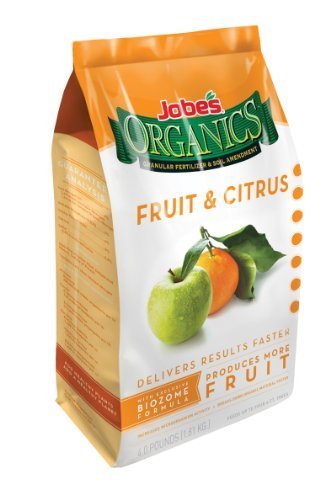
Jobe’s granular version shares the same 3-5-5 NPK as the spikes but in a loose format that allows you to distribute the fertilizer across a wider root zone. For a mature apricot with a canopy spread of 10 feet or more, broadcasting granules from the trunk out to the drip line ensures that the entire feeder-root network gets access to phosphorus for bloom set and potassium for fruit fill.
Biozome microbes in this formula are particularly effective in cooler spring soils where native microbial activity is low. The claimed “fast-acting organic” designation means that, unlike some rock-based organic fertilizers that need months to break down, this blend delivers visible results — deeper green leaves and more flower clusters — within two weeks of application.
The 4-pound bag covers up to four six-foot trees, making it the most economical option for a grower with multiple apricots or mixed stone fruit. The granular texture also allows for split applications: half at bud break and the other half after fruit set, which is the ideal rhythm for apricots.
What works
- Covers multiple trees with one bag
- Fast organic response for spring feeding
- Simple broadcast application
What doesn’t
- Needs soil moisture to activate Biozome microbes
- Bag can clump if stored in humid conditions
4. FoxFarm Happy Frog Fruit & Flower 4-9-3

FoxFarm’s 4-9-3 ratio is the highest phosphorus option in this roundup, and that matters for apricot growers who struggle with poor bloom set. Phosphorus moves slowly through soil, so a generous pre-bloom application of this formula gives the tree a reservoir of energy to convert flower buds into fruit, rather than dropping them after a cold snap.
The inclusion of mycorrhizal fungi is a tangible benefit for container-grown apricots, where the root ball often loses its native fungal partners during potting. The fungi extend the effective root surface area, improving the tree’s ability to pull phosphorus and water from the confined volume of a pot. Owners of potted citrus and tropical trees have reported doubled growth rates within a season.
It is OMRI listed and greenhouse-tested, which means the particle size and moisture content are consistent from bag to bag — less important for in-ground trees but valuable for container growers who need a predictable release rate in a controlled environment.
What works
- High phosphorus targets bloom quality in apricots
- Mycorrhizae improve nutrient uptake in container trees
- No strong odor compared to some organic blends
What doesn’t
- 4-pound bag covers fewer trees than the Jobe’s granular option
- Nitrogen content is moderate but still higher than ideal for late-season use
5. FoxFarm Happy Frog Citrus & Avocado 7-3-3

The 7-3-3 NPK on this FoxFarm blend is higher in nitrogen than ideal for apricots, but the slow-release mechanism mitigates the risk of a growth surge. The nitrogen comes in a form that meters out over roughly 60 days, so the tree gets steady fuel for leaf expansion without the sudden spike that would push tender, frost-susceptible shoots.
Users with citrus, avocado, and stone fruit trees report that this formula eliminated leaf yellowing — a classic sign of nitrogen or iron deficiency — within days. For apricots growing in sandy soils where nitrogen leaches quickly, the slow-release profile is a practical advantage over quick-dissolving synthetic alternatives.
Some growers note that the smell attracts dogs because it contains alfalfa meal, which is also used in horse feed. Watering in immediately after application and keeping pets inside for a few hours is a simple fix, but it is worth factoring in if you have curious animals in the orchard.
What works
- Slow-release nitrogen reduces leaf-burn risk
- Effective for correcting chlorotic leaves in sandy soils
- Mycorrhizae support root efficiency
What doesn’t
- Higher N can still push unwanted vegetative growth in young trees
- Alfalfa meal smell attracts dogs
6. Nelson NutriStar Citrus Fruit & Avocado 12-10-10
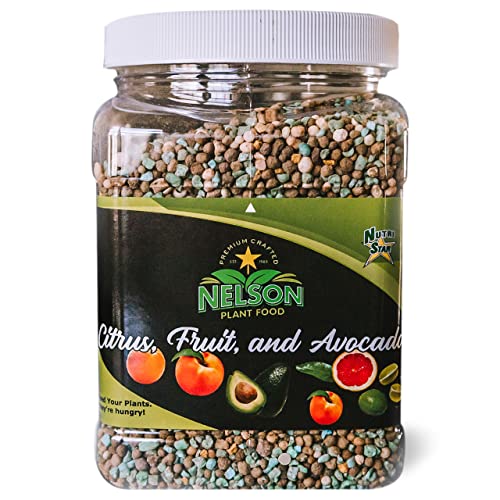
The Nelson NutriStar 12-10-10 formula is the most concentrated synthetic option on the list, and its high potassium content (10 percent soluble potash) directly supports apricot fruit size, sugar concentration, and cold hardiness. For apricot growers in regions where late spring frosts are a recurring threat, the potassium boost helps the tree maintain cellular integrity during temperature swings.
Nelson recommends applying every 30 days during the growing season, which is a more aggressive schedule than organic alternatives. This makes it better suited for experienced growers who are confident calibrating the dose for a single mature tree. Over-application on young or container apricots can lead to salt buildup that burns root tips.
The addition of calcium in the formula targets trunk and limb strength — a useful feature for apricots, which bear heavy fruit loads that can split branches in years with good pollination. Users with orange and avocado trees report an immediate flush of new leaf growth within two months of first application.
What works
- High potassium improves fruit quality and frost tolerance
- Calcium supports structural strength in bearing limbs
- Produces visible growth response quickly
What doesn’t
- High salt index requires precise watering to avoid root burn
- Frequent monthly application can be labor-intensive
7. Fertilome Fruit, Citrus and Pecan Tree Food 19-10-5
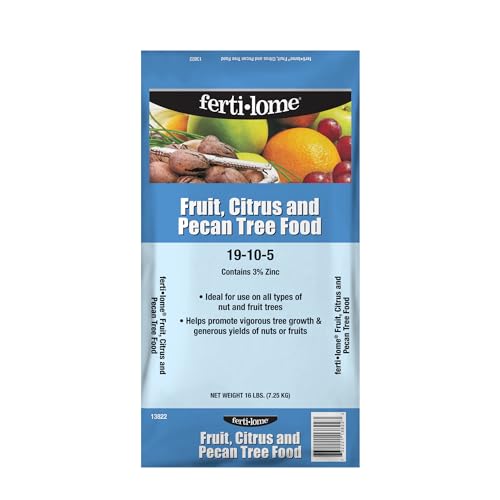
The Fertilome 19-10-5 blend is built for pecan and large fruit trees that need a heavy nitrogen push for canopy development. At 19 percent nitrogen, this is not a safe choice for young apricots or container trees, but for a mature, in-ground apricot with an established root system that can buffer the high salt load, it delivers a rapid green-up and vigorous shoot growth.
The included zinc targets rosette control in pecans, but zinc is also a micronutrient that apricots need for enzyme function and auxin production. If your soil test shows zinc deficiency, this product addresses it in a single pass rather than requiring a separate micronutrient supplement.
Long-term users of this brand report consistent results with peach, apple, and cherry trees over 20 years. The 16-pound bag represents the highest volume in this roundup, making it the most economical per-pound option for a large orchard, but the high nitrogen-to-potassium ratio means you will likely need to supplement with potassium sulfate later in the season to support fruit development.
What works
- Bulk 16-pound bag is cost-effective for large orchards
- Zinc content addresses specific micronutrient deficiencies
- Proven track record of decades of use on stone fruit
What doesn’t
- High nitrogen ratio can push soft growth if misapplied
- Not suitable for young or container apricot trees
Hardware & Specs Guide
NPK Ratio — The Triangle
The three numbers stand for nitrogen (N), phosphorus (P), and potassium (K). For apricots, the potassium number should be equal to or higher than the nitrogen number. A 3-5-5 or 6-2-4 is ideal. High-nitrogen formulas like 19-10-5 should be reserved for mature trees with a history of low vigor and only applied in early spring, never after fruit set.
Release Mechanism — Slow vs. Quick
Organic granules and spikes rely on soil microbes to break down nutrients, which means they release more slowly and are forgiving if you over-apply. Synthetic formulas like Nelson NutriStar release immediately and require precise watering to avoid salt damage. Apricots in sandy, fast-draining soils benefit from slow-release options that don’t leach past the root zone after one rain.
FAQ
What NPK ratio is best for an apricot tree?
Can I use a citrus fertilizer on my apricot tree?
When should I fertilize my apricot tree each year?
Final Thoughts: The Verdict
For most gardeners, the best fertilizer for apricot trees winner is the Jobe’s Organics Fruit & Citrus Spikes because the 3-5-5 ratio, Biozome microbes, and spike delivery eliminate the guesswork of feeding while aligning perfectly with apricot nutritional needs. If you want complete calcium coverage for fruit firmness, grab the Down To Earth Fruit Tree powder. And for the most economical coverage of a multi-tree orchard, nothing beats the Jobe’s Organics Granular 3-5-5.