
A 15-gallon grow bag represents the sweet spot for serious home food production — large enough for a single sprawling tomato plant, a trio of pepper bushes, or a full patch of potatoes, yet compact enough to cluster on a patio or balcony. The real challenge isn’t finding a bag this size; it’s finding one that won’t collapse mid-season, tear under wet soil weight, or force roots into a tangled mess that stunts your harvest.
I’m Rikta — the co-founder and writer behind Lawn Gear Lab. By evaluating fabric density, stitch integrity, handle reinforcement, and drainage geometry across dozens of grow bags, I’ve isolated the models that deliver tangible root-zone benefits without falling apart before your second growing season.
This analysis compares seven top contenders by construction quality and practical ergonomics so you can confidently select the best 15 gallon grow bags for your garden layout and crop type.
How To Choose The Best 15 Gallon Grow Bags
Fifteen-gallon fabric pots sit in a Goldilocks zone. Too small, and root-bound plants stunt; larger sizes become unwieldy to move. The decision hinges on three structural factors that separate a one-season disposable from a multi-year workhorse.
Fabric Density and GSM Rating
The weight of nonwoven fabric, measured in grams per square meter (GSM), directly dictates structural rigidity. Entry-level bags hover around 200G and tend to slump after heavy watering. Premium options at 300G maintain their cylindrical shape even with fully saturated soil, preventing the waist-like pinching that restricts root expansion along the bag walls.
Handle Architecture and Reinforcement
A 15-gallon bag filled with moist potting soil weighs roughly 60 to 70 pounds. Single-stitched nylon handles often tear at the seam under this load. Look for double-stitched or X-box reinforced straps. Bags designed with a lower side handle plus top handles allow you to tilt and dump the harvest without straining the fabric or your back.
Drainage and Air-Pruning Geometry
Nonwoven fabric naturally sheds excess moisture, but bag dimensions affect how much surface area contacts the root ball. Wider, shallower profiles (19-inch diameter, 12-inch height) provide more lateral root-zone aeration than tall, narrow cylinders. This geometry encourages fibrous root branching rather than downward spiraling, which is the primary advantage of fabric over rigid plastic nursery pots.
Quick Comparison
On smaller screens, swipe sideways to see the full table.
| Model | Category | Best For | Key Spec | Amazon |
|---|---|---|---|---|
| iPower 15 Gallon 6-Pack | Fabric Pot | Multi-season reusability | 300G thickened nonwoven + nylon handles | Amazon |
| FEED GARDEN 4-Pack | Fabric Pot | Heavy soil loads without collapse | 300G heavy-duty nonwoven | Amazon |
| Land Guard 10-Pack | Fabric Pot | Large-scale container gardens | 10-pack bulk value | Amazon |
| Gsonia Potato Grow Bags 4-Pack | Harvest Bag | Monitoring growth without digging | Dual viewing window + metal grommets | Amazon |
| VIVOSUN 5-Pack 15 Gallon | Fabric Pot | Lightweight portability with handles | 10.6 oz per bag — ultra-light | Amazon |
| Xpatee Potato Grow Bags 6-Pack | Harvest Bag | Mess-free harvest with built-in flap | Velcro harvest window + 3 handles | Amazon |
| Gro Pro Premium Nursery Pot | Plastic Pot | Long-term structural durability | Injection-molded plastic, 2.6 lb | Amazon |
In‑Depth Reviews
1. iPower Plant Grow Bag 15 Gallon 6-Pack
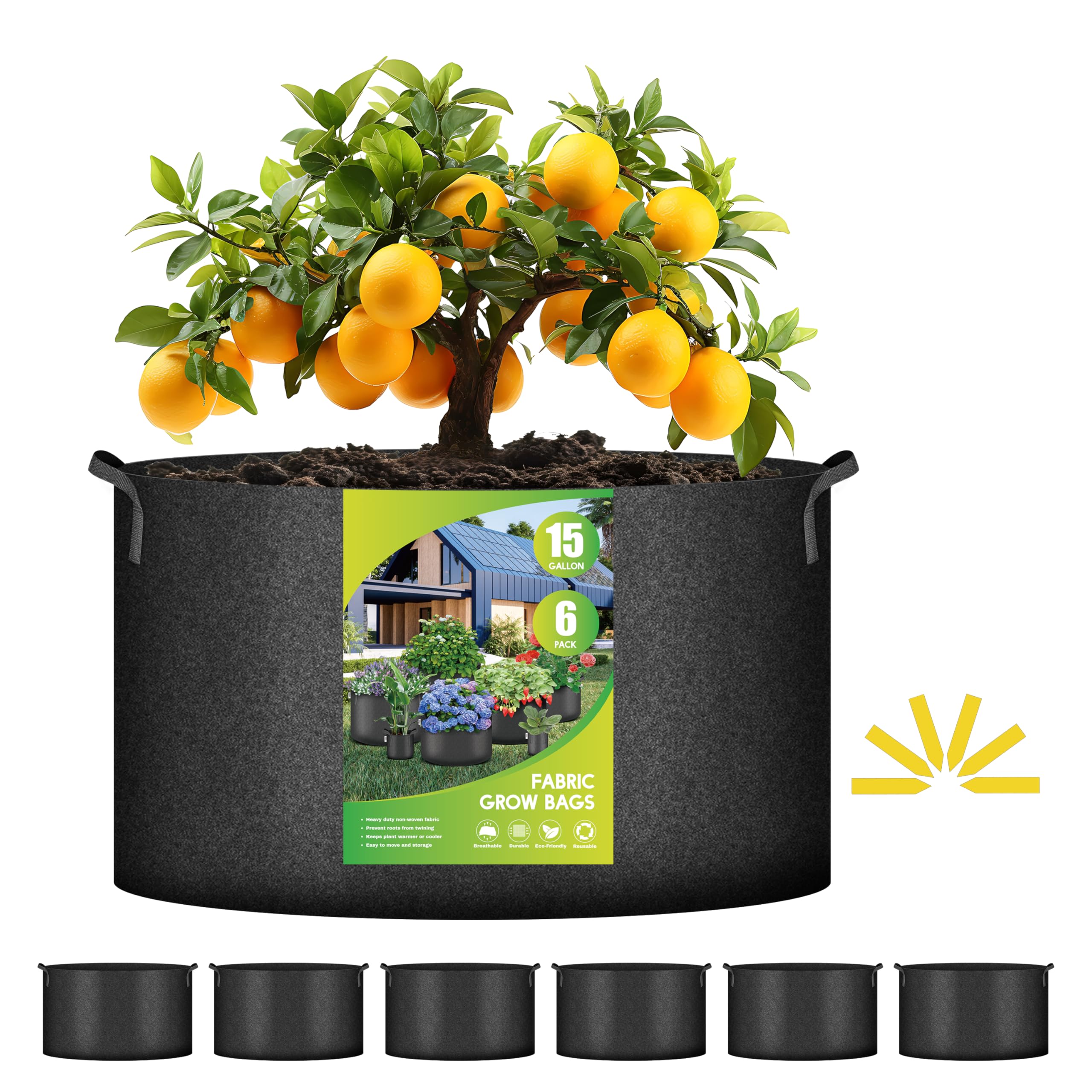
The iPower 6-pack uses 300G thickened nonwoven fabric that stands upright without external support, even when filled with damp potting mix. The nylon handle straps are double-stitched at stress points, and owners report these bags surviving three full growing seasons with only a machine wash between cycles. At 20 inches diameter and 14 inches tall, this profile provides generous lateral root space for indeterminate tomatoes and sprawling squash varieties.
The air-pruning action is pronounced because the fabric density allows airflow without excessive water loss through the sidewalls. Reviewers consistently note that roots stop at the bag perimeter rather than circling, then branch into dense fibrous networks. This is exactly the behavior that drives yield increases over rigid plastic nursery containers.
One limitation is that the 14-inch height is insufficient for tall-staking potatoes — reviewers aiming for heavy potato yields may prefer a deeper bag. The handles, while strong, are sewn directly into the fabric fold rather than X-box reinforced, so lifting a fully saturated bag requires two hands on opposing straps.
What works
- 300G fabric holds shape without sagging
- Nylon straps survive multiple seasons of washing and reuse
- Exceptional air-pruning promotes fibrous root branching
What doesn’t
- Height too shallow for heavy potato production
- Handles lack X-box reinforcement at attachment point
2. FEED GARDEN 15 Gallon Grow Bags 4 Pack
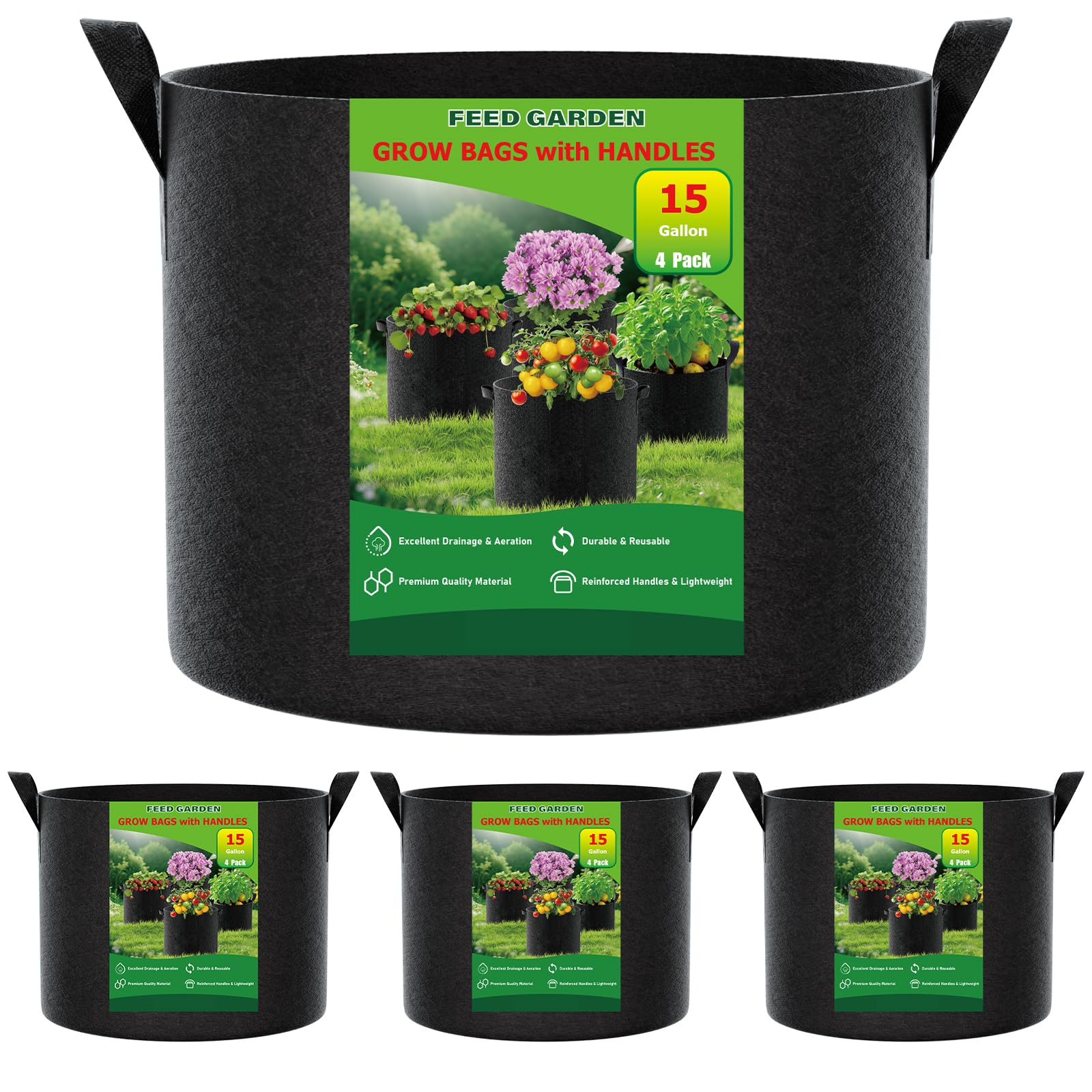
FEED GARDEN matches the iPower’s 300G fabric density but packages a 4-count set at a slightly lower per-bag cost, making it a strong choice for gardeners who want premium material without paying for a full 6-pack. The double-stitched handles are placed lower on the sidewall than most competitors, improving the mechanical advantage when carrying a loaded bag from the patio to a sunny lawn spot.
Customer reports confirm these bags hold their cylindrical shape against heavy soil pressure without the middle-section collapse that plagues thinner 200G bags. The 19.7 x 19.7 x 11.8-inch dimensions create a wide, stable base that resists tipping in windy conditions — a real advantage for top-heavy tomato plants in exposed locations.
The fabric does dry out faster than plastic pots, particularly in direct afternoon sun. Some users note that the bags arrive compressed and require a few days of outdoor expansion before they sit perfectly flat. The folding and storage convenience at the end of the season, however, offsets this minor break-in period.
What works
- Wide 19.7-inch footprint provides excellent tip resistance
- Handle placement lower on sidewall improves lifting leverage
- Premium 300G fabric maintains structure without sagging
What doesn’t
- Higher water loss rate in hot, dry conditions
- Bags need a few days to fully open and settle flat
3. Land Guard 10-Pack Fabric Grow Bags 15 Gallon
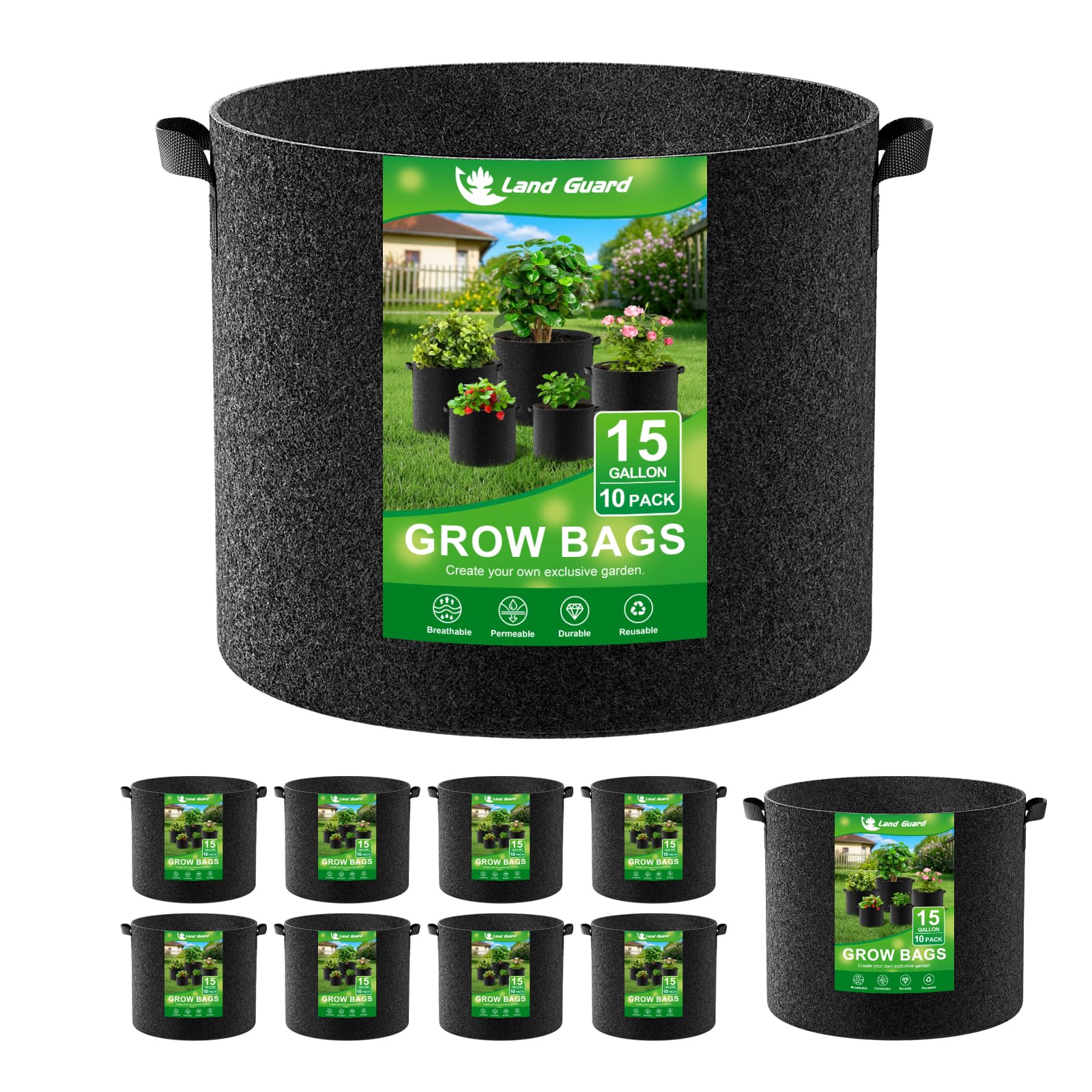
Land Guard delivers the lowest per-bag cost in this lineup by packaging ten bags together. The nonwoven material is slightly lighter than the 300G premium tier, but the high-strength weaving technology referenced in the specs helps it bear weight without immediate structural failure. At 13.7 inches tall these are among the shallower 15-gallon options, favoring shallow-rooted crops like greens and peppers over deep taproot vegetables.
The handles are adequate for moderate loads but lack the heavy-duty reinforcement seen on the FEED GARDEN and iPower units. Reviewers moving bags across a deck or patio after a rainfall report needing to lift from the base rather than trusting the straps alone. For gardeners placing bags in a permanent location and only shifting them occasionally, this is a marginal concern.
Second-year durability is the main question mark. Several owners report the bags surviving a full greenhouse season with tomatoes and cucumbers, but the thinner fabric shows more UV wear when left in direct sun year-round. For budget-conscious growers establishing a large container garden, the 10-pack volume is difficult to beat.
What works
- Lowest per-bag cost for large-scale setups
- Adequate drainage for peppers and leafy greens
- Lightweight enough for easy seasonal folding storage
What doesn’t
- Fabric feels less dense than 300G premium bags
- Handles not reinforced for heavy wet-soil lifts
4. Gsonia Potato Grow Bags 15 Gallon 4-Pack
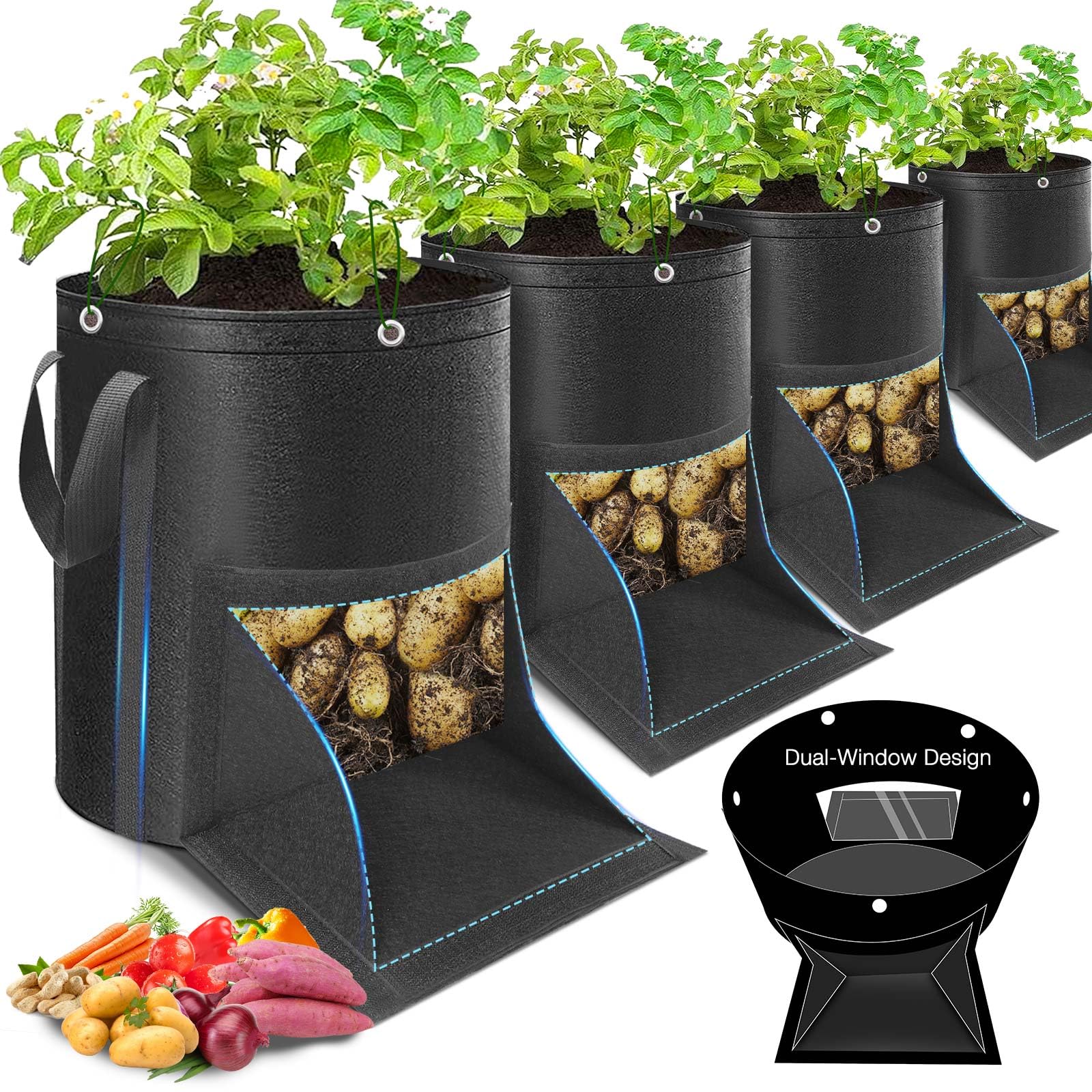
Gsonia takes a specialized approach with dual window panels — a clear front viewing section for monitoring tuber development and a separate top-down harvest flap on the rear. The clear window lets you assess ripeness without digging, while the harvest flap opens cleanly to pull potatoes or sweet potatoes without spilling the entire soil column onto your patio.
Metal grommets around the top edge support low-stress training (LST) by threading zip ties through them for tying down branches. This is a genuine advantage for gardeners growing sprawling tomato varieties or pepper plants that benefit from lateral branch positioning. The grommets are evenly spaced and riveted securely into the fabric hem.
Construction quality is solid for the price point, though the fabric itself feels slightly thinner than the 300G bags from iPower and FEED GARDEN. The handles are rated at 66 pounds each, but the stitching on the handle attachments would benefit from additional reinforcement at the stress corners. Users report the viewing window can cloud after a season of soil exposure, reducing clarity.
What works
- Dual window design enables root inspection without disturbance
- Metal grommets simplify low-stress training for tomatoes
- Rated handle capacity supports safe lifting at 66 lbs
What doesn’t
- Clear window panel loses transparency after extended use
- Fabric weight lighter than premium 300G alternatives
5. Xpatee Potato Grow Bags 6-Pack with Flap
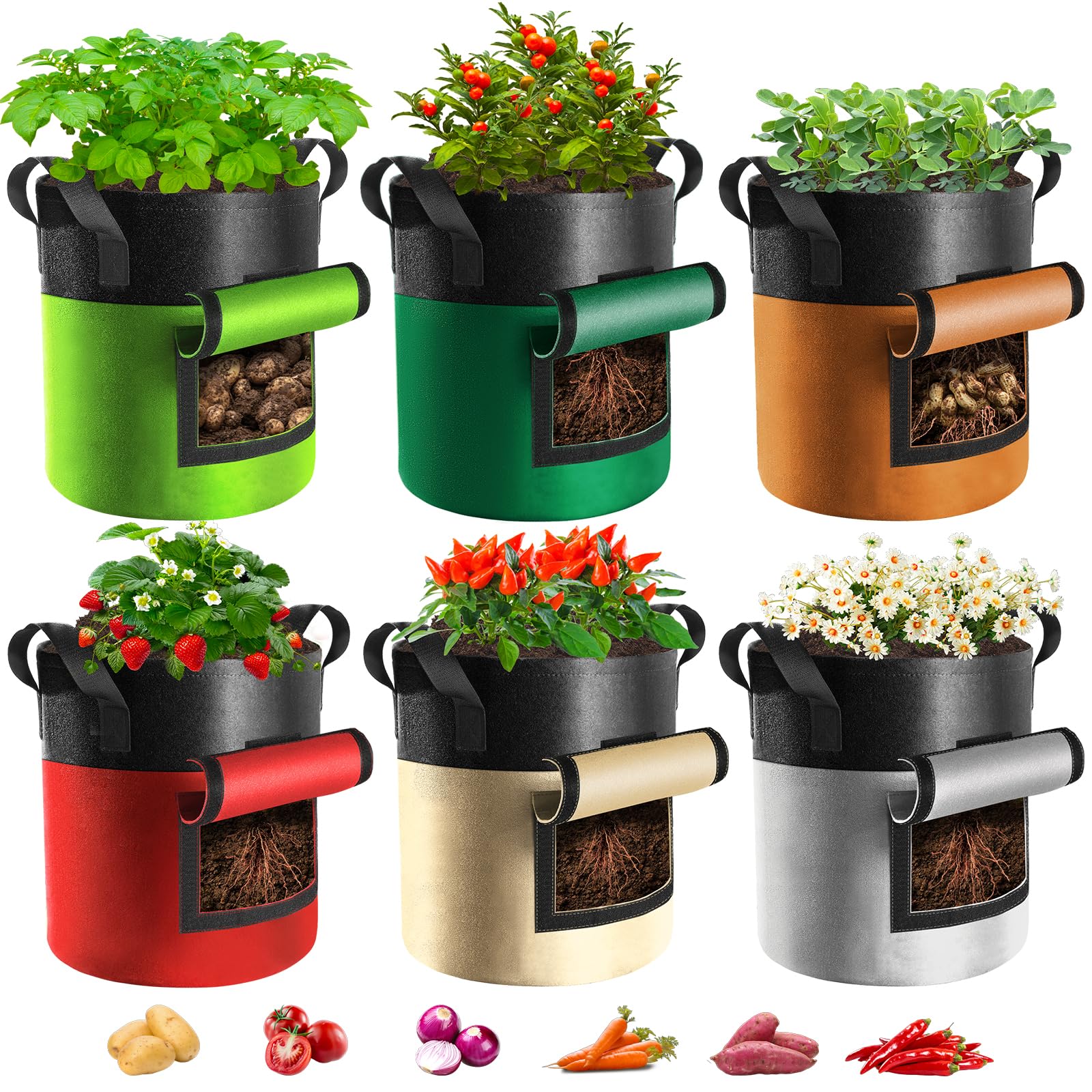
The Xpatee 6-pack introduces a Velcro-sealed harvest flap that runs vertically down one side, offering a cleaner alternative to the Gsonia’s dual-window approach. The Velcro closure allows you to open a section of the bag, reach in, and harvest mature potatoes without dumping the entire contents. The color-block fabric design adds visual variety to mixed-container gardens.
Three handles — two at the top rim and one lower on the side — provide superior control when tilting the bag for emptying or repositioning. The lower handle is particularly useful for gingerly tipping the bag without stressing the upper seam. The fabric is durable enough to survive a wash cycle, and multiple owners confirm these bags carried full vegetables into their second season without tearing.
One quirk reported by users is that light-colored fabric sections show soil-stain discoloration from water seepage. This staining is cosmetic and doesn’t affect structural performance, but gardeners who prioritize a clean aesthetic appearance may prefer all-black options. The Velcro flap should be kept free of soil debris between openings to maintain a secure seal.
What works
- Velcro harvest flap allows mess-free selective potato picking
- Three-handle configuration improves lifting and tilting control
- Durable fabric survives multiple seasons with washing
What doesn’t
- Light-colored panels show soil and water stains
- Velcro trap can clog with soil if not maintained
6. VIVOSUN 5-Pack 15 Gallons Grow Bags
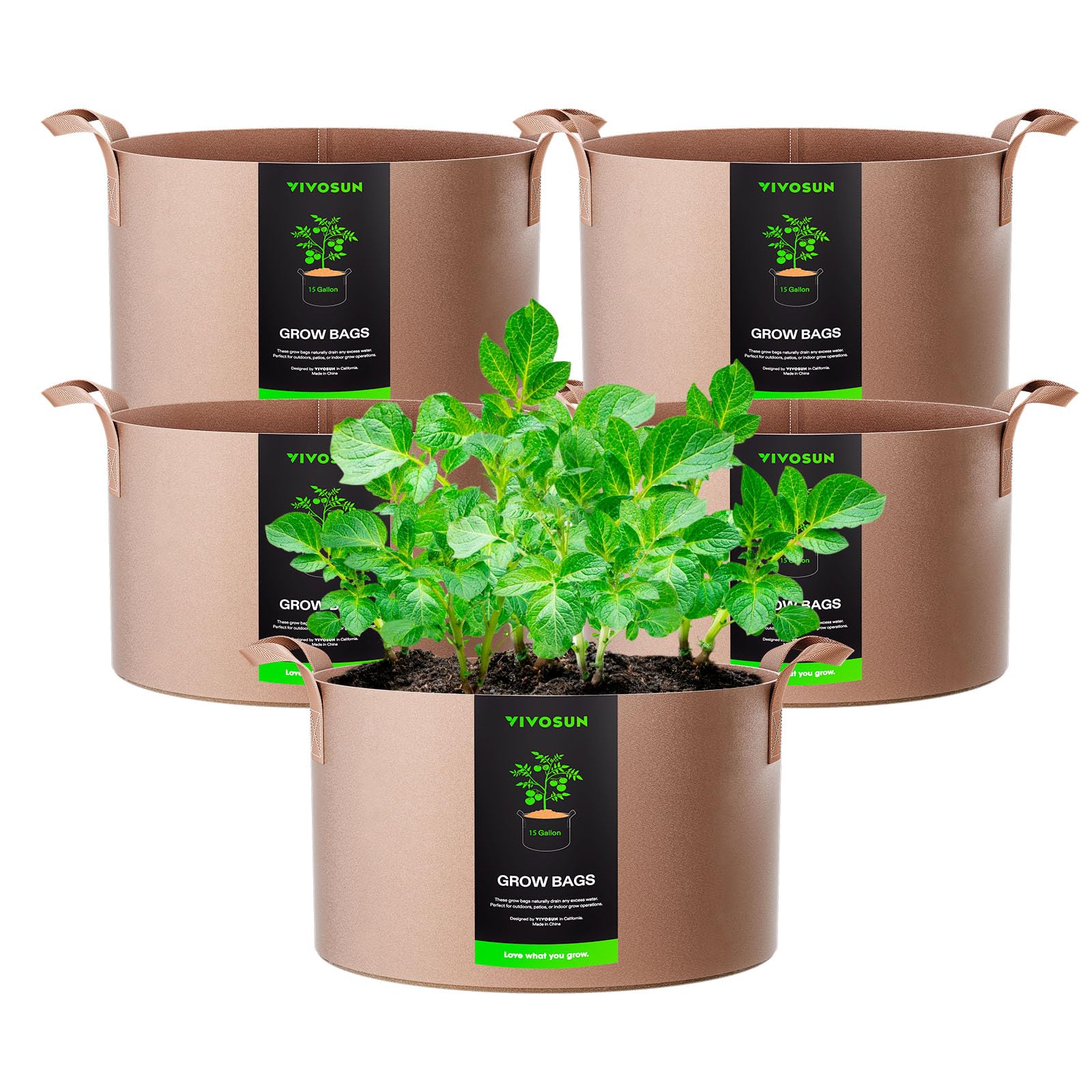
VIVOSUN’s 5-pack fabric bags weigh only 10.6 ounces each, making them the lightest option in this review. The tan nonwoven material provides effective drainage and air-pruning for container vegetables and berries. Owners report excellent results with berry bushes, noting that the root systems spread laterally rather than circling, which is a common complaint with smaller-diameter plastic nursery pots.
The double-stitched strap handles are a highlight — they attach with reinforced stitching that extends several inches into the fabric body, distributing load across a wider surface area than simple sewn loops. For lifting filled bags up stairs or onto deck surfaces, this handle design reduces the risk of tearing at the attachment point compared to budget alternatives with single-pass stitching.
The fabric is not as thick as the 300G premium options, which means the bag may develop a slight outward bulge when fully saturated with wet soil for extended periods. The bags will hold their shape for normal seasonal use, but gardeners in high-rainfall climates who keep bags consistently waterlogged may see accelerated fabric fatigue by the third season.
What works
- Ultra-light construction for easy transport and storage
- Handle stitching extends into body for better load distribution
- Proven success with berry bushes and lateral root development
What doesn’t
- Lower fabric density bulges under consistent saturation
- Less structural rigidity than 300G alternatives
7. Gro Pro Premium Nursery Pot 15 Gallon

The Gro Pro Premium Nursery Pot is the only rigid plastic option in this lineup, serving a different use case entirely. Instead of air-pruning benefits, you get an injection-molded container that will not degrade under UV exposure for years. The 2.6-pound wall thickness is noticeably heavier than flimsy nursery throws, and the rounded grip lip at the top rim prevents finger strain during carries.
Drainage holes are adequate for outdoor use, and the 14.6 x 19 x 15-inch dimensions provide a generous 15-gallon capacity that matches fabric bag volumes. The plastic walls retain soil moisture much longer than fabric, which can be an advantage in hot, dry climates where fabric bags require twice-daily watering. For perennial shrubs or small ornamental trees that will stay in the same pot for multiple years, this is a valid alternative to replaceable fabric.
The main drawbacks are the lack of air-pruning — roots will still circle when they hit the smooth plastic wall — and shipping fragility. Multiple owners report receiving pots with hairline cracks from being taped together in transit. The manufacturer sticker is also notoriously difficult to remove, leaving adhesive residue that collects dirt.
What works
- Near-indefinite UV and weather resistance outdoors
- Rounded grip lip prevents finger strain during lifting
- Slower moisture loss beneficial for dry-climate gardeners
What doesn’t
- Root circling still occurs on smooth plastic walls
- Shipping damage risk — pots can arrive with hairline cracks
Hardware & Specs Guide
Fabric GSM vs. Structural Integrity
Grams per square meter (GSM) is the primary spec for nonwoven fabric bags. A 300G rating means the material is dense enough to stand upright without external support when filled. Bags rated at 200G or lower tend to develop a “waist” pinch as the soil settles and the fabric relaxes, restricting root volume midway down the bag. Always verify the GSM in the product listing — some brands omit this spec for thinner bags intentionally.
Bag Profile and Root Architecture
The ratio of diameter to height determines root growth pattern. A wide, shallow profile (19-inch diameter, 12-inch height) promotes lateral root branching and air-pruning along the sidewalls. A taller, narrower profile forces roots downward, which can create a dense plug at the base that slows drainage over time. For crops like tomatoes and peppers that benefit from a broad exploration zone, the wider footprint is almost always superior.
FAQ
How much soil does a 15-gallon grow bag actually hold?
Can 15-gallon grow bags be reused year after year?
Do fabric grow bags need a plastic saucer underneath?
Final Thoughts: The Verdict
For most gardeners, the 15 gallon grow bags winner is the iPower 15 Gallon 6-Pack because its 300G fabric and nylon handles deliver multi-year durability at a per-bag cost that undercuts premium single-pack alternatives. If you want a harvest window for inspecting root crops without disturbing the plant, grab the Gsonia 4-Pack with Dual Windows. And for the largest installation — ten bags for a serious container garden — nothing beats the Land Guard 10-Pack for raw volume value.