
A crisp, clean border between your lawn and flower beds is the single most underrated upgrade for a landscape. Without it, mulch migrates, grass invades, and the whole yard looks unfinished. But choosing the wrong type of edging—flimsy plastic that warps, or decorative pieces that don’t hold up to a string trimmer—leads to constant maintenance and a frayed look. The right barrier saves you hours of re-edging every season.
I’m Rikta — the co-founder and writer behind Lawn Gear Lab. I’ve spent countless hours analyzing edging materials, installation methods, and long-term durability data from thousands of owner reports to separate the permanent solutions from the temporary fixes.
Whether you need a quick no-dig strip or a heavy-duty steel barrier that stays put for years, this guide will help you find the ideal edging for landscaping that matches your project’s scale and your tolerance for maintenance.
How To Choose The Best Edging For Landscaping
Picking the wrong edging means replacing it every year. Focus on material rigidity, height, and the anchoring system. Here are the three factors that separate a border that lasts from one that buckles or disappears into the soil.
Material Rigidity and Climate Stability
Thin, cheap plastic coils warp and curl under direct sun, creating wavy borders that look messy. High-density polyethylene (HDPE) holds its shape better, but even that can soften in extreme heat if the stake spacing is too wide. Galvanized steel with powder coating is the gold standard for straight lines, though it requires a bit more effort to bend around curves. For a decorative look, resin faux stone is rigid but susceptible to cracking if driven over or hit by a metal edger blade.
Height and Ground Clearance
A 2-inch edging works for shallow flower beds with a thin layer of mulch, but it won’t block deep-rooted grass like Bermuda or zoysia. A 4- to 5-inch edging—with about 2 inches above ground—digs deep enough to act as a true root barrier. If you use river rock or heavy pebbles, choose a 2.5-inch or taller wall to keep the stones from spilling over the top during rain.
Installation Method and Stake Quality
No-dig edging with integrated spikes is convenient for loose soil, but the stakes often bend or break in clay-heavy ground. Pound-in steel edging with sawtooth spikes provides superior hold in any soil type, though you’ll need a rubber mallet and gloves. The number of stakes included matters—most kits are stingy on stakes. Plan on one stake every 18 to 24 inches for straight runs, and every 12 inches on tight curves to prevent warping.
Quick Comparison
On smaller screens, swipe sideways to see the full table.
| Model | Category | Best For | Key Spec | Amazon |
|---|---|---|---|---|
| Worth Garden Galvanized Steel 10-Pack | Steel Strip | Permanent straight borders | 4.5″ H x 33 ft total, 11 clips | Amazon |
| EasyFlex 2.5″ Tall Wall No-Dig Kit | No-Dig Coil | Large curved beds, river rock | 2.5″ H x 100 ft, 64 stakes | Amazon |
| Beuta Landscape Edging Faux Stone | Resin Brick | Decorative, high-visibility beds | 2.25″ H x 48″ per section, 4 packs | Amazon |
| Master Mark Terrace Board 5″ x 40 ft | HDPE Coil | Deep root barriers, raised layers | 5″ H x 40 ft, 10 stakes | Amazon |
| AGTEK Garden Edging 49 ft Kit | No-Dig Coil | Quick borders, curves, small beds | 3″ H x 49 ft, 30 stakes | Amazon |
| FunFanso 2″ x 66 ft Edging Kit | No-Dig Coil | Budget-friendly, shallow beds | 2″ H x 66 ft total, 100 spikes | Amazon |
| OUSHENG Decorative Metal Fence 10-Pack | Mesh Panel | Pet barrier, decorative bed border | 36″ H x 10.8 ft, 10 panels | Amazon |
In‑Depth Reviews
1. Worth Garden 10-Pack Galvanized Steel Landscape Lawn Edging

The Worth Garden edging solves the single biggest complaint about coil edging: it stays straight. Each of the 10 strips measures 40 inches long with a 4.5-inch height, and the 2.5-inch sawtooth spikes drive deep into compacted soil without bending. The powder-coated galvanized steel resists the rust that develops on bare metal within two seasons, and the 11 included connecting clips lock adjacent strips firmly together for a seamless line.
Installation requires a rubber mallet—no trenching or digging needed—and the steel bends smoothly for gentle curves while maintaining crisp edges on straight runs. Owners consistently note that the edging holds up to string trimmer contact without warping or cracking, something thin plastic edging cannot claim. The rustic powder-coated finish also hides minor scuffs that occur over time.
The main concession is flexibility for tight-radius curves. The steel strips can bend but do not handle a 90-degree corner as gracefully as a flexible coil. You will also need a hacksaw to trim the metal to custom lengths. For the durability gain over plastic, these are minor trade-offs for a border that will look the same five years from now.
What works
- Galvanized steel with powder coat resists rust and impact from trimmers.
- Sharp sawtooth spikes anchor firmly in hard soil without pre-digging.
- Includes 11 connecting clips for a locked, seamless seam between strips.
What doesn’t
- Steel requires a hacksaw or metal blade to cut; not easily trimmed by hand.
- Limited flexibility for sharp 90-degree corners compared to plastic coils.
2. EasyFlex 2.5″ Tall Wall No-Dig Landscape Edging Kit

The EasyFlex Tall Wall is the best choice for large-scale projects where you need a lot of coverage fast. The 100-foot coil of recycled plastic stands 2.5 inches tall, giving it enough height to retain medium river rock and heavy mulch without spilling. The woodgrain texture on the visible face blends into natural landscapes better than a flat black strip, and the recycled material resists UV fading better than standard polyethylene.
Installation is genuinely no-dig: pull the coil into position, score the ground along the bottom edge with a shovel or trowel, then hammer the included anchoring spikes into the pre-formed slots. The 64 included spikes are generous compared to most kits, though owners recommend buying a secondary pack if your layout has many tight curves requiring closer stake spacing. The material bends easily for sweeping arcs around trees or curved beds.
The biggest real-world concern is heat distortion. In direct summer sun, the recycled plastic can soften slightly, causing the top edge to curl or wave if stakes are spaced more than 24 inches apart. Keeping stake spacing at 18 inches or less solves this. Also, the 2.5-inch height is not enough to block deep-rooted grass species—this is a surface retainer, not a sub-surface root barrier.
What works
- 100-foot coil covers large borders without needing multiple sections.
- No-dig installation saves hours on big projects; spikes included.
- Recycled plastic resists UV fading and holds up to seasonal ground movement.
What doesn’t
- Can curl or wave in direct heat if stakes are spaced wider than 18 inches.
- 2.5-inch height is too shallow for blocking deep-rooted grass invasion.
3. Beuta Landscape Edging Faux Stone Bricks

The Beuta edging elevates the visual standard for landscape borders. Each 48-inch section comprises six interlocking resin bricks molded to mimic natural stone in a Greystone finish. At 2.25 inches tall and 3.75 inches wide, the profile mimics real stone edging at a fraction of the weight and without the back-breaking installation. The sections interlock securely, creating a continuous line that resists shifting even when walked on.
Installation is straightforward: set the sections in a shallow trench or directly on top of the soil, then drive the included spikes through the pre-drilled holes. Each six-brick section comes with three spikes, which is enough for straight runs but may require additional stakes for curves or high-traffic areas. The resin material holds up well against string trimmer hits and UV exposure, and the realistic stone texture hides minor scuffs from maintenance equipment.
The premium price reflects the aesthetic payoff, but the 2.25-inch height is the shallowest of all options reviewed. It effectively defines a border and holds light mulch in place, but it will not stop grass rhizomes from creeping underneath. Also, the end sections lack stakes—you must order additional spikes separately if you want both ends anchored securely.
What works
- Realistic faux-stone appearance elevates landscape aesthetics immediately.
- Interlocking sections install without adhesive or special tools.
- Lightweight resin is durable against trimmers and weather extremes.
What doesn’t
- 2.25-inch height is too short for deep mulch retention or root blocking.
- End pieces lack stakes; additional spikes must be bought separately.
4. Master Mark Terrace Board Landscape Coiled Edging

The Master Mark Terrace Board is the best option when you need serious sub-surface depth. At 5 inches tall, it buries well below root level for most grass species, making it an effective weed and grass barrier for garden beds and raised layers of mulch or rock. The HDPE material is thick enough to hold its shape without constant staking, and the textured woodgrain finish on the visible face blends well into natural landscapes.
Installation involves digging a shallow trench about 1.5 inches deep, setting the coil edge in place, and using the included stakes to secure it. Owners strongly recommend laying the coil flat in the sun for an hour or two before installation to relax the curl memory, which makes it much easier to lay straight. The product takes a set well once in place and does not warp or fade like thinner polyethylene alternatives.
The most common criticism is the stake count. The kit includes 10 stakes for 40 feet of edging—that is one stake every 48 inches. In loose soil or sandy conditions, this leaves the edging prone to shifting. Most owners confirm that buying a separate pack of stakes and spacing them every 18 inches is necessary for a stable, straight border. The material itself, however, is proven to last for years without rot or peeling.
What works
- 5-inch height provides a true root barrier that blocks deep grass invasion.
- HDPE material resists UV fading, cracking, and peeling for many seasons.
- Textured woodgrain face blends better than flat plastic edging.
What doesn’t
- Only 10 stakes included for 40 feet—requires purchasing additional stakes.
- Coil memory can cause waviness unless warmed in the sun before installation.
5. AGTEK Garden Edging 49 ft Kit
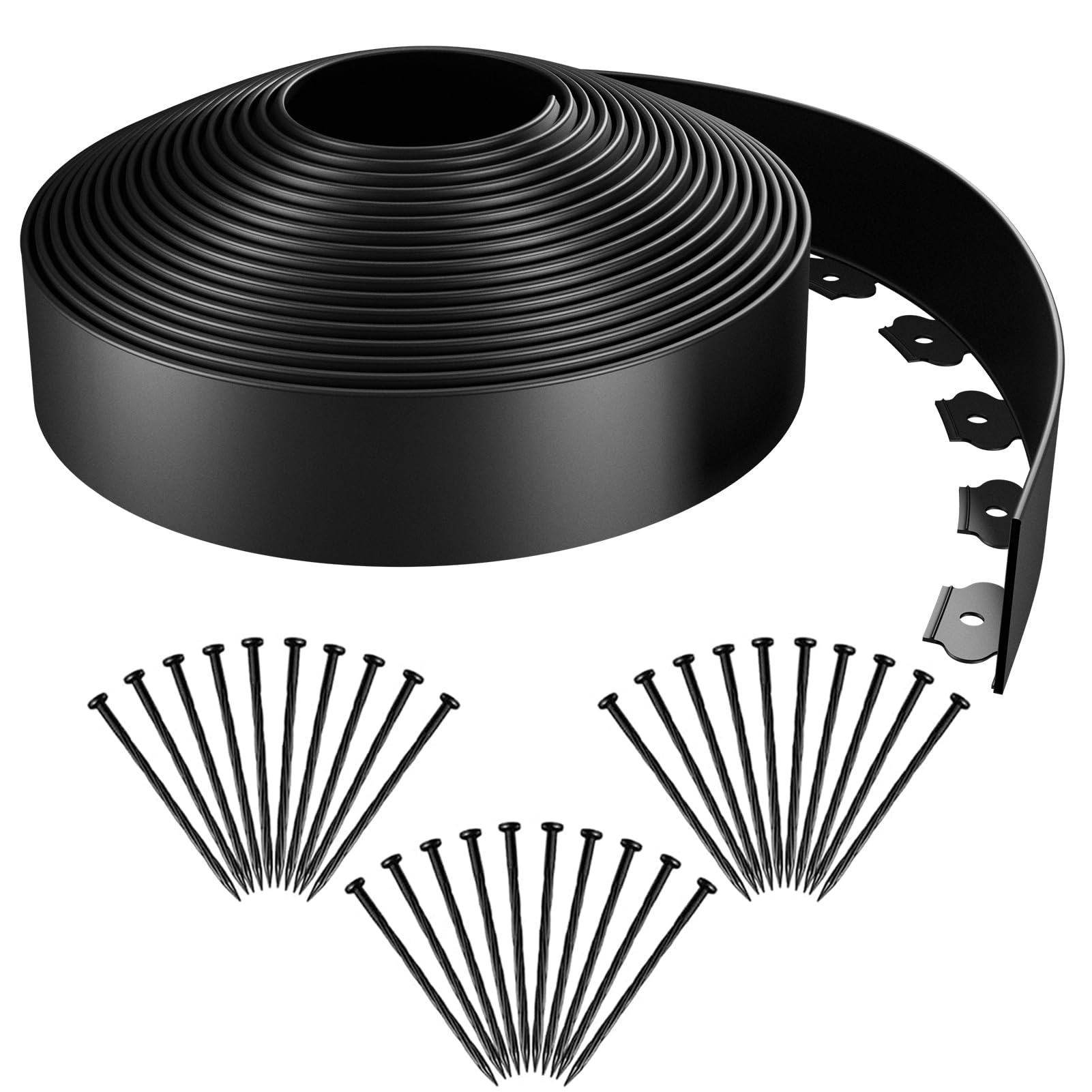
The AGTEK 49-foot kit hits a sweet spot between price and practical height. At 3 inches, this polyethylene coil stands tall enough to retain a generous layer of mulch or pebbles without looking intrusive. The material is flexible enough to form tight curves around tree rings or garden corners, and the 30 included stakes bring the spacing down to roughly one stake every 19 inches, which is adequate for most soil types.
Installation is no-dig: set the coil in your desired line and tap the stakes through the pre-punched holes with a rubber mallet. The polyethylene is easier to cut than HDPE—scissors or a utility knife clean through it—so trimming to exact length is fast. Owners report that the edging holds up well to string trimmer contact and resists cracking in low-freeze climates. The black color stays fairly deep out of direct sun for two or three seasons.
The trade-off for the low cost is that the polyethylene is not as rigid as HDPE or steel. In very hot, direct sun, the exposed top edge can soften slightly, leading to a subtle waviness over long straight runs. The 3-inch height is also not enough to stop deep-rooted weeds—this is a surface border tool. For a clean, quick border on a modest flower bed, it works well enough to justify the budget.
What works
- 49-foot length covers large beds for a low cost per foot.
- 30 stakes included—better stake density than most budget kits.
- Flexible polyethylene bends easily for tight curves and corners.
What doesn’t
- Polyethylene softens and waves in direct sun on long straight runs.
- 3-inch height is insufficient for blocking deep grass or weed roots.
6. FunFanso 2-Inch x 66 ft Landscape Edging Kit
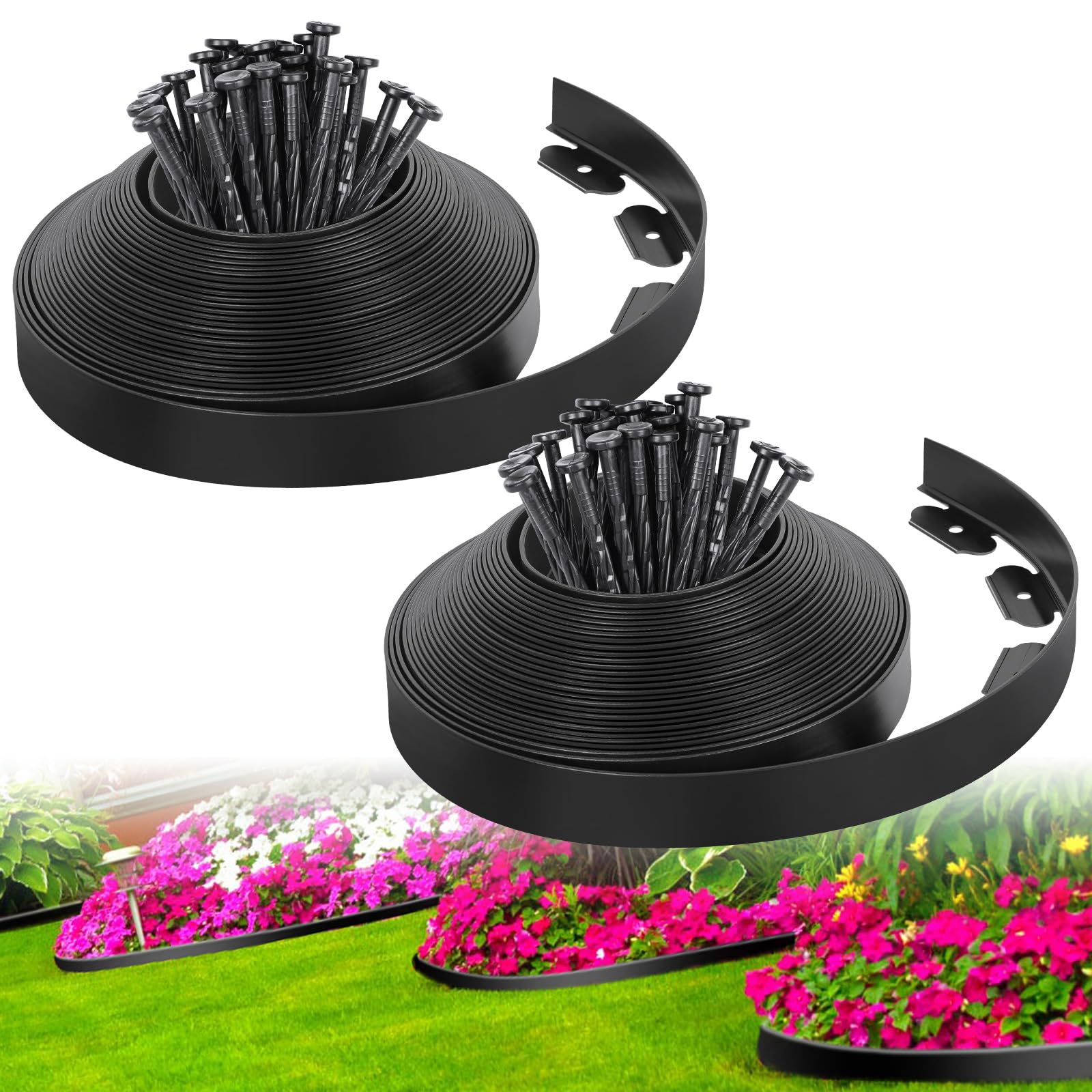
The FunFanso kit is a cost-effective entry point for defining shallow flower beds. The 66-foot total coverage comes from two 33-foot coils, and the kit includes 100 landscape spikes—far more stakes per foot than any other product reviewed.
Installation is simple: unfurl the coil, set it along your border, and hammer the spikes through the pre-cut holes. The polyethylene cuts easily with scissors or a utility knife, making it simple to custom-fit around corners. Owners highlight that with 100 spikes, you can space them every 8 to 10 inches if needed, which helps prevent the waviness that plagues similar thin coils.
The main limitation is the shallow 2-inch height. Heavy mulch or river rock will spill over the top during heavy rain or foot traffic, and the edging does not offer any resistance to deep-rooted grass. Some owners also note that the stake tips can snap off when hammering into hard or rocky soil. For a temporary border or a very low-profile bed, this gets the job done without breaking the budget, but expect to replace it sooner than a thicker or steel option.
What works
- 66 feet of coverage at a very low per-foot cost; 100 spikes included.
- Easy to cut and install with basic hand tools; no trenching required.
- Thin profile works well for low-profile borders with shallow mulch.
What doesn’t
- 2-inch height does not retain heavy materials or block deep roots.
- Stake tips can break off when hammering into hard or rocky ground.
7. OUSHENG Decorative Garden Fence Metal Panel 10-Pack

The OUSHENG fence panels serve a completely different role than ground-level edging. At 36 inches tall, these arched wire panels act as a decorative barrier that keeps small dogs, chickens, and rabbits out of garden beds while defining the border with a classic garden aesthetic. The set includes 10 panels that interlock horizontally, creating a 10.8-foot run that can be arranged in straight lines, L-shapes, or zig-zags.
Installation requires screwing pointed feet into each panel, then pressing the assembled feet into the soil. The interlocking design holds the panels together without additional tools, and the rustproof black coating holds up well to rain and sprinkler exposure. Owners report that the panels are sturdy enough to deter small animals and provide a visual boundary without blocking sight lines like a solid fence.
Build quality is the main variable. Some buyers report that the welding on the decorative arch can be inconsistent, with a few pieces arriving with loose top sections that require zip ties to tighten. The pointed feet also require pre-drilling or significant effort in hard-packed soil. As a decorative animal barrier, it works well for the price, but it should not be confused with a permanent ground-level edging solution for holding mulch or blocking grass roots.
What works
- 36-inch height effectively keeps small animals out of garden beds.
- Classic arched design adds a decorative element to the landscape.
- Interlocking panels assemble without tools and configure in various shapes.
What doesn’t
- Inconsistent welding on some panels requires DIY fixes like zip ties.
- Pointed feet are difficult to drive into hard or rocky soil.
Hardware & Specs Guide
Material Composition
The material determines the edging’s longevity, rigidity, and resistance to impact. HDPE (high-density polyethylene) is the best plastic choice for sub-surface root barriers because it does not rot or peel and remains flexible enough for curves without breaking. Galvanized steel with powder coating offers the best straight-line stability and impact resistance from string trimmers but lacks flexibility for tight curves. Standard polyethylene (PE) is the most affordable but softens in heat, leading to waviness over time. Resin faux stone provides a decorative appearance but is brittle under heavy impact.
Height and Sub-Surface Depth
Edging height splits into above-ground and below-ground portions. A 5-inch total height typically sits 1.5–2 inches below ground, giving enough root-block depth for most grasses. A 3-inch or lower height is adequate for surface definition only—it will not stop rhizome-spreading grass like Bermuda or St. Augustine. For heavy gravel or large bark chips, a 2.5-inch or taller above-ground wall prevents material from washing over the top during rain. Always confirm the actual above-ground exposure of a given product, as some brands list total height including the buried portion.
FAQ
What height of edging is needed to stop Bermuda grass from spreading?
Can I install no-dig edging in clay-heavy soil?
How do I prevent plastic edging from becoming wavy in the sun?
Is steel or plastic edging better for curved flower beds?
How many stakes do I actually need for a 50-foot run of edging?
Final Thoughts: The Verdict
For most gardeners, the edging for landscaping winner is the Worth Garden Galvanized Steel 10-Pack because it offers the best balance of permanent durability, straight-line stability, and impact resistance. If you need a decorative, high-visibility border for shallow flower beds, grab the Beuta Faux Stone Bricks. And for a massive curved-bed project where speed matters most, nothing beats the coverage of the EasyFlex 100-Foot No-Dig Kit.