
Potatoes are heavy feeders—they pull a lot of nutrients from the soil to swell those tubers underground. The wrong dirt leaves you with small, misshapen potatoes or a disappointing harvest. What you need is a loose, well-draining mix full of organic matter that gives potato roots room to expand and the food to fuel growth.
I’m Rikta — the co-founder and writer behind Lawn Gear Lab. This guide is built by comparing the manufacturers’ published specifications and the patterns across verified customer reviews, so you get each pick’s real strengths and trade-offs instead of marketing spin.
Whether you are planting in raised beds, grow bags, or straight into the ground, this breakdown of the best dirt for potatoes will help you choose the mix that gives your spuds the best chance at a bumper crop.
How To Choose The Best Dirt For Potatoes
Picking soil for potatoes is less about brand names and more about a few key traits. Here is what matters most.
Texture and drainage: why potatoes hate heavy clay
Potato tubers are essentially swollen stems that need room to expand. A dense, clay-heavy soil compacts easily, which stunts tuber growth and leads to misshapen potatoes. You want a mix that stays loose and crumbly—typically one that contains perlite (a lightweight volcanic rock that creates air pockets) or vermiculite (a mineral that holds water like a sponge). Those small white bits create air pockets so roots get oxygen and water flows through instead of pooling. Waterlogged soil is the fastest way to rot your crop before it ever reaches the kitchen.
Nutrient density: pick a mix that already feeds
Potatoes are hungry from day one. They devour nitrogen, phosphorus, and potassium to build strong vines and fat tubers. Many bagged soils already contain compost, worm castings, or kelp meal—ingredients that release nutrients slowly. A mix that already has these cuts down on your need to add fertilizer later. Look for organic matter near the top of the ingredient list. A soil that says “fortified” or “enriched” on the bag is usually a good sign.
Volume: one bag is rarely enough for a full patch
Potatoes grow best when you “hill” them—pulling extra soil up around the stems as they grow. This encourages more tubers to form along the buried stem. Because of that, you go through a surprising amount of dirt. A single 2-cubic-foot bag might fill a couple of 10-gallon grow bags, but if you are filling a raised bed, you will need several. Check the volume number on the bag (in quarts or cubic feet) and multiply based on your container or bed size before you buy.
Quick Comparison
On smaller screens, swipe sideways to see the full table.
| Model | Category | Best For | Key Spec | Amazon |
|---|---|---|---|---|
| Coast of Maine Vegetable & Tomato Soil | Premium All-Purpose | Container and in-ground potatoes | 20 Quarts | Amazon |
| Espoma Organic Vegetable & Flower Garden Soil | In-Ground Specialist | Amending native garden soil | 1 Cubic Foot | Amazon |
| Avalution Potting Soil Mix | Container Champion | Grow bags and small containers | 18 Quarts | Amazon |
| Coast of Maine Bar Harbor Blend | Premium Potting Mix | Potato containers in small spaces | 16 Quarts | Amazon |
| Coast of Maine Castine Blend | Raised Bed Powerhouse | Large raised beds and big yields | 2 Cubic Feet | Amazon |
In‑Depth Reviews
1. Coast of Maine Organic & Natural Planting Soil for Vegetables & Tomatoes

20 quarts (25% more than the brand’s 16-quart Bar Harbor Blend) makes this the top pick for anyone who wants one bag that works in both containers and in-ground patches. The composted manure and sphagnum peat moss mix stays lightweight and crumbly, giving potatoes room to swell, and buyers report it is “excellent for vegetables; holds moisture well, drains well, high in nutrients.”
The cedar and aromatic wood in the mix help deter soil insects naturally, a detail that matters for potatoes left underground for weeks. The OMRI (Organic Materials Review Institute) organic listing means no synthetic chemicals touch your crop.
The honest limit: a few reviewers noted it can arrive with fungus gnats (tiny flying insects that hatch from damp soil), so letting the soil dry in the sun or treating with neem oil before planting is a good precaution. For the volume, quality, and nutrient content, this is the most versatile pick.
Why it’s great
- Holds moisture well without getting soggy
- Lightweight texture perfect for hilling potatoes
- OMRI certified organic
Good to know
- May contain fungus gnat larvae — disinfect before use
- Higher price per quart than bulk options
2. Espoma Organic Vegetable & Flower Garden Soil

Where the Coast of Maine mix shines in containers, Espoma takes the lead if you are mixing it into existing garden beds. It is designed to be blended with native soil rather than used alone in pots. The 1-cubic-foot bag (about 30 quarts) gives you more volume than the Coast of Maine Vegetable & Tomato and the 18-quart Avalution mix, making it a better value for covering a larger area. Buyers confirm the difference is real, with one noting that “plants in Espoma outperformed those in a store-bought organic mix.”
The secret is Myco-Tone, a proprietary blend of mycorrhizal fungi (tiny fungi that attach to roots and help them pull in water and nutrients). This is especially useful if your native soil is average and needs a boost. The mix is enriched with earthworm castings, which release nitrogen steadily — exactly what potatoes need during the bulking phase.
Choose this over the top pick if you are planting directly in the ground and want to improve your existing dirt rather than replace it entirely. Just keep it outdoors — a couple of buyers reported soil gnats when using it for indoor plants, though the outdoor potato patch avoids that problem. This is the right choice for amending large in-ground beds where the Coast of Maine all-purpose mix would run out quickly.
Where it shines
- Mycorrhizae help roots absorb more nutrients
- Large 1-cubic-foot volume covers more ground
- Trusted organic ingredients, no synthetics
Worth noting
- Best used as a soil amendment, not standalone potting mix
- Some users saw gnats with indoor use
3. Avalution Potting Soil Mix (18 Quarts)
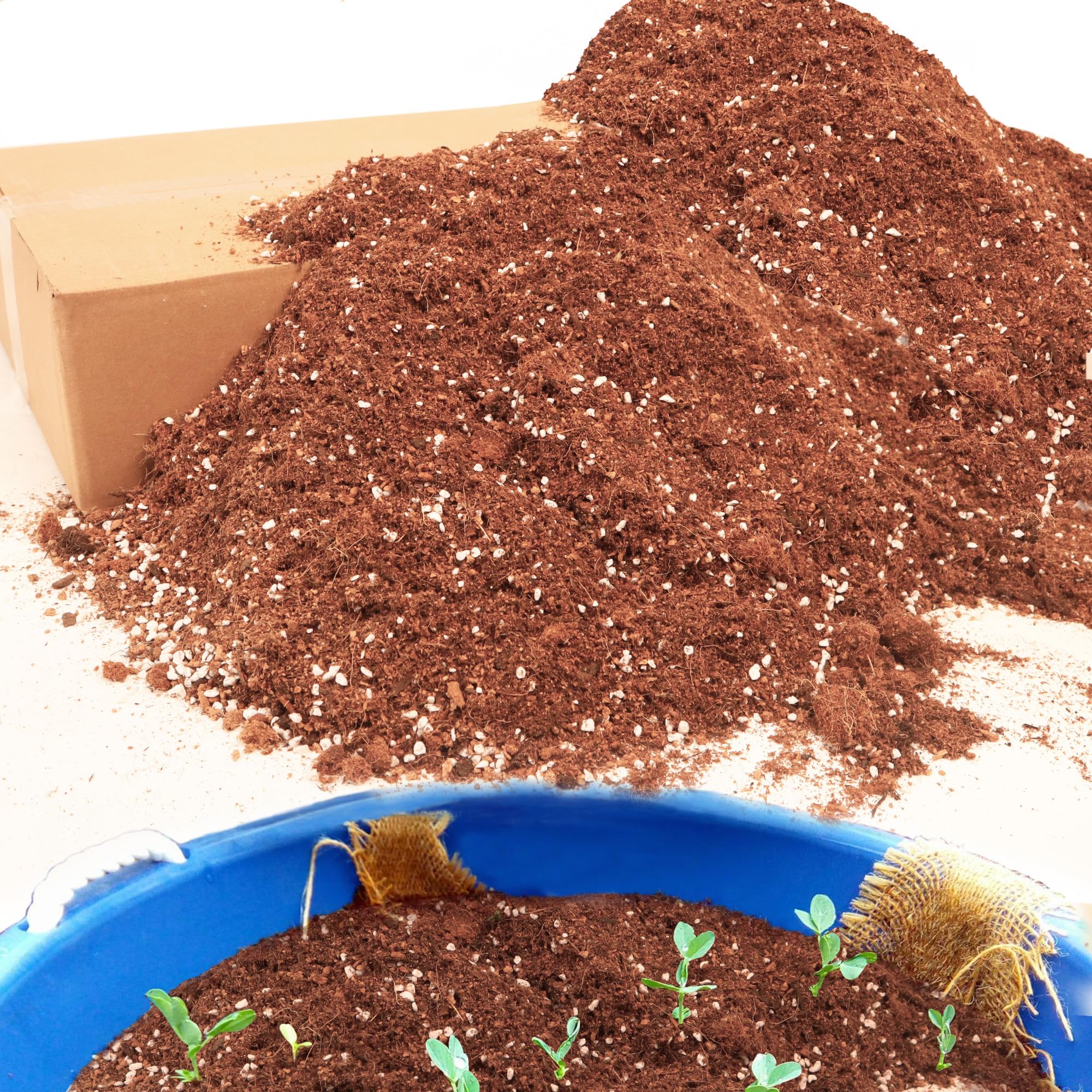
Picture this scenario: you have a few 10-gallon grow bags on a patio and want to grow potatoes without a full garden. This mix from Avalution is built exactly for that. It combines five ingredients — 55% coconut coir (a pH-neutral, fast-rehydrating fiber from coconut husks), 12% peat moss, 11% perlite, 11% vermiculite, and 11% rice hull charcoal — to create a soil that is extremely light and aerated. One buyer shared a remarkable story: “Soil revived a severely wilted plant overnight after repotting; water retention improved significantly (no runoff).”
For potatoes in containers, that light texture is critical. The perlite and vermiculite prevent compaction, so tubers can push through the soil easily. The rice hull charcoal adds a subtle nutrient boost and helps control moisture. At 18 quarts, it is a convenient size for one or two grow bags. Unlike the Espoma mix which is meant to amend native soil, this one works perfectly as a standalone container fill.
The standout here is the water-retention-to-drainage balance — it holds enough moisture between waterings but never turns into a muddy clump. That is the single hardest thing to get right in container potato growing. Skip this if you are filling a large raised bed; the coarser Castine Blend from Coast of Maine will give you better volume and value.
What stands out
- Five-part blend gives exceptional aeration
- Excellent water retention without runoff
- Lightweight and easy to handle in containers
The trade-offs
- Not as nutrient-dense as compost-based mixes
- Smaller volume may require multiple bags for larger beds
4. Coast of Maine Bar Harbor Blend Potting Soil
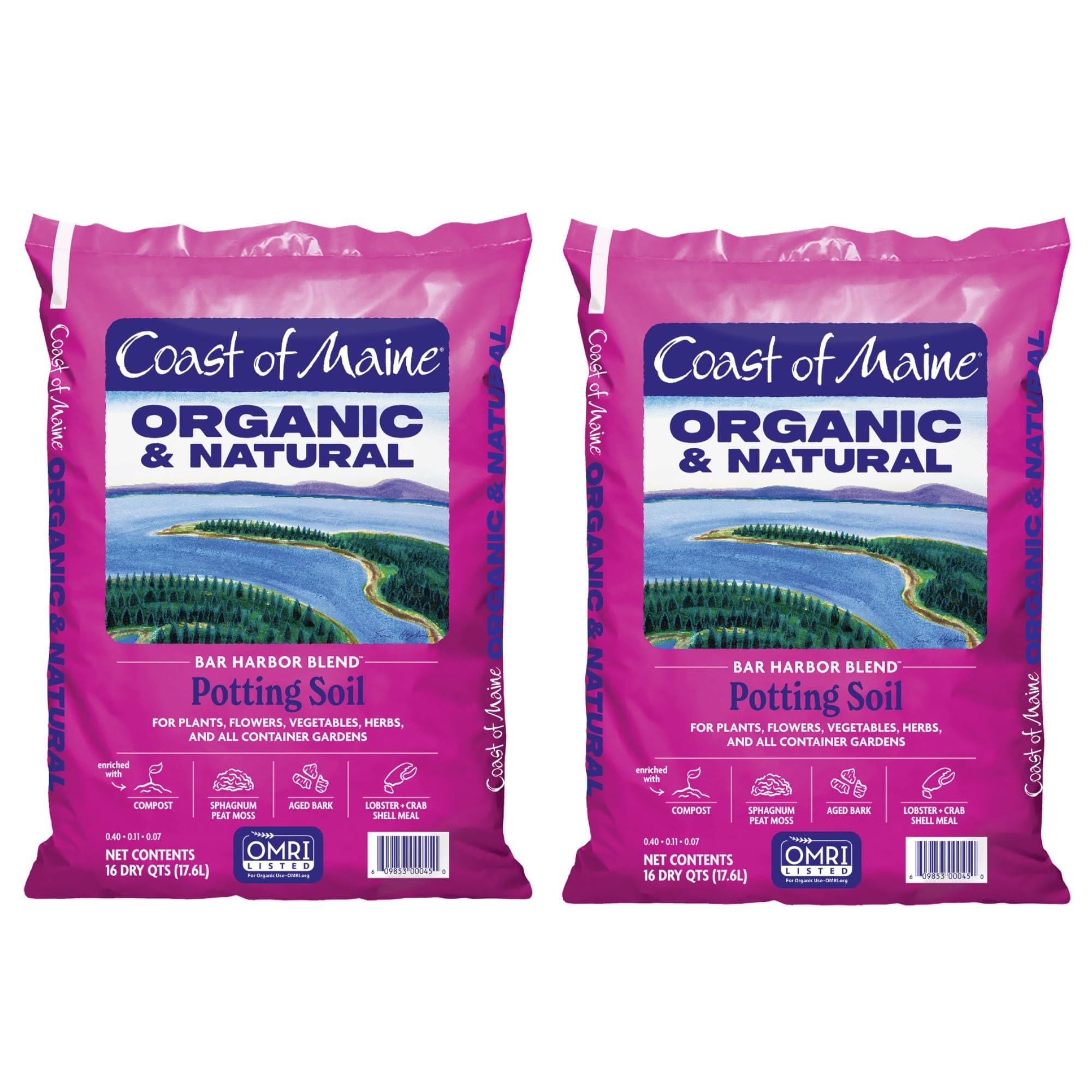
The single number that matters most in this category is its 16-quart volume — it is smaller than the top pick but packs a denser nutrient profile. What makes it special is the lobster and crab shell meal mixed in, a slow-release source of calcium and chitin (a substance in crustacean shells that strengthens plant cell walls and naturally deters soil-borne pests). One reviewer who used it for potatoes said: “Super nice feeling soil, planted containers with potatoes and also peas and tomato plants, everything is growing more than I even expected.” Two bags were enough to mound up eight potato plants.
The catch you accept is the price — per quart, this is the most expensive option here. You pay for the premium organic ingredients, including kelp meal for trace minerals and sphagnum peat moss for structure. The perlite content ensures good drainage, though the mix is heavier and feels more like rich garden earth than a lightweight potting mix like the Avalution.
For small-space growers who want the highest-quality organic ingredients and are willing to pay for them, this is the price-to-value champion — not cheap, but you feel the difference the moment you open the bag. If the budget is tight, the Avalution mix gives you a lighter, cheaper container option.
The upsides
- Lobster and crab shell meal add natural calcium
- Kelp meal provides trace minerals
- Ideal texture for container potatoes
Keep in mind
- Higher cost per quart than other options
- 16 quarts go quickly for large plantings
5. Coast of Maine Castine Blend Raised Bed Soil
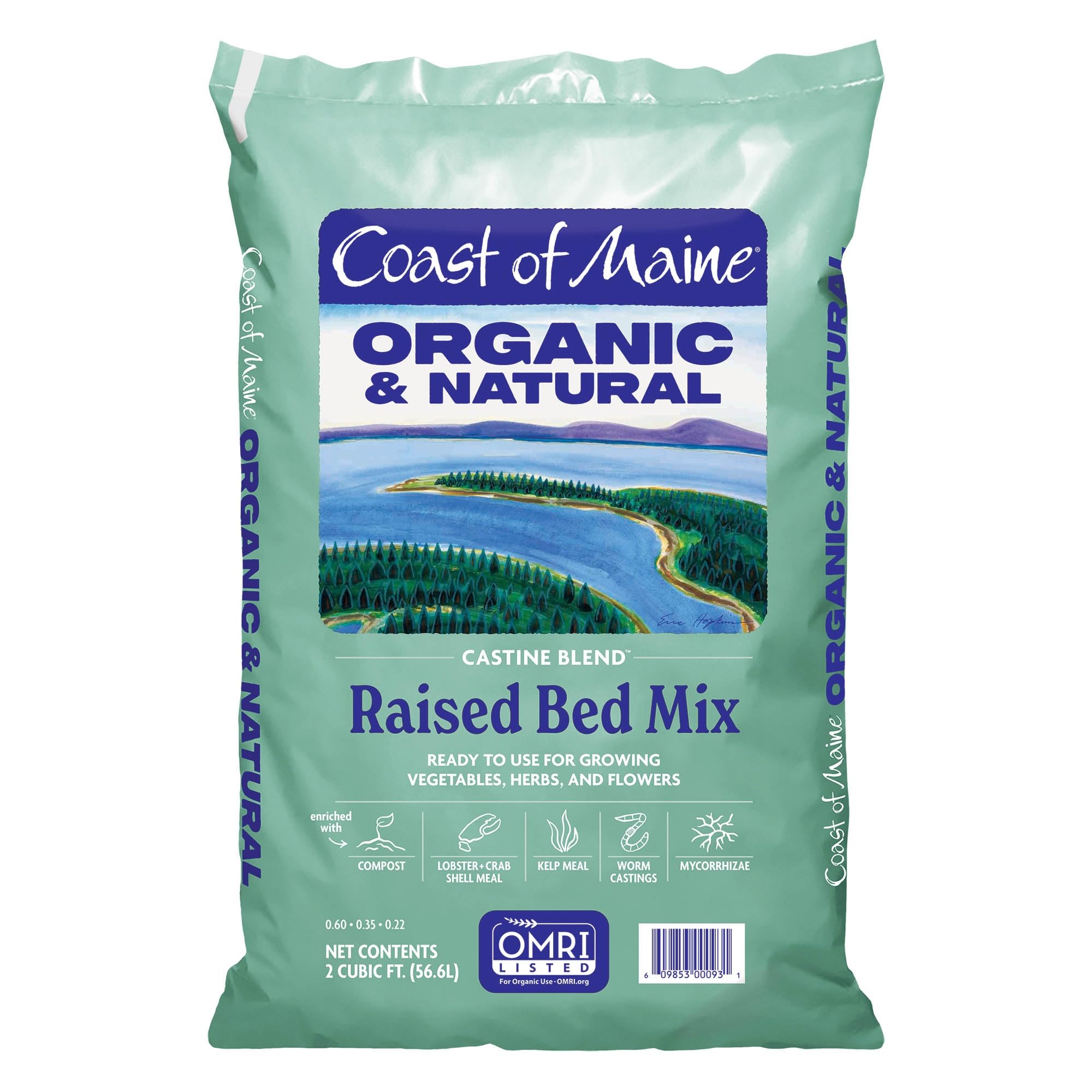
At 2 cubic feet (that is roughly 60 quarts), this is the biggest bag and the best value per volume if you are filling a raised bed. It goes beyond basic compost with a serious ingredient list: worm castings, mycorrhizae, biochar (a porous charcoal that holds nutrients and water like a sponge), green sand, kelp meal, and lobster and crab shell meal. Buyers confirm the quality, with one noting: “Dark, rich, soft dirt. No twigs or bugs.” Another said the soil is perfect for amending hard clay soil, which is exactly the scenario many potato growers face.
What you give up is the fine, potting-mix texture — this is a coarser raised bed blend designed to be mixed with your existing garden soil or used as a top layer. It is not ideal for containers alone, since it is heavier and may compact in a small pot. The biochar is a standout feature; buyers using it in raised beds reported less frequent watering and healthier plants through dry periods.
This is the field pick for anyone with a large raised bed who wants a single bag to transform the entire growing area. The volume-to-quality ratio beats everything else here. If you are working with small containers, look at the Avalution or Bar Harbor Blend instead — they are lighter and better suited for pots.
Why we’d pick it
- Massive 2-cubic-foot volume covers large areas
- Biochar improves long-term soil fertility
- Rich, dark texture with no debris
A few caveats
- Heavier, coarser texture than potting mixes
- Better suited for raised beds than small containers
Understanding the Specs
Perlite vs. Vermiculite
Both are lightweight volcanic rocks that improve soil texture, but they do different things. Perlite (those small white pebbles) creates air pockets for drainage and oxygen flow. Vermiculite (shiny, flaky particles) soaks up water like a sponge and releases it slowly. For potatoes, you want perlite to dominate so the soil stays loose; vermiculite in large amounts can make the mix too wet. Check the bag — if it lists perlite before vermiculite, that is a good sign for potatoes.
Mycorrhizae
This is a fungus that forms a partnership with potato roots. It attaches to the root system and extends its reach into the soil, pulling up water and nutrients (especially phosphorus) that the roots cannot reach on their own. In return, the fungus gets sugars from the plant. Products like Espoma’s Myco-Tone add these fungi directly into the bag. For in-ground beds where soil is less controlled, mycorrhizae make a bigger difference than in sterile potting mixes.
Coconut Coir vs. Peat Moss
Both are used to hold moisture, but they come from different sources. Peat moss is harvested from bogs and is acidic — great for acid-loving plants but needs lime added for potatoes. Coconut coir is a byproduct of coconut processing, pH-neutral, and rehydrates much faster if it dries out. The Avalution mix uses 55% coir, which is why buyers said it can revive a wilted plant overnight. Coir is also more sustainable, since peat bogs regenerate very slowly.
Biochar
Think of biochar as charcoal for your soil. It is made by burning organic matter in a low-oxygen environment, creating a porous carbon structure. When mixed into soil, it acts like a microscopic sponge that holds onto nutrients and water, releasing them slowly to plant roots. The Castine Blend from Coast of Maine includes biochar, which is why buyers using it in raised beds reported less frequent watering and healthier plants through dry periods.
FAQ
Can I use regular garden soil for potatoes in containers?
Do I need to add fertilizer to these soils for potatoes?
Should I worry about the pH of the soil for potatoes?
How much soil do I need per potato plant in a grow bag?
Final Thoughts: The Verdict
When it comes down to it, the dirt for potatoes winner is the Coast of Maine Organic & Natural Planting Soil for Vegetables & Tomatoes because it balances moisture retention, drainage, and nutrient density in a single versatile bag that works for both containers and in-ground planting. If you are amending a large in-ground garden bed, grab the Espoma Organic Vegetable & Flower Garden Soil for its mycorrhizae boost and bigger volume. And for serious raised-bed growers who want the largest yield from a single bag, the standout is the Coast of Maine Castine Blend with its biochar and rich organic base.