
Specs are compiled from manufacturer listings and verified buyer reviews and can change over time — please confirm the key details on the product page before buying.
Dallisgrass is the weed that laughs at standard lawn treatments. Its thick, clumping base and deep root system shrug off most sprays, which is why the right active ingredient matters more than anything else. You need a selective herbicide labeled for grassy weeds, or you’ll only feed the dallisgrass.
I’m Rikta — the founder and writer behind Lawn Gear Lab. This guide is built by comparing the manufacturers’ published specifications and the patterns across verified customer reviews, so you get each pick’s real strengths and trade-offs instead of marketing spin.
If your lawn is losing the battle, the right dallisgrass weed killer depends on your turf type, experience level, and how fast you need results, so here is how to pick.
Our Picks at a Glance

How To Choose The Best Dallisgrass Weed Killer
Dallisgrass is a perennial grass that comes back from its roots every year, so a quick fix never lasts. You need a selective herbicide that kills grassy weeds while leaving your turf standing, and that starts with checking the active ingredient on the label.
Match the chemical to your turf
MSMA is the heavy hitter for dallisgrass, but it is not safe on every lawn and can brown warm-season grass if mixed wrong. Quinclorac is gentler and widely used on crabgrass, but its results on mature dallisgrass clumps vary depending on timing and rate.
Decide between liquid and granules
Liquid concentrates let you mix a precise rate and spot-spray the exact clumps, which is how you protect surrounding grass. Granular formulas spread dry and need watering in, but they make measuring easier for large, even applications.
Quick Comparison
| Model | Best For | Active Ingredient | Form | Volume | Amazon |
|---|---|---|---|---|---|
| Target 6 Plus★ Best Overall | Deep-rooted dallisgrass kill | MSMA 48.3% | Liquid | 2.5 gallons | Amazon |
| Bayer Celsius WG | Safe warm-season turf care | Thiencarbazone + odosulfuron-methyl-sodium + Dicamba | Granule | 10 oz | Amazon |
| Pro Quinclorac (64 oz) | Broad grassy weed control | Quinclorac 18.92% | Liquid | 64 oz | Amazon |
| Pro Quinclorac (8 oz) | Small spot treatments | Quinclorac 18.92% | Liquid | 8 oz | Amazon |
In‑Depth Reviews
1. Target 6 Plus (MSMA 48.3%) Turf Herbicide
Our pick — over 4.5★ from 900+ verified ratings; the strongest balance of quality and price.
The professional-grade MSMA concentrate that actually knocks out deep dallisgrass clumps.
This is the strongest option in this guide. With a 48.3% MSMA concentration and a 2.5-gallon jug that works out to 320 fluid ounces, it is built for serious infestations, not a single stray clump. It is labeled for cotton farms, golf courses, and sod farms, which tells you the strength you are dealing with.
The effectiveness impresses buyers the most — dozens of owners single out its weed-killing power, and it draws praise for quality too. The real-world proof comes from a zoysia owner whose lawn was heavily infected with dallisgrass, reporting the spray “knocked it out quite impressively.” That’s the result you want after years of failed cheap sprays.
You must mix this concentrate exactly per the label. Buyers warn that if the rate is off, it “will brown your grass really bad.” Keep pets off the treated lawn for a few days after spraying. Done right, it lasts — one owner has been using the same bottle for five seasons.
What wins people over
- Kills tough grassy weeds including dallisgrass, crabgrass, and nutsedge
- Professional-grade strength for serious infestations
- 2.5-gallon jug delivers excellent value per treatment
Handle with care
- Can brown Bermuda grass if mixed incorrectly
- Toxicity worries are a recurring theme in feedback
- Overkill for a single lawn with one small patch
Reach for this if: you want one heavy-duty concentrate that ends a widespread dallisgrass problem for good.
Think twice if: you need a quick small-patch fix or you are not comfortable following precise mixing rates.
2. Bayer Celsius WG 10 oz
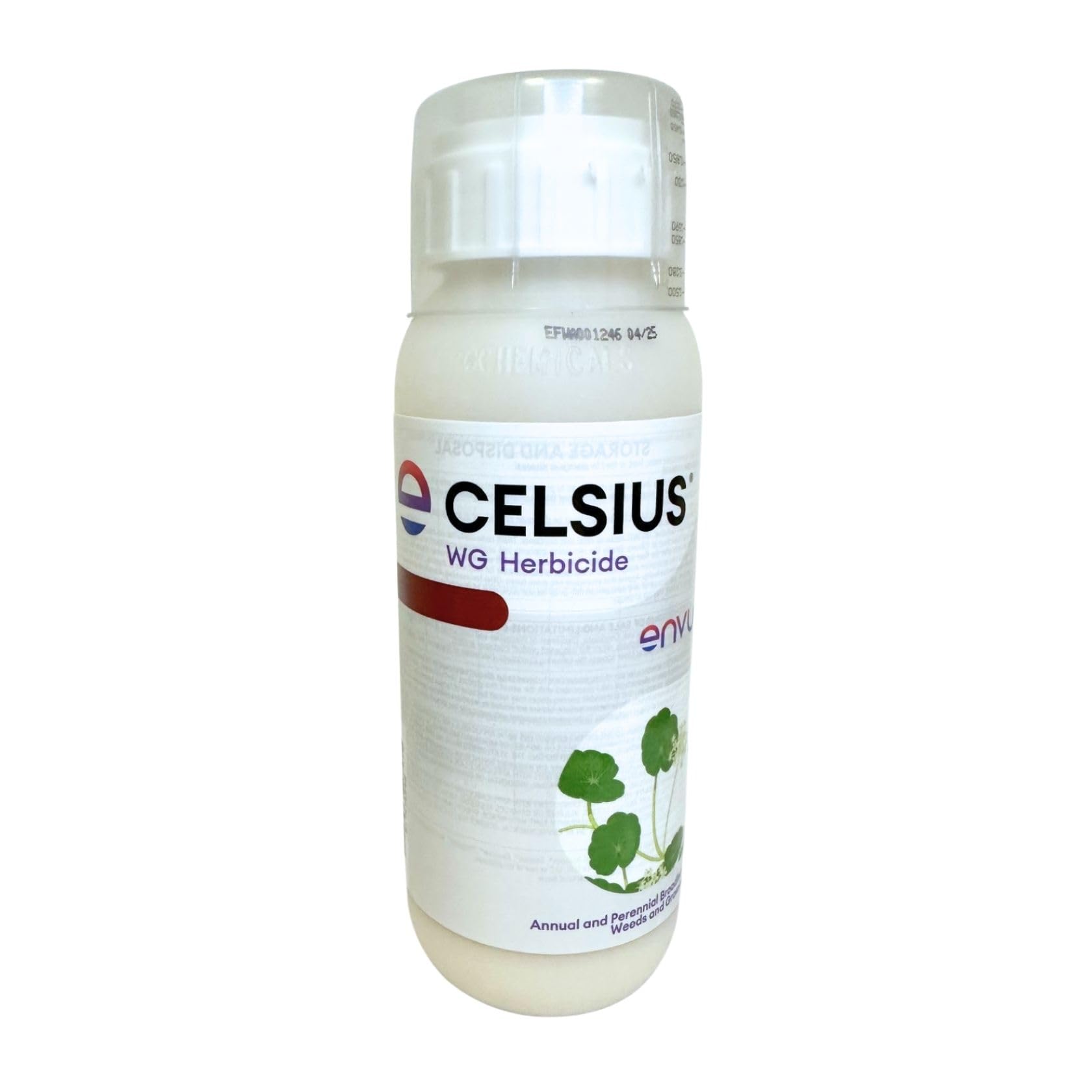
The granular selective formula that protects St. Augustine while hammering warm-season weeds.
If you grow warm-season turf, this is the name pros trust. Celsius WG combines thiencarbazone-methyl, odosulfuron-methyl-sodium, and dicamba in a 10-ounce wettable granule that is explicitly safe for centipede, Bermuda, and St. Augustine — the lawns where other killers cause the most damage. It lists dallisgrass suppression right on the label and takes on large crabgrass, carpetgrass, and Virginia buttonweed too.
Its main strength is protecting your desirable turf. Buyers report killing carpetgrass in a mixed centipede and Bermuda lawn without any damage to the turf, and eliminating stubborn Virginia buttonweed on a full acre with no yellowing even in 94°F heat. The 10-ounce bottle is economical too — it stretches across roughly two seasons of spot treatments for a home lawn.
The trade-off is that it requires more careful application. There is no hose-end sprayer support on the label, so you want a backpack sprayer with agitation, and you need to identify your grass and weed types to avoid mistakes. Measuring cup markings are faint, and one owner found dallisgrass unaffected after ten days, noting it may need three full weeks to show results.
Why it stands out: it offers rare turf safety for warm-season lawns while still suppressing dallisgrass, making it the smart pick when protecting your lawn matters as much as killing the weed.
The patience factor: results on dallisgrass can take a few weeks, so it suits owners who plan ahead rather than expect overnight changes.
Best for: homeowners with centipede, Bermuda, or St. Augustine who want weed control without wrecking the lawn.
Skip if: you want the fastest possible dallisgrass kill or you only have a hose-end sprayer on hand.
3. Pro Crabgrass & Grassy Weed Killer — 64 oz Quinclorac

The 18.92% Quinclorac concentrate that covers a big lawn with residual control.
This is the go-to volume play for larger properties. At 18.92% Quinclorac in a 64-ounce jug weighing 4.5 pounds, it mixes into many gallons of spray so one purchase handles a full season across a sizeable lawn. Quinclorac targets crabgrass, foxtail, barnyardgrass, and dallisgrass as a perennial grassy weed, and the residual control keeps new weeds from reappearing for a while.
Buyer feedback stresses following the label rates exactly. Owners who hit the right mix report killing crabgrass in two weeks at 3.0 oz per gallon, while a weaker 1.5 oz rate failed even after several weeks — the dose really decides the outcome. One Texas user had the opposite experience, finding dallisgrass thriving after two applications, so results can vary by region and weed maturity.
It is labeled safe on Jamur Zoysia and wild Bermuda, and it is compatible with 2,4-D for broader weed programs. Expect regrowth next year, because Quinclorac works on the plant you see now, not the seeds in the soil — that is where a pre-emergent comes in. Owners mention it can harm Bermuda and Zoysia if misapplied, so stick to the label.
The real story: concentration and timing decide everything here — follow the higher rate and you get visible kills in a couple weeks.
The honest caveat: on established southern dallisgrass, a second application or a different chemical may be needed.
Pick this up if: you have a large lawn and want an economical concentrate for grassy weed control.
Look elsewhere if: your dallisgrass is mature and deep-rooted and you expect one pass to finish it.
4. Pro Crabgrass & Grassy Weed Killer — 8 oz Quinclorac
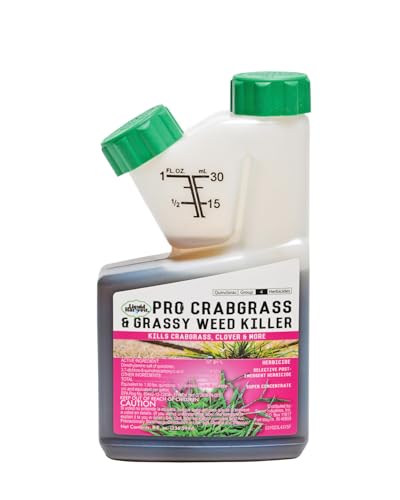
A small-batch Quinclorac concentrate for tackling patchy grassy weeds without buying a jug.
This 8-ounce bottle is the entry point for the same high-concentration Quinclorac formula as the bigger jug. It is a lightweight liquid weighing 8 ounces, so it is easy to store and ideal for targeted spot treatments on a small or medium lawn. The 18.92% concentration means a little goes a long way when you mix it at the label rate.
Results depend heavily on how precisely you follow the application steps. Owners who follow the directions exactly — mixing with a surfactant, avoiding rain and dew, using a fine mist — see crabgrass yellow by day three and die by day five, with no damage to fescue. Others who expected results without the prep work found it “has not produce the results expected,” and felt nervous about reapplying for fear of harming the grass.
Buyers praise it for targeting grassy weeds “without any issues when used as directed,” making it a simpler alternative to other grass-safe sprays. It handles foxtail, barnyardgrass, and dallisgrass alongside crabgrass, though note that Quinclorac needs a surfactant to work at its best.
The right application
- Easy to mix and apply for spot treatments
- Visible results within days on crabgrass
- Compact 8 oz size for small lawns
What to watch
- Requires a surfactant and careful timing to work
- Effectiveness reports are mixed, especially on mature weeds
Grab it if: you have a few grassy weed patches and want a small, easy-to-store concentrate.
Pass if: you have a heavy dallisgrass infestation — this is better as a maintenance tool than a cure.
Understanding the Specs
Active Ingredient
The chemical that actually kills the weed is the single most important spec. MSMA is a strong arsenical that excels on dallisgrass but can brown warm-season grass if misapplied, while Quinclorac is a gentler grassy-weed killer that needs a surfactant. Look for the ingredient percentage on the label, because higher concentration means more power per ounce.
Liquid vs. Granule
Liquid concentrates mix with water and let you spray individual clumps, protecting surrounding grass. Granules like Celsius WG are measured dry and often need watering in, making them easier for even, large-area coverage but harder to target a single weed. Choose liquids for spot control, granules for whole-lawn treatment.
FAQ
Why does my regular weed killer not kill dallisgrass?
Will MSMA brown my Bermuda lawn?
How long does Quinclorac take to show results?
Is Celsius WG safe on St. Augustine grass?
Do I need a surfactant with Quinclorac?
Why does dallisgrass come back every year?
Can I use a hose-end sprayer with Celsius WG?
How much Target 6 Plus do I mix per gallon?
Final Thoughts: The Verdict
For most people, the dallisgrass weed killer winner is the Target 6 Plus because its 48.3% MSMA concentration is the most proven tool for eliminating deep-rooted dallisgrass. If you want to protect warm-season turf like St. Augustine or centipede, grab the Bayer Celsius WG. And for large lawns needing broad grassy weed control at a strong value, the 64-ounce Quinclorac is the one to reach for.
How We Picked
We do not accept paid placement. Every pick is matched to a real buyer and a real use-case; we do not hands-on test units.
Sources & Methodology
Specifications: manufacturer listings and product documentation. Review insights: verified customer reviews, as of August 2026. Pricing: not shown on this page (it changes often); check the current price via the retailer link.
As an Amazon Associate, Lawn Gear Lab earns from qualifying purchases. This does not affect which products we feature.