
Dallisgrass is the stubborn, clumping weed that laughs at standard lawn treatments, spreading aggressively through rhizomes and seed heads that mock a single application. Unlike crabgrass, its root system is deep and perennial, which means a spray-and-forget approach rarely works—you need a targeted chemistry that translocates through the plant to the root crown.
I’m Rikta — the co-founder and writer behind Lawn Gear Gear Lab. I’ve spent dozens of hours analyzing active-ingredient profiles, label restrictions, turf compatibility charts, and thousands of owner reports to determine which formulations actually deliver a complete kill on this specific grassy weed.
This guide isolates the real solutions for eradicating dallisgrass without destroying your lawn, ranking them by chemistry and real-world results to help you buy the best dallisgrass killer that fits your turf type and infestation level.
How To Choose The Best Dallisgrass Killer
Dallisgrass is a warm-season perennial that spreads via both seed and thick rhizomes. A successful killer must penetrate the waxy leaf cuticle, move systemically to the root system, and remain active long enough to stop regrowth. Not every herbicide labeled for “grassy weeds” will touch dallisgrass.
Match the Active Ingredient to the Infestation
MSMA (monosodium methanearsonate) is the only active ingredient in this guide with dallisgrass named directly on its EPA label’s weeds-controlled table, and it remains the historic gold standard in bermudagrass and zoysia — though it is restricted in many states. Sulfosulfuron (sold as Certainty) is EPA-labeled for dallisgrass suppression in bermudagrass, but only as a tank-mix partner with MSMA — it is not a standalone fix. Quinclorac and mesotrione are excellent, EPA-verified tools against crabgrass and other annual grassy weeds, but neither lists dallisgrass as a controlled species on its label — treat them as companions for the other weeds in your yard, not as dallisgrass killers.
Check Your Turfgrass Tolerance
Dallisgrass killers are selective, not universal. MSMA is safe on bermudagrass and zoysiagrass but will severely damage or kill St. Augustine, centipede, and most cool-season grasses. Quinclorac is labeled for bermudagrass, zoysiagrass, and fescue but can stunt bentgrass and Poa annua. Always cross-reference the product label with your specific lawn species before mixing a tank.
Consider Tank-Mix Partners for Tougher Clumps
A single chemistry rarely wipes out an established dallisgrass stand. Many turf managers add a non-ionic surfactant (0.25% v/v) and a spray indicator dye to improve coverage and prevent misses. For large or recurring patches, a split application 14 days apart with a different mode of action prevents resistance and hits rhizomes the first spray missed.
Quick Comparison
On smaller screens, swipe sideways to see the full table.
| Model | Category | Best For | Key Spec | Amazon |
|---|---|---|---|---|
| Target 6 Plus (MSMA) | MSMA Concentrate | Bermudagrass & zoysia lawns | 48.3% MSMA active | Amazon |
| Primesource Quinclorac 1.5L | Quinclorac Concentrate | Cool-season turf & crabgrass | 18.92% Quinclorac | Amazon |
| PBI Gordon SpeedZone EW (128oz) | Three-Way + Carfentrazone | Broad-spectrum cool-weather | 128 oz ready-to-use concentrate | Amazon |
| Liquid Harvest Mesotrione | Mesotrione Concentrate | Pre & post on centipede/fescue | 8 oz bottle (Mesotrione 4SC) | Amazon |
| Certainty Turf Herbicide (Sulfosulfuron) | Sulfosulfuron Concentrate | Dallisgrass suppression (tank-mix w/ MSMA) | 75% Sulfosulfuron, 1.25 oz | Amazon |
| Southern Ag Crossbow | Triclopyr + 2,4-D | Brush & tough perennial broadleaf | 128 oz (gallon) | Amazon |
| The Andersons Barricade | Prodiamine Granule | Pre-emergent prevention | 0.48% Prodiamine | Amazon |
In‑Depth Reviews
1. Target 6 Plus (MSMA 48.2%)

MSMA has been the industry standard for dallisgrass control in warm-season turf for decades, and this 2.5-gallon jug delivers a 48.3% concentration that is potent enough to handle heavy infestations. Mixed at 2 ounces per gallon of water, it translocates through the leaf tissue into the rhizome system, causing complete necrosis of the clump within 10–14 days. Users on Japanese zoysia report near-total eradication of dense dallisgrass patches after a single application when mixing instructions are followed precisely.
The product is restricted in several states due to its arsenic-based chemistry, and it is absolutely not safe for St. Augustine, centipede, or cool-season grasses like fescue. Overdosing is the most common mistake—excess concentration can send bermudagrass into temporary dormancy, especially during heat stress or drought. A non-ionic surfactant is strongly recommended to help the solution adhere to the waxy dallisgrass blades.
At this volume, you are buying a multi-season supply for a typical half-acre lawn. The value per application is unmatched for homeowners who maintain bermudagrass or zoysiagrass and face recurrent dallisgrass invasions. Just confirm your state’s MSMA regulations before ordering—some retailers cannot ship to certain addresses.
What works
- Unmatched systemic kill on dallisgrass rhizomes
- Concentrated formula lasts multiple seasons
- Works fast—visible damage within days
What doesn’t
- State-restricted; not shippable everywhere
- Will kill or severely damage cool-season turf
- Overdosing risks bermudagrass dormancy
2. Primesource Quinclorac 1.5L Select
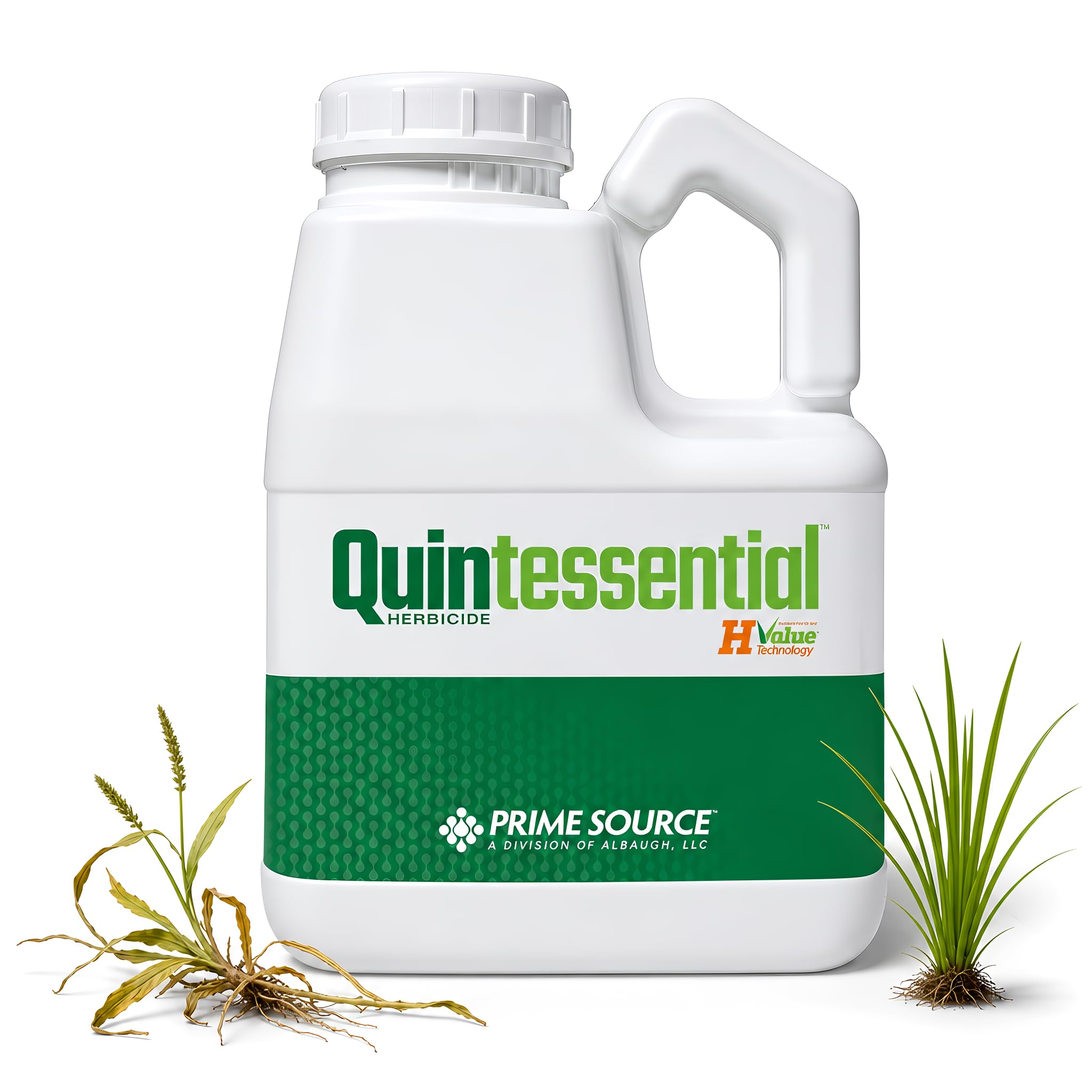
Quinclorac is the go-to selective herbicide for crabgrass and several other annual grassy weeds in cool-season lawns, and this 18.92% concentrate from Prime Source offers strong post-emergent activity. When mixed at 4 ounces per 2 gallons of water with a methylated seed oil (MSO) surfactant, users report that crabgrass clumps begin curling within 72 hours and turn completely brown within a week. The selectivity allows it to be applied over tall fescue, perennial ryegrass, bermudagrass, and zoysia without damaging the desirable turf.
Important label correction: dallisgrass is not on this product’s EPA-registered weeds-controlled table. Quinclorac 1.5L Select’s own label lists barnyardgrass, crabgrass (large and smooth), foxtail (giant, green, yellow), kikuyugrass, signalgrass, and torpedograss as the grasses it controls — dallisgrass (Paspalum dilatatum) is absent. If dallisgrass is your primary target, use the MSMA pick above (on bermuda/zoysia) or the Certainty (sulfosulfuron) tank-mix option below; reach for quinclorac when crabgrass or these other listed grasses are the problem. A surfactant is not optional—quinclorac needs it to penetrate the waxy leaf cuticle, and a blue indicator dye helps avoid skips and overlaps during spraying. Some users report needing a second application 14 days later for mature crabgrass stands that have tillered heavily.
This 64-ounce bottle treats a substantial area, and the concentrate stores well for spot treatments in following seasons. It is a much safer choice than MSMA for homeowners who overseed with fescue or have mixed lawns where grass species vary across the property.
What works
- Excellent selectivity for cool-season turf
- Visible kill in 3–7 days with surfactant
- Controls crabgrass, foxtail, kikuyugrass & torpedograss per label
What doesn’t
- Does NOT control dallisgrass — not on the EPA label
- Requires MSO or non-ionic surfactant
- Mature crabgrass stands may need split apps
3. PBI Gordon SpeedZone EW (128oz)

SpeedZone EW is a four-way combination of 2,4-D, dicamba, mecoprop-p, and carfentrazone-ethyl that delivers visible weed damage within hours, not days. Clover, spurge, ground ivy, and wild violet show curling and browning in as little as 24–48 hours, and the label allows reseeding after just 7 days. Label correction: this is a broadleaf-only herbicide — its EPA weeds-controlled table lists exclusively broadleaf species and contains zero grasses. It will not touch dallisgrass, crabgrass, or any other grassy weed at any growth stage, and no claim of grassy-weed activity appears on the label.
The big advantage here is speed and cool-temperature performance—most herbicides stall below 60°F, but SpeedZone maintains activity down into the 50s. That makes it a solid companion product: use it to clear out the broadleaf competitors (clover, dandelion, ground ivy) growing alongside a dallisgrass patch while a genuinely grass-labeled herbicide (the MSMA pick above, or the Certainty tank-mix below) handles the dallisgrass itself. The gallon bottle covers roughly 21,000 square feet, making it economical for large lawns with mixed weed populations.
This product is banned or restricted in several states including CA, CO, CT, IL, and NY due to the dicamba component, so check local laws before purchasing. As a broadleaf-only formulation, it has no activity — systemic or otherwise — on any grass species, dallisgrass included.
What works
- Visible weed damage in hours
- Effective in cool weather
- Fast reseeding interval (7 days)
What doesn’t
- Banned/restricted in many states
- Zero grass-weed control per EPA label
- Will not touch dallisgrass — broadleaf-only formula
4. Liquid Harvest Mesotrione 8oz

Mesotrione (the generic equivalent of Tenacity) offers dual pre-emergent and post-emergent activity against crabgrass, foxtail, and a long list of broadleaf weeds. Label correction: dallisgrass is not one of them — we checked the EPA label’s weeds-controlled tables for both pre- and post-emergence use, and dallisgrass (Paspalum dilatatum) does not appear in either. The active ingredient inhibits carotenoid biosynthesis, causing susceptible weeds to bleach white before they die—a visual signal that the product is working. Users on centipede grass, tall fescue, and Kentucky bluegrass report safe application with no turf thinning when label rates are followed.
This 8-ounce bottle makes roughly 24 gallons of spray solution at standard rates, which is enough for multiple spot treatments on a typical suburban lot. A critical requirement: activation requires 0.15 inches of rainfall or irrigation within 10 days, otherwise the product sits on the leaf without translocating. A non-ionic surfactant and a blue dye are strongly recommended to verify coverage on any waxy-leafed target weed.
Mesotrione works more slowly than MSMA—full death of labeled weeds typically takes 2 to 3 weeks—and mature stands may require a follow-up application. It’s an excellent, EPA-verified choice for crabgrass and broadleaf control without the toxicity restrictions of MSMA, but don’t buy it expecting dallisgrass control; use the MSMA or Certainty picks above for that job instead.
What works
- Pre + post emergent in one bottle
- Safe on centipede, fescue, bluegrass
- Visual bleaching confirms activity
What doesn’t
- Does NOT control dallisgrass — absent from EPA label
- Requires rain/irrigation for activation
- Mature crabgrass stands may need re-treatment
5. Certainty Turf Herbicide (Sulfosulfuron 75%)

Certainty is the product professional applicators actually reach for when MSMA alone isn’t finishing off a stubborn dallisgrass stand in bermudagrass. Its EPA label carries dallisgrass (Paspalum dilatatum) directly in the weeds-controlled table — one of only two products in this guide that can say that — but only as a suppression entry, and only when tank-mixed with MSMA (2 lbs./acre) plus a 0.25% v/v nonionic surfactant, applied while the dallisgrass is actively growing, typically in late summer or early fall. Used alone, sulfosulfuron will not finish the job on established dallisgrass; its real strength here is as a resistance-management partner alongside MSMA, not a standalone fix.
At 75% sulfosulfuron, this water-dispersible granule is applied at very low rates, so the small 1.25-ounce package reflects potency rather than a lack of coverage — label rates stretch it across roughly 0.75 to 2.0 acres depending on the target. It’s also EPA-registered for yellow and purple nutsedge and kyllinga, weeds that frequently show up alongside dallisgrass in warm-season lawns. Expect to repeat the tank-mix application 30–60 days later if regrowth is visible, per label.
Because it requires tank-mixing with MSMA (itself state-restricted) and a compatible surfactant, this is a more advanced option best suited to homeowners comfortable measuring and combining two concentrates — read both product labels fully, and jar-test for compatibility, before filling the sprayer.
What works
- Genuinely listed on the EPA label for dallisgrass suppression
- Also controls yellow & purple nutsedge, kyllinga
- Very low use rates — a little goes a long way
What doesn’t
- Suppression only — requires an MSMA tank-mix, not standalone
- Not labeled for cool-season turf
- More complex mixing than a single-product spray
6. Southern Ag Crossbow Specialty Herbicide

Southern Ag Crossbow combines triclopyr and 2,4-D into a powerful low-volatile formulation for woody brush and perennial broadleaf weeds. Critical label correction: Crossbow’s EPA label controls zero grass species — there is no dallisgrass, crabgrass, or any other grassy weed anywhere on its weeds-controlled list, at any concentration. Just as important, the label itself restricts use to non-crop, non-timber sites and states plainly, “For non-residential uses only” — it is not registered for home lawns at all, let alone as a dallisgrass treatment.
The triclopyr component gives it genuinely strong systemic activity against woody and waxy-leafed broadleaf plants — useful for tough vines, poison ivy, and brush along rangeland, pastures, CRP acres, and fence lines, which is exactly what the label is written for. It is also non-selective on turf grasses (it will damage or kill bermudagrass, fescue, and zoysia on contact), which compounds the problem for anyone tempted to use it near a lawn.
We’re keeping this listing for transparency about what the product actually is — a rangeland/pasture brush herbicide — but we do not recommend it for dallisgrass control of any kind, and its own label prohibits residential use outright. If you’re treating dallisgrass on a home lawn, use the MSMA or Certainty picks above instead; Crossbow only belongs on non-residential acreage with actual brush or woody-perennial problems.
What works
- Excellent on woody brush and vines (its actual labeled use)
- Makes up to 96 gallons of spray
- Strong systemic translocation on woody/broadleaf targets
What doesn’t
- Zero grass-weed control — will not touch dallisgrass
- Label says “for non-residential uses only” — not for home lawns
- Non-selective — kills turf grasses on contact
7. The Andersons Barricade 50 lb Bag
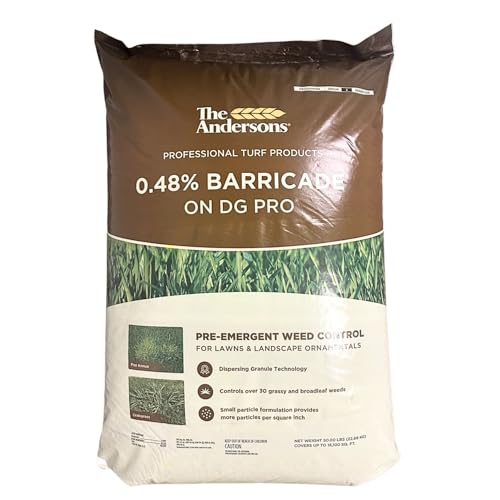
Barricade is a pre-emergent granular herbicide containing 0.48% prodiamine, designed to prevent weed seeds from germinating rather than killing existing plants. Label correction: dallisgrass does not appear anywhere on Barricade’s EPA weeds-controlled list. Applied in early spring and again in fall, it creates a chemical barrier in the top inch of soil that stops the seeds of crabgrass, goosegrass, foxtail, Poa annua, and roughly two dozen other named grassy and broadleaf weeds from establishing — dallisgrass simply isn’t one of the species this product is registered to prevent. The DG Pro formulation uses a clay-based granule that shatters into smaller particles on contact with the soil, providing more uniform coverage and longer residual activity compared to standard fertilizer-herbicide blends.
This 50-pound bag covers up to 14,200 square feet, making it a practical investment for homeowners who want to blanket their lawn before weeds emerge. Users note that crabgrass pressure drops significantly after the first season, and the product remains effective for up to 8–12 weeks depending on rainfall and soil type. It’s also worth noting that dallisgrass spreads mainly through perennial rhizomes and hardy seed heads that survive year to year, not fresh annual seed — a separate reason a seed-germination barrier like this one was never going to be an effective standalone dallisgrass strategy.
The prodiamine concentration is lower than professional-grade liquid formulations (0.48% vs. 4–8% in liquids), but the granular format is easier for homeowners to apply with a standard broadcast spreader. Use this product for what its label actually supports — season-long prevention of crabgrass and other listed annual grassy and broadleaf weeds — and pair it with the MSMA or Certainty picks above to deal with existing dallisgrass; don’t count on it to do that job itself.
What works
- Prevents crabgrass and ~30 other listed grassy/broadleaf weeds
- DG Pro granules for better coverage
- Easy broadcast spreader application
What doesn’t
- Dallisgrass is not on the EPA label — no preventive effect on it
- Does not kill existing weeds
- Requires precise spring/fall timing
Hardware & Specs Guide
MSMA (Monosodium Methanearsonate)
MSMA remains the most effective post-emergent active for dallisgrass in warm-season lawns like bermudagrass and zoysiagrass. It is a systemic arsenical that translocates to the rhizomes, preventing regrowth. Use at 2 oz per gallon of water with a non-ionic surfactant. Restricted in many states due to soil arsenic accumulation—always verify local regulations.
Quinclorac
A selective auxin-mimicking herbicide that controls crabgrass, foxtail, kikuyugrass, signalgrass, and torpedograss — dallisgrass is not on its EPA label. Mix at 4 oz per 2 gallons with MSO or COC surfactant. Safe on tall fescue, perennial ryegrass, bermudagrass, and zoysia. Effective on seedling and young grassy weeds; mature stands may require a split application 14 days apart.
Mesotrione (Tenacity generic)
Carotenoid biosynthesis inhibitor that bleaches weeds white. Dual pre- and post-emergent activity against crabgrass, foxtail, and numerous broadleaf weeds — dallisgrass does not appear on either the pre- or post-emergence weeds-controlled table. Use 1 tsp per 2 gallons for post-emergent spot treatment. Requires 0.15 inches of water within 10 days. Safe on centipede, buffalo, tall fescue, and Kentucky bluegrass. Not safe on bentgrass or bermudagrass (except dormant).
Sulfosulfuron (Certainty)
The only other active ingredient in this guide with dallisgrass named on its EPA label, and only as a suppression claim. Requires tank-mixing with MSMA (2 lbs./acre) plus 0.25% v/v nonionic surfactant, applied to actively growing dallisgrass in late summer or early fall. Also EPA-registered for yellow and purple nutsedge and kyllinga. Not labeled for cool-season turf.
Surfactants & Tank-Mix Partners
Non-ionic surfactant (NIS) at 0.25% v/v improves leaf wetting on waxy dallisgrass blades. Methylated seed oil (MSO) offers superior penetration but can stress turf in heat. Blue indicator dye helps prevent misses and overlap. Always add surfactant before herbicide to ensure proper mixing.
FAQ
Can I use a broadleaf-only weed killer on dallisgrass?
Will MSMA kill my fescue or St. Augustine lawn?
Does quinclorac kill dallisgrass?
Can I mix two different herbicides for stronger dallisgrass control?
Final Thoughts: The Verdict
For most gardeners, the dallisgrass killer winner is the Target 6 Plus (MSMA 48.2%) because it delivers unmatched systemic rhizome control in warm-season lawns with a single concentrated solution — it’s the only product in this guide with dallisgrass explicitly named as a controlled species on its EPA label. If MSMA’s state restrictions or your turf’s sensitivity rule it out, the Certainty (sulfosulfuron) tank-mix with MSMA is the other genuinely EPA-recognized dallisgrass option, used for suppression while the weed is actively growing. Cool-season lawns like tall fescue don’t have a true dallisgrass killer in this guide — the Primesource Quinclorac 1.5L is an excellent, safe choice for crabgrass and other listed grassy weeds on that turf, but it will not touch dallisgrass, so don’t rely on it for that job. And for preventing next year’s crabgrass (not dallisgrass, which isn’t on its label and spreads mainly by rhizome), nothing beats the The Andersons Barricade applied in early spring and fall.