
Cucumbers are heavy feeders that deplete soil quickly, and the wrong fertilizer can send them into a leafy overdrive with few actual fruits to harvest. The difference between a sprawling vine and a productive one often comes down to a precise balance of nitrogen, phosphorus, and potassium — specifically formulated for the cucurbit family.
I’m Rikta — the co-founder and writer behind Lawn Gear Lab. I’ve spent dozens of hours cross-referencing NPK ratios, real-world yield reports, and long-term soil impact data to sort through the most promising cucumber-specific and vegetable-safe plant foods on the market today. This guide cuts through the marketing noise with hard spec comparisons and honest grower feedback.
Whether you’re growing in raised beds, containers, or traditional rows, finding the right best cucumber plant food means understanding NPK timing, calcium content for blossom-end rot prevention, and whether your soil needs a slow-release granular or a quick-acting liquid.
How To Choose The Best Cucumber Plant Food
NPK Ratio: Nitrogen vs. Fruit Set
Cucumbers need a fertilizer that is lower in nitrogen than phosphorus and potassium once flowering begins. A ratio like 5-10-10 or 3-4-4 encourages blooms and fruit development rather than excessive vine growth. High nitrogen (first number) feeds leaves and stems but can delay or reduce fruit production.
Granular vs. Liquid vs. Soluble
Granular organic fertilizers release nutrients slowly as soil microbes break them down — ideal for long-season feeding with less risk of burn. Liquids, like fish emulsion or concentrated mineral blends, act within days, making them better for correcting deficiencies mid-season. Hydroponic or soluble powders offer precision control for soilless setups.
Micronutrient Content
Calcium is critical for preventing blossom-end rot in cucumbers. Look for added calcium, magnesium, iron, and sulfur. Ingredients like bone meal, greensand, and kelp meal indicate a more complete nutrient profile that supports soil biology as well as plant health.
Organic Certification and Soil Safety
OMRI-listed fertilizers ensure ingredients meet organic production standards. These products feed soil microbes over time rather than just the plant — important for building long-term fertility in beds where cucumbers return each season. Non-burning formulas are safer for young transplants and shallow-rooted crops.
Quick Comparison
On smaller screens, swipe sideways to see the full table.
| Model | Category | Best For | Key Spec | Amazon |
|---|---|---|---|---|
| Growth Technology GT Vegetable Focus | Premium Liquid | Hydroponics & containers | 12 essential minerals, SPT | Amazon |
| Espoma Organic Garden-tone 3-4-4 (2-Pack) | Organic Granules | In-ground vegetable gardens | Bio-tone formula, 5% Ca | Amazon |
| Down To Earth All Purpose 4-6-2 | Organic Granules | Transplants & heavy feeders | OMRI, fish bone meal, kelp | Amazon |
| Cz Garden 5-10-10 Tomato & Vegetable | Granules | Fruiting stage boost | 2% iron, low N | Amazon |
| True Organic All Purpose Plant Food | Organic Granules | Monthly feeding all season | Seabird guano, 5% N slow-release | Amazon |
| VIVOSUN Base A & B Bundle | Hydroponic Liquid | Hydroponic and coco coir | 1:1 two-part, pH-stabilizing | Amazon |
| Alaska Fish Fertilizer 5-1-1 | Organic Liquid | Early vegetative growth | OMRI, 115 oz, cold-processed | Amazon |
In‑Depth Reviews
1. Growth Technology GT Vegetable Focus
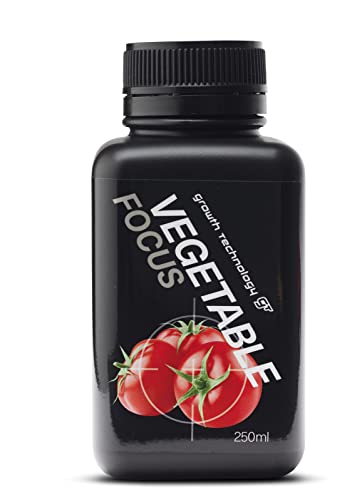
GT Vegetable Focus delivers all 12 essential minerals including calcium — a direct defense against blossom-end rot in cucumbers. Its balanced liquid concentrate uses Growth Technology’s SPT absorption enhancer, meaning each application feeds the roots efficiently even in cool or compacted soil. With a mixing ratio of 3-5 ml per liter for soil or hydroponics, this tiny bottle packs serious punch; one 250 ml bottle treats hundreds of gallons over a season.
Unlike granular organics that require microbial breakdown, this formula is immediately available, making it ideal for correcting deficiencies mid-season. Growers report visibly stronger stems and larger fruit sets within two weeks of switching to this nutrient. The formula is pH-stable and safe for all growing media, including coco coir, rockwool, and amended garden soil.
The only real drawback is concentration: some users note the original bottle can leak if tipped during mixing. It also commands a premium per-ounce cost compared to bulk organic meals, but the sheer longevity of use offsets the upfront spend for serious vegetable gardeners.
What works
- Complete mineral profile with calcium for cucumber fruit quality
- Immediate availability — no soil microbe activation needed
- Exceptionally concentrated; small bottle lasts months
What doesn’t
- Original bottle cap seal can leak during mixing
- Higher per-ounce cost than granular organics
2. Espoma Organic Garden-tone 3-4-4 (2-Pack)

Espoma’s Garden-tone is a go-to for in-ground cucumber growers who value soil biology. The 3-4-4 ratio leans toward phosphorus and potassium, supporting fruit formation without pushing excessive leaf growth. Enhanced with Espoma’s patented Bio-tone microbes, this formula actively colonizes the root zone to improve nutrient cycling and drought tolerance — particularly helpful for cucumbers that demand consistent moisture.
Each bag contains 5% calcium derived from natural sources, which works to strengthen cell walls and reduce blossom-end rot risk during heavy fruit set. The 2-pack covers roughly 200 square feet when applied monthly, and the slow-release granules won’t burn even if you over-apply slightly. Growers report deep green leaves and steady cucumber production throughout the season without the need for supplemental liquid feeds.
On the downside, the organic meal smell can be strong for the first few days after application, and granular feeding requires consistent soil moisture to activate the microbes. It’s also slightly heavier to store than compact liquid concentrates.
What works
- Calcium-rich formulation prevents cucumber blossom-end rot
- Bio-tone microbes improve long-term soil fertility
- Non-burning granules safe for young cucumber transplants
What doesn’t
- Organic odor lingers briefly after application
- Requires regular watering to activate microbial release
3. Down To Earth All Natural Fertilizers All Purpose 4-6-2

Down To Earth’s 4-6-2 blend is built from fish bone meal, blood meal, rock phosphate, langbeinite, greensand, humates, and kelp meal — giving cucumbers a wide micronutrient foundation that granular synthetics lack. The 4-6-2 ratio provides enough nitrogen for early growth while shifting emphasis to phosphorus during flowering. OMRI-listing means it’s fully approved for certified organic production.
The 5-pound box is enough to feed a 50-foot row of cucumbers for a full season when applied at 1-2 tablespoons per plant every 4-6 weeks. Growers note that pale, flimsy cucumber plants visibly darken and stiffen within two weeks of the first application. The addition of greensand supplies potassium and over 60 trace minerals that support fruit firmness and disease resistance.
The granular form takes longer to break down in cool spring soil, so it pairs best with a light liquid starter until soil temperatures consistently exceed 60°F. Some users also report that the loose fill box can spill if not resealed carefully.
What works
- Broad organic ingredient base with minerals and kelp
- OMRI-listed for certified organic cucumber production
- Affordable per-pound cost for season-long feeding
What doesn’t
- Slow release in cold spring soil — needs soil warmth
- Box packaging can spill if resealed poorly
4. Cz Garden 5-10-10 Tomato & Vegetable Fertilizer

Cz Garden’s 5-10-10 formulation is engineered for the fruiting stage — exactly when cucumbers stop building leaves and start swelling fruit. With phosphorus at 10% and potassium at 10%, this granular feed directs energy into flower set and cucumber development while only 5% nitrogen keeps vegetative growth in check. The added 2% iron prevents interveinal chlorosis on new cucumber leaves, a common sign of micronutrient lockout in overwatered beds.
The resealable 4-pound pouch is convenient for spot-feeding individual cucumber plants — just spoon 1-2 tablespoons around the drip line every two weeks during active fruiting. Visual colored beads help you confirm even distribution. Users consistently report that this product produces noticeably larger cucumbers and peppers when used alongside consistent irrigation.
The 5-10-10 ratio is specifically designed for fruiting crops, meaning it should not be used as a general all-season feed for young cucumber seedlings — early applications can starve them of nitrogen before vines establish. It also lacks any organic certification, which may matter to purists.
What works
- High phosphorus & potassium for peak cucumber fruiting
- 2% iron prevents yellowing on new foliage
- Resealable pouch with easy-pour spout
What doesn’t
- Not suitable as a sole feed for young cucumber seedlings
- Not OMRI-listed for organic gardening
5. True Organic All Purpose Plant Food

True Organic’s 5-4-5 all-purpose formula contains seabird guano, shrimp and crab shell meal, soybean meal, and fish bone meal — a diverse organic base that feeds cucumber plants and soil life simultaneously. With 3.75% of its nitrogen in slow-release form, it provides steady feeding over 4-6 weeks without the surge-and-crash pattern of synthetic quick-release products. The added sulfur and calcium support soil pH balance and cell structure.
At 4 pounds covering 87 square feet, one bag feeds a typical 4×8 raised bed for roughly two months when applied monthly. Growers transitioning from synthetic fertilizers often notice that their cucumber plants develop darker, thicker leaves and better disease resistance after two feed cycles. The formula is safe for containers, in-ground beds, and even hoophouse plantings.
Because this is a balanced general-purpose food, it leans slightly higher on nitrogen than an ideal cucumber-specific bloom formula. Cucumber growers in peak fruiting may want to supplement with a phosphorus-kick like bone meal or switch to a lower-N product late in the season to avoid excessive vine growth at the expense of fruit.
What works
- Diverse organic ingredient profile boosts soil microbiology
- Slow-release nitrogen provides steady feeding for cucumbers
- Works well in containers and raised beds
What doesn’t
- Nitrogen slightly high for peak cucumber fruiting stage
- May need phosphorus supplement late-season
6. VIVOSUN Liquid Nutrients Base A & B Bundle

VIVOSUN’s two-part base nutrient system is designed for hydroponic cucumber growers who need precise pH-stable nutrition. Part A and Part B contain different concentrations of macro and micronutrients that must be diluted separately before combining — this prevents chemical precipitation and ensures full bioavailability. The 1:1 mixing ratio simplifies dosing for beginners while still delivering professional-grade results in NFT, DWC, and ebb-and-flow systems.
Users in hydroponic environments report that cucumber vines grow visibly thicker within a week, with faster node development and earlier flowering compared to single-part formulas. The 16-ounce total volume (8 oz per bottle) makes enough nutrient solution for hundreds of gallons when mixed at 5 ml per gallon. The bottles are compact and easy to store, though the included packaging could benefit from integrated measuring marks.
This is not a standalone feed for in-soil cucumbers — the two-part format is optimized for soilless media where pH and EC need daily management. Gardeners using it in amended soil may see inconsistent results without a separate pH buffer. The bottles also lack dropper tips, so a separate syringe or measuring spoon is essential for accuracy.
What works
- pH-stable formula ideal for hydroponic cucumber systems
- Comprehensive macro and micronutrient coverage
- Compact bottles last hundreds of gallons at 5 ml/gal
What doesn’t
- Not optimized for traditional in-soil cucumber growing
- Bottles lack measuring marks or dropper tips
7. Alaska Fish Fertilizer 5-1-1
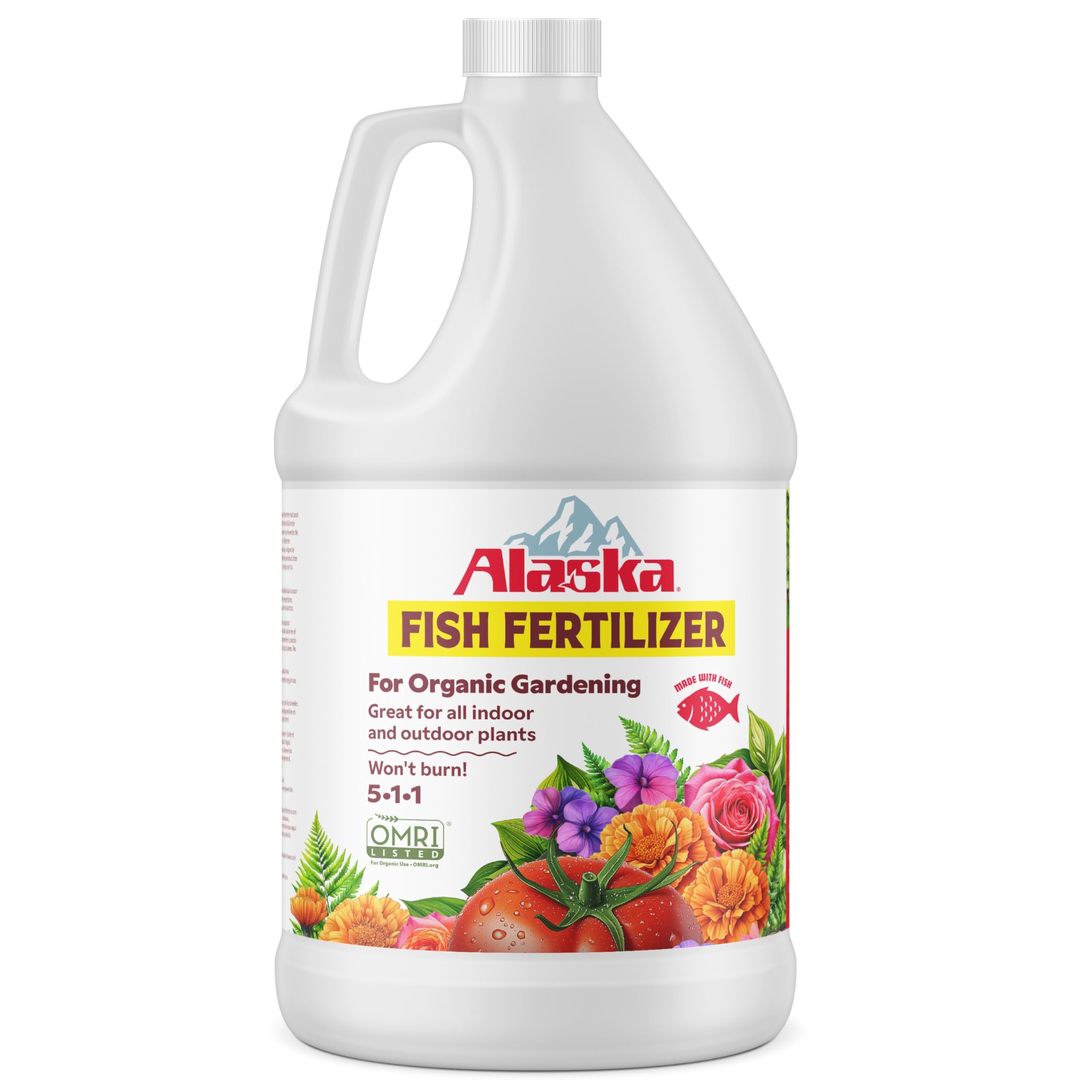
Alaska Fish Fertilizer is a straight-up nitrogen source (5-1-1) ideal for the early vegetative phase of cucumber growth when vines are racing to establish. Made from cold-processed fish emulsion, it retains more bioavailable amino acids and micronutrients than heat-processed alternatives, giving cucumber seedlings a fast green-up without the synthetic salt burn. OMRI listing makes it safe for organic gardens, and the 115-ounce jug is one of the best value-per-dose options on this list.
Applied every 3 weeks at 2-3 tablespoons per gallon, this liquid feed keeps cucumber leaves deep green and vigorous through the first 4-5 weeks of growth. The fishy odor, while pungent during mixing, dissipates into the soil within 24 hours and actually attracts beneficial soil microbes. Growers note that transplants recover faster from shock when drenched with a diluted fish emulsion solution at planting time.
The 5-1-1 ratio is drastically low in phosphorus and potassium, meaning it cannot support cucumber fruiting alone. You must switch to a bloom booster or balanced granular feed once flowers appear, or supplement with a high-P/K liquid additive. The strong smell also makes it less suitable for indoor container cucumbers kept inside living spaces.
What works
- Excellent nitrogen source for early cucumber vine growth
- OMRI-listed cold-processed formula retains micronutrients
- Large 115 oz jug provides exceptional value per feeding
What doesn’t
- Too low in phosphorus and potassium for cucumber fruiting alone
- Strong fishy odor during mixing and application
Hardware & Specs Guide
NPK Ratios Decoded
The three numbers on a fertilizer label represent nitrogen (N), phosphorus (P), and potassium (K) by weight. For cucumbers, a balanced ratio like 3-4-4 or 5-10-10 supports steady vine growth without sacrificing fruit production. High first numbers (like 10-10-10) push leaves at the expense of cucumbers, while very low first numbers (like 2-4-6) are ideal for the fruiting stage only.
Calcium and Blossom-End Rot
Cucumbers are susceptible to blossom-end rot when calcium uptake is inconsistent — often caused by uneven watering or low soil calcium. Fertilizers containing 3-5% calcium from natural sources (bone meal, gypsum, or langbeinite) help stabilize cell walls. Liquid calcium supplements can also be applied as a foliar spray during heavy fruiting periods.
Slow-Release vs. Quick-Release
Slow-release organic granules (feather meal, fish bone meal, seabird guano) feed cucumbers over 4-8 weeks and improve soil structure over time. Quick-release liquids (fish emulsion, mineral concentrates) provide an immediate green-up but require more frequent application — typically every 1-2 weeks for container cucumbers with limited root volume.
pH and Nutrient Availability
Cucumbers prefer a soil pH between 6.0 and 6.8. Outside this range, critical nutrients like iron, phosphorus, and zinc become locked out even if present in the fertilizer. If your plants show yellowing leaves despite regular feeding, test your soil pH first. Adding sulfur lowers pH; lime raises it.
FAQ
What NPK ratio is best for cucumber fruit production?
Can I use tomato fertilizer on cucumber plants?
How often should I fertilize cucumber plants in containers?
Why are my cucumber leaves yellow even after fertilizing?
Final Thoughts: The Verdict
For most gardeners, the best cucumber plant food winner is the Growth Technology GT Vegetable Focus because its complete 12-mineral profile covers calcium for rot prevention and provides immediate availability for both soil and hydroponic setups. If you want a slow-release organic that builds soil over time, grab the Espoma Organic Garden-tone 3-4-4 (2-Pack) — its calcium-rich Bio-tone formula feeds your cucumbers and your soil biology in one step. And for budget-conscious growers feeding a large in-ground patch, nothing beats the cost-per-pound value of the Down To Earth All Purpose 4-6-2, an OMRI-listed blend of fish bone meal and kelp that covers a full season of cucumber nutrition.