
Orchid roots suffocate in dense potting soil. Cork bark — a chunky, airy, natural medium — gives those aerial roots the oxygen and drainage they need to stay firm and white instead of turning to brown mush. Trade frequent repotting anxiety for a mount-or-pot solution that dries evenly and breaks down slowly.
I’m Rikta — the co-founder and writer behind Lawn Gear Lab. I’ve spent dozens of hours cross-referencing bark density specs, reading orchid-grower feedback on moisture retention versus aeration, and comparing sheet thickness and piece variety to find the mounts that actually hold up in a humid terrarium or greenhouse.
Whether you mount a phalaenopsis or pack the base of a cattleya, the right texture and piece size matter. This guide breaks down the top five contenders to help you find the best cork bark for orchids that balances root grip with long-term durability.
How To Choose The Best Cork Bark For Orchids
Orchids, especially epiphytic types, need a mount or medium that doesn’t stay soggy. Cork bark is naturally rot-resistant, lightweight, and textured enough for roots to grip. But not every cork product is cut with orchid growers in mind. Here are the specs that matter most.
Sheet Thickness & Texture
Mounting an orchid like a phalaenopsis or vanda requires bark thick enough to hold a staple or fishing line without splitting on day one. Look for pieces at least 1-inch thick. Thinner sheets (under half an inch) will sag in humidity and won’t give roots enough purchase. The deep crevices in virgin cork also trap moisture at the base of the root crown without soaking the full mount — exactly what orchids need between waterings.
Piece Shape: Flats, Rounds, or Assorted
Flat sheets work best as terrarium backdrops or wide mounting boards where you want an even root spread. Half-rounds and full-round tubes function like natural pots or horizontal hides — perfect for orchids that prefer a tight root ball at the base. Assorted mixed bags offer flexibility but can leave you with thin scraps that are useless for mounts. Decide based on whether you are attaching the orchid to a vertical surface or placing it inside a container.
Humidity Tolerance & Natural Resin Content
High-quality virgin cork bark contains suberin, a natural waxy compound that repels water on the outer layer while allowing the inner structure to hold moderate moisture. This dual behavior prevents the bark from becoming a waterlogged sponge. Cheaper substrates, like compressed cork or wood-based bark blends, break down in a matter of months. Pure cork bark survives years of misting if the orchid roots themselves don’t outgrow the mount.
Quick Comparison
On smaller screens, swipe sideways to see the full table.
| Model | Category | Best For | Key Spec | Amazon |
|---|---|---|---|---|
| Zoo Med Natural Cork Round | Round Tubes | Mounts & pot inserts | Full / half-round shapes, multi-pack | Amazon |
| DBDPet Virgin Reptile Assorted | Assorted Pieces | Mixed setups & hides | 1 lb assorted (rounds, halves, flats) | Amazon |
| Hamiledyi 4PCS Cork Background | Flat Sheets | Large terrarium panels | 15.7 x 11.8 in, 4 panels | Amazon |
| RHBLME 6 Pack Cork Bark | Multi-Panel Mats | Background wall coverage | 11.8 x 7.8 in, 6 pieces | Amazon |
| Josh’s Frogs Natural Virgin Cork Sheet | Pressed Sheet | Small terrarium mounts | 12 x 12 in, 1-in thick | Amazon |
In‑Depth Reviews
1. Zoo Med Natural Cork Bark Round – Small (3)

Zoo Med’s cork rounds are the gold standard for orchid growers who want a single, consistent shape without waste. Each pack contains three full rounds that can be used as vertical plant holders (stuff the bark cavity with sphagnum moss) or laid horizontally as a natural pot. The inner bark structure is dense enough to hold a fishing line or staple without splitting — critical when mounting a Cattleya seedling that needs time to grip before you remove the tie.
The small size runs about 8 inches long per piece, which fits a 10-gallon terrarium or a standard 8-inch orchid pot. Because these are natural products, you may get one slightly crushed piece (the shipping risk). But even the damaged portions are usable as loose filler or a bottom drainage layer. A few isolated reviews mention spiderweb-like fibers inside — a known characteristic of raw cork that poses no risk to orchids and can be brushed off with a dry toothbrush.
For growers running multiple mini mounts or wanting uniform hide-tubes for their collection, the per-piece value here is excellent. You don’t get the massive surface area of a flat sheet, but you get shape versatility that sheet bark cannot replicate. The suberin content keeps the inside surface from rotting, so a phalaenopsis can stay mounted for two to three years before the bark needs replacing.
What works
- Thick, full-round shape works as pot or mount
- Holds staples/fishing line without cracking
- Suberin-rich, resists rot in high humidity
What doesn’t
- One piece occasionally arrives crushed
- Some pieces may have natural bark webbing
2. DBDPet Virgin Reptile Cork Bark Assorted Pieces (1lb)

DBDPet’s assorted bag is the equivalent of a “cork bark grab bag” — you get rounds, half-rounds, and flat pieces packed by weight instead of by count. For orchid growers who are building multiple mounts or a bio-active terrarium floor, this variety is a huge advantage. The 1-pound bag includes at least one piece large enough to make a corn-snake-sized hide, meaning you can mount a medium orchid on the flat side while repurposing the tube portion as a drainage plug.
The bark is thick and dense, with deep crevices that give orchid roots immediate anchorage. Users report that the pieces hold water well for humidity without cracking under daily misting, which directly mirrors how an orchid mount behaves in a vivarium or greenhouse. The downside: you can’t predict the exact distribution. Some bags lean heavy on small flakes, while others deliver a few big slabs. If you need a precise number of matching panels, this isn’t it. But if you want a stash of cork for building, experimenting, and replacing over a year, the cost-per-pound is hard to beat.
The bag is advertised as virgin cork, so there’s no glue or filler — just raw bark harvested from the cork oak. That purity keeps the pH neutral, which is critical for epiphytic orchids that can’t handle acidic breakdown products. One bag is enough to cover the back wall of an 18x18x24 terrarium if you piece the flats together. For a dedicated orchid mount wall, buy two bags and sort by thickness.
What works
- Thick, virgin cork with great crevice depth
- Includes a mix of shapes for various builds
- Withstands daily misting without cracking
What doesn’t
- Piece size is variable, no control over selection
- Bag may contain small unusable flakes
3. Hamiledyi 4PCS Cork Terrarium Background (15.7×11.8in)
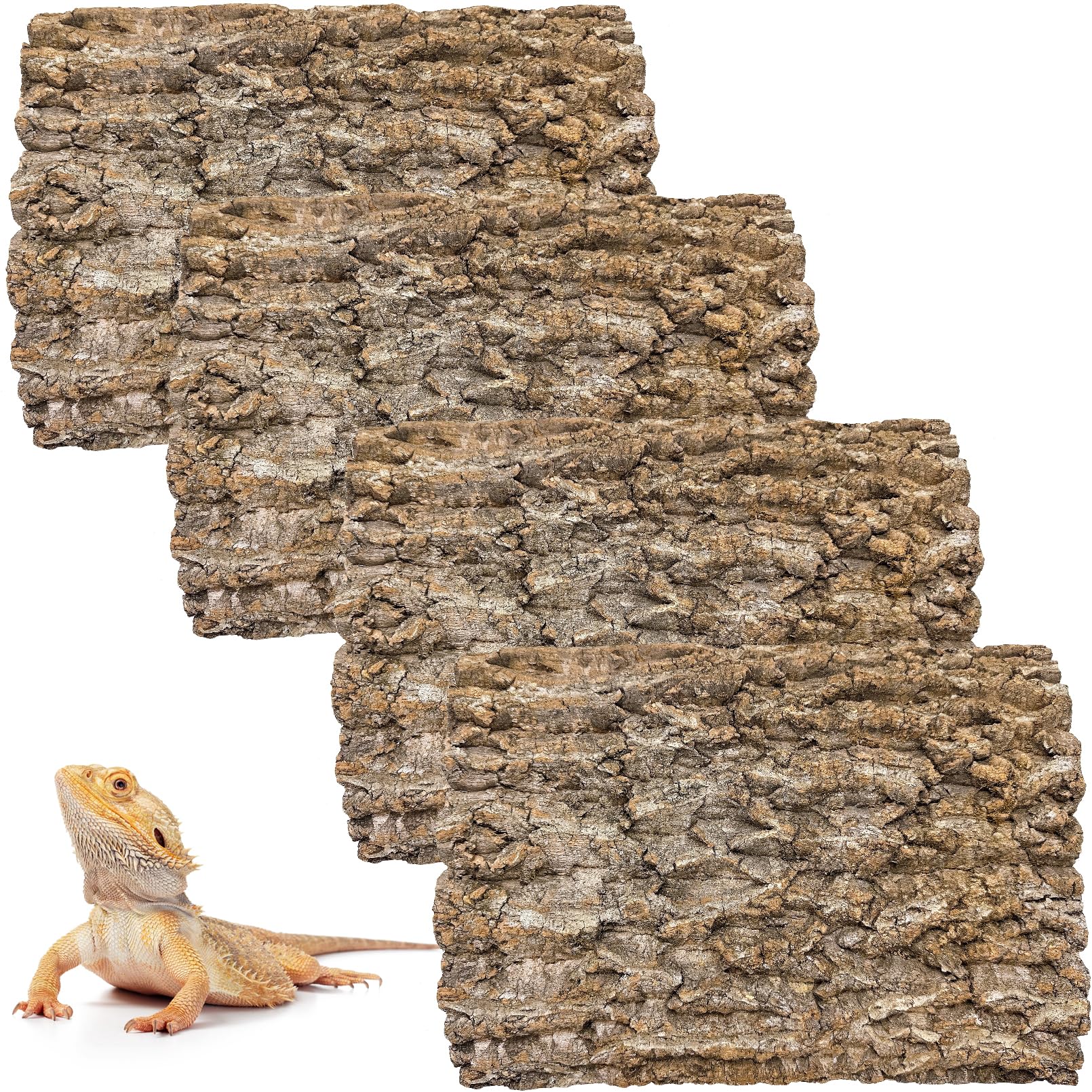
Hamiledyi’s four-panel set gives you 63 total inches of linear coverage — enough to line the back and one side wall of a 40-gallon breeder tank. That surface area is massive for mounting a collection of miniature orchids like Neofinetia falcata or Lepanthes. Each panel is roughly 15.7 by 11.8 inches, with thickness varying from about half an inch to a full inch depending on the individual piece.
The bark is made from 100 percent champagne cork wood, meaning it retains that waxy suberin layer. The curved nature of the bark can be a blessing or a challenge: if you mount it on a flat glass terrarium wall, you’ll need a good bead of silicone and a weight to hold it flat for 24 hours. Once cured, the bark stays flush and the natural curve creates small pockets behind the panel where roots can grow without being crushed. Orchid growers who use this as a vertical mount should add a thin layer of sphagnum between the bark and the root ball to buffer the drying time.
The biggest drawback is piece inconsistency — one panel may be thick and heavily textured while another is thin and nearly smooth. For terrarium builders this matters less because the overall look remains organic. But for someone mounting a large orchid on a single panel, the smooth piece won’t hold roots as well. Silicone and zip ties work. Plan to place your largest orchid on the thickest panel and use the thinner one as a floor or hide cover.
What works
- Very large panels, great coverage for big enclosures
- Champagne cork, high suberin content
- Lighter than equivalently sized plywood mounts
What doesn’t
- Thickness varies noticeably between panels
- Curved pieces need weight and silicone to flatten
4. RHBLME 6 Pack Cork Bark (11.8″ L x 7.8″ W)
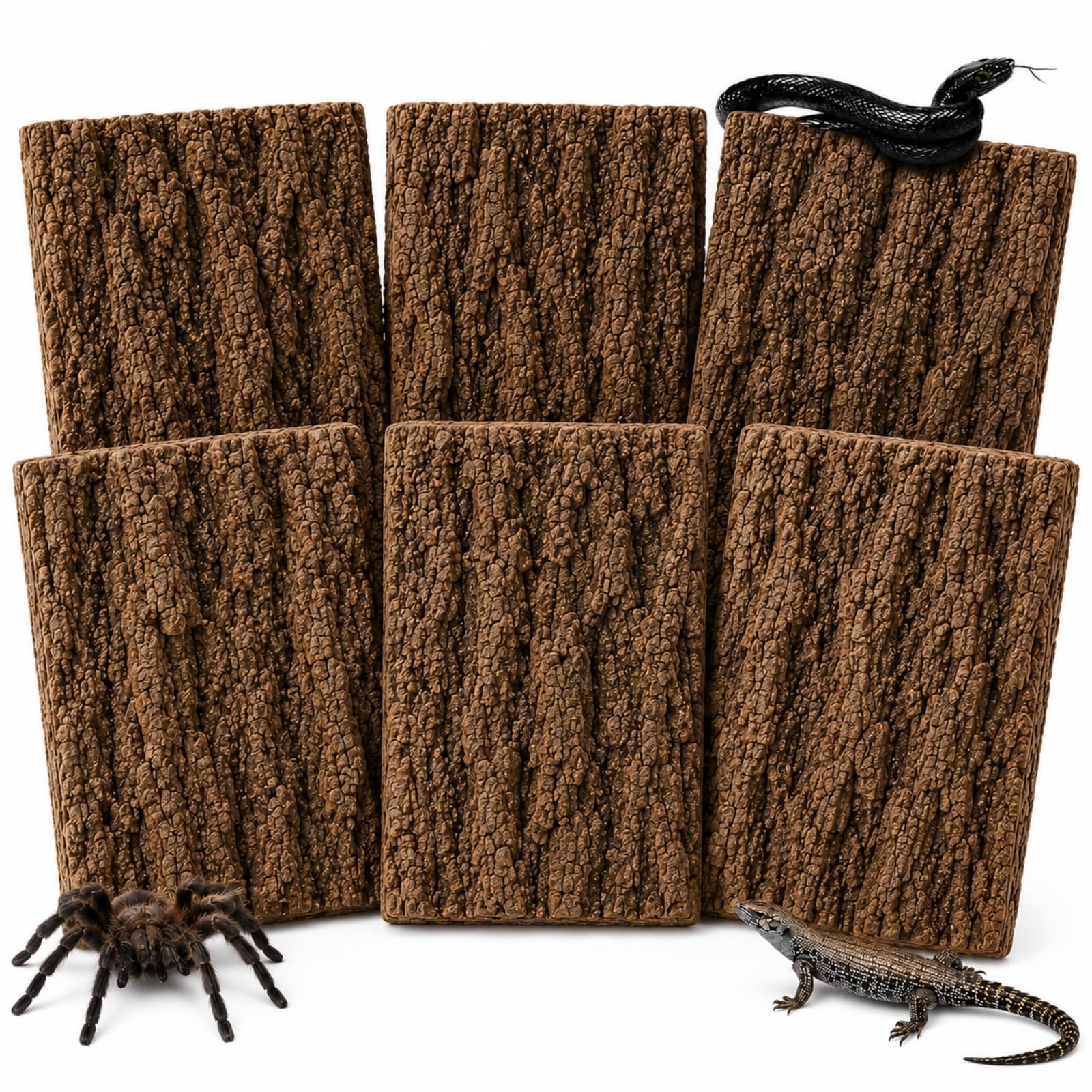
RHBLME offers six cork panels that are slightly smaller than the Hamiledyi set (11.8 by 7.8 inches) but come in a higher count. These are marketed as backdrops for reptile tanks, but their light, flexible texture makes them a solid option for orchid growers who want a minimalist mount or a quick liner for a wire basket. The bark is pliable enough that you can tear it by hand, which eliminates the need for a saw.
The thinness (around 0.5 to 0.75 inches) is the key trade-off. Thin cork dries faster, which is excellent for orchids prone to root rot like a Cattleya, but it also means the bark won’t hold moisture as long between waterings. If you mount a phalaenopsis, you’ll need to mist more often or pack the roots with moss. On the positive side, the six panels give you modularity: use three on the back wall, two on the side, and reserve one for a loose bottom layer. Owners report that the cork holds up under regular misting and provides good climbing texture, though the natural color variations between pieces can clash if you’re aiming for a matched look.
Older reviews mention that the bark is easy to cut with scissors, so you can trim each panel to fit oddly shaped enclosures. For orchid growers who build several small terrariums at once, this six-pack offers the best coverage-to-cost ratio among the flat-sheet options. It won’t last as long as a thicker 1-inch piece, but for a two-year mounting cycle it performs well.
What works
- Six pieces offer excellent modular coverage
- Hand-tearable, no saw needed
- Dries quickly, good for rot-prone orchids
What doesn’t
- Thinner than premium sheets, less moisture retention
- Color may vary between pieces in the pack
5. Josh’s Frogs Natural Virgin Cork Sheet (12×12)

Josh’s Frogs is a known name in the terrarium space, and this 12×12 pressed sheet reflects that focus. Unlike the loose natural slabs seen in other options, this sheet is purpose-made as a flat background — meaning it’s consistent, square-edged, and sits flush against glass. For an orchid grower who wants a clean mounting surface without the unpredictability of natural curves, this is a strong pick.
The sheet is a full 1-inch thick, which gives you enough depth to hammer a staple through without splitting and deep enough texture for roots to find purchase quickly. Because it’s pressed from virgin cork, the sheet holds its shape in humid environments — no warping or sagging over a year of daily misting. It fits a standard 12x12x12 terrarium, making it ideal for smaller grow-outs or a single specimen phalaenopsis mount.
The downside is that you get exactly one sheet per purchase. If you’re building a large enclosure, you’ll need multiple sheets, and the square shape doesn’t piece together as seamlessly as natural slabs. Some users report that the sheet can be slightly larger than advertised (around 12.5 inches), requiring trimming with a serrated knife. But the overall quality — customer reviews consistently hit five stars — makes it a reliable choice for first-time cork users who want a foolproof mount.
What works
- Consistent 1-inch thickness, no thin spots
- Square edges fit small terrariums perfectly
- Pressed virgin cork, won’t warp in humidity
What doesn’t
- Only one sheet per purchase
- May run slightly oversized, needs trimming
Hardware & Specs Guide
Bark Thickness & Root Anchorage
Orchid roots grow by adhering to surface texture, not by absorbing through the medium like soil. A cork piece under 0.75 inches will often break when you try to tie the plant. Specs to target: 1 inch or thicker for mounts. Sheets thinner than half an inch are better used as floor cover or wall filler, not primary mounting boards.
Suberin Content & Rot Resistance
Suberin is the waxy polymer in cork that makes it water-repellent on the surface while allowing internal moisture storage. Pure virgin cork from Quercus suber contains high suberin. Substrates labeled as “cork blend” or “compressed cork” have lower suberin and will degrade within a year. Always choose “virgin” or “natural” cork for orchid applications that need to last multiple growing cycles.
FAQ
How long does cork bark last when used as an orchid mount?
Is cork bark better than tree fern fiber for mounting orchids?
Can I put cork bark directly in an orchid pot as a potting medium?
Final Thoughts: The Verdict
For most orchid growers, the best cork bark for orchids winner is the Zoo Med Natural Cork Round because its thick, uniform rounds serve equally well as vertical mounts or horizontal hide-pots, and the suberin-rich construction handles years of humidity without rot. If you want variety and bulk for multiple builds, the DBDPet Virgin Reptile Assorted 1lb bag gives you the best value per pound with deep textures. And for a large-scale terrarium wall where flat coverage matters most, the Hamiledyi 4-panel set delivers the surface area to mount an entire micro-orchid collection in one go.