
Picking a concentrate insecticide is confusing because the label lists ingredients you have never heard of and coverage numbers that feel made up. The real question you have is simple: which bottle actually stops bugs from ruining your yard, your plants, or your peace of mind without costing a fortune or smelling like a chemical factory? This guide compares 7 top concentrate insecticides by what they kill, how long they last, and what real buyers discovered after spraying them — so you can grab the right one on your first try.
I’m Rikta — the co-founder and writer behind Lawn Gear Lab. This guide is built by comparing the manufacturers’ published specifications and the patterns across verified customer reviews, so you get each pick’s real strengths and trade-offs instead of marketing spin.
Choosing the right concentrate insecticide comes down to matching the active ingredient to your specific pest and your tolerance for reapplication — whether you fight ants in the kitchen, ticks in the yard, or bed bugs in the bedroom.
How To Choose The Best Concentrate Insecticide
Not all concentrate insecticides are built the same. Some kill on contact but fade after rain, while others get absorbed into the plant and protect from the inside out. Here are the three things you need to check before you buy.
Match the active ingredient to your pest
The active ingredient is the chemical that actually kills bugs. Lambda-Cyhalothrin (a pyrethroid that attacks insect nerve cells) is found in Martin’s Cyonara and covers 130+ pests including fire ants and spider mites. Permethrin (another pyrethroid, found in Martin’s Permethrin 13.3%) is the go-to for ticks and mosquitoes but will not touch ants or roaches. Cyfluthrin (a pyrethroid in Atticus Tirade CS) targets 55+ pests with a time-release capsule that survives weather. Always cross-check the label’s pest list against what you see — one ingredient does not rule them all.
Check the residual duration
Residual control means how long the chemical stays active after it dries. Standard concentrates like Martin’s Permethrin offer 4 to 6 weeks of tick protection, but rain cuts that short. Premium options like Cy-Kick CS use microencapsulation (tiny capsules that stick to surfaces and release the active ingredient slowly) to deliver a full 90 days of power, even in sun and rain. If you want to spray once and forget it, go with a time-release formula.
Understand liquid volume vs. coverage
A 32-ounce bottle of concentrate sounds like more than a 13-ounce bottle, but dilution ratios change everything. You mix concentrate with water in a sprayer, so the number of gallons you can make depends on the ounces of concentrate per gallon the label recommends. A product that requires only 1.5 ounces per gallon (like Martin’s Permethrin) can treat far more square footage than one that needs 4 ounces per gallon. Always calculate total treatable area, not just bottle size.
Quick Comparison
On smaller screens, swipe sideways to see the full table.
| Model | Category | Best For | Key Spec | Amazon |
|---|---|---|---|---|
| Martin’s Cyonara 32 oz | Broad-Spectrum | Lawns, gardens & 130+ pests | 0.5% Lambda-Cyhalothrin | Amazon |
| Bonide Systemic 16 oz | Systemic | Ornamental plants & fungus gnats | Acephate-based systemic | Amazon |
| Paragon Conquer 16 oz | Residual | Leaf-cutter ants & colony injection | EPA-registered residual formula | Amazon |
| Martin’s Permethrin 32 oz | Tick/Mosquito | Yard perimeter, tick tubes & clothing | 13.3% Permethrin | Amazon |
| Crossfire Liquid 13 oz | Bed Bug | Mattresses & pyrethroid-resistant bugs | Non-repellent residual formula | Amazon |
| Atticus Tirade CS 16 oz | Time-Release | Indoor/outdoor 55+ pests | 6% Cyfluthrin microencapsulated | Amazon |
| Cy-Kick CS 16 oz | Long-Duration | Heavy bug zones & 90-day barrier | Microencapsulated CS formula | Amazon |
In‑Depth Reviews
1. Martin’s 32 oz Cyonara Lawn & Garden Concentrate

0.5% Lambda-Cyhalothrin in a 32-ounce jug — the largest volume among our picks — makes this the top choice for anyone who wants one bottle to handle everything from spider mites in the flower bed to fire ants in the lawn. That is 2.5 times more liquid than the Crossfire bed bug concentrate, giving you far more spray for the money.
Buyers report it “kills maggots immediately and prevents recurrence” when sprayed undiluted in trash cans. The residual control keeps mosquitoes, cockroaches, and squash bugs gone for weeks. At just 2 pounds per bottle, it is light enough to carry around the yard while you treat roses, vegetables, trees, and shrubs with the same mix.
Choose this if you need one insecticide for your whole yard and garden — it covers 130+ pests including spider mites, fleas, fire ants, and chinch bugs. Consider the Bonide Systemic instead if you need plant-absorbed protection for hidden pests on ornamentals. The honest limit: a few reviewers noticed it is slightly less effective than previous batches, and like any contact spray, rain can wash away diluted treatments. For a single-bottle yard-and-garden solution, this is the one to get.
Why it’s great
- Covers 130+ pests including spider mites, fleas, fire ants, and chinch bugs
- Low odor formula safe for vegetables, flowers, and lawns
- 32-ounce bottle gives you plenty of concentrate for multiple treatments
Good to know
- Diluted spray washes away in heavy rain
- Some users report slightly reduced potency in recent batches
2. Bonide Systemic Insect Control 16 oz Concentrate

Where the Cyonara kills on contact, the Bonide Systemic works from the inside out. It contains acephate (a systemic insecticide that plants absorb through their roots, turning the entire plant toxic to chewing and sucking insects). That means it targets hidden pests like thrips, scale, and whiteflies that a contact spray might miss — a clear head-to-head advantage over the Cyonara for ornamental plants with stubborn infestations.
Owners mention it was “effective immediately against fungus gnats,” with results visible within days on arborvitae trees and Canna Lilies. The 16-ounce bottle makes 16 gallons of finished spray. The included measuring cup takes the guesswork out of dilution.
This is the right pick if you need plant-absorbed protection against hard-to-reach sucking insects and can tolerate the odor. The catch is extreme: the smell is so strong that reviewers describe it as “a dumpster that has been baking in the sun for a week” and “like actual poop.” It also says clearly on the label that it is not for use on vegetables or fruit — ornamentals, roses, shrubs, and flower beds only. Choose this over the top pick when your main target is hidden sucking pests on ornamentals and you can accept the strong odor and limited use area.
Where it shines
- Systemic absorption protects the whole plant from hidden pests
- Treats thrips, mealybugs, scale, spider mites, and whiteflies
- Makes 16 gallons of spray from one 16 oz bottle
Worth noting
- Extremely strong odor that lingers for days
- Not labeled for use on any vegetables or fruit plants
3. Paragon Conquer Residual Insecticide Concentrate 16 oz
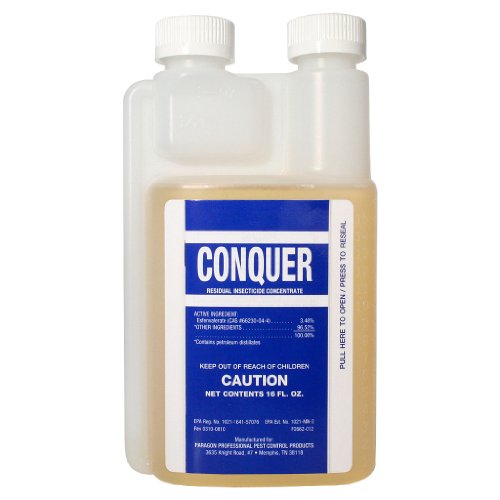
If you have tried seven different baits, neem oil, diatomaceous earth, and flooding — and the ants are still stripping your trees overnight — you need Conquer. This EPA-registered residual concentrate was designed for the hardest-to-kill colony pests, especially leaf-cutter ants that ignore standard treatments. No other product in this lineup is praised specifically for colony injection.
Customers note that “Conquer eliminated leaf-cutter ants after failed professional and store-bought treatments,” with one reviewer pouring a quarter to half gallon of diluted solution directly into ant holes via a funnel and seeing the holes vacated within hours. It also eliminated cockroaches and carpenter ants with very low odor.
This is the specialist you call for a pest that has resisted everything else. The standout spec is its immediate surface kill combined with deep colony penetration. The downside is cost per ounce: at 0.57 kilograms for the full bottle, it is a premium per-use price. The Martin’s Cyonara covers more pests for less cost if you do not have a colony-level infestation.
What stands out
- Kills leaf-cutter ants that resist standard store-bought treatments
- Works via colony injection when poured directly into holes
- Very low odor, easy indoor or outdoor storage
The trade-offs
- Higher cost per ounce compared to broad-spectrum alternatives
- Best results require direct application into nests, not just surface spray
4. Martin’s 32 oz Permethrin 13.3% Concentrate
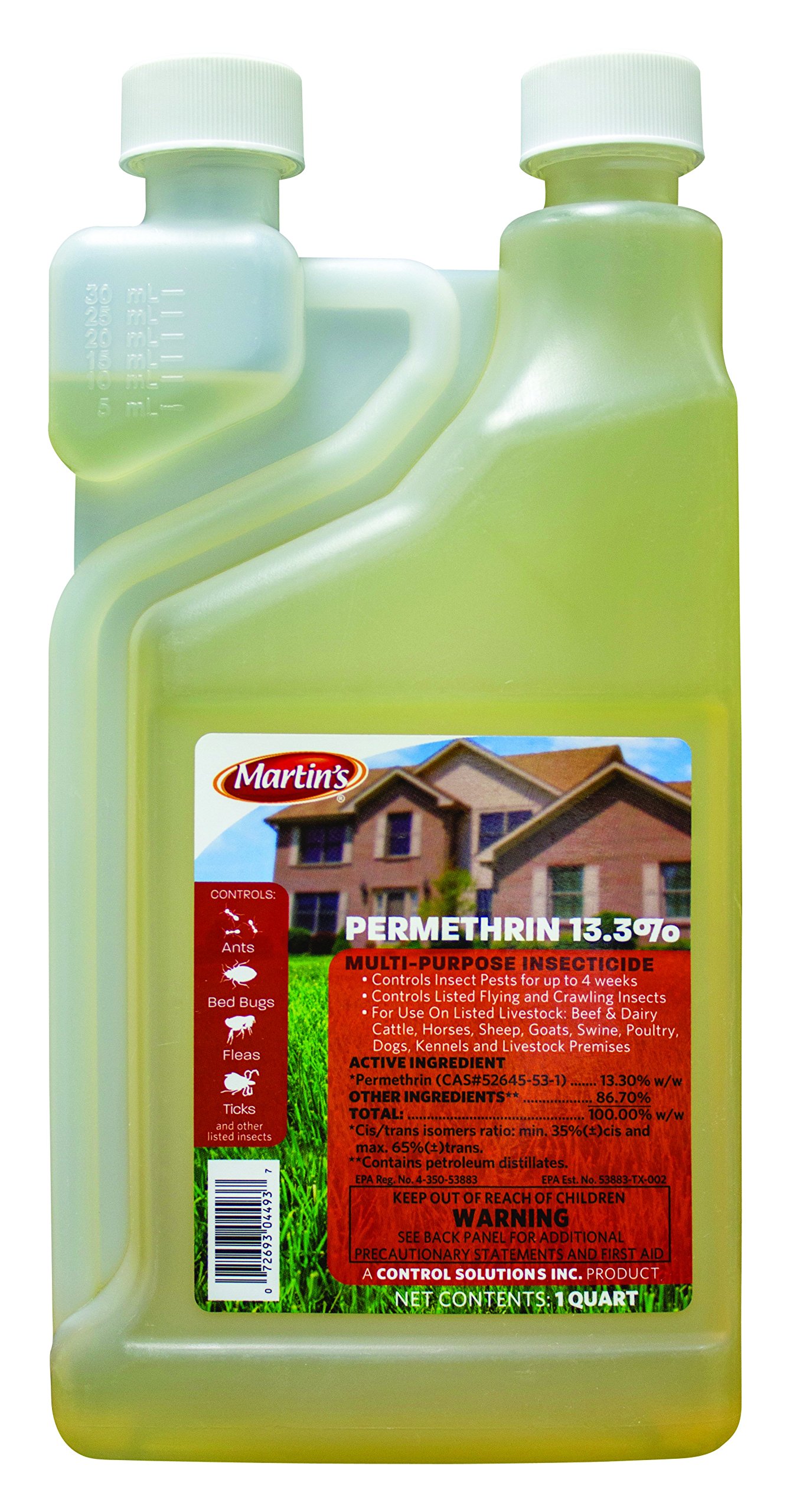
The single number that matters most in this category is the active ingredient percentage, and Martin’s scores 13.3% Permethrin — the highest concentration in this lineup for a single-ingredient permethrin product. That 32-ounce bottle lets you mix just 1.5 ounces per gallon to treat 800 to 1,000 square feet of yard perimeter. For large properties, this is extremely efficient.
Buyers confirm it gives “excellent tick control (4-6 weeks per application, less effective after rain)” and note it is the only product that stopped ticks in their chicken runs and dog areas. It is also widely used to treat clothing — mix 3 ounces per gallon and spray your pants and boots for an invisible tick shield when walking through brush.
This is one of the best pure tick-killing bargains on the market if ticks are your only enemy. The trade-off you accept is narrow pest targeting: permethrin at this level is excellent for ticks and mosquitoes but ineffective on ants, crickets, roaches, and spiders. The Martin’s Cyonara handles those pests but does not match the tick-specific concentration, making this a strong price-to-value read for tick-focused buyers.
The upsides
- 13.3% permethrin kills ticks for 4-6 weeks per application
- Treats 800-1,000 sq ft per gallon at just 1.5 oz concentrate per gallon
- Safe for use on clothing and in livestock areas
Keep in mind
- Not effective on ants, crickets, roaches, or spiders
- Rain significantly reduces residual duration
5. Crossfire Liquid Concentrate 13 oz

At 13 fluid ounces, Crossfire is the smallest bottle in this guide, but it is the only one specifically engineered for bed bugs, including pyrethroid-resistant strains. What you get is a non-repellent formula (bed bugs do not sense it, so they walk right through the treated area and die) that is approved for direct application onto mattresses — something no other concentrate here can claim.
Reviewers point out it “kills bugs and eggs effectively; eliminated bed bug infestation; recommended for continued preventive spraying,” with one reviewer noting it saved them thousands versus hiring professional pest control. The kit includes a pair of USA Supply protective gloves.
If you need to eliminate a bed bug problem without staining your mattress and without driving bugs into hiding, this is the budget-focused specialized tool for the job. What you give up is versatility: this product is laser-focused on bed bugs. It will not replace your yard spray for ants or mosquitoes. The Atticus Tirade CS covers more pests if you need a general indoor-outdoor spray, making this the perfect pick for a budget buyer with a single, stubborn bed bug problem.
Why we’d pick it
- Non-repellent formula prevents bed bugs from avoiding treated areas
- Approved for direct application onto mattresses without staining
- Kills pyrethroid-resistant bed bugs and their eggs quickly
A few caveats
- 13 oz bottle is small and targeted — not for general pest control
- Best results require repeat treatment after 10 days
6. Atticus Tirade CS Insecticide 16 oz
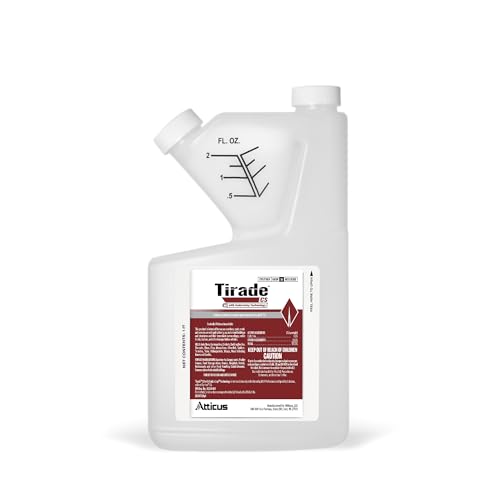
This pick is perfect for the busy homeowner or property manager who wants to set a perimeter spray and forget about bugs for months. Atticus Tirade CS uses EnduraCap Technology: microcapsules that wrap the 6% cyfluthrin active ingredient in a protective shell, releasing it slowly over time while shielding it from UV rays and rain. It delivers up to 90 days of control, which is roughly 3x longer than standard contact sprays like Martin’s Cyonara.
That time-release technology serves the busy homeowner or property manager perfectly. One quick perimeter spray around the house foundation kills ants, mosquitoes, roaches, and wasps on contact, then keeps killing for weeks. Shoppers say effects visible “within 15 minutes of spraying around outside of my house,” with no flying or crawling insects after treatment. It is also labeled for use in dog kennels, livestock barns, and poultry housing, though you need to check your state’s registration (it is not available in Alaska, DC, Hawaii, Puerto Rico, or Vermont).
The honest limit: you pay more upfront than for the Martin’s Cyonara, and it targets about 55 pests instead of 130+. The payoff is the time you save by not re-spraying every few weeks.
Strong points
- Microencapsulated formula lasts up to 90 days even in rain and sun
- Kills 55+ pests including roaches, ants, bed bugs, fleas, and ticks
- Low phytotoxicity — safe to spray on ornamentals and landscape plants
Before you buy
- Not available in AK, DC, HI, PR, or VT
- Higher price per bottle than basic contact sprays
7. Cy-Kick CS Liquid Concentrate 16 oz

Cy-Kick CS sits at the top end of this field on price-to-performance, but what that money buys you is the longest residual duration in the lineup: a full 90 days of full-throttle killing power. Like the Atticus Tirade, it uses microencapsulation, but Cy-Kick is specifically formulated for heavy bug zones where other sprays fail — think cricket infestations, severe ant pressure, or commercial-grade perimeter defense.
Buyers report it “kills on contact within 15-30 minutes” and that “barrier protection reduced bugs by 95% after initial treatment.” One reviewer eliminated a severe cricket infestation with just two spray treatments using 2 ounces of concentrate per gallon of water. The 16-ounce bottle comes with a pair of USA Supply protective gloves, and the label covers 28 pest types including bed bugs, termites, scorpions, and yellow jackets.
The one clear reason to choose it: Cy-Kick earned multiple buyer reviews calling it the “best insect control product I have ever used” and explicitly stating it delivered “months” of control. If your bug problem is severe enough that standard sprays feel like a waste, this is the value choice for heavy duty.
What we like
- 90 days of residual killing power via microencapsulation
- Covers 28 pests including termites, scorpions, and bed bugs
- Owners mention 95% bug reduction and months of control
The downsides
- Premium price point compared to non-encapsulated concentrates
- Heavy bug zones may still require a second application at 30 days
Understanding the Specs
Active Ingredient & Concentration
The active ingredient is the chemical that actually poisons the insect. The percentage tells you how much of that chemical is in the bottle — 13.3% Permethrin means 13.3% of the liquid is the killing agent and the rest is carrier fluid, stabilizers, and emulsifiers. Higher percentage means you use less concentrate per gallon of water, extending the life of the bottle. Different ingredients target different pest nervous systems: pyrethroids like Lambda-Cyhalothrin and Cyfluthrin attack sodium channels in nerve cells for fast knockdown, while acephate is an organophosphate that inhibits an enzyme for longer-term systemic control.
Residual Duration & Microencapsulation
Residual duration is how many days or weeks the dried chemical continues to kill bugs after you spray. Basic contact sprays degrade in sunlight and wash off in rain within days. Microencapsulation technology wraps the active ingredient in tiny polymer capsules that stick to leaves, soil, and building materials. These capsules release the poison slowly over time (up to 90 days) while protecting it from UV breakdown and moisture. If you want to spray once for the whole season, look for “CS” (capsule suspension) or “microencapsulated” on the label.
FAQ
Can I use a concentrate insecticide on my vegetable garden?
How long does a concentrate insecticide stay effective after mixing with water?
What is the difference between contact kill and systemic insecticide?
Final Thoughts: The Verdict
For most people, the concentrate insecticide winner is the Martin’s Cyonara 32 oz because it covers over 130 pests, works on lawns and vegetables, and offers the best balance of price and versatility. If you need a plant-absorbed systemic for ornamental gardens, grab the Bonide Systemic 16 oz. And for a 90-day no-reapply barrier against heavy bug zones, the Cy-Kick CS 16 oz delivers the longest residual duration in the lineup.