
Perennials return to the same ground year after year, steadily draining the same pocket of soil of its organic matter and microbial life. A single bag of the wrong compost can stunt root development for an entire season, while the right mix feeds the soil web that keeps delphiniums, echinacea, and peonies pushing out flower stalks well into late summer.
I’m Rikta — the co-founder and writer behind Lawn Gear Lab. I’ve spent hundreds of hours cross-referencing NPK profiles, organic certification standards, particle sizes, and pH ranges across dozens of bagged composts to isolate the formulations that actually support the long root tenure of perennial plants.
This guide breaks down the top performers by what matters most to perennial beds — slow-release feeding, moisture retention, and microbial density — so you can match the right bag to your specific soil and bloom goals. After comparing specs and owner results across seven products, I’ve assembled the definitive resource for choosing the best compost for perennials.
How To Choose The Best Compost For Perennials
Perennial roots occupy the same space for years, so the compost you add must improve soil structure without overwhelming the plants with a sudden nutrient spike. A compost that works for a single-season tomato will often burn a peony crown or create leggy growth in a lavender border. Focus on three factors that separate perennial-friendly blends from generic garden filler.
Organic Source and Certification
OMRI (Organic Materials Review Institute) listing confirms the compost contains no sewage sludge, synthetic additives, or unapproved processing aids. For edible perennials like asparagus or rhubarb, OMRI certification is non-negotiable. Even for ornamental beds, certified organic compost delivers a more consistent microbial population because the raw feedstocks are controlled from the start.
Texture and Drainage Profile
Perennial root systems — especially fleshy crowns and taproots — rot quickly in compost that holds too much water. Look for a screened, uniform texture without large wood chunks or clods. A mix that feels crumbly and dark, like damp coffee grounds, integrates into native soil without creating a perched water table. Bags labeled “fine” or “screened” are usually safer than coarse landscape blends.
Nutrient Release Pattern
Perennials benefit from a steady, low-level nutrient supply rather than a high-nitrogen blast. Check for compost with a balanced NPK ratio — something close to 1-1-1 or 2-1-2. Worm castings naturally provide this slow-release profile because the nutrients are coated in humus, making them available as soil microbes break them down. Hot, fresh manure compost can push leaf growth at the expense of flower bud formation.
Quick Comparison
On smaller screens, swipe sideways to see the full table.
| Model | Category | Best For | Key Spec | Amazon |
|---|---|---|---|---|
| Espoma Organic Land and Sea | Lobster & Crab Meal | Flowering perennials & shrubs | 24 lb bag with mycorrhizae | Amazon |
| Mountain Valley Seed Worm Castings | Pure Vermicompost | Established beds & heavy feeders | Neutral 7.0 pH; 6 lb bag | Amazon |
| Back to the Roots Organic Compost | Peat-Free Mix | Raised beds & sensitive roots | Yucca extract for moisture | Amazon |
| R&M Organics Premium Compost | Dairy Manure | Reviving stressed perennials | 5:1 mixing ratio; 10 lb bag | Amazon |
| Michigan Peat Baccto Wholly Cow | Peat & Manure Blend | Large beds & lawn top-dressing | 40 quart; odor-free | Amazon |
| Brut Cow Compost | Pure Manure Compost | New planting holes & vegetables | OMRI listed; 10 quart bag | Amazon |
| Great Big Roses Liquid Booster | Liquid Extract | Rose bushes & bloom boost | 70 minerals + humic acid | Amazon |
In‑Depth Reviews
1. Espoma Organic Land and Sea Gourmet Compost

The Espoma Land and Sea blend combines lobster and crab meal with composted organic matter, delivering chitin and calcium that perennial roots use to build cell structure. At 24 pounds per bag, it covers a substantial bed area without requiring multiple purchases, and the included Myco-Tone inoculant introduces endo and ecto mycorrhizae directly into the root zone. Hostas and hydrangeas show noticeably wider leaf spread and deeper green coloration within three weeks of incorporation.
Chitin from crustacean shells stimulates soil microbes that suppress root-feeding nematodes, a hidden advantage for perennials left in the ground year after year. The granular texture integrates smoothly into existing garden soil without forming clumps, and the organic certification means it is safe for edible perennials like asparagus. No synthetic plant foods are used in the production process.
The main trade-off is the bag size — 1 cubic foot weighs 24 pounds, so carrying it from a car to a back border involves some effort. A few gardeners note that the crustacean meal can attract curious wildlife if left exposed on the surface, so light incorporation into the top inch of soil is recommended. For perennial beds where long-term root health and bloom density are the priority, this is the most complete bagged option available.
What works
- Dual-action organic compost plus mycorrhizal inoculant
- Calcium and chitin from crustacean meal support strong cell walls
- Consistent granular texture that mixes without clumps
What doesn’t
- Bag is heavy for its volume, making transport awkward
- Crustacean meal may attract animals if left as top dressing
2. Mountain Valley Seed Company Worm Castings

Worm castings operate differently from manure compost because the digestive process coats nutrients in a humic layer that resists leaching and releases minerals in response to root exudates. This 1-gallon bag of Mountain Valley Seed Company castings delivers a neutral pH of 7.0, making it safe for perennial beds that already trend acidic from years of bark mulch application. The 6-pound weight means the bag is easy to handle even for gardeners with limited mobility.
Because the castings are derived from certified organic cow manure and processed through red worms, the microbial diversity is significantly higher than heat-composted manure. Perennials with fine root hairs — think bleeding hearts and ferns — respond well to this material because there is no risk of ammonium burn. The included recipe for brewing liquid worm tea extends the value of a single bag across an entire growing season.
The volume is the primary limitation. One gallon covers roughly 6 to 8 square feet at a quarter-inch top-dress depth, so large perennial borders require multiple bags. Some users feel the price per pound is steep relative to bulk manure blends. For targeted feeding of specimen perennials or for use as a soil drench on established beds, the biological density justifies the premium.
What works
- Slow-release nutrient profile that won’t burn fine roots
- Neutral pH ideal for countering acidic soil conditions
- Odorless and clean, suitable for indoor overwintering mixes
What doesn’t
- Small bag volume limits coverage for large beds
- Higher cost per pound compared to manure-based alternatives
3. Back to the Roots 25.7qt Organic Premium Compost
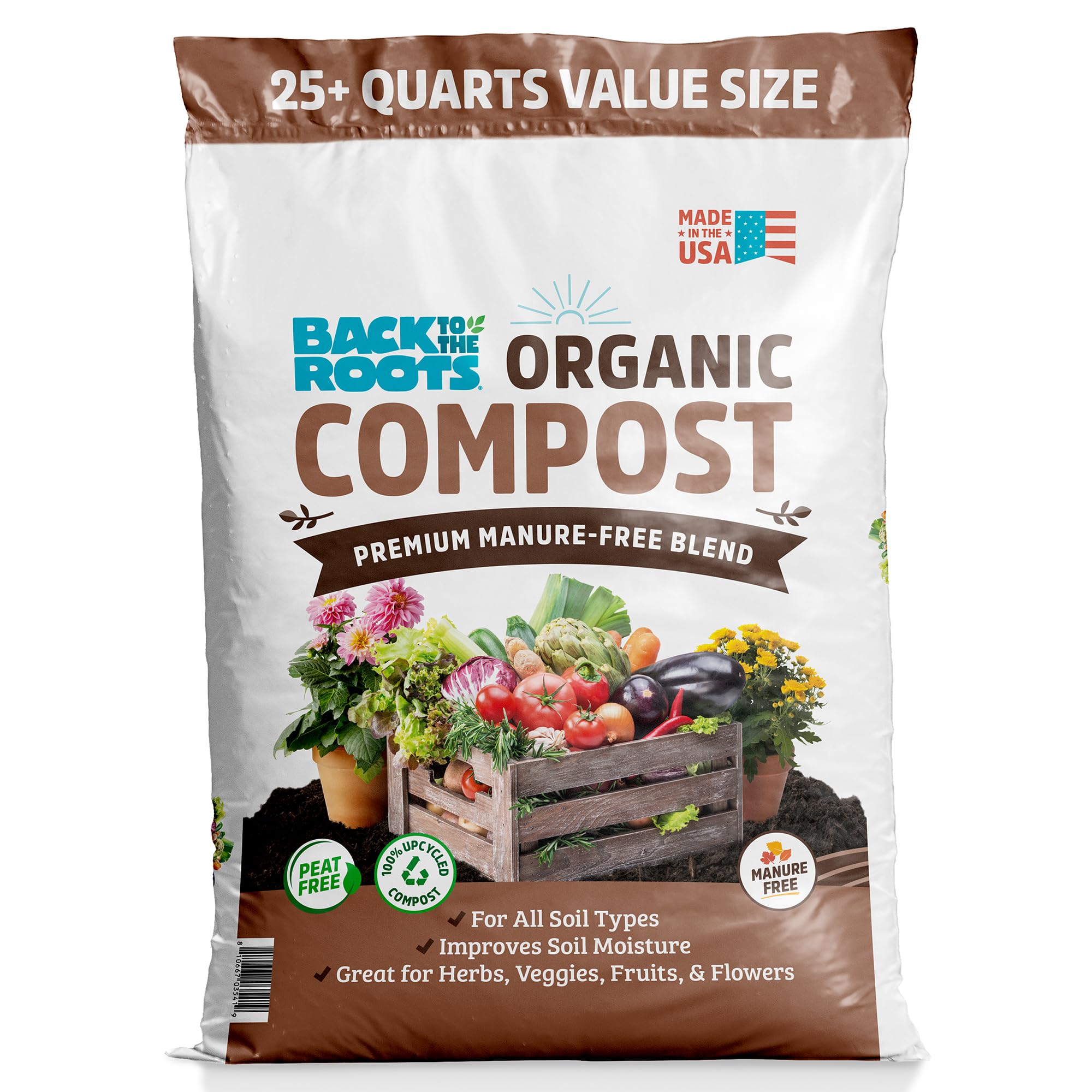
Back to the Roots takes a strong stance against peat harvesting by building this compost from upcycled plant matter and wood fines, a difference that matters for ecologically minded gardeners who want their perennial bed amendments to carry a low carbon footprint. Yucca extract improves water absorption without creating the soggy conditions that rot perennial crowns.
Dolomitic limestone buffers the pH toward neutral, and gypsum improves soil structure by flocculating clay particles — a specific benefit for perennial borders built on heavy native soil. Gardeners report that seeds and transplants settle into this compost with minimal transplant shock, likely because the wood-fine base provides a consistent moisture gradient from wet to dry. The material is dark, rich, and free of the large fragments that make some composts frustrating to spread.
The primary consideration is that this product is formulated as a raised bed mix rather than a pure compost amendment. Mixing it 50-50 with existing garden soil delivers better results than using it straight. Some users would prefer a finer texture for top-dressing around shallow-rooted perennials like coral bells. For new raised perennial beds or when refreshing tired soil, this is a clean, responsible choice.
What works
- Peat-free construction with a lower environmental impact
- Yucca and gypsum improve water penetration in clay soil
- Lightweight bag makes transport and application easy
What doesn’t
- Best results require 50-50 mixing with native soil
- Texture may be too coarse for very fine-rooted perennials
4. R&M Organics Premium Organic Compost 10 lb Bag
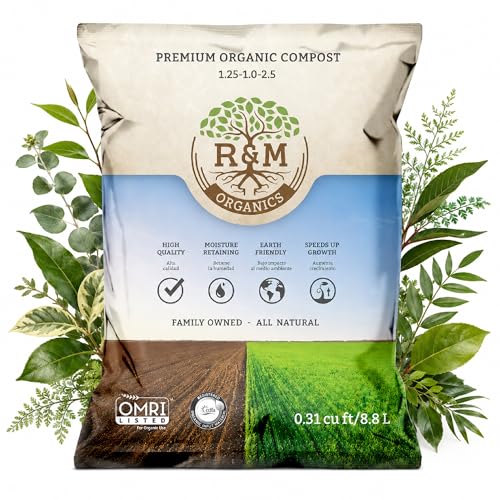
R&M Organics uses dairy cow manure that has been aerated through a complete composting cycle, resulting in a fine, soil-like texture with very little of the ammonia smell that puts some gardeners off manure products. The 10-pound bag is compact enough for small garden plots or container perennial arrangements, and the quarter-inch application recommendation means a single bag can refresh a modest border without overwhelming the existing soil profile. The low odor makes this a realistic indoor overwintering amendment for perennials brought inside.
The moisture retention characteristics are what set this compost apart for stressed plants. Master gardeners have used it to reverse die-back in azaleas after roof-cleaning chemical exposure, and tomato growers report yellow leaves turning green within a week of incorporation. The 5:1 mixing ratio gives room to tailor the concentration for sensitive perennial species. It spreads easily without clumps and does not crust over after rain.
The main drawback is relative cost per cubic foot. At 10 pounds, this bag covers less area than bulkier alternatives, and users with large established borders will need multiple units. A few customers note that the bag could be sturdier to prevent tearing during transport. For targeted restoration of struggling perennials or for container-grown specimens, the results speak for themselves.
What works
- Fine texture and low odor suit indoor and outdoor use
- Rapid reversal of nutrient stress in established plants
- Easy 5:1 mixing ratio for customized application
What doesn’t
- Higher cost per volume for large-scale perennial beds
- Bag material may tear under heavy handling
5. Michigan Peat Baccto Wholly Cow 40 Quart Bag
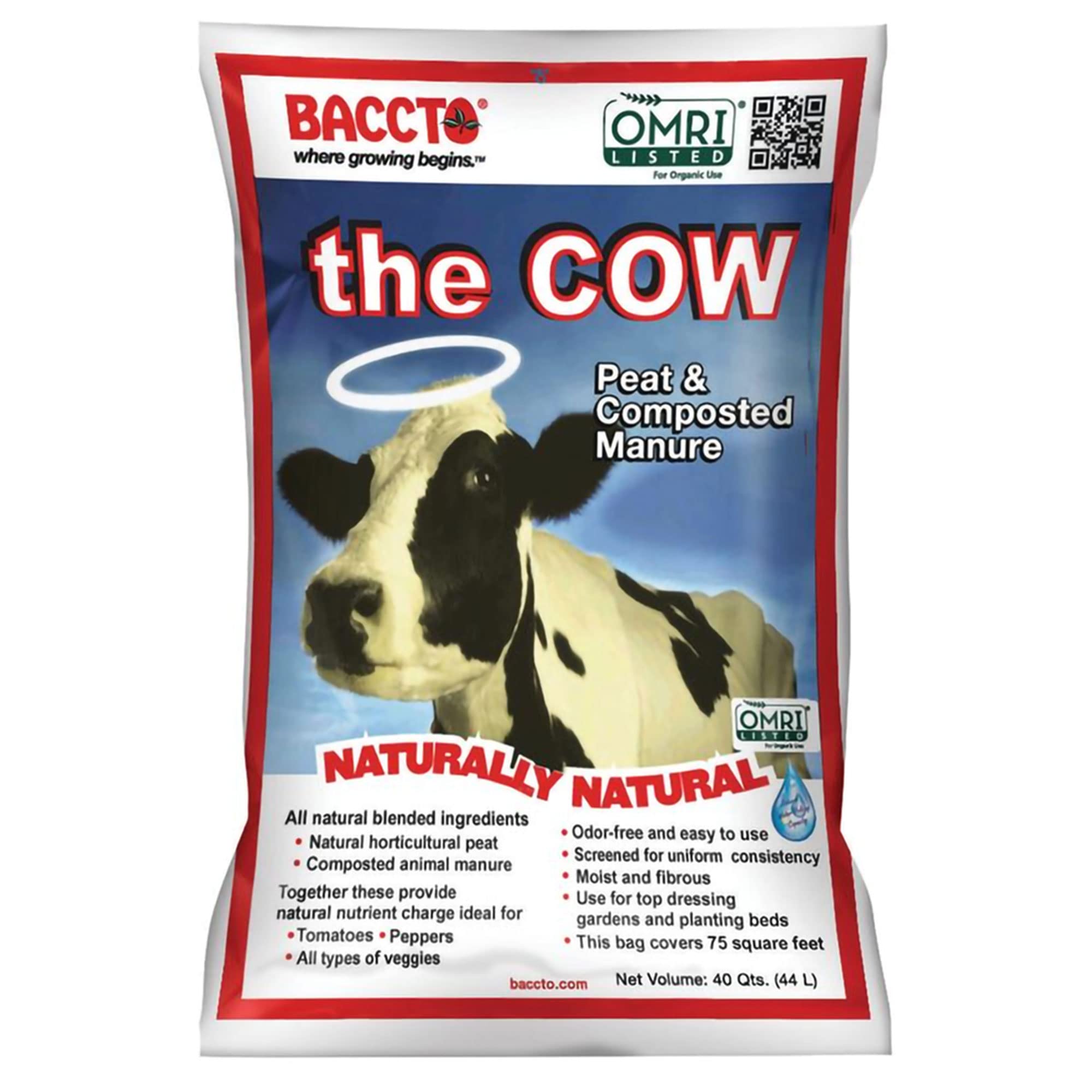
The 40-quart Baccto Wholly Cow bag delivers the most volume at the most accessible price point in this lineup, making it the go-to choice for gardeners who are amending large perennial borders or building new beds from scratch. The blend combines natural peat with composted animal manure for a balanced nutrient profile that improves both moisture retention and drainage. Users consistently mention the complete absence of unpleasant odor, a feature that matters when working near open windows or entertaining areas.
This compost screens clean with minimal debris — a few small sticks per bag but nothing that requires significant removal. The uniform, dark, fluffy texture makes it pleasant to work with by hand or trowel. Mushroom growers have adopted it as a bulk substrate, and rose enthusiasts report strong stem development after incorporation. The 34-pound bag is manageable for one person to lift into a wheelbarrow or garden cart.
Because it contains peat, this product is not a fit for gardeners who avoid peat harvesting for environmental reasons. The peat content also means the compost can acidify soil slightly over repeated applications, so a pH test after two seasons is wise. For pure volume and consistent quality at a reasonable per-quart rate, this remains a staple of many perennial propagation programs.
What works
- Excellent volume-to-price ratio for large-scale projects
- Odor-free and clean with minimal debris
- Versatile for top-dressing, bed prep, and mushroom substrate
What doesn’t
- Peat content may conflict with sustainable gardening practices
- Repeated use can lower soil pH over time
6. Brut Cow Compost 10 Quart Bag

Brut delivers a no-frills, OMRI-listed cow manure compost that skips the additives and filler ingredients common in lower-tier brands. The 10-quart bag is compact enough for apartment gardeners or for spot-treatment of specific perennial clumps, and the finely sifted texture integrates into planting holes without forming the pockets that can trap roots. Nitrogen, calcium, and iron are present at levels that support green foliage without forcing excessive soft growth.
First-time growers have successfully used this compost as a 3:2 ratio mix with potting soil for tomato and flower seeds, reporting rapid germination and sturdy stem development. The odor-free claim holds up — the material smells like clean earth rather than barn waste, making it tolerable for indoor potting sessions. For the price, it is one of the most affordable OMRI-listed options in the category.
The nutrient concentration is modest compared to worm castings or crustacean-based blends, so heavy-feeding perennials like peonies may need supplemental feeding mid-season. The bag volume is small, meaning extensive borders will require several units. For entry-level perennial gardeners or for those needing a clean, certified organic compost for targeted planting holes, this delivers solid baseline nutrition.
What works
- OMRI-listed organic with no synthetic additives
- Fine texture integrates smoothly into planting holes
- Budget-friendly entry point for certified organic compost
What doesn’t
- Nutrient levels are moderate; heavy feeders need extra help
- Small bag volume requires multiple purchases for large beds
7. Great Big Roses and Flowers Liquid Fertilizer Booster
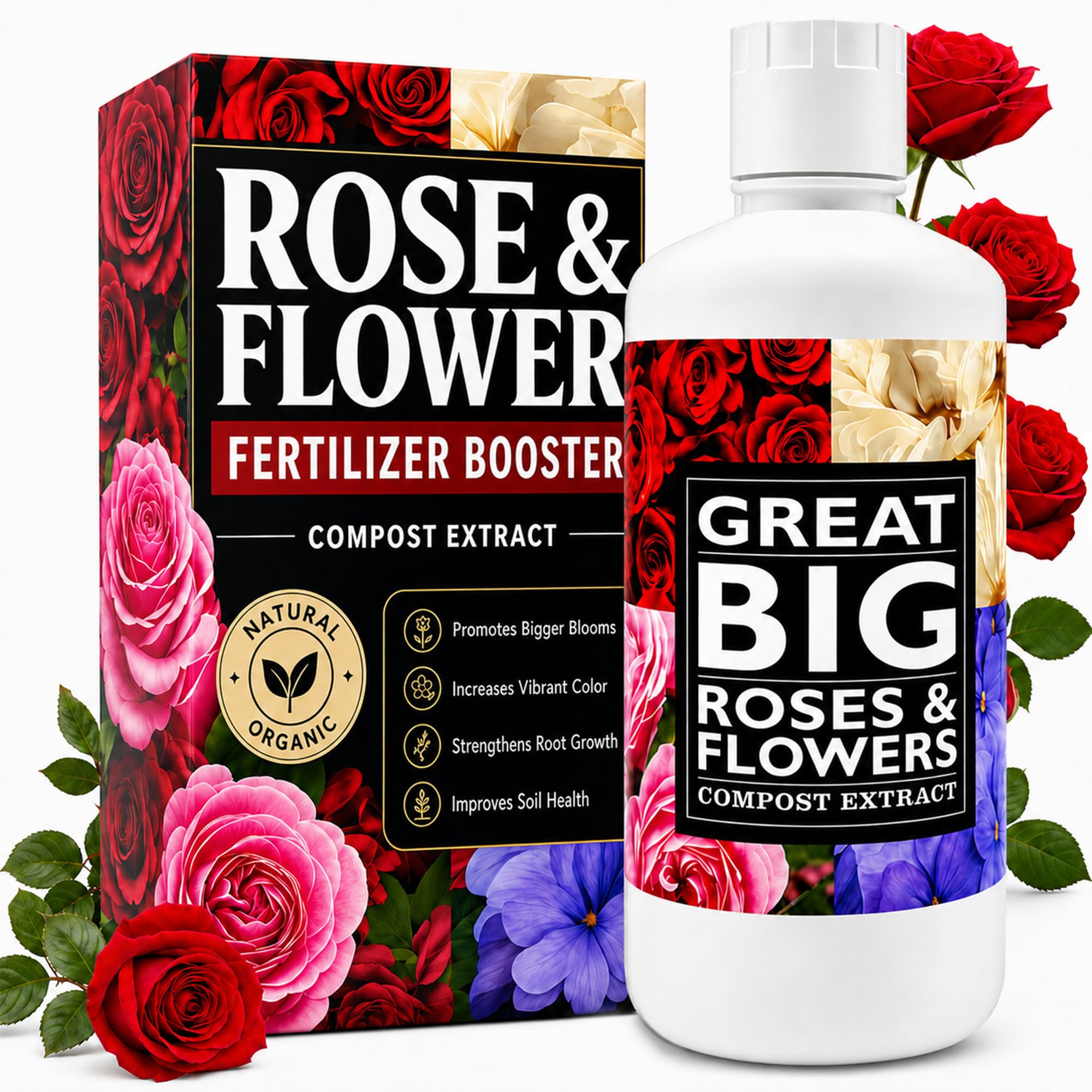
This liquid concentrate operates as a compost extract rather than a solid amendment, delivering humic acids, seaweed, and over 70 chelated trace minerals directly to the root zone in a form perennial roots can access within hours. The 32-ounce bottle makes 8 gallons of solution at the 4-ounce-per-gallon rate, covering an entire growing season for most rose borders. Gardeners report bushes that had not bloomed in years producing flowers within weeks of the first application.
The formula functions as a soil activator, unlocking nutrients that are already present in the soil but bound up in unavailable forms. It works alongside any solid compost or fertilizer, amplifying results without replacing the need for organic matter. For perennial gardens with established root systems, this liquid booster addresses the micronutrient gaps that limit flower production — specifically chelated iron, manganese, and zinc.
The bottle design has drawn criticism for its wide mouth, which makes measuring into a standard watering can messy and leads to product waste. The per-ounce cost is higher than any bagged compost, though the diluted coverage offsets some of that expense. For dedicated rose growers or for perennial beds where bloom quantity is the primary goal, the biological response rate is unmatched by any solid amendment.
What works
- Rapid delivery of 70 trace minerals to root zone
- Unlocks soil-bound nutrients for immediate plant use
- Long-season coverage from a single 32-ounce bottle
What doesn’t
- Bottle design makes clean measuring difficult
- Higher per-application cost than bagged compost alternatives
Hardware & Specs Guide
pH Range and Neutrality
Perennial root systems perform best in soil with a pH between 6.0 and 7.5, but compost applied year after year can shift that balance. Worm castings naturally buffer at 7.0 pH, making them the safest choice for beds where the native pH is unknown. Manure-based composts vary between 6.5 and 7.2 depending on the animal’s diet and the composting duration. Always test your bed’s pH before applying a peat-heavy compost, which can pull the soil below 6.0 over multiple seasons.
Organic Matter Content
Compost sold for perennials should contain at least 30% organic matter by weight, with the remainder being mineral particles that improve soil structure. Higher organic matter percentages improve water-holding capacity but can create anaerobic zones if the compost is too dense. The Espoma Land and Sea and the Mountain Valley Worm Castings both test above 40% organic matter, while the Baccto Wholly Cow blend sits closer to 35% because of its peat dilution.
FAQ
Can I use a general garden compost for perennials?
Should I mix compost into the soil or apply it as a top dressing?
How often should I apply compost to my perennial beds?
Final Thoughts: The Verdict
For most gardeners, the compost for perennials winner is the Espoma Organic Land and Sea because it combines crustacean-derived calcium, mycorrhizal inoculant, and consistent texture in one bag — a complete solution for soil biology and bloom support. If you want a gentle, biologically dense amendment that cannot burn roots, grab the Mountain Valley Seed Worm Castings. And for large-scale perennial borders where volume matters most, nothing beats the Michigan Peat Baccto Wholly Cow for coverage at a sensible per-quart rate.