
Specs are compiled from manufacturer listings and verified buyer reviews and can change over time — please confirm the key details on the product page before buying.
Onions are heavy feeders — they pull nitrogen, phosphorus, and potassium out of your soil to build those bulbs you count on for every soup, salsa, and stir-fry. The wrong compost can leave you with puny bulbs or, worse, a sulfurous stench that lingers in your raised beds. The right compost feeds the soil biology, delivers steady nutrition, and keeps your onions bulking up without the odor.
I’m Rikta — the founder and writer behind Lawn Gear Lab. This guide is built by comparing the manufacturers’ published specifications and the patterns across verified customer reviews, so you get each pick’s real strengths and trade-offs instead of marketing spin.
Read on for the four composts that earn a spot in an onion bed, from a premium lobster-and-crab-meal blend to a pure plant-based option — all chosen to help you pick the right compost for onions without guessing.
Quick Picks
- Espoma Organic Land and Sea Gourmet Compost — Best Overall
- R&M Organics Premium Organic Compost — Best Value
- Brut Cow Compost — Pure Manure
- Old Potters Organic Compost — Eco Choice
How To Choose The Best Compost For Onions
Onions are root crops that form bulbs, so they need a different mix than leafy greens or fruiting tomatoes. Here is what to look for when scanning bags.
Nitrogen content and source
Onions use a steady supply of nitrogen early to build leaf mass (the leaves feed the bulb later). Composted manures — especially cow manure — deliver nitrogen in a slow-release form that won’t burn tender roots. A bag labeled “manure-based” or “plant-based” usually has the right balance, while pure synthetic mixes can push too much fast nitrogen and cause forked or split bulbs.
Texture and drainage
Onion bulbs rot if they sit in soggy soil. You want a compost that is finely sifted (no large wood chips or bark chunks) so it mixes evenly into the bed and improves aeration. The reviews for several picks here mention a “fine topsoil texture” — that is exactly what you want for onions.
Mycorrhizae and soil biology
Some premium composts include mycorrhizal fungi (pronounced my-ko-RYE-zee), beneficial fungi that attach to onion roots and help them pull more water and nutrients from the soil. If your garden soil is tired or compacted, a compost with added mycorrhizae can give onions a real head start.
Quick Comparison
| Model | Best For | Weight | Volume | Base Material | Amazon |
|---|---|---|---|---|---|
| Espoma Organic Land and Sea | Premium all-around growth | 24 lbs | 1 cubic foot | Lobster & crab meal | Amazon |
| R&M Organics Premium | All-purpose value | 10 lbs | 0.31 cubic feet | Dairy cow manure | Amazon |
| Brut Cow Compost | Pure manure compost | 10 lbs | 10 quarts | Aerated cow manure | Amazon |
| Old Potters Organic Compost | Plant-based & eco-friendly | ~25 lbs | 24 quarts | Plant-based material | Amazon |
In‑Depth Reviews
1. Espoma Organic Land and Sea Gourmet Compost

A 24-pound seafood-infused powerhouse that turns onion beds into productive patches.
This is the one to reach for when you want your onions to get a broad spectrum of nutrients, not just nitrogen. The key spec is the 24-pound bag — more than 2.4 times heavier than the R&M Organics bag — and the base includes lobster and crab meal, which supply chitin (a substance that naturally feeds beneficial soil microbes). It also includes a proprietary blend of endo and ecto mycorrhizae (beneficial fungi that attach to plant roots and help them pull more water and minerals from the soil).
The texture is dry and lightweight despite the weight, buyers report, and a long-time buyer reports that after using it for three years they saw “larger tomatoes, more productive zucchini, healthy greens.” For onions, the mycorrhizae part is the real hook — it helps the roots explore more soil volume while the bulbs are forming underground.
Why it leads: This is the only premium pick here that combines a seafood-based nutrient profile with mycorrhizae in a single bag, and the 24-pound weight means one bag covers a decent-sized bed. No synthetic plant foods or chemicals are used.
The trade-off: At 1 cubic foot of volume, it is heavy on the wallet compared to budget options, but the yield improvement — especially in tired soil — often justifies it for serious onion growers.
Grab it for: An all-in-one soil-feeding program for bulb veggies and heavy feeders, backed by a trusted organic brand.
Look elsewhere if: You need a very large volume for a big garden bed and want to keep costs low per cubic foot.
2. R&M Organics Premium Organic Compost
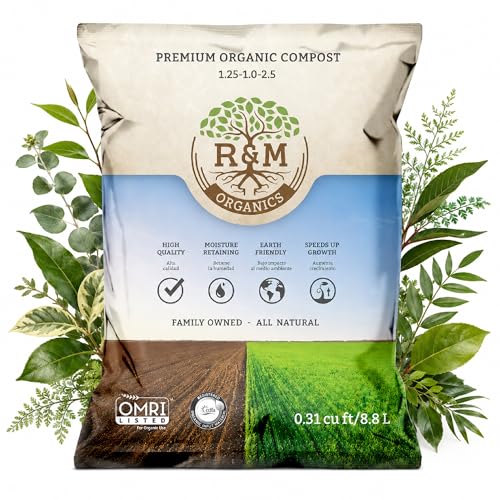
Dairy-cow compost that revived a dying tomato in one week — and smells like earth, not a barn.
If you are planting a small onion patch or container onions, this 10-pound bag (0.31 cubic feet) is a practical start. It is made from composted dairy cow manure processed with continuous aeration to knock out odors. Owners mention the texture is fine — “no manure smell, no clumps” — and one gardener saw an ailing tomato plant with yellow leaves turn green with new growth and flower buds within a week after mixing it into a 27-gallon planter.
Unlike the Espoma above, this one is manure-only with no mycorrhizae added, but the nitrogen release is steady and gentle on roots. The mixing ratio is 5:1 (soil to compost), so a little goes a long way. It also improves moisture retention, which is helpful for onions in raised beds that dry out fast.
Smart for onion starters: The low-odor, fine texture makes it easy to work into a small bed without overwhelming the bed with material you do not need. The 10-pound bag is easy to carry, too — unlike the Espoma’s 24 pounds.
Where it falls short: At 160 ounces unit count, it holds 20% less material than the Brut Cow Compost (192 ounces) for a similar price, so the cost per ounce is higher than some competitors.
Good for: First-time onion growers, container gardeners, and anyone who wants a risk-free, proven dairy compost without a strong manure smell during handling.
Not ideal for: Very large in-ground beds where you need bulk volume to cover several rows.
3. Brut Cow Compost

An OMRI-listed cow compost with a 3:2 success story from a first-time tomato grower.
Brut is the most straightforward option here — pure composted cow manure, odor-free, and OMRI listed (a seal that means it meets organic standards). It comes in a 10-quart bag, and the unit count is 192 ounces, which is 20% more material than the R&M Organics bag. One first-time buyer reported planting tomato seeds on March 1st and by April 22nd had strong plants using a 3:2 ratio of this compost to soil.
For onions, the finely sifted texture matters — it mixes into the top few inches of the bed without leaving lumps that could deform bulb shapes. The maker claims it is safe for seedlings and delicate blooms because it does not burn roots, which is a common concern when adding raw manure to an onion patch.
Pure, no frills: If you want to know exactly what is in your compost — just cow manure — this is it. No added mycorrhizae, no seafood meal, no filler. It is a clean base that you can customize with your own amendments.
What you give up: Unlike the Espoma, there is no added biology boost, so in very depleted soil you may need to supplement with a separate mycorrhizae product. The bag is also 10 pounds, similar to the R&M, so bulk buyers may want to order multiple bags.
Best suited for: Gardeners who want a certified organic, single-source manure compost with no additives to keep things simple and safe for onions.
Avoid if: You want an all-in-one compost that includes mycorrhizae or trace minerals — you will need to add those separately.
4. Old Potters Organic Compost
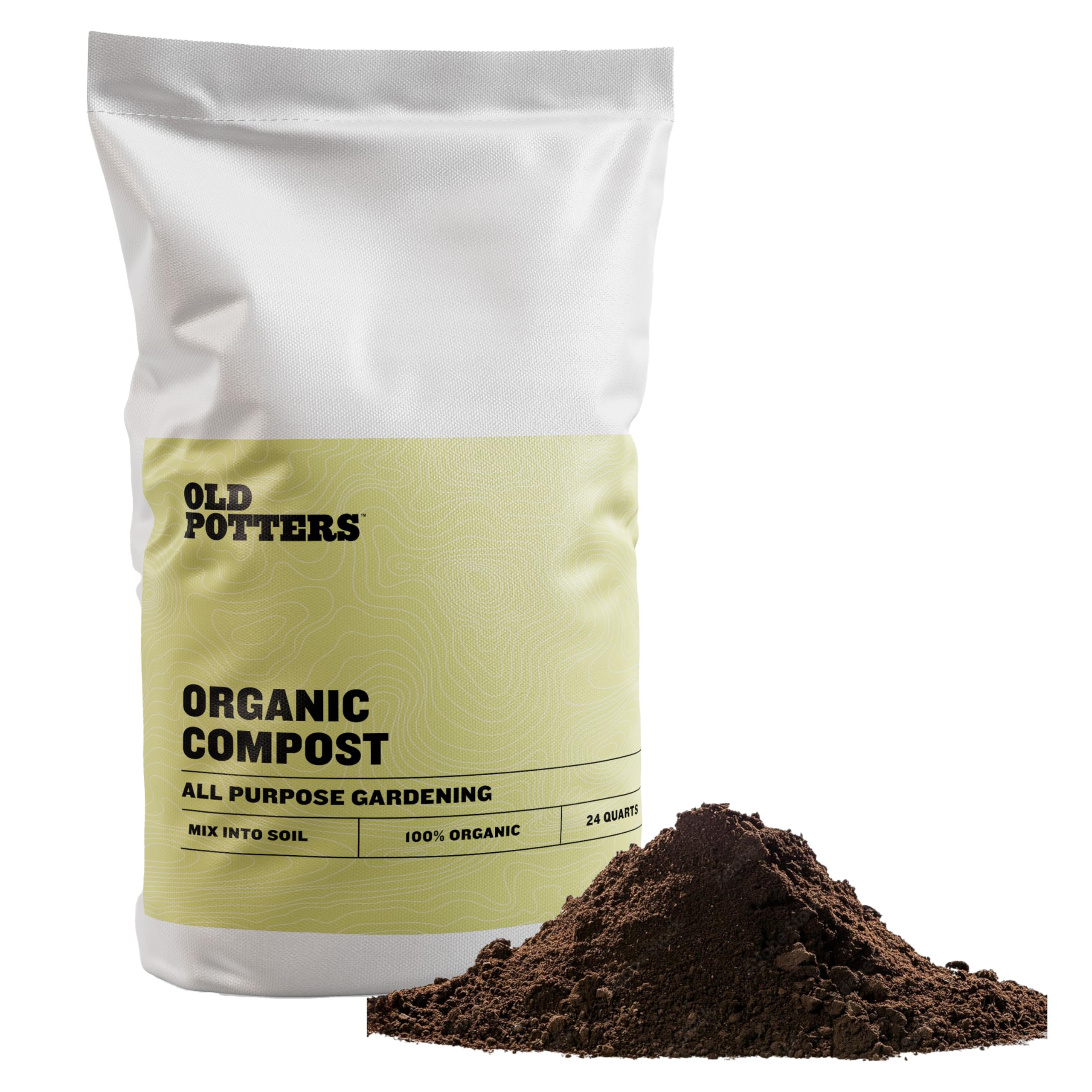
A 25-pound plant-based alternative that helped bare-root roses thrive in punishing zone 7a weather.
If you prefer a compost made entirely from plant materials rather than animal manure, this Old Potters bag is the pick. It weighs about 25 pounds and holds 24 quarts (768 fluid ounces), making it the largest volume bag here by a noticeable margin. The base is 100% plant-based and chemical-free, so there is no risk of introducing unwanted pathogens or salts that sometimes accompany manures.
One gardener in zone 7a reported using it mixed with worm castings and mycorrhizae to help 10 Walmart bare-root roses survive a season of heat, floods, drought, and frost — “no root burn” — which speaks to its gentle, balanced nutrient profile. A separate reviewer noted some clumps that needed manual breaking, but described the result as “nice dark soil” that plants loved.
Why choose plant-based for onions: Plant compost typically has a more balanced carbon-to-nitrogen ratio and may be less likely to cause soft, rot-prone growth in bulbs. It also improves aeration in clay-heavy beds — which is exactly the scenario the reviewer from zone 7a tackled.
The catch: The clumpy texture reported in a review means you may need to sift or crumble it before working into an onion bed, especially if you are direct-sowing tiny onion seeds. It also has no added mycorrhizae, unlike the Espoma pick.
Reach for this if: You want a large-volume, plant-based, eco-friendly compost for heavy clay soil or for beds where you avoid all animal inputs.
skip it if: You need a ready-to-use fine texture for delicate onion starts or you want built-in mycorrhizae soil biology.
Understanding the Specs
Weight vs. Volume
A bag that says “24 pounds” or “10 pounds” tells you how much mass you are carrying, but two bags of the same weight can have very different volumes if one is dry and fluffy and the other is dense and moist. The Espoma is 24 pounds in 1 cubic foot; the R&M is 10 pounds in 0.31 cubic feet. Always check the volume (cubic feet or quarts) to know how far the bag will stretch across your onion bed — weight alone can mislead you if you are filling raised beds.
Mycorrhizae
Mycorrhizae (my-ko-RYE-zee) are beneficial fungi that form a symbiotic relationship with plant roots. They extend the root system’s reach, helping the plant access more water and nutrients. For onions, which have relatively shallow, fibrous root systems, a compost that includes endo and ecto mycorrhizae (like the Espoma pick) can make a real difference in how well the bulbs size up during dry spells or in degraded soil.
FAQ
Can I use cow manure compost directly on onion beds without burning the plants?
How much compost do I need for a standard 4×8 foot onion bed?
Is compost with lobster and crab meal safe for all onion varieties?
Do I need a different compost for onions in containers versus in-ground beds?
How often should I apply compost to my onion beds during the growing season?
What is the difference between OMRI listed and organic compost?
Can I mix these composts together for better results?
Will using compost with manure affect the taste of my onions?
How long does a 10-pound bag of compost last for onions?
What is the mixing ratio for the R&M Organics compost with soil?
Final Thoughts: The Verdict
For most buyers, the compost for onions winner is the Espoma Organic Land and Sea because it delivers a dense, 24-pound, mycorrhizae-rich bag with lobster and crab meal that feeds both the soil biology and the bulbs through the season. If you want a pure, OMRI-listed manure compost for simplicity and budget, grab the Brut Cow Compost. And for a large-volume, plant-based, eco-friendly option that handles tough clay soil, the Old Potters Organic Compost is the choice that gives you the most cubic feet per purchase.
How We Picked
We do not accept paid placement. Every pick is matched to a real buyer and a real use-case; we do not hands-on test units.
Sources & Methodology
Specifications: manufacturer listings and product documentation. Review insights: verified customer reviews, as of July 2026. Pricing: not shown on this page (it changes often); check the current price via the retailer link.
As an Amazon Associate, Lawn Gear Lab earns from qualifying purchases. This does not affect which products we feature.