
Garlic is a notoriously heavy feeder that demands a steady supply of nitrogen early on and phosphorus and potassium as the bulbs swell, making the choice of compost the single most critical decision for a harvest of fat, flavorful cloves. A poorly chosen mix can leave you with undersized bulbs or a crop that bolts before its time, while the right organic amendment builds the loose, fertile soil garlic roots crave.
I’m Rikta — the co-founder and writer behind Lawn Gear Lab. I’ve spent many hours combing through NPK ratios, OMRI certifications, and ingredient lists to understand how different organic composts, manures, and meals actually support garlic’s distinct growth cycle from clove to harvest.
This guide breaks down the specific nutrient profiles, textures, and microbial benefits of the top contenders so you can confidently pick the best compost for garlic and set your patch up for success this season.
How To Choose The Best Compost For Garlic
Garlic has a long growing season—often 8 to 9 months—so the compost you work into the soil at planting must release nutrients steadily without burning tender roots. The wrong mix can cause lush top growth at the expense of bulb size or lock up essential minerals.
Nitrogen, Phosphorus, and Potassium (NPK) Balance
Garlic needs a moderate to high nitrogen source in early spring when leaves are forming, then a shift toward phosphorus and potassium as scapes appear and bulbs begin to size up. Look for a ratio like 3-4-4 or 5-7-3, where the middle and last numbers support root development and bulb density without pushing excessive foliage.
Organic Matter and Soil Texture
Heavy clay soils smother garlic bulbs, while sandy soils drain too fast for consistent moisture. A quality compost adds humus that improves soil structure, increases water-holding capacity in sandy beds, and breaks up compaction in clay. Sifted, even-textured compost spreads easily and integrates without large woody chunks.
Slow-Release vs. Quick-Release Formulas
Most garlic growers prefer slow-release organic options—like composted manures, worm castings, or meals—because they feed the soil microbiome and release nutrients over months. Quick-release synthetic options can produce a soft, lush plant that is more prone to disease and storage rot. Stick with OMRI-listed or natural blends for the best garlic results.
Quick Comparison
On smaller screens, swipe sideways to see the full table.
| Model | Category | Best For | Key Spec | Amazon |
|---|---|---|---|---|
| Espoma Garden-tone 3-4-4 | Organic Granules | Balanced all-season feeding | NPK 3-4-4 + 5% calcium | Amazon |
| FoxFarm Happy Frog 5-7-3 | Organic Granules | Vigorous early growth | NPK 5-7-3 + mycorrhizae | Amazon |
| Fishnure Humus Fish Compost | Powder | No-burn, slow-release humus | OMRI-listed fish manure | Amazon |
| Espoma Land & Sea Lobster/Crab | Granules | Microbe-boosting planting mix | Lobster & crab meal + myco | Amazon |
| Doter Worm Castings | Granules | Gentle, odor-free top dressing | 5.5 lbs pure worm castings | Amazon |
| Brut Cow Compost | Composted Manure | Affordable soil enrichment | 10 quarts OMRI cow manure | Amazon |
| Michigan Peat Wholly Cow | Compost/Manure | Large beds and heavy feeding | 40 quarts screened manure | Amazon |
In‑Depth Reviews
1. Espoma Organic Garden-tone 3-4-4 (Pack of 2)

The Espoma Garden-tone 3-4-4 is a mineral-rich organic granular fertilizer that aligns almost perfectly with garlic’s seasonal demands. The moderate nitrogen (3) supports early leaf growth without triggering excess foliage, while the elevated phosphorus (4) and potassium (4) actively drive bulb development and root function. The included 5% calcium helps prevent internal bulb disorders common in dense soils.
This two-pack gives you 8 pounds total, which is enough to side-dress a moderate garlic patch monthly throughout the growing season. The Bio-tone formula includes beneficial microbes that continue breaking down organic matter, and the granules are easy to work into the top 2 inches around the drip line without burning tender roots. Many users in cooler zones report noticeably larger bulbs compared to standard vegetable foods.
Gardeners using this in raised beds alongside a quality base soil notice the difference in clove fill and storage life. The 3-4-4 ratio hits the sweet spot for garlic that is planted in fall—it releases slowly through winter and delivers the right nutrients when spring growth resumes. It is OMRI-listed and made in the USA.
What works
- Balanced NPK tailored for bulb crops
- Calcium content supports proper bulb formation
- Two-bag pack offers excellent coverage for the price
- No synthetic chemicals, safe for organic gardens
What doesn’t
- Some users note an earthy smell when first applied
- Can clump if stored in humid conditions
2. FoxFarm Happy Frog Tomato & Vegetable 5-7-3

The FoxFarm Happy Frog 5-7-3 is formulated for plants that demand a higher phosphorus jolt early in their cycle—exactly what garlic needs when root development kicks off after planting. The 5-7-3 ratio delivers a strong start, especially in soils that test low in phosphorus. Mycorrhizal fungi included in the blend form a symbiotic network around garlic roots, improving both water uptake and mineral absorption through winter.
In practice, garlic growers report that this fertilizer pushes rapid leaf growth in early spring—ideal for varieties like hardneck that rely on robust tops to fuel bulb expansion. Calcium in the mix also targets blossom end rot in tomatoes, but for garlic, it supports cell-wall integrity in the cloves, reducing the chance of splitting or soft spots at harvest. The 4-pound bag covers roughly 60 square feet when applied at the recommended rate.
A key consideration is the higher price tag compared to general-purpose blends. However, gardeners who already use FoxFarm’s Ocean Forest soil often pair this as a seasonal top dress, creating a consistent organic feeding program that keeps garlic healthy from clove to curing. The granular form dissolves easily with watering and doesn’t produce a strong fishy smell.
What works
- High phosphorus directly supports root and bulb formation
- Mycorrhizal fungi improve nutrient and water uptake
- Calcium helps prevent storage-related clove issues
- Low odor, easy to apply without pre-mixing
What doesn’t
- Premium pricing per pound compared to other organics
- Higher nitrogen may encourage soft growth if overapplied
3. Fishnure Humus Fish Compost Fertilizer
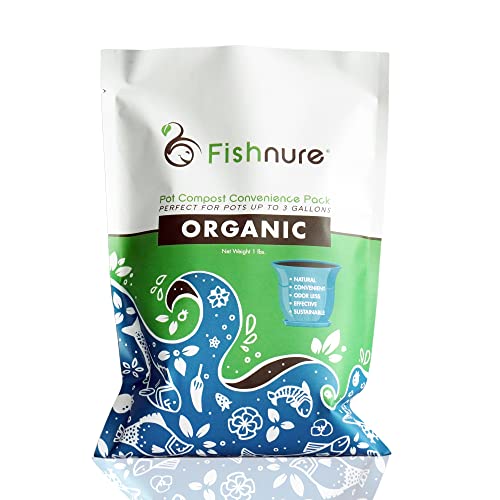
Fishnure takes a different approach by using composted fish manure rather than typical fish emulsion, creating a humus-rich powder that feeds soil microbes without any of the strong fishy odor. For garlic, this means a gentle, slow-release nitrogen source that won’t cause a soft, lush canopy vulnerable to fungal disease. The 1-pound bag is concentrated enough to treat a 3-gallon pot or a small raised bed section.
User reports highlight how this amendment boosts microbial life in tired soils—critical for garlic, which relies on mycorrhizal activity to access phosphorus. The humus component improves water-holding capacity, helping garlic survive dry spells between irrigation. Gardeners using it in no-till setups note that it integrates seamlessly without disturbing soil structure, and the powder form can be mixed into the top layer at planting or used as a side dressing.
One recurring complaint is the presence of small stones or gravel in some bags, requiring a quick sift before application. While the bag size limits its use for large plots, the concentration makes it a smart pick for container garlic or small garden beds where precision feeding matters more than volume. It is OMRI-listed and free of synthetic additives.
What works
- Odorless fish compost, no unpleasant smell
- Slow-release humus builds long-term soil fertility
- Concentrated formula covers a 3-gallon pot effectively
- Supports microbial activity essential for nutrient cycling
What doesn’t
- Small stones occasionally found in the powder
- Small bag size is impractical for large gardens
4. Espoma Organic Land and Sea Gourmet Compost

Espoma’s Land and Sea Gourmet Compost combines lobster and crab meal with their proprietary Myco-Tone blend of endo and ecto mycorrhizae, creating a biologically active planting mix that gives garlic an immediate boost. The crustacean meals are naturally rich in chitin, which research suggests stimulates soil bacteria that suppress certain nematodes and fungal pathogens—a valuable benefit for garlic beds where soil-borne diseases can accumulate over seasons.
The 1-cubic-foot bag (about 24 pounds) is designed more as a soil amendment than a concentrated fertilizer. When mixed into the planting hole or tilled into the top 4 inches at a 1:5 ratio with existing soil, it adds organic matter that loosens heavy clay and improves moisture retention in sandy loam. Reviewers consistently note dramatic growth differences in their hostas, tomatoes, and vegetables, and the same principle applies directly to garlic’s large root system.
The only downside is the price per cubic foot, which lands this in the premium tier. However, for gardeners establishing new garlic beds or trying to rehabilitate overworked soil, the combination of crustacean-derived nutrients and mycorrhizal inoculants justifies the investment. The granules have a mild, earthy scent and are easy to spread by hand.
What works
- Crustacean meals add chitin for pathogen suppression
- Dual endo/ecto mycorrhizae expand root absorption
- Improves soil structure in both clay and sandy beds
- Safe for planting and transplanting without burn risk
What doesn’t
- Higher cost per cubic foot than basic compost
- Large bag may be too heavy for some users
5. Doter Worm Castings Organic Fertilizer

Worm castings are widely considered one of the safest and most complete organic soil amendments, and Doter’s 5.5-pound bag delivers pure, sifted castings that can be used as a top dressing or mixed directly into garlic planting beds. The microbial diversity in vermicompost helps break down existing soil nutrients into plant-available forms, which is particularly helpful for garlic grown in soils with low organic matter.
Garlic planted with a generous handful of castings in the hole shows more vigorous root spread and uniform sprouting, according to many gardeners. The castings release nutrients gradually over weeks without any risk of burning roots—even if applied heavily. This makes them an ideal companion to a balanced granular fertilizer, providing a steady background supply of trace minerals and humic acids that improve clove fill.
One limitation is that worm castings have a lower NPK concentration than blended fertilizers, so they work best as a supplement rather than a standalone feed. Some users also note that the product is manufactured in China, though quality control appears consistent and the castings arrive odor-free and uniform. For organic garlic growers looking for a safe, no-measure base amendment, this is a solid pickup.
What works
- Impossible to burn plants, safe for seedlings and direct contact
- Rich in beneficial microbes and humic acids
- Odorless—perfect for indoor storage and use
- Improves soil structure and drought resistance
What doesn’t
- Low NPK means it must be paired with a stronger feed for heavy feeders
- Some gardeners prefer domestically sourced castings
6. Brut Cow Compost – Nutrient-Rich Composted Manure

Brut Cow Compost is a straightforward, OMRI-listed composted cow manure that provides a balanced infusion of nitrogen, calcium, and iron without the risk of nutrient burn. The manure has been fully composted and aerated, resulting in a fine, sifted texture that is easy to incorporate into garlic beds. For fall-planted garlic, working this compost into the top 4 inches of soil gives the bulbs a steady supply of nutrients through the winter dormancy period.
The 10-quart bag is a convenient size for small to medium raised beds or container-grown garlic. Many users report strong results when mixing it at a 3:2 ratio with standard potting soil for container plantings, noting faster growth and darker green foliage compared to unamended soil. Because it is pure composted manure with no fillers or synthetic additives, it acts primarily as a soil conditioner that feeds the biology while slowly releasing nutrients.
While the nutrient content is gentler than concentrated granular fertilizers, some garlic growers find they need to supplement with a phosphorus source mid-season for optimal bulb sizing. The lack of strong odor is a plus for indoor mixing, and the bag is resealable. For growers on a tight budget looking for a clean, reliable base amendment, this is a very affordable entry point.
What works
- Fully composted, no burn risk for young plants
- Fine, sifted texture mixes easily into soil
- OMRI-listed for certified organic use
- Odor-free and pleasant to handle
What doesn’t
- May need a phosphorus supplement for heavy-feeding garlic
- 10-quart bag covers a limited area
7. Michigan Peat Baccto Wholly Cow Compost and Manure 40-Quart
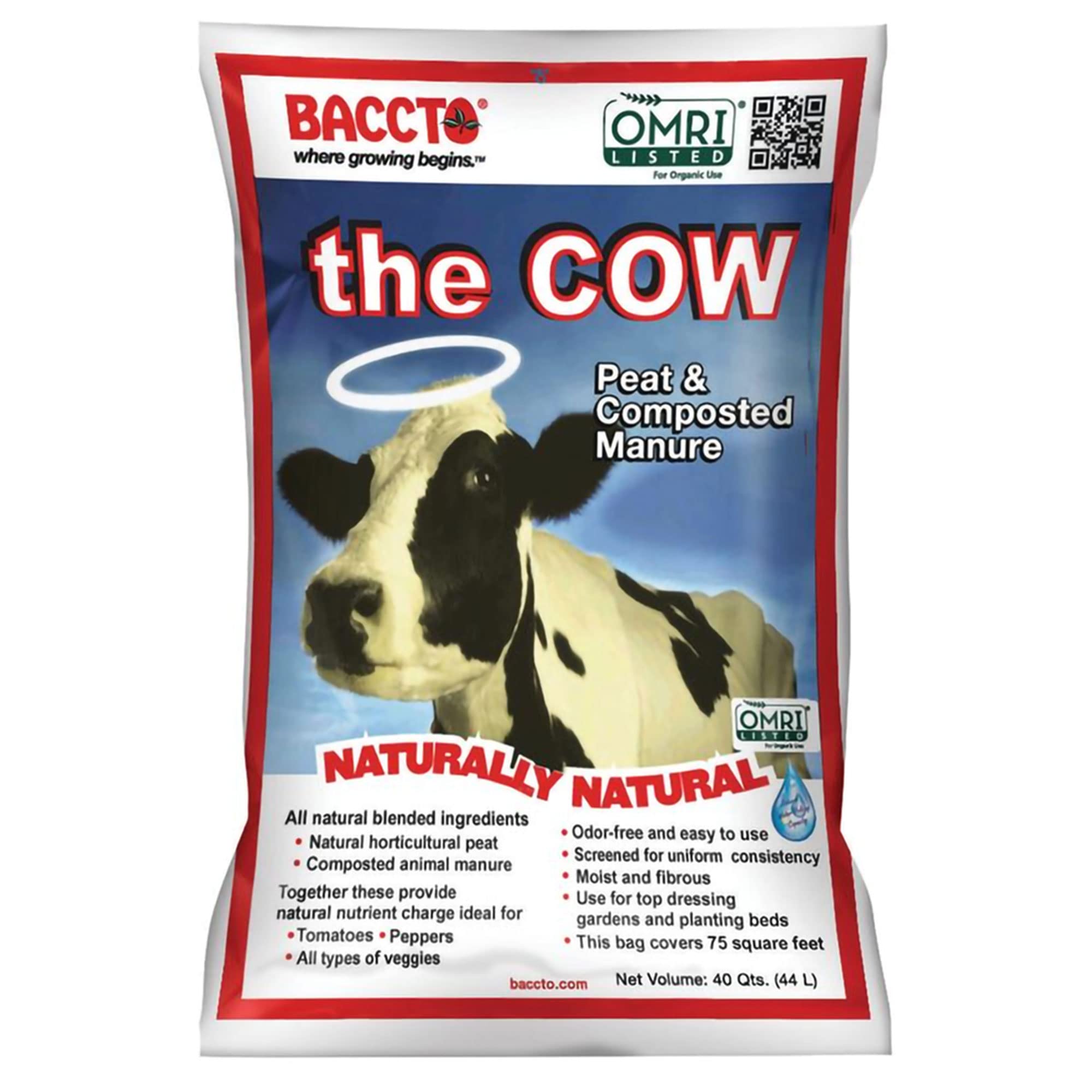
Michigan Peat’s Wholly Cow is a 40-quart blend of natural peat and composted animal manure, offering the largest volume in this roundup at a per-quart price that beats most competitors. This is a practical choice for gardeners with extensive garlic beds who need to amend large areas without breaking the budget. The peat component adds organic matter that dramatically improves moisture retention—a key factor for garlic, which requires consistent soil moisture during bulb formation in late spring.
The compost is screened for uniform consistency, with users reporting minimal woody debris compared to other bulk manures. Garlic planted with a 2-inch layer of Wholly Cow tilled into the soil shows strong early root development, and the peat helps keep the soil loose, allowing cloves to expand without resistance. Because it is not a concentrated fertilizer but a soil amendment, it works best when paired with a moderate application of a balanced granular feed at planting time.
Several gardeners use this as a top dressing for garlic in early spring, where it suppresses weeds, conserves moisture, and slowly releases nutrients. The bag is heavy (about 34 pounds) but manageable with two hands. The only trade-off is that the nutrient levels are lower than specialized bulb fertilizers, so plan to supplement if your soil is already lean. For large-scale organic prep, this is the most cost-efficient option.
What works
- Excellent value per quart for large beds
- Peat improves moisture retention for consistent growth
- Screened texture with minimal large debris
- Odor-free and pleasant to work with
What doesn’t
- Lower nutrient concentration requires supplementing
- Heavy bag may be difficult to handle
Hardware & Specs Guide
Nitrogen-Phosphorus-Potassium (NPK) Ratio
The NPK ratio tells you the percentage by weight of nitrogen, phosphorus, and potassium. For garlic, a 3-4-4 or 5-7-3 blend supplies enough nitrogen for leaf growth without sacrificing the phosphorus and potassium needed for root spread and bulb density. Avoid high-first-number blends (like 10-10-10) unless diluted, as excess nitrogen produces lush tops at the expense of storage quality.
Organic Certification (OMRI)
OMRI-listed products meet strict organic standards for crop production. Using OMRI compost for garlic ensures no synthetic pesticides, sewage sludge, or GMOs are present. This is especially important for garlic grown for seed or culinary use, as clean soil biology directly impacts clove flavor and storage life.
FAQ
Can I use fresh manure directly on my garlic bed?
How much compost should I mix into the soil before planting garlic?
Do I need different compost for hardneck versus softneck garlic?
Final Thoughts: The Verdict
For most gardeners, the best compost for garlic winner is the Espoma Garden-tone 3-4-4 because its balanced NPK, calcium content, and slow-release organic formula match garlic’s entire growth cycle from fall planting to spring bulbing. If you want a more potent early-season boost, grab the FoxFarm Happy Frog 5-7-3 with mycorrhizae. And for large gardens needing bulk organic matter, nothing beats the Michigan Peat Wholly Cow for cost-effective soil conditioning.