
Tomatoes demand deep, unobstructed root channels to produce heavy fruit sets, yet standard nursery pots often force roots into tight spirals that stunt growth and reduce yields. A true 10-gallon container gives indeterminate tomato varieties the soil volume they need to develop robust root systems capable of supporting vigorous vines and abundant harvests. The difference between a cramped plant and a thriving one often comes down to the container’s internal geometry, breathability, and drainage design.
I’m Rikta — the co-founder and writer behind Lawn Gear Lab. I’ve spent countless hours cross-referencing fabric weights, seam construction techniques, drainage hole patterns, and hundreds of verified owner reports to isolate the containers that genuinely outperform in real growing conditions.
This guide breaks down the strongest contenders on the market, from heavy-duty fabric bags to plastic pots with viewing windows, so you can confidently choose the best 10 gallon pots for tomatoes that match your growing style and space constraints.
How To Choose The Best 10 Gallon Pots For Tomatoes
Selecting the right 10-gallon container for tomatoes requires a closer look at material construction, drainage architecture, and how the pot handles the daily demands of a heavy, top-heavy indeterminate vine. Beginners often assume any large pot works, but the container directly influences root zone temperature, oxygen exchange, and the plant’s ability to access nutrients.
Fabric Weight and Material Type
Nonwoven fabric pots labeled at 300G (grams per square meter) strike a strong balance between breathability and structural integrity. Lighter fabrics dry out too fast in summer heat, forcing tomatoes into constant stress cycles, while heavier felt-like materials retain moisture longer but reduce air flow to roots. For tomatoes, 300G is the sweet spot — it allows adequate air-pruning without requiring hourly watering.
Seam and Handle Durability
Double-stitched seams and reinforced polypropylene webbing handles separate multi-season containers from single-season disposables. Tomato vines in full production can weigh over 40 pounds when the soil is saturated, so handles must be sewn through the bag body, not just tacked onto the rim. A double-seam construction with serger stitching prevents blowouts at the stress points where the handle meets the fabric.
Drainage and Moisture Management
Fabric pots drain through the walls and bottom, while plastic or PE-based containers rely on bottom drainage holes. Tomato plants need consistent moisture, but standing water invites fusarium and root rot. Look for a design that offers bottom drainage holes plus side ventilation — this combination lets excess water escape while keeping the root ball evenly hydrated.
Quick Comparison
On smaller screens, swipe sideways to see the full table.
| Model | Category | Best For | Key Spec | Amazon |
|---|---|---|---|---|
| Rain Science Grow Bag | Fabric Pot | Long-term root health | Plastic-coated mesh | Amazon |
| LUNGAR 5-Pack | Nonwoven Fabric | Multi-pack value | 300G nonwoven fabric | Amazon |
| RVZHI 6-Pack | Felt Nonwoven | Thickest fabric option | 350G felt nonwoven | Amazon |
| OPPOLIFE 12-Pack | PP Fabric | Best bulk buy | 12 packs / 300G PP | Amazon |
| Sinimaka 7-Pack | Colorful Fabric | Decorative versatility | Double-stitched fabric | Amazon |
| MEKOLIFE 6-Pack | Fabric + Window | Harvest monitoring | 300G + viewing window | Amazon |
| BIJOKETTEN 8-Pack | PE Plastic | Lightweight plastic pots | PE material + flap | Amazon |
In‑Depth Reviews
1. Rain Science Grow Bag 10 Gallon
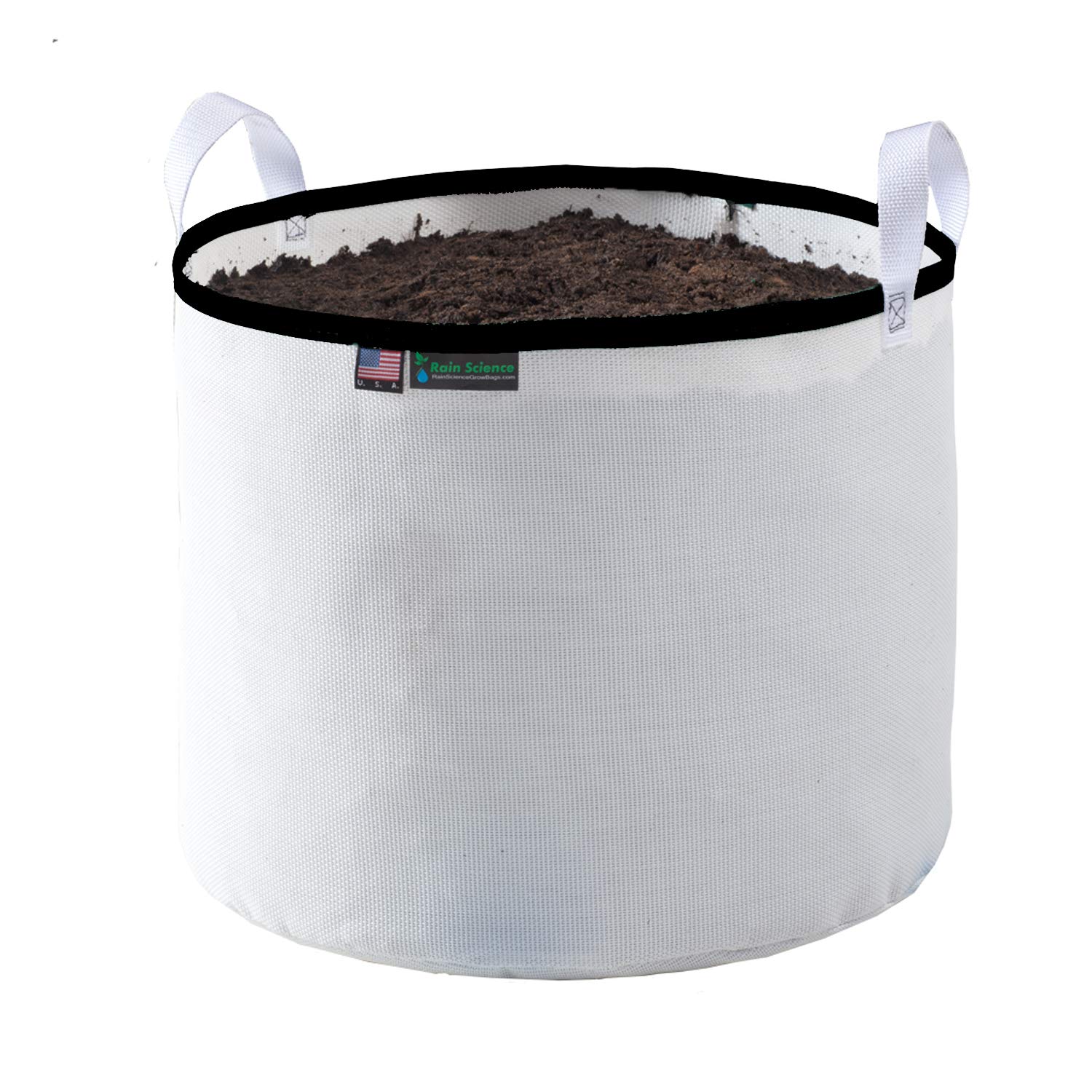
The Rain Science grow bag uses a plastic-coated mesh construction that prevents water from weeping through the sides like standard fabric pots, which keeps the patio clean and reduces evaporation rate. This unique material also resists algae buildup and degrades far slower than uncoated nonwoven fabric, making it a genuine multi-season investment for serious tomato growers.
Owner reports consistently highlight the bag’s structural integrity — the external seams and tapered shape simplify transplanting without tearing roots, and the reinforced binding handles hold up under the weight of fully saturated 10-gallon loads. Multiple verified buyers note that after a full season of outdoor use, the bag shows no fraying or stitch failure, a common weak point in thinner fabric pots.
Compared to standard nonwoven bags, the Rain Science model offers superior drainage without the side-leak annoyance. The white/black color option reflects heat while the black interior absorbs warmth for the root zone, a combination that helps tomato roots stay cool in direct sun while warming up on cooler nights.
What works
- Plastic-coated mesh prevents side water seepage and reduces evaporation.
- External seams and tapered shape make transplanting stress-free.
- Reinforced binding handles withstand heavy saturated loads.
What doesn’t
- Higher per-unit cost compared to standard nonwoven options.
- Plastic coating reduces breathability slightly versus open fabric.
2. LUNGAR 10 Gallon 5-Pack Grow Bags

LUNGAR’s 5-pack of 10-gallon grow bags brings a 300G nonwoven fabric density that retains moisture better than ultra-light alternatives — a critical advantage for tomatoes that need consistent hydration during fruit set. The double-stitched side seams provide reinforcement at the vertical stress lines where single-stitch bags typically split after one season.
Gardening enthusiasts report that these bags hold their shape well when filled, thanks to the denser fabric that doesn’t slump outward under soil pressure. The handles are sewn through the bag body using the double-seam method, giving owners confidence when dragging heavy containers across patios or repositioning plants to chase sunlight.
One tradeoff noted by buyers is the slightly shorter handle length compared to premium models — while functional for two-handed lifting, the handles could be longer for easier one-handed grabbing. Nonetheless, the overall durability and per-bag cost make this pack a strong mid-range choice for gardeners expanding their container rows.
What works
- 300G fabric retains moisture without sacrificing breathability.
- Double-stitched seams resist splitting under heavy soil loads.
- Great per-unit value for a 5-pack arrangement.
What doesn’t
- Handles are shorter than ideal for one-handed grabbing.
- Some units shipped with dimensions smaller than listed.
3. RVZHI 10 Gallon 6-Pack Grow Bags
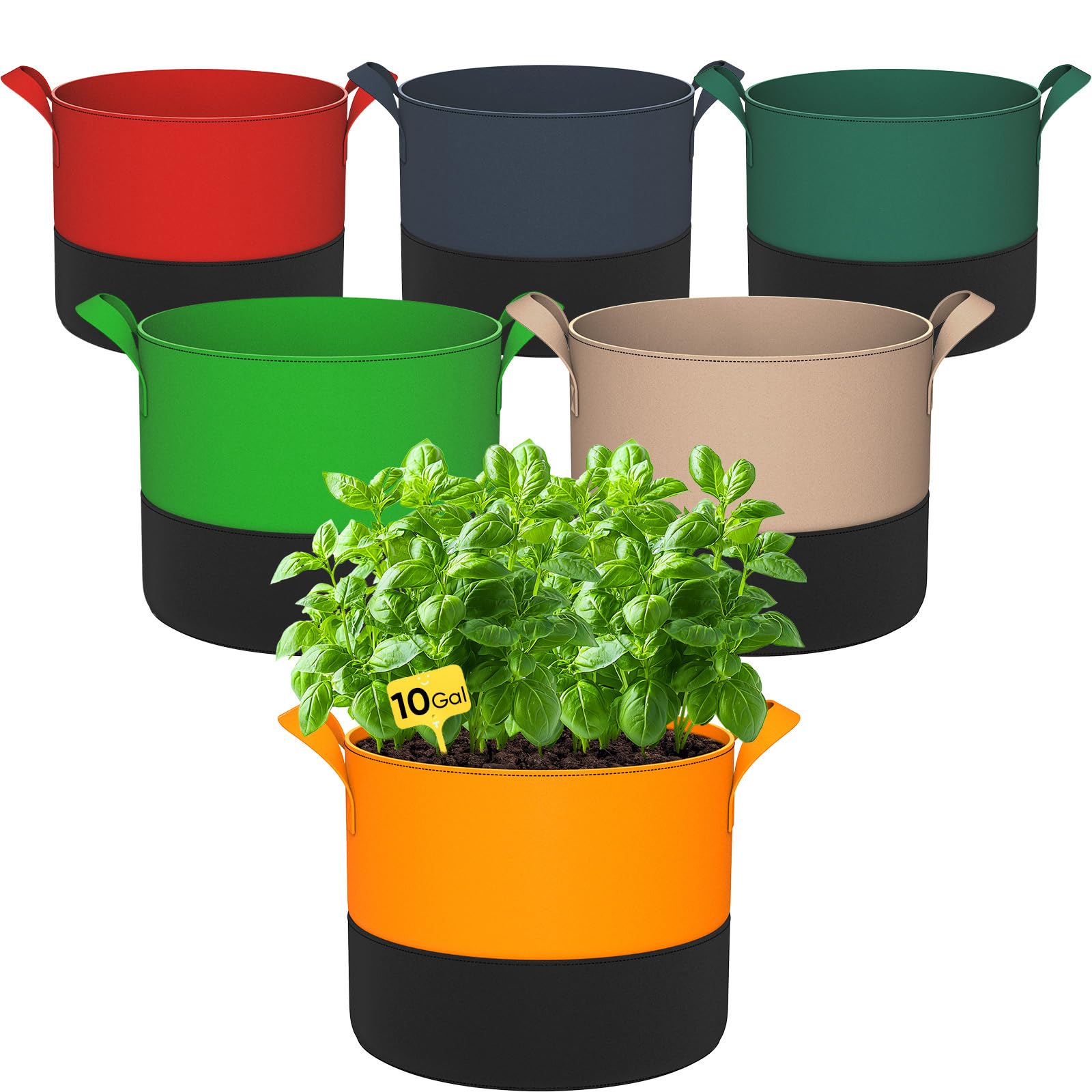
RVZHI pushes fabric density to 350G felt nonwoven, making these the thickest bags in this roundup. The heavier material slows evaporation considerably, a benefit for tomato growers in hot, dry climates who want to reduce watering frequency. The black fabric bottom absorbs and retains heat, which gives indeterminate tomatoes a warmth boost during early spring and late fall.
The multicolor patchwork design adds visual organization to a garden setup — owners report using different colors to track tomato varieties or planting dates. The handles are twice as thick as standard bags and sewn through the full body, and buyers describe being able to move fully loaded bags without any handle tearing or fabric distortion.
On the downside, the 350G fabric reduces airflow compared to lighter bags, so growers in humid climates should monitor soil moisture levels to prevent overly wet conditions around the root crown. The thick felt also takes longer to dry after rain, which may be a consideration for uncovered outdoor setups.
What works
- 350G felt is the thickest option — holds moisture longer in heat.
- Color-coded bags help organize variety tracking.
- Reinforced thick handles endure repeated heavy loads.
What doesn’t
- Reduced airflow compared to lighter fabric bags.
- Thick felt dries slowly after rain in humid climates.
4. OPPOLIFE 12-Pack 10 Gallon Grow Bags
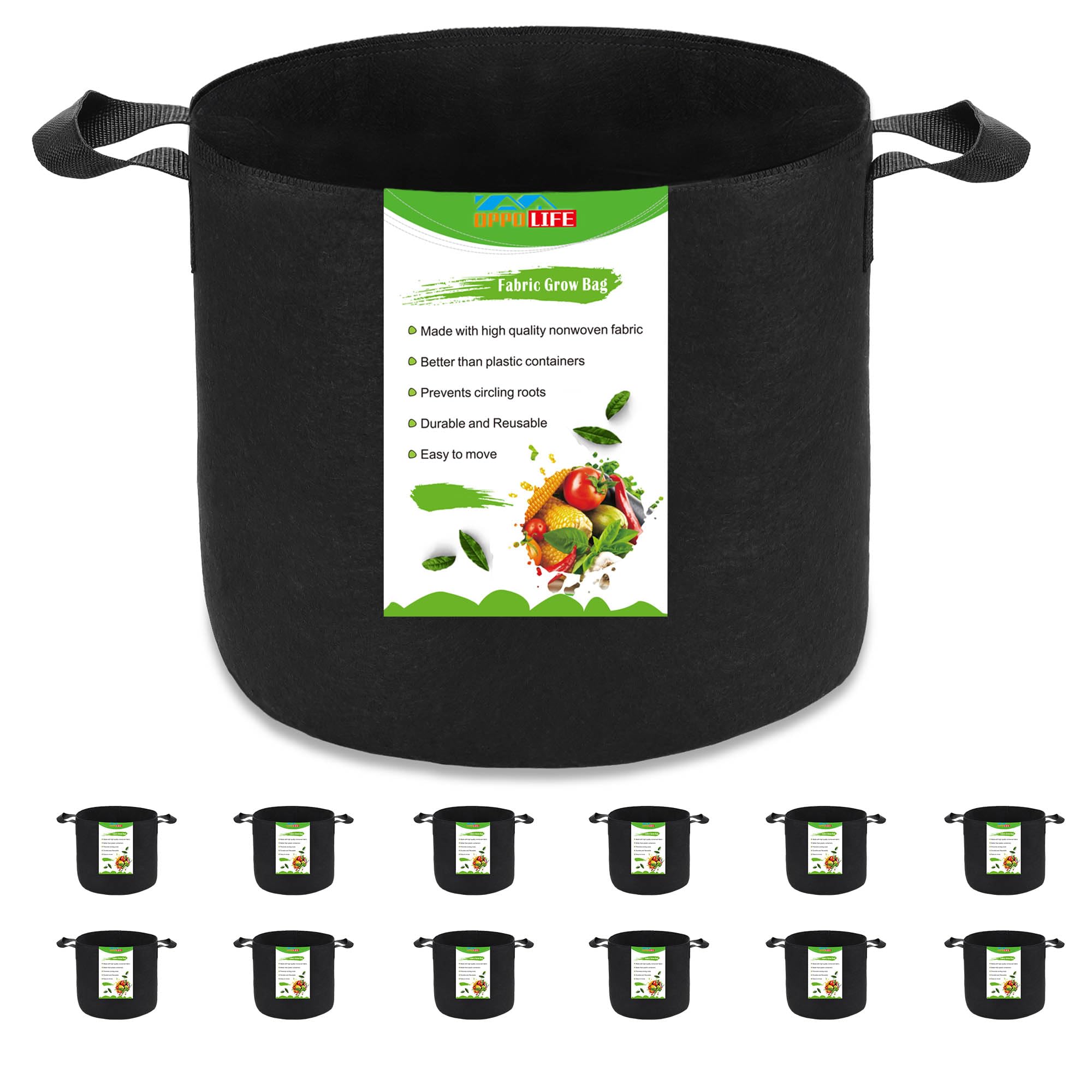
OPPOLIFE offers the largest count in this comparison — 12 bags of 10-gallon capacity in a single purchase, making it the most economical per-unit option for high-volume growers. The 300G polypropylene fabric provides standard breathability and UV resistance, and the extended polypropylene webbing handles are lined with inner reinforcement for safer lifting.
Buyers note that the bags perform well for tomato and pepper cultivation, with plants growing large and producing strong yields. The 12-inch diameter by 10-inch height provides a stable base that resists tipping, even when indeterminate vines grow tall. Owners report using these bags for multiple seasons after simple washing and flat storage.
The main sacrifice comes in fabric refinement — the OPPOLIFE material is functional but doesn’t have the premium texture or algae-resistant coating of higher-end options. Some users note minor water seepage through side walls during heavy watering, though this is typical of uncoated nonwoven fabric.
What works
- 12-pack provides the highest quantity at a low per-unit cost.
- Widened PP webbing handles with inner lining for secure lifting.
- Proven multi-season durability in customer gardens.
What doesn’t
- Uncoated fabric allows some side water seepage.
- Fabric lacks premium texture and algae resistance.
5. Sinimaka 7-Pack 10 Gallon Colorful Grow Bags

Sinimaka offers a 7-bag set in distinct colors that transform a utilitarian container garden into a visually organized plot. The double-stitching along the side seams and handles provides structural integrity, and the BPA-free fabric construction appeals to organic growers who want to avoid plastic leaching into the soil.
Verified buyers praise these bags for surviving full outdoor exposure to rain, wind, and hail without material degradation. The 15-inch diameter provides a wider footprint than some competing 10-gallon bags, giving tomato roots more horizontal spread room. Owners also appreciate the multi-purpose versatility — several report reusing the bags for laundry hauling and storage when not in the garden.
The main limitation is the absence of specialized features like viewing windows or UV-resistant coatings. The fabric is standard nonwoven, so it will dry out faster than coated bags in hot weather, requiring more attentive watering schedules for heavy-feeding tomatoes during fruit development.
What works
- Seven distinct colors allow easy plant variety organization.
- Double-stitched seams hold up against weather exposure.
- Wide 15-inch footprint supports robust root spread.
What doesn’t
- No viewing window or UV-resistant coating.
- Standard fabric dries quicker in direct sun.
6. MEKOLIFE 10 Gallon Potato Grow Bags with Viewing Window

MEKOLIFE distinguishes itself with a transparent viewing window shielded by a soil-retention flap, allowing gardeners to monitor root and tuber development without disturbing the plant. The 300G nonwoven fabric provides standard breathability, while the 3D surround handles use serger stitching rated to handle up to 50 pounds of saturated weight — a practical feature when moving heavy tomato vines.
The 13.7-inch diameter and 17.7-inch height give this bag a taller profile than many competitors, which benefits indeterminate tomato varieties that develop deep root systems. Owner feedback highlights the bag’s foldable storage design — it collapses flat when empty, occupying minimal space in a garden shed during the off-season.
Fabric pots inherently dry out faster than plastic containers, and MEKOLIFE’s nonwoven material is no exception. Tomato growers in arid regions should expect to water more frequently, especially during peak fruiting. The viewing window, while excellent for potatoes, offers less utility for tomatoes unless you are specifically monitoring root crown health.
What works
- Viewing window with flap allows root inspection without digging.
- 3D surround handles with serger stitching support 50-pound loads.
- Tall 17.7-inch profile suits deep-rooting tomato varieties.
What doesn’t
- Standard nonwoven fabric dries faster in windy conditions.
- Viewing window is less relevant for non-tuber crops.
7. BIJOKETTEN 10 Gallon 8-Pack Grow Bags
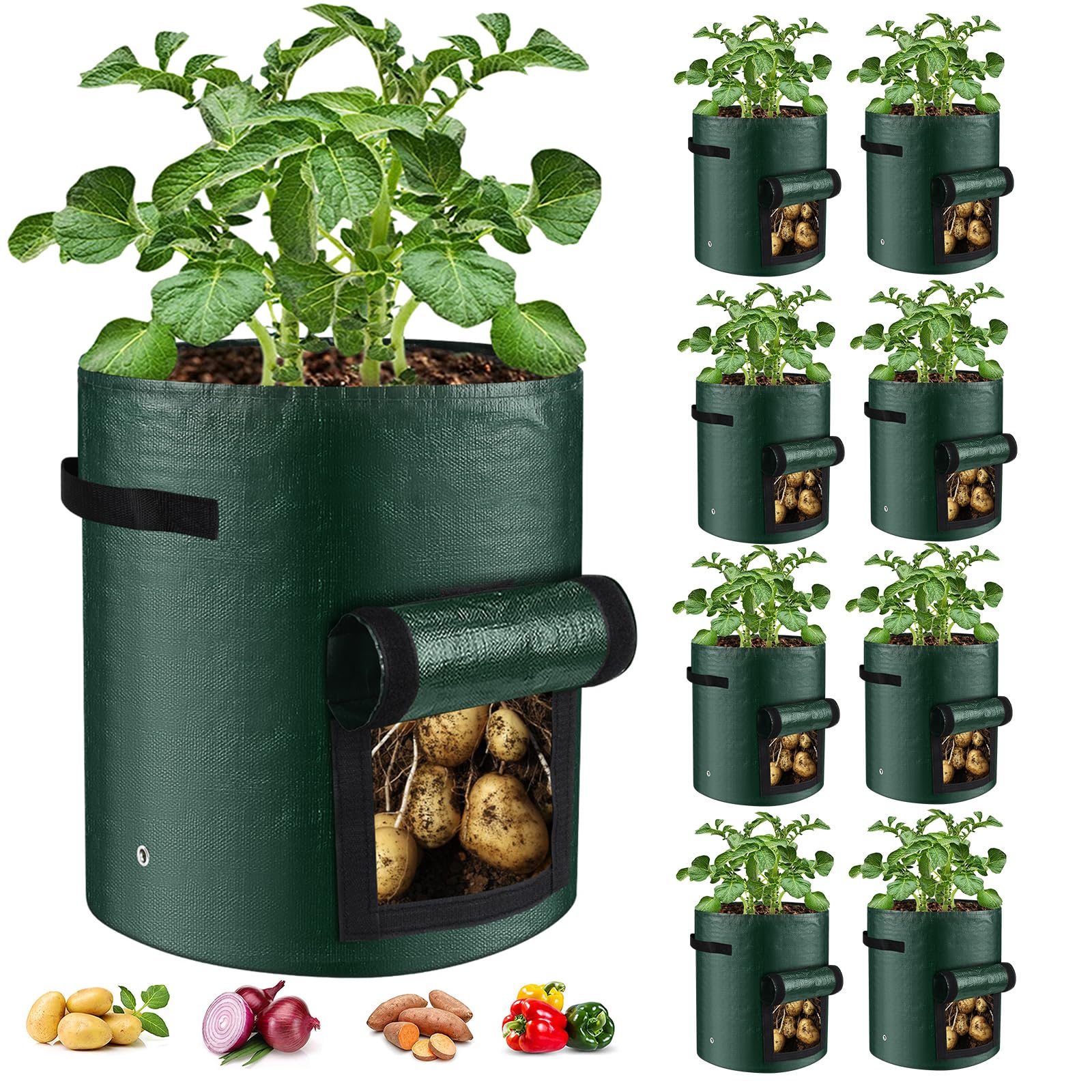
BIJOKETTEN uses lightweight BPA-free PE material instead of nonwoven fabric, giving this 8-pack a distinctly different feel — it’s less breathable than fabric but does not weep water through side walls. The 13.8-inch by 17.7-inch dimensions offer a tall, narrow profile that fits well on balconies or tight patios where footprint is limited.
Three drainage holes at the bottom plus two ventilation ports on the sides provide a controlled drainage system that prevents overwatering without losing all moisture. The large front flap offers easy harvest access for root vegetables, and the bag can be hosed clean and folded flat for winter storage. Owners report plants starting growth quickly with no transplant shock.
The PE material is less permeable than fabric, meaning tomato roots won’t experience air-pruning — this can be a positive or negative depending on your gardening philosophy. Some buyers express concern about long-term plastic durability in direct sun, though early reports show the material is holding up across at least one full growing season.
What works
- PE material prevents side water weeping and patio mess.
- Drainage holes plus side vents balance moisture control.
- Large front flap simplifies root vegetable harvest.
What doesn’t
- Less breathable than fabric — no air-pruning benefit.
- Long-term UV durability is unconfirmed across seasons.
Hardware & Specs Guide
Fabric Weight (GSM)
The density of nonwoven fabric is measured in grams per square meter (GSM). Standard 10-gallon grow bags use 300G material, which offers a reliable balance of breathability and moisture retention. The RVZHI bag pushes to 350G, slowing evaporation for hot climates but reducing airflow. Lower-GSM bags dry out faster and typically last fewer seasons.
Seam Construction Method
Single-stitch seams are common on budget bags and often fail under the weight of saturated 10-gallon loads. Double-stitched or serger-stitched seams distribute stress across two thread lines, dramatically reducing the chance of blowouts. The Rain Science bag uses external seams that also simplify transplanting by avoiding root entanglement.
Handle Attachment Type
Handles sewn through the bag body with reinforcement lining (as in OPPOLIFE and MEKOLIFE) outperform handles tacked onto the rim. The 3D surround handles on the MEKOLIFE bag wrap around the full circumference, providing balanced lifting that prevents the bag from collapsing under load.
Drainage Architecture
Fabric containers drain through porous walls, which encourages air-pruning but accelerates drying. Plastic or PE-based pots like the BIJOKETTEN use bottom drainage holes with additional side ventilation ports, offering more controlled moisture release. Tomato growers must match the drainage style to their local humidity and watering schedule.
FAQ
What is the ideal fabric weight for a 10-gallon tomato pot?
Will a 10-gallon fabric pot dry out too fast for tomatoes?
How many tomato plants can I grow in one 10-gallon pot?
Final Thoughts: The Verdict
For most gardeners, the best 10 gallon pots for tomatoes winner is the Rain Science Grow Bag because its plastic-coated mesh eliminates side-water leaking while maintaining breathability, and the external seam design simplifies transplanting without root damage. If you want the thickest fabric for heat retention and moisture savings, grab the RVZHI 6-Pack. And for bulk buyers building a large container garden, nothing beats the per-unit cost of the OPPOLIFE 12-Pack.